Feeds:
Posts
Comments

Posts Tagged ‘history’

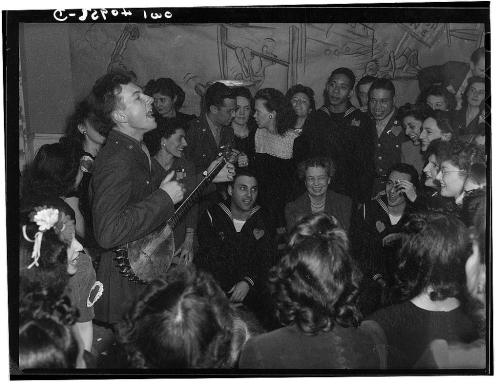
In February 1944, a photographer took a series of photos at the opening of a Labor Canteen in Washington, DC.  The entertainment that night was a young Pete Seeger and in the audience First Lady Eleanor Roosevelt.  Two years after I found the picture, I wrote Mr. Seeger asking if he remembered the photographer.  I was hoping for but not really expecting a response.  But one day I checked my mail and there was a postcard.
One side was covered with words, actually one word, peace, translated into many languages.  On the other side, handwritten, was essentially the following note:  “Cynthia, I’m 94 years old. The details from that time aren’t so clear anymore but my memoirs are being updated and I will make sure that the photographer’s name is duly noted.  Joseph Anthony Horne.”
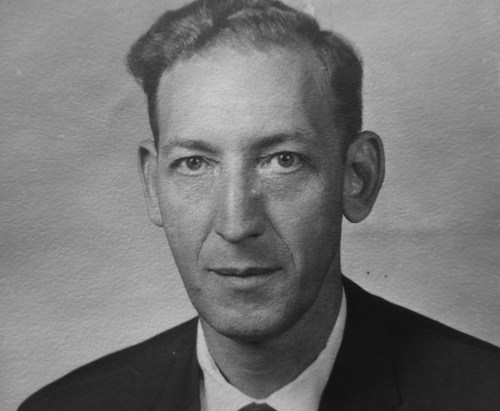
Joseph A. Horne

Joseph A. Horne

Joseph Anthony Horne was born in 1911 and died in 1987.  I began researching his life out of curiosity.  You see, I knew a man who kept telling stories of a 1950s and 1960s childhood spent in exotic places.  Of fishermen in Genoa, Italy dropping seahorses into his hands. Petting a white elephant belonging to the Maharaja of Mysore. Skating in Vienna by doctor’s orders.  It was a life made possible by his father, Mr. Horne, working for the U.S. foreign service, a post he’d taken on after World War II.  As for what he’d done during the war, “something involving art and books while stationed in Germany.”  In the 1960s the family moved back to the U.S. to the Maryland/DC area where Horne continued to work in foreign service until retirement.
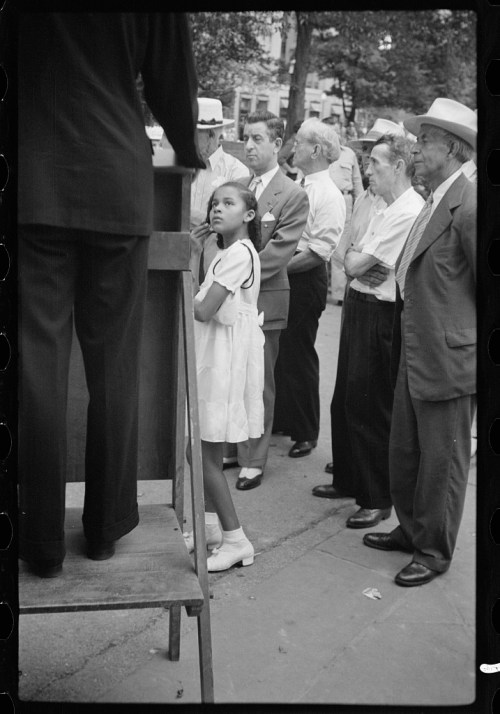
Photo by Joseph A. Horne, 1944, Library of Congress

Photo by Joseph A. Horne, 1944, Library of Congress

I already knew from the son that his father had been a photographer, loved books and music, and that the foreign service position held in all the various countries had involved working with libraries and inviting American musicians, writers and other artists to share their works.  Perhaps inspired by that PBS show, History Detectives, I asked the son was there anything more he’d like to know about his father.  I was given carte blanche to research as I liked.  Those mysterious post-war German years working with books drew my attention but soon I was researching his early years as well. So many files from the early and mid-twentieth century have been digitized, but I kept hitting a wall with finding information prior to 1940.  When I queried the son he mentioned, “that might be because he changed his name. ”  Turned out that Mr. Horne used to be Mr. Wisniewski and had grown up in Nebraska not Maryland as I had assumed.  “So he was born to the Wisniewski family?”  The son shook his head.  “He was adopted, along with a baby girl.  My father thought he’d been born in New York.”  When asked why he had selected Horne of all names, the son replied with a smile, “He thought he was an illegitimate love child of two New York families. the Astors and Langhornes.”  As I stared at the son, he laughed.  “My dad was quite the storyteller.  He even mentioned studying in Europe and hearing G. K. Chesterton.”

One bit of information was easy to find thanks especially to National Archive records available online.  In 1946, Joseph Anthony Horne joined the Monuments, Fine Arts and Archive unit.  From 1947-1948, he would serve as the director of the Offenbach Archival Depot, one of the primary collection points for preserving and returning books, artwork and cultural items stolen by Nazi Germany during World War II.  He had been a Monuments Man.  As for how an orphaned baby in New York City might travel to the American Midwest (along with many thousands of other orphaned and homeless children), and how a young man from Nebraska might find himself working as a photographer in Washington, DC … not to mention exactly who were the people, places and events experienced in Europe during and after the war … Well, all of that, would take a bit more digging.  It would be a treat to discover his connection to photography historians like Erich Stenger and artists like Karl Hofer and quite a surprise to learn of the drama at Offenbach involving missing books and the complex decisions made as the Cold War loomed, reminiscent of decisions made in the world today.  This post is just to set the stage.  More stories to follow.

Read Full Post »

For the past couple of years, I’ve had the pleasure of engaging in a part-time research project.  Though in the beginning I thought I was documenting the story of one person, it quickly became an opportunity to learn the stories of many peoples, some famous and others not so famous, across many lands.  I’ve been struggling with how to share just a few vignettes.  With the advice of friends, I’ve decided to think of the vignettes as a journey, a walk through history.  Since the stories from that time have relevance today I think it is okay to share some of my findings here on this blog. These “interludes: a walk through history,” present different chapters in one’s man life, but really provide a glimpse into the history that continues to shape this world.  It’s been a wonderful, sometimes surprising, experience for me. I hope you enjoy the tales to be posted over time.  Not too frequently — I still need to share my pictures of the present day, like these branches covered in fresh fallen snow.

Read Full Post »

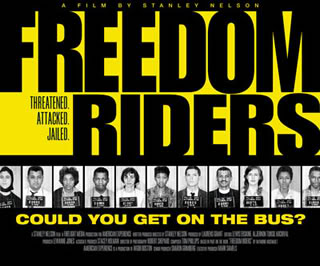
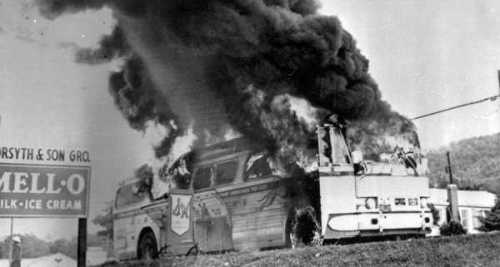
PBS advertised The Freedom Riders for so long and with such intensity that I knew exactly when it was premiering on television … and I wasn’t sure that I wanted to see it.  I mean, the advertisement seemed to tell the story.  Groups of well-meaning black and white people rode buses through the Deep South in 1961.  They were heckled or worse.  In time things changed.  Done.  But life is never that simple.  And if there is one adage I believe above all others it is this:  If you do not remember the past, you are doomed to repeat it.  So I watched it.

Nothing compares to hearing history retold by the actual participants in the events, from the students on the bus to the then-governor of Alabama.  It becomes clear what a complex web history is as all the names of the day are mentioned:  Jimmy Hoffa who refused to let his union drivers drive the buses once the buses became targets for white mobs, John F. Kennedy and Robert Kennedy who were trying to juggle international and domestic events and just wanted the riders to stop and go home, Marting Luther King Jr. and other high level civil rights leaders who also wanted the riders to stop in the beginning, and on and on.   Ah, the deals that were made and the lies that were told.  But above all else what stands out in this amazing film is the courage of the men and women who took part in this protest, a protest that evolved quite a bit over time.

Of course, in the end, this is a story with uplift.  Perseverance pays off.  I, as an African American woman in 21st Century U.S.A., can travel anywhere I like by bus or any other mode of transportation.  In fact, in 2005, before I ever knew of the freedom rides, I did travel solo around the Deep South by bus and train. Still, I am left with questions after my first viewing of the program.

Throughout the program we hear first-hand remembrances of the riders, politicians, and a few local residents.  I’d be interested in hearing the reflections of the men who made up the attacking mobs in the various cities.  Do they feel any different, fifty years later, about what took place?  If circumstances allowed, would they repeat their actions?  If yes, why?  If no, why not?  The most nagging question I have is for my parents.  In 1961, they would have been married and begun raising a family.  How is it that they — and so many other people like them — could experience such denigration throughout their lives, be habitually treated as second-class citizens or little better than animals, and still somehow choose not to plant seeds of hatred in the hearts of their children for their “oppressors?”  I think that must take courage, too.

Read Full Post »

Two men climbing into the back of a garbage truck to escape the rain are crushed, and so set into motion a strike that will paralyze a city, empower a people, and bring into their midsts one of the great orators in U.S. history, Dr. Martin Luther King Jr.  The city is Memphis, the year is 1968, and it is the place where Dr. King will die at the hands of escaped convict, James Earl Ray.  But before he dies his words will once more stir the hearts and minds of a downtrodden people.   I encourage you to watch the documentary Roads to Memphis to hear Dr. King’s words and indeed the words of the Memphis garbage workers who kept a city clean but could not ride the buses and who felt the need to walk the streets wearing a placard stating clearly, “I am a man.”  I’ve read mixed reviews of the documentary, with negative comments ranging from “it’s not riveting” or “it’s weak and filled with potholes.”  Apparently it brings to light nothing new about the assassination.

Well … perhaps the lens through which I watched the film was different than the reviewers.  What stood out to me were the stories told, and reflected in those stories were the choices people made.  Like the choice the little boy made to participate in the peaceful march through Memphis streets after King’s death.  “Well,” he says when asked why he’s in the march, “I took part in this march today because of Martin Luther King and for what he stood for, because this march is what he died for, and I think that if he died for it, I could carry out what he started.”

Irena Sendler made a choice.  A young Polish Catholic, she and her young friends chose to help the Jewish children dying on the streets in Warsaw during the early 1940’s.  They smuggled the children out of the ghetto and into the homes of individuals as well as into convents and orphanages.  The children were taught Catholic prayers and how to behave in a Christian church so that if they were ever stopped by Gestapo they would know what to do.  And, in 1942,  “as conditions worsened and thousands of Jews were rounded up daily and sent to die at the Treblinka death camp, less than hour outside Warsaw, Sendler and her cohorts began to appeal to Jewish parents to let their children go. ”  They kept careful record of the children’s Jewish names so that they could be reunited with their parents.  Of the 2,500 or so children they saved most had no parents or family members to return to, but some did.  You can see the stories of both the horror and the beauty that people chose to do to and for each other in the documentary, Irena Sendler: In the Name of Their Mothers.

Read Full Post »

« Newer Posts