Feeds:
Posts
Comments

Archive for the ‘Music’ Category

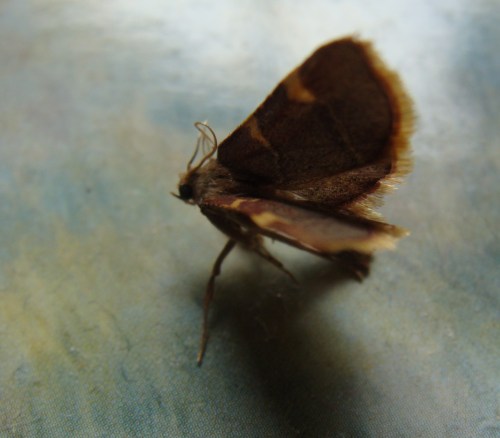
I found this moth on my kitchen table.  I have to admit, thanks to Steve, I see moths just a little bit differently than I did before he and I met.  Because he and I are of different generations, he often introduces me to art and music that I am quite sure I would not chance upon without him.  Most recently he introduced Archy, a philosophical cockroach who used to be a poet in a previous life, and Mehitabel, a wise-talking alley cat who believes she is Cleopatra reincarnated.  Created in 1916 by Don Marquis in his daily column for the New York Evening Sun, the pair share adventures expressed in light verse.  One of Steve’s favorites:  the lesson of the moth. In time, the shorts were compiled into books, and a musical was recorded with Carol Channing voicing Mehitabel.
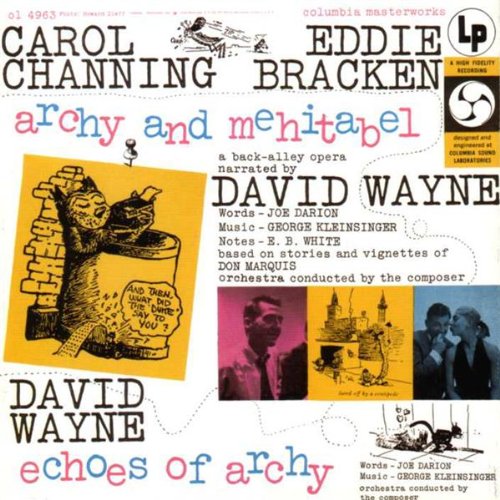
Steve tracked down a CD containing the original music production.  We listened last night.  It was a treat to hear the actors bringing such unique characters to life.  Now, also found on this CD is the Carnival of Animals, an instrumental work paired with words by Ogden Nash.  When the Carnival music started, it was beautiful … and it was strangely familiar.  I asked Steve who confirmed, “It’s a classic by Saint-Saens.  I first heard it as a child, when my father played it in the 50’s.”  “Hmmm,” I replied.  “I think I first heard it on Bugs Bunny.”  Steve shrugged.  “That’s where you first heard Wagner, isn’t it?”  Well, too true.  Meanwhile …

* You can hear the complete version of the Saint-Saens Carnival of Animals suite via this link.

* Read more about and by Archy & Mehatibel here.

* FYI, Carnival of Animals was featured in a Bug Bunny production which you can read more about at the bottom of this wiki page.  And to learn more about Bugs Bunny as classical music teacher, check out this wonderful page called Bugs Bunny Goes Classical.


Read Full Post »

Reading photographer Jay Kinghorn’s post about how audio affects perception of visual images reminded me of the “soundtracks” I used to create as I wrote short stories.  The music I collected helped me channel, get lost in, build and sustain emotions that I needed to create strong images on the page.  With the support of a tech savvy roommate, I even played around with Windows Media and tried to weave together my written words with still images and compiled music.  The goal?  Simply to tell a story and use accompanying music to create emotional resonance.  Currently I do little with short stories or movie making though music still influences my work … I sometimes listen to music as I walk along the Charles with my camera.  Perhaps this New England winter, I will jump back into the fiction.  Meanwhile, this late summer morning, I find myself pondering the fact that while audio certainly affects image perception, the flipside is also true.  Visuals influence our perception of audio.

Leaf by the Charles River

Yes, there is some connection to recent Sunday musings where I lamented that, in today’s politics, glossy images distract from listening to candidates’ words.  Nothing novel there – just look at the 1960 Kennedy/Nixon debate where television viewers apparently thought the inexperienced yet highly telegenic Kennedy won the debate while radio listeners thought the less telegenic, more experienced Nixon won.  Politics aside, consider pharmaceutical ads especially the ones that air during the evening news and other programs associated with older viewers.  The companies have to share the side effects associated with the drug being advertised.  Notice how the spoken words (e.g. … this drug may cause this that or the other thing and in rare cases lead to death …)  are paired with images of happy people of all ages meandering — sometimes slowly but always with a smile — along beaches, up mountains, through open-air markets, with a dog or two in tow.  Hope is evoked so powerfully, visually that it becomes easy to let words of risk go in one ear and out the other.  In the end, the images convey the message.  Words become irrelevant.

Fallen

Of course, this is nothing new.  Peoples’ visual and auditory responses and perceptions have been manipulated throughout human history, as a means to some end.  I guess that’s what I am struggling with right now.  When I watch a movie or movie trailer or attend a concert or an art exhibit or even a religious service, I am open to being manipulated.  I await the melding of music, words and images to make me experience a story.  But it’s when that manipulation happens in other contexts that I become wary and quite frankly on occasion angry.  Artistically, I am looking forward to exploring these ideas in both my photography and writing, and to better understand how other artists use these ideas and I don’t mean in a Wag the Dog kind of way.


Read Full Post »

This morning I lay in bed a long time listening to birdsong.  It drifted in through multiple windows, from the trees and bushes surrounding the house, rich layers of sound that were deeply relaxing.  At least, relaxing for me.  I know the birds were hard at work “speaking” to each other.  With spring finally sprung, I’ve seen many birds this past week, including cardinals, blue jays, robins, blackbirds, sparrows as well as the ever present pigeons.   The intensely bright hues of the cardinals and blue jays startled me until I realized they were males trying to catch some attention.  I don’t know which ones sing which songs but together they create quite the symphony.  Care to hear or see for yourself?  Below are a few links you might enjoy.

Why Birds Sing

World’s Largest Archive of Animal Sounds

Songbird Photos on National Geographic

Read Full Post »

A friend of mine teaching a course on race, class and privilege asked if she could use some of my writings on the subject.  Most of what I have written simply recounts my experiences as a brown woman abroad or of my family members in the American south.  In one of the essays, I reference Sam Cooke’s song, A Change is Gonna Come.  My family has long played this tune.  It is a beautiful piece.  Until today though I did not know its history:

http://en.wikipedia.org/wiki/A_Change_Is_Gonna_Come_%28song%29


I don’t know if my friend will use song in her course, but she has certainly reminded me of the influence and power of song, for creating change and for simply helping people endure.  Another song I shared with her is Billie Holiday’s rendition of Strange Fruit:

http://en.wikipedia.org/wiki/Strange_fruit


Moving me right now are songs without words by Ralph Vaughn Williams:

Five Variants of Dives and Lazarus

Fantasia on a Theme by Thomas Tallis


If you don’t know these songs, they are well worth a listen!


Read Full Post »

Recently for the first time as an adult, I saw the movie musical Showboat.  Its most famous song is “Old Man River,” sung by Paul Robeson.  If you have not heard the song as sung by him, I encourage you to listen just once.  Similarly, I encourage you to listen to Sam Cooke’s rendition of “A Change is Gonna Come.” Despite the hardships, the pain, the unbearable burdens of this life captured in these and so many other songs about the African American experience in the U.S., there is always an underlying thread of hope that one can withstand the hardship, if only to give one’s offspring a chance at a better life.

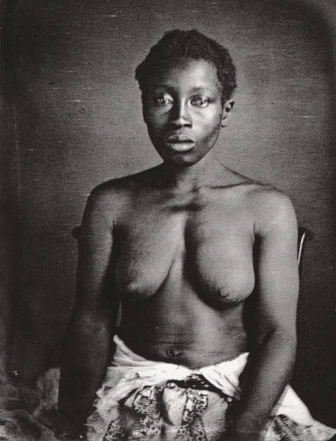
Hope is on my mind quite a bit this Sunday and not just because I’ve been listening to old songs.   I read an excellent query posed by Dave Mance III, editor of Northern Woodlands Magazine.  He asks what gives the readers of the magazine hope.  (Read more here.)  As I started to think about my answer, negro spirituals popped into my head, but so did the cover image of the book, Delia’s Tears, a book about race, science and photography in nineteenth century America.

The focus of the book is fifteen images discovered in the attic of Harvard University’s Peabody Museum in 1976.  Today, they are iconic images.  If you have ever watched a PBS program on slavery, you have probably seen the faces.  I admit I accepted the visage of these slaves without thought to who they were and where they lived.  I accepted them as representative without thinking of them as individual.  But they were individuals.  Slaves on 1850 Columbia, South Carolina plantations photographed for a revered Harvard University professor convinced that Africans were biologically inferior.  When I look into their eyes, I wonder where these individuals found hope.  I wonder where my own slave ancestors found hope as they worked in Virginia and North Carolina.

I find hope in the sunrise and sunset.  The light that leaks in through a window, that dots the midnight sky.  I know it sounds hokey but it is true.  Even if my eyes are closed, if I can feel the sun’s rays, there is something hopeful in the sensation.  And maybe that’s it, at least for me.  There’s something about simply interacting with the world — seeing the possibilities, feeling them, hearing the stories of others –that inspires a sense of one day, just maybe, that possibility might come true for me or for the ones I care about in this world.

Anyway, that’s my random musings on a sunny Sunday in Massachusetts.  Wherever you are in the world, hope you’re having a good day.


Read Full Post »

This Sunday, I find myself consumed with thoughts of math, music, science, and art — and oh, what a tangled web they weave.  As I sit at the computer right now, I have open beside me a copy of Douglas Hofstadter’s Pulitzer Prize-winning book, Godel, Escher, Bach:  An Eternal Golden Braid.  On the left page is Figure 104. Castrovalva, by M.C. Escher. On the right page, a crab, tortoise and Achilles are having a conversation about mathematics.  It’s a book that I know is great, but my goodness, it does tax my brain.  In a good way. 😉

Read Full Post »

Have you ever listened to Barber’s Adagio for Strings?  If so, what did you experience?

I have never forgotten my first time.  I must have been sixteen or seventeen.  Still in high school.  Sitting in the dark of the living room while the family watched Oliver Stone’s Platoon.  Stone’s words delivered by the actors, the cinematographer’s vision executed on screen, the historical context, and that music wrapping it all together.  I wish I could better explain the power of that moment and why today that music brings me to tears.

As a writer, I sometimes listen to music to help ground me or to help me tap into an emotional space.  Barber’s Adago helps me to pause, to breathe, and be carried away by the lines of music.  I have read that it is considered one of the saddest pieces of music ever.  Even sadness, perhaps especially sadness, we need to explore on occasion in writing, in music, in words, in pictures.  As a friend of my has a penchant for saying, “It’ll make you stronger.”

Read Full Post »

« Newer Posts