Feeds:
Posts
Comments

Posts Tagged ‘American history’

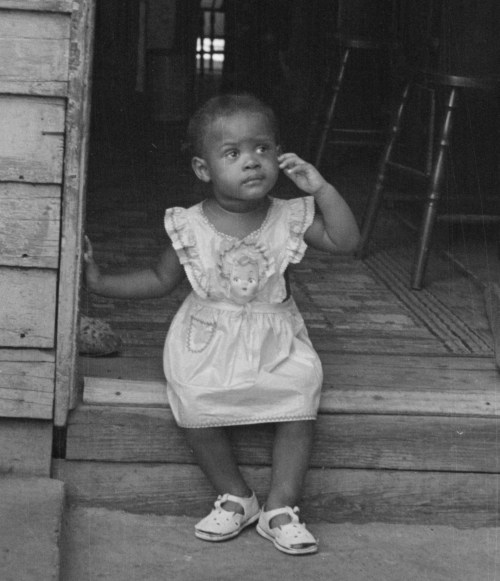
detail from untitled photo by joseph a. horne, 1940s

This photo was taken by Joseph Anthony Horne during the 1940s as he worked for the Farm Security Administration – Office of War Information.  As highlighted in a previous chapter of Interludes, he like many other photographers had been sent out across the country, under the direction of Roy Stryker, to capture the American experience. One of the areas that Horne captured on film was southeast Washington, D.C.,  an area not far from where his family lived and an area that was predominantly African American. The photos he took in that community were notable, for me, in part because there was no characterization or stereotyping. He simply photographed in a straightforward manner people living their daily lives. He, like many of the FSA photographers, was very good at that.  Otherwise in commercial media, unless it was an African-American specific publication, there was either no representation of “colored” people or it was often a mimicry.  Out of all the photos that Horne took in this community, I was especially struck by the series of photos of this little girl who had been positioned in front of the camera by a person who appeared to be her mother. No doubt she’d been placed in a best dress for the occasion. And its that dress that caught my attention.

There are people far more eloquent and scholarly than I who have written and who continue to write about how we as humans form our sense of self, our sense of self-worth, our sense of what is beautiful and our sense of how we individually fit within that definition of beauty.  This little girl is lovely and thoughtful. Her face clearly reads, who are you and what are you doing? The little face affixed to her dress is also lovely. Two different expressions of beauty.
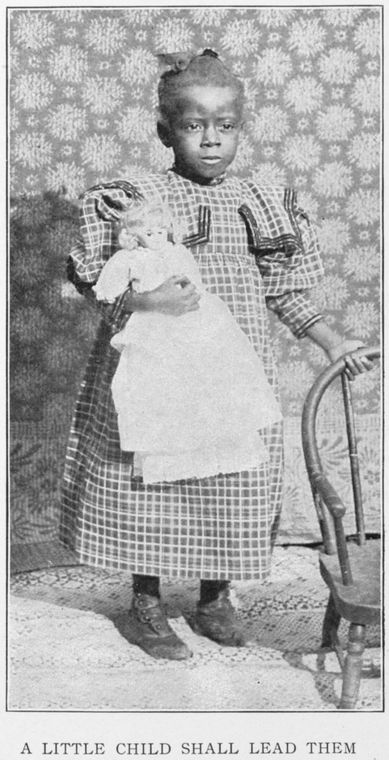
This photograph was taken in 1905 and is located in the NYPL Digital Collection. I don’t know the context in which this photograph was taken though there is that accompanying caption suggesting to me that it was in a magazine and meant as a positive image highlighting how far African Americans had come in the 40-years since slavery and that a new generation would have even more success.  Too true as evidenced by the strength in that little girl’s face, and yet I am struck by the doll wrapped in her arm.  Growing up in the 1970s, I too had a lovely doll around which to wrap my arms and I enjoyed combing her blonde hair and wondering why it was so hard, in fact impossible, to braid her hair the way my mother braided mine. I grew up in a far different time than these two young girls but Toni Morrison’s The Bluest Eye, published the year I was born, certainly resonated in my teenage years. I don’t remember ever wanting blue eyes but I think I wanted blonde hair (or maybe a lion’s mane).

These musings come to the fore because of a convergence of recent events, including having the opportunity to explore the imagery being made available through digital collections, seeing images of the past that had not been made widely available before, images that today have the potential to spark positive conversations about the past, present and future.

I recently pulled together research to tell two stories of one place.  One story focused on two sisters of great wealth whose lives are well-documented and whose enduring influences are often remarked upon.  The second story took great effort to pull together, of a gentleman whose image and good works I could only find because of the old texts and photographs being digitized and made available online.  The two sisters were white and the gentleman was black. They lived during the same time period and interacted in the same place.  When I printed my drafts and shared the stories with an elder (whose age I shall not share), she listened politely to the story of the two women but she took the story of the gentleman. We had a conversation and she said, “Cynthia, all my life I have heard about these women and the people like them. I never heard about this man. You keep doing your research. Why is it important? I want people to know that we were here. To know that we were a part of this place.”

Sources

https://www.loc.gov/item/owi2001000491/PP/

Schomburg Center for Research in Black Culture, Jean Blackwell Hutson Research and Reference Division, The New York Public Library. “A little child shall lead them.” The New York Public Library Digital Collections. 1906. http://digitalcollections.nypl.org/items/510d47df-9e16-a3d9-e040-e00a18064a99
 

Read Full Post »

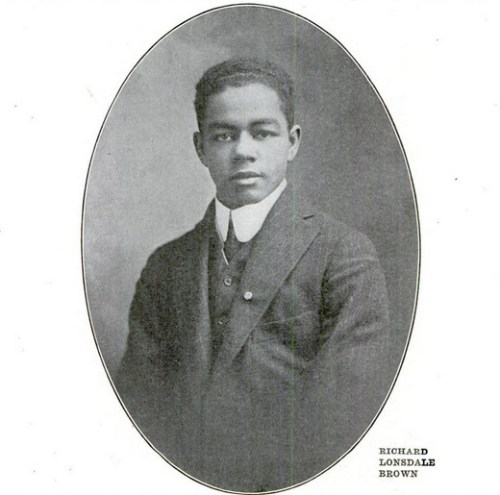
Richard Lonsdale Brown was born in 1892 in Evanston, Illinois. When less than a year old, his parents moved to West Virginia. There he attended public school and then trained as a sign painter. After finishing trade school, he remained in West Virginia for five years, “and then being a journeyman sign painter I traveled through the mining districts of the state … My journeys took me almost altogether through the mountains where, when God made them, He placed scenery the equal of which, I think, cannot be found in all America.”

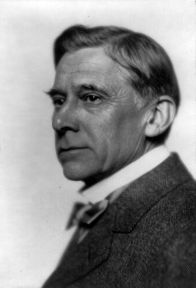
Richard Lonsdale Brown, 1912

“It was there I believe that my love for landscape painting was awakened. When not painting signs I was doing what I could to reproduce the scenery of the mountains and valleys, the rivers and the streams on canvas.” Brown shared those words in a 1913 article that appeared in the New York Sun.

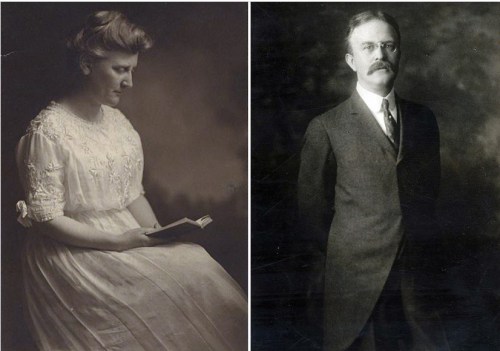
Mary White Ovington and Oswald Garrison Villard, circa 1910-1920

Mary White Ovington and Oswald Garrison Villard, circa 1910-1920

Mary White Ovington (1865-1951), co-founder of the National Association for the Advancement of Colored People, remembered first learning of Richard Lonsdale Brown in 1910.  In her memoirs, she recounts it was during a meeting with Oswald Garrison Villard (1872-1949).”In 1910, when Mr. Villard and I were working in the newly organized NAACP, he gave me a letter from the artist George de Forest Brush, asking me if I would take up the business mentioned in it. It told of a young colored artist, Richard Brown, from Charleston, West Virginia, who had recently come to New York with some excellent sketches.”

George De Forest Brush

George De Forest Brush

“I called upon Mr. Brush in his picturesque studio on MacDougall Alley and saw his pictures. They were lovely things, trees and melting skies, alive in form and color. Mr. Brush was deeply impressed with them.  ‘He is no more than a boy,’he said, ‘and he came into my studio, shy, discouraged. He had brought his sketches under his arm to New York, and when not in one of our great galleries was spending his time trying to sell them. No one wanted even to look at them. He was poor; he was colored. Could one have greater handicaps?’ Mr. Brush welcomed him to his studio and looked with interest and appreciation at his work. ‘Can I ever be an artist?’ Richard asked when had shown all he had. The answer was, ‘You are an artist.'”

Brown would exhibit his work in the Ovington Brothers Gallery in New York, March 18-23, 1912.  It would showcase paintings done in West Virginia before he was 18 years old and in the hills of New Hampshire while under the tutelage of Mr. Brush. Mary Maclean, a writer with the New York Times wrote a profile of the young artist for the newspaper. The article appeared in March, just before the exhibit, helping to make it a great success.

It was estimated that 2,500 people attended. Twenty-six pictures were for sale and sixteen were sold including little sky sketches. The young man charmed people with his demeanor as well as the quality of his work. Collectors who reportedly purchased his work included Jacob H. Schiff, Edward Warburg, Mr. Coster, and celebrity Miss Mary Garden.

Art Critic Joseph Edgar Chamberlin quoted in the New York Age, March 1912

Maclean’s profile would also be printed in the April 1912 issue of the NAACP’s The Crisis Magazine for which Richard Lonsdale Brown produced the cover.

Cover Art by Richard Lonsdale Brown

Ovington remembered, “Crowds came and he had many purchasers. The prices for most of the pictures were high, and so Richard would paint little cloud sketches in the evening and sell them the next day. He made over a thousand dollars. We all hoped he would use it for study; I had plans for Paris but the money went where his affections dictated. He spent it on a sister, who he used to tell me, was more talented than he, in a vain attempt to cure her of what proved to be an incurable disease.”

by Richard Lonson Brown

by Richard Lonsdale Brown

White and black publications of the period described him as “the rising young artist.” Instead of Paris, Brown would study in Boston, living at the Robert Gould Shaw House. Ovington remembers him producing posters for W. E. B. Du Bois’s Pageant. He exhibited in private homes. He would eventually travel down South. Before he left, he would confide to Ovington that he could not paint as he used to. He’d begun painting landscapes but was now intrigued by figures. As he studied those figures he was discouraged at how society beat them down. He was excited by what was happening in Harlem and hoped to be a part of it. “Not that I have forgotten what I want to do most of all, ” he would tell her. “Someday, when I am the artist I hope to be, I want to return and paint those West Virginia hills.”

Mt. Monadnock, originally purchased by Jacob H. Schiff

While it is unclear if he returned to those West Virginia hills, he would not be part of what became known as the Harlem Renaissance, nor would Ovington see him again after that last encounter. In 1915, he would exhibit his work in the Washington, DC home of Mrs. Carrie W. Clifford.  He died September 23, 1917. Posted in the March 1918 issue of The Crisis was the following passage: “The parents of the late Richard Lonsdale Brown write us that they are living in Muskogee, Okla, and that the young artist died at their home and under their care.”

by Richard Lonson Brown

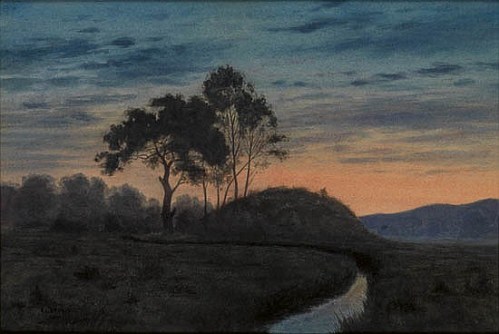
A Bend in the Stream, originally purchased by Albert Andriesse

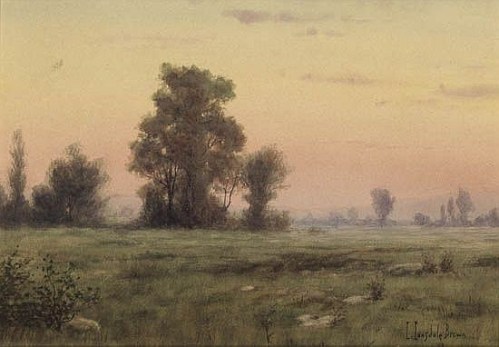
While it appears that the three paintings above and the 1912 Crisis cover are his only surviving work, clearly he produced many other sketches and paintings during his brief lifetime. So perhaps somewhere out there are Brown’s little cloud sketches, scenes of melting skies and his West Virginia mountains.


Sources and Additional Readings

Negro Youth Amazes Artists By His Talent, New York Times, March 1912

Richard Lonsdale Brown Biography by the Indiana Illustrators and Cartoonists

Black and White Sat Down Together: The Reminiscences of an NAACP Founder (pp. 75-76)

Detailed descriptions of his three known paintings

Read Full Post »

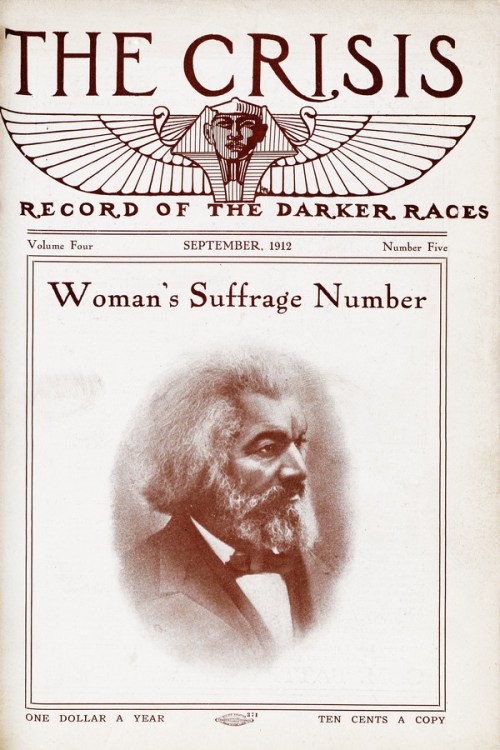
To rediscover the beauty once created like this cover for The Crisis Magazine by artist Laura Wheeler, and …

To remember the struggles we have faced before as a nation and overcome, to a degree, though it is frightening to see how easy it is to regress.

FYI, W. E. B. Du Bois founded The Crisis in 1910.  You can read about the magazine’s origin, and browse issues through 1922, via this link.  You can read the above issue on women’s suffrage online via this link. And the Online Books Page identifies sources for viewing other issues.

Read Full Post »

When do we see ourselves? How do we see ourselves? How is our sense of self shaped by the images of others?  This past year, I spent a lot of time researching U.S. history, mostly pre-Civil War into the early twentieth century.  One of the things that I re-discovered for myself was an evolution in the illustration and other visual representation of African Americans that reflected the sentiments of a rapidly evolving nation.  A nation that had loosely reknit after a Civil War, thirty-years later still in rancorous debate about the “Negro Problem”, and now having to deal with waves of mostly non-English speaking European immigrants making their way to a promised land. Culture clashes took place at every level of society. And those tensions were reflected in the arts and how “others” were represented.

I chanced upon an 1898 issue of the magazine, The Art Amateur: Devoted to Art in the Household, a popular type of magazine at the time.  The article that caught my attention, by E. Day McPherson, focused on Drawings of the Negro Character, an actual tutorial for how to capture the character of your artistic subject.  When reading the text I tried to keep in mind the context of the time. For example … “Character might be defined as the result of emotional habit, and certainly the lines expressive of character are those which show what emotions the person is most frequently subject to and in what degree he is accustomed to repress or hide them.  The negro is much more accustomed to give his emotions free play than white people, and they more than the yellow and the red races. To the Japanese we seem as “funny” as the negro seems to us …”

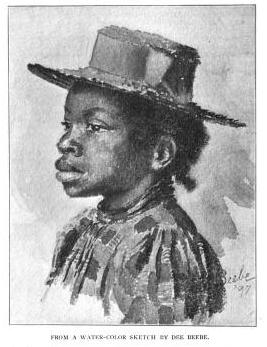
But my focus was not the words but the artist’s work.  Most publications from that time, outside of publications produced by African Americans, were already presenting stereotypical images of African Americans, if any images were being shown at all.  I was struck by Dee Beebe’s portraits of young African Americans, possibly in Galveston, Texas, in the casual clothing of their day.  I don’t know if she captured their character but she captured their beauty for me.

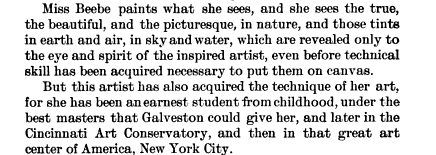
I couldn’t find out much about the artist. She was born in 1870 into a prominent family in Galveston, Texas. Her artistic skills were clear at an early age.  As one writer noted in 1896:

At the Art Academy of Cincinnati, she studied with Frank Duveneck.  In New York, she studied with William Merrit Chase and Kenyon Cox, and later with Theodore Wendel in Gloucester, MA.  Throughout her life she was a teacher while continuing to produce oil and watercolor paintings as well as etchings. The last reference to an exhibit that I could find was 1922.  She exhibited at the Ainslie Galleries in New York, seventy-five watercolors, “including bits of Holland and Switzerland, views of New England, the Arizona desert and around San Francisco and studies of flowers in localities as diversified as Prospect Park, Brooklyn, Los Angeles, Switzerland and Holland.” She died in 1946.

It would be intriguing to see more of the work of this artist. I found a few landscapes online.  The 1898 article says that at one period while back home in Texas she “devoted much time to the portrayal of negro types.” Perhaps those other images, if they still exist I might not like so much, but I am glad she created these images and that they were shared with the public in that popular magazine.

Sources

The Art Amateur: Devoted to Art in Household, Volume 39-40, 1898

Prominent Women of Texas (1896), p. 82

Magazine of Art, 1922


Read Full Post »

I chanced upon Kicha’s Black History website while researching an African American architect who lived during the late 1800s into early 1900s. I was finding lots of words providing context about the African American experience during this period but very few images until I came across her galleries.

Her unique collection is a moving reminder of the power of images to document the stories of people and places that might otherwise be forgotten.

I highly recommend taking time to peruse the site  and view the wide range of photos and their accompanying text. You can scroll through individual photos or browse different albums.

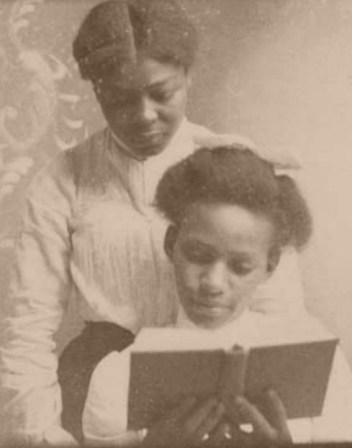
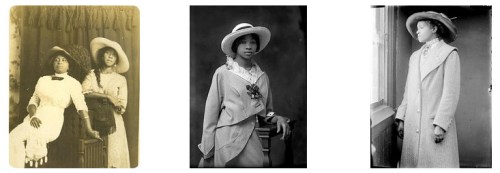
The photos were taken by different photographers.  They capture a beauty and dignity as well as diversity not always depicted in today’s historical narratives about the African American experience or in most popular media recreations of the time period.

While I don’t know the website creator’s story, I say bravo to what she has pulled together.  I think the site does something important by presenting pictures of an American experience that many may not know but may be important to rediscover and celebrate as we continue to define who we are in this melting pot of a nation.

View Kicha’s Black History galleries:  http://www.ipernity.com/home/285591

Read Full Post »

foreword to the interludes

On February 21, 2014, an article appeared in the New York Times reporting that the city intended to remove over 400 children from 2 homeless shelters.  The article goes on to highlight how these 400 are part of “a swelling population of 22,000 homeless children.” Such numbers have not been reported in New York since the Great Depression.  Nearly two decades before the Great Depression, on January 1, 1911,  Joseph Anthony Horne was born and then orphaned in that city.  He could easily have become homeless.

Young Horne

A Young Joseph Anthony?

Even then it was quite clear that there was a widening divide in the city, and across the nation, between haves and have-nots.  The late 1800s into the early 1900s was the Gilded Age  for the country, with a rapidly expanding economy resulting in some growing extremely wealthy (e.g. Carnegie, Mellon, Morgan, Vanderbilt, etc) while others sank into poverty.  Especially affected during this era were children like Joseph, i.e. those who were orphaned or abandoned.  Even for children remaining with their families, so many families had so few resources that children had to work alongside parents for survival.

Spinning Boy by Lewis Hine

Spinning Boy by Lewis Hine

Throughout the 1800s and early 1900s, New York was a major port of entry for people of many backgrounds and skills seeking a new life for themselves and their children.  Some within the U.S. were eager to welcome these immigrants to work in growing cities and homestead “empty” lands out west.  When Joseph was born, the population of the U.S. was estimated at nearly 94 million.  In 1818, less than 100 years before his birth, the population had been only 9 million.  That staggering increase in population in such a short time was primarily due to immigration from England, Ireland and Germany (including territories then considered part of the German Empire like Poland).

Children Sleeping in Mulberry Street (1890) by Jacob Riis

Children Sleeping in Mulberry Street (1890) by Jacob Riis

For those immigrants who arrived with few funds, they took whatever jobs they could find.  New York photographer and journalist Jacob Riis chronicled the life led by some of these people in the late 1800s in his book How the Other Half Lives. So, even as on one side of the city people were enjoying the wealth and prosperity of “the age of innocence,” on the other side of the city, people were experiencing a very different life.  It is also around this time, in 1883,  American poet Emma Lazarus wrote The New Colossus, a poem that would be engraved on a bronze plaque and mounted inside the lower level of the pedestal of the Statue of Liberty, including those famous lines:  “Give me your tired, your poor, Your huddled masses yearning to breathe free …”

In the Home of an Itlaian Rag Picker, Jersey Street by Jacob Riis

In the Home of an Italian Rag Picker, Jersey Street by Jacob Riis

During this time, there were few labor laws in place to prevent mistreatment and abuses of all sorts.  In fact, in 1911,  one of the worst industrial disasters in U.S. history took place in New York City at the Triangle Shirtwaist Factory.  A fire led to the deaths of 146 men and women who were killed by the fire, smoke inhalation or by jumping to their deaths.  The owners had locked the doors and any exits, a common practice in those times.  It was one of those tragic events that would help to usher in new workplace safety standards.  And eventually through the efforts of photographers like Lewis Hine child labor laws would be created as well.

Jo Bodeon, back-roper in mule room at Chace Cotton Mill, Burlington, VT, by Lewis Hine

Jo Bodeon, back-roper in mule room at Chace Cotton Mill, Burlington, VT, by Lewis Hine

Midnight at the Glassworks by Lewis Hine

Midnight at the Glassworks by Lewis Hine

As an investigative reporter for the National Child Labor Committe, Lewis Hine documented the working and living conditions of children across the U.S. between 1908 and 1924.  Many images can be found on the Library of Congress website.  Leading up to World War I (1914-1918), as manual labor work increased, there was no more cheap and readily available labor than that of a child.

Little Lottie A Regular Oyster Shucker, Bayou, LA, 1911, by Lewis Hine

Little Lottie A Regular Oyster Shucker, Bayou, LA, 1911, by Lewis Hine

Hughestown Borough PA Coal Company Breaker Boys by Lewis Hine

Hughestown Borough PA Coal Company Breaker Boys by Lewis Hine

Reformers, like those who started the National Child Labor Committee, and many other people were aware that the practice of putting children to work had to end, not only for their immediate safety but to facilitate giving them an opportunity for  schooling and increasing any chances they had at breaking out of a cycle of poverty.  One such reformer was philanthropist Charles Loring Brace.  In 1853, he formed the Children’s Aid Society in New York City.  At the time, abandoned and homeless children lived on the streets or were placed in institutions where they could stay until a certain age (e.g. 14) before being expected to leave.  Brace and others felt that it would be better to collect these children, and even to accept children from poor families who could not take care of them, and to send those children to live with families outside of the city, in farming communities.  These “foster families” could even adopt the children.  As for how these children, including an orphaned baby Joseph, would travel to one of these families? By train.

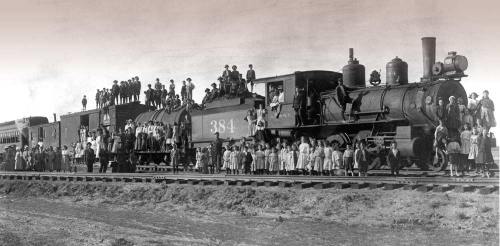
Celebration of completion of the First Transcontinental Railroad at what is now Golden Spike National Historic Site, Promontory Summit, Utah. Photo by A. J. Russell, 1869

Celebration of completion of the First Transcontinental Railroad at what is now Golden Spike National Historic Site, Promontory Summit, Utah. Photo by A. J. Russell, 1869

With the support of wealthy families like the Astors and other philanthropists, from 1854 to 1929, the Children’s Aid Society and the New York Foundling Hospital, would send nearly 250,000 children of all ages by “orphan trains” to cities and towns across the country, primarily to the American Midwest.  The children ranged in age from babies like Joseph to teenagers.  Notices would be sent out to communities before the children departed.  Agents would be sent along with the children as chaperones.  Stories have been collected over the years.  It is clear that sometimes children were fostered as “helping hands,” but it is also clear that children were taken in to be cared for and loved as part of a family.  Such is likely the case with Joseph.

Orphan Train, Kansas State Historical Society

Orphan Train, Kansas State Historical Society

Joseph and a baby girl named Pearl were taken in by farmer  Anton J. Wisnieski and his wife, Anna.  The German-speaking couple of German and Polish ancestry would raise the two children in Webster Township, Dodge County, Nebraska.  So instead of growing up on the streets of New York City, young Joseph grew up on the Great Plains where he fished for buffalo carp in the Platte River and had many other adventures into the 1920s.  And then something happened. He felt a calling to travel back east and even cross the Atlantic into worlds very different from the farmlands of Nebraska.  In his travels, he would deepen his knowledge of “dead languages,” literature, music and religion and somehow pick up his first camera … just in time to return to the States and join the ranks of one of the most legendary groups of documentary photographers in U.S. history.

More about those adventures and that walk through history in March.

A Few Recommended Links …

The Gilded Age

Lost Children: Riders on the Orphan Train

PBS American Experience:  The Orphan Train

A History of the Orphan Trains

Washington Post article by Andrea Warren

Early Child Labor in U.S. with Lewis Hine Photography

NYTimes Slide Show of Jacob A. Riis Photography

Orphan Train: A Novel

National Orphan Train Complex

Read Full Post »

« Newer Posts