Feeds:
Posts
Comments

Posts Tagged ‘storytelling’

With Father’s Day approaching, I decided to post a “reprint” of a story I wrote that appeared a few years ago on the Dead Mule School of Southern Literature website.  


Seeds

In elementary school, my younger brother and I participated in an activity where we were given seeds to plant in cups. Over time the seeds sprouted and tiny house plants grew. At home, when my brother discovered that the neighbor’s maple tree helicopters littering our yard were in fact winged seeds, he decided to replicate the school activity.  He planted one seed in a handful of soil in one of the small white Styrofoam cups that our dad liked to use for coffee.

My parents were supportive of his effort, though not at all positive that he was doing anything except making a cup full of mud.  But, green shoots soon sprouted up through the soil. When the sapling outgrew the Styrofoam cup, he planted it in one of Mom’s large clay pots.

My brother was only about seven years old with the attention span of gnat. We all expected him to forget about the tree, to let it wither and die once the joys of watering it faded away. But he didn’t lose interest. He watered it. He moved it around the yard to catch the traveling rays of the sun.  He dragged it under the house during rain storms.  When a branch was accidentally broken, he applied a field dressing of black electrical tape which saved the budding limb.

Dad was fine with the tree until my brother wanted to transplant it from the pot to a fertile area near the vegetable garden. He tried to explain to us that the roots of maple trees spread ferociously. We heard the words but we didn’t really understand. My brother wanted to replant his tree, and I supported him. Mom sided with  us.  “Let him plant the thing. See what happens.”

Over the years we watched the garden shrink as the tree grew magnificently, with a trunk so wide I couldn’t wrap my arms around it, and a canopy so broad that it shaded half the back yard.

One day I saw my father looking up at the tree, lips pursed.  Then he looked at my brother’s head thrown back, face beaming as he looked up at his tree. My father tipped his cap at the tree and sighed.

“Come on,” he said to my brother. “Get inside and wash your hands.”

As my brother dashed by him, my father patted him on the head.

Nearly thirty years later, the tree is gone and so are my parents. My brother is grown and not especially inclined toward gardening.

But recently he did call me. He’d gone to the store to buy gifts for his girlfriend’s two young daughters.

“What did you buy?” I asked.

“Little gardening gloves,” he said.

And I could hear the smile in his voice.

Read Full Post »

Two men climbing into the back of a garbage truck to escape the rain are crushed, and so set into motion a strike that will paralyze a city, empower a people, and bring into their midsts one of the great orators in U.S. history, Dr. Martin Luther King Jr.  The city is Memphis, the year is 1968, and it is the place where Dr. King will die at the hands of escaped convict, James Earl Ray.  But before he dies his words will once more stir the hearts and minds of a downtrodden people.   I encourage you to watch the documentary Roads to Memphis to hear Dr. King’s words and indeed the words of the Memphis garbage workers who kept a city clean but could not ride the buses and who felt the need to walk the streets wearing a placard stating clearly, “I am a man.”  I’ve read mixed reviews of the documentary, with negative comments ranging from “it’s not riveting” or “it’s weak and filled with potholes.”  Apparently it brings to light nothing new about the assassination.

Well … perhaps the lens through which I watched the film was different than the reviewers.  What stood out to me were the stories told, and reflected in those stories were the choices people made.  Like the choice the little boy made to participate in the peaceful march through Memphis streets after King’s death.  “Well,” he says when asked why he’s in the march, “I took part in this march today because of Martin Luther King and for what he stood for, because this march is what he died for, and I think that if he died for it, I could carry out what he started.”

Irena Sendler made a choice.  A young Polish Catholic, she and her young friends chose to help the Jewish children dying on the streets in Warsaw during the early 1940’s.  They smuggled the children out of the ghetto and into the homes of individuals as well as into convents and orphanages.  The children were taught Catholic prayers and how to behave in a Christian church so that if they were ever stopped by Gestapo they would know what to do.  And, in 1942,  “as conditions worsened and thousands of Jews were rounded up daily and sent to die at the Treblinka death camp, less than hour outside Warsaw, Sendler and her cohorts began to appeal to Jewish parents to let their children go. ”  They kept careful record of the children’s Jewish names so that they could be reunited with their parents.  Of the 2,500 or so children they saved most had no parents or family members to return to, but some did.  You can see the stories of both the horror and the beauty that people chose to do to and for each other in the documentary, Irena Sendler: In the Name of Their Mothers.

Read Full Post »

You just never know where inspiration is gonna come from.

Have you noticed on the back of cars there are often decals indicating the make up of the family? White stick figures roughly indicating gender, age, etc.  The usual line up is X number of parents, X number of children, and X number of cats and dogs.   So the other day Steve and I are out driving.  At a stop light, we see different decals on the car in front of us.  They  indicate the family is composed of two adults and their two ferrets.  We knew they were ferrets because the word ferret had been applied to the car under the image of two long cat-like creatures.  I wasn’t hugely surprised.  Over the years I’ve made the acquaintance of a few New Englanders owning pet ferrets.  What surprised me was hearing the following words said softly beside me, “I miss my mongoose.”

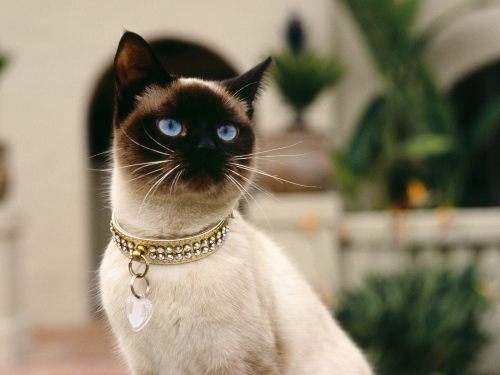
My only childhood experience of a mongoose was watching the animated version of Rikki-Tikki-Tavi on television with my younger brother when I was seven.  As far as I know there were no mongoose in Virginia.  But Steve, whose father served in the U.S. foreign service,  spent several years of his childhood in India.  And there, in a bungalow in Bangalore, he was allowed to add a pet mongoose to his menagerie that already included a Dachshund and Siamese cat.  “The cat used to carry the mongoose around like a kitten, with a hold on the back of its neck.  And the dog allowed the mongoose to pummel its stomach as they all settled down to sleep together.  Quite clearly the mongoose was in charge.”

“Just imagine,” Steve adds with a smile, “A Dachshund, a mongoose, and a Siamese cat walk into a room.  There’s a story there, don’t you think?”  Undoubtedly, especially when you add in a towheaded little boy.

Animal images from http://www.fantom-xp.com/

Steve image by his father circa late 1950’s.

Read Full Post »

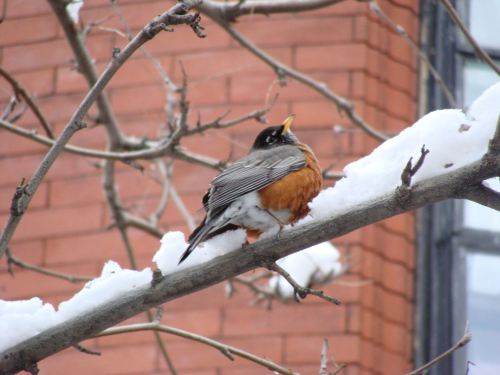
Do you know the story of Who Killed Cock Robin?  I was reminded of the tale (and of this photo taken years ago) while visiting with family this past weekend.  My uncle told a tale of growing up in rural Virginia, in the ’40s I believe, and of being infatuated with little speckled sparrows.  One day, he had a grand idea.  To capture a sparrow and make it his own.  And how would he do that?  Well, he chose a mouse trap as his device with bread crumbs as his bait.  The bird was of course caught and the bird was of course killed.  As for the connection to robins …

For years afterward, his sister, in the way of older siblings, found a unique way to mess with her little brother when he was getting on her nerves.  If he was getting too big for his britches, she would simply start reciting that poem about the murder of a little bird.  “Every time,” my uncle said with a chuckle, “Every single time, she had me in tears.”  And then he began to recite:

Who killed Cock Robin?
I, said the sparrow, with my bow and arrow, I killed Cock Robin.
Who saw him die?
I, said the fly, with my little eye, I saw him die.
All the birds of the air fell a-sighing and a-sobbing
When they heard of the death of poor Cock Robin,
When they heard of the death of poor Cock Robin.

Who’ll catch his blood?
I, said the fish, with my little dish, I’ll catch his blood.
Who’ll make his shroud?
I, said the beetle, with my little needle, I’ll make his shroud.

Who’ll toll the bell?
I, said the bull, because I can pull, I’ll toll the bell.
Who’ll dig his grave?
I, said the owl, with my little trowel, I’ll dig his grave.

Who’ll be the clerk?
I, said the lark, if it’s not in the dark, I’ll be the clerk.
Who’ll carry the coffin?
I, said the kite, if it’s not in the night, I’ll carry the coffin.

Who’ll bear the pall?
I, said the wren, both the cock and the hen, we’ll bear the pall.
Who’ll sing the psalm?
I, said the thrush, as she sat in the bush, I’ll sing the psalm.

Who’ll be the parson?
I, said the rook, with my little book, I’ll be the parson.
Who’ll be chief mourner?
I, said the dove, I’ll mourn for my love, I’ll be chief mourner.

Read Full Post »

Yesterday, for a small friend, I drew the blueberry of happiness.  It sat beneath an orange tree, at rest like a wise old sage.  In the sky above an orange plane rose above orange clouds.  Higher and higher into the sky it rose until night fell, and then the plane passed the moon.  As you might imagine, it was no ordinary moon, but one with bright emerald eyes.  My little friend had me add some fancy sneakers, and then it was her mom who suggested the wizard’s hat.  Ah, teamwork. 😉  Next time she visits I’ll put out some strawberries and see what story we unveil.

Previous stories inspired by my little friend:  In the Butterfly House.

Read Full Post »

One of my favorite phrases from childhood is “tell me a story.”  Four words that were an invitation to weave together the day’s events into a narrative with a beginning, middle and an end.  Well, on this quiet Monday (at least where I am), I invite you to tell me a story using the following image recently sent to me by a friend.  It is a petunia growing straight out of a wall.  If you know nothing of petunias, let me tell you, it takes a while for them to grow from seed into a flowering plant.  How did it get there?  As it grew, did people stop to stare?  As the blossom formed, was anyone tempted to pick it?  How in the world has it survived the recent summer storms?  Hardy little thing it surely is.

The Petunia Wall by Frank Reece

Read Full Post »

« Newer Posts