
Posted in Inspiration, Nature Notes, On the Road, tagged beauty, colors, flowers, Inspiration, landscape, nature, Photography, travel on August 17, 2016| 1 Comment »
Posted in Branches, Inspiration, Nature Notes, tagged art, creativity, exhibits, Inspiration, nature, Photography, urban landscape on August 15, 2016| 3 Comments »
Eyes On: Nature || the Urban Landscape

Stand still in a meadow. Look up as you pause at a street corner. What do you see? In either landscape there is beauty to be found, complexity of forms and the rich display of life. In Eyes On: Nature || the Urban Landscape, over a dozen emerging and professional photographers exhibit works exploring their experience of the natural world and the urban landscape. Two oftentimes contrasting themes are brought together in one remarkably diverse show.

From September 11 to October 9, 2016, photographs will be on view at the Riverside Gallery hosted at the Cambridge Community Center in Cambridge, MA. Featured artists include Colin Buckley, Beverly Fisher Crawford, Lois Fiore, Anton Grassl, Linda Haas, Cedric Harper, Michelle Hogan, Derrick Z. Jackson, Carol E. Moses, Andrew McPhee, Seacia Pavao, Ted Prato, and Cynthia Staples. Curators: Derrick Z. Jackson, Carol E. Moses, and Cynthia Staples.
Key dates …
More details in the coming weeks!
Posted in Nature Notes, tagged colors, flowers, Inspiration, light, nature, Photography on August 11, 2016| 3 Comments »
Posted in Guest Contributor, Inspiration, Nature Notes, tagged cemeteries, Inspiration, landscape, memoir, Paris, Pere Lachaise, Photography, reflection, storytelling, travel on August 9, 2016| 4 Comments »
Burial places they certainly are, but across time, cemeteries have also served other functions within our communities — as gathering places for celebration, as gardens of serenity for reflection, as time capsules that help us remember and document the past. In the first of two posts, friend and guest contributor Donna Stenwall shares memories of her visits to cemeteries around the world, respecting their universal solemnity while experiencing the unique attributes of each place.

Detail from Oscar Wilde Tomb, Pere Lachaise Cemetery
It seems strange to say this, but cemeteries have always played a role in my life. The small New England town I grew up in is where it all began. One of my earliest memories is walking by the old cemetery on my way to the library. It was locked every day with the exception of July 4th. That’s when we were able to enter and roam the aisles of the chipped and weathered headstones of the residents that founded the town in the 1600’s. With the names and dates barely visible to the naked eye, this is where we were taught the art of stone rubbing.
The “new cemetery” as we called it was the spot to learn how to ride your bike for the first time without training wheels. We would fly up and down the streets of the cemetery enjoying the freedom of 2 wheels, and all the while passing the graves of neighbors that left us too soon.
Since Massachusetts still had Blue Laws at the time (meaning no shopping on Sunday), the place to take your first spin behind the wheel was the parking lot of the newly built mall on Sunday afternoons. There we got accustomed to the feel of the car, practicing forward and reverse and left and right hand turns. But, to practice that three-point turn on a hill that we would be tested on? It was back to the cemetery!

Gates of Pere Lachaise
When I began to travel, trips to cemeteries were on the itinerary. During my first trip to New Orleans I mentioned to our host that I would like to visit one of the old cemeteries I had heard so much about. The next day we set out to St. Louis Cemetery #3. It was there that I decided I wanted to be buried in a Mausoleum! Breathtakingly beautiful, I thanked our host for such an experience. It wasn’t until later I discovered that his mother was buried in St. Louis Cemetery and that our visit that day had been his first trip back since she had passed many years before.
My first trip to Paris, with its famous cemetery Pere Lachaise, was long overdue and bittersweet. My husband and I had planned a trip to Paris several times but circumstances prevented us from ever getting there. With a smile and twinkle in his eye he promised that he would take me to Paris on my 50th birthday. Ah, I thought, the City of Lights I will see you soon!
Heartbreakingly, my husband passed away on July 25, 2005 after a brief illness. Two months later, I celebrated my 48th birthday. When my 50th was approaching my dear friend suggested I think about Paris for my birthday. I wasn’t sure I could do it or even wanted to but with the urging of family and friends I made the trip. Paris was worth the wait and every step I took I knew my husband was with me cheering me on!
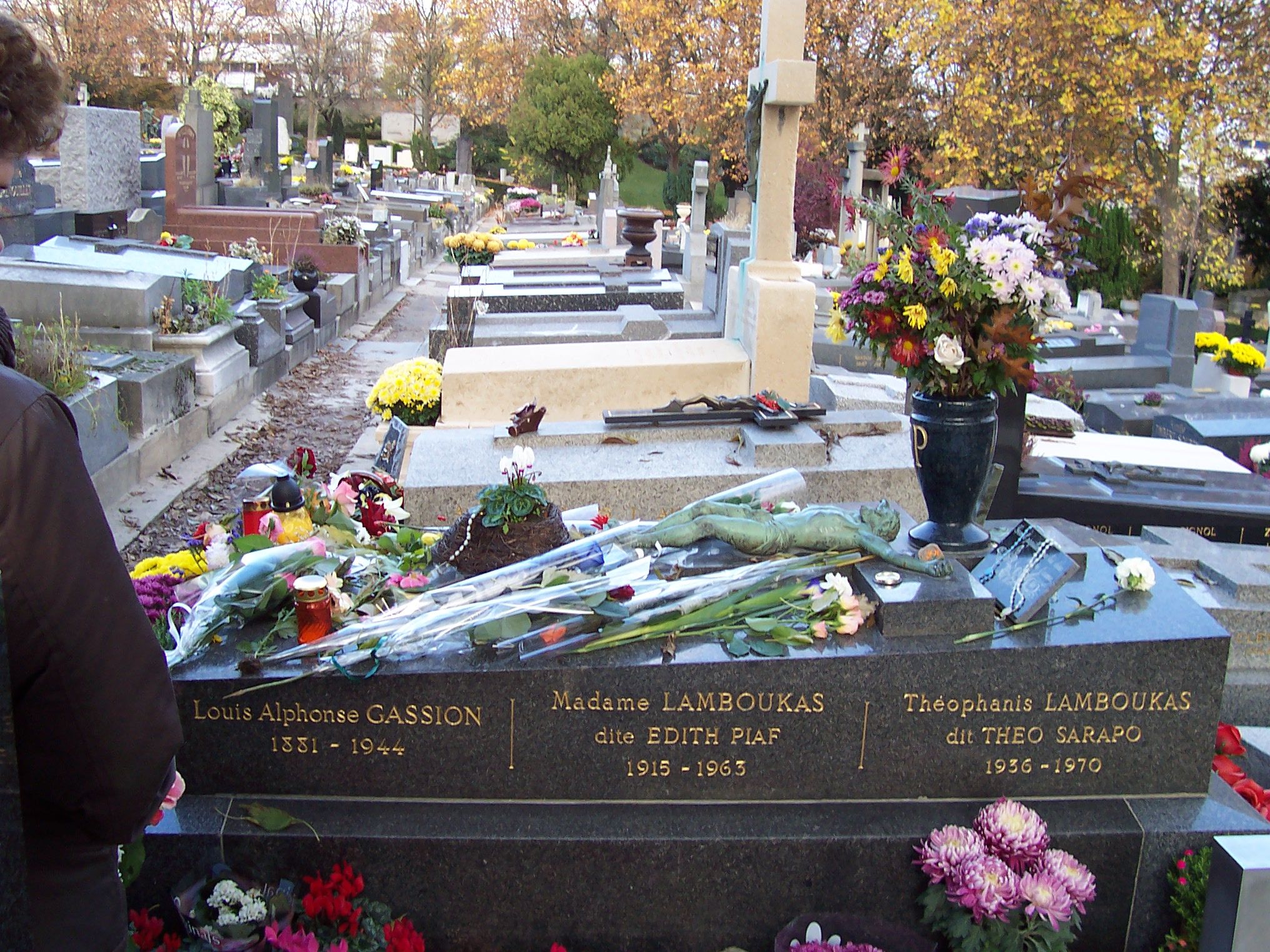
As a huge fan of Oscar Wilde, I knew I had to venture out to Pere Lachaise, the oldest cemetery in the city of Paris, to pay my respects. Not the easiest spot to get to, we hopped on the Metro, then a bus, and finally by foot. As we made our way to the other side of the cemetery we stopped to visit with Edith Piaf, Proust, Chopin, Colette, Sarah Bernhardt and Moliere. I noticed several people taking photos of the graves. I was a bit uncomfortable believing that these legendary souls were gawked at their entire lives and that now they should be allowed the peace they deserved.

On our way to the exit it dawned on me that Jim Morrison of the Doors was buried here and we should find his grave. My friend humored me but after ½ hour of roaming (we were notoriously bad map readers), she was ready to give up. I told her to stay put and I would take 10 more minutes. If I didn’t find his grave we would head back to the apartment. As I was rounding the corner, there, right in front of me was Jim Morrison, surrounded by metal barriers and his own security guard. His grave was strewn with gifts of cigarette butts and empty bottles of Jack Daniels left by the pilgrims that made the trek.
Several years have passed since my trip but I was reminded of my trip to Pere Lachaise when I caught a documentary on the cemetery and its residents. One scene shows 2 elderly ladies sitting on a bench, taking a moment after visiting their husband’s graves. One was buried next to Jim Morrison. When the interviewer asks her how she feels about all the activity near her husband’s grave, she just smiles and states “at least I know he never gets lonely.”
Photography by Donna Stenwall.
Posted in Inspiration, Nature Notes, tagged Inspiration, landscape, nature, Photography, trees on August 8, 2016| Leave a Comment »
Posted in Branches, Nature Notes, tagged animals, chipmunks, Inspiration, landscape, nature, Photography on August 5, 2016| 3 Comments »
 you never know what you’ll see sitting in the tree.
Posted in Inspiration, Nature Notes, tagged abstract, beauty, Inspiration, landscape, nature, nature photography, Photography on August 4, 2016| 2 Comments »
Posted in Inspiration, Nature Notes, tagged beauty, Inspiration, landscape, nature, Photography, wildflowers on August 3, 2016| Leave a Comment »
Posted in Inspiration, Nature Notes, tagged Inspiration, landscape, nature, Photography, reptiles, snakes on August 2, 2016| 2 Comments »
Posted in Inspiration, Nature Notes, tagged beauty, Inspiration, landscape, nature, Photography, snails on July 31, 2016| 1 Comment »