Feeds:
Posts
Comments

Archive for the ‘Nature Notes’ Category

Lin A. Nulman is an Adjunct Professor of English at Bunker Hill Community College.  Her poetry has appeared in Black Water Review, Tanka Splendor, and the anthology Regrets Only: Contemporary Poets on the Theme of Regret, among others. Lin puts her heart and soul into teaching and while I’ve yet to take a formal class, I have felt a student. In her own unique ways, she has challenged me to both appreciate and expand upon the work that I do as writer and photographer. It’s with pleasure I share Lin’s words and images about her grandmother, a great influence in her life.
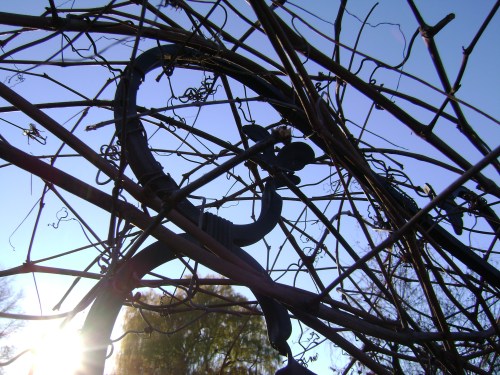
photo by Lin A. Nulman

“Oh, you see one tree, you’ve seen them all,” a woman once said to my grandmother, who had just remarked on a tree she found beautiful. Gram repeated the comment throughout my childhood as “the saddest thing I ever heard anyone say.” I think so, too, and I’m thankful for the gift of knowing why.

We took walks when I was a little girl, and even not so little, in our neighborhoods and on the beach. Often Gram would stop to look at something commonplace, such as weeds in a patch by the side of the road. Isn’t it amazing, she would say, how Nature creates so many shapes of leaves in just this one place?

photo by Lin A. Nulman

photo by Lin A. Nulman

Eventually I reached the age of impatience with what grown-ups noticed that wasn’t rare blue beach glass or a good climbing tree. But even when I felt impatient, I knew I could see what she was talking about. I don’t know if Gram believed in God, certainly not in a kindly God, but she did deeply believe in Nature, wonderful and endlessly giving. If you looked at it that way. And I do, and I have to, despite all the other ways my eyes still need to open. Her view was one of my starting places, creatively and spiritually.
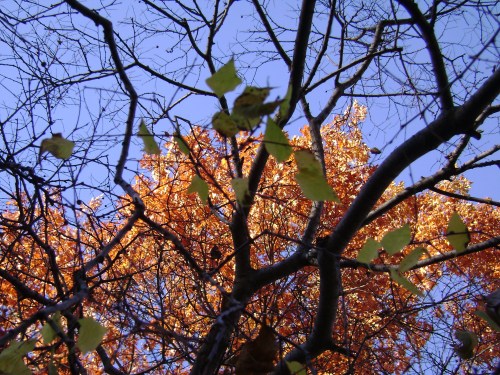
photo by Lin A. Nulman

Recently a latent love for bohemian style has sprouted in me, thanks in part to author and blogger Justina Blakeney. I stay up too late turning pages of her new book and feeling out of breath. Justina defines bohemian style as the product of “a creative life and an active engagement in the search for alternative ideals of beauty…Our worldly collections are as eclectic as we are…Decorating is about feeling free, having fun, rejecting traditional notions about what goes with what…and getting a little bit wild.” [I’m quoting from her introduction to The New Bohemians: Cool & Collected Homes. UNputdownable.]
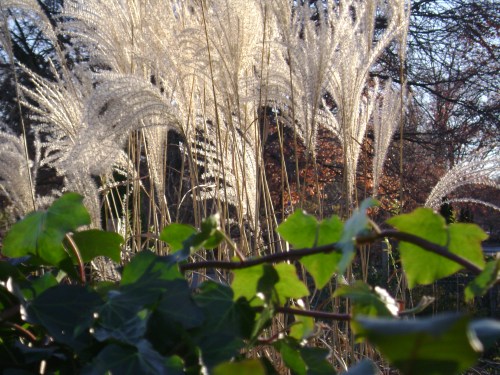
photo by Lin A. Nulman

photo by Lin A. Nulman

Even my 1906 copy of Putnam’s Handbook of Etiquette warns New York High Society about the habits of “Bohemia”, over there in Greenwich Village, beyond “the borders of wise convention”, definitely over the edge and unacceptably wild.
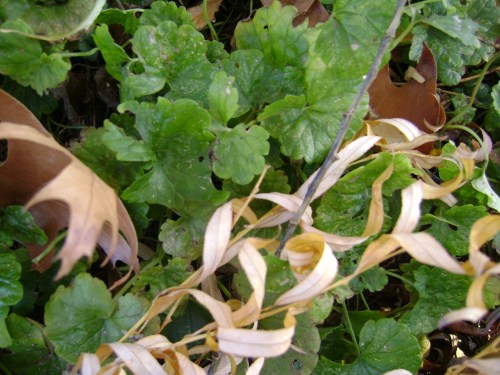
photo by Lin A. Nulman

photo by Lin A. Nulman

Her book was in my mind recently on a walk through the Fens, one jewel in the Emerald Necklace of green spaces that loops through Boston. It has a wide area of community gardens, where dozens of people fulfill their own visions with flowers, trees, bushes, berries, vegetables, bamboo, grasses, and leafy plants. It is a wonderful place to open my grandmother’s eyes, to see the shades and shapes Nature creates in just one corner of a park, sometimes helped along by a little human artistry: a painted gate, a statue, a purple disco ball. On this walk, my looking as I was taught to look revealed Nature, to my joy, as The First and Ultimate Bohemian. Everything goes with everything, so feel free and always be a little bit wild.
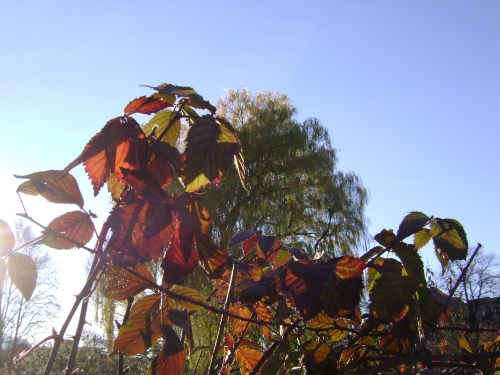
photo by Lin A. Nulman

photo by Lin A. Nulman

I challenged myself to photograph the gardens in December, without most of the flowers to help, and still found colors and forms running madly, beautifully together, eye-catching contrasts of silhouette, especially as I lost the light, and small places full of texture and depth. Thanks, Gram.
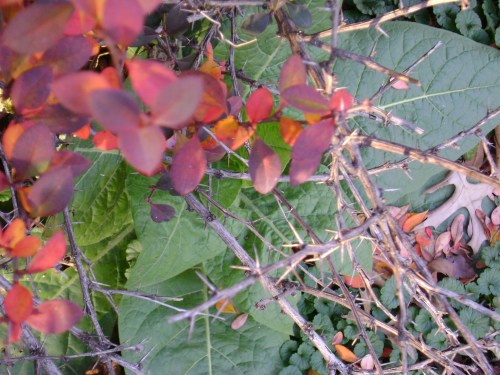
photo by Lin A. Nulman

photo by Lin A. Nulman

Please look for my blog, The Creative Part-Timer, in early 2016.
Read Full Post »

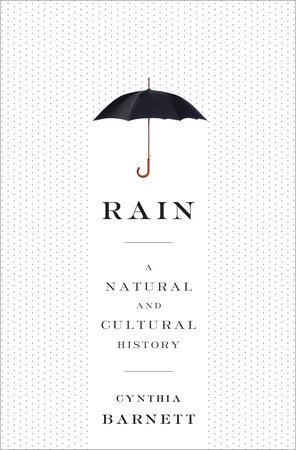
Aside from those times when I’m waiting at the bus station for what seems like hours and the winds are blowing so hard that an umbrella is useless, I love the rain. The sound of rain on rooftops. The scent of rain. The sight of rain striking windows or dripping from leaves.  Peter Gabriel’s Red Rain is one of my favorite songs. All the different renditions of I Can’t Stand the Rain … just love it.  Living in the northeastern part of the U.S.,I’ve rarely had to think about rain. There’s no real lack of it.  I’ve just accepted it when it falls but Cynthia Barnett’s book, Rain, truly gave me a new appreciation for rain’s influence in shaping human society and culture both in the past and in the present.

Over the past two months, I’ve carried the book across two continents.  Just under 300 pages in length, it’s not that long but the writing is dense and detailed. There’s no one narrative thread leading you someplace.  Each chapter is like an umbrella and beneath that umbrella there’s a beautifully complicated web of stories all united by rain. One moment you’re reading about the origin and evolution of the Mackintosh raincoat by 18th century Scottish inventor Charles Macintosh and next you’re reading about Mary Anderson, a Birmingham, Alabama socialite who devised the first windshield wiper.

The Scent of Rain is a particularly fascinating chapter where she explains how rain “picks up odors from the molecules it meets. So its essence can come off as differently as all the flowers on all the continents — rose-obvious, barely there like a carnation, fleeting as a whiff of orange blossom as your car speeds past the grove. It depends on the type of the storm, the part of the world where it falls, and the subjective memory of the nose behind the whiff.” Barnett takes the reader on a journey from a village in Uttar Pradesh where fragrances have been distilled for generations, including the scents of rain, using compounds found in nature to the labs of super-smellers and scent scientists working to synthetically develop the rain scents found in perfumes, detergents, soaps and air fresheners.

In the chapter Writers on the Storm, readers learn how rain in all its guises has influenced musicians from Chopin to Morrissey and the works of directors Robert Capra, Akira Kurosawa and Woody Allen. The book is a treasure trove of interesting stories, and well-researched facts, about how people and nature interact in the presence of rain.  If there is one suggestion I’d have for future editions it is to include maps. Barnett’s prose takes readers around the world and back again and maps illustrating that journey would be a boon.

Please note that I received this book from Blogging for Books for this review.  Additional links are below with information about the author and the book.

http://www.penguinrandomhouse.com/books/228186/rain-by-cynthia-barnett/

http://www.penguinrandomhouse.com/authors/177450/cynthia-barnett/

Read Full Post »

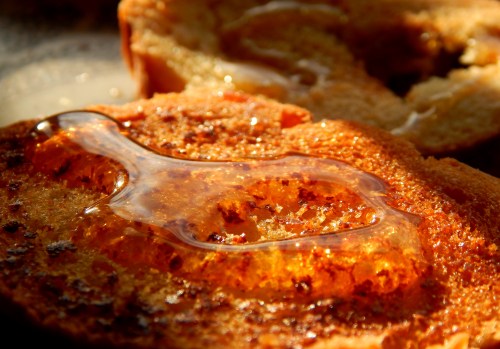
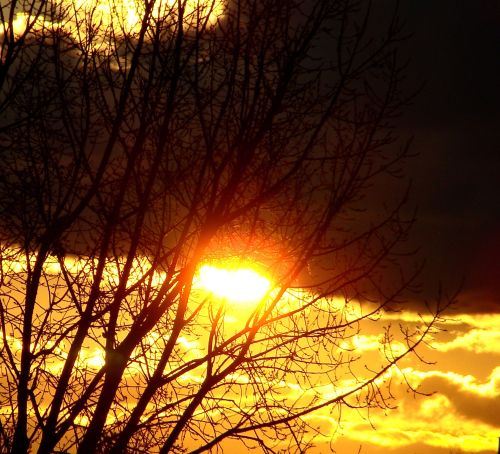
It streamed into the kitchen and set everything on fire, from the honey on bread to the pink petals of the African violet.

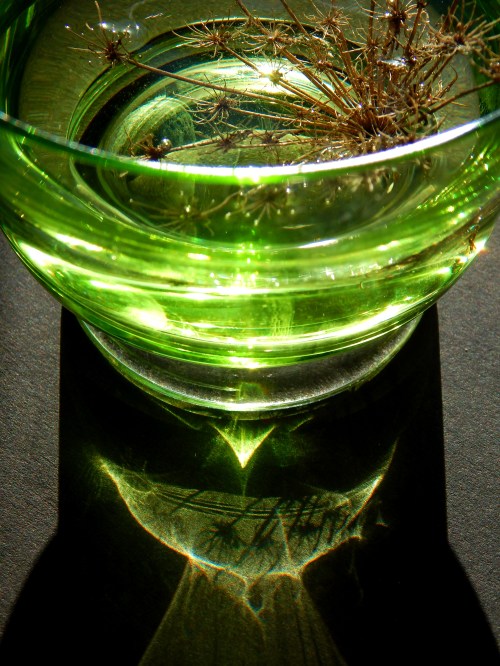
And then of course my curiosity was sparked and so I wondered what if I pull out that green glass and fill it once more with water and perhaps a dried flower or two?

Nothing earth shattering but it was fun and as I had fun the light went out. A thick layer of blue-gray clouds veiled the sun. I missed the sun but the clouds were beautiful too.

Read Full Post »

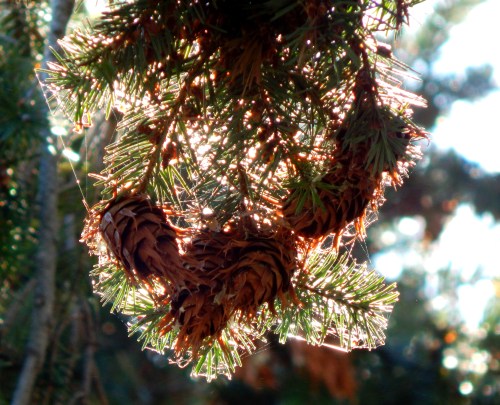
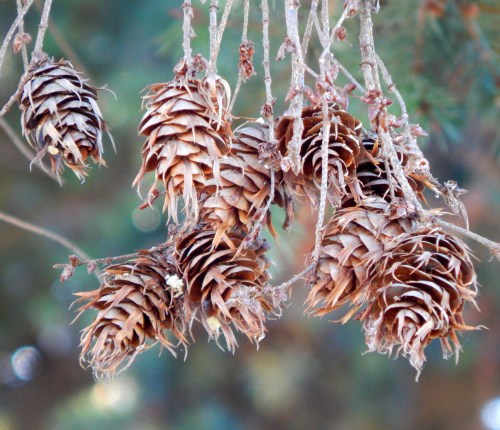
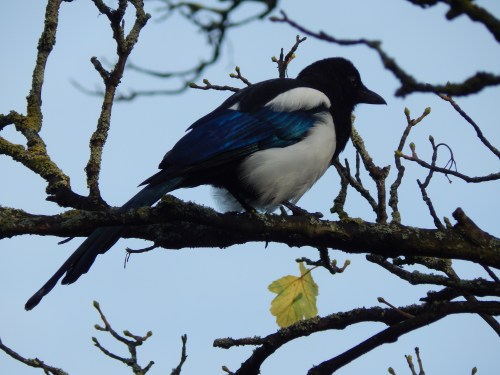
one day while standing still and looking up into the trees this is what I saw

Read Full Post »

Read Full Post »

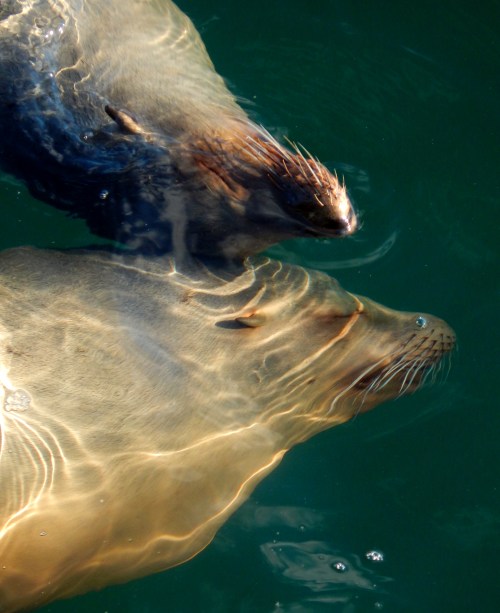
Sea lions in the waters along the coast of California …

Read Full Post »

This post was inspired by the images of Trump (and others) espousing hateful words against those who are different, and the audiences who are looking up at him (and others) with these beautific smiles as if he (and the others) are the second coming of … something.  Trump (and too many others) are playing upon peoples’ fears and I’m not sure what to do except when the opportunity arises to reach out to those who think that I am different, and perhaps fearsome, and hold out my hand.  But sometimes I can’t make myself take my hands out of my pocket and I will excuse myself by saying, “Well, I am not a saint.” But what is a saint? It is a concept found in many cultures and across different religions.

There is a word that I overuse: timeless.  Yet timeless is what comes to mind whenever I read the words of Theodore Parker Ferris in the book, Death & Transfiguration.  It is a small book of sermons he began compiling shortly before his own death in 1972.  The book’s cover is unfortunate I think because these days, especially for people who know nothing of Ferris, they are not drawn to pick up a small book with only those words on the cover in black and green on a white background.  Even when I hold the book, people come up to me and ask what’s wrong, why am I reading a book about death.  I’m not reading a book about death. I’m reading a book about life. About how we live and about how we could live.

I keep returning to a sermon he wrote about saints. In a sermon titled The Unknown Saints he invokes the “image of Christ” – words that fit his life and times.  But looking past that historical and theological specificity to the heart of his message – generalizing his “image of Christ” to encompass the range of behavior we all recognize as holy, however labeled — do not his words fit these times as well?

… we stand before the staggering fact that in a world so steeped in sin, there are still people who live saintly lives.  By sin I mean anything that blurs the image of Christ; anything that blurs his image either in you or in the world.  The word sin means vastly more than that, but seldom can we take in at any one time all that it means.  Right now it means anything that blurs the image of Christ. The pursuit of money as an end in itself is one of the things that blurs the image of Christ. Everyone, of course, has to make a living, and he has the right to have the opportunity to make a living; but not everyone has to make a fortune, and when this becomes the obsession of his life, to make not only the money he needs to live on and a little extra to spare, but to make enough to give him excessive power and inordinate pleasure, then his money begins to blur the image of Christ. It does to his image of Christ what glass wax does to a window before it is wiped off; it cuts off the view.

The bitterness brought to light by a political campaign like some we have been through blurs the image of Christ. It has brought out into the open, and this may be healthy for all I know, hostilities that run deep beneath the well-paved surface of our national life. It has revealed the fact that we are much less mature as people than we thought we were, and perhaps it is better for us to know the truth; but in the meantime this bitterness which is bred by hostility, and this immaturity which it reveals, blurs the image of Christ.  We look at ourselves and at our world through the distortions of the most adolescent political campaign of the twentieth century.

The desire for freedom which rejects every conceivable restraint, where there is no respect for law and order, or decency, or the rights of others, no consideration for other people, this too blurs the image of Christ. We see ourselves and our world through screens of litter, licentiousness, and violence.

The refusal to face facts when the facts hurt; this is another thing that smears the image.  There is a social revolution going on in our country and in our world.  In our own nation a submerged race is reaching for its rights.  If it is not recognized, it will seize by force what those in power refuse to give it.  Thousands of people refuse to face the fact that there is any such revolution going on and, if they do face it, they refuse to face the fact that the people who are reaching for their rights have a right to reach, and that the rest of us will not find it easy to do the right thing when we have done the wrong thing for so long that we have come to think that it is right.

By sin I mean the self-centeredness in your own life which leaves no room for the spirit of Christ.  We all have to cope with this because in a sense we are all self-centered.  We are all deeply concerned about our own lives.  We are made that way, we can’t help it.  But when that self-concern reaches the point where it excludes everything else except the things that concern our own pleasure, our own welfare, or our comfort, when it reaches the point that there is no room left for the spirit of Christ, then that self-centeredness blurs the image of Christ.  In fact it blots it out.

And yet, in spite of the fact that we are living in a world so steeped in sin, there are people who are nevertheless living saintly lives. They are not perfect, not by any means.  They are living imperfect lives, under difficult circumstances, without word of complaint.  They do not win all the games, but they never play a crooked game.  They have their faults but in some peculiar, mysterious way, they are lovable faults. They make mistakes, but their mistakes do not make them. Everyone makes mistakes, but there are some people who are made by their mistakes; they are shaped and molded by them. Other people make mistakes, but their mistakes do not make them; they rise above them, go on in spite of them, and sooner or later master them.

In an un-Christian world, these people are the unknown saints.”

Would Ferris today think that there is a whole industry today in blurring the image of Christ? Clearly there is much money being made in promoting hateful behavior.  Is it behavior that has become so common, so taken for granted, that people do not even recognize what is being done to them and taking place around them?

Just something to think about perhaps. Meanwhile I am grateful for those who are able to take their hands out of their pockets and reach across the aisle.

Please note that the above words by Ferris is just an excerpt of the full sermon.  His book, Death & Transfiguration, can be purchased online and at the Shop at Trinity Church in Copley Square.

Read Full Post »

I recently ordered some seeds.  At first, it felt like an extravagance.  Not a lot of money was spent but there were certainly other things I could have put that money towards.  Immediate needs. But I bought the seeds thinking long-term for when the winter settles in, and all the leaves are gone from the oak tree and the sunlight shines through the many windows of the house.  Even in the bitter cold, when on the one hand I am able to photograph ice on the inside of the windows, there are sunlit nooks just warm enough for sprouts to grow and even on occasion my bucket of little potatoes.

The sprouts grow in little dishes so I’m not working with much dirt but whether a few inches of soil or a foot, it brings me joy sometimes and calm always.  I feel grounded.  Of late I’ve been interacting with friends, family and even strangers for whom the winter is a tough time. I’m tempted to send them all seeds so that they can create winter gardens and perhaps find calm and maybe even joy.  But I’m not sure that gardening works that way for everyone.  I may do it anyway, out of selfishness, because the act would make me feel good.

I did this past summer mail a young friend a package of edible flower seeds.  Someone who can be a little down and get stuck inside her head.  I thought working with her hands might be good.  She texted me back a picture of the unopened colorful seed packet sealed in a beautiful glass jar.  What else could I do but applaud her on the composition of the picture.  I mean, who am I to dictate how someone gardens.  Later when she came to visit in person I let her taste some of the sprouts I had growing, some mild mixture of greens.  I happened to have an unopened package of the seeds tucked away.  I gave them to her … along with a little bag of dirt.  The next text I received was of a bowl of growing greens.

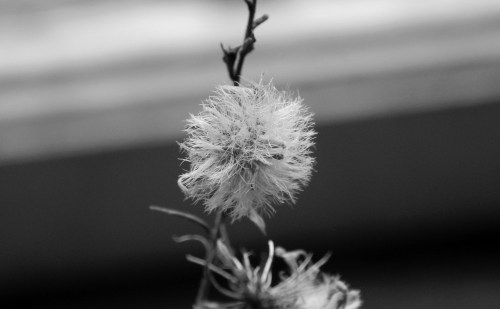
Just some random thoughts this Sunday morning as I stare at empty vessels waiting for their seeds. The pictures are images of dried flowers from the Belle Isle Reservation.

Read Full Post »

I thought I’d take a moment to say thank you.  Thank you for viewing this blog.  Thank you for the comments that I don’t always respond to but I read and enjoy every one.  And most of all thanks for the support and encouragement on this creative journey.  Have a wonderful day. 😉

Read Full Post »

but it didn’t matter. The waters were still beautiful. Like the clouds had come down to earth.

Read Full Post »

« Newer Posts - Older Posts »