
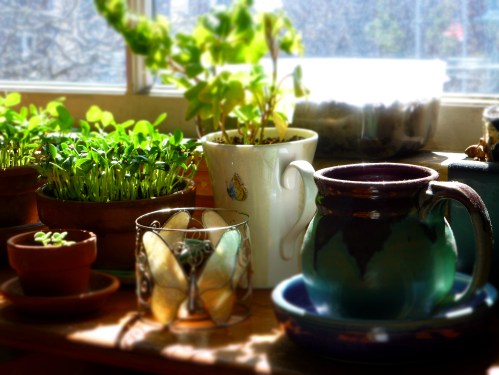
Meanwhile, the scallions are a beautiful, unruly mess and the lemon thyme is creating great shadows on the bookcase.

The fennel I nearly watered to death but I think I caught myself just in time. We’ll see. 😉
Meanwhile, the scallions are a beautiful, unruly mess and the lemon thyme is creating great shadows on the bookcase.
The fennel I nearly watered to death but I think I caught myself just in time. We’ll see. 😉
Posted in Inspiration, Kitchen Inspirations | Tagged food, food photography, gardening, herbs, indoor gardening, Inspiration, Photography | 1 Comment »

An unexpected find in the pantry drawer this morning. Tucked in the back, a small red onion and a few small potatoes had sprouted. My father used to treasure such finds at this time of year.

He’d claim them from my mother and save to plant in the vegetable garden. I consulted with my brothers who paid much better attention that I to the details of planting vegetables that have gone to seed.

I’m going to tuck these sprouts into some dirt in some big pots I have in the house. I don’t expect I’ll get much of a crop but it will be fun to see what does happen. Stay tuned … 😉
Posted in Inspiration, Kitchen Inspirations, Nature Notes | Tagged colors, food, gardening, indoor gardening, Inspiration, onions, Photography, potatoes, red onion, spring, sprouts | 5 Comments »

Posted in Inspiration, On the Road | Tagged beauty, colors, Inspiration, journeys, paths, Photography, rocks | 3 Comments »
Posted in Inspiration, Kitchen Inspirations | Tagged butterflies, colors, gifts, Inspiration, kitchen, Photography | 1 Comment »
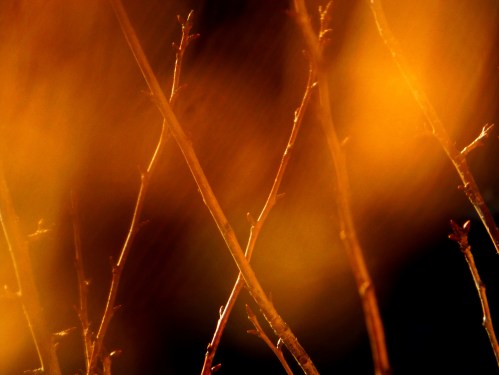
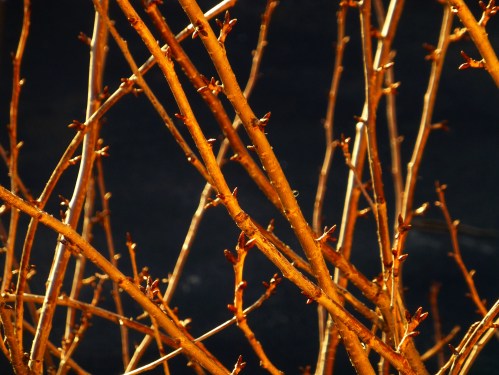
Yesterday, as the sun was setting, I decided to focus on the earth instead of the sky.
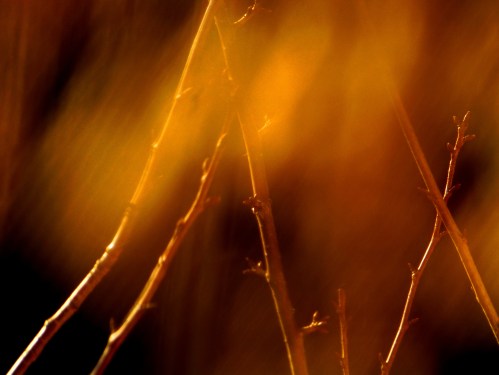
Between the angle of the light and the new color upon the budding bush outside my window, the branches did seem to have fiery glow.
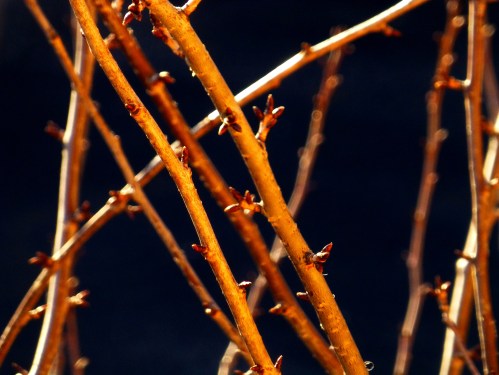
That glow became a little less fiery after I stopped photographing the curtain as well.
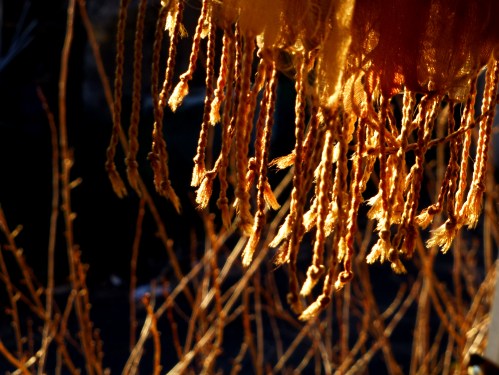
But whether bark or cloth, it was all a beautiful sight in the fading sunlight.
Posted in Branches, Inspiration, Nature Notes | Tagged abstract, beauty, colors, Inspiration, light, nature, Photography, sunset, textures, urban landscape | Leave a Comment »

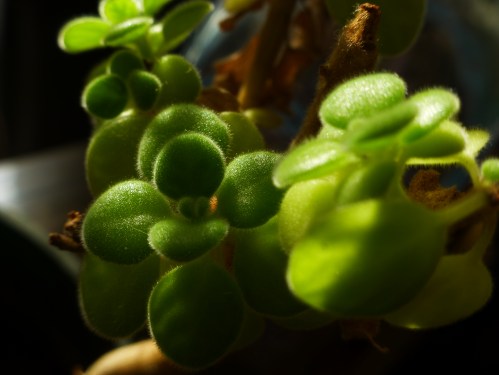
My favorite flower shop, Ricky’s, has reopened, providing further evidence that Spring is truly here. He does not yet have his full array of herbs on display but he had enough to make me happy as I walked into the shop. I departed with some standard items, e.g. two different types of thyme, but I also walked out with something new that I’ve never tried to grow before. Fennel.
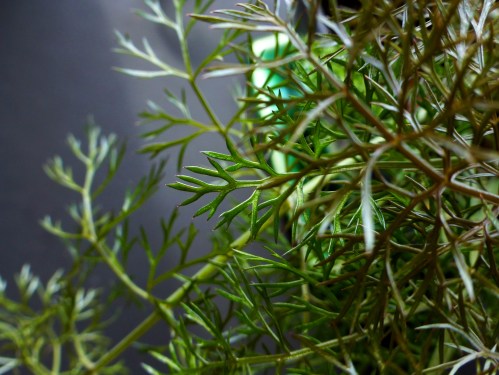
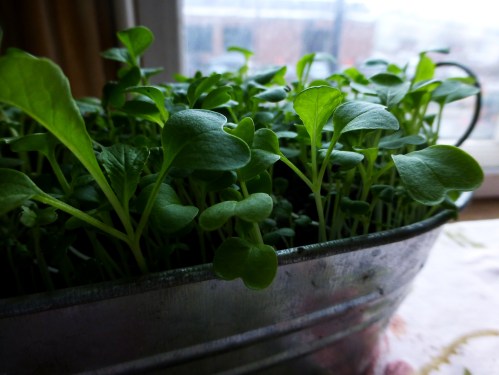
The resident chef seemed happy with sight of the little pot on the table. We’ll see what he does with the feathery fronds in future dishes. Meanwhile, the other indoor greenery continues to do well, bathed by the light of the new season.


Posted in Inspiration, Kitchen Inspirations | Tagged fennel, food, food photography, herbs, indoor gardening, Inspiration, nature, Photography, spring | 7 Comments »

Detail from David’s Charge to Solomon Stained Glass Window, Trinity Church in Copley Square, by Burne-Jones and William Morris
Returning to the Trinity Church Book Shop are items with a detail I photographed from David’s Charge to Solomon, a stained glass window located in the church’s baptistry. The magnificent window was designed by Pre-Raphaelite artist Edward Burne-Jones and executed by William Morris Studios in 1882. These “four angels” are located in the upper left corner of the window. There they look down upon David, near the end of his days, as he instructs his son Solomon in how to move forward in life as a man and as a leader of his people.

Items currently available are magnets, mugs and postcards. Coming soon are totes and t-shirts. Visit the Shop to view these and many more lovely and thought provoking spiritual items at 206 Clarendon Street, Boston, in the heart of Copley Square. Shipping is possible. For more Book Shop information, click here. And to see additional details from the window David’s Charge to Solomon, please check out images 25-32 here. Better yet, if you’re in the area, take one of the excellent guided tours so that you can see the window firsthand. 😉
Posted in Inspiration | Tagged angels, art, beauty, bible stories, Copley Square, David, Edward Burne-Jones, Inspiration, licensing, muses, Photography, Pre-Raphaelite, retail, Solomon, stained glass windows, Trinity Church, William Morris | 1 Comment »

The sun finally shone bright, or at least, just bright enough to revisit the orchid.


Posted in Inspiration | Tagged botanicals, colors, flowers, indoor gardening, Inspiration, nature, orchids, Photography | 1 Comment »
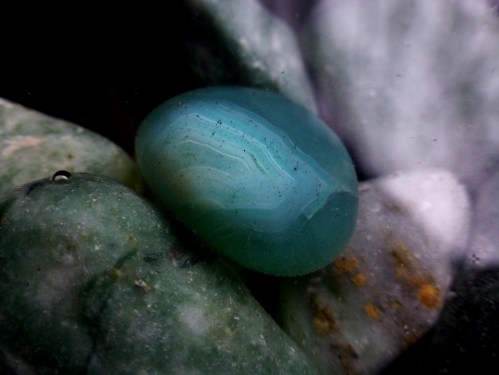
blue stone in water in black bowl
One night a year or so ago, I entered my childhood home and walked into the kitchen. The light was low and the air was warm. I sat at the table with my mother, feeling welcomed as always. Just as I did when I returned home from college, I began to tell her the stories of my daily life, the ups, the downs and all that lay in between. I told her about the people I cared about and worried about. I opened up a bit more than usual and began to share mistakes made and the opportunities I saw on the horizon. I explained how I felt older, not sure about wiser, but at least tempered by life and was looking forward to trying to apply some of the lessons learned.

blue stone in water, branches reflected
She listened attentively, as she had always done, and on occasion, she smiled as I described some silliness of mine. As I paused to take a deep breath, I admired how wonderful she looked, the smoothness of her caramel skin, the fullness of her brown hair reaching her proud shoulders, the strength in her arms, and the brightness of her eyes. She was the strong woman of my youth, not the more fragile woman of my adulthood. And yet I sat before her as an adult.

blue stone in water and branches reflected, tilting the bowl
Still trying to catch my breath, I managed to say, “Ma, I’ve been telling you stuff that happened after you died, haven’t I?” She nodded. We stood and she pulled me into her arms. She felt soft and warm and held me tight. “That’s right, baby,” she said. ” And you’ve got a lot more stuff to do. My time has passed but this isn’t your time.” I woke up gasping for breath … which is what I had needed to do since I’d been having trouble breathing in my sleep.
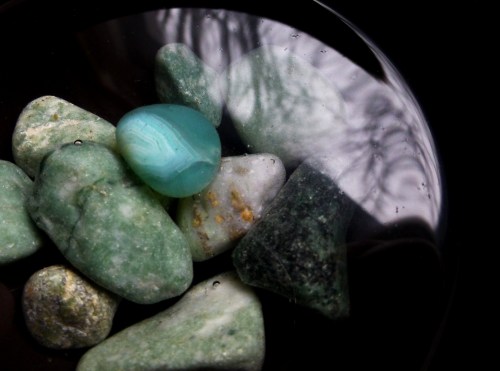
rocks in water
I have not visited my mother’s grave, or my father’s, in well over a decade. My main memories of the site are actually based on the stories my brother told of walking through the area with flower seeds in his pocket and letting them fall when the caretaker wasn’t looking. I don’t know if those flowers ever bloomed but I feel like I carry them with me wherever I go, just as I carry my mother. Or perhaps, she still carries me.
Posted in Inspiration | Tagged dreams, family, Inspiration, life, memories, parents, Photography, reflection, rocks, storytelling, water | 8 Comments »
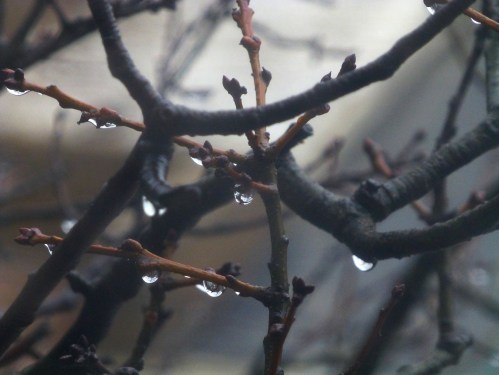
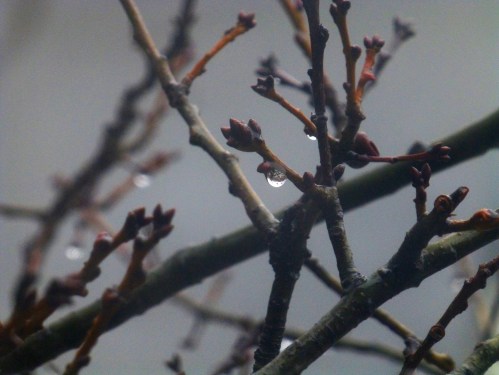
As I waited for the coffee to brew, I decided to snap a few photos of the morning rain beading on the oak tree towering beside the house.

For the most part, I focused through one or two panes of glass though at one point I did open a window and stick my head out.

Despite the morning chill, it was neat to see the buds on the branches and the subtle colors emerging, suggesting spring blossoms and leaves will soon to be.
Posted in Branches, Inspiration, Nature Notes | Tagged Branches, Inspiration, landscape, nature, oak tree, Photography, rain, spring, trees, water | 3 Comments »

