Feeds:
Posts
Comments

Posts Tagged ‘life’

foreword to the interludes

interlude: genesis

interlude: exodus, part 1

Photographers shooting cherry blossoms in Washington, D.C., 1922.

Photographers shooting cherry blossoms in Washington, D.C., 1922.

In early 1920s America, “a return to normalcy” was the popular catchphrase. People were weary from war and desiring to pull back from engagement in world affairs. With the support of business and promotion of isolationism, the Republicans would hold the White House throughout the decade.

Five sisters working for congressmen in Washington, 1926

Five sisters working for congressmen in Washington, 1926

Throughout most of the decade, the economy improved in the U.S. and in many parts of the world.  At the same time, countries like Germany were still dealing with the debts and damages of war, and in many countries, there were rising tides of nationalism — and resulting conflicts — as people sought independence from colonial powers.  In the U.S. wages were increased by some industry leaders.  Tax rates were lowered for the wealthy.  It was a bullish stock market.  In general, people had more money.  Some invested in stocks for the first time.  A consumer culture evolved.

Flapper 1922

Flapper 1922

In some agricultural areas, like Nebraska where Joseph lived, the situation was a bit different.  The postwar economics were not as kind.  The technological advances (e.g. electricity, telephone infrastructure, etc.) were taking place at a much slower rate in rural areas. The rural exodus to cities increased dramatically as people searched for new opportunities.

Inauguration of the garter flask in Washington, DC, 1926.

Inauguration of the garter flask in Washington, DC, 1926.

The 18th Amendment to the U.S. Constitution was still in place.  Prohibition would not be repealed until the 21st Amendment was ratified in 1931. Al Capone would become notorious during the 1920s, and he wouldn’t be the only one trying to find creative ways around the law. The era would be remembered by many names, from the Roaring Twenties to the Jazz Age.

F. Scott Fitzgerald, 1921

F. Scott Fitzgerald, 1921

In his book The Great Gatsby, Fitzgerald would capture the beauty and excesses of the period.  In his book The Sun Also Rises, Ernest Hemingway would popularize the term the lost generation, describing the young men who’d returned from World War I.  In 1925, folklorist  Zora Neal Hurston would arrive in New York during the height of the Harlem Renaissance where African American intellectuals like Langston Hughes and artists like Romare Bearden were redefining and celebrating what it meant to be black in America.

Zora Neale Hurston

Zora Neale Hurston

It was a period of innovation and of expansion of mass production.  People indulged in wonderful new technologies like radio and greater access to automobiles.  By 1928, Velveeta cheese was crafted, so to speak, for the first time and sliced bread made its debut.  Charles Lindbergh had flown his Spirit of St. Louis non-stop from New York to Paris.  Sports figures were celebrities.  Lou Gherig, Ty Cobb and Babe Ruth were hitting baseballs out of stadiums across the country.  Cinema expanded.   Mickey Mouse made his debut in a Disney animated short. Charlie Chaplin became an independent producer at this time.  In 1928, he films The Circus, a movie that brought Chaplin a special trophy at the very first Academy Awards (1929).

Charlie Chaplin

Charlie Chaplin

Such prosperity would not last, of course.  By the time seventeen-year old Joseph arrives in Washington, D.C., in 1928, financial collapse was imminent.  He didn’t share many stories of that time in his life so there’s no way to know what he was thinking or what he did on a daily basis.  We know the following based on notes written by Joseph later in his life, and the few stories he did tell his children.

Catholic University, between 1910-1926

Catholic University, between 1910-1926

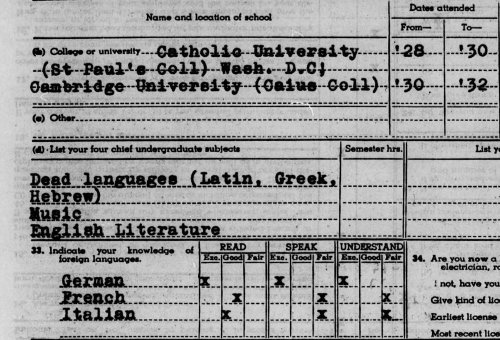
He arrived in Washington in 1928 to attend either Immaculate Conception College or St. Paul’s College.  St. Paul’s College is the house of studies for Paulist Seminarians who then complete their graduate studies in theology at Catholic University.

In a different document then the above, Joseph mentions attending Immaculate Conception College, also located in Washington, D. C.   Immaculate Conception (also known as the Dominican House of Studies) is the theological school for candidates for the priesthood in the Dominican Province of St. Joseph, which in the 1920s and ‘30s included all of the U.S. except for the West Coast. He may have studied there before transferring to Catholic University.

So far none of the schools can find record of his attendance.  I suspect some of the difficulty has to do with Joseph’s last name.  At some point in the 1920s, as he traveled from Nebraska to Washington, D. C., Joseph changes his last name.  He may have changed it more than once, but by the time he is in attendance at Caius College in Cambridge, England his last name is definitively Horne.  He will later recall an incident at the school when a professor would say, ” Mr. Horne, will you tell us, please, in your rude, crude, inimitable manner, all that you know of the Peloponnesian War.

Joseph also describes hearing, during this period, the writer, Christian apologist and famed orator G. K. Chesterton (1874-1936).  Chesterton was known for great intellectual debates with friends and colleagues George Bernard Shaw, H.G. Wells, and Hillaire Belloc.  Their debating spans the time Joseph was studying in Cambridge (1930-1932).  Mr. Chesterton was also debating on both sides of the Atlantic during this time.  In January 1931 in New York City, he debated with Clarence Darrow about whether or not the world would return to religion (read more here).  If indeed Mr. Horne was in England during this time he missed the beginning of the Great Depression in the U.S. though eventually the whole world would be affected.  In 1932, Joseph would have returned to see Hooverville’s springing up, the shantytowns named for President Hoover who had so misjudged the financial crisis.  He may have returned just in time to vote in the 1932 election in which New York Governor Franklin Delano Roosevelt would win in a landslide with his promise of A New Deal for the country.  He would have returned with the knowledge and skills of what he later characterized as “dead languages,” literature, and music.  He would not return with clerical robes.

President-Elect Roosevelt traveling to inauguration with President Hoover

President-Elect Roosevelt traveling to inauguration with President Hoover

By June 1933 he was teaching  music for the Pennsylvania-based Smith Williams Institute of Music. He would teach music and music appreciation to classes in Clarksburg, WVa and environs.  When I mentioned to Horne’s son that the institute apparently gave away free violins to students and instructors, he remarked, “Maybe that’s where my father got that beat-up violin he carried around.”  Horne would make $40/week until December 1935.

Smith Williams Institute of Music Advertisement

Smith Williams Institute of Music Advertisement

He ceased to teach in the Clarksburg vicinity after economic conditions became very bad.  He made his way back to the Washington, D. C. area and there, in his own words:

In other documents, he describes in greater details the different jobs held in the D.C. area. What becomes increasingly clear is his growing interest and skill in photography as a tool.  He also becomes interested in a young woman. Elsie was beautiful with a keen mind.  The two soon married and, in 1937, Joseph Jr. was born.

Though he clearly stayed in touch with is parents back in Nebraska, Joseph’s home was now in the Washington area.  He would continue to take on any job to provide for his new family, and to buy his cameras.

Elsie would later recall that he  always had to have the best camera, and that one year the family ate an awful lot of oatmeal so that they could pay for their son’s orthopedic shoes and still buy such an instrument. By 1941, Joseph would provide clinical photography for the Vets Administration, Mt. Alto Hospital in D.C.  In that same year, the U.S. would enter its second World War.

Washington D. C. Photo by Joseph A. Horne

Washington D. C. Photo by Joseph A. Horne

Priorities across the nation would shift.  Joseph Horne with his rural American roots, his knowledge of multiple languages, world literature, and music, and his facility with a camera would find himself in the U.S. and especially abroad at the crossroads of arts, culture and, perhaps most unexpectedly to him, of politics.

Stay tuned for the next Interlude in April.

Additional Reading/Sources …

1920s Farm Life in Nebraska

Radio in 1920s America

Prohibition: A Film by Ken Burns & Lynn Novick

Jazz: A Film by Ken Burns

Wall Street Crash of 1929

Library of Congress Prints and Photographs Online Catalog

Read Full Post »
Spring is in the air in many places and in one of those places a man decided to invest some time and energy into washing the winter salts off his car and polishing the exterior bright.  He even added a few shiny details so that the vehicle sparkled like brand new.  That night, he and his teenage step-daughter made a late night food run for the family.  As they walked toward the car, the man looked closely at the vehicle.  Once they were safely buckled inside, he made a choice.  He decided that here was a teachable moment.

a view through that rippled glass window

today’s view through that rippled glass window

He said, “You know that area where we go to get fast food, right?  Well, at night and especially on the weekends, there is a police car in one of the parking lots.  Their goal is to reduce crime.  One way they think they are doing that is by profiling people.  Look at me and look at what we’re driving.  Okay, let’s see what happens.”  They pulled into the restaurant drive-thru, placed their order and then pulled over to wait.  The man chatted with the girl about school and what music she was listening to these days. When they received their food, he started to drive home.

yesterday's view through the rippled glass window

yesterday’s view through the rippled glass window

After a while he told the girl, “Okay, take a look in the mirror.  Can you see him? He’ll probably stay about 4-5 seconds behind to see if we do anything out of the ordinary like suddenly speeding up or weaving across the yellow line … anything that will give him cause to pull me over.  But we haven’t done anything wrong and so we just stay calm even if he were to pull us over.”  They made it home and as they pulled into the driveway the man told the skeptical girl,  “I know, I know.  I could be wrong.  People call me a worrier and even paranoid.  But, let’s see.  If I’m even half-way right, he’ll shortly drive down this street, pass our house, do a scan and then at the bottom of the street do a u-turn and drive back up the street. And then since we are clearly just fine, he’ll drive away into the night.”  They waited.  The car drove past, did a u-turn at the bottom of the street and then drove away into the night.  The man and girl went into the house with their fries and other food items to share.

impurities in and on the glass window

impurities in and on the glass window

When my brother began relating this recent experience with me, I thought he was just going to share the continuing adventures of teaching a teenage girl to drive.  When the story concluded, I could not help but ask, “Of all the things you thought you’d be teaching the children in your life, did you ever think you’d be teaching them about profiling?”  All he could say was, “Nope.”

Read Full Post »
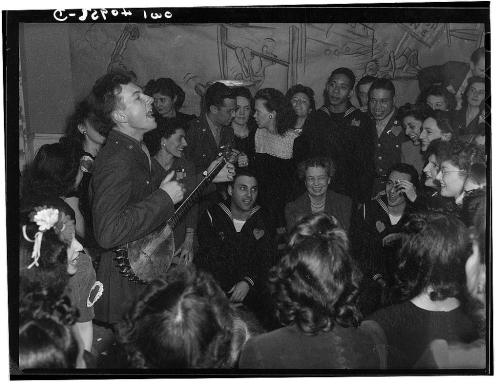
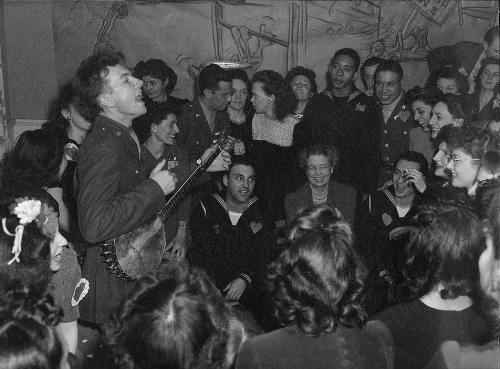
In February 1944, a photographer took a series of photos at the opening of a Labor Canteen in Washington, DC.  The entertainment that night was a young Pete Seeger and in the audience First Lady Eleanor Roosevelt.  Two years after I found the picture, I wrote Mr. Seeger asking if he remembered the photographer.  I was hoping for but not really expecting a response.  But one day I checked my mail and there was a postcard.

One side was covered with words, actually one word, peace, translated into many languages.  On the other side, handwritten, was essentially the following note:  “Cynthia, I’m 94 years old. The details from that time aren’t so clear anymore but my memoirs are being updated and I will make sure that the photographer’s name is duly noted.  Joseph Anthony Horne.”

Joseph A. Horne

Joseph A. Horne

Joseph Anthony Horne was born in 1911 and died in 1987.  I began researching his life out of curiosity.  You see, I knew a man who kept telling stories of a 1950s and 1960s childhood spent in exotic places.  Of fishermen in Genoa, Italy dropping seahorses into his hands. Petting a white elephant belonging to the Maharaja of Mysore. Skating in Vienna by doctor’s orders.  It was a life made possible by his father, Mr. Horne, working for the U.S. foreign service, a post he’d taken on after World War II.  As for what he’d done during the war, “something involving art and books while stationed in Germany.”  In the 1960s the family moved back to the U.S. to the Maryland/DC area where Horne continued to work in foreign service until retirement.

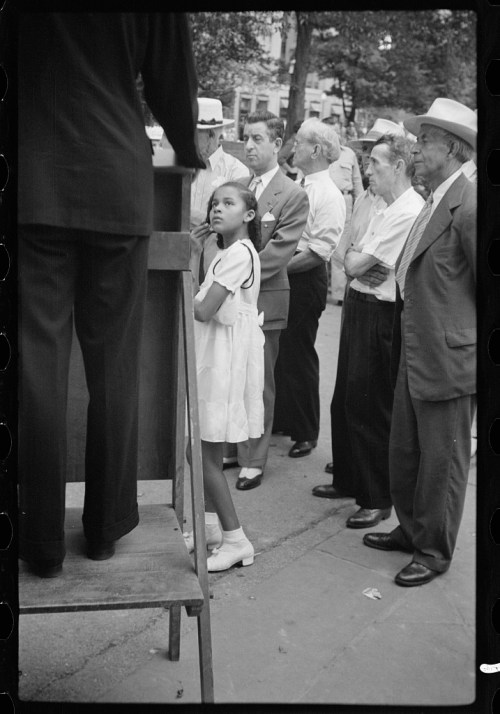
Photo by Joseph A. Horne, 1944, Library of Congress

Photo by Joseph A. Horne, 1944, Library of Congress

I already knew from the son that his father had been a photographer, loved books and music, and that the foreign service position held in all the various countries had involved working with libraries and inviting American musicians, writers and other artists to share their works.  Perhaps inspired by that PBS show, History Detectives, I asked the son was there anything more he’d like to know about his father.  I was given carte blanche to research as I liked.  Those mysterious post-war German years working with books drew my attention but soon I was researching his early years as well. So many files from the early and mid-twentieth century have been digitized, but I kept hitting a wall with finding information prior to 1940.  When I queried the son he mentioned, “that might be because he changed his name. ”  Turned out that Mr. Horne used to be Mr. Wisniewski and had grown up in Nebraska not Maryland as I had assumed.  “So he was born to the Wisniewski family?”  The son shook his head.  “He was adopted, along with a baby girl.  My father thought he’d been born in New York.”  When asked why he had selected Horne of all names, the son replied with a smile, “He thought he was an illegitimate love child of two New York families. the Astors and Langhornes.”  As I stared at the son, he laughed.  “My dad was quite the storyteller.  He even mentioned studying in Europe and hearing G. K. Chesterton.”

One bit of information was easy to find thanks especially to National Archive records available online.  In 1946, Joseph Anthony Horne joined the Monuments, Fine Arts and Archive unit.  From 1947-1948, he would serve as the director of the Offenbach Archival Depot, one of the primary collection points for preserving and returning books, artwork and cultural items stolen by Nazi Germany during World War II.  He had been a Monuments Man.  As for how an orphaned baby in New York City might travel to the American Midwest (along with many thousands of other orphaned and homeless children), and how a young man from Nebraska might find himself working as a photographer in Washington, DC … not to mention exactly who were the people, places and events experienced in Europe during and after the war … Well, all of that, would take a bit more digging.  It would be a treat to discover his connection to photography historians like Erich Stenger and artists like Karl Hofer and quite a surprise to learn of the drama at Offenbach involving missing books and the complex decisions made as the Cold War loomed, reminiscent of decisions made in the world today.  This post is just to set the stage.  More stories to follow.

Read Full Post »
That was my first reprimand at my first paying job as a 15 year old in Lynchburg, Virginia.  I believe it was in summer at McDonald’s near the public library.  The manager had placed me at a register and was watching me from the lobby.  I had learned the manual well of the various phrases from “Welcome to McDonald’s. How may I help you?” to “Would you like some fries with that?” and so on.  I was a bit perplexed by the smile comment but I gave it go on the next orders throughout the day.  It was midweek and during a block of time when mostly older folk would come in and buy a cup of coffee or tea.  And what happened near the end of my shift?  Well, as I took a silver-haired lady’s two dollars and gave her some change back, she took my hand, patted it and said, “My dear, you have a lovely smile.  You have a good day.”  And I said, “You too, ma’am.  See you tomorrow.”  What brings to mind this memory of making people feel welcome?  There’s been an interesting series of articles in the New York Times about people, especially seniors, sitting too long in the fast food restaurant.  As with any story, there are many ways to dissect the issues but I think this morning’s article about “lessons learned” from the recent clash presents some good food for thought, not about how a business should be run but more about how over time people operate in the world: The Urban Home Away From Home.

Read Full Post »
Yesterday, in a coffee-stained manilla folder, I found an old personal essay.  I almost posted it on this blog but I remained indecisive about the imagery with which to pair the words.  Embedded in the text was a reference to red dust and that was the image I most wanted — little pyramids of red — but the dust in the story is red Virginia clay not dark Massachusetts soil.  I tried photographing mounds of smoky paprika but the imagery just didn’t work. 

I then tried photographing blue sea glass. In the text there are many references to that color.  There is even a blue glass in the essay but it is a drinking glass and has nothing to do with the sea. So, no.

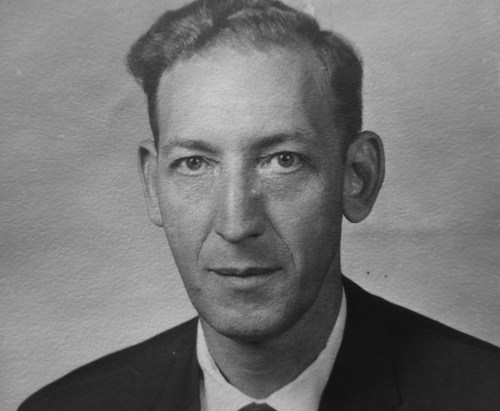
The essay is about family and that universal topic of death and the revelations made soon after and then long after the passing of loved ones.  I considered uploading this portrait of Steve.  He is part of my family now.  Maybe I could make him a bridge between past and present?  In the end, I decide that wouldn’t work either.  He is not mentioned in the essay at all as it currently exists.  The key subjects of the text, my parents, passed away before meeting him.  He often tells me that he wishes that fact were not so.

As the day grew long, I began to wonder about the appropriateness of posting the text at all with or without complementary images.  An unfinished essay, without direction, perhaps something written years ago just to help me let go?  Not a sad piece, just reflective, but would anyone want to read such stuff?  I kept staring at the words.  Not every passage worked but some did seem like diamonds in the rough.  Maybe.  In the end I decided to post the ice picture, little B-612  (by the way no ice on the windows today),  and to commit to continue working on the essay.   I will keep it out in the light and we’ll see what emerges this year.

Read Full Post »

Here I am in 1996 standing by a creek in Missoula, Montana.  At the time I worked with a Boston-based nonprofit conducting sustainability-themed workshops for universities.  For a number of years, I was able to travel around the country interacting with people of all ages and cultures.  I was able to view landscapes like this that I’d read about but wasn’t sure I’d ever see in person.  Few photographs did I take but I loved to tell stories of the places I’d visited with family and friends, in letters and by phone.  In 2014, I hope to do more writing and storytelling about people and places and be more strategic with my photography.  Meanwhile, as the year wraps up, here is a link to one of the most moving sets of images on the web —  The New York Times 2013 Year in Pictures — and a page of wonderfully orchestrated New York Times Op-Docs.

Read Full Post »

“Of course, my dear.”  As he presented his hands to me – resting them on a book, waving them in the air, etc – he described the work he’d done with those hands over the years.  Keith is his name and he was subbing for a security guard at a local church.  We’d only known each other for less than an hour though when he first saw me his first words were, “Have we met before?”  While I’m horrible with names I’m pretty good with faces and his aged face did not look familiar.  But he did feel awfully comfortable to be around.  And so after hearing him speak for a few minutes with his beautifully accented voice I said, “Sir, when were you born?”  The people around me may have been appalled I asked that question, but he looked at me and laughed.  “1933, my dear.”  Then he took out his I.D. card with his birth date to prove it.

keith hands

For the short while that we were together he described growing up in Barbados,  then moving to England as a young man where he worked for Rover and his various adventures as a stellar mechanic.  He described his first wife and her untimely death that left him with three young children under the age of 10.  He made a decision to focus on the children and not remarry until they were grown.  And when they were grown he did remarry.  There was no question asked that did not produce beautiful, sometimes heartwrenching, stories of family, friends and work. I finally said, “Sir, you should record these stories.”  He chuckled and said, “I’ve lived these experiences.  Why do I need to record them?”

Read Full Post »

And so the morning began with sounds.  Laying in bed listening to snow slide from the roof.  Over breakfast listening to Steve tell stories of his night.  My brothers’ voices, one via voice mail, him singing a made up song about getting up and getting started with a cup of coffee.  His words inspired me to pour some beans into a white cup and photograph a single image and hope it came out well.

I continued to take random shots about the kitchen, of lemons in bowls and of rosemary.  I don’t think I’m supposed to let indoor herbs bloom but I couldn’t help myself. No sounds there, just lovely periwinkle silence.

During the midst of all this, something happened.  Nothing serious but one of those incidents that can color a day, darken it … if you allow.  I told myself to let the incident go.  To help me do so, I pulled from my bag a list of desired tasks.  One of them was to look up composer Peteris Vasks.  I’d only learned of him yesterday at an organ recital.  The organist had played one of his pieces, Te Deum.  During my research I came across this piece, Dona Nobis Pacem.

A beautiful, calming piece.

As it played on repeat in the background, I wandered around taking other photos, indoors of items on tables

and through windows of ice melting beautifully.

What that music inspired exactly I can’t say.  It did encourage me, remind me even, to be present, to appreciate the beauty before me that I could see, that I could hear, and that I could imagine.  We all need reminders on occasion. 😉

Read Full Post »

Growing up in Virginia, my parents made clear quite often that “times are tight.”  Many a fellow classmate wore more expensive clothes but mine were just as clean and it didn’t matter that they were purchased via layaway.  And my brothers and I still share stories of how well my mother could stretch a can of Campbells soup.  But it wasn’t until I was accepted into college, completing financial aid forms and trying to figure out how my family’s income fit on various grids … that’s when one day I looked across the table at my parents and said, “Did you know we’re classified as poor?”  That I did not feel poor despite my family having little money says a lot about my parents and the neighborhood in which I walked.

Virginia Dogwood

It is a very different neighborhood in which the little girl Dasani lives.  It is a Brooklyn neighborhood in transition.  Thanks to the New York Times series, Invisible Child, readers can journey with her through that changing world.  You the reader can walk with her, run, kick, and dance.  You can even hear her voice and those of the people around her because it is a multimedia presentation with short videos at the end of each of the five parts.  It is a series provoking a lot of conversation, dialogue, debate … and hopefully, most importantly, some good actions.  It can sometimes be tough to read and to watch but I hope people do.

Read Full Post »

“If we are a drop of water and we try to get to the ocean as only an individual drop, we will surely evaporate along the way.  To arrive at the ocean, you must go as a river.” — Thich Nhat Hanh in Creating True Peace


Read Full Post »

« Newer Posts - Older Posts »