foreword to the interludes
interlude: genesis
interlude: exodus, part 1
interlude: exodus, part 2

Son of farmer in dust bowl area. Cimarron County, Oklahoma , photo by Arthur Rothstein, 1936.
“A gentle wind followed the rain clouds, driving them on northward, a wind that softly clashed the drying corn. A day went by and the wind increased, steady, unbroken by gusts. The dust from the roads fluffed up and spread out … Now the wind grew strong and hard … the dust lifted up out of the fields and drove gray plumes into the air like sluggish smoke. The corn threshed the wind and made a dry, rushing sound. The finest dust did not settle back to earth now, but disappeared into the darkening sky.” — in the opening chapter of The Grapes of Wrath by John Steinbeck.

Liberal (vicinity), Kan. Soil blown by dust bowl winds piled up in large drifts on a farm, photo by Arthur Rothstein, 1936.
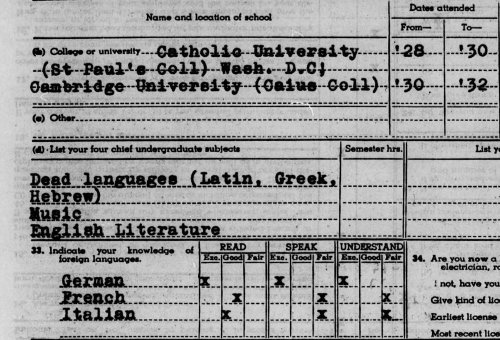
In April 1935, as Joseph A. Horne was teaching music in West Virginia, President Franklin Delano Roosevelt was creating the Resettlement Administration (RA) in Washington, D.C. Guided by Rexford G. Tugwell, the agency intent was to help farmers and other rural poor suffering from the economic impacts of the Great Depression and the devastation of dust storms and other ecological events. A Historical Section was created within the agency to document existing poverty as well as report the benefits of the agency’s work. This section would be led by Roy E. Stryker.

Rexford Tugwell and Roy Stryker
In the 1920s, Tugwell and Stryker, both economists, had taught at Columbia University. While there, they had collaborated on the book, American Economic Life. Stryker’s contribution included using photography to complement the text, something he also did as part of his lectures at the university. He was not a photographer but he, and Tugwell, recognized photography as a useful, illustrative tool to convey and strengthen information.

Farmer and sons walking in the face of a dust storm. Cimarron County, Oklahoma, photo by Arthur Rothstein, 1936.
Stryker left academic life to follow his friend and mentor to the Resettlement Administration. Three decades later, Stryker would recount that “Tugwell never said, “Take pictures.” He said, “We need pictures.” He never said how to take them. He said, “Remember,” — and this is the only thing I can remember — “remember that the man with the holes in his shoes, the ragged clothes, can be just as good a citizen as the man who has the better shoes and the better clothes.” (Interview, June 13, 1964)

Farmer, local type, Brown County, Indiana, photo by Theodor Jung, 1935.
The agency’s original focus was on Rural Rehabilitation, Rural Resettlement, Land Utilization and Suburban Resettlement. Activities included purchasing exhausted farmlands from farmers to convert the land into pastures or parks, for instance, and providing training for farmers to rehabilitate their farms through refinancing and other debt adjustments. Out of work farmers were given jobs. Building projects were begun. The most controversial feature of the agency’s efforts was relocation.

Scottsboro (vicinity), Alabama. Farmers who have been resettled at work in a sand pit at Cumberland Mountain Farms, a U.S. Resettlement Administration project, photo by Arthur Rothstein, 1935.
From the beginning, the agency did not have much Congressional support. Part of it was political. Tugwell was considered to be one of the most radical of FDR’s New Dealers. Plus the idea of relocating nearly a million farmers and other rural poor off the land into cities that they’d helped to build seemed too socialistic.

Rehabilitation client, Garrett County, Maryland, photo by Theodor Jung, 1935.
With funding limited by Congress, the Resettlement Administration would eventually dramatically narrow its efforts and focus on building relief camps in California for migratory farm workers. One of these relief camps would inspire John Steinbeck’s The Grapes of Wrath.

All races serve the crops in California, photo by Dorothea Lange, 1935
Faced with rising criticism for his management, Tugwell resigned from the Resettlement Admininistration in 1936. By September 1937, the agency was folded into a new federal entity, the Farm Security Administration (FSA). The FSA, with its mandate to help the rural poor, would complete some of the Resettlement Administration’s original projects as well as embark upon a whole other series of financial and technical assistance programs. Roy Stryker was given the greenlight to continue his documentary photography program.

Negro field worker. Holtville, Imperial Valley, California. He has just made himself shoes out of that old tire, photo by Dorothea Lange, 1935.
He directed his photographers to take the best picture possible and to capture the story behind the image. He could not tell them how to use their cameras, but he did suggest themes to focus on.

Imperial Valley, California, Mexican. He tells his story: he helped drive the French out of Mexico, fought against Maximilian, and he has, by serving the crops for many years, help build up Imperial Valley, photo by Dorothea Lange, 1935.
Based on how they operated in the field, these early documentary photographers, including Dorothea Lange, Walker Evans, Ben Shahn and Arthur Rothstein, were sometimes described as “sociologists with cameras.”
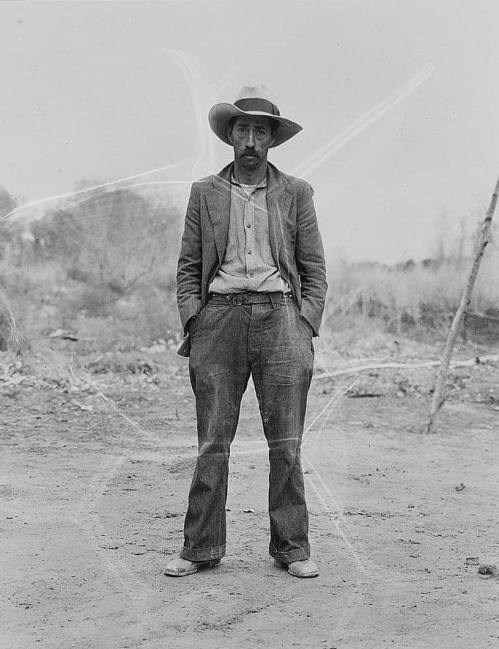
Mexican field worker, father of six. Imperial Valley, Riverside County, California, photo by Dorothea Lange, 1935.
The photographers traveled across the nation, by assignment, sometimes alone and sometimes in groups, to areas of economic challenge, capturing dramatic hardships and also simply documenting people living their daily lives.
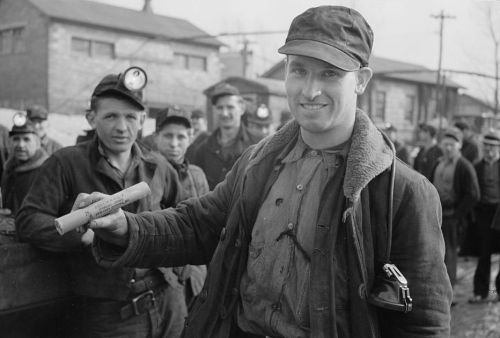
Untitled photo, possibly related to: Miners at American Radiator Mine, Mount Pleasant, Westmoreland County, Pennsylvania, photo by Carl Mydans, 1936.

Warm Springs Indian boy. Molalla, Oregon photo by Arthur Rothstein, 1936.
The FSA would operate from 1937 – 1942, with its photography unit capturing the diversity of the United States.

Negro boys on Easter morning. Southside, Chicago, Illinois, photo by Russell Lee, 1941.
That diversity would be represented in the ranks of the photographers that Stryker brought together, men and women of different backgrounds, interests, and photographic skill.

Westmoreland project, Pennsylvania. Westmoreland County. Construction worker on the Westmoreland subsistence homestead project, photo by Walker Evans, 1935.
In 1942, the photography unit moved into the Office of War Information (OWI). The OWI was created shortly after U.S. entry into World War II as an effort to consolidate existing government information services.

Two children in Anacostia, Washington, D.C. at the Frederick Douglass Housing Project, photo by Gordon Parks, 1942.
By 1943, another federal agency, the Office for Emergency Management, would also be brought under the OWI umbrella, and its activities and some of its staff would merge with Roy Stryker’s photographic unit. One of those staff would be Joseph A. Horne.
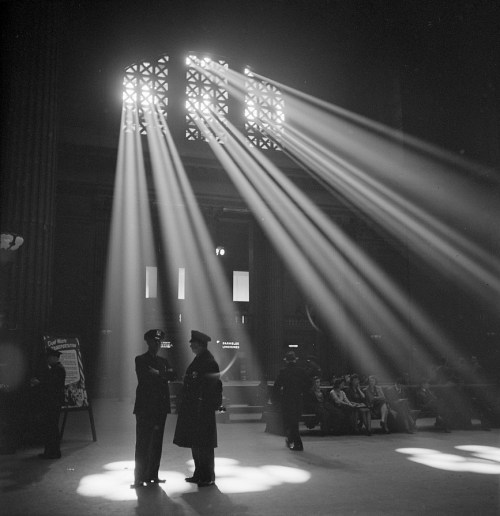
Chicago, Illinois. In the waiting room of the Union Station, photo by Jack Delano, 1943.
As these many agencies consolidated into one, the Farm Security Administration-Office of War Information (FSA-OWI), the nature of the photographs taken by its photographers changed to some degree as did the purpose of the images.
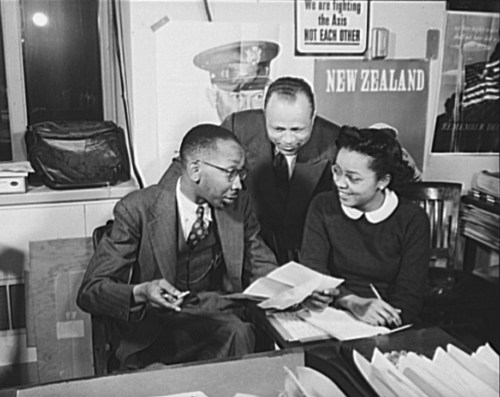
Office of War Information news bureau. Ted Poston, Negro desk editor of the Office of War Information (OWI), discusses a letter from one of the 240 Negro editors to which he sends war news from Washington, with William Clark and Harriette Easterlin, his assistants, photo by Alfred T. Palmer, 1943.
Documenting American life was still important but now with an emphasis on framing the images so that they would inspire patriotism, educate people about how to live and act during war time, and evoke a sense of national pride in the strength, good humor and resilience of the American people.
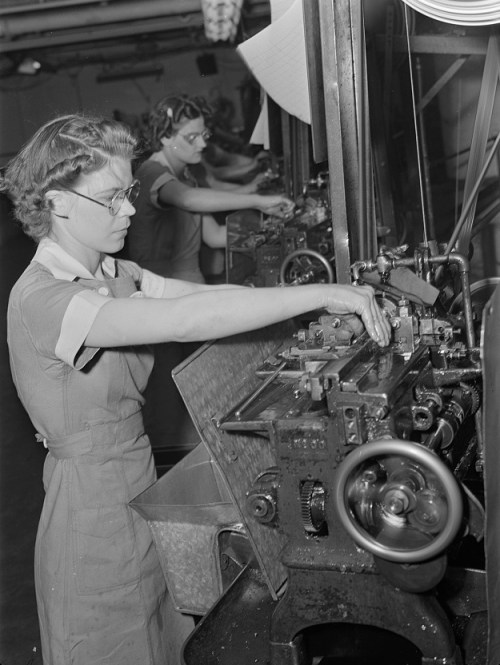
Women in industry. Tool production. Arms for the love of America! The capable young woman whose strong hands guide this cutoff machine is one of a Midwest drill and tool factory’s many women employees. Almost 1,000 women have recently been employed in this comparatively new plant; sole men workers, other than foreman, are those in the heat treating department. Republic Drill and Tool Company, Chicago, Illinois, photo by Ann Rosener, 1942.
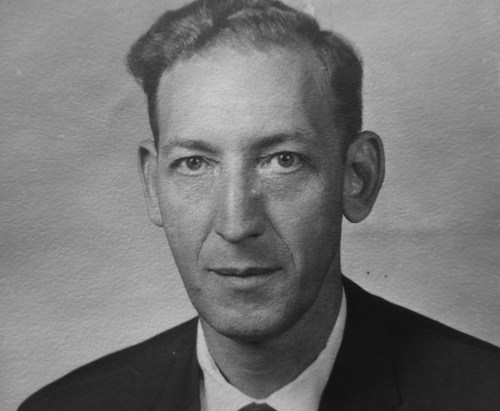
Joseph Horne’s photos that appear in the FSA-OWI Collection, now housed in the Library of Congress, focused on the Washington, D.C. area where he had settled with his family. His images include the crafting of victory gardens and urban farms.
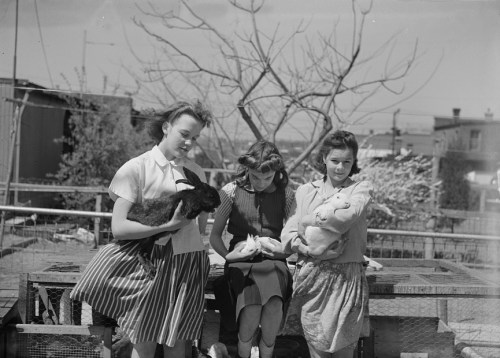
Washington, D.C. Children with rabbits which were formerly kept as pets, but now are being raised for food, photo by Joseph A. Horne, 1943.
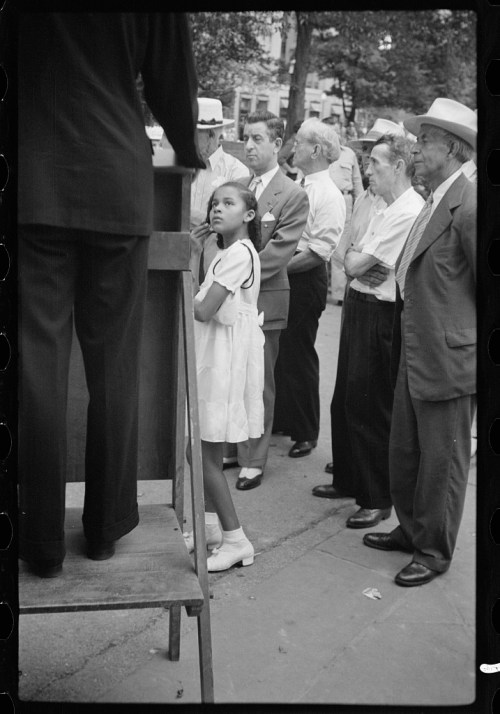
He also photographed the unique monuments located in the Congressional Cemetery, and the mix of peoples who made their way through Washington’s Franklin Park. And then there was that night in February 1944, when he photographed the opening of a new labor canteen.
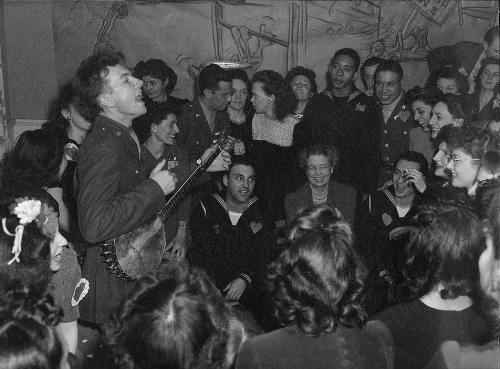
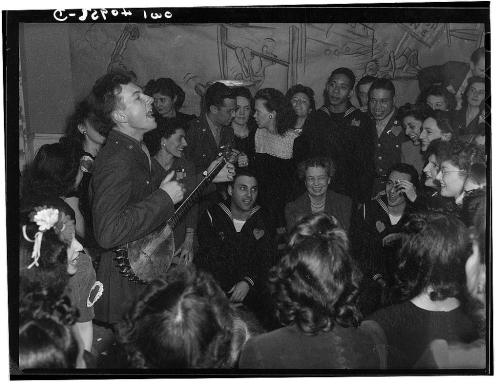
Washington, D.C. Pete Seeger, noted folk singer entertaining at the opening of the Washington labor canteen, sponsored by the United Federal Labor Canteen, sponsored by the Federal Workers of American, Congress of Industrial Organizations (CIO), photo by Joseph A. Horne, 1944
The photography unit was only one part of the FSA-OWI but it was one of the most successful units. Through domestic and overseas operations, the agency had sought to excite and educate Americans at home, and inform (or intimidate) allies and foes abroad, using radio broadcasts (e.g. Voice of America), newspapers, posters, film and photography. But as World War II progressed, conflicts arose around agency management and how to balance civilian and military interests. Soon, Congress would severely cut the organization’s budget. By 1944, the enormous collection of FSA-OWI photos, black and white and color, would be transferred to the Library of Congress where they remain a valuable resource to this day.

Negro boy near Cincinnati, Ohio, photo by John Vachon, 1942 or 1943.
By 1945, the Office of War Information as an organization was no more. Any relevant international activities were transferred to the U. S. State Department, while relevant information gathering and related responsibilities were handed over to the intelligence agencies like the Office of Strategic Services/Central Intelligence Agency.
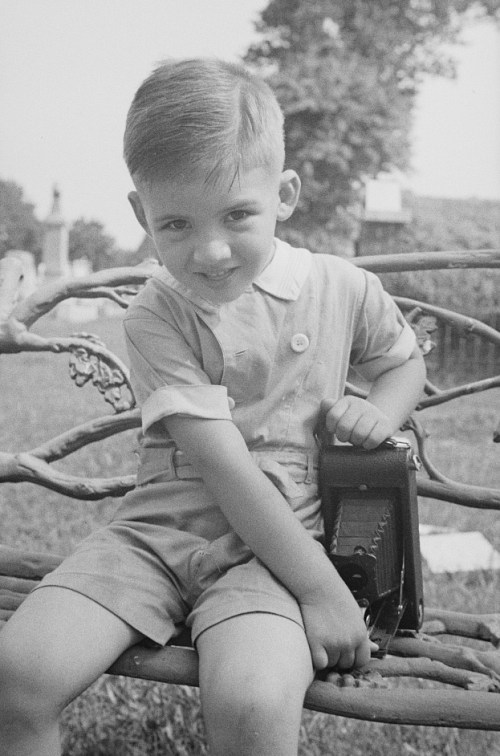
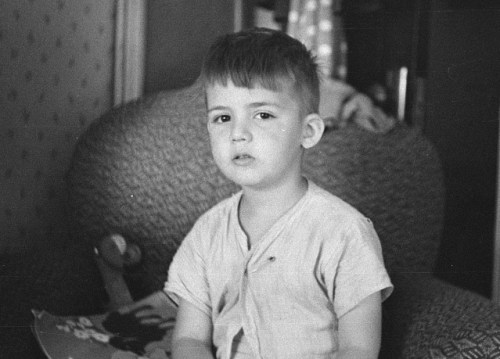
Joseph Jr. with Camera, photo by Joseph A. Horne.
By the spring of 1944, Joseph A. Horne, the fellow with whom we are walking through history, had enlisted in the U.S. Army. Soon he would be off to Europe where photography would remain an important feature of his life. But before he traveled overseas, he would let his son play with one of his cameras.
…
Additional Reading/Sources …
Library of Congress Prints and Online Catalog
Stryker’s Shooting Scripts
Resettlement Administration
Farm Security Administration
Office of War Information
Oral Interviews with Roy E. Stryker
About Roy E. Stryker
Out of One, Many: Regionalism in FSA Photography
Stryker and the FSA
John Steinbeck
FDR Presidential Library and Museum
Read Full Post »




 Of late I have received so many calls and notes from friends and family, all suffering in some way, but mostly feeling alone though they are surrounded by others. I hear only their words, and know that there is always more than one side to any story. I can make no judgements about those others in their lives. I just wish that all were happy and each knew how precious each day was to have such people in their lives. I can listen to the words and I can read the notes but I cannot change behavior. But there is something I can do.
 Each spring into summer, I buy seeds of all kinds, in packages large and small. I send them out into the world to family and friends, of all ages, to help people pause and maybe even share a precious moment with others as they plant the seeds in the soil. I send them to the closest of friends and family, and I send them to family and friends I know not very well at all. I send them to the people who cannot speak to each other in hopes they can plant a seed together even if they do so in silence. It is a selfish act — to know that I did something, gave something, to another. I do not know what the seeds do for the recipients or even if the seeds are planted. I simply hope they are. I hope they are.