Feeds:
Posts
Comments

Posts Tagged ‘storytelling’

God grant me the serenity to accept the things I cannot change, courage to change the things I can, and wisdom to know the difference.
four

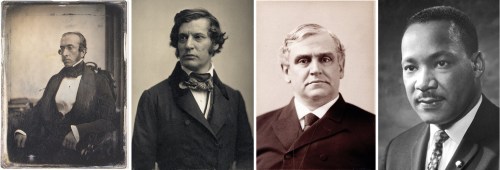
Robert C. Winthrop. Charles Sumner. Phillips Brooks. Martin Luther King Jr. The lives of these four men span over 150 years. What’s the connection? For me, it’s in their words and actions, or lack thereof, on the subjects that humanity has struggled with since the beginning.  Most often these subjects involve issues of race, class and gender, issues that have always, it seems, inevitably produced tensions within defined societies that then threaten to tear those societies apart. As then as chaos looms or even reigns, individuals within those societies, like these men, must decide what to do, if anything at all.
Robert_Charles_Winthrop

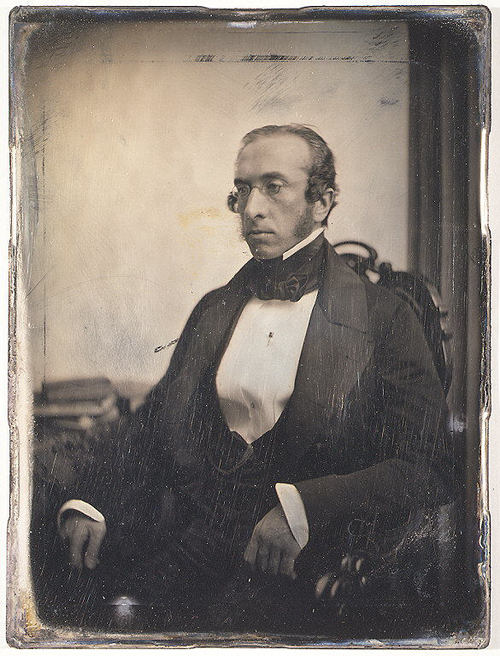
Robert C. Winthrop, 1850

It has been two years since I last wrote about Robert C. Winthrop in the context of Hope, the stained glass window that he purchased for Trinity Church in Boston. Winthrop, a one-time Speaker for the U.S. House of Representatives, was a complicated man.  He was a major philanthropist especially to educational institutions in the north and south believing that education was vital to blacks and whites. A contemporary of Frederick Douglass, he too gave anti-slavery speeches. He did not want slavery to spread but as far as ending slavery where it already existed, he differed with Douglass and other activists, like Charles Sumner.
Charles_Sumner_by_Southworth_&_Hawes_c1850

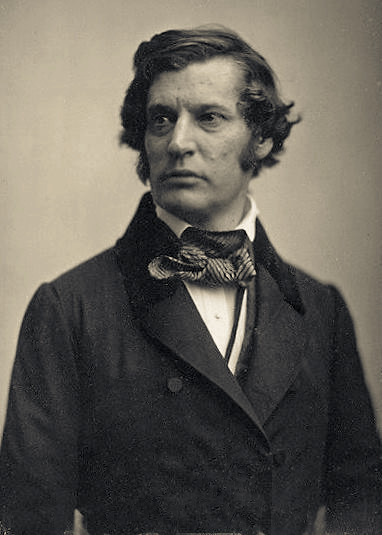
Charles Sumner, 1850

Sumner was a U.S. Senator from Massachusetts who became the leader of the anti-slavery movement in Massachusetts and a leader of the Radical Republicans. He was an incendiary speaker against slavery, one speech of which led to a physical attack on the Senate floor. When Sumner died in 1874 after a long career in domestic and international politics, people immediately remarked upon his anti-slavery leadership. One of those people who praised Sumner’s legacy was Phillips Brooks, Rector of Trinity Church, himself noted for his powerful oratory.
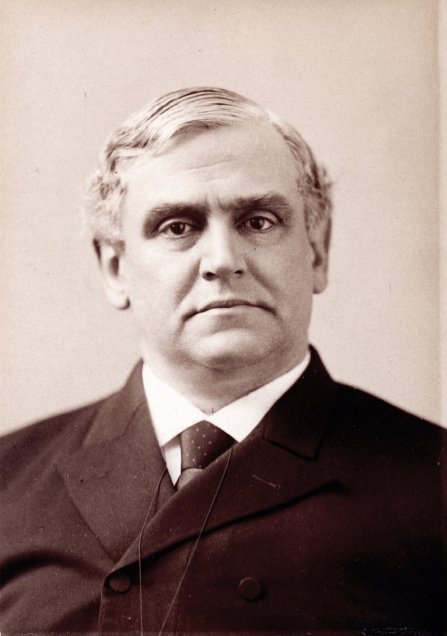
Phillips_Brooks

Phillips Brooks, Rector of Trinity Church

The words were spoken on a Sunday morning at the end of his sermon.  Exactly what Brooks said in entirety, I do not know. What I do know I learned from Winthrop’s memoir. The diary entry he wrote in response to Brooks are thought provoking.

“I sometimes question whether the cause of religion is advanced when clergymen, from a pulpit on a Sunday, single out for especial admiration statesmen in no way identified with religious observances; and I have been led into this train of thought by the fact that my own rector, in the course of a fine sermon this morning, took occasion to make a brief but glowing tribute to Sumner, who, according to Henry Wilson, had not been inside of a church for twelve years past, unless to attend a wedding or a funeral. He spoke of him, moreover, as one who was ‘a friend to freedom when others were its enemies,’ and as  ‘hating slavery when others loved it.’

Precisely what was meant by this allusion to ‘others’ is not quite clear but it was interpreted by some in the congregation as referring to the party with which Sumner was originally associated. If so, I do not think it fair. The great Whig party loved freedom and hated slavery as much as he, though they could not adopt his mode of showing love and hate. It is a perversion of historical truth to stigmatize that party as having been, in any sense, a proslavery party.  …

We did what we could to keep the peace between North and South, hoping that a day would one day be opened, in the good providence of God, for gradual emancipation on some basis which would be safe for both blacks and whites. Emancipation came as a necessity of the Civil War which we had sought to avert. Perhaps it could have come in no other way, but we had always looked to the ultimate disappearance of slavery under the influence of civilization and Christianity, without endangering the Union or sacrificing half a million lives. …”

His words irritated me.

Upon reflection I realized why and then I found myself re-reading Martin Luther King’s Letter from a Birmingham Jail, written nearly 100 years after Winthrop put pen to paper.

Martin_Luther_King,_Jr.

Martin Luther King, Jr, 1964

The 1963 letter opens “My Dear Clergymen, While confined here in the Birmingham city jail, I came across your recent statement calling my present activities “unwise and untimely. … I am in Birmingham because injustice is here.”

King goes on to affirm that “Injustice anywhere is a threat to justice everywhere. We are caught in an inescapable network of mutuality, tied in a single garment of destiny. Whatever affects one directly, affects all indirectly. Never again can we afford to live with the narrow, provincial “outside agitator” idea. Anyone who lives inside the United States can never be considered an outsider anywhere within its bounds.” …

“I must make two honest confessions to you, my Christian and Jewish brothers. First, I must confess that over the past few years I have been gravely disappointed with the white moderate. I have almost reached the regrettable conclusion that the Negro’s great stumbling block in his stride toward freedom is not the White Citizen’s Counciler or the Ku Klux Klanner, but the white moderate, who is more devoted to “order” than to justice; who prefers a negative peace which is the absence of tension to a positive peace which is the presence of justice; who constantly says: “I agree with you in the goal you seek, but I cannot agree with your methods of direct action”; who paternalistically believes he can set the timetable for another man’s freedom; who lives by a mythical concept of time and who constantly advises the Negro to wait for a “more convenient season.” Shallow understanding from people of good will is more frustrating than absolute misunderstanding from people of ill will. Lukewarm acceptance is much more bewildering than outright rejection. … 

“Such an attitude stems from a tragic misconception of time, from the strangely irrational notion that there is something in the very flow of time that will inevitably cure all ills. Actually, time itself is neutral; it can be used either destructively or constructively. More and more I feel that the people of ill will have used time much more effectively than have the people of good will. We will have to repent in this generation not merely for the hateful words and actions of the bad people but for the appalling silence of the good people. Human progress never rolls in on wheels of inevitability; it comes through the tireless efforts of men willing to be co workers with God, and without this hard work, time itself becomes an ally of the forces of social stagnation. We must use time creatively, in the knowledge that the time is always ripe to do right. Now is the time to make real the promise of democracy and transform our pending national elegy into a creative psalm of brotherhood. Now is the time to lift our national policy from the quicksand of racial injustice to the solid rock of human dignity.”

Well, fifty years later, you have only to read the headlines of a reputable news source. Indeed, now is the time, yet again, to lift our national policy from the quicksand of injustice of any kind for anyone.

An addendum: I recently saw a news story about a small town in coal country in a southern state. The mass majority of people left in the town are white, economically adrift with few job prospects and with little access to health care and food. Drug use is rampant, and there is great love of Trump because somehow there is a perception that he is just like them. After surviving in this strange new world through July 2017, I now realize I don’t need those people to ever like me, someone who is so different from them, and I don’t need them to vilify Trump and his cronies. At least not yet. First I need to see their living conditions improved … because what they are dealing with, whatever their beliefs, is indeed an injustice. And, as we have seen with this recent Presidential election, its that kind of injustice, as well as injustice regarding race and gender, that can too easily become a threat to justice everywhere.


Sources & Additional Reading

[1] https://en.wikipedia.org/wiki/Charles_Sumner

https://en.wikipedia.org/wiki/Robert_Charles_Winthrop

https://en.wikipedia.org/wiki/Martin_Luther_King_Jr.


Read Full Post »

IMG_0835

photo by patricia cobb

I feel I honored the memories of the children like Willis Cofer. 🙂

CSinstallation2

CSinstallation

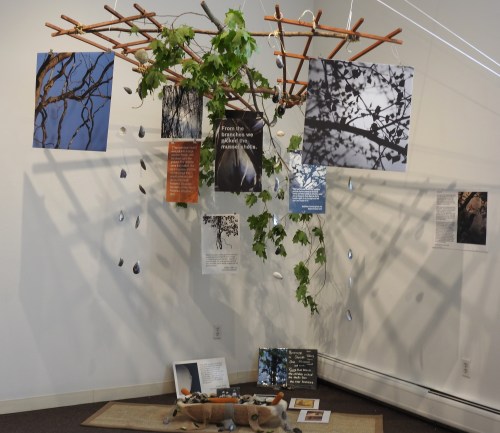
I have received many encouraging words about the installation. For me it was a truly collaborative process where people around me helped bring to life the picture in my head. I am thankful. We’ll see what the future holds in terms of future installations. Meanwhile, I do hope if you’re in the area you have a chance to walk beneath these branches.

Read Full Post »

1

The opening reception for Peace: Cutting Through Turmoil at Brickbottom Artist Gallery was a powerful night. What a treat to have my work featured next to such wonderful artists. Each shares work — from paintings to sculpture to video — that is quite different and yet the whole comes together quite cohesively.  Each artist telling a different story. Kudos to curator Lois Fiore for her vision.  The exhibit will be on view Thursday – Saturday noon – 5pm until July 1st.

2

lois fiore

Lois Fiore, Curator: http://loisfiore.com/pages/artist.html

10 Patricia Cobb: https://www.brickbottomartists.com/artist/227

Cedric Harper: https://edward-film.squarespace.com/about/

4

cedric harper

Riki Moss: http://www.rikimoss.com/

3

riki moss

Jose Santos: http://joselsantos.com/about_jose.htm

5

jose santos

Brynmore Williams: http://brynmore.com/


Read Full Post »

shells

castle island shells

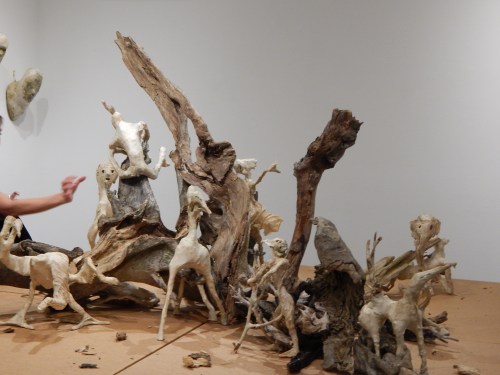
Tomorrow night, June 8th from 6:00 – 8:00 PM, is the opening reception for Peace: Cutting Through Turmoil at the Brickbottom Artist Gallery in Somerville. Good food, good drink and great art with a story to tell. I’m one of seven proud participants, debuting my first installation, Mussel ‘Em. Hope to see you there, and FYI, the show will run through July 1, 2017.

final_e_card

Learn more at  https://www.brickbottomartists.com/gallery_future

Read Full Post »

I highly recommend taking a break in the day to read Christian N. Kerr’s review of an imaginative experiment in words and images by filmmaker Jennifer Crandall, Whitman, Alabama.  As Kerr writes, “The project is journalistic at heart, presenting a pointillistic portrait of the expansive American identity through 52 short videos of Alabama residents reading the 52 verses of “Song of Myself.”” New videos, just a few minutes in length, are scheduled for release every Friday of 2017. Read Kerr’s review here and please do visit Whitman, Alabama  http://whitmanalabama.com/  It’s worth the journey.

Read Full Post »

I’ve been thinking about the tree of life ever since a book near-literally fell from the shelves into my arms at the Boston Public Library. A non-descript old fashioned hardback with no book jacket. A bit over-sized though not especially thick. It was turquoise blue with gold lettering on the slender spine that said “Ain’t You Got A Right To The Tree Of Life?” The title page made clear that it was a collection of interviews by Guy and Candie Carawan, with black and white photographs by Robert Yellin, together capturing the words, images and songs of the people of Johns Island, South Carolina. I knew of the island and that the people interviewed must have been the descendants of slaves, slaves who most often were of West African origin, who had labored on the plantations producing indigo, rice and other produce that had made their white owners some of the wealthiest people in America. Slavery ended with the Civil War but by the time this book was published in 1966 a new war of sorts raged for civil rights especially the right to vote.

DSCN3371

Given that the preface was written by Alan Lomax, the famed ethnographer and musicologist, I figured the book was just another cool book documenting folkways before a group of people and their ways vanished. Probably a good read but I had so many books in my bag already. I decided to flip through it just a bit and then I would put it away.  I did put it away but not before I saw myself.

Now I grew up in the foothills of the Blue Ridge Mountains of Virginia not the Lowcountry of South Carolina. But it really didn’t matter as I stared into a book at a landscape that had surely shaped the people, as my childhood landscape had shaped me, and looked into faces that reminded me of home.  Beautiful men and women with dark-hued skin. Some slim as a stick and others quite round. Seniors and babies and every age in between. Some people laughing, some people crying and then there were those with their heads thrown back in song as they prayed through music to God. The poverty comes through too. Even so the poverty does not overshadow the joy, the sense of community, and the intense devotion, a devotion that must have helped these people survive the present when they had little idea what the future held for them and their children.

Look at pictures. That’s all I intended before placing the book back on its shelf.  But then I thought maybe I’d read a page or two, just standing there in the library, and then I’d tuck the book back on the shelf.  It was just a couple of minutes of reading. And then I walked away.

DSCN3373

That night I dreamed about what I’d read. It was a scene described in the first interview by Rev. G. C. Brown. It opens with him describing how his father had been a slave. But then he goes on to describe his grandmother whom he had known. She was a stubborn woman with a cruel owner and when she did not do as was expected of a slave “he’d take her by the ears to the corner of a house, and just bang her head against the corner until she’d bleed. … She died in the insane hospital in Columbia. You couldn’t find three square inches on her head where there wasn’t a scar when she died. And well, you find naked places all through her head where she was beaten until she beaten into unconsciousness. … In her latter years it was discovered that during one of those forays the skull was crushed into her brain.”  It was horrific to think of that woman having to endure such treatment for so much of her life, for her children to know of her abuse at the hands of someone who saw her as less than human … and that people must have stood around and did nothing, for whatever reason, as she was having her head bashed against a wall.

DSCN3200

I returned to the library and checked out the book and have begun to read it properly. I’ve learned more about the people behind the book, Guy and Candie Carawan, and their incredible legacy of social activism. And then there’s Esau Jenkins and his mission of teaching people to read so that they could register to vote.  He operated a bus driving people to their jobs between the island and Charleston. He decided to get a group on the bus in the mornings to teach them how to read the part of the Constitution they needed to read before they could become registered citizens.  As one woman describes she didn’t think Jenkins would have any luck with her; she’d had too little book learning to read such a thing. But somehow, as she described, standing in line and watching the woman before her stammer (and thus failing?), for the woman who’d been on Jenkins’s bus, the words flowed. She even surprised herself.


I am immersed in the music of the peoples’ words as well as the lyrics of their music. The music transcribed by Ethel Raim were songs sung by the island congregation at Moving Star Hall. I can’t read the music notes but the words themselves have impact — sad, uplifting and thought-provoking.

DSCN3210

I’m still working my way through the book, this book that’s not so thick and mostly images. The words I read resonate, in some ways too much so, with words I hear today.  By the way, another book recently fell into my arms at the library, 865 pages including footnotes and index. It’s called The Framers’ Coup The Making of the United States Constitution by Michael J. Klarman. One book at a time …

Sources & Additional Reading

Guy Carawan

Alan Lomax

Esau Jenkins

Moving Star Hall

Ain’t You Got A Right To The Tree Of Life? (1966)

Ain’t You Got A Right To The Tree of Life? (1994 updated & revised)


The Framers’ Coup by Michael J. Klarman


Read Full Post »

The man knew why security and I escorted him to the door. He was drunk and that meant he could not stay on the premises especially not with the beer he held tight in its brown paper bag. “I want to make a change,” he said, voice cracking. “I want to stop.” He sounded sincere, as sincere as the friends and family I knew who struggled with alcohol. “I believe you,” was all that I could say, then added. “I wish you well.” He shook the security guard’s hand and then he turned to me. “Will you give me a hug?” What else could I do as he leaned down but to embrace him?

After my shift ended I wandered around the building and there he was. Close, so close, to another door where he could have received help. Instead, he stood there in the damp of the day and opened the bottle.

The child did not utter the words, give me a hug. She just walked up to me with no other expectation than what was to be. If she were to lean against me but of course I would wrap my arms around her. Had I not done that the whole of her short life?

Somehow the child felt heavier than the man. The weight of her promise waiting to be fulfilled versus all that he had lost perhaps. “I’m tired,” she said. “I know,” I replied. “You can lean here for a bit but no sleeping. I might have to tickle you so we can get you home.” There was a giggle but the weight remained in my arms a while longer. And that was alright.

In my dreams I sometimes try to hold people. It is the gift of paupers and probably no greater gift. I hope so.

Read Full Post »

DSCN2352

an unlit candle waiting for its spark

… there’s a company called Usful Glassworks. Recycled glass is transformed into lovely, useful items. What’s really special about this company, in addition to its merchandise, is its founding philosphy of providing manufacturing and production experience to those who face the greatest employment barriers including at-risk youth, male and female offenders, those with mental or physical disabilities, refugees, veterans and the low-income elderly. It is an institution providing help, hope and opportunity to those who need it most. See for yourself in the following video and learn more about its future on its gofundme page:

https://www.gofundme.com/usfulglass

Additional Reading

http://builtinboise.com/usful-glassworks/


Read Full Post »


1VAGazetteApril11737

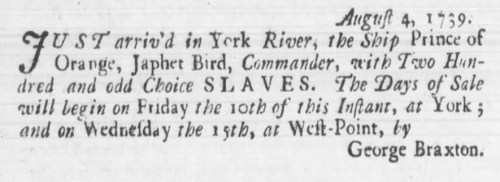
April 1 1737 Ad in Virginia Gazette

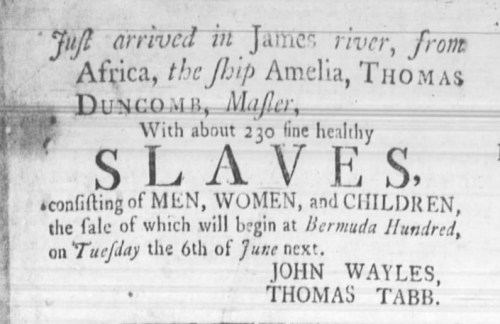
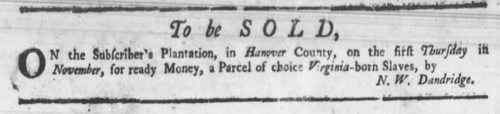
Imagine the infrastructure that had to have been in place in 18th century colonial America before the American Revolution.  Take just one ship arriving in one port city in Virginia, like York or Bermuda Hundred, both on the James River, with a cargo of nearly 500 African slaves.

People would have been herded off the ship and placed into a holding pen of sorts to wait for up to two weeks or more as they are advertised like stock, which in fact they are considered, in newsprint and by word of mouth.  Before they were led out onto an auction block to be sold individually or in small groups they would have been examined intimately, as they had been on the ship, to confirm their health. A few behind the scene deals would be made, of course. Not every slave would need to stand on the block before being transported to his or her place of servitude.

That’s one ship, one port and one delivery of slaves. But there were many ports in colonial America and many ships delivering their human cargo before loading their holes with colonial-made goods, like tobacco and molasses.

So imagine the growth in and the scale of operations over time – not one ship at one port with hundreds of slaves on board but multiple ships dropping off thousands of chained people who had homes and identities that were stripped away. Who had cultures millenia old that were dismissed in this new land. Who had languages, arts and religions that were deemed insignificant. Who had skin in wondrous shades of brown which made them seem so “other” that perhaps that otherness made it especially easy for people to dismiss their humanity.

2VAGazetteJuly81737

July 8 1737 Ad in Virginia Gazette

5VaGazetteAugust31739

August 3 1739 Ad in Virginia Gazette

7VAGazetteAug171739

August 17 1739 in Virginia Gazette

Imagine how a concept of indentured servitude referred to in the early days of colonial life — you could eventually buy your way to freedom — evolved into something much more insidious and institutionalized as black African slavery became the engine for a growing economy. An economic growth that would help fuel the idea of creating an independent United States versus remaining colonies subject to British rule.

4VAGazetteMay251769

May 25 1769 in Virginia Gazette

Not all were in agreement with slavery and eventually the slave trade from Africa would officially end around 1810 (though it would continue illegally long after).  As future generations of slaves were born, not in Africa but in the colonial and then United States, it became de rigeur not to allow them to learn to read or write. To prevent their gathering for worship except under very proscribed conditions. To prevent their free movement by chain, by brand and by paper pass. They were property – perhaps loved or respected by those who owned them – but they were property nonetheless.

9VaGazetteSep151752

September 15 1752 in Virginia Gazette

Tens of thousands and eventually millions of people would be born into a system that had evolved to maintain a “free” labor force through intimidation, denigration and willful ignorance of horrors against humanity. I say willful ignorance because even people who were kind to their slaves had to be aware of what would happen if their slaves ran afoul of patrols without their papers and so on.  The identity of the slaves, their sense of self and of their worth in this world, would be shaped by a cruel system as would be the identities of the people who maintained that system with both wealth and whip. Slavery as an institution, on that scale and by that design, exist no more in this country … but human nature remains the same … the good, the bad, the ugly and all that lies in between.

When I compare 18th century newspaper clippings about slave auctions, slaves being sold as part of estate sales, advertisements for the return of runaway slaves, and so on to slave narratives from the 1930s, nearly two centuries later, it is extremely sad and insightful to see how slavery in this country was nearly successful in keeping a people down and it is only because of visionary and courageous people, of all races, working hard across all of those centuries that I am able to sit here pounding away on my computer. Without fear.

Why revisit this past? In this age of 140-character messages, history is becoming increasingly sanitized. And I guess because I am reading too much in this 21st Century about people looking back with nostalgia about those former times.  The patrollers of those centuries, from the 17th into the late 19th centuries, riding through the countryside in various states rounding up brown people without papers were not civil servants – they were a fear mongering horde whose jobs enabled their most base behavior. I don’t care the color of the shirt, red, or the hood, white, all who wore them in those times did so to generate fear. And people are wearing those colors today.

There are far too many people who are fearful today. And that is wrong. That’s my random musing this Sunday. Back to nature photography next week. Maybe.

Read Full Post »

DSCN2304

detail from The Arthurian Round Table and the fable of the Seat Perilous

Between 1893 and 1902 fifteen panels were installed in the Boston Public Library in Copley Square depicting the story of The Quest for the Holy Grail. Conceived of by artist Edwin Austin Abbey (1852-1911) he based his work on Lord Alfred Tennyson’s  version of the Arthurian legend. In recent years the BPL has done a magnificent job of capturing the beauty of the full panels and sharing each panel’s story with the public through Flikr. That link is below. When I walk in with my camera I tend to focus in on the details and this is what I recently saw.

DSCN2292

DSCN2295

detail from King Amfortas and the Castle of the Grail lie under a spell

DSCN2297

This time one of my favorite panels to focus on what the last in the sequence, The Golden Tree. According to the BPL summary, an adaptation from an outline by Henry James, “Sir Galahad, now the King of Sarras, builds a golden tree. When he is presented with the Grail, his spirit and the Grail ascend to heaven. Like other elements throughout the mural cycle, the golden tree and the Grail are depicted in gilded raised relief, a method that Abbey may have learned from his studio partner John Singer Sargent.”

DSCN2319

DSCN2322

DSCN2317

DSCN2323

DSCN2325

DSCN2332

Well worth a visit to see in person but until then you can see the full cycle of panels here: https://www.flickr.com/photos/boston_public_library/sets/72157647672175522/with/15258034891/

And if you have a large cup of tea at hand, or something else, you can read Tennyson’s Holy Grail upon which the murals were based. They don’t write poems like this anymore. 🙂 http://d.lib.rochester.edu/camelot/text/tennyson-the-holy-grail

Read Full Post »

« Newer Posts - Older Posts »