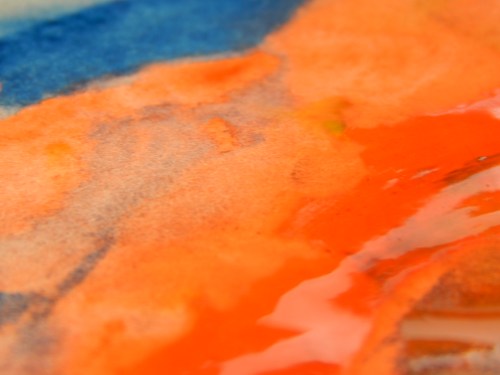
at least for now …



at least for now …
Posted in Inspiration | Tagged abstract, art, beauty, colors, fun, Inspiration, paints, Photography, watercolor | 3 Comments »

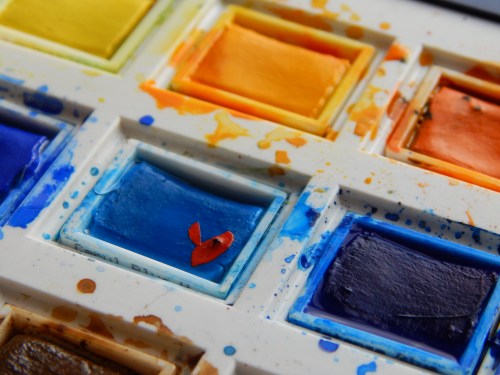
Part of the fun of playing with watercolors as I’m researching and working on papers is that there are writing rules I must obey on occasion but I don’t feel constrained with the watercolors. I can get up from the computer — good for my back anyway — and just dab paints and water on papers and see what happens.

Posted in Inspiration | Tagged abstract, art, colors, fun, Inspiration, painting, Photography, watercolors | 2 Comments »

Nope. Just a wet paper towel as I played with watercolors today.
Posted in Inspiration | Tagged abstract, art, colors, fun, Inspiration, Photography, watercolors | 3 Comments »
Posted in Inspiration, Kitchen Inspirations | Tagged colors, gifts, Inspiration, light, Photography, shadow, silhouette | 2 Comments »

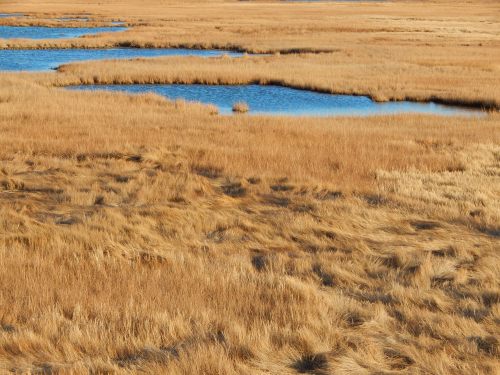
Posted in Inspiration, Nature Notes | Tagged Belle Isle Marsh Reservation, colors, East Boston, Inspiration, landscape, nature, Photography, water | 6 Comments »


Posted in Inspiration, Kitchen Inspirations | Tagged abstract, beauty, colors, Inspiration, nature, Photography, shells, textures | 5 Comments »

When do we see ourselves? How do we see ourselves? How is our sense of self shaped by the images of others? This past year, I spent a lot of time researching U.S. history, mostly pre-Civil War into the early twentieth century. One of the things that I re-discovered for myself was an evolution in the illustration and other visual representation of African Americans that reflected the sentiments of a rapidly evolving nation. A nation that had loosely reknit after a Civil War, thirty-years later still in rancorous debate about the “Negro Problem”, and now having to deal with waves of mostly non-English speaking European immigrants making their way to a promised land. Culture clashes took place at every level of society. And those tensions were reflected in the arts and how “others” were represented.
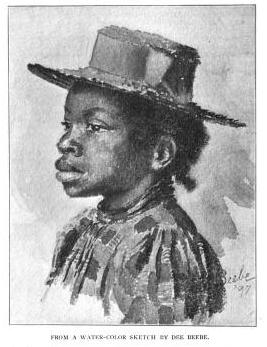
I chanced upon an 1898 issue of the magazine, The Art Amateur: Devoted to Art in the Household, a popular type of magazine at the time. The article that caught my attention, by E. Day McPherson, focused on Drawings of the Negro Character, an actual tutorial for how to capture the character of your artistic subject. When reading the text I tried to keep in mind the context of the time. For example … “Character might be defined as the result of emotional habit, and certainly the lines expressive of character are those which show what emotions the person is most frequently subject to and in what degree he is accustomed to repress or hide them. The negro is much more accustomed to give his emotions free play than white people, and they more than the yellow and the red races. To the Japanese we seem as “funny” as the negro seems to us …”

But my focus was not the words but the artist’s work. Most publications from that time, outside of publications produced by African Americans, were already presenting stereotypical images of African Americans, if any images were being shown at all. I was struck by Dee Beebe’s portraits of young African Americans, possibly in Galveston, Texas, in the casual clothing of their day. I don’t know if she captured their character but she captured their beauty for me.

I couldn’t find out much about the artist. She was born in 1870 into a prominent family in Galveston, Texas. Her artistic skills were clear at an early age. As one writer noted in 1896:
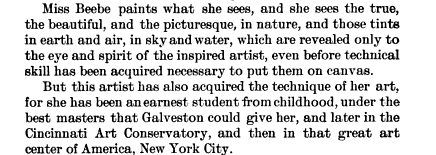
At the Art Academy of Cincinnati, she studied with Frank Duveneck. In New York, she studied with William Merrit Chase and Kenyon Cox, and later with Theodore Wendel in Gloucester, MA. Throughout her life she was a teacher while continuing to produce oil and watercolor paintings as well as etchings. The last reference to an exhibit that I could find was 1922. She exhibited at the Ainslie Galleries in New York, seventy-five watercolors, “including bits of Holland and Switzerland, views of New England, the Arizona desert and around San Francisco and studies of flowers in localities as diversified as Prospect Park, Brooklyn, Los Angeles, Switzerland and Holland.” She died in 1946.
It would be intriguing to see more of the work of this artist. I found a few landscapes online. The 1898 article says that at one period while back home in Texas she “devoted much time to the portrayal of negro types.” Perhaps those other images, if they still exist I might not like so much, but I am glad she created these images and that they were shared with the public in that popular magazine.
Sources
The Art Amateur: Devoted to Art in Household, Volume 39-40, 1898
Prominent Women of Texas (1896), p. 82
Magazine of Art, 1922
Posted in Inspiration | Tagged American history, art, black history, culture, Dee Beebe, illustration, Inspiration, perspective, race relations, racial identity, watercolor | 4 Comments »
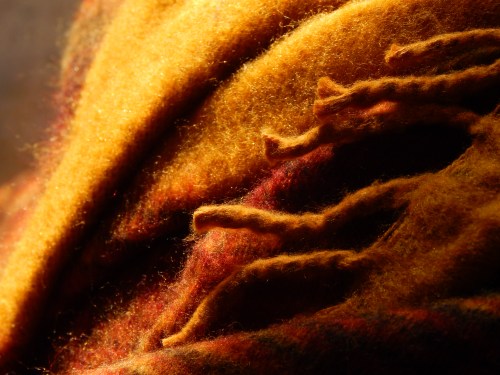
Just a blanket I sometimes wrap up in when I write. 😉
Posted in Inspiration | Tagged colors, Inspiration, orange, Photography, random | 4 Comments »
At night, in the winter times, ice forms on the interior of the windows where I live, depending on location of the window, thickness of the glass and so on. By morning, between the household heat cycling on and the heat of the rising sun, the ice melts quickly and forms these interesting patterns. I have learned to grab my camera and walk briskly from window to window knowing I have only a few moments to “see” something before the waters dissipate. This morning in one room …
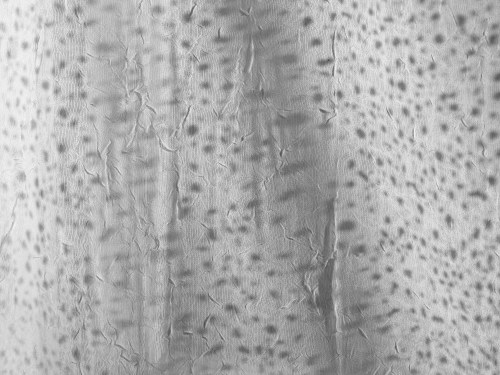
I saw the silhouette of water drops on the sheer white curtain.

And then I pulled aside the curtain to see the drops themselves and also saw the reflection of the curtain in the glass. In the hallway there was a tree …
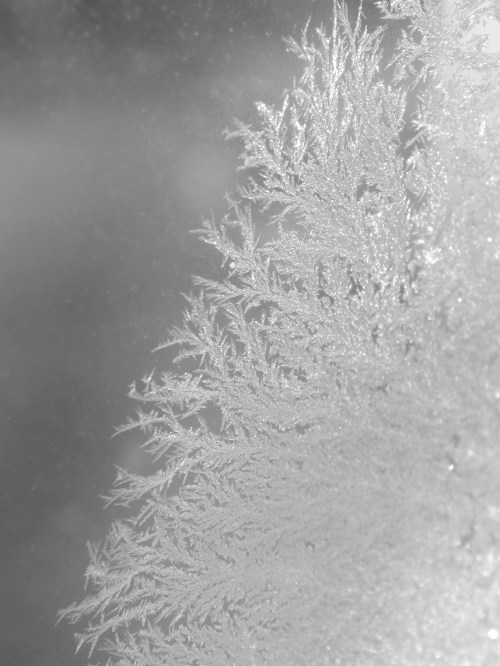
at least that’s how I thought of it because the pattern reminded me of this tree I’d seen recently in Harvard Square.

And in the kitchen …
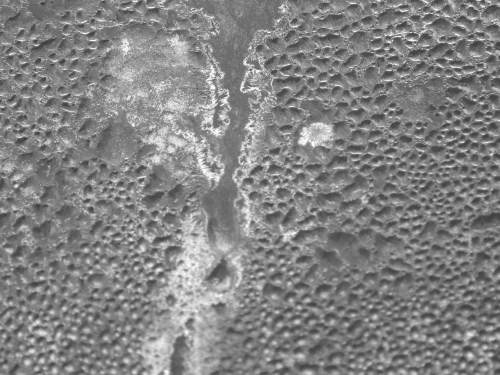
quite the landscape there had formed on the glass.

But now the temperatures have risen and all this beauty is now gone, at least until tomorrow.

Posted in Branches, Inspiration, Nature Notes | Tagged abstract, beauty, black and white, ice, Inspiration, nature, perspective, Photography, storytelling, water, windows | 7 Comments »

Near sunset at Belle Isle Reservation.
Posted in Branches, Inspiration, Nature Notes | Tagged Belle Isle Reservation, colors, Inspiration, landscape, light, nature, Photography, shadows, sunset, trees | 2 Comments »

