
On the left is the silhouette of the spiral staircase and to the right is its reflection. Just a lovely play of light and shadows in the hallway.
On the left is the silhouette of the spiral staircase and to the right is its reflection. Just a lovely play of light and shadows in the hallway.
Posted in Inspiration | Tagged abstract, Inspiration, light, Photography, reflection, shadow | 1 Comment »

winter kale sprouts
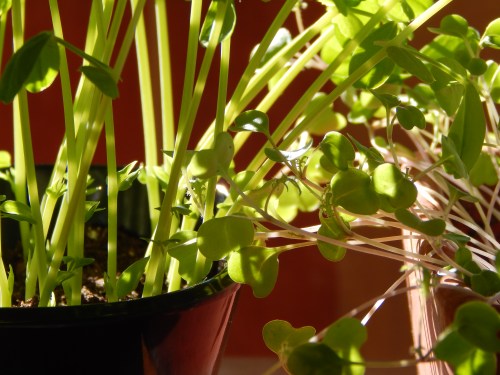
winter kale and pea sprouts


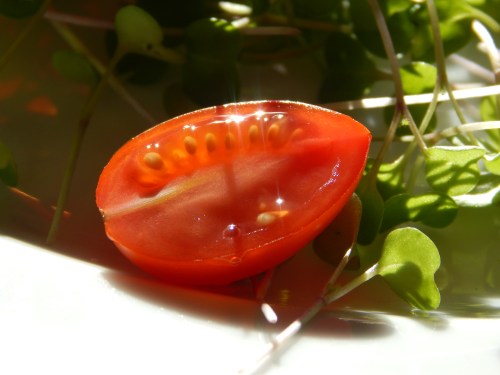
Posted in Inspiration, Kitchen Inspirations | Tagged beauty, food, healthy eating, indoor gardening, Inspiration, photo essay, Photography, salads, sprouts | 5 Comments »

I ended the year feeling a bit prickly. But I do not like to stew in negativity and so this morning I decided to spend a few moments photographing the literal prickles on the few cacti I have scattered about my home.
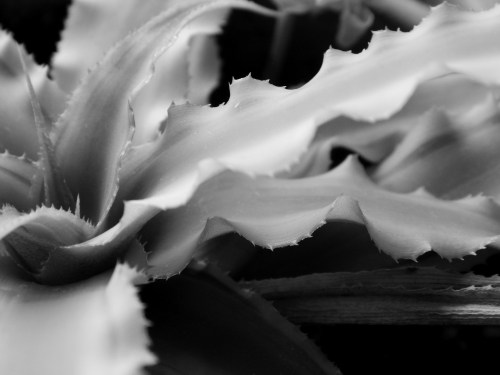
No problems were solved but the act of movement, of looking outside of myself, was a wonderful exercise. And, to be honest, I think I’ve taken these cacti for granted. Tucked in various corners, they need so little care that I sometimes forget about them as I fawn over delicate sprouts and herbs and the occasional flowers and veggies I grow indoors.

I’m glad they were there on this New Year’s Day. 😉

Posted in Inspiration, Nature Notes | Tagged beauty, black and white, cactus, indoor gardening, Inspiration, Photography, plants | 3 Comments »
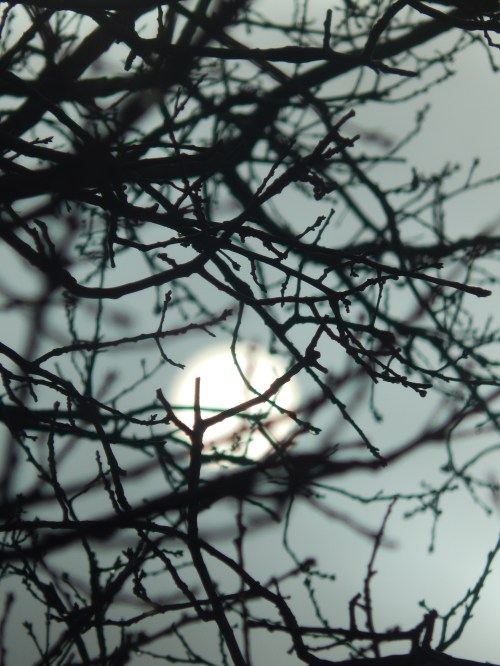
this morning’s light through the oak tree branches

Posted in Branches, Inspiration, Nature Notes | Tagged beauty, colors, Inspiration, nature, Photography, sunlight, urban landscape | 1 Comment »
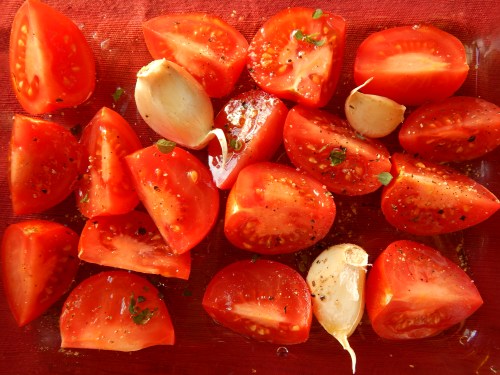
preparing tomatoes for roasting
I feel like this has been a year of color for me in more ways than one.
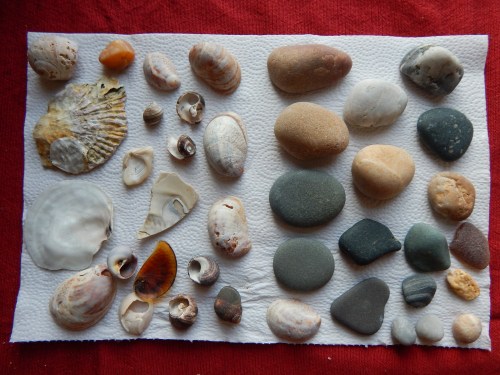
items collected by the seashore
Posted in Inspiration, Nature Notes | Tagged colors, Inspiration, Photography | Leave a Comment »
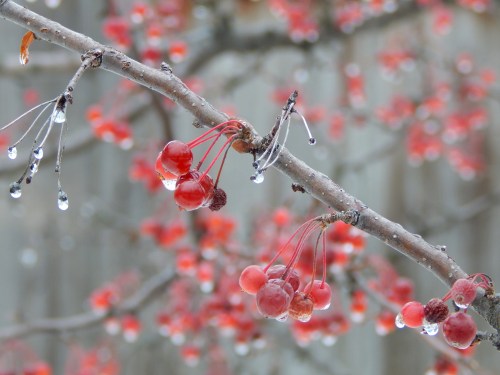


Posted in Branches, Inspiration, Nature Notes, On the Road | Tagged colors, Inspiration, nature, perspective, Photography, red, urban landscape, winter | 3 Comments »

or I may move into a modern home where the glass will be quite clear without an imperfection to be found. But until then what pleasure to pause and peer out, as I did this sunny day, and never truly know what will be seen.
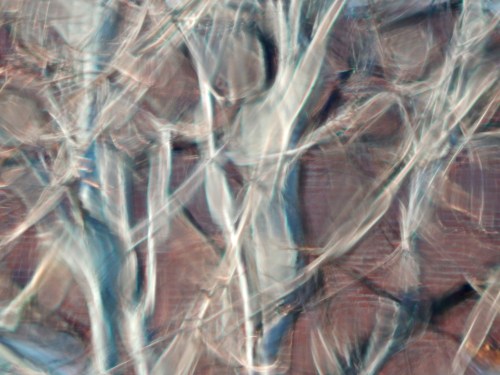


Posted in Inspiration | Tagged abstract, Branches, glass, Inspiration, perspective, Photography, trees, urban landscape, windows | 2 Comments »

dried blossoms on the ground
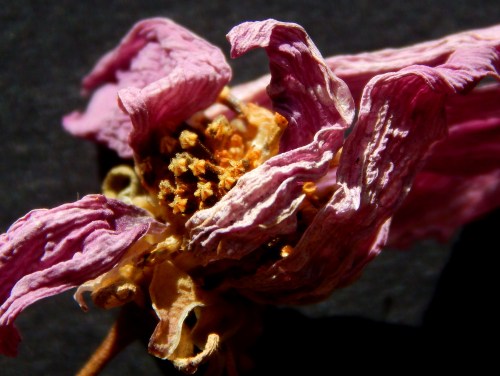
and Zoe’s leaves still kicking around

Posted in Inspiration | Tagged abstract, colors, flowers, Inspiration, leaves, Photography | 1 Comment »
Not sure what the neighbor has still growing in his garden but it is lovely up close and through the rippled glass. Happy holidays, folks.

Posted in Inspiration, Nature Notes | Tagged abstract, colors, Inspiration, nature, Photography, rippled glass, urban landscape | 2 Comments »
This too is a story about gifts.
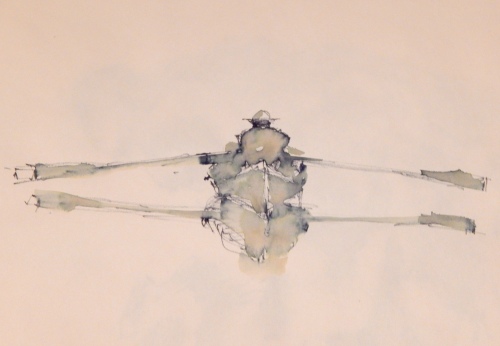
watercolor by ludwig a. joutz
Ludwig Aloysius Joutz (1910 – 1998) was an architect noted for his work with religious and educational institutions primarily in the Washington, DC area. I learned of this gentleman while researching Joseph Anthony Horne as part of my Interlude Series.
By the time Horne meets Joutz, Joutz had already earned his doctorate. His 1936 thesis is still referenced with regard to medieval church architecture. In 1939/40 he was awarded a travel grant from the German Archaeological Institute but was perhaps unable to use it because of the outbreak of World War II. He would be drafted into the German army and become a prisoner of war.
Exactly how he and Horne originally met is unclear. It might have been as early as the Invasion of Italy where Joutz was captured but certainly by the end of the war they were fast friends. The earliest document that I’ve been able to find so far is dated May 1947. In that year, Horne was working with the Monuments, Fine Arts & Archives unit.
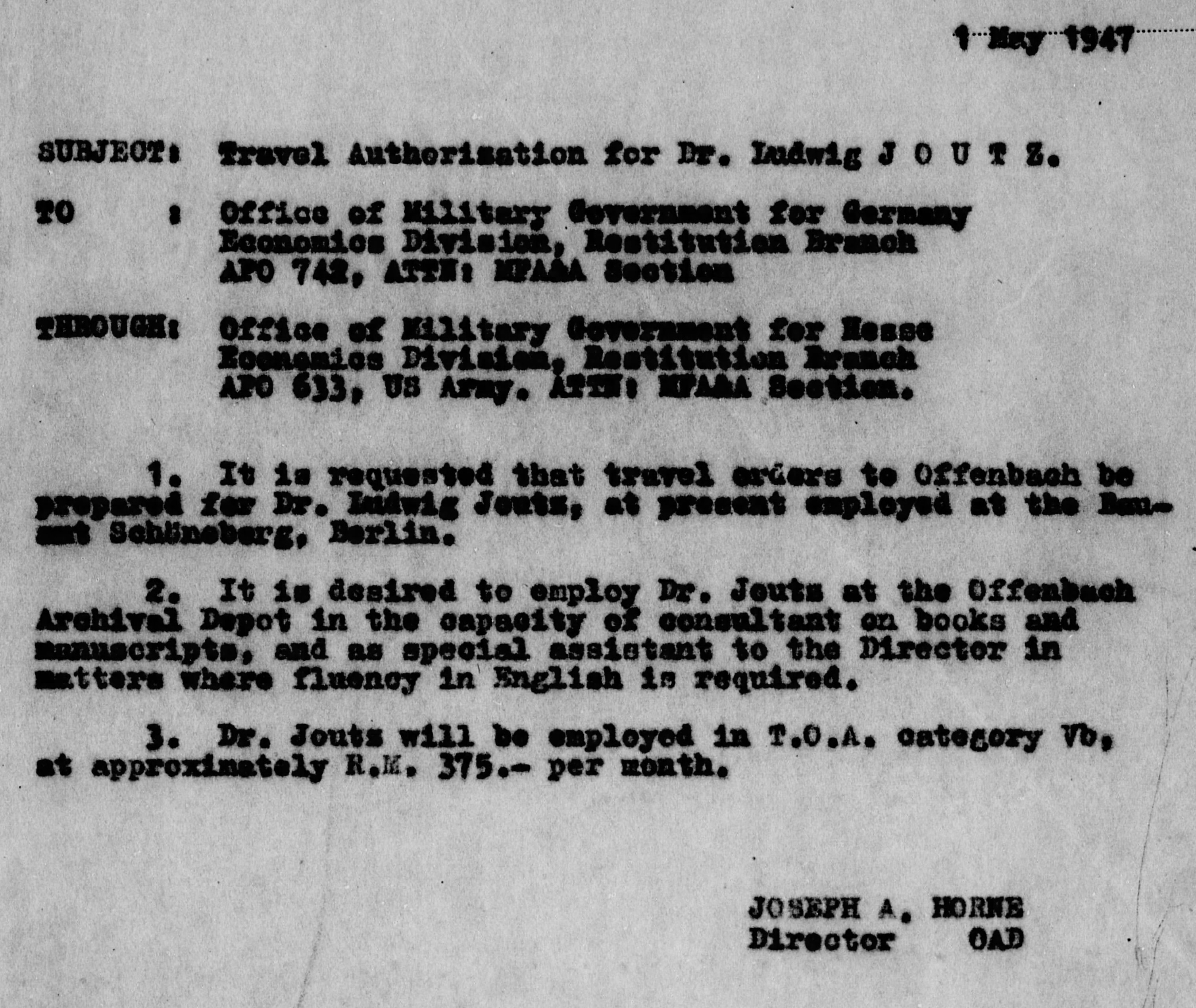
As the Monuments Men continued their efforts to find, catalog and restitute items looted by the Nazis and others during the war, Joutz would become a valuable resource. German-born, he was fluent in English and several other languages and knowledgeable about the art and literary worlds. Horne, American-born and fluent in German thanks to his immigrant parents, was culturally sensitive and knowledgeable about the arts. They apparently worked well as a team.
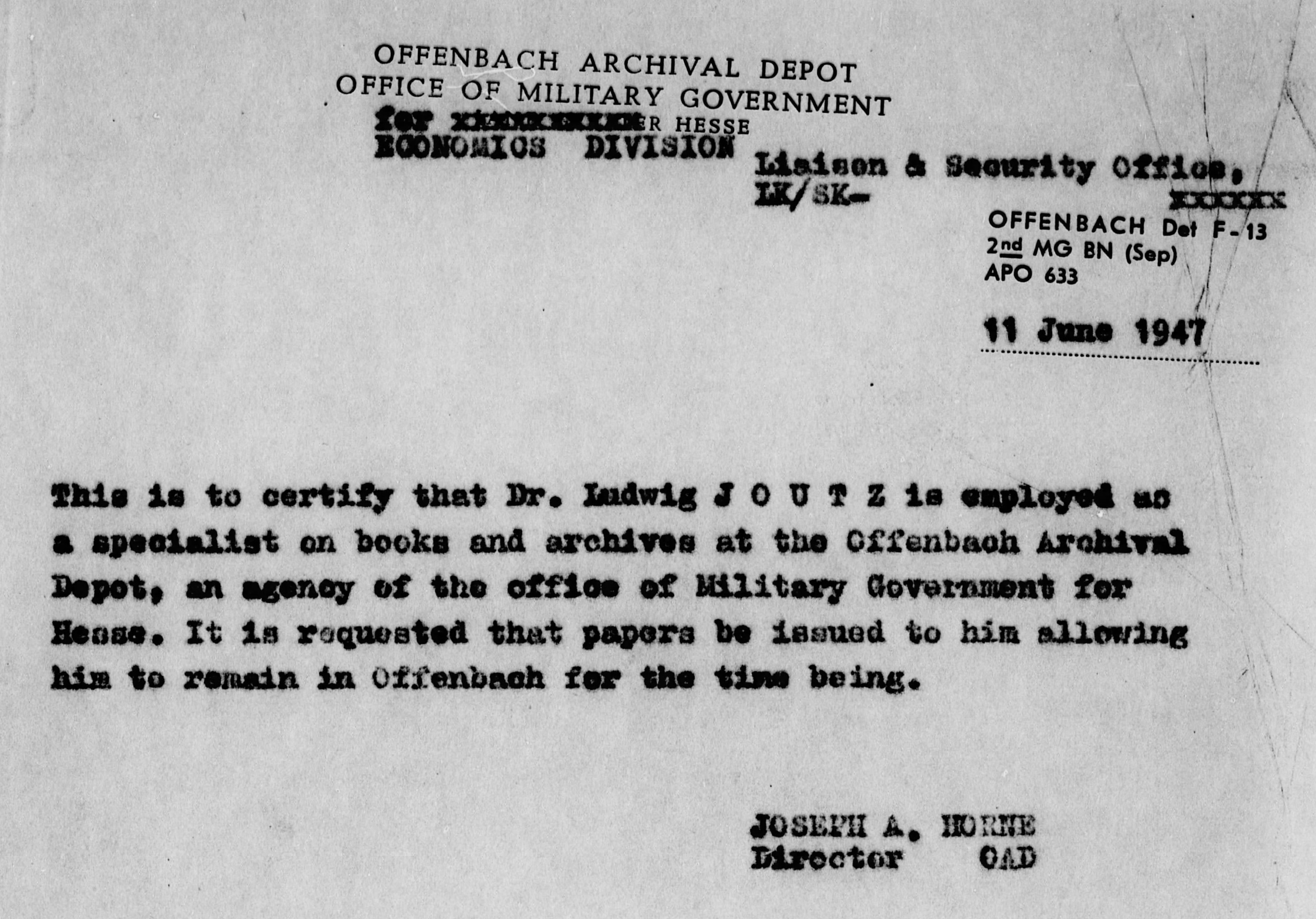
Between June 1, 1947 and March 1948, Joutz would serve as an operations specialist on books and archives at the Offenbach Archival Depot. During that period, he and Horne, by then director of the Depot, would become great friends. Horne would aid Joutz in resettling in the U.S. where he would establish himself as architect. They would become godparents to each other’s children and remain friends until the end of their days.
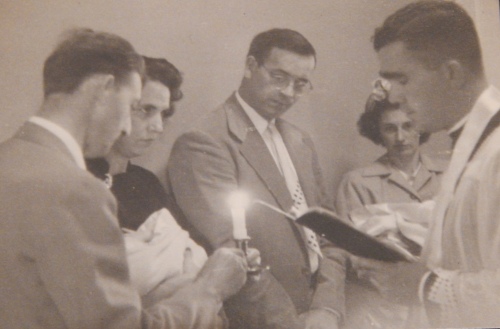
joseph and elsie horne and ludwig and lucy joutz
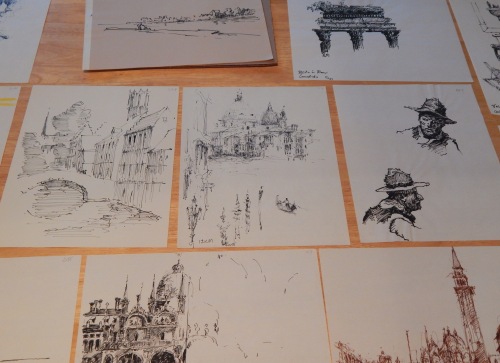
Throughout out his personal and professional life, Joutz would travel around the world. As part of those travels, whether for work or for pleasure, he would view his surroundings with an artist’s eye and try to capture what he saw. Yes, with a camera like his friend Horne, but Joutz would also explore many different forms and techniques of art. He experimented with pen and ink, pastels, watercolor, woodblock prints, papercutting and more. How do I know this? By a gift he painstakingly assembled for his son.
When visiting Joutz’s son, Frederick, a noted economist, I noticed a stack of suitcases tucked in a corner. Now these suitcases were the old-school, at least 1950’s if not earlier, kind of suitcases that are deep enough to curl up and go to sleep in and strong enough to, well, last a lifetime. Frederick explained that they contained his father’s artwork. Now at first I thought he meant prints related to his father’s architectural practice, photos of completed projects, etc. But that was not so.
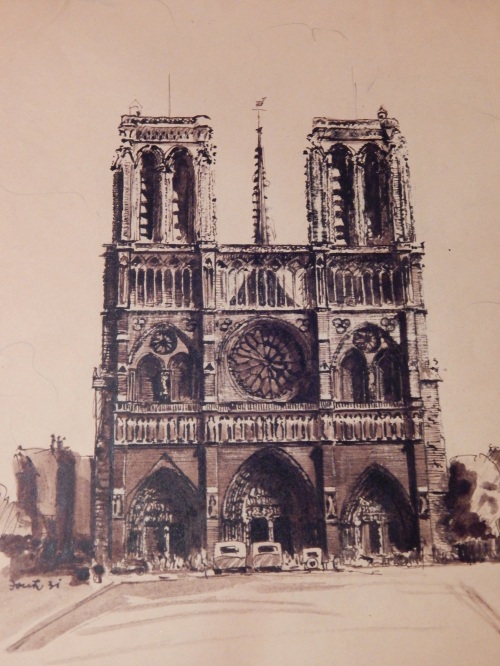
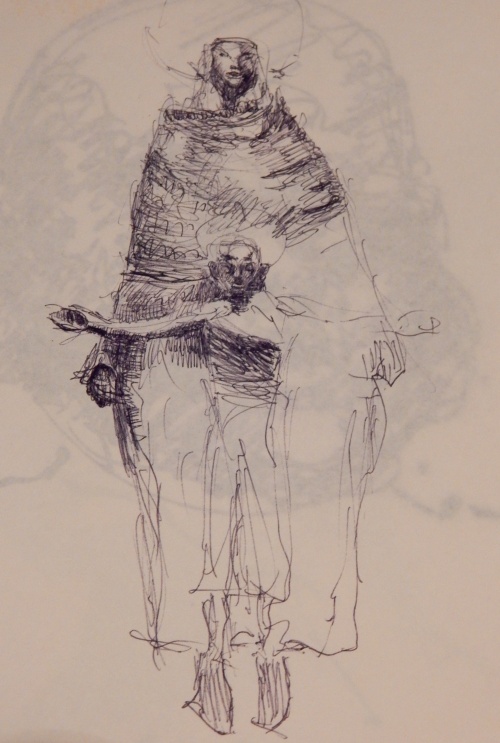
artwork by ludwig joutz
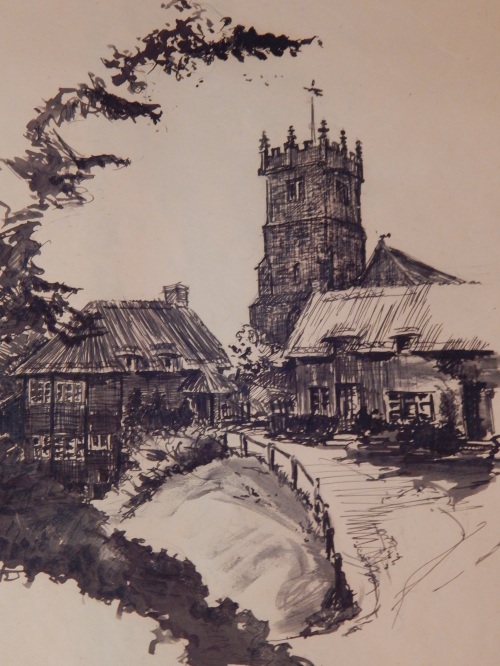
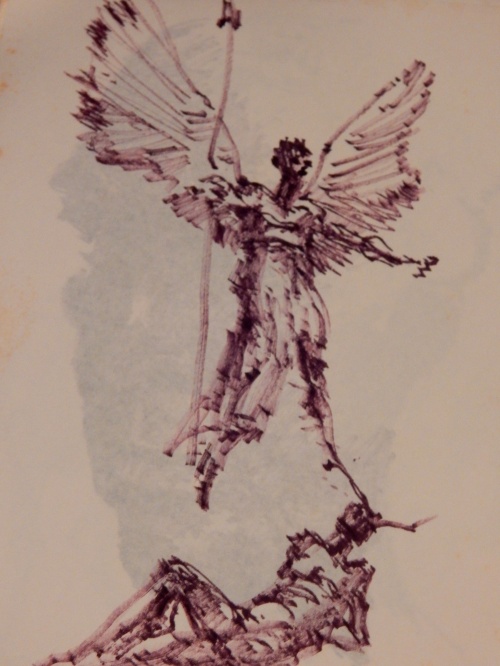
artwork by ludwig joutz
Inside the suitcases was artwork spanning nearly five decades. Joutz had carefully organized his artwork, everything from sketches on the back of used envelopes to sweeping washes of color applied to delicate Japanese papers. It was all layered in stacks in these deep suitcases. The son remembered his father engaged in the process and how he culled items along the way. One can only imagine what the father may have considered not worth saving.
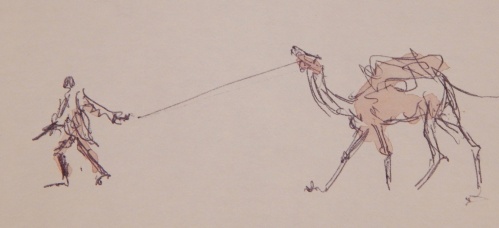
artwork by ludwig joutz
What I managed to see, the content of only two of the many suitcases, was breathtaking in its scope, in the diversity of imagery, and the range of techniques attempted. Each image suggested a story. On some of the pages were notes. What did they mean?
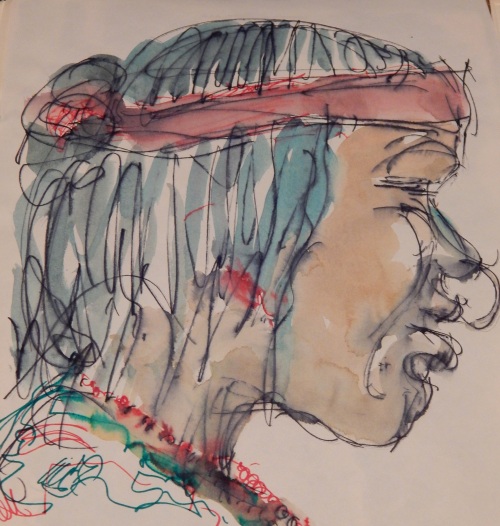
artwork by ludwig joutz
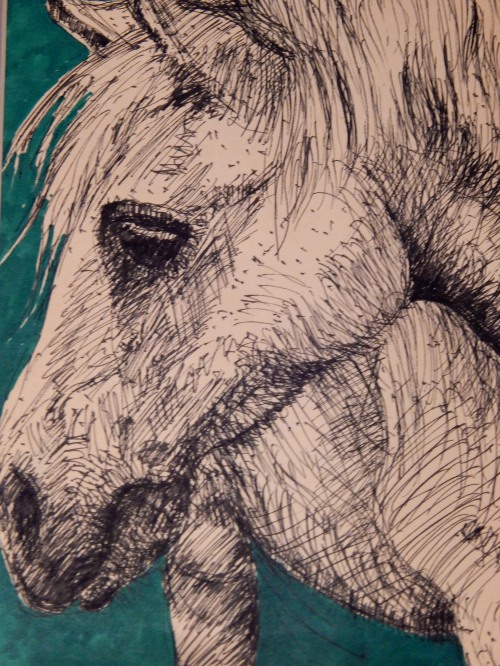
artwork by ludwig joutz
Some of the works were clearly copies of masterpieces, as done by any art student spending a day in an art gallery might do, but many images appeared to be of ordinary people. Perhaps seen in European town squares or along desert routes when he traveled in Egypt?
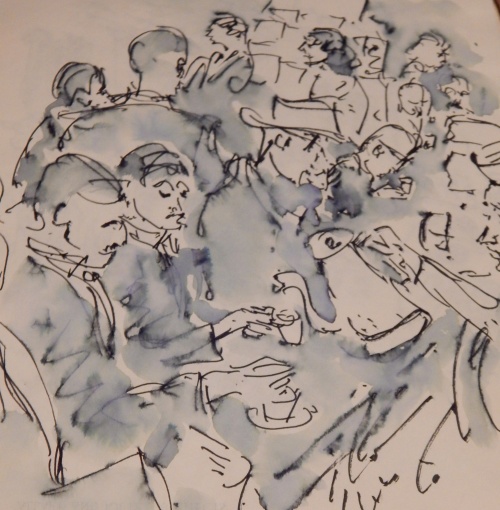
artwork by ludwig joutz
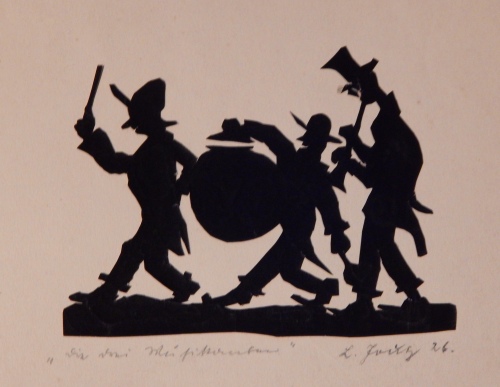
artwork by ludwig joutz
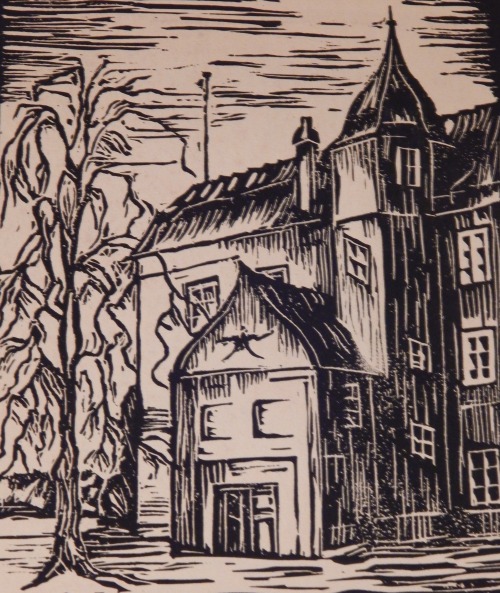
artwork by ludwig joutz?
Then there are the images that are ecclesiastical in nature … were they the early concepts or cartoons for church murals? Did the murals still exist or had they become lost and all that remains are these vestiges?
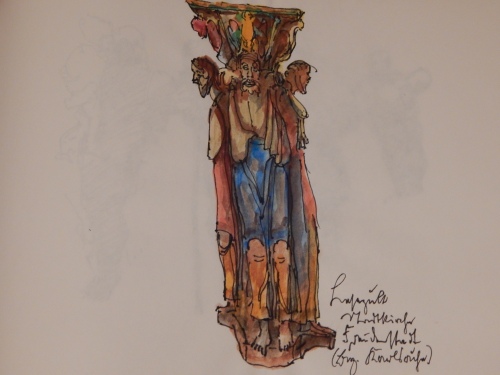
Those are stories that others may choose to research and tell one day. I am grateful that his son allowed me to see just a fraction of what is contained in those suitcases. And a salute to Mr. Joutz for preserving his own artwork as he helped to preserve the works of others throughout his career.
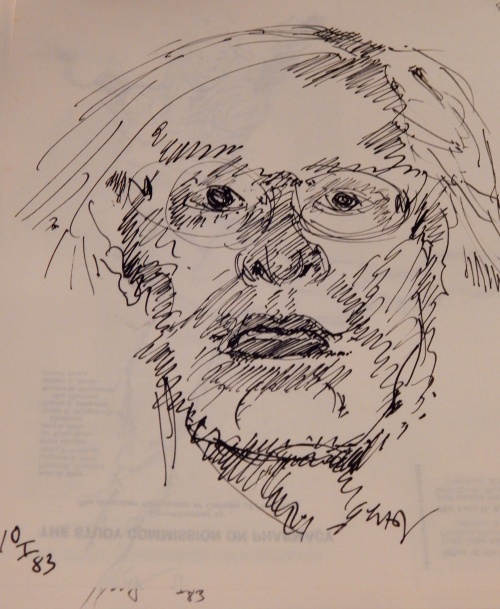
artwork by ludwig joutz
Sources and Additional Readings …
Fold3.com Holocaust Collection
Posted in Inspiration | Tagged architecture, art, beauty, colors, family, family archives, gifts, history, illustration, Inspiration, Monuments Men, Photography, sketching, storytelling | 5 Comments »

