Feeds:
Posts
Comments

Posts Tagged ‘beauty’

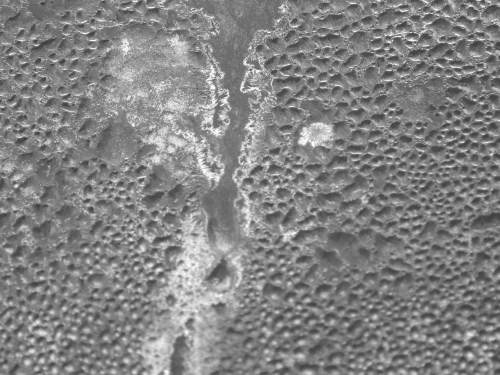
At night, in the winter times, ice forms on the interior of the windows where I live, depending on location of the window, thickness of the glass and so on. By morning, between the household heat cycling on and the heat of the rising sun, the ice melts quickly and forms these interesting patterns. I have learned to grab my camera and walk briskly from window to window knowing I have only a few moments to “see” something before the waters dissipate.  This morning in one room …

I saw the silhouette of water drops on the sheer white curtain.

And then I pulled aside the curtain to see the drops themselves and also saw the reflection of the curtain in the glass.  In the hallway there was a tree …

at least that’s how I thought of it because the pattern reminded me of this tree I’d seen recently in Harvard Square.

And in the kitchen …

quite the landscape there had formed on the glass.

But now the temperatures have risen and all this beauty is now gone, at least until tomorrow.

Read Full Post »

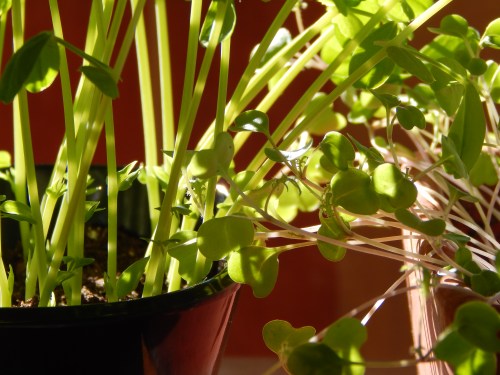
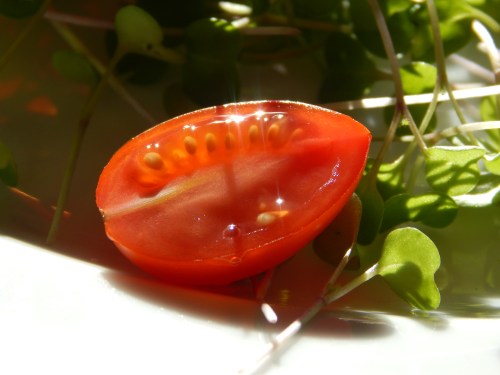
winter kale sprouts

winter kale and pea sprouts

Read Full Post »

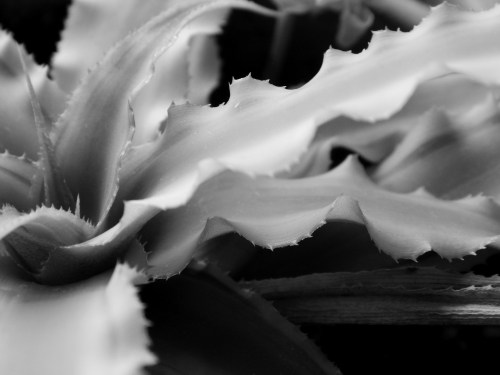
I ended the year feeling a bit prickly.  But I do not like to stew in negativity and so this morning I decided to spend a few moments photographing the literal prickles on the few cacti I have scattered about my home.

No problems were solved but the act of movement, of looking outside of myself, was a wonderful exercise. And, to be honest, I think I’ve taken these cacti for granted. Tucked in various corners, they need so little care that I sometimes forget about them as I fawn over delicate sprouts and herbs and the occasional flowers and veggies I grow indoors.

I’m glad they were there on this New Year’s Day. 😉

Read Full Post »

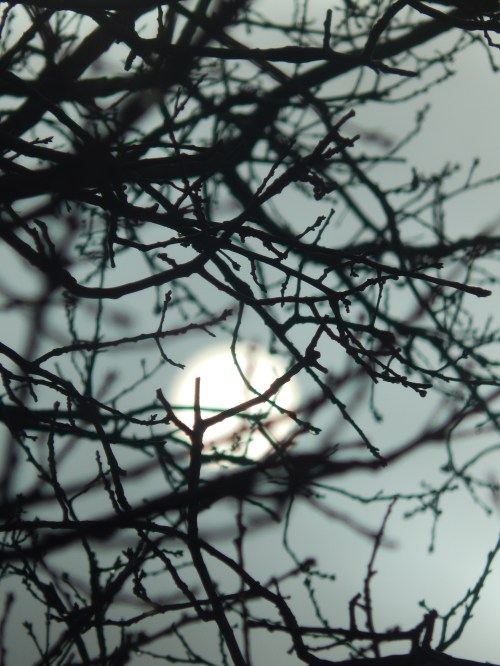
this morning’s light through the oak tree branches


Read Full Post »

This too is a story about gifts.
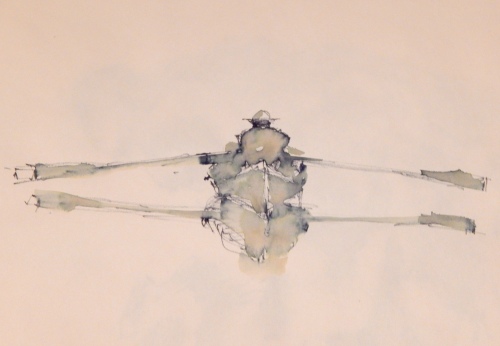
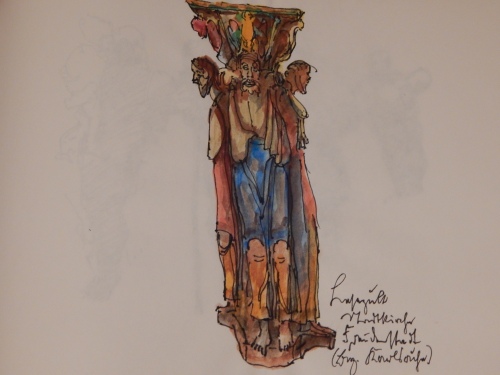
watercolor by ludwig a. joutz

Ludwig Aloysius Joutz (1910 – 1998) was an architect noted for his work with religious and educational institutions primarily in the Washington, DC area.  I learned of this gentleman while researching Joseph Anthony Horne as part of my Interlude Series.

By the time Horne meets Joutz, Joutz had already earned his doctorate. His 1936 thesis is still referenced with regard to medieval church architecture.  In 1939/40 he was awarded a travel grant from the German Archaeological Institute but was perhaps unable to use it because of the outbreak of World War II.   He would be drafted into the German army and become a prisoner of war.

Exactly how he and Horne originally met is unclear.  It might have been as early as the Invasion of Italy where Joutz was captured but certainly by the end of the war they were fast friends.  The earliest document that I’ve been able to find so far is dated May 1947.  In that year, Horne was working with the Monuments, Fine Arts & Archives unit.

As the Monuments Men continued their efforts to find, catalog and restitute items looted by the Nazis and others during the war, Joutz would become a valuable resource.  German-born, he was fluent in English and several other languages and knowledgeable about the art and literary worlds. Horne, American-born and fluent in German thanks to his immigrant parents, was culturally sensitive and knowledgeable about the arts. They apparently worked well as a team.
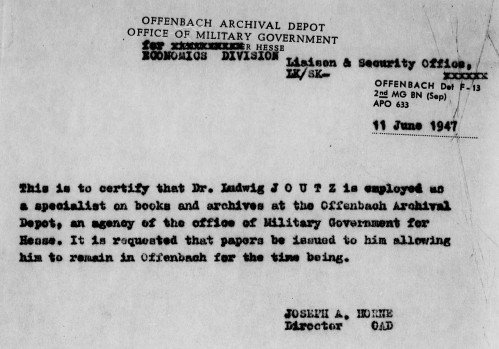
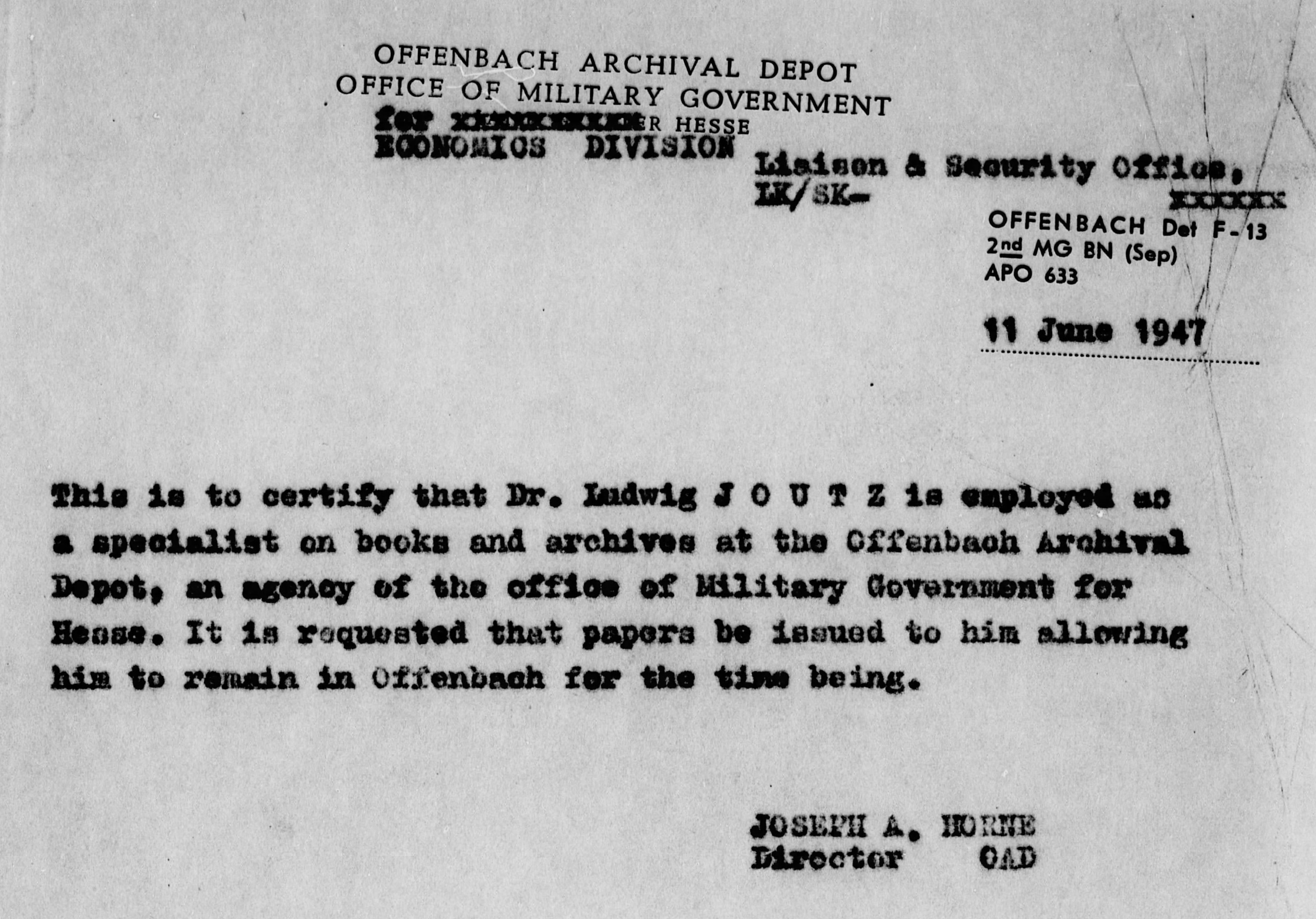
LJConfirmation

Between June 1, 1947 and March 1948, Joutz would serve as an operations specialist on books and archives at the Offenbach Archival Depot.  During that period, he and Horne, by then director of the Depot, would become great friends. Horne would aid Joutz in resettling in the U.S. where he would establish himself as architect. They would become godparents to each other’s children and remain friends until the end of their days.
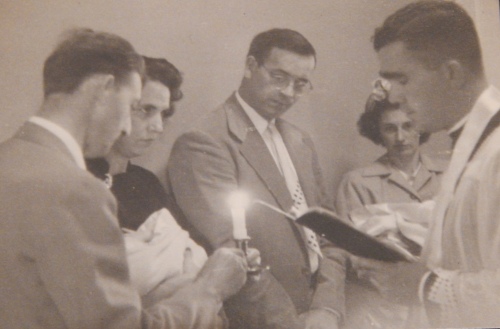
familyceremony

joseph and elsie horne and ludwig and lucy joutz

Throughout out his personal and professional life, Joutz would travel around the world.   As part of those travels, whether for work or for pleasure, he would view his surroundings with an artist’s eye and try to capture what he saw.  Yes, with a camera like his friend Horne, but Joutz would also explore many different forms and techniques of art. He experimented with pen and ink, pastels, watercolor, woodblock prints, papercutting and more.  How do I know this? By a gift he painstakingly assembled for his son.
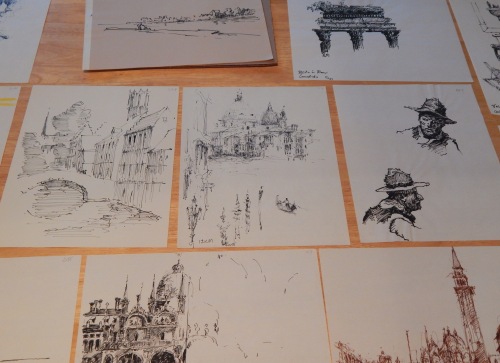
When visiting Joutz’s son, Frederick, a noted economist, I noticed a stack of suitcases tucked in a corner. Now these suitcases were the old-school, at least 1950’s if not earlier, kind of suitcases that are deep enough to curl up and go to sleep in and strong enough to, well, last a lifetime.  Frederick explained that they contained his father’s artwork. Now at first I thought he meant prints related to his father’s architectural practice, photos of completed projects, etc.  But that was not so.
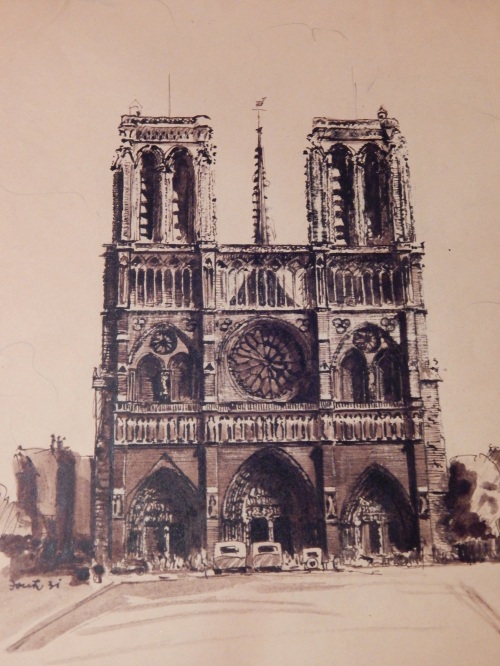
artwork by ludwig joutz
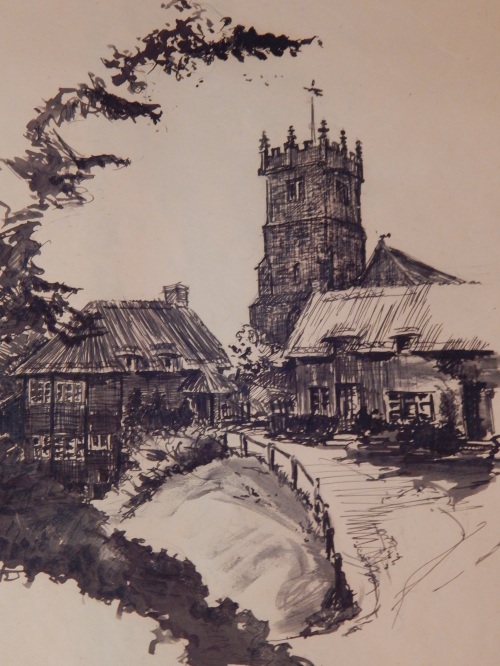
artwork by ludwig joutz

artwork by ludwig joutz

Inside the suitcases was artwork spanning nearly five decades. Joutz had carefully organized his artwork, everything from sketches on the back of used envelopes to sweeping washes of color applied to delicate Japanese papers.  It was all layered in stacks in these deep suitcases.  The son remembered his father engaged in the process and how he culled items along the way. One can only imagine what the father may have considered not worth saving.
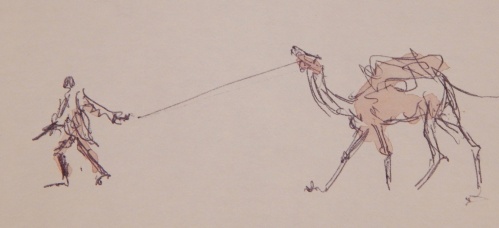
artwork by ludwig joutz

What I managed to see, the content of only two of the many suitcases, was breathtaking in its scope, in the diversity of imagery, and the range of techniques attempted. Each image suggested a story. On some of the pages were notes. What did they mean?
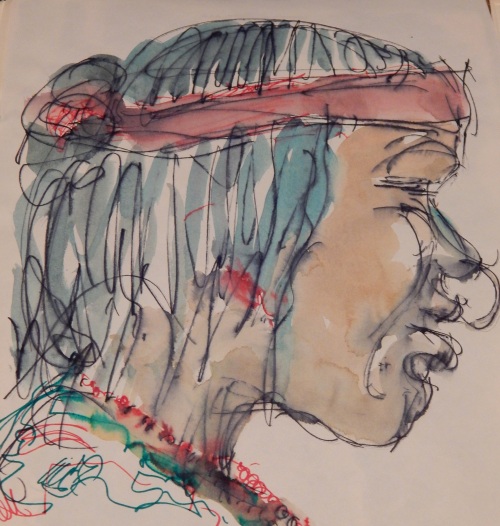
artwork by ludwig joutz
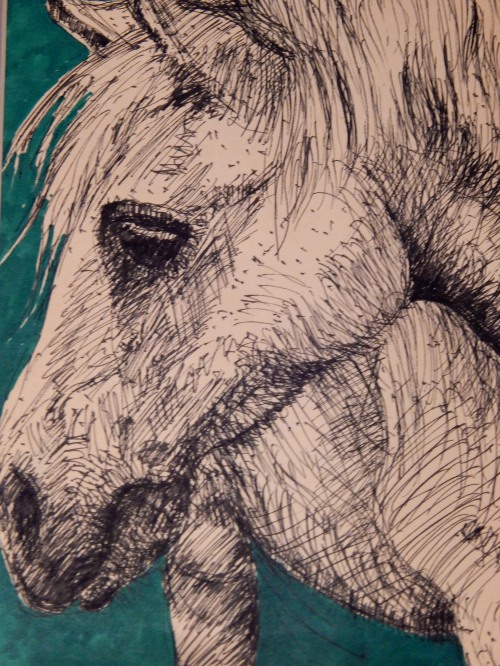
artwork by ludwig joutz

Some of the works were clearly copies of masterpieces, as done by any art student spending a day in an art gallery might do, but many images appeared to be of ordinary people.  Perhaps seen in European town squares or along desert routes when he traveled in Egypt?
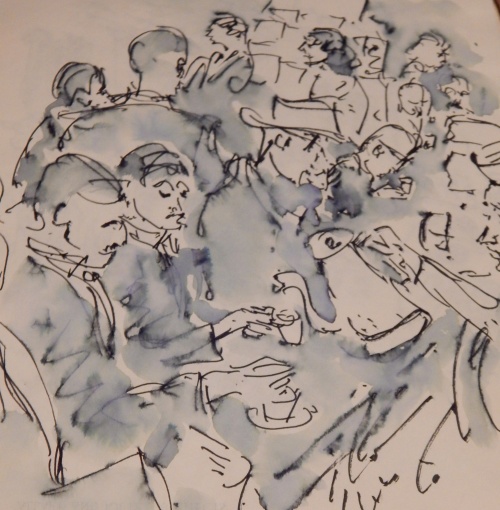
artwork by ludwig joutz
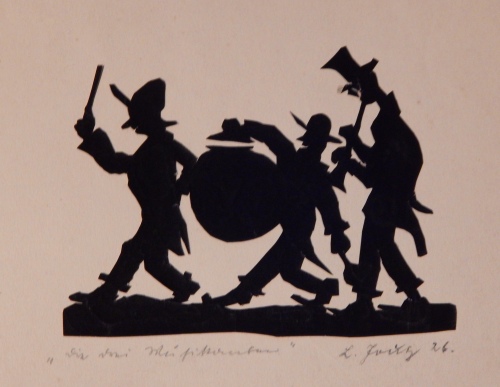
artwork by ludwig joutz
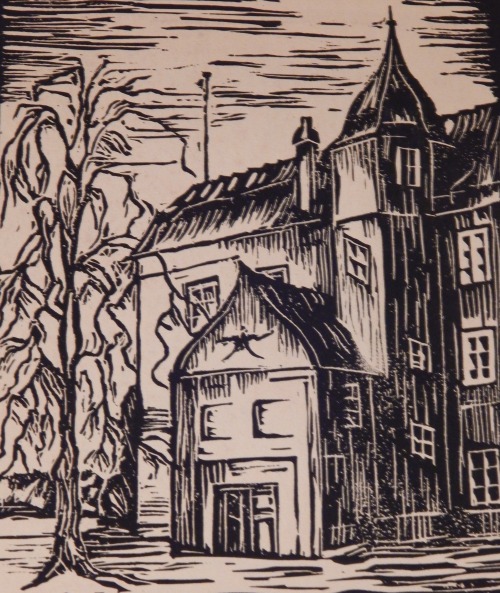
artwork by ludwig joutz?

Then there are the images that are ecclesiastical in nature … were they the early concepts or cartoons for church murals? Did the murals still exist or had they become lost and all that remains are these vestiges?
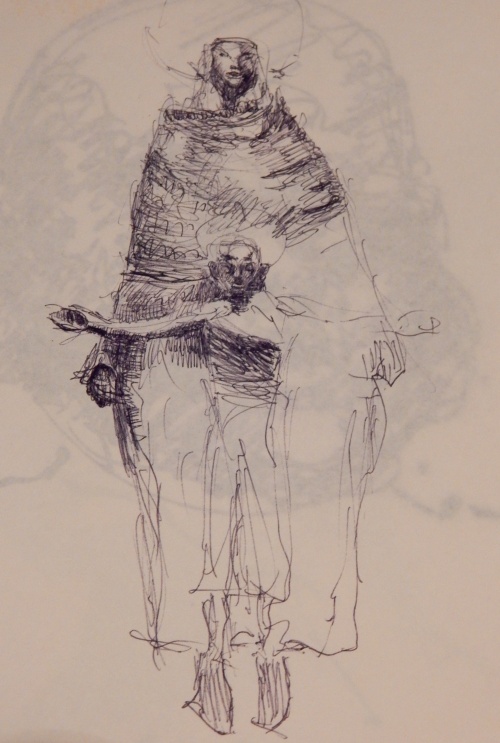
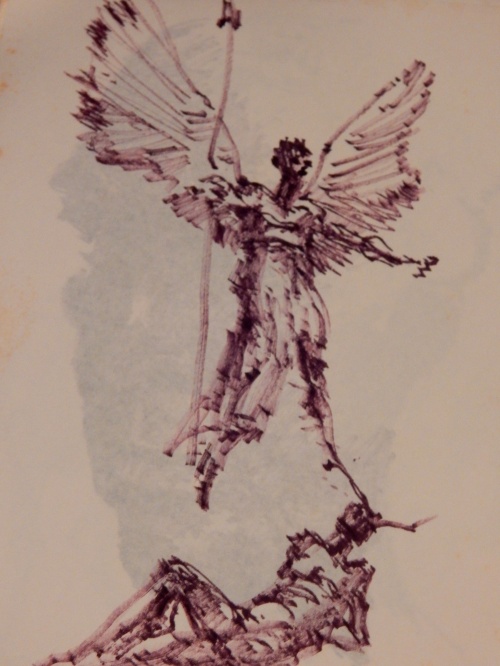
Those are stories that others may choose to research and tell one day. I am grateful that his son allowed me to see just a fraction of what is contained in those suitcases.  And a salute to Mr. Joutz for preserving his own artwork as he helped to preserve the works of others throughout his career.
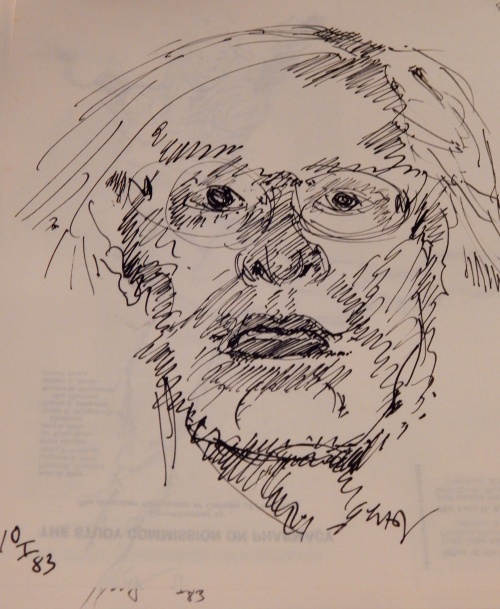
artwork by ludwig joutz


Sources and Additional Readings …

Fold3.com Holocaust Collection


Read Full Post »
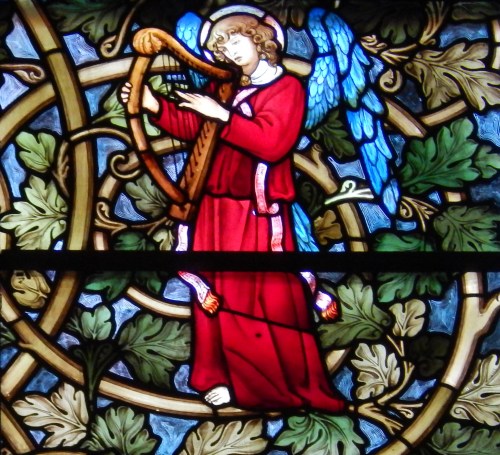
I will not likely make my goal of photographing by Christmas day all eighteen Burne-Jones angels in the stained glass windows known as the Christmas Windows at Trinity Church in the City of Boston.  The logistics are just not going to work out.  But …

… it has been a delightful exercise.  As I review what I did accomplish, new ideas are forming.

I think I shall consider this attempt a “first draft.” We’ll see what unfolds in the new year. 😉

You can read more about this personal project here: https://wordsandimagesbycynthia.com/2015/11/02/as-for-those-angels/

You can view the gallery of angels here: https://photosbycynthia.smugmug.com/ArchitectureDesign/Burne-Jones-Angels/

Read Full Post »
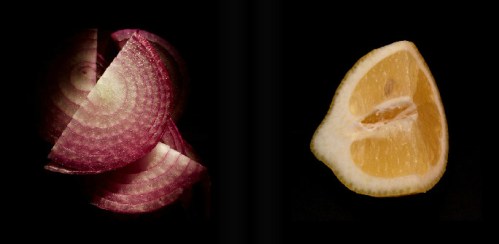
Even on a gray day in Cambridge and Somerville, the colors were popping out.

Read Full Post »

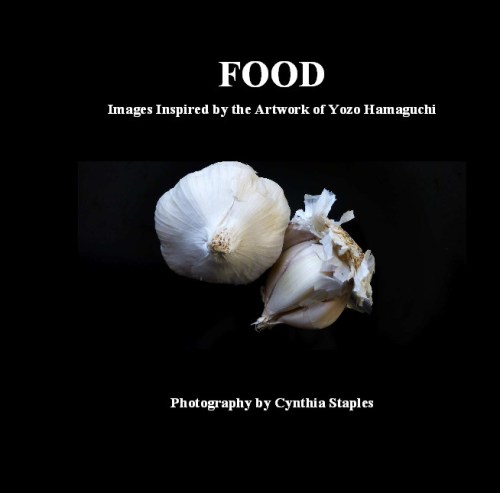
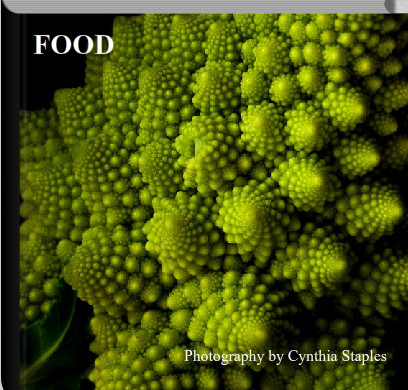
Now available in print and as a PDF in my bookstore.

FOOD

Read Full Post »

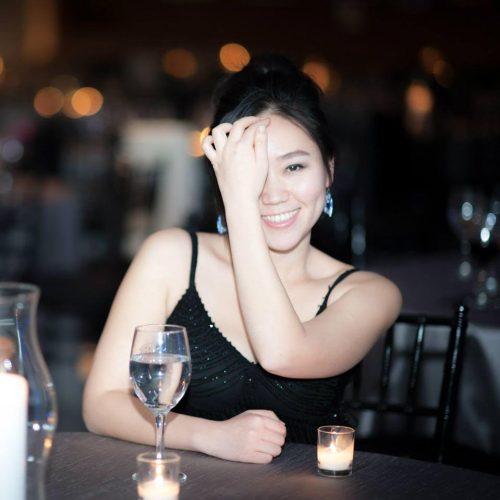
Nancy Li, owner of TAO Select Image courtesy of artist.

Nancy Li of TAO Selection
Image courtesy of artist.

Believe it or not, porcelain had been on my mind just before my chance encounter with Nancy Li of TAO Selection.  I had come across a review of Edmund de Waal’s new book, The White Road.  A noted potter, the book chronicles de Waal’s “journey into an obsession” to learn more about the origins and reinvention of porcelain.  The prologue opens with de Waal in China: “I’m trying to cross a road in Jingdezhen in Jiangxi Province, the city of porcelain, the fabled Ur where it all starts …” Nancy Li is quick to tell you, and rightfully so, her family is from this region of China and that she is a third generation designer of porcelain.

Image courtesy of artist.

As I later told her, what I most admired about our first brief encounter outside of a church gift shop was her determination to find venues to market her jewelry, and also to share the story of her family and cultural heritage of working with porcelain. In his book de Waal writes of working with porcelain clay to make a jar. Though his studio is in South London, he writes, “… as I make this jar I’m in China. Porcelain is China. Porcelain is the journey to China.” During an interview, Nancy Li made a similar statement.

Image courtesy of artist.

We met briefly in Cambridge during her lunch break.  Again, with great passion, she began sharing the story of her family especially of her grandfather, a porcelain master.  For three generations the family and 15-20 employees have been working with clay using a proprietary process, molding it in forms from pendants to bowls to large statuary, hand-glazing and then firing the pieces in her family’s kiln.  I’ve always thought of porcelain as fragile but porcelain can be strong as Nancy demonstrated by dropping a lovely blue and white bracelet on the floor. It made a beautiful ringing sound and remained unbroken.

On her website, Nancy describes attending the top fashion school in China, Donghua University.  In talking with her I learned that six years ago she moved to the U.S. where she also received a Ph.D. in Materials Engineering from Boston University and a Management Degree from the MIT Sloan School of Management, part of her dual efforts to better understand the science behind porcelain and to raise awareness globally about the family business and the high-quality of the artwork produced.

Image courtesy of artist.

On top of her full-time job as a Systems Engineer, Nancy makes time to interact with people around Boston, educating them about porcelain and obtaining feedback about peoples’ fashion interests.   She shares the feedback with her family, including producing sketches for alterations and new designs, inspired by what she hears and by her own artistic background.

She describes wanting to help people understand that high-quality porcelain is not only for the wealthy.  It is not only something from the past to be found in antique stores.  It is contemporary and it is art, an art that represents a culture.  “Each piece of art has a story behind it,” she says at one point, holding a necklace in her hand.  “It is art that inspires, that’s meant to be shown and shared. I think Americans have a wrong impression that everything made in China is cheap quality. What my family does in its local community, what it has been doing for so long, is of the highest quality and I want to share that work, our work, and help it evolve.”

Following are links to learn more about and connect with designer Nancy Li and to view more of her wearable porcelain art.

TAO Selection Etsy Shop

TAO Selection Website

Following are links to learn more about artist and writer Edmund de Waal and his passion for porcelain.

http://www.edmunddewaal.com/

The White Road

Read Full Post »
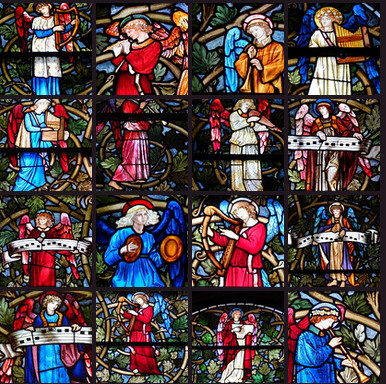
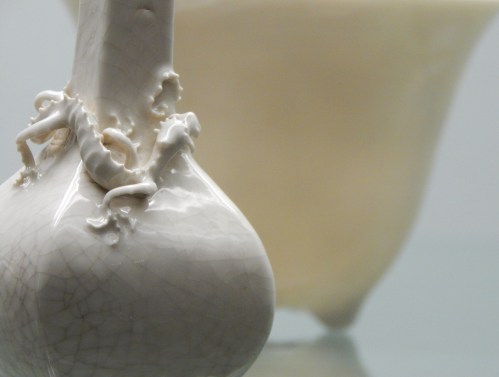
An unexpected treat as I meandered about the streets of Prague was to visit the National Gallery and view a small selection of its Asian and African art collection. There’s an excellent description of the collection’s origin and growth on the gallery website. When I visited, I was one of only a few people. In the silence and near solitude, it became almost a meditative space.  You can learn more in the link below.

Additional Reading

http://www.ngprague.cz/en/objekt-detail/kinsky-palace/

Read Full Post »

« Newer Posts - Older Posts »