Feeds:
Posts
Comments

Posts Tagged ‘history’

Excerpt from Edward Gordon Craig's Book of Penny Toys, 1899

Excerpt from Edward Gordon Craig’s Book of Penny Toys, 1899

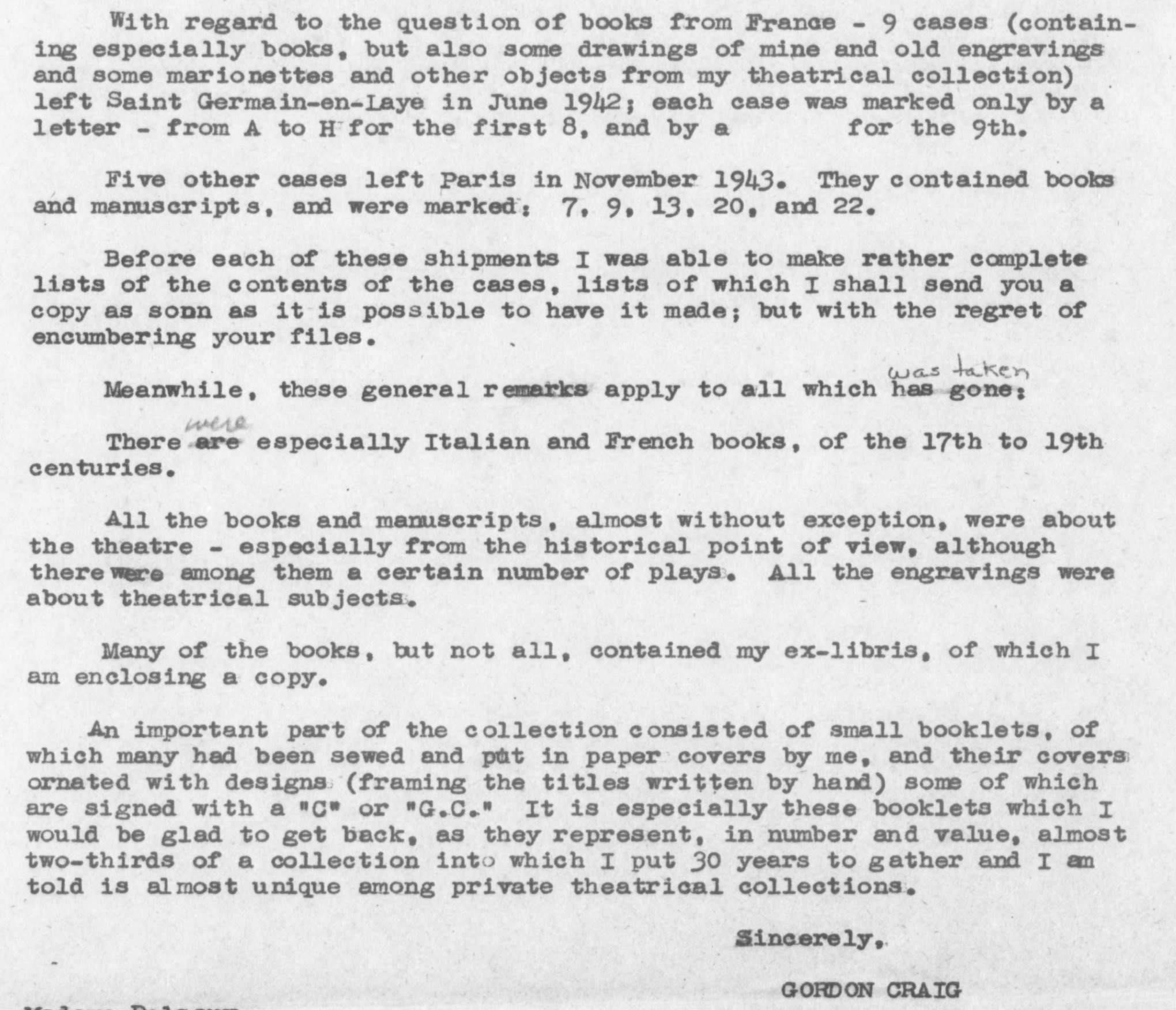
One day, as I was perusing the files of the Monuments, Fine Arts and Archives Unit as part of my walk through history with Mr. Horne, I kept coming across the name, Gordon Craig.  In a series of letters, Craig appealed to different agencies seeking the return of items stolen in France and taken to Germany.  In one letter, he even presented a list:

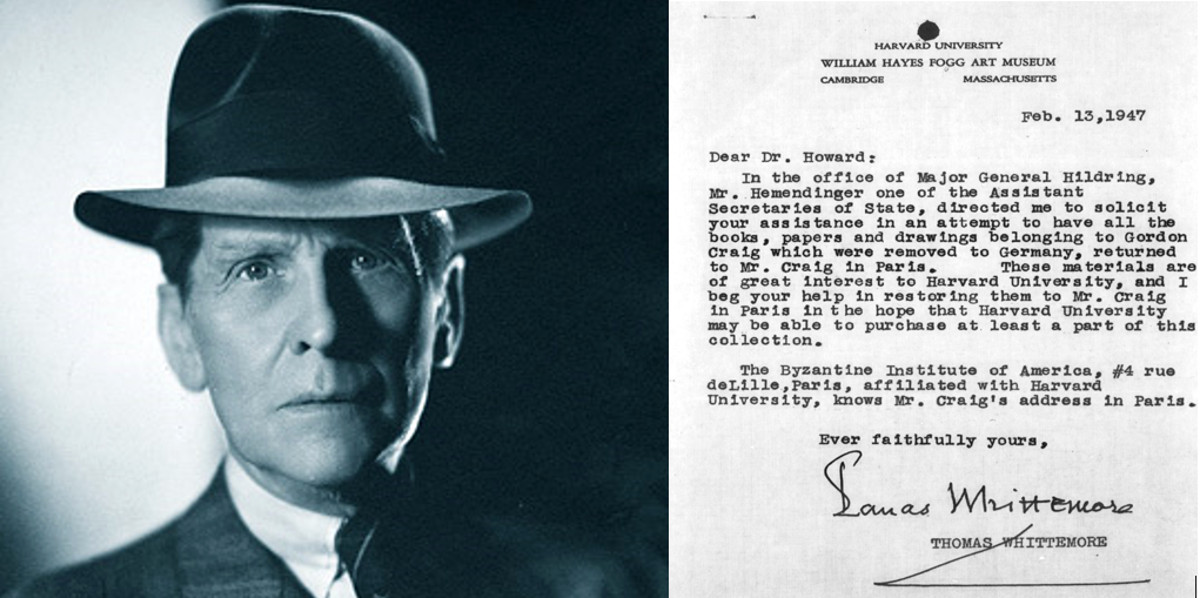
Additional letters had been been submitted on his behalf by noted scholars in the art world, like Thomas Whittemore.

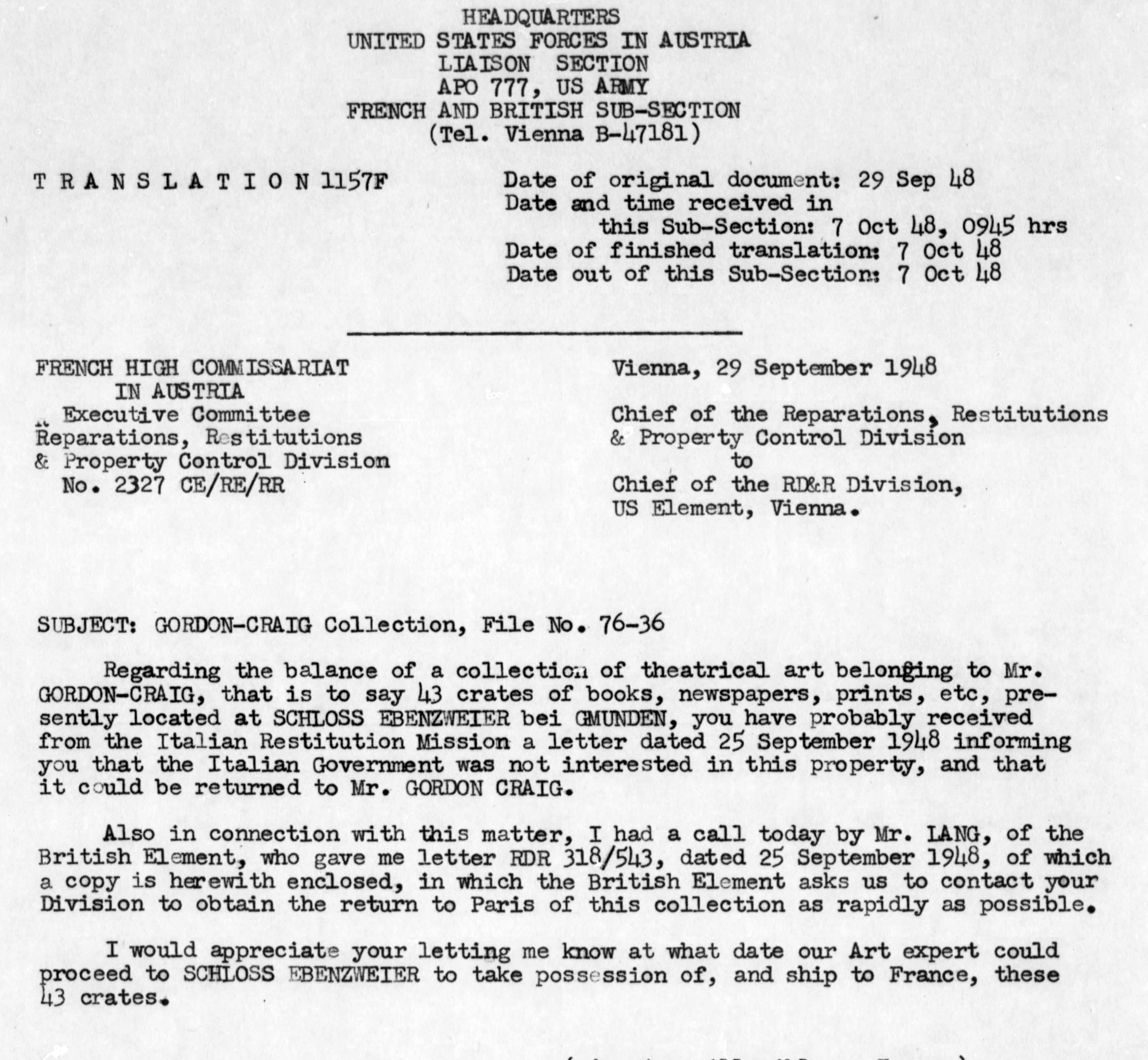
The correspondence, like this one, that first caught my attention was dated 1947.  By this time, many collections of books and papers recovered postwar had been shipped to the Offenbach Archival Depot in Germany, awaiting restitution.  And, by this time, Joseph A. Horne had been assigned as the third director of the Depot.  Horne was contacted and requested to make a search.  His findings:

Further inquiry would reveal that Craig’s property was in the hands of U.S. forces but in Austria, not Germany.  Unfortunately, while it was clear who had amassed the collection, it was unclear to whom the collection belonged, to which institution or even to which country.  But before I learned about that intrigue, I first had to learn about this Gordon Craig.  I was just curious.  Why was this man’s boxes of books and drawings of such interest?

Edward Gordon Craig

Edward Gordon Craig (1872-1966)

It didn’t take long to discover that he was one of the most innovative forces in theater whose influence is felt to this day.  A rather renaissance figure, an actor from a distinguished acting family…

as Hamlet, 1897

as Hamlet, 1897

a set designer and theatrical producer who revolutionized the use of light, space and costumes for storytelling

Craig's design (1908) for Hamlet 1-2 at Moscow Art Theatre, directed by Stanislavsky

Craig’s design (1908) for Hamlet 1-2 at Moscow Art Theatre, directed by Stanislavsky

a writer and publisher

who also did woodcuts and other illustrations.

I found many online biographies describing his years of studying, performing,  and teaching, and how he eventually moved to France.  One document even stated, “In 1931 he went to live in France and in 1948 made his home in Vence, in the south of that country, where he wrote his memoirs entitled Index to the Story of My Days (1957).” (National Trust)  But what happened between 1931 and 1948?  In most online bios, and even in this wonderful timeline charting his career, about this time period little is written.  It is the events that take place during this time that establishes Craig’s presence in the U.S. National Archives and in the files relating to the work of the Monuments, Fine Arts and Archives Unit.

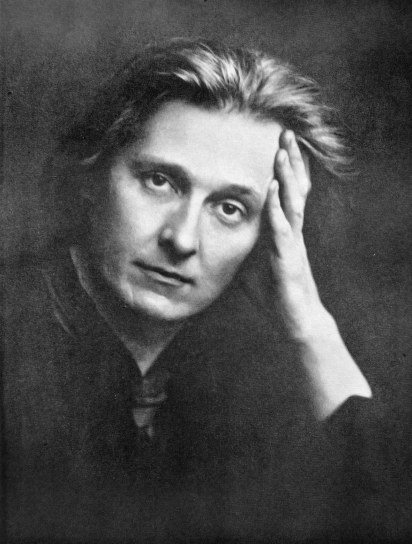
Edward Gordon Craig, 1941, by Dora Kallmus

Edward Gordon Craig, 1941, by Dora Kallmus

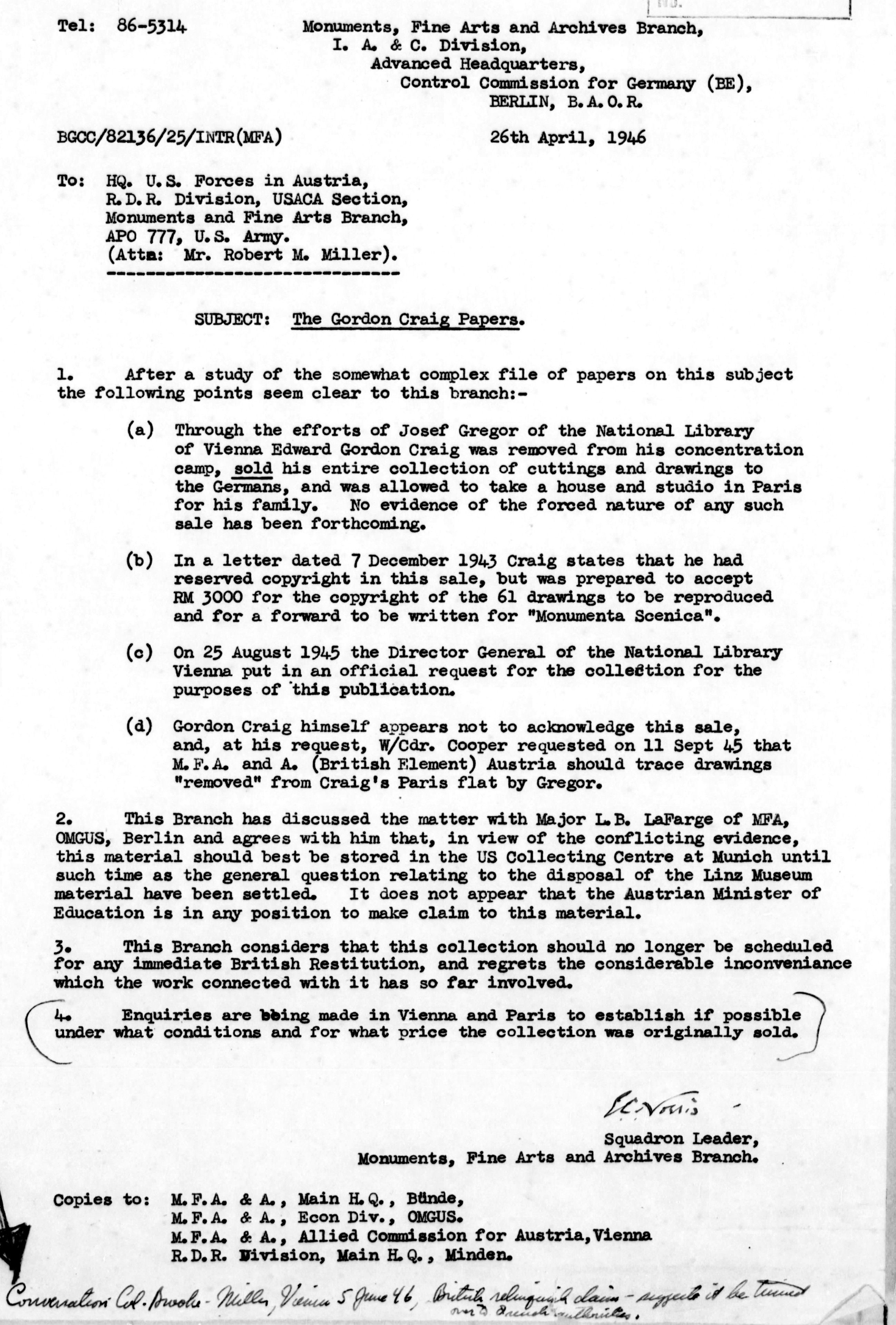
By the 1930s he had begun building his Gordon Craig Collection of writings and resources on the tools, techniques and artistry of theater.  In 1942 he would be arrested in German-occupied France and taken to a Nazi Concentration Camp.  He would be released, and his collection taken. Soon after, conflicting stories would arise, as evidenced in this letter, about whether or not he’d sold the collection and, if so, under what circumstances.

Joseph Gregor, mentioned in the above letter, had been working with Craig prior to the war.  Documentation suggests that Gregor and others at the Vienna library in some way facilitated Craig’s sell of his collection to Hitler, who wanted to add the collection to his planned museum and library at Linz, Austria. Craig also made claims that Gregor had personally removed drawings from his apartment without his agreement.

It took time and lots of paperwork but it appears that the items dispersed during the war were reassembled as a whole, and an attempt was made to return them to Craig.

In October 1948, MFA&A officer Evelyn Tucker handed over the 40-plus cases comprising the Craig Collection to a French representative.  The cases contained manuscripts, illustrations, back issues of The Mask and The Marionnette Magazine.  By November bills of laden were being exchanged between at least France and Britain to cover the cost of shipping the cases to Paris on behalf of Mr. Craig.

Nearly seventy years later, Edward Gordon Craig artwork and writings are distributed, as collections, in many major museums, universities and public and private libraries.  His vision remains respected to this day.  New articles are being written critiquing his work and his legacy, and exhibits of his drawings take place around the world.


Sources/Additional Readings

Biography of Edward Gordon Craig

Stage Design of Edward Gordon Craig

Victoria & Albert Museum early Craig images

National Portrait Gallery Craig image 1950

Digitized version of Craig’s Woodcuts and Some Words

Digitized version of Craig’s Book of Penny Toys

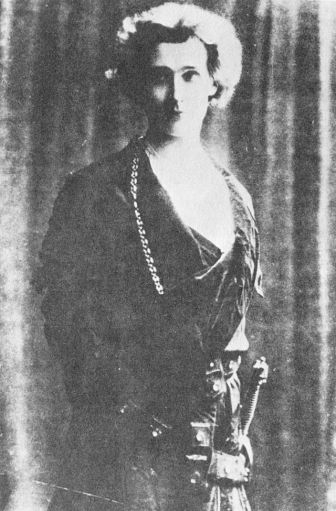
More about photographer Dora Kallmus aka Madame d’Ora

Beyond the Mask: Gordon Craig, Movement and the Actor

Edward Gordon Craig: A Vision of Theatre

About Thomas Whittemore


Read Full Post »

Like Lucy R. Woods, mentioned in a prior post, Sarah Wyman Whitman (1842-1904) taught Bible class at Trinity Church in Boston for over thirty years.  She was also an accomplished artist working in multiple media, from painting to glasswork to book cover design.

She was friends with Phillips Brooks, the rector of Trinity Church.  Upon his passing, she and her Sunday Bible class gifted the church with a window in his memory.

It was begun in 1895 and installed Easter, March 1896.  In a letter dated March 12, 1896, Whitman writes:

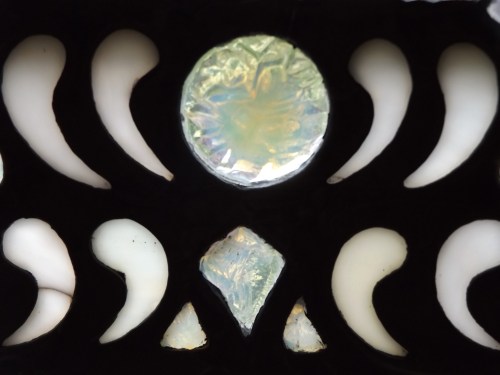
“The little memorial to Mr Brooks which my Bible Class has long dreamed of, is now finished and waiting to be put up at Easter. Someday I will show you this, and meantime send a little rough sketch. The three windows are in the Parish Room where the Class meets, and as it is also used for many practical purposes,

the windows (three giving on the cloister to the south) are kept in clear glass with jewelled flowers at the intersecting of the little frames …and then the middle one with a single device. 

In the glass of course there is a depth and richness that this paper sketch little conveys.”

The window is located in the parish library, and is another hidden gem of an architectural masterpiece.  If you would like to learn more about Sarah Wyman Whitman, there are some great resources available online including her letters.  The Boston Public Library has put together a gallery of her book cover designs.  Learn more about Trinity Church architectural tours here.


Read Full Post »

Detail from the Lucy R. Woods Window, Trinity Church, Boston

Detail from the Lucy R. Woods Window, Trinity Church, Boston

It is one of the many hidden gems of Trinity Church in the City of Boston.  According to archival records, the Woods Window was commissioned in memory of Miss Lucy R. Woods (1847-1904).  Miss Woods taught the Young Ladies’ Bible Class in the church Sunday School for thirty-three years, beginning in 1871.

The window was executed by John Hardman and Company, Birmingham, England, and designed by Dunstan John Powell, grandson of noted English architect and artist Augustus Pugin.

The window is located in a stairwell not easily accessible to the public but postcards and prints will soon be coming to the Book Shop.

Until then, you can read more about the original 1906 unveiling of the window here.  Hope to share more information about this window, and other hidden gems, in the near future.


Read Full Post »

Read previous Interludes here.

WWII: Europe: France; “Into the Jaws of Death — U.S. Troops wading through water and Nazi gunfire”, circa 1944-06-06, by Robert F. Sargent

WWII: Europe: France; “Into the Jaws of Death — U.S. Troops wading through water and Nazi gunfire”, circa 1944-06-06, by Robert F. Sargent

On June 6, 1944, the Western Allies launched the invasion of Normandy.  It would prove to be a pivotal point in the course of the war as soldiers, by air, land and sea, fought to liberate France from Germany.  Troops landed at beaches all along the northern coast.  As part of the larger strategy, four port cities were identified for capture to facilitate future entrance of Allied troops.  One of these port cities was Le Havre.  Secured in September 1944, the city would then be turned into a major entry and exit point for military personnel and equipment needed at the front.

[Abandoned boy holding a stuffed toy animal amid ruins following German aerial bombing of London, by Toni Frissell, 1945

Abandoned boy holding a stuffed toy animal amid ruins following German aerial bombing of London, by Toni Frissell, 1945

By the end of 1944, the Germans were in retreat.  While an Allied victory was in sight, much of Europe lay in waste.

Polish kid in the ruins of Warsaw, September 1939, by Julien Bryan

Polish kid in the ruins of Warsaw, by Julien Bryan

Caen, 1944

Caen, France

As a new year dawned, the Allies were pressing hard and in great need of reinforcements. Fresh troops were crossing the English Channel into Le Havre.

40 and 8 Boxcar

40 and 8 Boxcar (in this image from World War I)

There they could be transported inland, either by rail or by road, to staging camps where men and machines were made ready for action at the front. On January 17, 1945, in Le Havre, Joseph A. Horne, with the men of the 929th Heavy Automotive Maintenance Company, was supposed to board troop train 2980.  The train was to make its way to a French village bordering one of the largest of the military staging areas, Camp Lucky Strike.  Indeed, the train’s 45 wooden cars, called Forty and Eights, were filled with U.S. personnel including men from the 553rd Ambulance Company, 656th Quarterhead Railway Company, 4th Squad of the 2nd Maintenance Platoon and 1471st Engineers.  And, indeed, the train did depart.  What happened next has been called an avoidable tragedy.

For much of its journey, the train crawled along, sometimes at 10 miles per hour, en route to the train station in St. Valery-en-Caux.  But then something happened. The train picked up speed.  With worn out brakes and no speedometer, there was little the engineer could do.  Packed tight into the cars and unaware of events, the military personnel were at first overjoyed to be moving faster.  They did not know the brakes had failed. The train crashed into the St. Valery railway station. Cars crumpled, piling mountain high.  The reports of the carnage were gruesome. At least 87 people were killed and 150 injured.

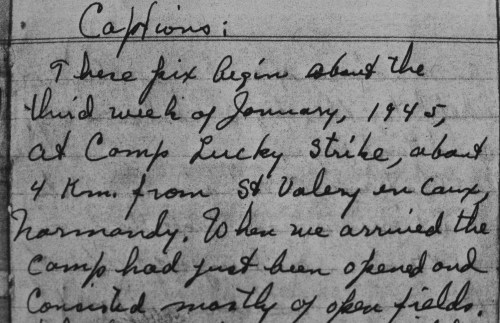
Horne and the men of the 929th were not on the train due to “some error on the part of an officer, as a result we rode the 40 miles from Le Havre to Lucky Strike in open trucks.”  Later Horne would take photos of the wreckage.  How do we know that? Because he says so in the caption notes he wrote that accompany the roughly 200 photos he took between 1945-1946 as he served in Germany and France.

His detailed notes, along with prints and negatives, are in a box in the Library of Congress.  They have yet to be digitized. Why he was taking photos with the 929th remains unclear.  Further research is needed.  After having worked as a photographer with the Farm Security Administration/Office of War Information, perhaps the military or some other arm of the federal government was continuing to utilize his photographic skill.

In any case, photocopies of at least 80 of the photos he took show images taken from January through at least June 1945 of the men of 929th at work, at play, and interacting with locals in France and Germany and of refugees, or “displaced persons”, from several other countries.  They show a war-ravaged European landscape, and they also capture the persevering spirit of people in the midst of war.

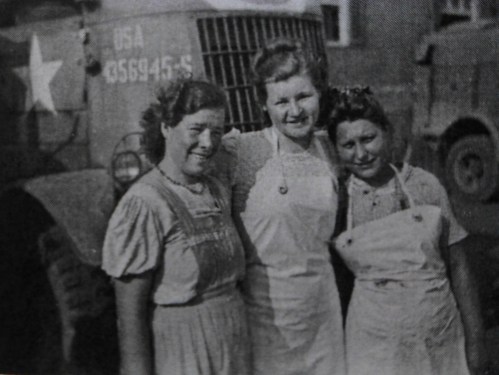
Russian girls who work in the kitchen of the 929th, by J. A. Horne

Russian girls who work in the kitchen of the 929th, by J. A. Horne

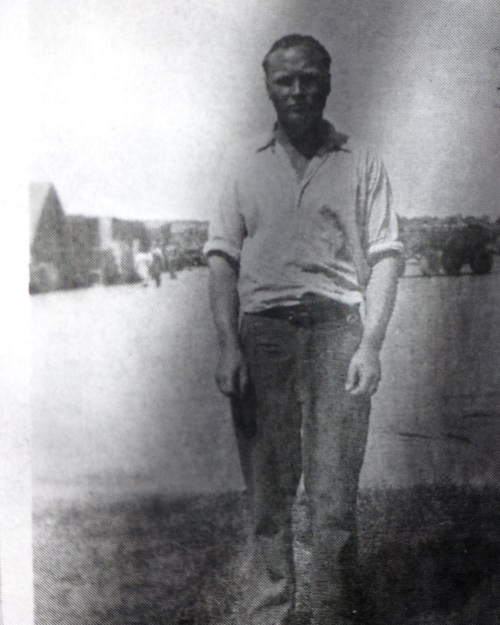
Former officer in the Russian army, captured by the Germans, and now attached to the Displaced Persons Unit of the 929th, by J.A. Honre

Former officer in the Russian army, captured by the Germans, and now attached to the Displaced Persons Unit of the 929th, by J.A. Horne

Frankfurt Vicinity, Germany. French family on Highway 8 returning home, by J. A. Horne

Frankfurt Vicinity, Germany. French family on Highway 8 returning home, by J. A. Horne

In his notes he describes taking photos from a moving train as the 929th travelled from Camp Lucky Strike to Verdun.  He describes holes in the sheet metal roof of a 929th shop caused by an air attack, and burned out tanks lined up to be salvaged near the shop area.  He describes a local elder, or burgermeister, in a German town pointing out the architectural highlights and history of his home.   The man refused to be photographed but he guided Horne around his city directing his photography.  Horne’s  caption notes, which are quite extensive, end with this statement:  “Other captions on back of prints.  Sorry I can’t do a good job on these captions.  There just isn’t time.”  The notes end around May 1945.

Around this time, the war is effectively ending in Europe.  The final battles are taking place, and soon Germany will surrender to the Western Allies and the Soviet Union.  And as German labor camps are secured, the full horror of the war comes to light.

Buchenwald Corpses, 1945

Buchenwald Corpses, 1945

What happens to Horne over the next six to twelve months is unclear.  He later summarizes that period of his enlistment as serving as an education officer.  Somehow, at some point, he comes into contact with the Monuments, Fine Arts and Archives Unit, the men and women tasked with recovering, preserving and eventually restituting the world’s great art, including the paintings, books and spiritual items that had belonged to the Jewish families of Europe.  By June 1946, he would no longer be enlisted in the Army but be employed with the MFA&A as a civilian.

U.S. soldier in a bombed church, by Toni Frissell

U.S. soldier in a bombed church, by Toni Frissell

He would be reunited with some of the same colleagues with whom he’d worked at the Farm Security Administration/Office of War Information.  He would be called upon to utilize his skills with language, especially German, his understanding of photography, and his experience in engaging with other cultures.  And, as he would later describe to his son, there would be the adventures to be had as former allies became enemies.

Stay tuned for further Interludes in June.


Sources/Further Reading …

About Cigarette Camps

Russell C. Eustice Recalls the Troop Train 2980 Tragedy at St. Valery-en-Caux During World War II

The WWII 300th Combat Engineers  553rd Ambulance Company

Area Soldier Survived World War II Train Disaster

More about the picture of the Polish boy in the Warsaw Ruins 

More about photographer Toni Frissell and Women at the Front

More about the Monuments Men

Introduction to the Holocaust

Read Full Post »

Photographer Arnold Genthe

Photographer Arnold Genthe

One of the unexpected gifts of researching the life of Joseph Anthony Horne has been exposure to photographers from the late 19th and early 20th centuries whose work and craftsmanship are no longer that widely known outside of scholarly circles.  Via the Library of Congress Prints & Photographs Online Catalog, I’ve most recently enjoyed learning about Arnold Genthe.  Born in Germany in 1869, by 1895 he would be living in San Francisco, California, serving as the tutor to a Baron’s son.  There, he would gain access to a camera, become adept at its use and begin documenting his travels around the city, especially in Chinatown.

Friends, Chinatown, San Francisco by Arnold Genthe. taken between 1896 and 1906

Friends, Chinatown, San Francisco by Arnold Genthe. taken between 1896 and 1906

Eventually he would become a famed photographer for the wealthy elite, politicians, artists and to budding movie stars like Greta Garbo.

Portrait of Greta Garbo, taken July 1925

Portrait of Greta Garbo, taken July 1925

His earliest photographs, with the exception of photos he took in Chinatown, would be destroyed by the city’s devastating 1906 earthquake and fire.  But with a successful career that spanned three decades, the Library of Congress has archived thousands of his photographic images — the negatives and other materials were purchased from his estate after his death in 1943.  During his lifetime, like many people of his generation with his financial resources, Genthe would spend time traveling throughout Africa and Asia.

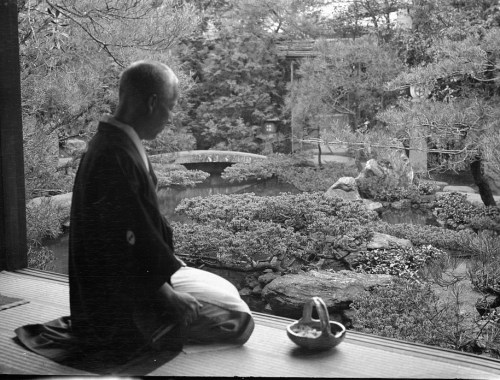
It is his images taken in Asia during a several month sojourn in 1908 that I find especially captivating.  Collectively titled, Travel Views of Japan and Korea, the breadth of imagery is extensive.

No city names are cited or any geographic locations given.  There are certainly clues to be gleaned from the landscape (e.g. an image of a giant buddha that may be in Kamakura and images of the Itsukushima Shinto Shrine).

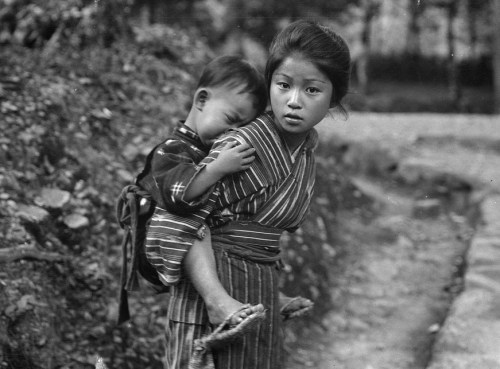
I am particularly fascinated by his photographs of the people.

Each image holds a story in the expressions captured on faces over a hundred years ago, in the clothing worn, in the backgrounds of each scene.

Genthe seemed particularly drawn to photographing how, rich or poor, young or old, everyone took care of the babies.

The images are a dream in terms of capturing a very specific moment in time.

The Genthe Collection at the Library of Congress can be viewed via this link: http://www.loc.gov/pictures/collection/agc/

If you’re particularly interested in the photographs of Old Chinatown, there’s a book available here.

And it appears that at least one chapter of his 1936 memoir, As I Remember, is available online here.

Read Full Post »

In the following 1965 debate that took place between James Baldwin and William F. Buckley, Baldwin refers to “forty years ago when I was born …” Perhaps, because of my age, the phrase struck a chord.  The debate takes place at Cambridge University, and its focus is that ever-evolving, often elusive concept of the american dream, and at whose expense that dream is realized.   The whole debate is 58 minutes long.  With all due respect to Mr. Buckley and his rebuttal, I am encouraging/challenging people to listen to at least the first part of the debate, the remarks of Baldwin.  Whatever one’s political or social leanings, his command of language is a marvel to watch and listen to.

As I listened to Baldwin I was saddened at the timelessness of his words.  Why are his words, spoken nearly fifty years ago, as relevant today?  In a related side note, this morning I had the opportunity, by phone, to singalong with my four-year old nephew, Jordan.  Apparently we both like to whistle.  As I listened to Baldwin, I thought of Jordan and other little family members new to the world.  I hope that they learn about Baldwin as a writer and an activist in his own unique way, and that they also learn about the power of words.

Read Full Post »

Lucy Schildkret Dawidowicz

Lucy Schildkret Dawidowicz

As part of my research with the Interlude series, I’ve been reading the memoir, From That Place and Time, by Lucy S. Dawidowicz. The narrative focuses on the period 1938-1947, and the author’s time spent pre-war in Vilna, Poland, studying at the Yiddish Scientific Institute (YIVO) and then her later post-war work to identify the remains of the YIVO library.  The Interlude series is my attempt to share some of what I’ve learned in my walk through history via the life of Joseph Anthony Horne.  The paths of Ms. Dawidowicz and Mr. Horne cross in 1947 in the German city of Offenbach at the Offenbach Archival Depot.  More details to follow in the next Interlude, coming soon.


Read Full Post »

foreword to the interludes

interlude: genesis

interlude: exodus, part 1

interlude: exodus, part 2

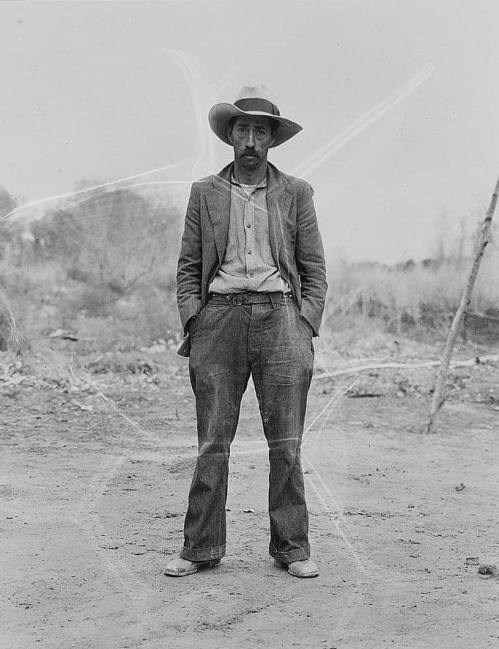
Son of farmer in dust bowl area. Cimarron County, Oklahoma , photo by Arthur Rothstein, 1936.

Son of farmer in dust bowl area. Cimarron County, Oklahoma , photo by Arthur Rothstein, 1936.

“A gentle wind followed the rain clouds, driving them on northward, a wind that softly clashed the drying corn. A day went by and the wind increased, steady, unbroken by gusts. The dust from the roads fluffed up and spread out …  Now the wind grew strong and hard …  the dust lifted up out of the fields and drove gray plumes into the air like sluggish smoke. The corn threshed the wind and made a dry, rushing sound. The finest dust did not settle back to earth now, but disappeared into the darkening sky.”  — in the opening chapter of The Grapes of Wrath by John Steinbeck.

Liberal (vicinity), Kan. Soil blown by dust bowl winds piled up in large drifts on a farm, photo by Arthur Rothstein, 1936.

Liberal (vicinity), Kan. Soil blown by dust bowl winds piled up in large drifts on a farm, photo by Arthur Rothstein, 1936.

In April 1935, as Joseph A. Horne was teaching music in West Virginia, President Franklin Delano Roosevelt was creating the Resettlement Administration (RA) in Washington, D.C.  Guided by Rexford G. Tugwell, the agency intent was to help farmers and other rural poor suffering from the economic impacts of the Great Depression and the devastation of dust storms and other ecological events.   A Historical Section was created within the agency to document existing poverty as well as report the benefits of the agency’s work.  This section would be led by Roy E. Stryker.

Rexford Tugwell and Roy Stryker

Rexford Tugwell and Roy Stryker

In the 1920s, Tugwell and Stryker, both economists, had taught at Columbia University.  While there, they had collaborated on the book, American Economic Life. Stryker’s contribution included using photography to complement the text, something he also did as part of his lectures at the university.  He was not a photographer but he, and Tugwell, recognized photography as a useful, illustrative tool to convey and strengthen information.

Farmer and sons walking in the face of a dust storm. Cimarron County, Oklahoma, photo by Arthur Rothstein, 1936.

Farmer and sons walking in the face of a dust storm. Cimarron County, Oklahoma, photo by Arthur Rothstein, 1936.

Stryker left academic life to follow his friend and mentor to the Resettlement Administration. Three decades later, Stryker would recount that “Tugwell never said, “Take pictures.”  He said, “We need pictures.”  He never said how to take them.  He said, “Remember,” — and this is the only thing I can remember — “remember that the man with the holes in his shoes, the ragged clothes, can be just as good a citizen as the man who has the better shoes and the better clothes.” (Interview, June 13, 1964)

Farmer, local type, Brown County, Indiana, photo by Theodor Jung, 1935.

Farmer, local type, Brown County, Indiana, photo by Theodor Jung, 1935.

The agency’s original focus was on Rural Rehabilitation, Rural Resettlement, Land Utilization and Suburban Resettlement.  Activities included purchasing exhausted farmlands from farmers to convert the land into pastures or parks, for instance, and providing training for farmers to rehabilitate their farms through refinancing and other debt adjustments.  Out of work farmers were given jobs.  Building projects were begun.  The most controversial feature of the agency’s efforts was relocation.

Scottsboro (vicinity), Alabama. Farmers who have been resettled at work in a sand pit at Cumberland Mountain Farms, a U.S. Resettlement Administration project, photo by Arthur Rothstein, 1935.

Scottsboro (vicinity), Alabama. Farmers who have been resettled at work in a sand pit at Cumberland Mountain Farms, a U.S. Resettlement Administration project, photo by Arthur Rothstein, 1935.

From the beginning, the agency did not have much Congressional support.  Part of it was political.  Tugwell was considered to be one of the most radical of FDR’s New Dealers.  Plus the idea of relocating nearly a million farmers and other rural poor off the land into cities that they’d helped to build seemed too socialistic.

Rehabilitation client, Garrett County, Maryland, photo by Theodor Jung, 1935.

Rehabilitation client, Garrett County, Maryland, photo by Theodor Jung, 1935.

With funding limited by Congress, the Resettlement Administration would eventually dramatically narrow its efforts and focus on building relief camps in California for migratory farm workers.  One of these relief camps would inspire John Steinbeck’s The Grapes of Wrath.

All races serve the crops in California, photo by Dorothea Lange, 1935

All races serve the crops in California, photo by Dorothea Lange, 1935

Faced with rising criticism for his management, Tugwell resigned from the Resettlement Admininistration in 1936.  By September 1937, the agency was folded into a new federal entity, the Farm Security Administration (FSA).  The FSA, with its mandate to help the rural poor, would complete some of the Resettlement Administration’s original projects as well as embark upon a whole other series of financial and technical assistance programs.  Roy Stryker was given the greenlight to continue his documentary photography program.

Negro field worker. Holtville, Imperial Valley, California. He has just made himself shoes out of that old tire, photo by Dorothea Lange, 1935.

Negro field worker. Holtville, Imperial Valley, California. He has just made himself shoes out of that old tire, photo by Dorothea Lange, 1935.

He directed his photographers to take the best picture possible and to capture the story behind the image.  He could not tell them how to use their cameras, but he did suggest themes to focus on.

Imperial Valley, California, Mexican. He tells his story: he helped drive the French out of Mexico, fought against Maximilian, and he has, by serving the crops for many years, help build up Imperial Valley, photo by Dorothea Lange, 1935.

Imperial Valley, California, Mexican. He tells his story: he helped drive the French out of Mexico, fought against Maximilian, and he has, by serving the crops for many years, help build up Imperial Valley, photo by Dorothea Lange, 1935.

Based on how they operated in the field, these early documentary photographers, including Dorothea Lange, Walker Evans, Ben Shahn and Arthur Rothstein, were sometimes described as “sociologists with cameras.”

Mexican field worker, father of six. Imperial Valley, Riverside County, California, photo by Dorothea Lange, 1935.

Mexican field worker, father of six. Imperial Valley, Riverside County, California, photo by Dorothea Lange, 1935.

The photographers traveled across the nation, by assignment, sometimes alone and sometimes in groups, to areas of economic challenge, capturing dramatic hardships and also simply documenting people living their daily lives.

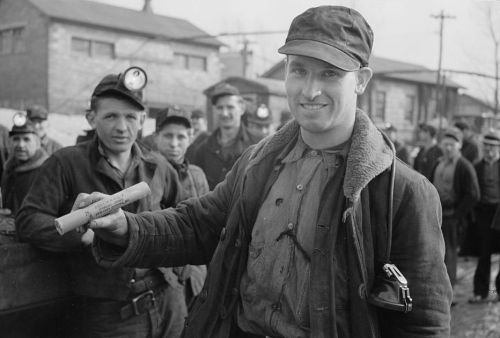
Untitled photo, possibly related to: Miners at American Radiator Mine, Mount Pleasant, Westmoreland County, Pennsylvania, photo by Carl Mydans, 1936.

Untitled photo, possibly related to: Miners at American Radiator Mine, Mount Pleasant, Westmoreland County, Pennsylvania, photo by Carl Mydans, 1936.

Farmer and sons walking in the face of a dust storm. Cimarron County, Oklahoma, photo by Arthur Rothstein, 1936.

Warm Springs Indian boy. Molalla, Oregon photo by Arthur Rothstein, 1936.

The FSA would operate from 1937 – 1942, with its photography unit capturing the diversity of the United States.

Negro boys on Easter morning. Southside, Chicago, Illinois, photo by Russell Lee, 1941.

Negro boys on Easter morning. Southside, Chicago, Illinois, photo by Russell Lee, 1941.

That diversity would be represented in the ranks of the photographers that Stryker brought together, men and women of different backgrounds, interests, and photographic skill.

Westmoreland project, Pennsylvania. Westmoreland County. Construction worker on the Westmoreland subsistence homestead project, photo by Walker Evans, 1935.

Westmoreland project, Pennsylvania. Westmoreland County. Construction worker on the Westmoreland subsistence homestead project, photo by Walker Evans, 1935.

In 1942, the photography unit moved into the Office of War Information (OWI)The OWI was created shortly after U.S. entry into World War II as an effort to consolidate existing government information services.

Two children in Anacostia, Washington, D.C. at the Frederick Douglass Housing Project, photo by Gordon Parks, 1942.

Two children in Anacostia, Washington, D.C. at the Frederick Douglass Housing Project, photo by Gordon Parks, 1942.

By 1943, another federal agency, the Office for Emergency Management, would  also be brought under the OWI umbrella, and its activities and some of its staff would merge with Roy Stryker’s photographic unit.  One of those staff would be Joseph A. Horne.

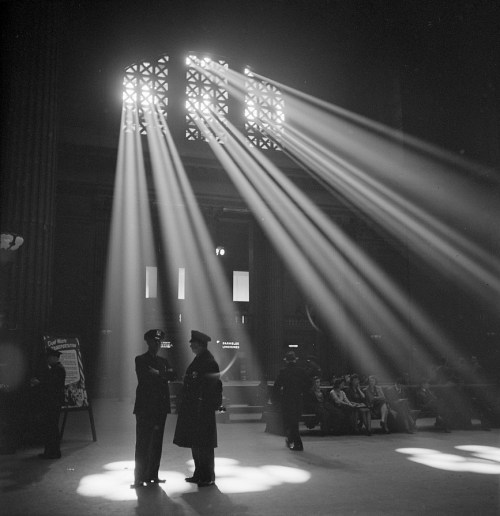
Chicago, Illinois. In the waiting room of the Union Station, photo by Jack Delano, 1943.

Chicago, Illinois. In the waiting room of the Union Station, photo by Jack Delano, 1943.

As these many agencies consolidated into one, the Farm Security Administration-Office of War Information (FSA-OWI), the nature of the photographs taken by its photographers changed to some degree as did the purpose of the images.

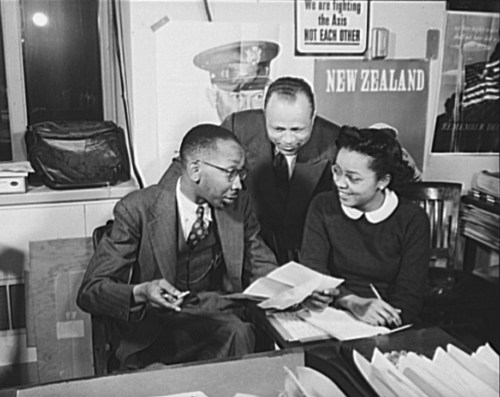
Office of War Information news bureau. Ted Poston, Negro desk editor of the Office of War Information (OWI), discusses a letter from one of the 240 Negro editors to which he sends war news from Washington, with William Clark and Harriette Easterlin, his assistants, photo by Alfred T. Palmer, 1943.

Office of War Information news bureau. Ted Poston, Negro desk editor of the Office of War Information (OWI), discusses a letter from one of the 240 Negro editors to which he sends war news from Washington, with William Clark and Harriette Easterlin, his assistants, photo by Alfred T. Palmer, 1943.

Documenting American life was still important but now with an emphasis on framing the images so that they would inspire patriotism, educate people about how to live and act during war time,  and evoke a sense of national pride in the strength, good humor and resilience of the American people.

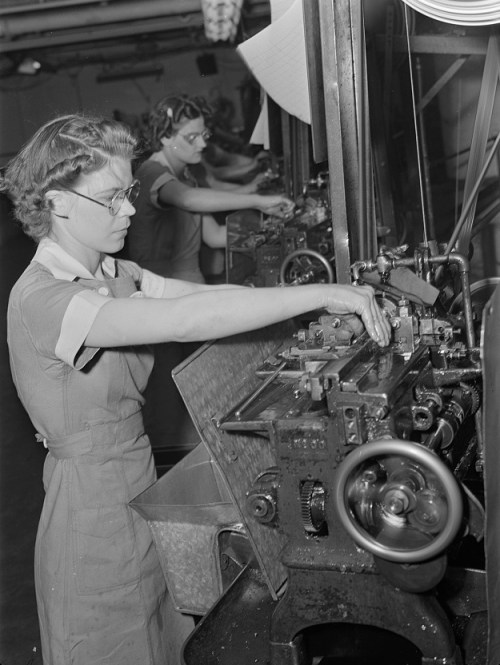
Women in industry. Tool production. Arms for the love of America! The capable young woman whose strong hands guide this cutoff machine is one of a Midwest drill and tool factory's many women employees. Almost 1,000 women have recently been employed in this comparatively new plant; sole men workers, other than foreman, are those in the heat treating department. Republic Drill and Tool Company, Chicago, Illinois, photo by Ann Rosener, 1942.

Women in industry. Tool production. Arms for the love of America! The capable young woman whose strong hands guide this cutoff machine is one of a Midwest drill and tool factory’s many women employees. Almost 1,000 women have recently been employed in this comparatively new plant; sole men workers, other than foreman, are those in the heat treating department. Republic Drill and Tool Company, Chicago, Illinois, photo by Ann Rosener, 1942.

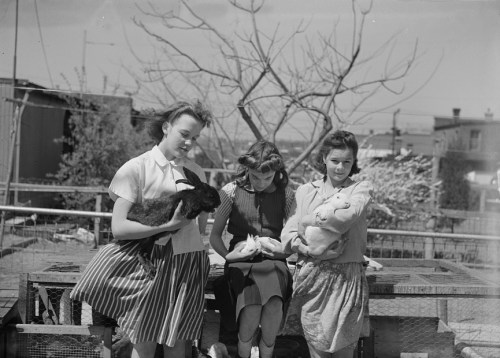
Joseph Horne’s photos that appear in the FSA-OWI Collection, now housed in the Library of Congress, focused on the Washington, D.C. area where he had settled with his family.  His images include the crafting of victory gardens and urban farms.

Washington, D.C. Children with rabbits which were formerly kept as pets, but now are being raised for food, photo by Joseph A. Horne, 1943.

Washington, D.C. Children with rabbits which were formerly kept as pets, but now are being raised for food, photo by Joseph A. Horne, 1943.

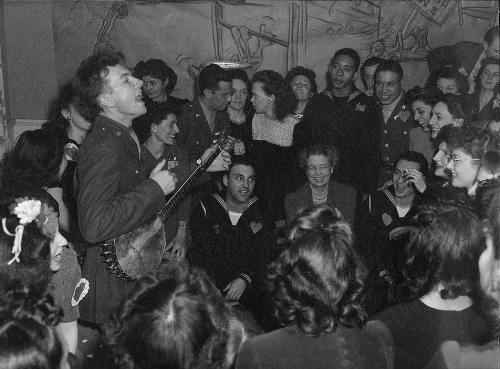
He also photographed the unique monuments located in the Congressional Cemetery, and the mix of peoples who made their way through Washington’s Franklin Park. And then there was that night in February 1944, when he photographed the opening of a new labor canteen.

Washington, D.C. Pete Seeger, noted folk singer entertaining at the opening of the Washington labor canteen, sponsored by the United Federal Labor Canteen, sponsored by the Federal Workers of American, Congress of Industrial Organizations (CIO), photo by Joseph A. Horne, 1944

Washington, D.C. Pete Seeger, noted folk singer entertaining at the opening of the Washington labor canteen, sponsored by the United Federal Labor Canteen, sponsored by the Federal Workers of American, Congress of Industrial Organizations (CIO), photo by Joseph A. Horne, 1944

The photography unit was only one part of the FSA-OWI but it was one of the most successful units.  Through domestic and overseas operations, the  agency had sought to excite and educate Americans at home, and inform (or intimidate) allies and foes abroad, using radio broadcasts (e.g. Voice of America), newspapers, posters, film and photography. But as World War II progressed, conflicts arose around agency management and how to balance civilian and military interests.  Soon, Congress would severely cut the organization’s budget. By 1944, the enormous collection of FSA-OWI photos, black and white and color, would be transferred to the Library of Congress where they remain a valuable resource to this day.

Negro boy near Cincinnati, Ohio, photo by John Vachon, 1942 or 1943.

Negro boy near Cincinnati, Ohio, photo by John Vachon, 1942 or 1943.

By 1945, the Office of War Information as an organization was no more.  Any relevant international activities were transferred to the U. S. State Department, while relevant information gathering and related responsibilities were handed over to the intelligence agencies like the Office of Strategic Services/Central Intelligence Agency.

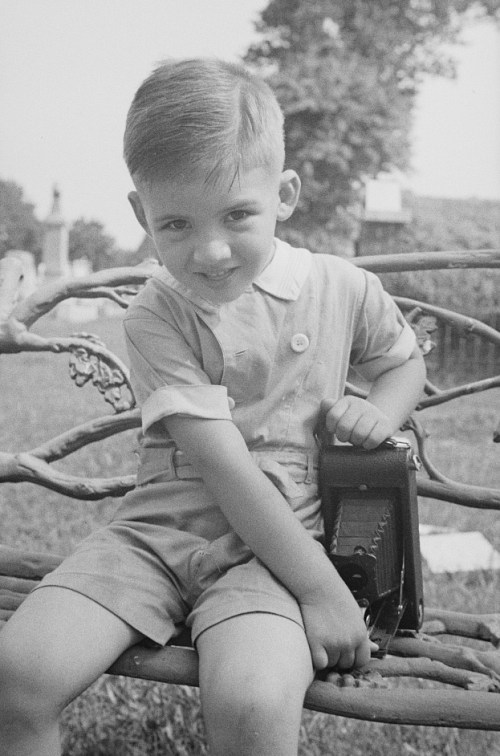
Joseph Jr. with Camera, photo by Joseph A. Horne.

Joseph Jr. with Camera, photo by Joseph A. Horne.

By the spring of 1944, Joseph A. Horne, the fellow with whom we are walking through history, had enlisted in the U.S. Army.  Soon he would be off to Europe where photography would remain an important feature of his life.  But before he traveled overseas, he would let his son play with one of his cameras.

Additional Reading/Sources …

Library of Congress Prints and Online Catalog

Stryker’s Shooting Scripts

Resettlement Administration

Farm Security Administration

Office of War Information

Oral Interviews with Roy E. Stryker

About Roy E. Stryker

Out of One, Many:  Regionalism in FSA Photography

Stryker and the FSA

John Steinbeck

FDR Presidential Library and Museum


Read Full Post »

foreword to the interludes

interlude: genesis

interlude: exodus, part 1

Photographers shooting cherry blossoms in Washington, D.C., 1922.

Photographers shooting cherry blossoms in Washington, D.C., 1922.

In early 1920s America, “a return to normalcy” was the popular catchphrase. People were weary from war and desiring to pull back from engagement in world affairs. With the support of business and promotion of isolationism, the Republicans would hold the White House throughout the decade.

Five sisters working for congressmen in Washington, 1926

Five sisters working for congressmen in Washington, 1926

Throughout most of the decade, the economy improved in the U.S. and in many parts of the world.  At the same time, countries like Germany were still dealing with the debts and damages of war, and in many countries, there were rising tides of nationalism — and resulting conflicts — as people sought independence from colonial powers.  In the U.S. wages were increased by some industry leaders.  Tax rates were lowered for the wealthy.  It was a bullish stock market.  In general, people had more money.  Some invested in stocks for the first time.  A consumer culture evolved.

Flapper 1922

Flapper 1922

In some agricultural areas, like Nebraska where Joseph lived, the situation was a bit different.  The postwar economics were not as kind.  The technological advances (e.g. electricity, telephone infrastructure, etc.) were taking place at a much slower rate in rural areas. The rural exodus to cities increased dramatically as people searched for new opportunities.

Inauguration of the garter flask in Washington, DC, 1926.

Inauguration of the garter flask in Washington, DC, 1926.

The 18th Amendment to the U.S. Constitution was still in place.  Prohibition would not be repealed until the 21st Amendment was ratified in 1931. Al Capone would become notorious during the 1920s, and he wouldn’t be the only one trying to find creative ways around the law. The era would be remembered by many names, from the Roaring Twenties to the Jazz Age.

F. Scott Fitzgerald, 1921

F. Scott Fitzgerald, 1921

In his book The Great Gatsby, Fitzgerald would capture the beauty and excesses of the period.  In his book The Sun Also Rises, Ernest Hemingway would popularize the term the lost generation, describing the young men who’d returned from World War I.  In 1925, folklorist  Zora Neal Hurston would arrive in New York during the height of the Harlem Renaissance where African American intellectuals like Langston Hughes and artists like Romare Bearden were redefining and celebrating what it meant to be black in America.

Zora Neale Hurston

Zora Neale Hurston

It was a period of innovation and of expansion of mass production.  People indulged in wonderful new technologies like radio and greater access to automobiles.  By 1928, Velveeta cheese was crafted, so to speak, for the first time and sliced bread made its debut.  Charles Lindbergh had flown his Spirit of St. Louis non-stop from New York to Paris.  Sports figures were celebrities.  Lou Gherig, Ty Cobb and Babe Ruth were hitting baseballs out of stadiums across the country.  Cinema expanded.   Mickey Mouse made his debut in a Disney animated short. Charlie Chaplin became an independent producer at this time.  In 1928, he films The Circus, a movie that brought Chaplin a special trophy at the very first Academy Awards (1929).

Charlie Chaplin

Charlie Chaplin

Such prosperity would not last, of course.  By the time seventeen-year old Joseph arrives in Washington, D.C., in 1928, financial collapse was imminent.  He didn’t share many stories of that time in his life so there’s no way to know what he was thinking or what he did on a daily basis.  We know the following based on notes written by Joseph later in his life, and the few stories he did tell his children.

Catholic University, between 1910-1926

Catholic University, between 1910-1926

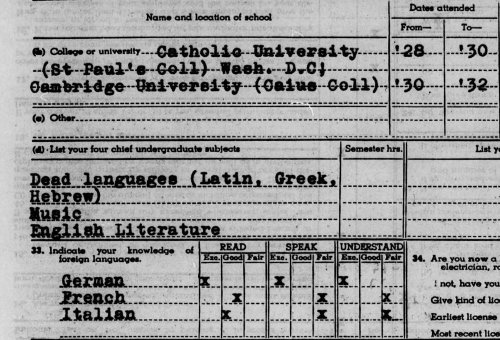
He arrived in Washington in 1928 to attend either Immaculate Conception College or St. Paul’s College.  St. Paul’s College is the house of studies for Paulist Seminarians who then complete their graduate studies in theology at Catholic University.

In a different document then the above, Joseph mentions attending Immaculate Conception College, also located in Washington, D. C.   Immaculate Conception (also known as the Dominican House of Studies) is the theological school for candidates for the priesthood in the Dominican Province of St. Joseph, which in the 1920s and ‘30s included all of the U.S. except for the West Coast. He may have studied there before transferring to Catholic University.

So far none of the schools can find record of his attendance.  I suspect some of the difficulty has to do with Joseph’s last name.  At some point in the 1920s, as he traveled from Nebraska to Washington, D. C., Joseph changes his last name.  He may have changed it more than once, but by the time he is in attendance at Caius College in Cambridge, England his last name is definitively Horne.  He will later recall an incident at the school when a professor would say, ” Mr. Horne, will you tell us, please, in your rude, crude, inimitable manner, all that you know of the Peloponnesian War.

Joseph also describes hearing, during this period, the writer, Christian apologist and famed orator G. K. Chesterton (1874-1936).  Chesterton was known for great intellectual debates with friends and colleagues George Bernard Shaw, H.G. Wells, and Hillaire Belloc.  Their debating spans the time Joseph was studying in Cambridge (1930-1932).  Mr. Chesterton was also debating on both sides of the Atlantic during this time.  In January 1931 in New York City, he debated with Clarence Darrow about whether or not the world would return to religion (read more here).  If indeed Mr. Horne was in England during this time he missed the beginning of the Great Depression in the U.S. though eventually the whole world would be affected.  In 1932, Joseph would have returned to see Hooverville’s springing up, the shantytowns named for President Hoover who had so misjudged the financial crisis.  He may have returned just in time to vote in the 1932 election in which New York Governor Franklin Delano Roosevelt would win in a landslide with his promise of A New Deal for the country.  He would have returned with the knowledge and skills of what he later characterized as “dead languages,” literature, and music.  He would not return with clerical robes.

President-Elect Roosevelt traveling to inauguration with President Hoover

President-Elect Roosevelt traveling to inauguration with President Hoover

By June 1933 he was teaching  music for the Pennsylvania-based Smith Williams Institute of Music. He would teach music and music appreciation to classes in Clarksburg, WVa and environs.  When I mentioned to Horne’s son that the institute apparently gave away free violins to students and instructors, he remarked, “Maybe that’s where my father got that beat-up violin he carried around.”  Horne would make $40/week until December 1935.

Smith Williams Institute of Music Advertisement

Smith Williams Institute of Music Advertisement

He ceased to teach in the Clarksburg vicinity after economic conditions became very bad.  He made his way back to the Washington, D. C. area and there, in his own words:

In other documents, he describes in greater details the different jobs held in the D.C. area. What becomes increasingly clear is his growing interest and skill in photography as a tool.  He also becomes interested in a young woman. Elsie was beautiful with a keen mind.  The two soon married and, in 1937, Joseph Jr. was born.

Though he clearly stayed in touch with is parents back in Nebraska, Joseph’s home was now in the Washington area.  He would continue to take on any job to provide for his new family, and to buy his cameras.

Elsie would later recall that he  always had to have the best camera, and that one year the family ate an awful lot of oatmeal so that they could pay for their son’s orthopedic shoes and still buy such an instrument. By 1941, Joseph would provide clinical photography for the Vets Administration, Mt. Alto Hospital in D.C.  In that same year, the U.S. would enter its second World War.

Washington D. C. Photo by Joseph A. Horne

Washington D. C. Photo by Joseph A. Horne

Priorities across the nation would shift.  Joseph Horne with his rural American roots, his knowledge of multiple languages, world literature, and music, and his facility with a camera would find himself in the U.S. and especially abroad at the crossroads of arts, culture and, perhaps most unexpectedly to him, of politics.

Stay tuned for the next Interlude in April.

Additional Reading/Sources …

1920s Farm Life in Nebraska

Radio in 1920s America

Prohibition: A Film by Ken Burns & Lynn Novick

Jazz: A Film by Ken Burns

Wall Street Crash of 1929

Library of Congress Prints and Photographs Online Catalog

Read Full Post »

foreword to the interludes

interlude: genesis

Photo by Joseph Anthony Horne, 1940s

American Midwest photo by Joseph A. Horne, 1940s

In 1911, by the time baby Joseph was held in the arms of his adoptive parents in Dodge, Nebraska, Europe was on the brink of war.  The Great Powers in Europe were Great Britain, Germany, Austria-Hungary, and Russia. The Ottoman (Turkish) Empire had a foothold in Greece and some parts of the Balkans — an area of southeastern Europe encompassing Romania, Bulgaria, Croatia, Serbia, Macedonia, Albania, Bosnia and Herzgovinia, Montenegro, and Kosovo.

Bulgarian Shepherdess, photo taken between 1880-1924.

Bulgarian Shepherdess

Five Girls Knitting in Albania, 1923.

Five Girls Knitting in Albania

In 1912 and 1913, wars broke out in the Balkans.  Bulgaria, Montenegro, Greece and Serbia formed the Balkan League to oust the Ottomans.  In the U.S., recent emigrants from the Balkans returned to their native lands to bear arms in support.

Greek Emigrants in NYC Returning to the Balkans to Fight, 1912

Greek Emigrants in NYC Returning to the Balkans to Fight, 1912

In the end, Bulgaria, Montenegro, Greece and Serbia conquered the Ottoman-held lands of Macedonia, Albania and Thrace. While nation-state lines had been redrawn; ethnic identities and affiliations had not changed.  Tensions simmered and flared, between the Balkan states, and with the Great Powers, especially between Austria-Hungary and Serbia.

Belgrade, Serbia circa 1900-1915

Belgrade, Serbia circa 1900-1915

The antipathy between the neighboring countries was longstanding.  Prior to the Balkan Wars, Serbia, which had been dependent economically upon Austria-Hungary, was beginning to build its own economic channels across Europe.  When Austria-Hungary banned imports of Serbian pork in 1906, the Serbs continued to sell its pork to France but rerouted the meat through Bosnia.  In 1908, Austria-Hungary annexed Bosnia from the Ottomans, and consequently shut down Serbian shipments of pork.  The Serbs appealed to Russia for support, but Czar Nicholas refused to go to war with Austria-Hungary.
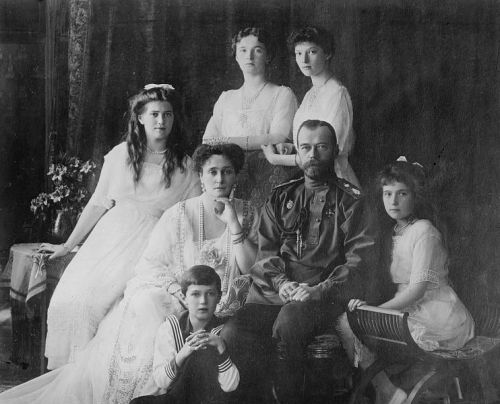
Czar Nicholas and the Russian Royal Family, 1917

Czar Nicholas and the Russian Royal Family, 1917

Approximately five years later, after the Serbian success against Turkey in the Balkan Wars, the Serbian prime minister apparently declared, “The first round is won. Now for the second round – against Austria.”  In his book, scholar Richard C. Hall refers to the Balkan Wars as the Prelude to World War I.

Four children seated on a ship, following battle for Thessaloniki between Bulgaria and Greece, 1912.

Four children seated on a ship, following the battle for Thessaloniki in the Balkan Wars, 1912.

On June 28, 1914, Austrian Archduke Franz Ferdinand and his wife were killed by a young Serbian nationalist.  The assassination is cited as the event that started World War I but obviously it was the spark that fell upon a lot of pre-existing kindling.  Diplomatic relations between many of the European nations was strained and alliances had become complicated.  With Germany’s support, Austria-Hungary presented Serbia with some strict demands in reparations.  While Serbia made efforts to meet the demands, in the end, Austria-Hungary broke off diplomatic relations and began preparing for war.  Russia, Serbia’s ally, began military mobilization against Austria-Hungary.  Britain and France expressed concern if Russia were to intervene in such a conflict.  Attempts at peaceful negotiations were brushed aside.  On July 28, 1914, Austria-Hungary declared war on Serbia.  Fighting began.  By August 1, Germany declared war on Russia.  Others joined the fray and soon every major Western power except for the United States was embroiled in war.

Packing for the Christmas Ship, November 1914

Packing for the Christmas Ship, November 1914

The majority of Americans, while aware of what was taking place in Europe, wanted to remain neutral.  Based on newspaper headlines and articles from the period,donations of every kind were collected and sent in support of allies like Great Britain, France and others.  The Red Cross Mercy Ship sailed to Europe with medical staff.  American children were encouraged to donate toys for the Christmas Ship, a vessel charged with delivering gifts by Christmas Day to needy European children.  The headlines also highlight the literal and figurative gulf separating Americans from the European conflict.  The U.S. was struggling with its own social, economic and political issues.  Even so the war was making an impression.

Suffragette Inez Milholland, suffragist, labor lawyer, World War I correspondent, and public speaker

Suffragette Inez Milholland, suffragist, labor lawyer, World War I correspondent, and public speaker

At the 1914 Southern States Suffrage Conference held in Chattanooga, Tennessee, Mrs. O. H. P. Belmont of New York was questioned about men in Belgium receiving the vote but not the women.  She replied: “With men waging war on the earth, in the air, on the sea and beneath the waters … shelling cities and destroying everything before them, leaving women and children without a place to lay their heads, it is somewhat illogical to talk of woman’s sphere as the home. In my opinion, the men who deliberately make war on women and children as has been done in Belgium, are not fit to be intrusted with the ballot for it was created as the weapon of civilization and Christianity, not of wholesale butchery.”
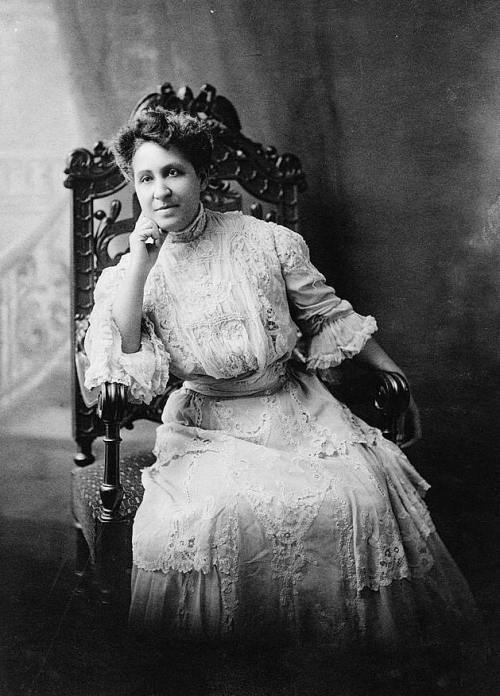
Suffragette Mary Church Terrell, daughter of former slaves, civil rights worker, suffragette, teacher

Suffragette Mary Church Terrell, daughter of former slaves, civil rights worker, suffragette, teacher

At the conclusion of her address, Ms. Belmont was asked if she thought the vote for women in the South should include the vote being given to Negro women, as well.  She replied that should be a decision left to the men of the South to decide. “We seek for women political rights equal to those of men. Negro women could share the rights of Negro men. If they are disenfranchised let the women share the same treatment. Our campaign is to eliminate the discrimination against women and secure for them a parity with men in the matter of the right to vote.” (New York Times, November 11, 1914)
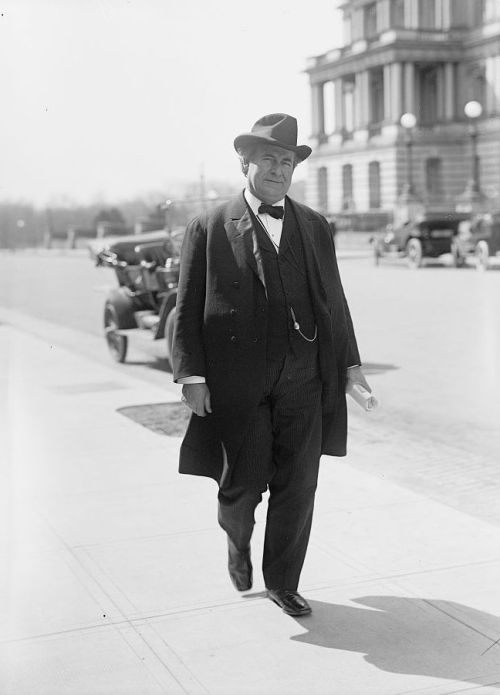
William Jennings Bryan, Rep. from Nebraska 1891-1895 and U.S. Secretary of State 1913-1915

William Jennings Bryan, Rep. from Nebraska 1891-1895 and U.S. Secretary of State 1913-1915

For several years, for many reasons, including a strong German American presence within the country, the United States pursued a policy of non-intervention.  One of the most vocal anti-war proponents was President Woodrow Wilson’s Secretary of State William Jennings Bryan.  He wanted the U.S. to maintain a neutral position and serve as mediator in the conflict.  “It is not likely that either side will win so complete a victory as to be able to dictate terms, and if either side does win such a victory it will probably mean preparation for another war. It would seem better to look for a more rational basis for peace.”  At odds with his President’s policies, Bryan would resign in 1915.

R.M.S. Lusitania, hit by torpedos off Kinsale Head, Ireland (photograph of drawing made for New York Herald and London Sphere)

R.M.S. Lusitania, hit by torpedos off Kinsale Head, Ireland (photograph of drawing made for New York Herald and London Sphere), Library of Congress

In 1917, after a series of events including the sinking of the Lusitania off the coast of Ireland with Americans on board (1915) and discovery of the Zimmerman telegram in which Germany proposed a military alliance with Mexico against the U.S. (1917), President Woodrow Wilson and other Progressives were able to promote the concept that the U.S. had to help make the world safe for democracy.  On April 1, 1917 the U.S. officially declared war on Germany. On December 7, 1917 war would be declared on Austria-Hungary.  In the end, the war would pit the Central Powers of Germany, Austria-Hungary and the Ottoman Empire against the Allied forces of Great Britain, the United States, France, Russia, Italy and Japan.  A national call for volunteers was made to join the military services.

Registering 1917, Library of Congress

Registering to Serve, 1917

The rate of enlistment for the volunteer army was too low, leading Wilson to sign the  Selective Service Act of 1917.  Over time, millions would be drafted into service.  Enlistment was even used as enticement to garner citizenship.  Tens of thousands of American men, of every race and background, began leaving daily for the battlefields of Europe.

World War I Infantry Soldiers, photographed between 1914-1918, Library of Congress

World War I Infantry Soldiers, photographed between 1914-1918, Library of Congress

At the same time, the formerly vast waves of immigration into the U.S. were effectively cut off.  A dearth of labor was created across the country just as industries were seeking to ramp up their production.  As a result, as one author phrased it, “an exodus ensued” as Northern and Midwestern manufacturers began recruiting for labor from the American South, especially for African Americans.  By 1919, nearly 500,000 African Americans had emigrated up north and out west. It would be a migration,  A Great Migration, that would continue into the 1940s.

Painting by Jacob Lawrence

Painting by Jacob Lawrence

Jobs and unexpected opportunities were created in an attempt to meet the demands of a nation and a world at war.  Wars do end, however, with WWI officially ceasing on November 18, 1918.  New opportunities arose as soldiers returned to the States, but tensions were heightened and prejudices magnified as well.

WEB Dubois in 1918, co-founder of the NAACP

WEB Dubois in 1918, co-founder of the NAACP

The summer and early fall of 1919, when Joseph would have been 8 years old, is known as Red Summer, a term coined by Joseph Weldon Johnson of the NAACP.  Race riots broke out in over two dozen cities across the U.S including in Omaha, NE, about an hour away from Dodge.  A black man was accused of assaulting a white woman and regardless of evidence a mob gathered and eventually the man was forcibly taken from police custody and brutally killed.  Actor Henry Fonda was a 14-year old boy in Omaha at the time.  He saw some of the events.  He later wrote that all he could think of was that black man dangling from a rope.
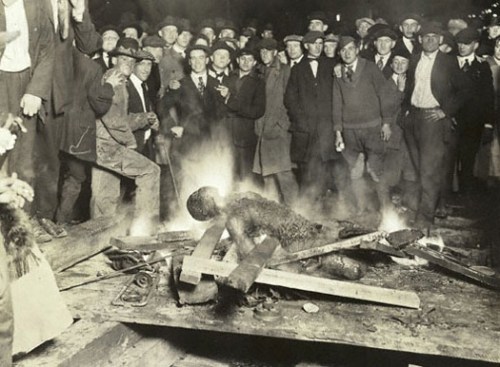
The burning of Will Brown's body, Omaha, Nebraska, Sept. 28, 1919. Source — NSHS, RG2281-69

The burning of Will Brown’s body, Omaha, Nebraska, Sept. 28, 1919. Source — NSHS, RG2281-69

Hundreds died that summer.  Many thousands lost their homes and livelihoods.  Seeds were sown for future conflicts.  And, no doubt, bonds were strengthened for future civil rights efforts.   A particular focus during the period, and for some decades to come, were campaigns against lynching. Lynching is a particularly color-blind act.  African Americans, while killed in large numbers, were not the only ones dying or being threatened with death in this horrific manner in the post-war period. Drawn to the U.S. in the late 1800s, German-speaking people from many different nations had emigrated seeking new lives.  Like little Joseph’s family, they especially migrated to the midwestern states to take advantage of the Homestead Acts.   The first act was signed into law by President Lincoln in 1862.  Anyone who had never taken up arms against the U.S. government (including freed slaves and women), was 21 years or older, or the head of a family, could file an application to claim a federal land grant. There was also a residency requirement.  In Nebraska, the land being homesteaded had once been considered “Indian Country” but as the U.S. sought to expand its territory the Kansas-Nebraska Act of 1954 opened the land to settlement.  The subsequent Homestead Act of 1862 gave 160 acres of this land to any head of household promising to live there for five years.
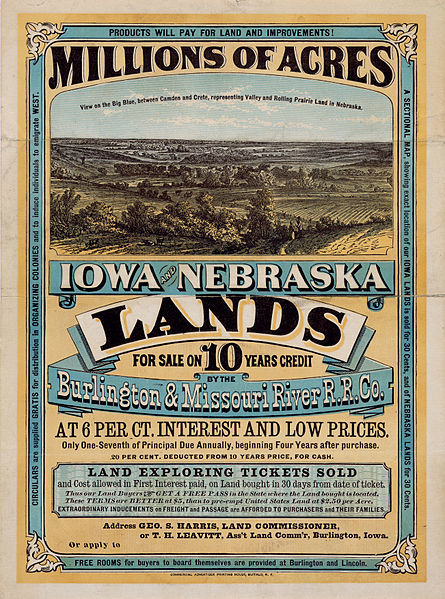
Library of Congress Printed Ephemera Collection; Portfolio 134, Folder 13. 1872.

Library of Congress Printed Ephemera Collection; Portfolio 134, Folder 13. 1872.

By 1910, approximately 200,000 residents of German heritage lived within the state of Nebraska.  Dozens of German language newspapers and other publications were regularly printed and distributed.  Cultural events conducted in German were the norm, not the exception.  All of this would change with U.S. entry into World War I in 1917.
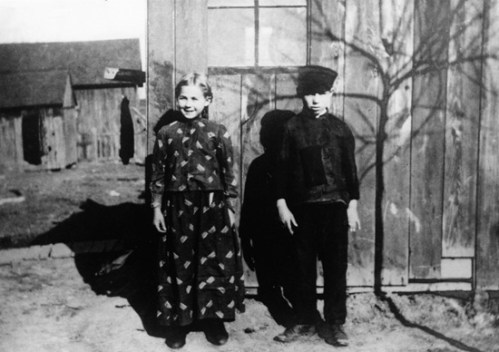
German Russian Children in Nebraska

German Russian Children in Nebraska

German-American farm family. Lincoln County, Nebraska by John Vachon, 1938.

German-American farm family in Nebraska by John Vachon, Library of Congress.

In Joseph’s adopted home, he spoke German, though he would have been challenged in speaking German in grade school.  Language has always been viewed as key to ethnic identity.   With anti-German sentiment at a fever pitch, the suppression of German language and culture was viewed as paramount to ensure that all those people of German-speaking heritage became thoroughly Americanized.  President Wilson signed a bill restricting German newspapers.  Clergy in primarily-German speaking communities were informed they could only deliver sermons in English even if people spoke only German.
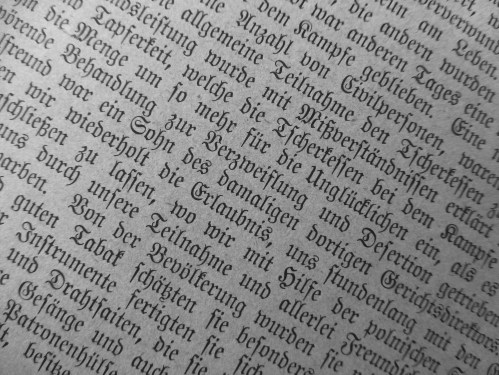
Classic German Script from a Vintage Book of Fairy Tales

Classic German Script from a Vintage Book of Fairy Tales

On April 9, 1919, Nebraska enacted a statute that would become known as the Siman Act, imposing restrictions on both the use of a foreign language as a medium of instruction and on foreign languages as a subject of study. Essentially no person in any public or private school could teach in any other language than English, and with respect to foreign language instruction, no child could be taught a foreign language until high school.

Example of one room school house in Nebraska, photographed 1938 by John Vachon

Example of one room school house in Nebraska by John Vachon, Library of Congress.

On May 25, 1920, instructor Robert T. Meyer broke the rules in his one-room schoolhouse in Zion Parochial School in Hampton, Nebraska by teaching to a 4th grader using a book of German bible stories.  He would be charged with violating the Siman Act and convicted at the state level.  Similar laws were being enacted across the country.  Meyer would fight his conviction all the way to the U.S. Supreme Court where the ruling would take on a national significance. In 1923, the Court would hold that the Nebraska statute violated the Due Process clause of the 14th Amendment.  While respecting the state’s desire to “foster a homogenous people,” the court found that the state had gone too far with the statute.  With its ruling, the court made clear that “the individual has certain fundamental rights which must be respected.”

Farm scene. Lancaster County, Nebraska , photo by Arthur Rothstein, Library of Congress

Farm scene. Lancaster County, Nebraska , photo by Arthur Rothstein, Library of Congress

By the time that ruling was made, Joseph was twelve years old.  Over the next five years, he would complete his grade school education.  In 1928, as a seventeen-year old, he would leave the family farm and Great Plains to travel eastward to study in a theological setting.  To become a seminarian as his path suggests?  If so, something happens along that path. He comes to a fork in the road. It is clear that at some point in the late 1920s or early 1930s, young Horne picks up a camera.  He will become adept at its use and he will begin to photograph the world around him.
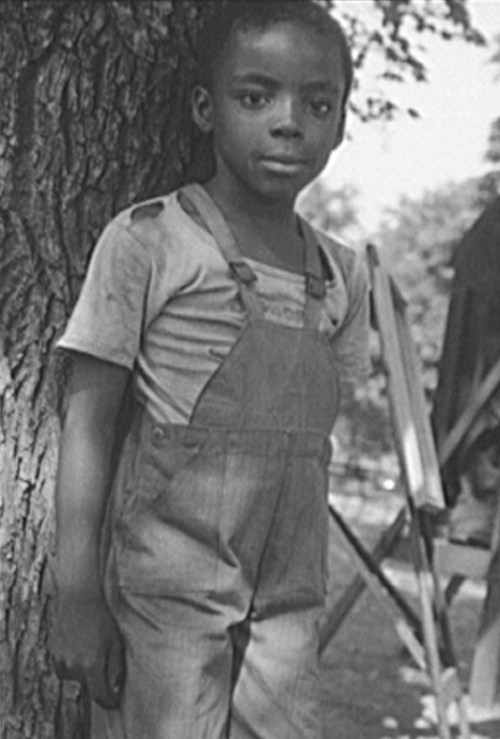
Photo by Joseph A. Horne

Photo by Joseph A. Horne

Sources/Additional Reading …

History.com Austria-Hungary Declares War on Serbia

William Jennings Bryan

Inez Milholland Boissevain

Mary Church Terrell

African Americans and World War I

Racial Tensions in Omaha September 28, 1919

The Rise and Fall of Jim Crow/Red Summer 1919

History of the NAACP

W.E.B. Dubois

Oral Histories from the Germans From Russia Collection

War Hysteria & the Persecution of German Americans

Library of Congress Prints and Photographs Online

Read Full Post »

« Newer Posts - Older Posts »