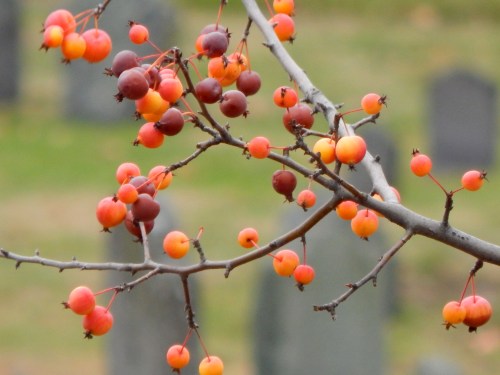
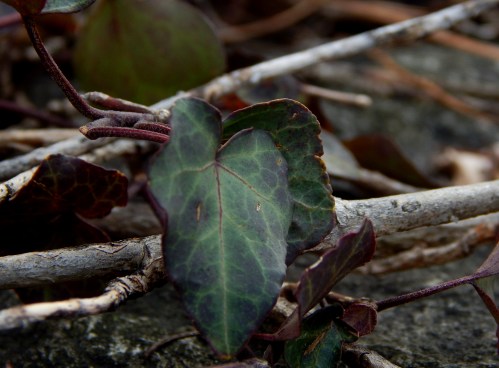
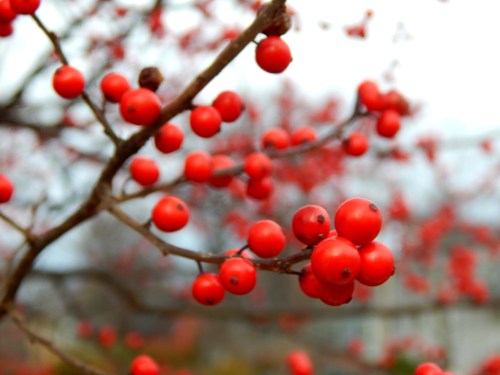
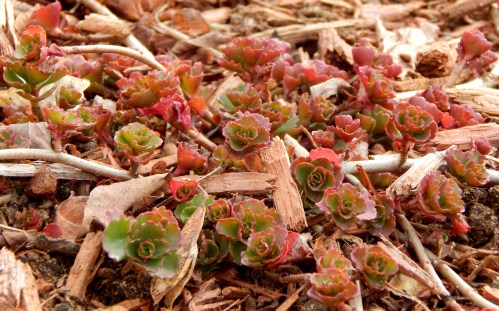
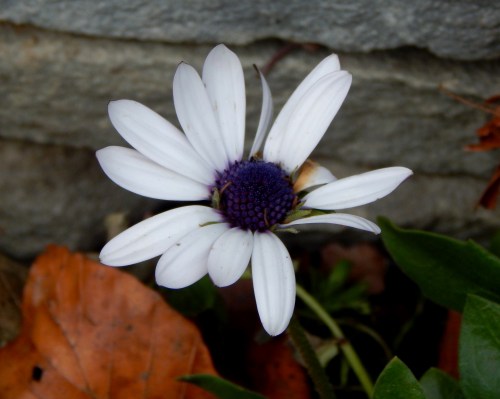
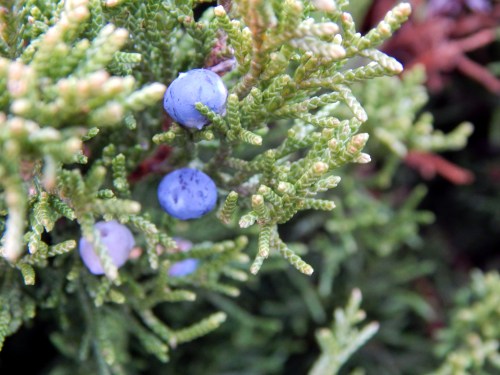
Even on a gray day in Cambridge and Somerville, the colors were popping out.
Posted in Branches, Inspiration, Nature Notes, On the Road, tagged beauty, colors, Inspiration, nature, Photography, urban landscape on December 21, 2015| 3 Comments »
Posted in Inspiration, Kitchen Inspirations, tagged clementine, colors, food, food photography, gifts, Inspiration, memories, Photography, storytelling on December 20, 2015| 7 Comments »

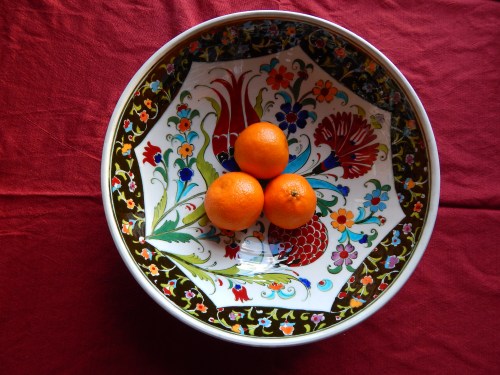
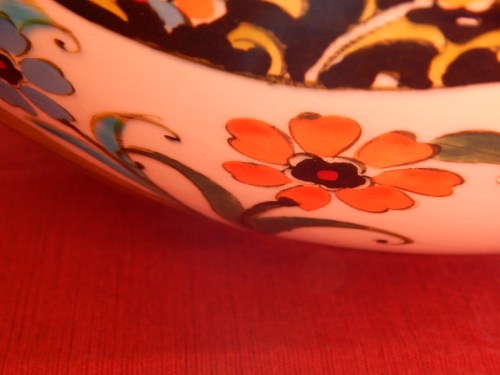
A friend traveled to Turkey and returned with a gift, a hand-painted bowl. The bowl inspired me to change my tablecloth from paisley to red to accent the bowl and then the colors of the bowl inspired me to buy clementines. Cherries came to mind as well except I don’t really like cherries. This morning, with light filling the bowl, I was able to reach for the fruit. As I ate the fruit and the air filled with the scent of oranges, I thought of gifts. My aunt told stories of post-Depression Virginia where her Christmas present was an orange and peppermint candies. Of late I’ve been on the cusp of worrying about all the Christmas cards not mailed, the presents not bought but as I held the fruit in my hand I let go of a bit of the guilt.
I’ve received lots of gifts this late autumn edging into winter. A shell from a young man as I walked along Revere Beach. He saw me stopping to collect and inspect and occasionally photograph, and so he came over to me and held out a speciman and simply said, “This one is beautiful.” I agreed. He kept standing there, shell in hand. “Is this for me?” I finally asked. He nodded. I took it. We separated and spoke no more.
A woman I’ve met on occasion, who can come across as rather brusque, she stopped to talk with me. As I helped her make a purchase, I admired a bracelet she wore. “It’s tiger agate,” she said, sliding it off of her wrist. I held it and then tried to give it back. She refused. “It is yours, “she snapped. “See? It does not match any of the other jewelry I wore. Clearly God made me wear this today for you. You are a tiger.” I must say, I’ve been called many things, but that may have been the first time I’ve been called a tiger.
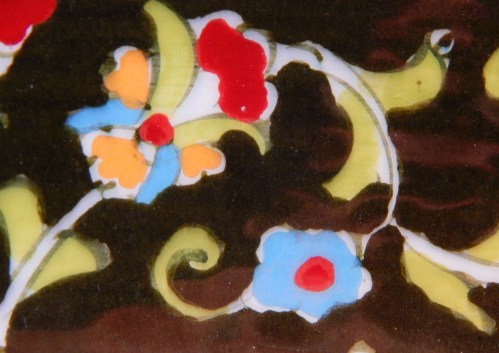
Gifts come in many forms. I will treasure the bracelet but mostly because of the memory it will evoke. I will treasure the shell, and all the shells given. And, of course, the bowl and the oranges and other fruits it will hold, and the memories that rise with their fragrance.
Posted in Guest Contributor, Inspiration, Nature Notes, tagged Back Bay Fens, bohemian style, creativity, family, friendship, gifts, Inspiration, Justina Blakeney, life, nature, perspective, Photography, storytelling, the Fens, urban landscape on December 20, 2015| 3 Comments »
Lin A. Nulman is an Adjunct Professor of English at Bunker Hill Community College. Her poetry has appeared in Black Water Review, Tanka Splendor, and the anthology Regrets Only: Contemporary Poets on the Theme of Regret, among others. Lin puts her heart and soul into teaching and while I’ve yet to take a formal class, I have felt a student. In her own unique ways, she has challenged me to both appreciate and expand upon the work that I do as writer and photographer. It’s with pleasure I share Lin’s words and images about her grandmother, a great influence in her life.
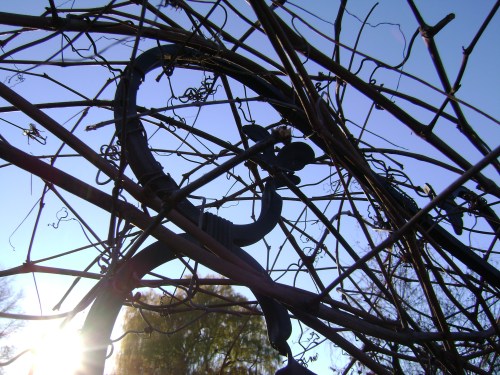
photo by Lin A. Nulman
“Oh, you see one tree, you’ve seen them all,” a woman once said to my grandmother, who had just remarked on a tree she found beautiful. Gram repeated the comment throughout my childhood as “the saddest thing I ever heard anyone say.” I think so, too, and I’m thankful for the gift of knowing why.
We took walks when I was a little girl, and even not so little, in our neighborhoods and on the beach. Often Gram would stop to look at something commonplace, such as weeds in a patch by the side of the road. Isn’t it amazing, she would say, how Nature creates so many shapes of leaves in just this one place?

photo by Lin A. Nulman
Eventually I reached the age of impatience with what grown-ups noticed that wasn’t rare blue beach glass or a good climbing tree. But even when I felt impatient, I knew I could see what she was talking about. I don’t know if Gram believed in God, certainly not in a kindly God, but she did deeply believe in Nature, wonderful and endlessly giving. If you looked at it that way. And I do, and I have to, despite all the other ways my eyes still need to open. Her view was one of my starting places, creatively and spiritually.
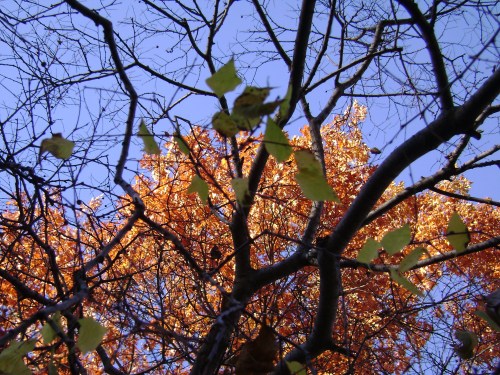
photo by Lin A. Nulman
Recently a latent love for bohemian style has sprouted in me, thanks in part to author and blogger Justina Blakeney. I stay up too late turning pages of her new book and feeling out of breath. Justina defines bohemian style as the product of “a creative life and an active engagement in the search for alternative ideals of beauty…Our worldly collections are as eclectic as we are…Decorating is about feeling free, having fun, rejecting traditional notions about what goes with what…and getting a little bit wild.” [I’m quoting from her introduction to The New Bohemians: Cool & Collected Homes. UNputdownable.]
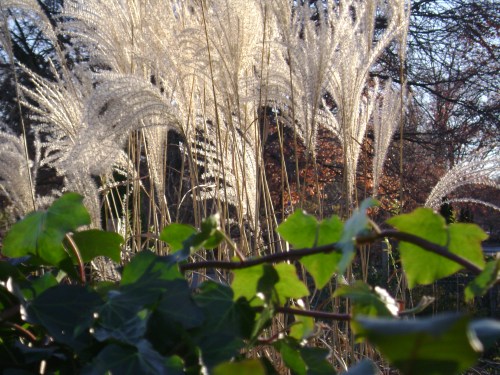
photo by Lin A. Nulman
Even my 1906 copy of Putnam’s Handbook of Etiquette warns New York High Society about the habits of “Bohemia”, over there in Greenwich Village, beyond “the borders of wise convention”, definitely over the edge and unacceptably wild.
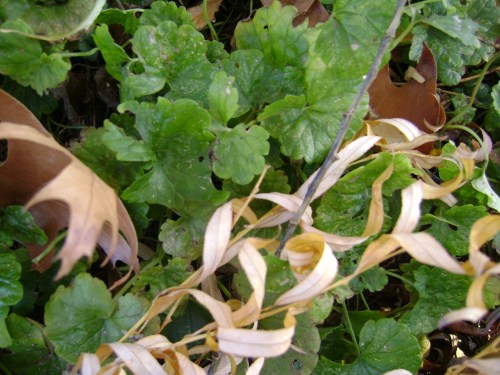
photo by Lin A. Nulman
Her book was in my mind recently on a walk through the Fens, one jewel in the Emerald Necklace of green spaces that loops through Boston. It has a wide area of community gardens, where dozens of people fulfill their own visions with flowers, trees, bushes, berries, vegetables, bamboo, grasses, and leafy plants. It is a wonderful place to open my grandmother’s eyes, to see the shades and shapes Nature creates in just one corner of a park, sometimes helped along by a little human artistry: a painted gate, a statue, a purple disco ball. On this walk, my looking as I was taught to look revealed Nature, to my joy, as The First and Ultimate Bohemian. Everything goes with everything, so feel free and always be a little bit wild.
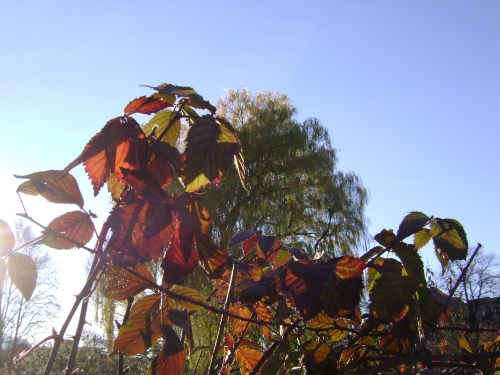
photo by Lin A. Nulman
I challenged myself to photograph the gardens in December, without most of the flowers to help, and still found colors and forms running madly, beautifully together, eye-catching contrasts of silhouette, especially as I lost the light, and small places full of texture and depth. Thanks, Gram.
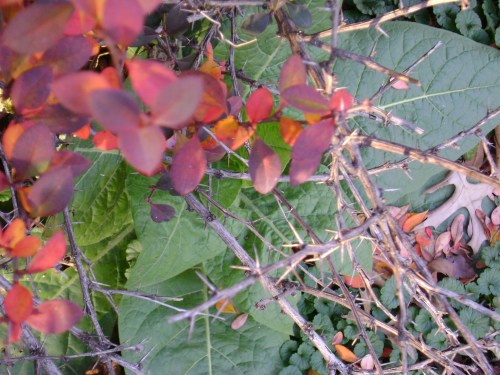
photo by Lin A. Nulman
Please look for my blog, The Creative Part-Timer, in early 2016.
Posted in Inspiration, Kitchen Inspirations, tagged African American history, black history, book review, cookbooks, cooking, culture, family, food, healthy eating, Inspiration on December 17, 2015| Leave a Comment »
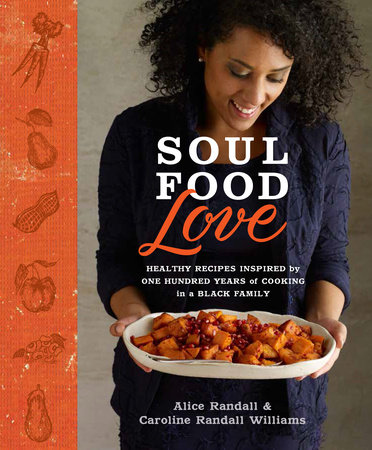
The recipes are good. They are simple, elegant and refined, like the family sharing its history through food. The preface describes the book as telling the story of five kitchens and three generations of women. “Mother-daughter duo” Alice Randall and Caroline Randall Williams use the book to share stories from the kitchen, a place that could be both forboding and a place of great calm, depending upon one’s generation (e.g. slavery) and one’s location (e.g. north vs. south). Traditional, mostly southern recipes, are reworked. Flavoring agents like bacon dripping, ham hocks, and butter are replaced by olive oil, or no oil at all. But fear not. As I told my big brother, a traditional southern cook, flavors have been retained if not indeed heightened with the liberal use of spices. My favorite recipes were the simplest like the Warm Onion and Rosemary Salad, Herb-Roasted Salmon Fillet, Fiery Green Beans and Links Salad composed of green beans, green peas, cucumber and basil.
There’s a Homemade Peanut Butter recipe. The authors describe peanut butter “as a bass note that can carry a wide variety of top notes” and encourage users, once comfortable with the basic recipe, to add spices. Be creative. Set no limits. It’s a sentiment that fits the family.
Many of the book’s recipes from Mama’s Tequila Ice to Eggplant Tower with Mashed White Beans open with brief headnotes that describe the family connection to the dish. Whether its a variation on a meal served while hosting parties during the Harlem Renaissance or a reworking of a meal had as family members traveled overseas in Yugoslavia, each recipe clearly has meaning.
While its an eclectic mix of recipes, overall the book is quite a culinary inspiration. The recipes don’t begin until page 80. Those first seventy-nine pages are a poetic examination of five kitchens, and American history, beginning with Minnie Randall (1897-1976) through Caroline Randall Williams (b. 1987). Reviewing the book has reawakened my desire to ask family members about their memories of food past and what they’d like to cook in the future. You don’t need to be of African American heritage to enjoy this book. It’s an American experience that can be shared, quite deliciously, by all.
I received this book from Blogging for Books for this honest review.
More Info …
Posted in Inspiration, Kitchen Inspirations, tagged black walnuts, cooking, creativity, food, food photography, Inspiration, Photography, raspberries, recipes on December 15, 2015| 1 Comment »
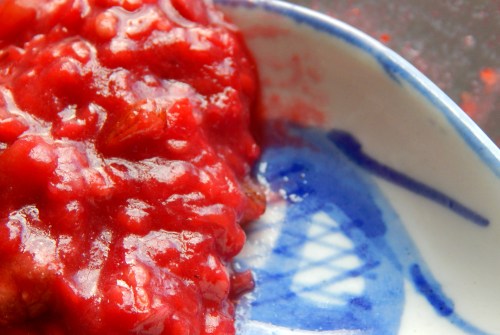
This is what happened when raspberries accidentally got crushed in my house. They’d bounced around a bit too much in their packaging on the way home. Steve took a look at them, rubbed his chin and then with a faraway look in his eyes said, “I have an idea.”
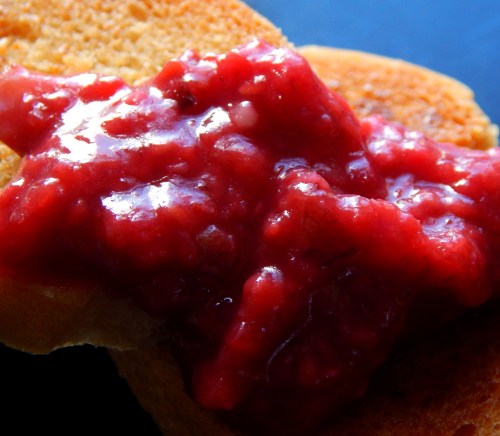
The next morning there was a sweet scent in the air. I made my way into the kitchen, and there on the table next to the plate of hot buttered toast sat a small bowl of warm red sauce. His recipe, more or less: crushed berries cooked with a little butter and brandy, sweetened with a touch of sugar, and flavored with half a teaspoon of crushed black walnuts.
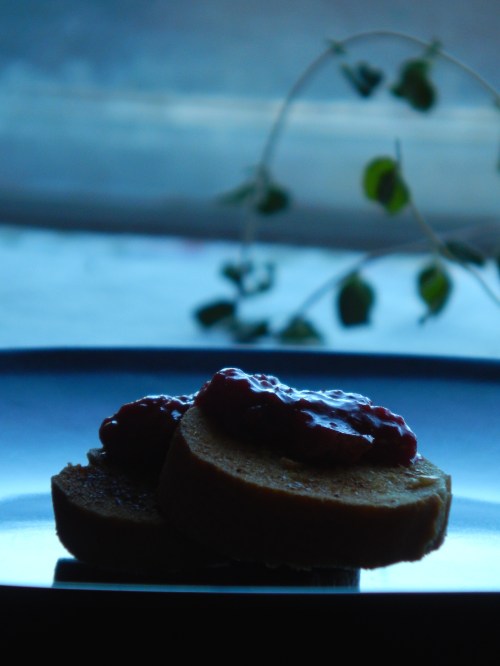
It’s a recipe that will continue to evolve. If we accidentally or on purpose crush anymore raspberries, he’d like to try maple syrup in place of the sugar. And maybe toss in a different nut like crushed hazelnuts. I’ll try any variation on the theme so long as there’s time to photograph the results. Have a good day. 😉
Posted in Branches, Inspiration, Kitchen Inspirations, tagged gardening, greens, healthy eating, indoor gardening, Inspiration, Photography on December 15, 2015| 5 Comments »
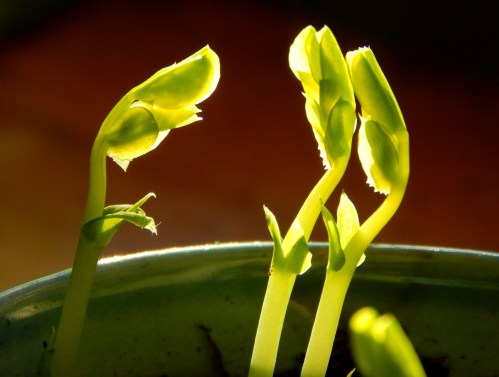
peas

cress

a mild and spicy mix
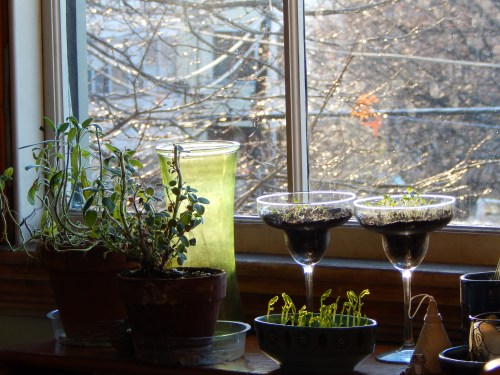
by the windowsill
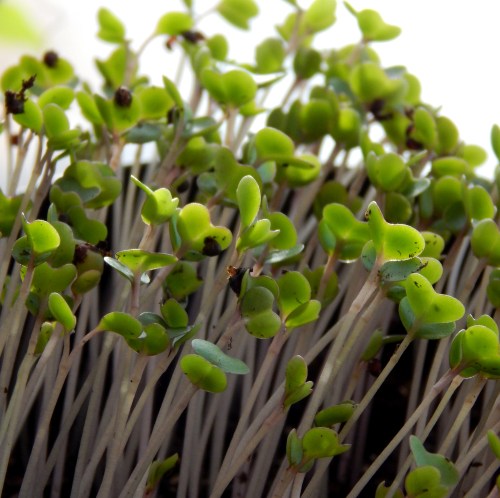
red winter kale in the hallway
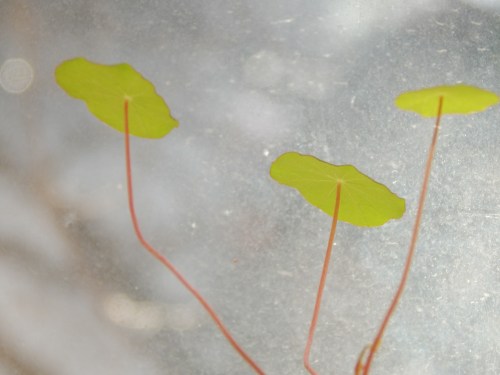
nasturtium
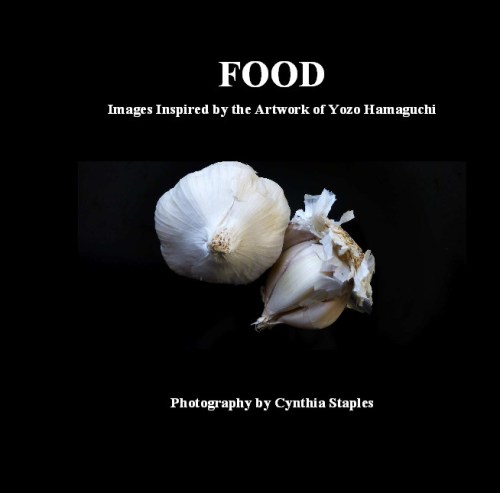
Posted in Books I Love, Inspiration, Kitchen Inspirations, tagged beauty, books, colors, food, food photography, Inspiration, photo books, Photography, Yozo Hamaguchi on December 14, 2015| 6 Comments »
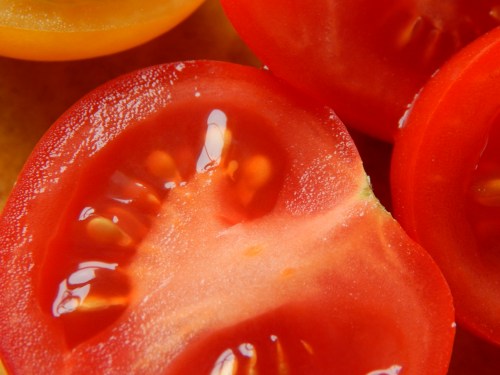
Posted in Inspiration, Kitchen Inspirations, tagged colors, food, food photography, healthy eating, Inspiration, Photography, salads, vegetables on December 13, 2015| 1 Comment »

It was a salad made to let loose the day, of rising from my desk and moving about the kitchen, assembling different colors and textures into something aesthetic and theoretically healthy. In the end, it looked good. And, drizzled with some oil and vinegar, it all tasted pretty good too. 😉
Posted in Books I Love, Inspiration, tagged art, art history, Asian art, beauty, creativity, design, Edmund de Waal, family, fashion, Inspiration, interview, jewelry, Nancy Li, Photography, porcelain, TAO Select, The White Road on December 13, 2015| 1 Comment »
Nancy Li of TAO Selection
Image courtesy of artist.
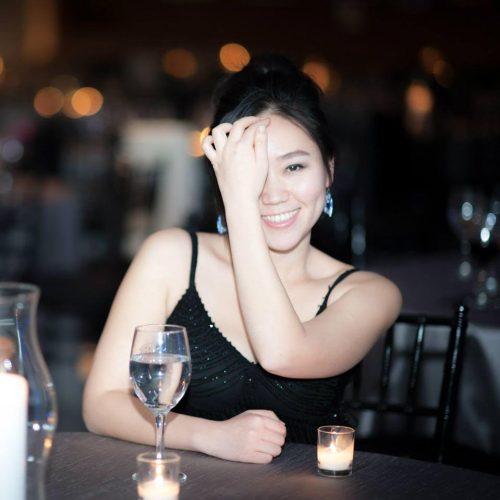
Believe it or not, porcelain had been on my mind just before my chance encounter with Nancy Li of TAO Selection. I had come across a review of Edmund de Waal’s new book, The White Road. A noted potter, the book chronicles de Waal’s “journey into an obsession” to learn more about the origins and reinvention of porcelain. The prologue opens with de Waal in China: “I’m trying to cross a road in Jingdezhen in Jiangxi Province, the city of porcelain, the fabled Ur where it all starts …” Nancy Li is quick to tell you, and rightfully so, her family is from this region of China and that she is a third generation designer of porcelain.

Image courtesy of artist.
As I later told her, what I most admired about our first brief encounter outside of a church gift shop was her determination to find venues to market her jewelry, and also to share the story of her family and cultural heritage of working with porcelain. In his book de Waal writes of working with porcelain clay to make a jar. Though his studio is in South London, he writes, “… as I make this jar I’m in China. Porcelain is China. Porcelain is the journey to China.” During an interview, Nancy Li made a similar statement.

Image courtesy of artist.
We met briefly in Cambridge during her lunch break. Again, with great passion, she began sharing the story of her family especially of her grandfather, a porcelain master. For three generations the family and 15-20 employees have been working with clay using a proprietary process, molding it in forms from pendants to bowls to large statuary, hand-glazing and then firing the pieces in her family’s kiln. I’ve always thought of porcelain as fragile but porcelain can be strong as Nancy demonstrated by dropping a lovely blue and white bracelet on the floor. It made a beautiful ringing sound and remained unbroken.

On her website, Nancy describes attending the top fashion school in China, Donghua University. In talking with her I learned that six years ago she moved to the U.S. where she also received a Ph.D. in Materials Engineering from Boston University and a Management Degree from the MIT Sloan School of Management, part of her dual efforts to better understand the science behind porcelain and to raise awareness globally about the family business and the high-quality of the artwork produced.

Image courtesy of artist.
On top of her full-time job as a Systems Engineer, Nancy makes time to interact with people around Boston, educating them about porcelain and obtaining feedback about peoples’ fashion interests. She shares the feedback with her family, including producing sketches for alterations and new designs, inspired by what she hears and by her own artistic background.
She describes wanting to help people understand that high-quality porcelain is not only for the wealthy. It is not only something from the past to be found in antique stores. It is contemporary and it is art, an art that represents a culture. “Each piece of art has a story behind it,” she says at one point, holding a necklace in her hand. “It is art that inspires, that’s meant to be shown and shared. I think Americans have a wrong impression that everything made in China is cheap quality. What my family does in its local community, what it has been doing for so long, is of the highest quality and I want to share that work, our work, and help it evolve.”
Following are links to learn more about and connect with designer Nancy Li and to view more of her wearable porcelain art.
Following are links to learn more about artist and writer Edmund de Waal and his passion for porcelain.
Posted in Inspiration, On the Road, tagged art, Asian art, beauty, czech republic, Inspiration, Photography, porcelain, pottery, prague, travel on December 10, 2015| 2 Comments »
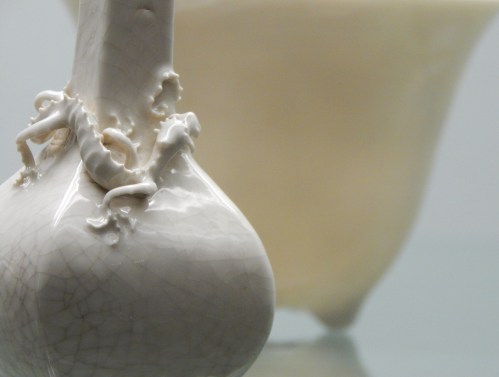
An unexpected treat as I meandered about the streets of Prague was to visit the National Gallery and view a small selection of its Asian and African art collection. There’s an excellent description of the collection’s origin and growth on the gallery website. When I visited, I was one of only a few people. In the silence and near solitude, it became almost a meditative space. You can learn more in the link below.


Additional Reading

 Words + Images