
Posted in Branches, Inspiration, Nature Notes | Tagged autumn, Inspiration, nature, Photography | Leave a Comment »
I think the lady meant Jesus, but in any case …
I heard her coming before I saw her. She made her way up the ramp with an awkward sliding gait, using a cane for additional support. I walked over to greet her. A small woman — a good wind could blow her down — but she exuded presence even when she wasn’t talking. Now when you enter the building where I was that day one of the first things you might see is the No Public Restroom sign, a not uncommon sight in the heart of Boston. And it was when she saw that sign that she made her declaration about God and peeing but she quickly moved on from that topic to talk about life more generally. And as the air around me became lightly perfumed by the scent of alcohol, I gently interjected to ask, “Ma’am, I see, but how can we help you today?” She seemed perplexed by the question so I added, “Would you like to sit in the sanctuary for a bit and maybe pray or something like that?” She looked me straight in the eye and said, “Of course!” Now when she went in, I did peer through the window to make sure that that was all that she was doing. She sat with head bowed and I let her be. Eventually she did come out and as I held the door for her — she was trying to coordinate handling several bags as well as her cane — she asked, “Now where’s the bathroom?”
After letting my colleague know I was going to be occupied for a while, I guided her to the restroom. It was a long walk because as she explained several times, she can’t walk fast anymore. As we came to the stairs, she held onto the railing for support. At one juncture, I took one of her bags. And all the while she talked to me, telling me of her daughters, her son out west who was buying a house where she might stay one day. As for today, she was waiting for a bus. “And I planned it just right,” she explained, “so that I have time to come here to pray and then go to the bathroom and then get to the bus stop. I got plenty of time. Cause you see I don’t like to be rushed.”
“Where are you going on the bus?” I asked. And when she said to the shelter, I asked which one and she said Pine Street Inn. I could only say, “I’ve only heard good things about Pine Street.” And she nodded.
Now by the time we make our way down the stairs, there is no railing for support and so I say, “If you need to, you can hold my arm.”
She leaned her whole self against my side and took my hand.
Resuming our slow walk toward the bathroom, she apologized, “I don’t walk fast anymore.” I said, “That’s okay.”
Eventually we made our ascent from the restroom, back up the stairs.
She said, “You’re a lot like my friend Sue. She doesn’t mind that I’m slow. She never rushes me. Sometimes she lets me stay at her place. I can take the bus there too. She’s got her own place you see. She’s the best friend I ever made at Pine Street.”
Finally back in the lobby she adjusts her bags and we agree after looking at the wall clock that she still has plenty of time to make it to the bus top for her journey to the shelter.
“What’s your name?” she asked. I told her and then I asked her name. With a big smile she said, “It’s Theresa. Like Mother Theresa. Maybe I’ll be a saint one day too.”
And then she was gone.
Posted in Inspiration | Tagged charity, compassion, faith, Inspiration, life, Pine Street Inn, shelter, storytelling | 1 Comment »
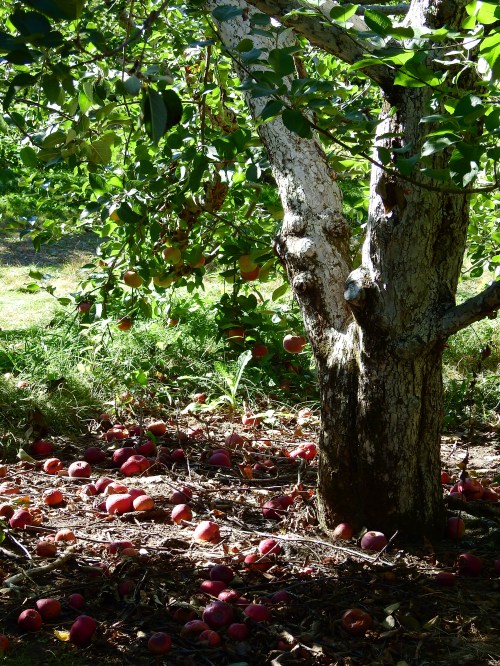

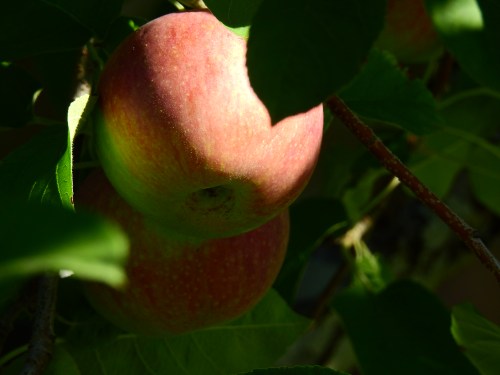
Posted in Inspiration, Kitchen Inspirations, Nature Notes | Tagged apples, autumn, food photography, fruit, Inspiration, nature, Photography | Leave a Comment »

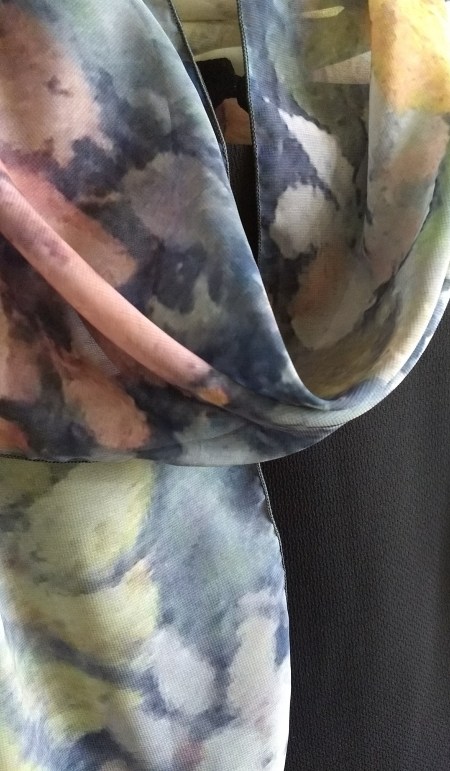
Well, it’s not exactly painted. It is a photograph of painted flowers high on a church wall. In this day and age of digital printing it translates well on a silk chiffon scarf. Available here http://bit.ly/paintedscarf
Posted in Inspiration | Tagged apparel, beauty, creativity, design, digital printing, fashion, Inspiration, Photography, scarves, silk chiffon | Leave a Comment »

I’ve been researching the year 1927 for a project and came across an issue of The Crisis Magazine for that year. In this issue, several new artists were featured. Even though they were not the focus of my research, I became curious about who these people were and who they became. I knew of Countee Cullen but the others … I began by looking up Blanche Taylor Dickinson. The article in The Crisis notes that she “received honorable mention for her poem, “That Hill,” in The Crisis contest of 1926. Four of her poems have recently been accepted to appear in “Present Day Poets.” She was featured alongside Cullen, Loren R. Miller, Anita Scott Coleman and Eulalie Spence.

Three years earlier, Dickinson had written W. E. B. Du Bois, co-founder and editor of The Crisis. “I am a teacher and a reader of The Crisis but am just becoming a suscriber. You edit a fine magazine and it is a great factor in helping to bring us more and more into the recognition of the opposite race.” Enclosed with the letter were poems but no envelope with return postage because, as Dickinson wrote, if the poems were unacceptable to Du Bois, “you have a waste basket handy I am sure.”
Du Bois read her poems and then sent a reply, despite her lack of return postage. “You have some poetic feelings but are not good enough to publish. You must read more poetry. Buy Rittenhouse’s Little Book of Modern British Verse.”
Dickinson does indeed read Rittenhouse and other compilations. In 1925 she wrote Du Bois once more.
“Once before I was ‘nervy’ enough to write you a personal letter and you were kind enough to advise. So pardon this second intrusion and say, ‘She is determined to hold out to the end.’ I have read or you might say studied the book you mentioned … and feel that I have profited thereby. I have made a study of several others, too. Now if I could see a few expressions of mine in our own magazine, CRISIS, I imagine I should feel as I imagine one feels in your own sphere. I am not working for money now but for RECOGNITION. It is unwomanly of me to beg favor of your staff but I do ask please read these lines from the angle of the writer and others less favored and see what you can find in them that deserves criticism or comment.”
Du Bois’s reply? “I do not think that the poems which are enclosed are quite good enough for publication but I do think that the course of study upon which you are embarked is worth while and I hope you will keep it up.”
Dickinson, who’d been writing since childhood, would continue to work at her craft and her poetry would be published in a number of publications during the late 1920s. A little but not a lot is written about her life. Born in 1896 to a prosperous Kentucky farmer, she did well in school (including having her writing published), attended university, became a school teacher and worked as a journalist. She married a truck driver and moved around a bit. In 1929 she interviewed Amelia Earhart for the newspaper, Baltimore Afro-American. In 1930 Dickinson would deliver a speech about “The Cultural Values of Negro Poetry,” but little writing can be found after this time.
Her poetry is quite moving and suggestive of how she (or perhaps women around her) may have felt about life as a woman in the 1920s in general and as an educated African American woman specifically.
“Ah, I know what happiness is …
It is a timid little fawn
Creeping softly up to me
For one caress, then gone
Before I’m through with it …
Away, like dark from dawn!”
— excerpt from poem, A Sonnet and a Rondeau, 1927
Her words can be raw as in this excerpt from, The Good Wife, appearing in a 1932 newspaper, where her words reference the to-this-day divisive issues of class, color and even education level within the African American experience.
All day long
I been sipping suds.
Money making’s mine-
Money spending’s Bud’s.
Folks keep asking,
How could I
Let a man black as Bud
Take my eye.
I keep rubbing
‘Till my po’ head swim.
‘T ain’t worthwhile to answer
‘Cause Bud ain’t courted them!
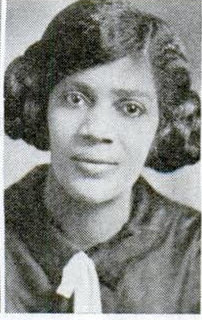
Her work can be found online and in print anthologies from and about the period known as the Harlem Renaissance. Blanche Taylor Dickinson died in 1972.
Sources & Additional Reading
http://credo.library.umass.edu/view/full/mums312-b168-i213
http://credo.library.umass.edu/view/full/mums312-b169-i545
http://credo.library.umass.edu/view/full/mums312-b169-i546
Shadowed Dreams: Women of the Harlem Renaissance by Maureen Honey
Kentucky African American Encyclopedia edited by Smith, McDaniel and Hardin, p. 142
New Negro Artists, The Crisis, February 1927, p. 206
The Good Wife, The Greeley Daily Tribune, October 10, 1932, p. 3.
Revelation, https://www.poetrynook.com/poem/revelation-16
Posted in Inspiration | Tagged African American history, American history, black history, class, culture, Inspiration, mentors, poetry, race relations, storyteller, women's history | Leave a Comment »

Light shining on the oak tree that now towers over the house.
Posted in Branches, Inspiration, Nature Notes | Tagged autumn, Inspiration, leaves, nature, Photography, urban landscape | Leave a Comment »

Calligraphy by Daniel Cronin
Posted in Guest Contributor, Inspiration | Tagged calligraphy, Inspiration, Photography, Reinhold Niebuhr, serenity, serenity prayer | 1 Comment »

… you never know what you’ll see.
Posted in Branches, Inspiration, Nature Notes, On the Road | Tagged beauty, Inspiration, landscape, nature, Photography, shadows, sudbury, sunlight | 1 Comment »
Posted in Inspiration, Nature Notes | Tagged cards, gifts, holiday shopping, Inspiration, nature, Photography, stationery | Leave a Comment »
Hard to believe it was four years ago that I wrote this post after my friend D. returned from Puerto Rico with shells. Thoughts and prayers to her family and all the people there trying to rebuild their lives. Here’s great link from PBS onhow to help – http://www.pbs.org/newshour/rundown/can-help-hurricane-victims-puerto-rico/

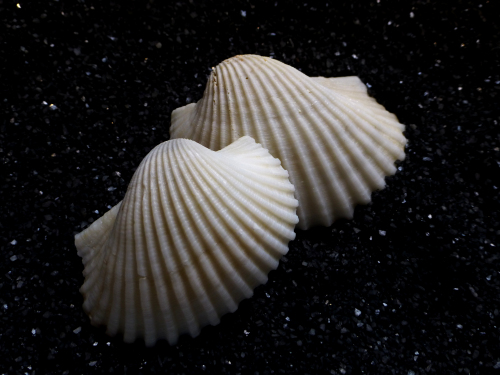
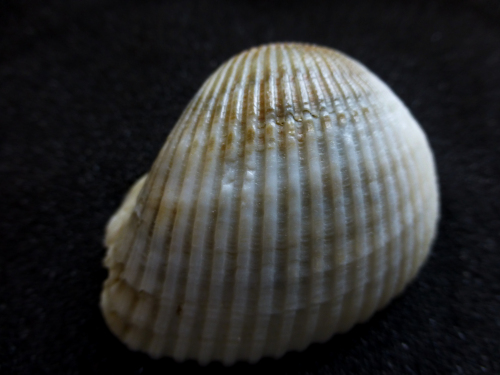
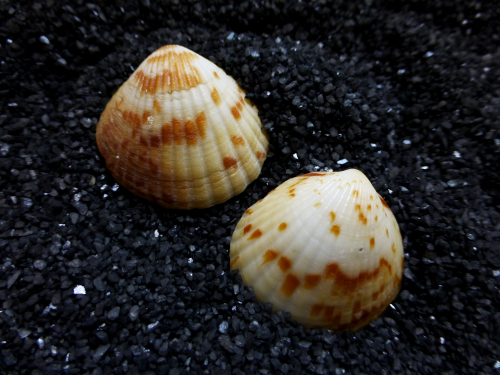
That has been my refrain of late when friends ask what they can bring me back from their travels. Since many of the locales included beaches, I figured it would be okay to ask for shells. Just reach down and stick a shell in your pocket. I am quite honored that my friend D. engaged friends and family in the task. After she showed me pictures of the black beaches of Puerto Rico, I thought it would be fun to photograph some of her shells against fields of black.

Posted in Uncategorized | 1 Comment »
 Words + Images