Feeds:
Posts
Comments

Posts Tagged ‘history’

Before I began photographing the stained glass windows of St. Cyprian’s Episcopal Church in Roxbury, MA, the Rector Monrelle Williams invited a longtime parishoner, Ms. Leslie Gore, to share the church history with me. An active member since a child in the 1950s, she described Sunday School classes of 300-500 children, the different guilds, the cotillions that took place, the plays produced in the lower parish hall, and much more. Finally, I asked her, if there was one thing that she wanted people outside of her congregation to know about St. Cyprian’s what would it be. With a beautiful smile, she said, “I’d want them to know that this place is home. A beautiful place to be. A place where people encompass you.” As I photographed the stained glass windows, I thought of the children she described including her own. As they raced about the church, sang in the choir, and participated in other social and cultural activities, around them they would have seen themselves and learned about their history, American history, rather uniquely.

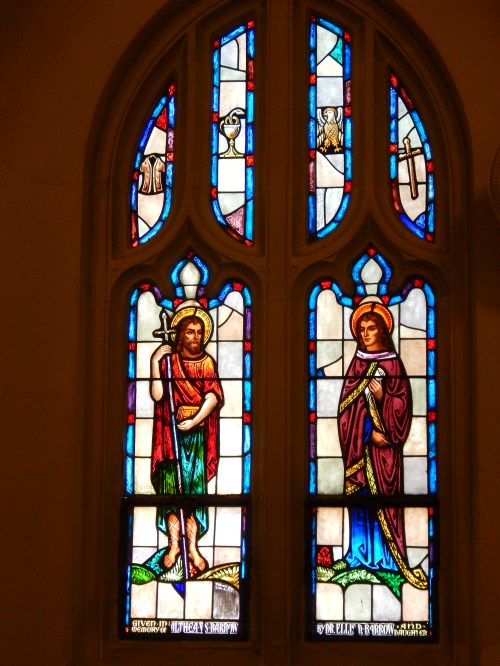
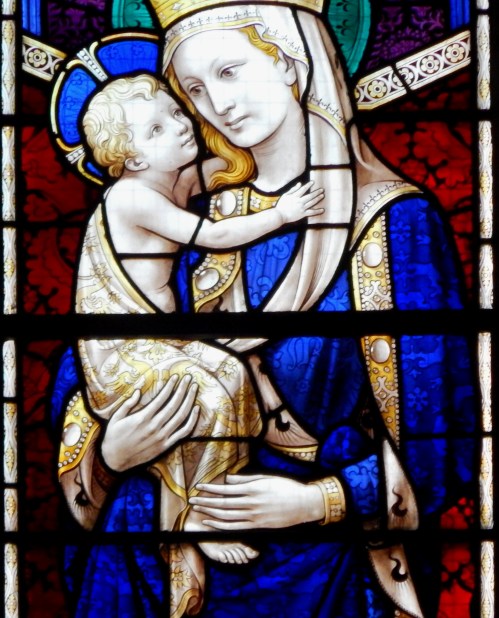
St. Cyprian’s is located at 1073 Tremont Street. While the physical structure was built between 1922 and 1924, the actual coming together of people for worship began much earlier. They were people who had emigrated to the U.S. from the former British West Indies and African Americans migrants from the southern states. Those who moved to Massachusetts primarily settled in Boston and Cambridge. It was the first decade of the 20th Century. It was a period of great change, opportunity and of racism. While many of these peoples wanted to attend existing Episcopal churches, they were rebuffed both overtly and subtly. In May 1910, a group of people decided to meet for worship in a private home. As numbers grew, they began to worship in other churches when those churches were not holding service. It was a nomadic existence, and again one where things were done – e.g. the fumigation of one church after they had left – thus spurring people, under the leadership of Reverend David Leroy Ferguson to raise the funds to buy land and build their own church. A home was created. And in that home there is lovely stained glass with traditional Christian imagery depicting figures from the bible …

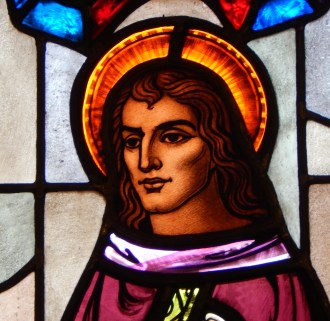
… and then at some point the community of St. Cyprian’s made a decision to depart from the traditional practice of using biblical figures and to instead highlight black people, men and women, “who have made significant contributions to the liberation and empowerment of our people. … Our stained glass windows, therefore do not serve to beautify the building or to enhance its ambience, rather they serve to educate us about the outstanding contribution of men and women to the betterment of our community.” “It is my hope,” a former rector concludes in a descriptive pamphlet, “that as we celebrate their lives and deeds that we may be inspired to follow their blessed footsteps to make our community and nation a better place for all.

Sojourner Truth and Harriet Tubman

Mary McLeod Bethune
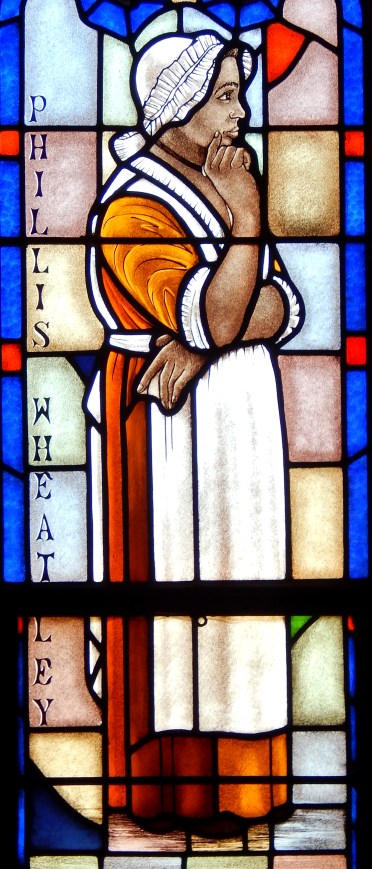
Phyllis Wheatley

Phyllis Wheatley

The images span the past into the present.

Richard Allen and James Forten

Richard Allen and James Forten

Prince Hall

Prince Hall

A booklet titled Voices and Victors in the Struggle features the biographies of each of these people. And thanks to physical libraries and of course the internet, if you are unfamiliar with the historical significance of these folks you can choose to discover why they have been recognized in this church.

Marcus Garvey

Martin Luther King Jr and Frederick Douglass

Martin Luther King Jr and Frederick Douglass

Absalom Jones

Alexander Crumwell

Alexander Crumwell

The Rt. Rev. John Melville Brugess

The Rt. Rev. John Melville Burgess

St. Cyprian’s was built by a people rising above discrimination. Over time and deliberately, members sought to use design as a tool for empowerment and celebration of the achievements of people of color from many different backgrounds.
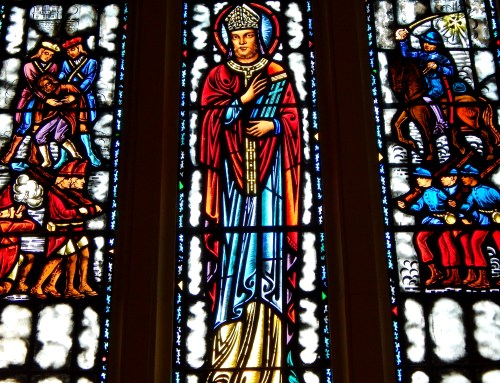
St. Cyprian

St. Cyprian

It was inspiring to learn of this church and its founders, and to see firsthand the beauty and history shared through its windows.

Sources & Additional Reading
About St. Cyprian’s


Save

Save

Read Full Post »

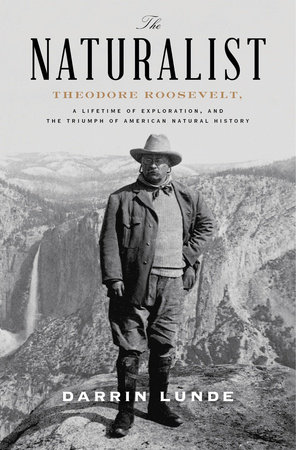
The Naturalist by Darrin Lunde presents yet another side of the complicated Theodore Roosevelt (1858-1919). Scion of a wealthy New York family, sickly as a child, Roosevelt’s enduring image is that of a rough and tumble soldier, a politician with a big stick foreign policy and a big game hunter extraordinaire. Lunde’s book focuses on Roosevelt the naturalist.

In 1867, just a couple years before his father Theodore Roosevelt Sr invested in the creation of the American Museum of Natural History in New York City, Roosevelt started his own natural history museum in the family house. Twelve specimen would soon grow to include hundreds of mice, shrews and birds. Though the museum would soon be relocated by family decree especially after “he acquired a live snapping turtle – an aggressive pond-dweller covered in algae and decorated with a gruesome frill of leeches,” a passion had been borne that would stay with Roosevelt throughout his life.

Roosevelt lived during the Victorian Age. Nature study was common and encouraged especially among his social class.  Never formally trained, he would teach himself the necessary skills, including taxidermy. The Naturalist provides unflinching accounts of how natural history museums of that era built their vast animal collections, collections that are scientific boons for researchers today but at what cost? Even then, ethical and moral questions arose around the killing of animals. Though museums in general collected far more animals than he did, Roosevelt took the brunt of criticism later in his life from animal rights advocates as the media reported graphic details of Roosevelt’s big game hunts in Africa.

Lunde is a Supervisory Museum Specialist in the Division of Mammals at the Smithsonian’s National Museum of Natural History. He’s clear in his affinity for Roosevelt the naturalist and also in his concern about the growing disconnect between people and nature. At the end of the book he raises questions about the changing perception of what it means to be a naturalist. He points out that “To really understand Roosevelt the naturalist, we need to locate him in the naturalists’ world that he knew  — a world that wholeheartedly embraced guns, hunting, and taxidermy as equally important to the naturalist’s craft.”

The book reads like an American Experience documentary and I mean that in the best possible way. The book is chock full of historical facts and details and yet it is not in anyway overwhelming.  The narrative flows carrying the reader along on a thought-provoking journey in the life of one of America’s great iconic figures.

I received this book from Blogging for Books for this honest review.

Additional Links …

The Naturalist

Darrin Lunde

Save

Read Full Post »

They could have stayed in the land where they had been born, a land that over time their ancestors had come to consider home. During the war the land had been bloodied but the war was over. A few cities and institutions had been destroyed but for the most part key systems and infrastructures had been preserved.  Yes, war had ended, and with war’s end some change had come.  Were they not free? A big change, for sure, but clearly not enough.

Word spread of a different place, a place with more opportunities, where one could make a fresh start.  It would be an all or nothing gamble. Not everyone was sure of such a gamble but some were.  Families mobilized.  All they need do to reach this promised land was to cross the river.  And they did.

Not everyone was happy.

This is how one group’s journey was described by an observer:

“… today there are sixty or seventy … of all ages and sexes on the river bank … singing and shouting … waiting for a government boat that will give them free transportation … These emigrants are the most lazy … too lazy to make a living in this warm and generous climate, where nature holds out to them her arms laden with rich and magnificent fruits that never fail. She points to her lakes … with unfailing yield of food from the waters, and can boast of a soil more productive than any other. Yet this lazy class of emigrants are compelled to go [elsewhere] to make a living or be fed by a magnanimous government.  The most important of these emigrants have abandoned comfortable homes, and many of them have no means to pay passage … and what money they had was expended … [They] have been deceived by designing rascals in our midst who have held out flattering hopes and promises for the future that can never be realized. …”

As for that elsewhere considered a promised land? It was Kansas. The river crossed was the Mississippi.  The emigrants were African Americans departing the south in what’s considered to be one of the first major migrations after the Civil War. The above excerpts were posted in the Boston Post on May 2, 1879 (just fourteen years after the end of the Civil War and two years after the end of Reconstruction) in a letter written by a resident of Vidalia, Louisiana to his client in Massachusetts. His client owned a Louisiana plantation.

While over six million people were freed by the end of the Civil War, many continued to work the fields where they had once been enslaved. Few other employment options existed.  By the late 1870s, white southern elites returned to power and quickly undid many of the advancements made with regard to voting rights and economic opportunities for blacks. As economic pathways disappeared and violence increased, people sought a promised land and that land was out west and especially Kansas, home of the mythic John Brown.

One concern sparked by the exodus of African Americans was, who would work the fields?  In his 1879 letter, the author includes a clipping from another southern voice reflecting upon this potential impact and proposed federal actions.

“The proposition of [President] Garfield to appropriate from the Treasury of the United States seventy-five thousand dollars for the relief of these emigrants … it is one the of most “cheeky”propositions, to use a cant expression, we have ever heard.  Here is a people, probably in combination with Garfield himself and other haters of the South, who leave their comfortable homes in the South, and under certain unexplained influences go voluntarily to the West to better their condition.  They there find only those who have persuaded them into such a wild goose chase … They find the conditions identical with what had been told them over and over again by intelligent men in the country they have left, they find the same difficulties and trials which every class of immigrants have to encounter when moving to a new country, and they are thrown on their own resources to no greater extent than the thousands of white immigrants who every year throng the Western Territories. Why does not Mr. Garfield ask the Congress of the United States to appropriate money for the temporary support of German and Irish and other European emigrants? They are as worthy …

“If this proposition to support this band of crazy wanderers should be adopted and money appropriated for keeping them in idleness, there would be created a drain on the public Treasury which hundreds of millions would not satisfy … and the time would not be long before our Western friends would have a surfeit of their colored brethren. … How long is this peculiar care for this class of our population to continue? … The colored people are as free as the whites … He has the same right as the white man has to emigrate but he has no further right than the white man for assistance …

“The place of those who go from the South will doubtless be soon supplied by the Chinamen, and what would Mr. Garfield say if the people of the South should apply to Congress for a year’s support for the almond-eyed Mongolians who may be brought here to develop our cotton lands?”

There are other letters from that time that echo the same sentiments about the roles of African Americans, the Chinese immigrants and more but I stop here. The history of that time — of emigration, migration and refugees arriving in a new land — is complex and is part of what makes America so darned unique.  Though no wall around Kansas or along the Mississippi was mentioned, as I read the words, I could not help but think of Trump. He is nothing new. Nor are the people who look up to someone like him, a man who puts down everyone, and who enables some peoples’ worse base instincts toward selfishness, fear of others and violence.

I do not find hope in these old letters but I am reminded that we as a nation have survived such people and attitudes before.  I have seen many stories of late debating whether or not Alex Haley’s Roots should have been remade. I don’t know but I do believe that there are always lessons to be learned from studying and remembering the past.

Sources

Boston Post, May 2, 1879, page 2, “The Negro Exodus”

National Archives Exodus to Kansas


Read Full Post »

brazil: banknote showing freed slaves cooking

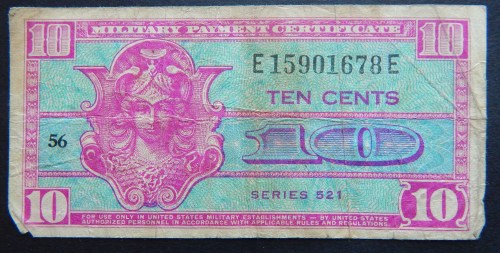
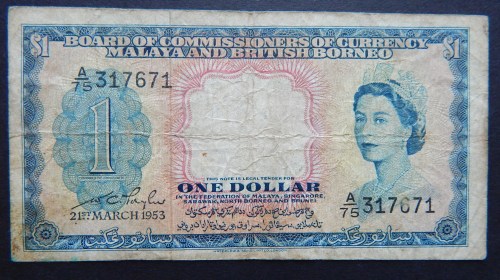
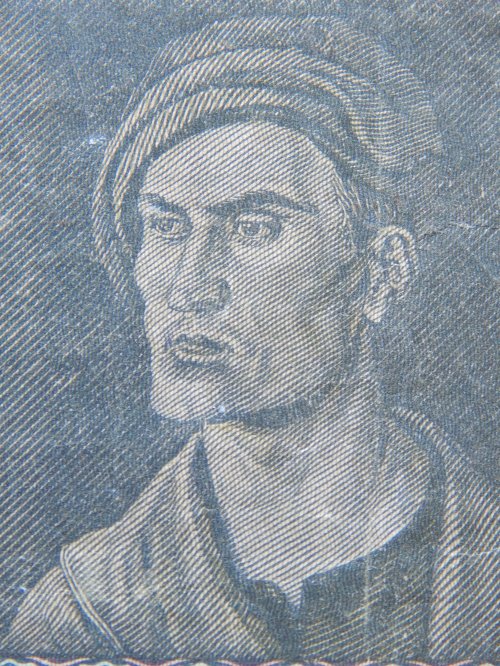
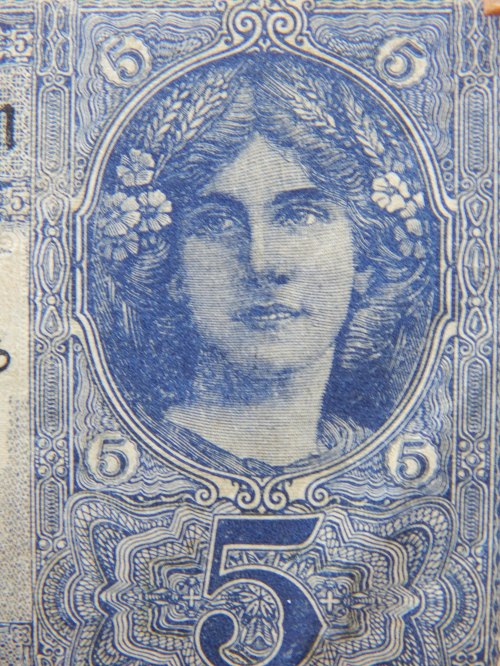
I am helping to research a bank note collection, mostly paper money from pre-World War Europe as well as other parts of the world. It is a fascinating project especially after the sometimes heated discussions here in the U.S. regarding the $20 bill and the plan to swap out the visage of Andrew Jackson for that of Harriet Tubman. Whichever $20 bill is held in hand in the future, embedded in that money, in the illustration, will be the story of that exchange. It’s the storytelling aspect that excites me about this bank note collection.  Gathered over many decades, the notes are like tiny time capsules with regard to artistic expression, economics, history and more. The nature of using money certainly continues to evolve (e.g. don’t carry cash at all, just swipe your phone!), but I expect paper money may be around for awhile.  Meanwhile, I’m looking forward to delving into the past and discovering the stories etched in these monies, a few of which are highlighted below.

    france: 1940s bank note, front image of Pyrenean shepherd

france: 1940s bank note, image of Pyrenean shepherd

germany

germany: notgeld was emergency money

british armed forces special voucher

u.s. military payment certificate

Read Full Post »

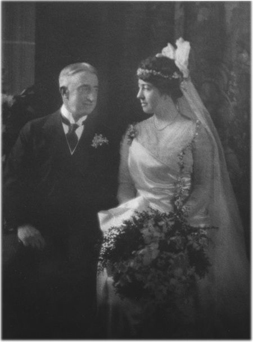
The church was decorated with Easter lilies and pink roses and the entrance to each pew marked by a cluster of lilies. Palms were placed in pew openings and stood at various points to create a natural chapel. Upon the altar more lilies and roses. The war had limited the number of guests in attendance but even so Emmanuel Church on April 21, 1915 was filled with those wishing well the bride and groom, Leslie Hawthorne Lindsey of Boston and Stewart Southam Mason of England.

william lindsey, father of the bride, and daughter leslie lindsey

The bride wore white satin made with rose point lace and garnitures of small clusters of orange blossoms. The flowers held in place a veil of Limerick lace made especially for Miss Lindsey in Ireland the previous year. She carried a bouquet of white orchids and jasmine. Her wedding party wore shades of blue and pink silk, their gowns adorned by rosebuds. The bride maids carried baskets of pink sweet peas.

After the ceremony, there was a reception in the Bay State Road home of the bride’s father, William Lindsey. The bride’s mother now wore blue silk in a shade known as moonlight embroidered with baskets of silver. Flowers prevailed, decorating each room, smilax in the hallway, greenery entwining railings and baskets of roses on the stairs. Bells rung in celebration on both sides of the Atlantic as everyone knew that soon the bride and groom would return to his home in England and all they need do was board the Lusitania.

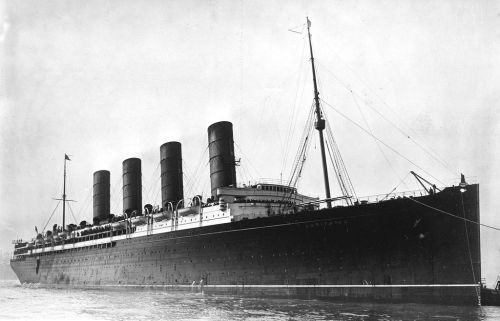
rms lusitania

rms lusitania

The RMS Lusitania would depart New York for Liverpool on May 1, 1915. On May 7, it would be torpedoes and sunk by a German U-boat. At least 1, 198 passengers and crew would die, including newlyweds Leslie Lindsey and Stewart Mason.  When the body of Leslie was returned to her father she wore the jewels that her father had given her.

A heartbroken father would do several things over the years in memory of his lovely daughter, one of which was to buy a piece of property adjacent to that of Emmanuel Church in 1919.  A chapel would be built. Begun in 1920, the structure would be finished in 1924.

The chapel was designed by the architectural firm Allen & Collins. John Ninian Comper (1864-1960) designed the chapel’s decorative scheme from the altar to the chapel’s signature stained glass windows. Sadly, William Lindsey did not see the finished chapel. His youngest daughter shared memories of seeing her father sitting across the street watching the building’s construction and knowing he would not live to see it completed.

Sources and Further Reading
History of Lindsey Chapel on Emmanuel Church website

Boston Evening Transcript, April 21, 1915

John Ninian Comper

Emmanuel Church building information
Read Full Post »

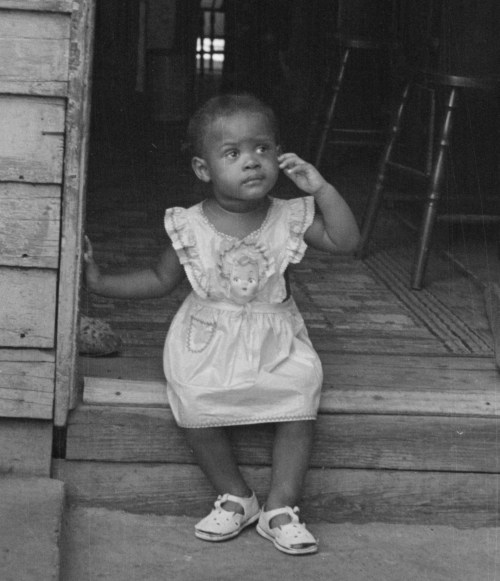
detail from untitled photo by joseph a. horne, 1940s

This photo was taken by Joseph Anthony Horne during the 1940s as he worked for the Farm Security Administration – Office of War Information.  As highlighted in a previous chapter of Interludes, he like many other photographers had been sent out across the country, under the direction of Roy Stryker, to capture the American experience. One of the areas that Horne captured on film was southeast Washington, D.C.,  an area not far from where his family lived and an area that was predominantly African American. The photos he took in that community were notable, for me, in part because there was no characterization or stereotyping. He simply photographed in a straightforward manner people living their daily lives. He, like many of the FSA photographers, was very good at that.  Otherwise in commercial media, unless it was an African-American specific publication, there was either no representation of “colored” people or it was often a mimicry.  Out of all the photos that Horne took in this community, I was especially struck by the series of photos of this little girl who had been positioned in front of the camera by a person who appeared to be her mother. No doubt she’d been placed in a best dress for the occasion. And its that dress that caught my attention.
There are people far more eloquent and scholarly than I who have written and who continue to write about how we as humans form our sense of self, our sense of self-worth, our sense of what is beautiful and our sense of how we individually fit within that definition of beauty.  This little girl is lovely and thoughtful. Her face clearly reads, who are you and what are you doing? The little face affixed to her dress is also lovely. Two different expressions of beauty.

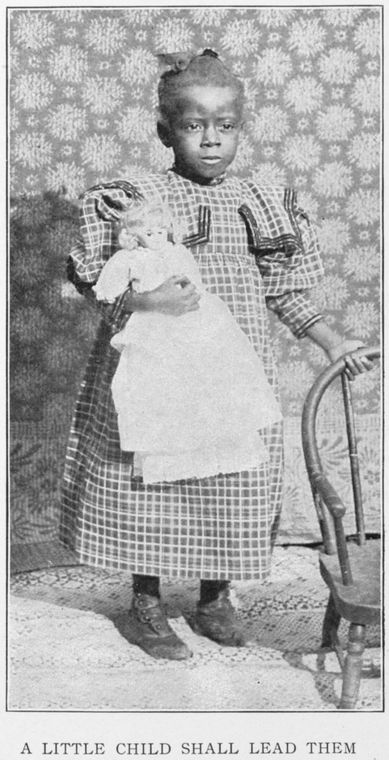
This photograph was taken in 1905 and is located in the NYPL Digital Collection. I don’t know the context in which this photograph was taken though there is that accompanying caption suggesting to me that it was in a magazine and meant as a positive image highlighting how far African Americans had come in the 40-years since slavery and that a new generation would have even more success.  Too true as evidenced by the strength in that little girl’s face, and yet I am struck by the doll wrapped in her arm.  Growing up in the 1970s, I too had a lovely doll around which to wrap my arms and I enjoyed combing her blonde hair and wondering why it was so hard, in fact impossible, to braid her hair the way my mother braided mine. I grew up in a far different time than these two young girls but Toni Morrison’s The Bluest Eye, published the year I was born, certainly resonated in my teenage years. I don’t remember ever wanting blue eyes but I think I wanted blonde hair (or maybe a lion’s mane).
These musings come to the fore because of a convergence of recent events, including having the opportunity to explore the imagery being made available through digital collections, seeing images of the past that had not been made widely available before, images that today have the potential to spark positive conversations about the past, present and future.

I recently pulled together research to tell two stories of one place.  One story focused on two sisters of great wealth whose lives are well-documented and whose enduring influences are often remarked upon.  The second story took great effort to pull together, of a gentleman whose image and good works I could only find because of the old texts and photographs being digitized and made available online.  The two sisters were white and the gentleman was black. They lived during the same time period and interacted in the same place.  When I printed my drafts and shared the stories with an elder (whose age I shall not share), she listened politely to the story of the two women but she took the story of the gentleman. We had a conversation and she said, “Cynthia, all my life I have heard about these women and the people like them. I never heard about this man. You keep doing your research. Why is it important? I want people to know that we were here. To know that we were a part of this place.”

Sources

https://www.loc.gov/item/owi2001000491/PP/

Schomburg Center for Research in Black Culture, Jean Blackwell Hutson Research and Reference Division, The New York Public Library. “A little child shall lead them.” The New York Public Library Digital Collections. 1906. http://digitalcollections.nypl.org/items/510d47df-9e16-a3d9-e040-e00a18064a99


Read Full Post »

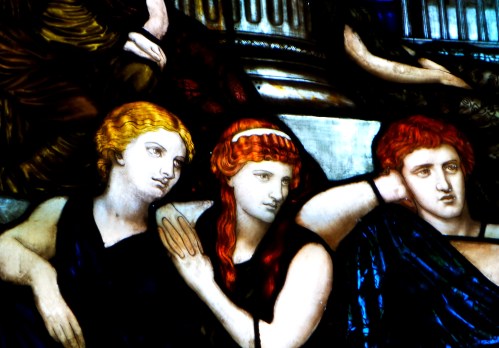
details from life of st. paul's life, by henry holiday of london, 1878

details from st. paul’s life, by henry holiday of london, 1878

During my time visiting Trinity Church in the City of Boston, I have focused my camera on the details of the stained glass windows and the stories behind their creation. Within the church itself there are over 30 windows visible to the public and, less accessible to the public, there are additional windows in the parish house that I refer to as “hidden gems.”

detail from ephphatha by burlison and grylls

detail from ephphatha by burlison and grylls

Significant changes have occurred to the church over time, which you can learn about on the excellent guided tours. It’s the changes that took place in the parish house during the 1940s and 1950s that recently intrigued me. As the parish house was being reconfigured, three stained glass windows were removed.  My curiosity was sparked. What was the story of those “lost” windows? Here’s what I found on my search, not much that wasn’t already known but for me it was a wonderful journey.

An 1888 history of the church describes in detail The Harmon Window.  Designed by Frederick Crowninshield, the window was created in memory of Cordelia Harmon.  Harmon was “Almoner of Trinity Church for many years, and through her good deeds was well known by all the poor connected in any way with the Parish.”  The window depicted Charity composed of “a woman and two half-clothed children in the centre, and a figure with bowed head at the left. Behind is the figure of Christ, with his hand extended over them. Above is the text — Inasmuch As Ye Have Done It Unto One Of The Least Of These, My Brethren, Ye Have Done It Unto Me.” You can read more about Miss Harmon in this previous post Enduring Legacies.

1920s photo of Charity, courtesy of Trinity Archives

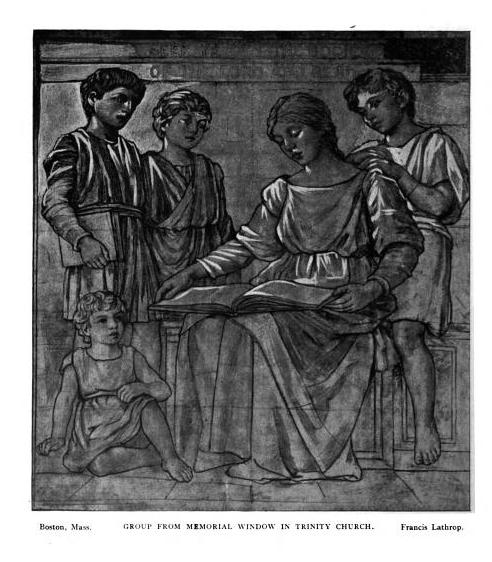
In a 1910 history of the church there is a description of The Tuckerman Window.  Designed by artist Francis Lathrop, most well known for his work with John La Farge on the murals of Trinity Church, the window depicted a woman surrounded by her four sons and instructing them from the bible.  According to the history, the woman and the boy at her right are the ones commemorated by the window.  They were Florence Tuckerman and her son Brooks Fenno Tuckerman. The design includes the words, Seek Ye Out The Book Of The Lord And Read. The window was given by Mr. and Mrs. John Brooks Fenno who also gave the window, The Storm on the Lake, located inside the church.

And finally there is The Suter Window. Designed by Charles E. Mills, it was executed by Edwin Ford and Frederick Brooks. It was a gift by Hales W. Suter in memory of his daughter, Gertrude Bingham Suter. “In the lower part of the window is the figure of a young girl, holding a sheaf of wheat.  On the ground before her, there lies a cross, while the path is strewn with roses. Her face is turned upward toward a vision – an angel who points out the New Jerusalem above.  The New Jerusalem is further represented in the smaller window above by the figures of two angels holding between them a crown.”

from Exhibition Catalog for the Boston Architectural Exhibition, 1891

The cartoon above I was able to find in the Catalog for the Boston Architectural Exhibition, 1891.  Such catalogs and similar art and architectural publications from the late 19th and early 20th centuries are increasingly being digitized and made available online. I love online research but it has been a pleasure interacting with archivists and stained glass experts too to learn as much as I did about these windows, the artists and their studios. While my search for now has come to an end, I hope you enjoy this brief glimpse of something beautiful that once was but is now no more except in stories. 😉

Read Full Post »

Recently I was walking through the reference section of the Boston Public Library in Copley Square. Though I had a specific destination, probably trying to find a book on stained glass, my eyes kept raking the shelves and a book title made me pause. I pulled the book from the shelf, randomly flipped it open and began to read.

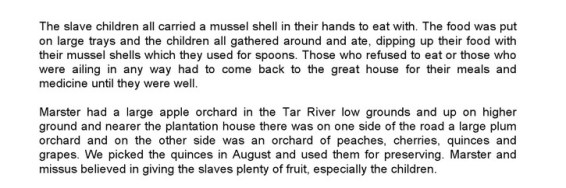
Willis Cofer, seventy-eight years old, a former slave in Georgia, was recounting his memories of how the cook fed the slave children.  They were fed all the time, he said, feeding them bread and milk for breakfast, mostly peas and cornbread for dinner, and then milk and bread for supper.  There were so many children on the plantation that “dey fed us in a trough. Dey jes’ poured de peas on the de chunks of cornbread what dey had crumbled in de trough, and us had to mussel ’em out.  Yessum, I said mussel.  De only spoons us had wuz mussel shells what us got out of de branches.

Strangely enough I had been pondering what to do with my growing collection of mussel shells. I often pick them up when I’m walking along Revere Beach. Sometimes I keep a few shells if we cook some up for dinner.  They have always been a treat. I’d never thought of them as a necessary utensil.  Just like I’d never thought of children being fed in a trough, like the rest of the farm stock.

The book I’d picked up was called Slave Culture, a 2014 series of books that present excerpts from slave narratives.  The narratives were collected starting in 1935.  It was at that time that the Federal Writers’ Project, one of Franklin Roosevelt’s New Deal programs, was established. The program provided jobs for unemployed writers, researchers, historians and others.  One of those jobs included interviewing more than 2000 former slaves across seventeen states like Willis Cofer.

Sometimes the stories captured were kept in the vernacular, like Willis Cofer’s childhood memories and those of Adeline Cunningham, 85, of Texas.  She shared, “Dey feds us well sometimes, if dey warn’t mad at us.  Dey has a big trough jes’ like de trough for de pigs and dey has a big gourd and dey totes de gourd full of milk and dey breaks de bread in de milk. Den my mammy takes a gourd and fills it and give it to us chillun.  How’s we eat it? We had oyster shells for spoons and de slaves come in from de fields and dey hands is all dirty, and dey is hungry. Dey dips de dirty hands right in de trough and we can’t eat none of it.”

Sallie Crane, at least 90 years old when interviewed in Arkansas, remembered eating out of a trough “with a wooden spoon, mush and milk. Cedar trough and long-handled cedar spoons.” Her owner’s children would taunt the slave children with their leftover school lunches, “Hold it out and snatch it back! Finally, they’d give it us, after they got tired of playing.

Other narratives were “cleaned up” by the interviewer or the former slave had received an education dependent upon the whims of his or her previous owners. Mary Anderson of North Carolina recalled in her 1937 interview:

The narratives are in the public domain. They can be found on the Library of Congress website. Universities in many states, especially in the southern states, have made them available in their libraries and online. So why read them? Institutionalized slavery in the U.S. was ended over 150 years ago. People of all shades fought and died to see passage of the Civil Rights Act of 1964 to end segregration and discrimination.  Why revisit the past?

Well, at one point, I believe that there were six million people enslaved in this country and many of those people had been enslaved over successive generations. To oversimplify, they were purposefully denigrated, treated like animals, and considered less than human. They were bred, fed and fattened to be sold and purposefully kept uneducated to dampen any dreams of a different life. And some of the people who suffered were my ancestors, and I’m fairly sure that some of the people cracking literal and figurative whips were my ancestors too. All of that history forms the foundation of this country. The seeds of fear, hate, discrimination that were planted so long ago have not disappeared.  They can too easily sprout again and in some places they clearly have.

I’d say revisit the slave narratives as a way to get a sense of what happened, the impressions made upon a people and upon a country, and to then reflect upon what has changed and what has not.  I was moved by Willie Cofer’s words to consider something I’ve never done before, to create an art installation.  I wanted to … and perhaps I will do it … to find a cedar trunk and carve it into a rough-hewn trough. To place nearby a tree and from its bare branches hang mussel shells. To fill the trough with milk and torn up pieces of bread and peas. I did find a little wooden box and one of my mussel shells and a wooden spoon. I poured in some milk and sprinkled in some corn meal.  I would do a little photo shoot, you see.  It was only when I tore up the bread and tossed it into the box that I began to cry.

Read Full Post »

This too is a story about gifts.

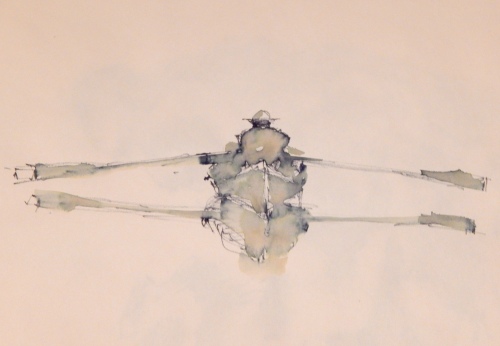
watercolor by ludwig a. joutz

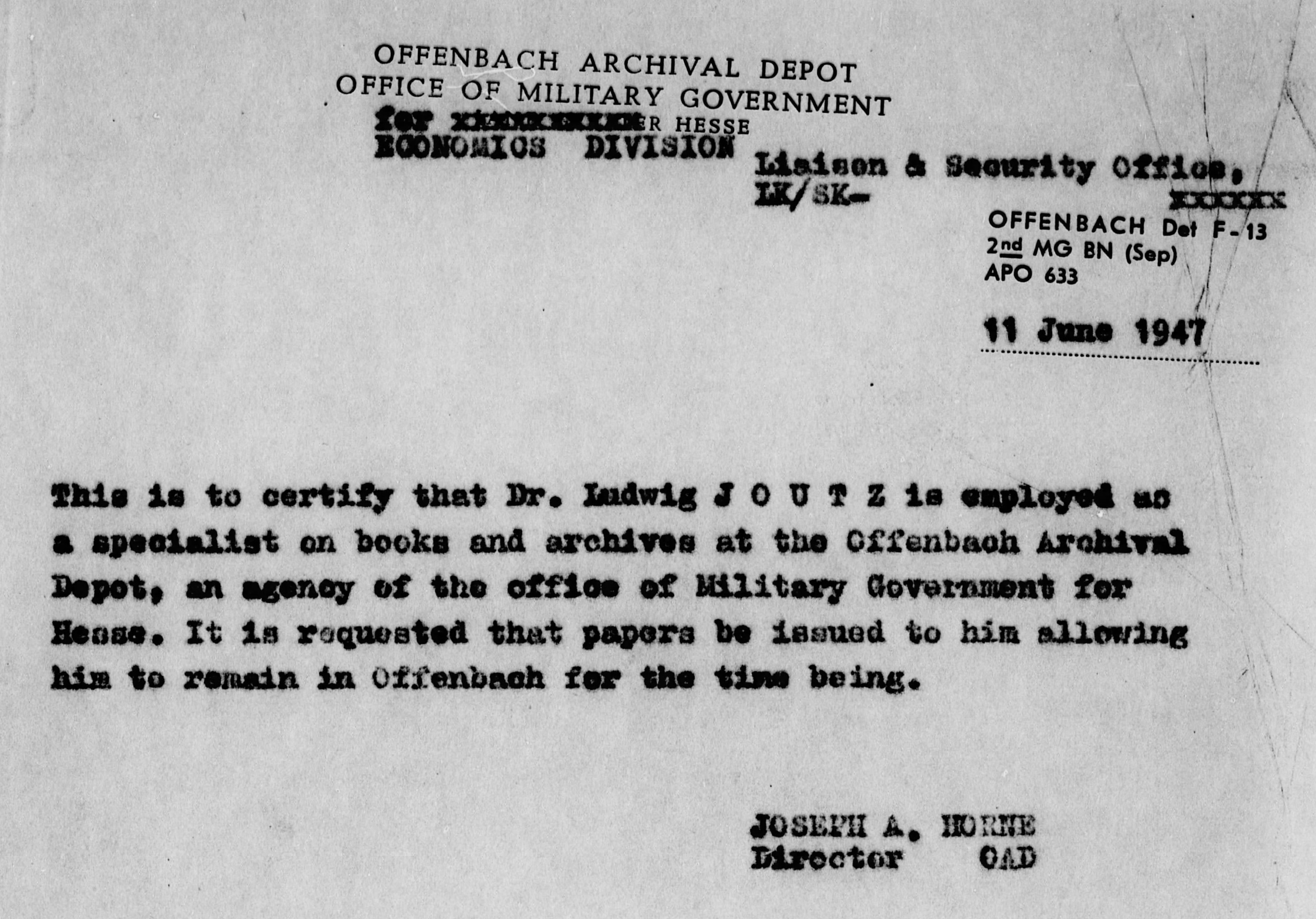
Ludwig Aloysius Joutz (1910 – 1998) was an architect noted for his work with religious and educational institutions primarily in the Washington, DC area.  I learned of this gentleman while researching Joseph Anthony Horne as part of my Interlude Series.

By the time Horne meets Joutz, Joutz had already earned his doctorate. His 1936 thesis is still referenced with regard to medieval church architecture.  In 1939/40 he was awarded a travel grant from the German Archaeological Institute but was perhaps unable to use it because of the outbreak of World War II.   He would be drafted into the German army and become a prisoner of war.

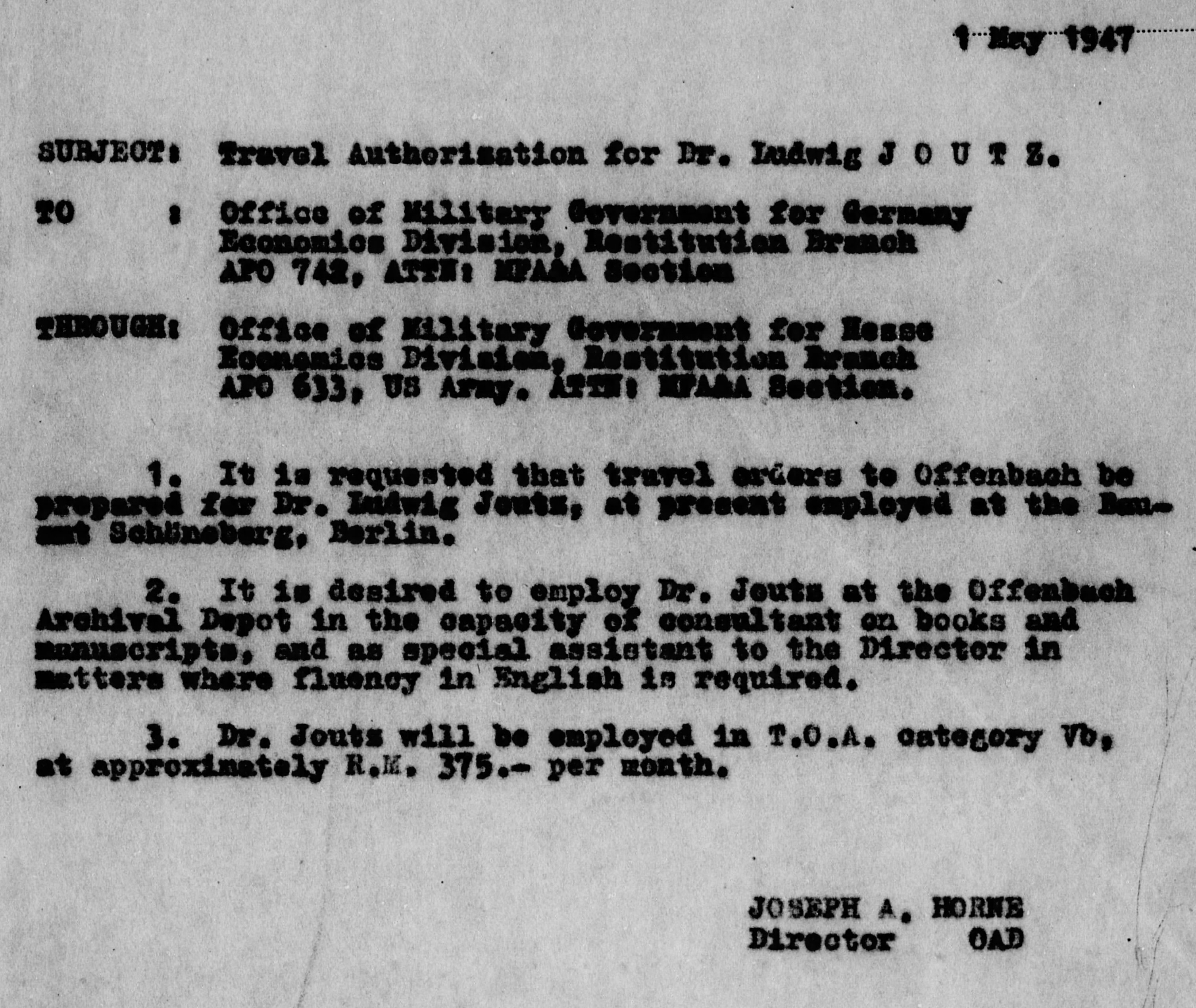
Exactly how he and Horne originally met is unclear.  It might have been as early as the Invasion of Italy where Joutz was captured but certainly by the end of the war they were fast friends.  The earliest document that I’ve been able to find so far is dated May 1947.  In that year, Horne was working with the Monuments, Fine Arts & Archives unit.

As the Monuments Men continued their efforts to find, catalog and restitute items looted by the Nazis and others during the war, Joutz would become a valuable resource.  German-born, he was fluent in English and several other languages and knowledgeable about the art and literary worlds. Horne, American-born and fluent in German thanks to his immigrant parents, was culturally sensitive and knowledgeable about the arts. They apparently worked well as a team.

LJConfirmation

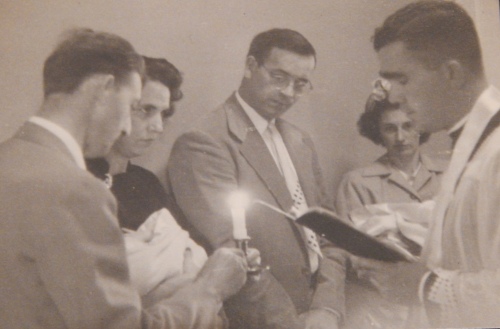
Between June 1, 1947 and March 1948, Joutz would serve as an operations specialist on books and archives at the Offenbach Archival Depot.  During that period, he and Horne, by then director of the Depot, would become great friends. Horne would aid Joutz in resettling in the U.S. where he would establish himself as architect. They would become godparents to each other’s children and remain friends until the end of their days.

familyceremony

joseph and elsie horne and ludwig and lucy joutz

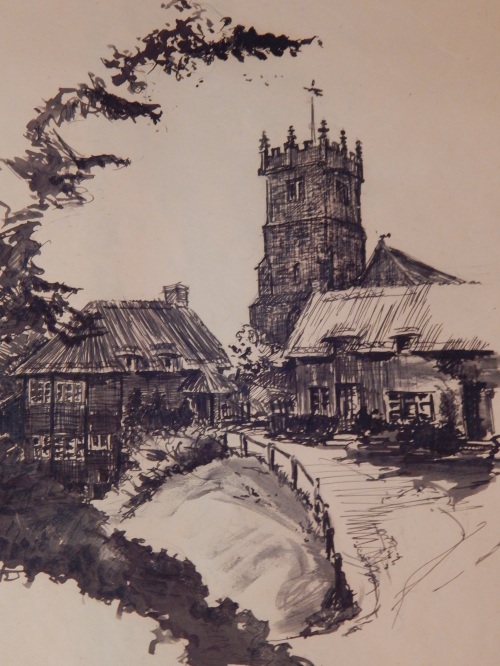
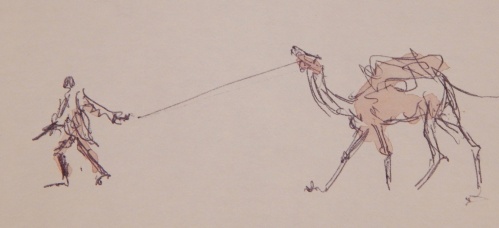
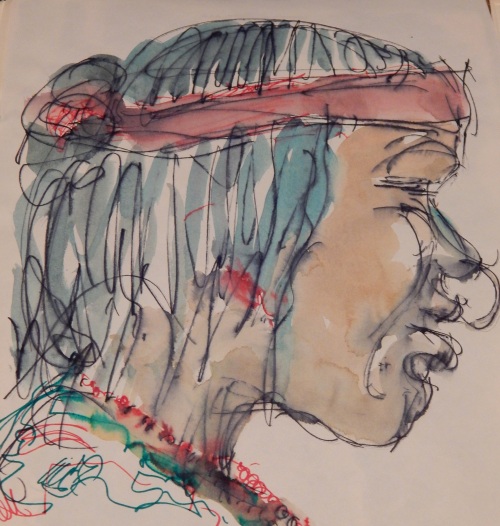
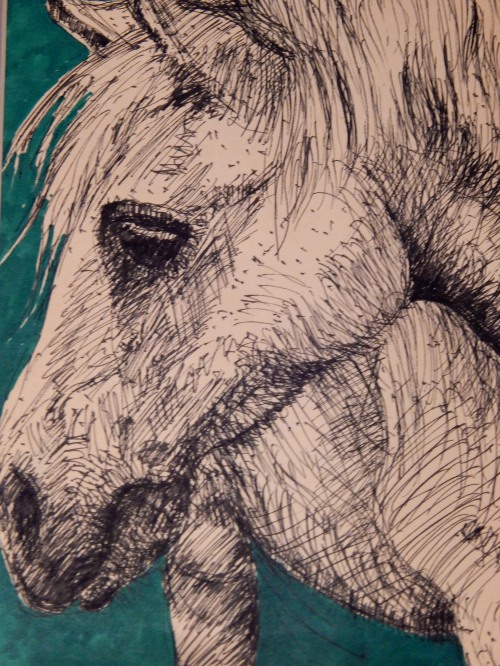
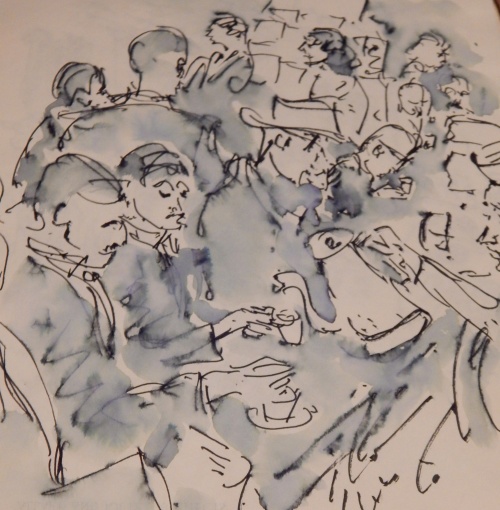
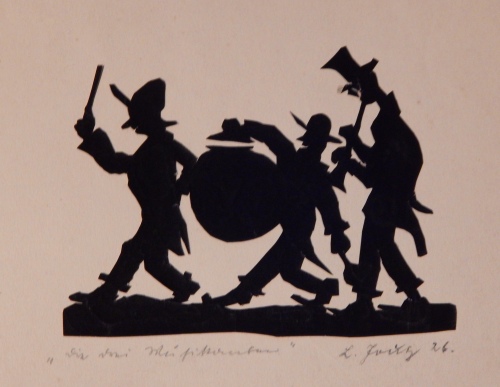
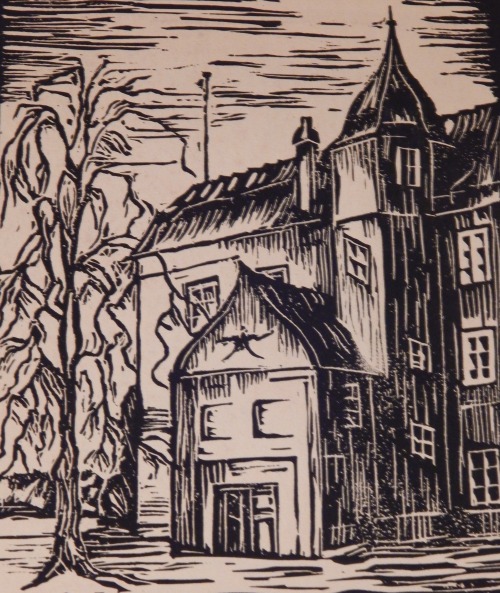
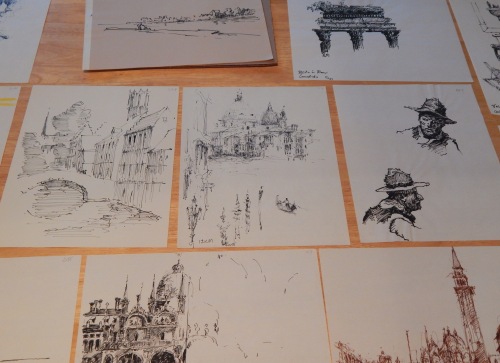
Throughout out his personal and professional life, Joutz would travel around the world.   As part of those travels, whether for work or for pleasure, he would view his surroundings with an artist’s eye and try to capture what he saw.  Yes, with a camera like his friend Horne, but Joutz would also explore many different forms and techniques of art. He experimented with pen and ink, pastels, watercolor, woodblock prints, papercutting and more.  How do I know this? By a gift he painstakingly assembled for his son.

When visiting Joutz’s son, Frederick, a noted economist, I noticed a stack of suitcases tucked in a corner. Now these suitcases were the old-school, at least 1950’s if not earlier, kind of suitcases that are deep enough to curl up and go to sleep in and strong enough to, well, last a lifetime.  Frederick explained that they contained his father’s artwork. Now at first I thought he meant prints related to his father’s architectural practice, photos of completed projects, etc.  But that was not so.

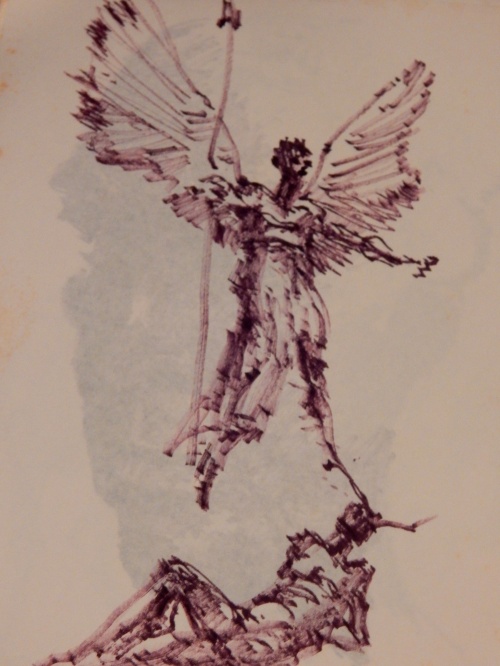
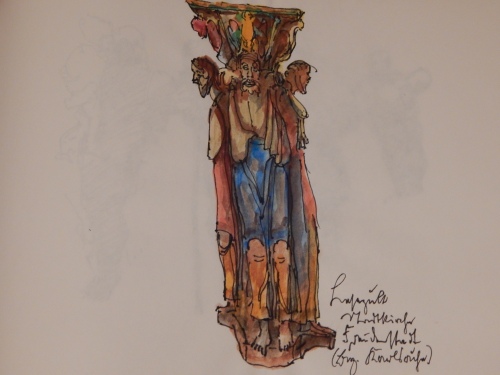
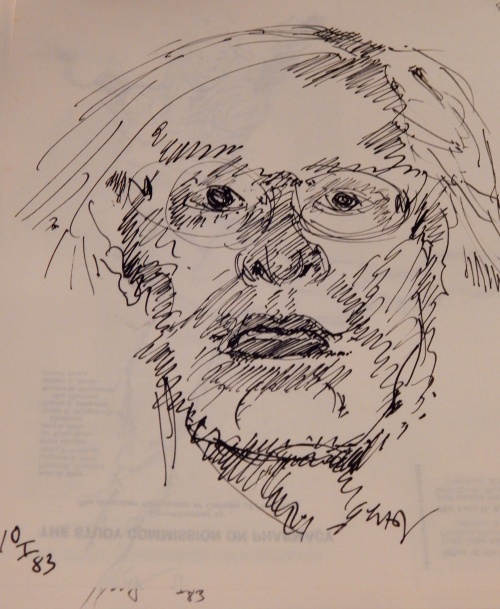
artwork by ludwig joutz

artwork by ludwig joutz

artwork by ludwig joutz

Inside the suitcases was artwork spanning nearly five decades. Joutz had carefully organized his artwork, everything from sketches on the back of used envelopes to sweeping washes of color applied to delicate Japanese papers.  It was all layered in stacks in these deep suitcases.  The son remembered his father engaged in the process and how he culled items along the way. One can only imagine what the father may have considered not worth saving.

artwork by ludwig joutz

What I managed to see, the content of only two of the many suitcases, was breathtaking in its scope, in the diversity of imagery, and the range of techniques attempted. Each image suggested a story. On some of the pages were notes. What did they mean?

artwork by ludwig joutz

artwork by ludwig joutz

Some of the works were clearly copies of masterpieces, as done by any art student spending a day in an art gallery might do, but many images appeared to be of ordinary people.  Perhaps seen in European town squares or along desert routes when he traveled in Egypt?

artwork by ludwig joutz

artwork by ludwig joutz

artwork by ludwig joutz?

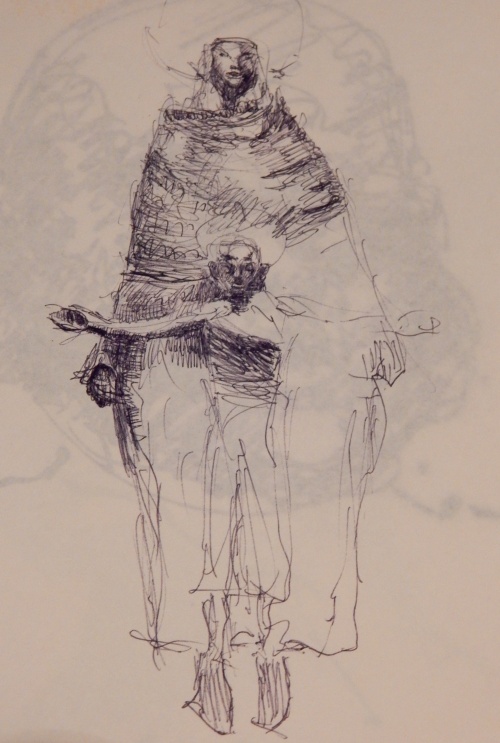
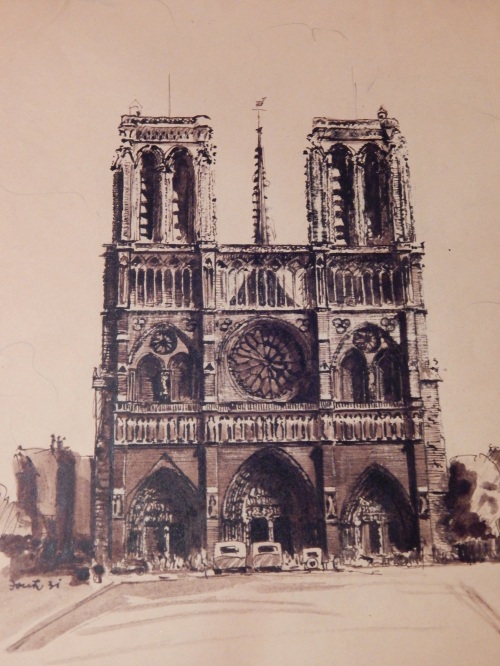
Then there are the images that are ecclesiastical in nature … were they the early concepts or cartoons for church murals? Did the murals still exist or had they become lost and all that remains are these vestiges?

Those are stories that others may choose to research and tell one day. I am grateful that his son allowed me to see just a fraction of what is contained in those suitcases.  And a salute to Mr. Joutz for preserving his own artwork as he helped to preserve the works of others throughout his career.

artwork by ludwig joutz


Sources and Additional Readings …

Fold3.com Holocaust Collection


Read Full Post »

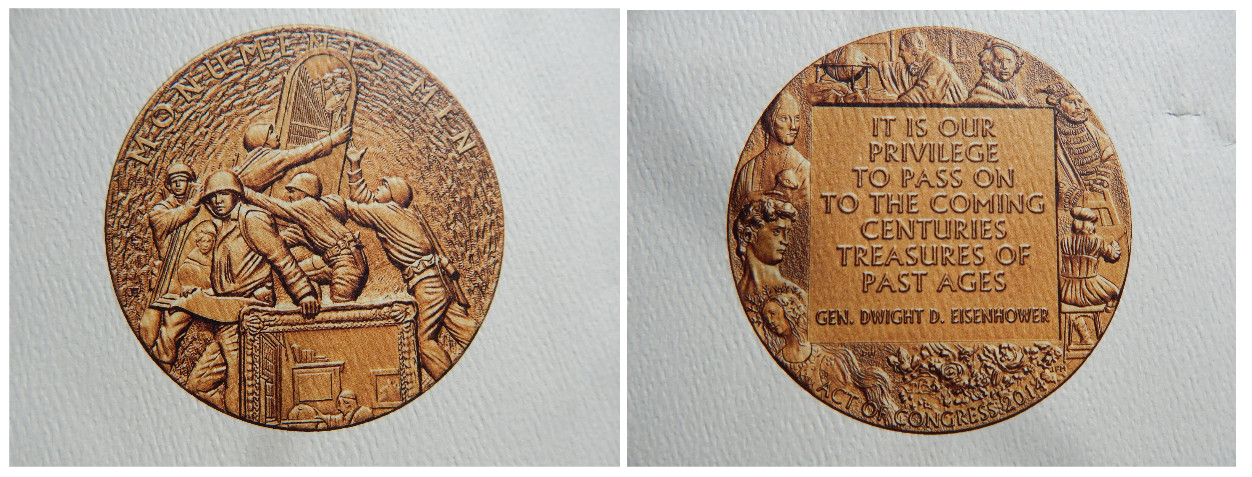
Congressional Gold Medal presented to the Monuments Men

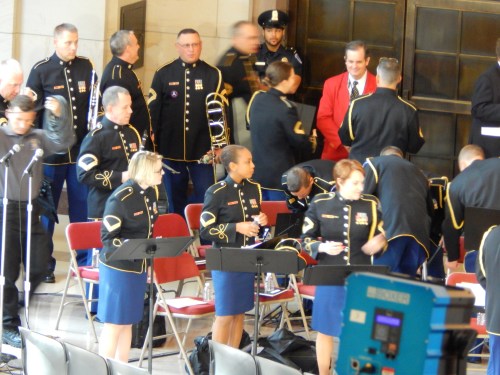
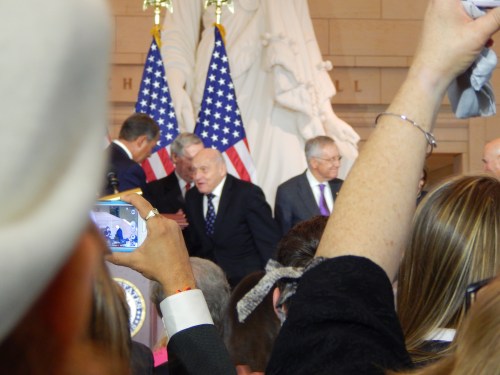
Of the nearly 350 men and women who served in the Monuments, Fine Art & Archives Unit recovering and returning fine art, books and other items looted by the Nazis during World War II, six are still alive.  On Thursday, October 22, one of the youngest of the group, Mr. Harry Ettlinger, now 89 years old, accepted the Congressional Gold Medal on behalf of what has become known as The Monuments Men. In attendance were 175 family members of the Monuments Men plus hundreds of others.  It has been my pleasure to learn about the work of these men and women while researching the life of Joseph Anthony Horne. Below are a few pictures from the event where the political parties put differences aside to honor great deeds done in the past and encourage continued preservation of art and culture in these troubled times as well.

Exterior of the Capitol Building

U.S. Army Band Pershing's Own and U.S. Army Voices

U.S. Army Band Pershing’s Own and U.S. Army Voices preparing themselves.

Member of U.S. Army Color Guard retiring the colors.

Member of U.S. Army Color Guard retiring the colors.

Rep. Michael E. Capuano (MA) and Rep. Kay Granger (TX)

Rep. Michael E. Capuano (MA) and Rep. Kay Granger (TX)

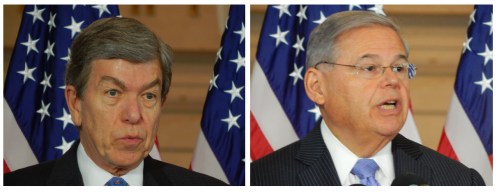
Sen. Roy Blunt (MI) and Sen. Robert Menendez (NJ)

Sen. Roy Blunt (MI) and Sen. Robert Menendez (NJ)

Robert M. Edsel, Chairman of the Board, Monuments Men Foundation for the Preservation of Art

Robert M. Edsel, Chairman of the Board, Monuments Men Foundation for the Preservation of Art

Nancy Pelosi, Democratic Leader of the House of Representatives

Nancy Pelosi, Democratic Leader of the House of Representatives

Harry Reid, Democratic Leader of the U.S. Senate and Mitch McConnell, Majority Leader of the U.S. Senate

Harry Reid, Democratic Leader of the U.S. Senate and Mitch McConnell, Majority Leader of the U.S. Senate

Speaker of the House John A. Boehner about to present the gold medal.

Speaker of the House John A. Boehner about to present the gold medal.

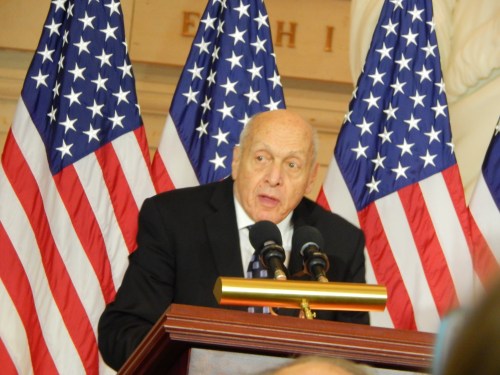
Mr. Harry Ettlinger, Monuments Man, accepting the award.

Mr. Harry Ettlinger, Monuments Man, accepting the award.

Other Monuments Men present at the ceremony were Richard Barancik, Motoko Fujishiro Huthwaite, and Bernard Taper.  Learn more about these amazing men and women at …

http://www.monumentsmenfoundation.org/

Picture of all four Monuments Men at ceremony

Read Full Post »

« Newer Posts - Older Posts »