Feeds:
Posts
Comments

Posts Tagged ‘history’

Previous Interludes

photo by Joseph A. Horne, Mt. Olivet Cemetery

photo by Joseph A. Horne, Mt. Olivet Cemetery

In 1949, when Joseph A. Horne received an award from the Netherlands for his part in the restitution of books to that country, he was Chief of the American Information Center in Frankfurt, better known as Amerika Haus.  In a 2013 blog post, illustrator Eric Carle described his experiences at Amerika Haus as a young man:  “The Amerika Haus countered the negative view of the United States and the free world. It housed a library with books and magazines mostly in English, arranged discussion groups, performed plays, concerts, movies and exhibitions, for instance, a show on architecture from the United States. From time to time, the Amerika Haus arranged joint ventures with German cultural institutes …  The concept of the Amerika Haus was ingenious, successful and resonated with the German population eager for more contact with the outside world from which it had been isolated for many years.” A 20-year old art student, Carle would be hired to design posters for Amerika Haus events.

Libraries as places of cultural exchange was not a new idea.  Since 1938, the U. S. State Department had operated a global Cultural Relations Program, working with private citizens and organizations like the American Library Association, establishing libraries, orchestrating and/or collaborating with others to produce a wide range of activities from teacher/student exchanges to fine art exhibitions.  In post-war Germany the first Amerika Haus was established in Frankfurt by October 1947.  Others quickly followed.

The_Logan_Daily_News_Thu__Oct_22__1953_(3)

These centers, soon located across Germany, drew peoples of all ages and backgrounds curious about the U.S. and seeking education and cultural opportunities that had been denied under Hitler, and then again under Stalin for those people living in Soviet-occupied areas.

By 1953, the libraries were being operated under the auspices of the United States Information Agency (USIA), known abroad as the United States Information Service (USIS).  Established under President Eisenhower, USIA focused on public diplomacy, and consolidated a number of foreign information activities into one agency, including the existing network of libraries.  The USIA would focus on delivering programming overseas with the Department of State providing foreign policy guidance. Titles changed and field operations shifted, but people like Joseph Horne continued what they had been doing since the end of the war, serving as liaison and ambassadors of U.S. culture and democratic ideals. The libraries were a focal point.  Pulitzer Prize winning journalist, Hal Boyle, reported from Berlin in 1954:

The centers were viewed by many as a strategic investment against the rise of the Soviet Union and communism, not by using force, but by using arts, literature, music and commercial publications.  As Joseph Horne would later tell his son, “One of the most powerful pieces of U.S. propaganda ever was the Sears Roebuck catalog.

As the Cold War intensified, libraries, and especially Amerika Haus libraries in Germany, would become unexpected targets as the anti-Communist fervor intensified across the U.S.

Concerns had escalated to the point that government employees had to swear they were not Communist. Television networks made their employees sign loyalty oaths. Public media encouraged people to report anyone suspected of being “red.””
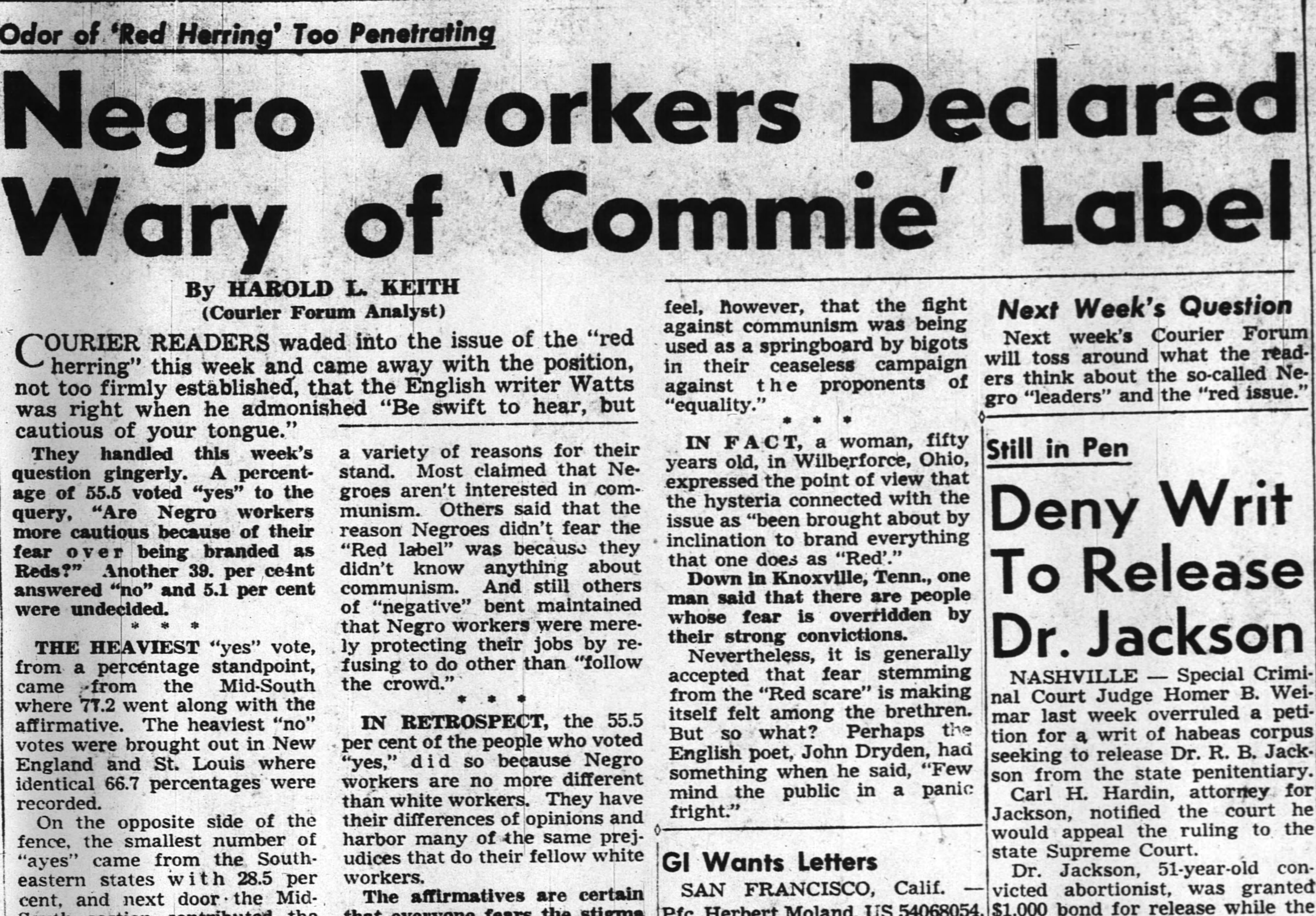
Excerpt from The_Pittsburgh_Courier_Sat__May_31__1952_

Excerpt from The_Pittsburgh_Courier_Sat__May_31__1952_

Lists were compiled by private groups as well as government agencies.  Celebrities were especially put under a spotlight.  People were blacklisted. They lost their jobs.  People were threatened with jail and expulsion from the country.

None more so than Wisconsin Senator Joseph McCarthy fanned the nation’s fears, with his fervent accusations of subversive activities at home and abroad.  In David Caute’s book, The Dancer Defects: The Struggle for Cultural Supremacy during the Cold War, he describes McCarthy’s interest in the State Department libraries, places where he believed Soviet and communist-leaning propaganda was being distributed.

McCarthy’s two aides, Roy Cohn and David Schine, would embark on a highly publicized tour of numerous European cities “striking at the cultural centers known as America House. … A major purge occurred in Berlin and throughout West Germany where the [United States Information Agency] had 40 branch libraries visited by an estimated 15 million people in the course of 1952.” He goes on to quote a 1953 Herald Tribune reporter as writing, “The burning of books is now progressing merrily in all American diplomatic missions abroad for all to see.

Russian American Vera Micheles Dean was head researcher for the New York-based, and anti-Communist, organization Foreign Policy Association.  In 1953, when her books were ordered pulled from the Amerika Haus libraries by the State Department, she put two questions to Secretary of State Dulles:  Who was responsible for drawing up the list of proscribed books? On what grounds were her writings forbidden?

In a 1953 article in opposition to McCarthy’s attacks against the libraries, correspondent Raymond Wilcove writes:  “More than 35 million people in 67 countries continue to throng America’s overseas libraries as Congress debates their value. Those who have seen them in operation say they provide America’s best show-window to the world.

Horne would later share that he remembered his phone calls from Cohn.  While he did not share the detail of the conversations, he was not complimentary about the interaction.  Despite the purge, in the end, the Amerika Haus libraries would survive McCarthy.  McCarthy would not survive Edward R. Murrow.

Edward R. Murrow

Edward R. Murrow

In the 1950s, on his CBS program See It Now, developed with colleague Fred Friendly, Murrow produced a series of reports about McCarthy’s activities.  His March 9, 1954 broadcast is widely hailed as one of television’s great moments.  Murrow began the report with these words,

Because a report on Senator McCarthy is by definition controversial, we want to say exactly what we mean to say, and I request your permission to read from the script whatever remarks Murrow and Friendly may make. If the Senator feels that we have done violence to his words or pictures and so desires to speak, to answer himself, an opportunity will be afforded him on this program. Our working thesis tonight is this question: If this fight against Communism is made a fight between America’s two great political parties, the American people know that one of these parties will be destroyed, and the Republic cannot endure very long as a one party system.”

Having been diligent at collecting film and audio clips of the Senator speaking in public, Murrow proceeded to air clips of the Senator, in his own words, making statements in one setting that he makes very differently in another. Murrow remarked,  “On one thing the Senator has been consistent. Often operating as a one-man committee, he has traveled far, interviewed many, terrorized some, accused civilian and military leaders of the past administration of a great conspiracy to turn over the country to Communism, investigated and substantially demoralized the present State Department …

Murrow was dogged in his examination of the Senator, finally concluding, “No one familiar with the history of this country can deny that congressional committees are useful. It is necessary to investigate before legislating, but the line between investigating and persecuting is a very fine one and the junior Senator from Wisconsin has stepped over it repeatedly. His primary achievement has been in confusing the public mind, as between the internal and the external threats of Communism. We must not confuse dissent with disloyalty. We must remember always that accusation is not proof and that conviction depends upon evidence and due process of law. We will not walk in fear, one of another. We will not be driven by fear into an age of unreason, if we dig deep in our history and our doctrine, and remember that we are not descended from fearful men — not from men who feared to write, to speak, to associate and to defend causes that were, for the moment, unpopular.
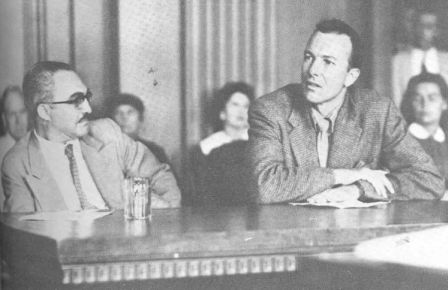
Pete Seeger Before McCarthy

Pete Seeger Before McCarthy Hearing

This is no time for men who oppose Senator McCarthy’s methods to keep silent, or for those who approve. We can deny our heritage and our history, but we cannot escape responsibility for the result. There is no way for a citizen of a republic to abdicate his responsibilities. As a nation we have come into our full inheritance at a tender age. We proclaim ourselves, as indeed we are, the defenders of freedom, wherever it continues to exist in the world, but we cannot defend freedom abroad by deserting it at home.

Langston Hughes Before McCarthy

Langston Hughes Before McCarthy Hearing

The actions of the junior Senator from Wisconsin have caused alarm and dismay amongst our allies abroad, and given considerable comfort to our enemies. And whose fault is that? Not really his. He didn’t create this situation of fear; he merely exploited it — and rather successfully. Cassius was right. “The fault, dear Brutus, is not in our stars, but in ourselves.”

Good night, and good luck.”

McCarthy’s influence waned. By the end of the year he would be censured by Senate.  In 1957 he died at the age of 48.  The libraries that he had so maligned were still going strong.  In 1959,  journalist Tom A. Cullen would write: “I have just visited the American “spy factory” in West Berlin.  That’s what the Communists call Amerika Haus, the new $250,000 United States Information Center.  But in an afternoon there I could find nothing more sinister than a few gray-haired grannies reading newspapers.  Or maybe it’s American jazz that’s sinister – there was a whole group of eager German youths listening to the latest long-playing jazz discs from the States.

Throughout this period, Joseph Horne’s foreign service activities would take him from Frankfurt, Germany to Genoa, Italy where he served as Public Affairs Officer. Intermittent time would be spent in the U.S. as his family grew.  In approximately 1957 or 1958 he would be assigned as Cultural Affairs Officer in Bangalore, India.  In 1961, President John F. Kennedy would appoint Edward R. Murrow as director of the United States Information Agency.  “Edward R. Murrow was my boss,” Horne would tell his son. India during this time, like much of the world, was going through great change. More to follow in the next Interlude.


Sources & Additional Readings

Amerika Haus: The First Fifty Years

History of the Amerika Haus

http://ericcarleblog.blogspot.com/2013/08/amerika-haus.html

DAI Heidelberg Library & USA Information

Information Bulletin April 1949

The Dancer Defects: The Struggle for Cultural Supremacy during the Cold War … by David Caute, page 26

Joseph McCarthy

Cohn & Schine Time Cover 1954

Vera Micheles Dean

Edward R. Murrow addresses Joseph McCarthy full video

Transcript of Murrow addressing McCarthy

https://en.wikipedia.org/wiki/Communist_Control_Act_of_1954


Read Full Post »

photo by D. Ledesma

photo by D. Ledesma

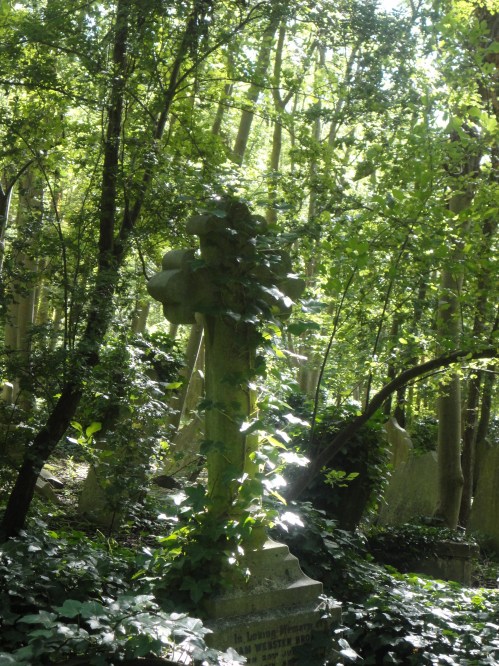
I am grateful to have family and friends who as they walk in the world will sometimes pause and think, “Hmmm.  This is a picture that Cynthia might like.” Some people will share photos of that sight in the moment by text.  Other times, as most often happens with my brothers, they will give me a ring and describe in great detail the Virginia sky above them. It is all wonderful, as are these images shared by a friend who recently traveled around London.  She is an archaeologist who has been involved in Egyptian digs and one day I will convince her to sit down for an interview about why she chose that field. Until then here are photos she shared of a walk through Highgate Cemetery.

photo by D. Ledesma

As the website notes, this cemetery opened in 1839 and is considered one of England’s great treasures with its fine funerary architecture.  There is an east side and a west side. The west side which includes an Egyptian Avenue is considered fragile and accessible only by special tour.  People of many backgrounds are buried here with some of the most famous figures buried including Karl Marx and George Eliot.

photo by D. Ledesma

photo by D. Ledesma

From these photos alone one can see the interplay of light and shadow upon the beautiful sculpture.  Scary movies (e.g. one involving Dracula) have been shot here but from these photos one can also imagine the serenity of this sacred space. It is still an operating cemetery.

photo by D. Ledesma

photo by D. Ledesma

For history buffs, the history page on the website is an amazing compilation of old and new video as well as text.  I don’t know if I will ever have the chance to view this place in person but I thank Ms. Ledesma for sharing these images with me.

Learn more at …

http://highgatecemetery.org/

http://highgatecemetery.org/about/history

Read Full Post »

… there was a school and on the campus there was a chapel and inside the chapel there was a stained glass window known as The Singing Window.

photo by Carol M. Highsmith

photo by Carol M. Highsmith


Sources and Additional Readings

Learn more about the photographer Carol M. Highsmith on the Library of Congress website: Carol M. Highsmith Archive.

Learn more about Tuskegee University including its tours and the history of the chapel.

Read Full Post »

On October 22, 2015, Congressional leaders will present a Congressional Gold Medal in recognition of the Monuments Men.  The Congressional Gold Medal is the highest honor the U.S. Congress can bestow upon civilians.  One of the civilians being recognized in this case will be Joseph A. Horne (1911-1987).

Joseph A. Horne

It has been my pleasure over the past few years to research just a bit into the life of Mr. Horne. Through his life journey, I’ve gained a deeper understanding of U.S. and world history.  I’ve been cataloging and sharing my findings on this blog in a series of Interludes.   Mr. Horne served his country throughout his life and part of that service included a very active role as a Monuments Man.  While I hope you have a chance to review the whole Interludes series, following are links to the two specific chapters chronicling efforts made by dedicated men and women during and after World War II to preserve, protect and return stolen works of art and books … efforts that actually continue to this day.

interlude: to protect, preserve and return … if possible

interlude: offenbach archival depot


P. S. I hope to complete the Interludes series by year’s end.  After service as a Monuments man, Mr. Horne continued his career with the U.S. Information Service, interacting with people around the world, rich and poor, literary giants, musicians, and with kings and queens.  “Walking” with him offered me a glimpse of worlds that are no more. I look forward to sharing the stories.

West End Hotel, Bangalore

Press Release Gold Medal Ceremony for Monuments Men

Monuments Men Foundation


Read Full Post »

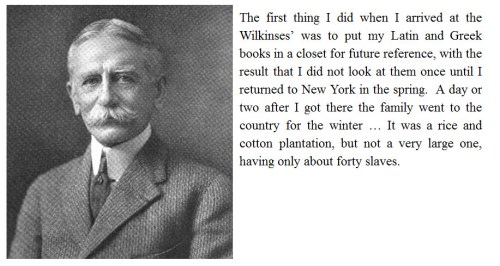
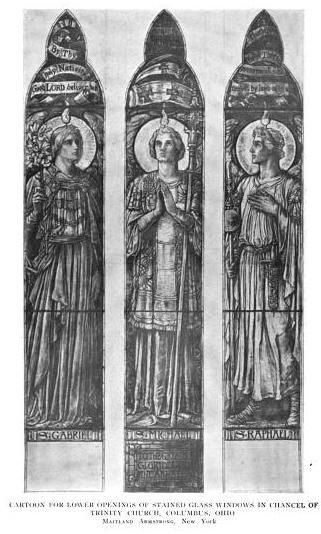
As I read Maitland Armstrong’s words, I heard David McCullough’s voice as he narrated Ken Burn’s The Civil War.  Maitland Armstrong (1836-1918) did many things during his long life but I was particularly interested in his journey as painter and stained glass designer.  I’d first learned about him as part of my research into the artists involved with decorating Trinity Church.  Maitland’s name had surfaced as a friend and contemporary of John LaFarge.

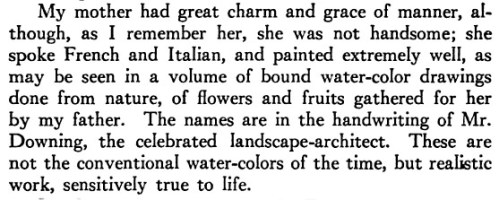
I chanced upon his memoir, Day Before Yesterday: Reminiscences of a Varied Life, published posthumously in 1920.  It opens, “I was born on the 15th of April, 1836, at Danskammer on the Hudson, near Newburgh.” In it he writes with great affection for his family and especially his mother.  He describes her southern roots, how she would sometimes leave New York to winter in Charleston, South Carolina, and how she nurtured his interest in painting before her death in 1853.

I had planned to skim Armstrong’s memoir focusing on his friendships with people like John La Farge and Augustus St. Gaudens.  In the table of contents, there is a chapter, St. Gaudens and Others.  But there was also a chapter, The South Before the War.  What did this artist have to say about such a time and place?

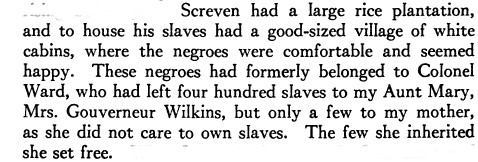
Well, what he does is describe in great detail, by painting with words, life in the south on a small network of plantations and the neighboring environs.  Even with his blood ties to a number of the families, he reports with a northern perspective.  He enjoys the hunting and accepts the slavery.  He learns a new language about the poor whites known as crackers and the slave assigned to him, his little darky.

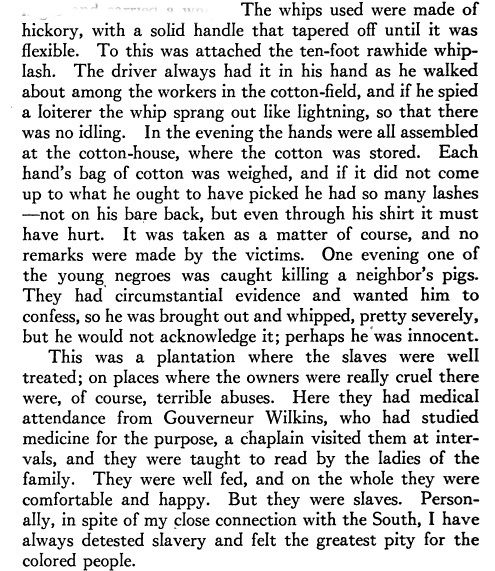
It was in 1853, perhaps after the death of his mother, that Armstrong and his brothers traveled to Charleston.  There, while he is staying with relatives, the Wilkins family, they drive to their plantation Kelvin Grove, where Armstrong describes there was “a nice little village of comfortable white cabins for the negroes. But there always was in evidence a driver, as he was called, who was a superior negro and carried a whip.

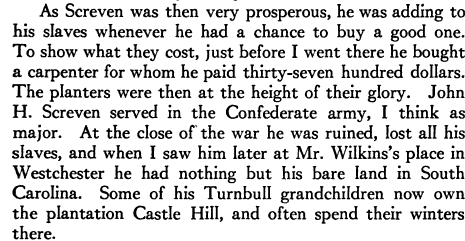
He visited several family relations while in the South, from the Wilkins to his cousins, the Screvens.

The detachment with which Armstrong is able to describe the scenes that took place around him in the south (and in a later chapter his description of turmoil in New York) make clear his compassion for others but also his upper class background that separated him from those others.

At the end of the chapter Armstrong describes how that period in the south was one of the most delightful times in his life.  No cares, no worries. He would receive a letter decades letter from a family member describing the loss of the plantations and the slaves, the occupation by Union troops, and the auctioning off of property to pay debts.

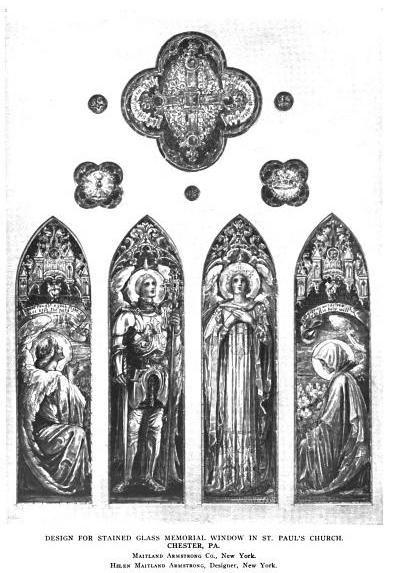
Armstrong would return to New York, attend the very best schools, and travel the world.  His life was truly varied serving as student and teacher in several different fields.  As a stained glass artist he would collaborate on masterpieces with his daughter, Helen Maitland Armstrong.  He would serve as a Consul General in Rome.  And near the end of his days, he decided to chronicle that life.

For anyone researching artists of a particular generation who ran in the same circles – La Farge, St. Gaudens, McKim, White, etc – this book could be an interesting resource. Armstrong describes personal vignettes of how these people interacted socially and appreciated each others work.  You could even completely ignore that chapter about the south.  But I think that chapter is important because, from a different source, it shines a light on life in the past … and it is that past that is the shaky foundation upon which we continue to try to build a brighter future in this country.

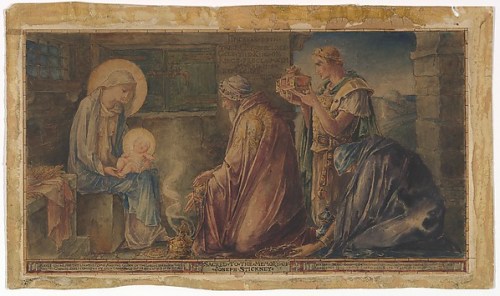
Nativity: Design for the Stickney Memorial Window, Faith Chapel, Jekyll Island, Georgia, Metropolitan Museum of Art

Nativity: Design for the Stickney Memorial Window, Faith Chapel, Jekyll Island, Georgia, Metropolitan Museum of Art


Sources/Additional Readings

Day Before Yesterday: Reminiscences of a Varied Life, 1920

Old Glass New Windows by Will H. Low, Scribner’s Magazine, Volume 4, 1888

Metropolitan Museum of Art, The Collection Online

Wikipedia — Maitland Armstrong

Year Books of the Architectural League of New York (late 1800s, early 1900s)


Read Full Post »

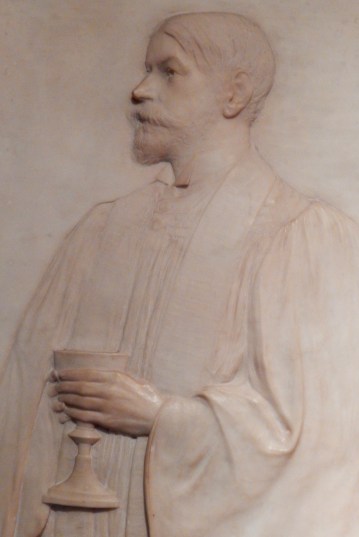
I’d seen the sculpture many times inside Trinity Church but not truly appreciated it. A man holding a cup, a cup-bearer, but the person depicted had no context for me.  I knew nothing of his significance in the past or in the present.  There were too many other visuals capturing my attention, like sunlight through stained glass windows.  Only recently have I returned with greater respect to the relief of Elijah Winchester Donald, Rector of Trinity from 1892 until 1904.

Detail of E. Winchester Donald Sculpture by Bela Pratt

I unexpectedly re-discovered the sculpture, and the man depicted, while researching the history of a church thousands of miles away at what is now known as Tuskegee University in Tuskegee, Alabama.

During my research I came across an issue of The Southern Workman, a publication founded in 1872 by General Samuel Chapman Armstrong of Hampton Institute, Hampton, VA.  Armstrong would leave his mark on American history for many reasons, one of which included founding Hampton just after the Civil War. There, a young Booker T. Washington, formerly a slave, would become a student and eventually a teacher. In 1881, when people in Alabama, wanting to start a new institute for black students, reached out to Armstrong for principal recommendations, Armstrong suggested young Washington who applied for the position and got the job.

The August 1895 issue of The Southern Workman made note of Tuskegee’s achievements, including recent receipt of anonymous funds to build a new chapel.  But prior to those funds being received graduation commencement services took place and, the journal describes the event in this way:

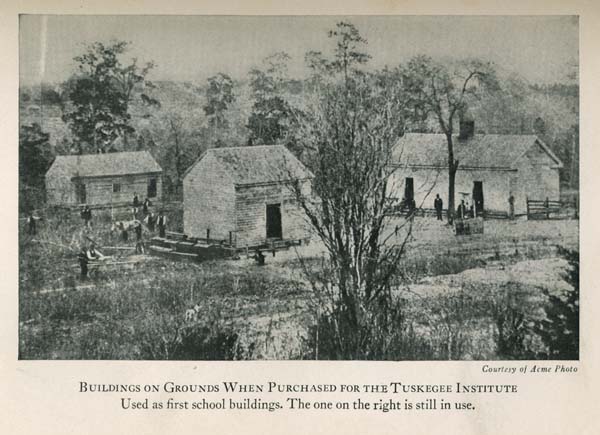
Years late, Booker T. Washington would describe the moment in a slightly different way.  In 1901, Washington wrote Up from Slavery, the chronicle of his journey from slavery, his attendance at Hampton and eventual leadership at Tuskegee and well beyond.  As Washington wrote, money had been found to start Tuskegee, with money set aside to pay future instructors, but no provisions had been made for securing land and buildings.

Later in his autobiography, Washington gives his personal recollection of the 1895 Tuskegee commencement in which Dr. Donald spoke:

The chapel would be built, designed by Robert R. Taylor, the first African American graduate of MIT. The chapel would be erected between 1896 and 1898, a structure some scholars say Taylor considered his masterpiece.

Robert R. Taylor

Robert R. Taylor

In 1900 author Max Thrasher wrote: “The building of this chapel illustrates, as well as any one instance can, the methods of the industrial training at Tuskegee.  The plans for the building were drawn by the school’s instructor in architectural and mechanical drawing.  The bricks, one million two hundred thousand in number, were made by students in the school’s brick yard and laid by the men in the brick-laying classes.  The lumber was was cut on the school’s land and sawed in the saw mill on the grounds.  The various wood-working classes did the work which in their departments.  The floor is of oak; all the rest of the finish in in yellow pine, and the use of this wood … The pews were built after a model designed by one of the students, and another student designed the cornices. The tin and slate roofing was put on by students, and the steam heating and electric lighting apparatus was installed by them …” Before his death in 1904, Donald would have an opportunity to speak in this chapel.

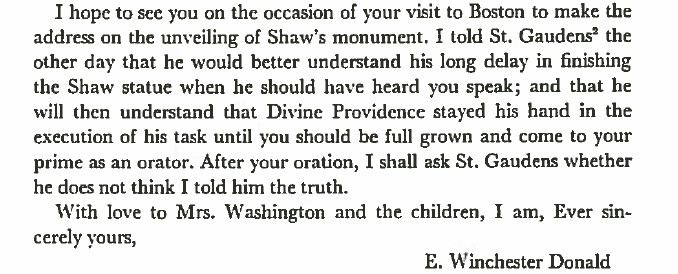
Though from two very different backgrounds, Donald and Washington appear to have greatly respected one another. In 1895  Donald established the Trinity Church Oratorical Prize, an award for the best written and best delivered paper on an assigned subject, a student prize that continues at Tuskegee, with different sources of funding, to this day.  For many reasons, Washington often made his way up North, cultivating philanthropists, accepting honorary degrees, attending national conferences, and speaking in places like Trinity.  In 1897 he was invited to deliver an address at the dedication of the Robert Gould Shaw Monument in Boston.  Prior to his arrival, Donald sent him a letter:

In 1901, Donald presented the dedication address for a new campus building at Tuskegee.  In attendance were noted business leaders and philanthropists including George Foster Peabody and John D. Rockefeller Jr. Before them was a magnificent campus, once a few fragile buildings, transformed by student-labor into a thriving educational institute with over 100 hundred instructors and staff, 50 buildings both functional and aesthetic, over 2500 acres of land with solid farming infrastructure and students applying from around the world.

Chemistry Lab 1902

Chemistry Lab 1902

Instructor George Washington Carver

Tuskegee Instructor George Washington Carver

Donald’s dedication address was made just a few decades after the end of the Civil War.  There was still great philosophical debate about what was to become of the millions of African Americans formerly enslaved.  Like Washington, Donald seemed to believe that education and skill building were the key for black people to let go of the past, achieve success in the present, and build a foundation for future excellence.

During the address, Donald would say: “We are in the presence of a fact. Whether or not the negro can be raised to self-respect, industry, thrift and ethical soundness, let the doctrinaires debate. One thing we know, whereas he was blind to his only chance, now he sees. He has only to keep his eyes open and use his chance to rise clean out of the condition into which 200 years of enforced servitude and thirty-five years of stupid, selfish and merciless political exploitation thrust him down.”  His words would become controversial with statements including “an educated negro without a vote is worth infinitely more than ten illiterate white men who vote as often as the polls are open.

Until the end of his days, in person and in writing, Donald would support the efforts of Washington at Tuskegee and those at other Southern black schools educating new generations.  He supported the efforts of many people inside the U.S. and from abroad trying to make social change.  He may have thought he was being militant.

As was said by the Rector of Grace Church in his memory, “his supreme gift was not militancy,–however it may have seemed to some, as well as to himself,–his supreme gift was not militancy, it was sympathy; he gave drink to the thirsty; he satisfied the longing soul; his true emblem was not the claymore, as he fancied, it was the chalice.”

Others stated, “Some of us disagreed with him, some of us thought his positions untenable, but none of us doubted his fraternal regard.”

His memorial was completed January 27, 1907, the bas relief by sculptor Bela Pratt and its setting designed by Donald’s friend, Charles A. Coolidge.

As for that chapel at Tuskegee, it would continue to evolve but that is a story for another day.

Sources & Additional Reading

Up from Slavery by Booker T. Washington

History of Tuskegee (University Website)

Tuskegee: Its History and its Work (1900)

Samuel Chapman Armstrong (Hampton University Website)

MIT Archives – Robert R. Taylor

Bela Pratt Sculpture of E. Winchester Donald

Trinity Church Art & History

The King’s Cup Bearer, Sermon in Memory of E. Winchester Donald, 1904

Read Full Post »

Bust of Dean Stanley at Trinity Church

I took the picture, I did the research and this is what I learned:  On Easter Monday in 1877, Rev. Phillips Brooks was given leave by his parish, Trinity Church in the City of Boston, to take a sojourn to Europe.  While in England, he spent time with Arthur Stanley, Dean of Westminster Abbey. Brooks was invited to preach at Westminster in July, and it is written that Dean Stanley listened with delight to a doctrine after his own heart.  Brooks would later share in a letter, “Last Sunday I preached for Mr. Stanley at his church in London, and William and I were much in the little man’s company while we were in his town.  He is very pleasant and entertaining, but much changed since his wife’s [Lady Augusta Stanley] death. He has grown old and fights hard to keep up an interest in things.”(1)


In the autumn of 1878, Dean Stanley traveled to America. In Boston he preached for the Rev. Phillips Brooks at Trinity Church.  Brooks would later write that no one who heard the benediction at the close of the service would ever forget it. “He had been but a few days in America. It was the first time he had looked an American congregation in the face. The church was crowded with men and women of whom he knew that to him they represented the New World. He was for a moment a representative of English Christianity. And as he spoke the solemn words, it was not a clergyman dismissing a congregation, it was the Old World blessing the New; it was England blessing America.  The voice trembled while it grew rich and deep, and took every man’s heart into the great conception of the act that filled itself.”


In 1881, following Dean Stanley’s death, Phillips Brooks would write a 12-page retrospective for The Atlantic Monthly.  In conclusion Brooks would highlight lessons of faith and good will he thought taught by Stanley’s life, and then end with these words:

“These lessons will be taught by many lives in many languages before the end shall come; but for many years years yet to come there will be men who will find not the least persuasive and impressive teachings of them in Dean Stanley’s life. The heavens will still be bright with stars, and younger men will never miss the radiance which they never saw. But for those who once watched for his light there will always be a special darkness in the heavens, where a star of special beauty went out when he died.” (3)

Miss Mary Grant, an eminent British sculptor and Stanley’s niece by marriage, would execute a memorial bust.  That bust would be given to Trinity Church to commemorate his visit.  It is located in an area that I believe is known as the baptistry.  His visage “stands upon a bracket of Sienna marble … beneath which is a tablet of Mexican onyx, on which is engraved a tribute by Robert C. Winthrop.” (4) And sitting across from him?  A bust of Phillips Brooks.

Bust of Phillips Brooks by Daniel Chester French

Bust of Phillips Brooks by Daniel Chester French

Learn more about Trinity stories in stone and glass with a tour: http://trinitychurchboston.org/art-history/tours

Sources for this post …

(1) Phillips Brooks, 1835-1893: Memories of his life … by Alexander Viets Griswold Allen (1907)

(2) Life and Correspondence of Arthur Penrhyn Stanley, Volume 2 by Rowland Edmund Prothero (1893)

(3) The Atlantic Monthly, Volume 48, October 1881

(4) Trinity Church in the City of Boston, 1888, pp. 31-32

(5) Mary Grant

(6) Phillips Brooks Bust image is from Wiki Commons

Save

Read Full Post »

Charles R. Lamb, photo by Doris Ulmann

Charles R. Lamb, photo by Doris Ulmann

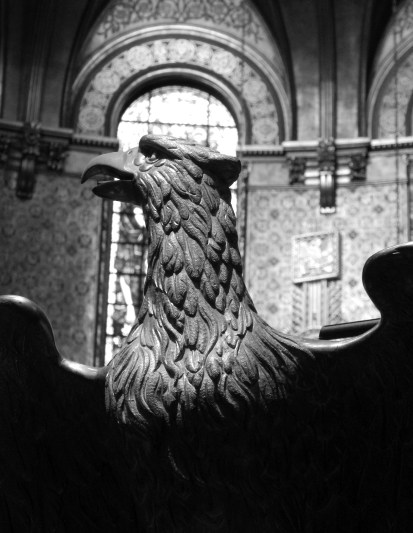
Recently I photographed the eagle lectern at Trinity Church in Copley Square, Boston.  That day I had grown impatient with color and switched to black and white.  And thankfully so because  the play of light and shadows across the bird’s form revealed wonderful details. That lectern, original to the historic landmark (1877), was designed by Charles R. Lamb of J & R Lamb Studios of New York.

J & R Lamb Studios, established by brothers Joseph and Richard Lamb in 1857 and still in operation today, is most well-known for its stained glass creations. In fact, the company’s artists produced designs for a range of furnishings, metalwork and interior architecture as well.  Charles Lamb (1860-1942), son of Joseph, left school at 16 to join his father and uncle at the studio.  He would eventually take over management of the company.

Design drawing for metalwork: Chiro chalice with grapevines

Design drawing for metalwork: Chiro chalice with grapevines, by Charles R. Lamb

His brother Frederick Stymetz Lamb would become head designer and oversee the studio’s artists who included Charles Lamb’s wife, Ella Condie Lamb.  Charles’s daughter Katherine Lamb Tait would become head designer after WWII.

Katherine Lamb Tait

Katherine Lamb Tait

Over the course of his individual career, Charles Lamb would focus on urban planning and help pioneer the concept of City Beautiful.  Most of the short biographies I found describe him as an innovator with ideas ahead of their time.  Though during his professional life, he enabled the creation of much bright beauty, the latter part of his life may have been a bit dark. On February 22, 1942 he passed away at his home, Lamb’s Lane, in Cresskill, NJ. He was 82.

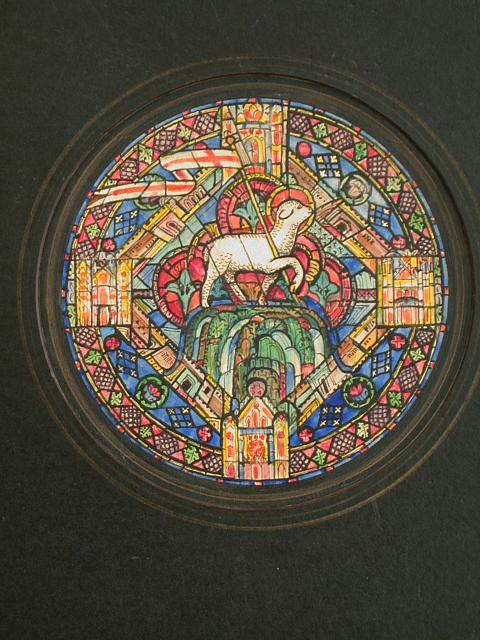
Design drawing for stained glass tondo window "The Lamb on Mount Zion and Four-Square City of New Jerusalem" showign lamb with and elaborate detailing including grape/leaf border and Jerusalem/architectural motif

Design drawing for stained glass window “The Lamb on Mount Zion and Four-Square City of New Jerusalem” showing lamb with and elaborate detailing including grape/leaf border and Jerusalem/architectural motif

In 2003 and 2004, the Library of Congress acquired nearly 2500 drawings and sketches as well business records and photographs from the Lamb Studios.  They are accessible to the public via this link: http://www.loc.gov/pictures/collection/lamb/.  An incredible resource for artists and historians.

Design drawing for two stained glass windows with grapevine vegetal design

Design drawing for two stained glass windows with grapevine vegetal design

Sources & Additional Reading

J & R Lamb Studios

Lamb Studios Archive at Library of Congress

Lamb Studios History by Barea Lamb Seeley

City Beautiful Movement

Corning Museum of Glass – Historical Perspectives: Katherine Lamb Tait

Charles R. Lamb image courtesy of Doris Ulmann Photographic Collection, 1915-1925, University of Kentucky

Read Full Post »

“The influence of education, or of the want of education, on the welfare of our land can have no territorial limits or boundary lines. … Colleges in South Carolina or Tennessee or Virginia are United States colleges, and are as important to the welfare of the country as Yale or Harvard or Columbia.  Illiteracy and ignorance are no mere local dangers, whether among whites or blacks.  They are dangers to law and order and true liberty everywhere; and he that does most to eradicate them anywhere may claim no second place on the role of a comprehensive patriotism.”

Robert C. Winthrop

Robert C. Winthrop (1809-1894)

In 1892, two years before his death, Hon. Robert C. Winthrop, spoke these rather timeless words at the annual meeting of the Peabody Trustees. For twenty-five years he had been President of the Peabody Education Fund, a philanthropic enterprise established by his friend George Peabody in 1867 to promote education initiatives in the post-Civil War southern states.  It was a fund created with the best of intentions that had short and long-term positive impacts as well as controversies. I learned about the fund and Robert C. Winthrop after I photographed details from Hope, a stained glass window in the north transept of Trinity Church.

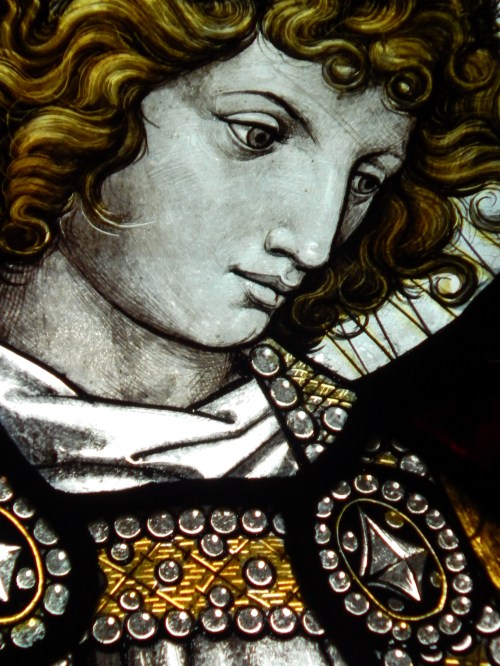
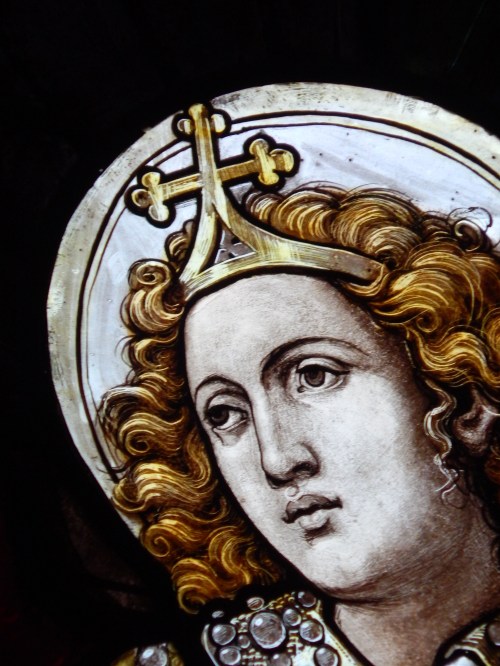
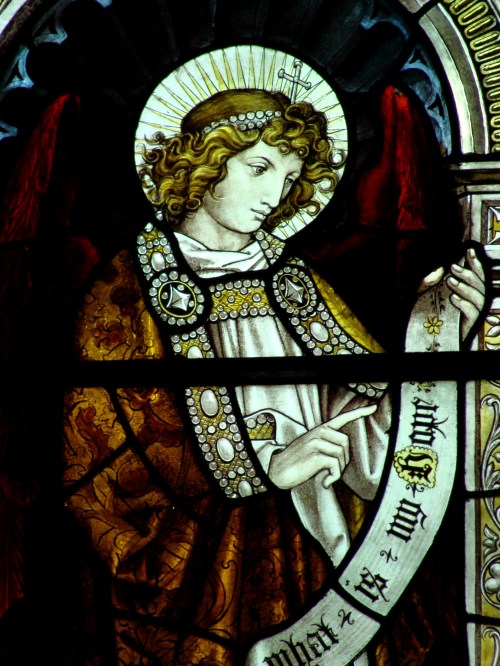
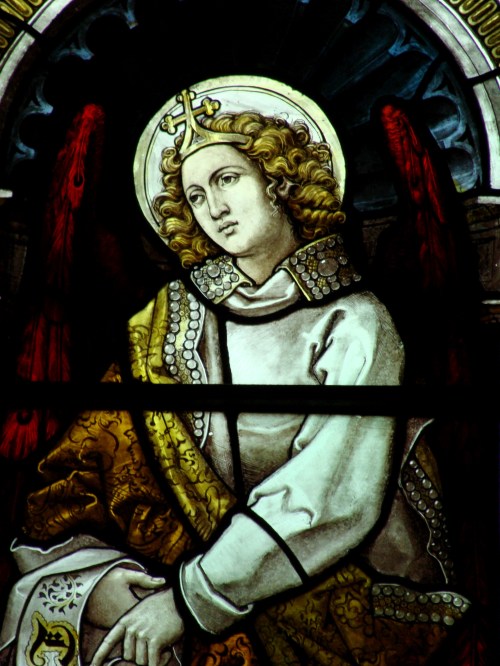
Detail from stained glass window, Hope, by Burlison & Grylls of Londong, 1877-1878

Detail from stained glass window, Hope, by Burlison & Grylls of London, 1877-1878

Most often after I photograph stained glass windows, I research the story depicted in the window or research the designers of the window.  But this time I was curious about who had commissioned the artwork.  In an 1888 document providing an historical and descriptive account of the parish and the Copley Square building, the author writes,  “This window is typical of Hope, the motto of the Winthrop arms.  The greater part of the window is occupied by two angels, each of whom is holding a scroll.”  And then at the bottom there is a Latin quotation signifying, “A surviving son to the best of parents.

Details from Hope

Details from stained glass window, Hope, by Burlison & Grylls of London, 1877-1878

The son was Robert C. Winthrop and you can read more about him via this detailed Wikipedia article, and in this Mass Historical Society article about interactions between Winthrop and Frederick Douglass.  As for the window designed by Burlison & Grylls …

I feel like I have a greater appreciation of its beauty and look forward to continuing to photograph and share its details.  Until then, learn more about Trinity Church and its art and architecture at http://trinitychurchboston.org/art-history

Read Full Post »

Here is a link to previous Interludes in our walk though history with Mr. Horne.


Walter Ings Farmer, Director, Wiesbaden Collecting Point

Walter Farmer, Director, Wiesbaden Collecting Point

In his book, The Safekeepers: Memoir of the Arts at the End of World War II (2000), Walter Ings Farmer writes that “The story of the Offenbach Archival Depot has never received the attention given to restoration of monuments … Nevertheless an account of MFA&A activities in the Frankfurt area would be incomplete without a description of the rescue of the literary and scriptural treasures that the Nazis had looted with the same nefarious purposes they applied to art collections. … Looting of libraries became as integral to the Nazis plan for cultural domination as the looting of art collections.

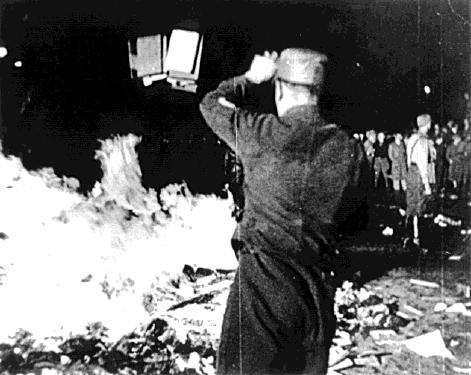
1933 Berlin Book Burning

1933 Berlin Book Burning

He describes how Nazi actions escalated from the 1930s public burnings of the authors they wanted to discredit to “a program of search and seizure among the libraries and archives of the nations that they sought to conquer. … These activities established a pattern which resulted in the eventual accumulation in Germany of storehouses full of other nation’s libraries.

Millions of books would be accumulated, along with a stunning amount of other cultural and religious items collected from across Europe.  Farmer writes of being introduced to Offenbach by “his boss” Captain James Rorimer in the fall of 1945.

James Rorimer

James Rorimer

He took me with him to inspect an abandoned warehouse within the I.G. Farben plant at Offenbach,” remembers Farmer. “This building was under consideration to become to repository primarily for Jewish libraries, archives and the Torahs.” Prior to the warehouse in Offenbach being established as a collecting point, library collections were being stored at the Rothschild Library in Frankfurt. Over time it was clear that infrastructure at the Rothschild Library was inadequate.

Based on his and others assessment of the situation, librarian and MFA&A officer Lt. Leslie Poste suggested that detailed cataloging of the items be stopped at Rothschild and that operations be relocated across the river to the I.G. Farben plant, the site of a five-story, reinforced concrete loft building.

Seymour Pomrenze (center)

Seymour Pomrenze (center)

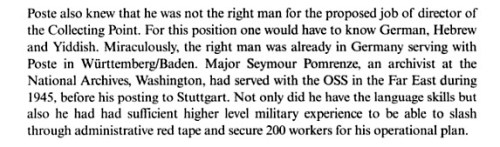
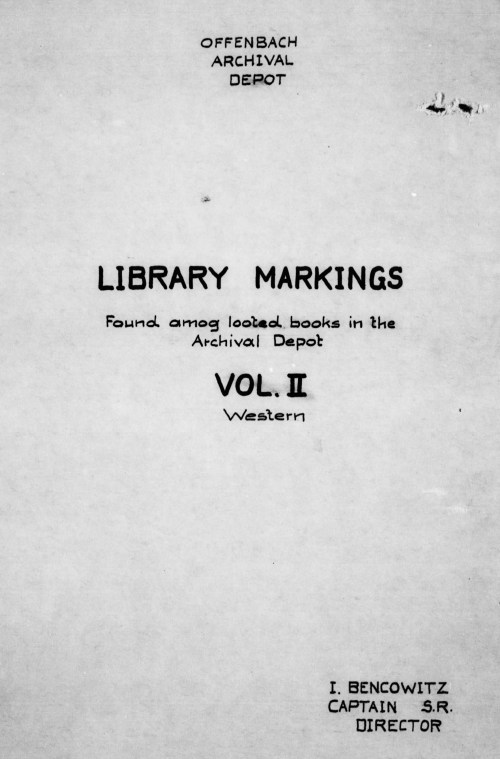
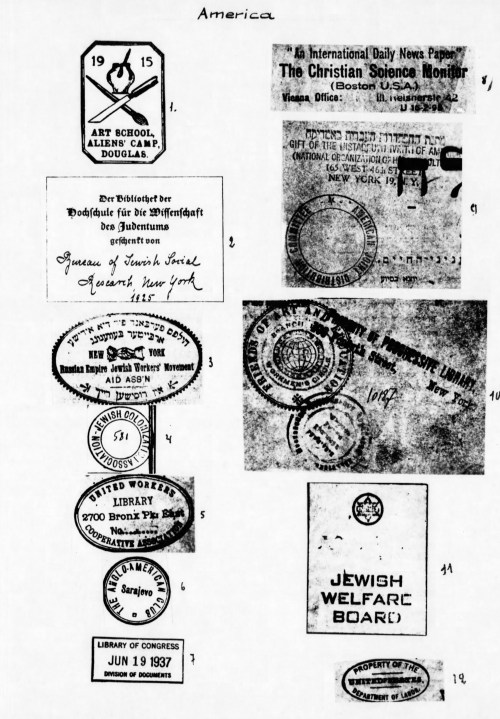
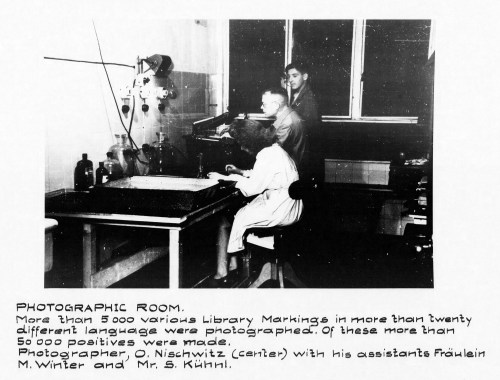
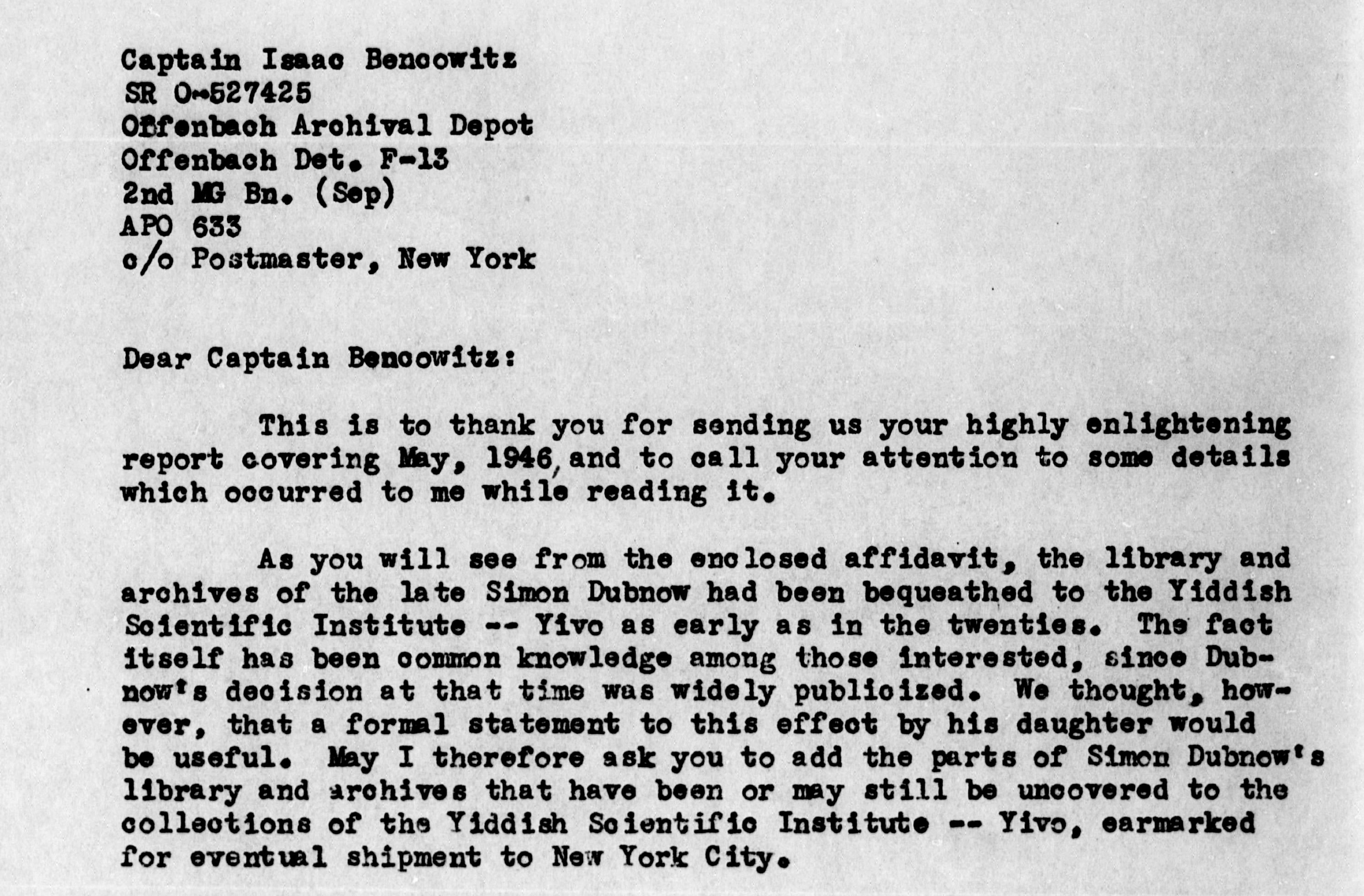
Pomrenze put into place necessary administrative, transportation, cataloging and storage systems enabling the depot to operate much more effectively.  Professional conservation and preservation labs, a photographic studio and other needed infrastructure was created.  His successor, Captain Isaac Bencowitz, refined a system for photographing ex-libris and library markings found in books.

Isaac Bencowitz

Isaac Bencowitz

The resulting cataloging system would significantly increase staff ability to identify and sort items, identifying country of origin and other markers of ownership .  In the end Bencowitz and his team would complete “two volumes with reproductions of library markings belonging to 4,105 libraries of individuals and institutions in Western and Eastern Europe

and two volumes with more than 1,300 bookplates or ex-libris, including 1,200 German-Jewish, German-Masonic and probably German non-Jewish plates as well as over 100 mostly Dutch-Jewish bookplates.” (F. J. Hoogewoud)

As requests were submitted by individuals, families and nation states seeking missing items, MFA&A staff were able to use the catalogs to help them search through the millions of books and cultural items that would eventually be stored at Offenbach.

Bencowitz, during his tenure as director, used photography to document the operations of the depot and its staff and volunteers.

Staffing the depot was a mix of U.S. military, Allied and civilian personnel, as well as German civilians, and scholars from around the world. In October 1946, Bencowitz received orders for redeployment.  The imminent nature of his departure and shifting priorities in the region for policy and decision-making made selecting a new director difficult.  As an “emergency measure,” archivist Major Lester K. Born and his assistant, Joseph A. Horne, were sent to Offenbach for temporary duty.  Born was to develop an interim plan for continued operation of the depot, a plan that Mr. Horne was to implement.  In short, a plan was finally developed and by January 1947, Horne became the third director of the Offenbach Archival Depot.

Exactly what Horne was doing prior to assuming his new role remains opaque without futher research.  Archival records show him often assisting MFA&A colleagues like Gordon Gilkey, Leslie Post, Lester Born and Paul Vanderbilt with the acquisition of information about available artwork and cultural items.  His fluency in German, facility with “dead languages,” appreciation and knowledge of the arts, and photographic skills would have made him invaluable in the field.  He produced numerous reports about his trips across Germany about what he was seeing and hearing from locals. People were often very open with him.  Following is an excerpt from a field report after visiting libraries in over a dozen landkreise or rural districts:

By 1947, relations with the Russians had deteriorated significantly, adversely affecting the restitution of items to individuals and institutions in Russian-controlled territories, and the exchange of items between the Russian Zone and other Allied Zones.  With plans well underway to revitalize German economy and culture (including denazification), military and intelligence priorities shifted to stopping the Russians.  And so Horne like many within the MFA&A unit followed orders as high level officials made clear that those in the U.S. intelligence sector had full access to depot materials and freedom to act as they deemed necessary.

In February 1947, one month after Horne became director of Offenbach, Lucy Schildkret arrived.  She would later write, “his friends called him Tony. Before the war, he’d been on the staff of the Library of Congress’s photographic division.  Transferred from the MFA&A in Berlin, he was then new to the Depot, having taken over his duties barely two weeks before my visit.  About thirty, very tall, thin, lanky, and blond, he was the only American there.  He was in charge of a staff of some forty Germans.”

In her memoir, From That Place and Time, Lucy Schildkret describes her encounter with Horne as she works to sort, identify and return the YIVO library of Vilna, Poland.  The Yiddish Scientific Institute (YIVO) was founded in 1925 for the scientific study of Jewish life.  Headquartered in Vilna, the institute had branches around the world including the United States. At the start of the war its headquarters were transferred to New York City.

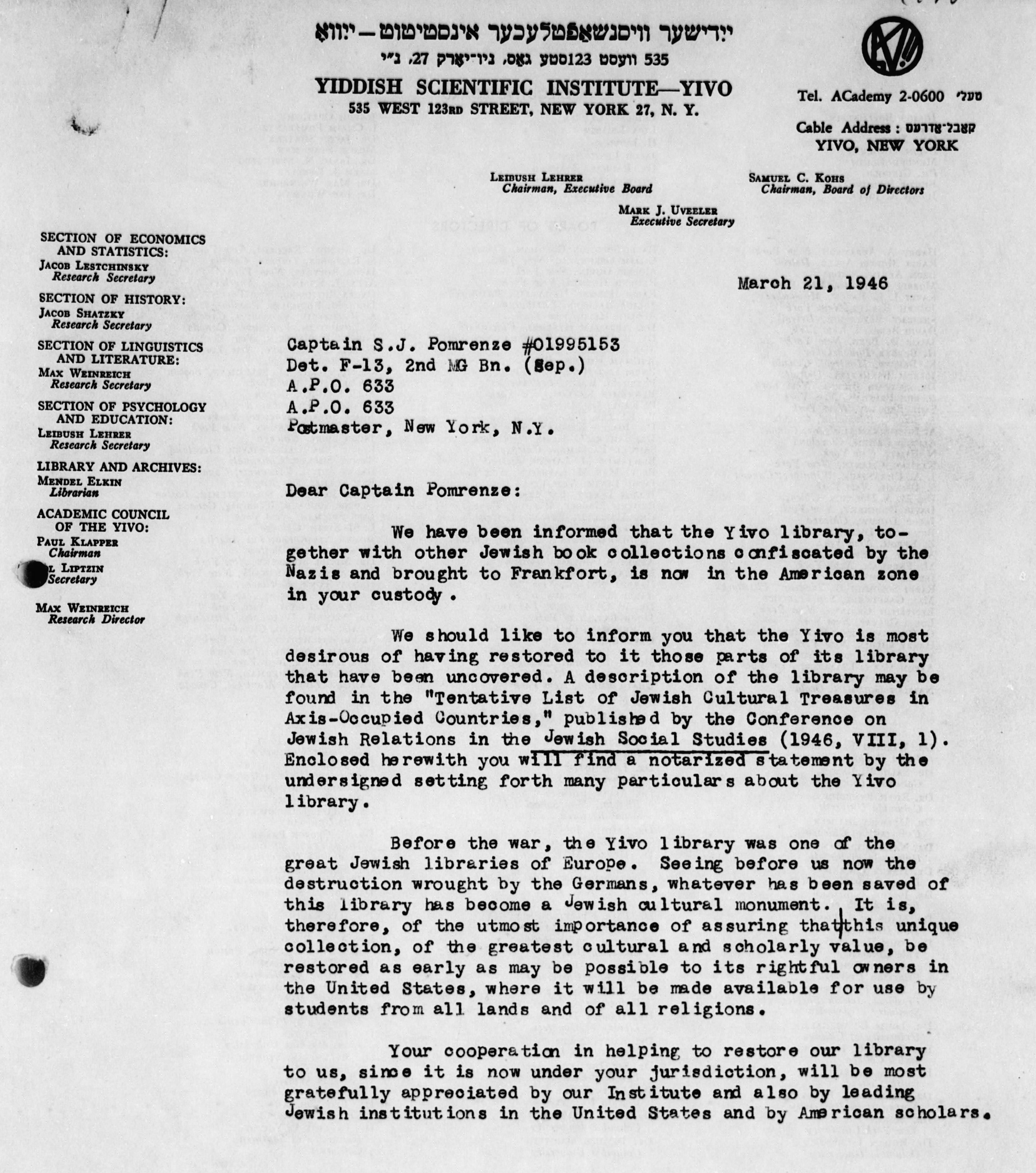
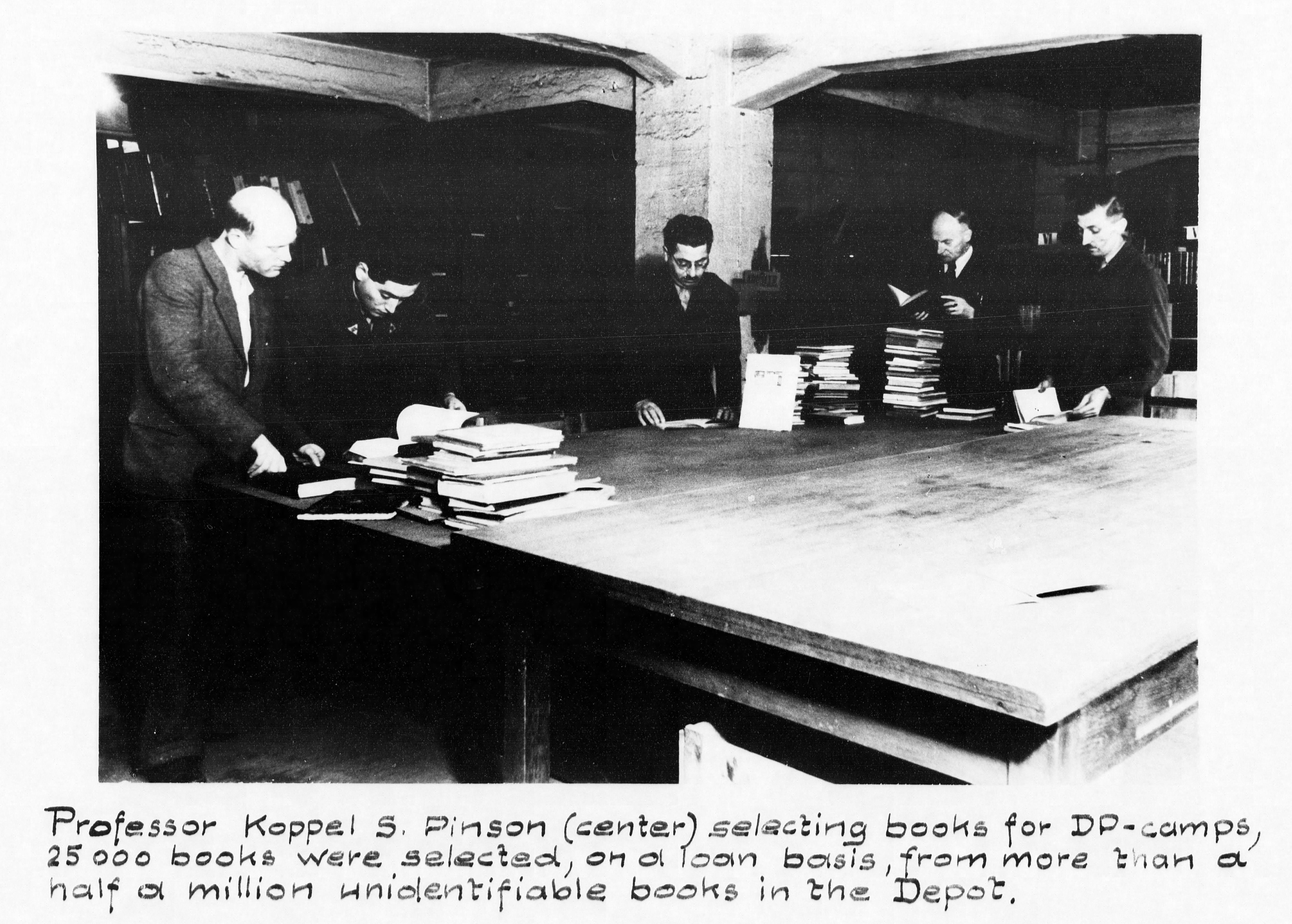
In late 1945, when the YIVO library was identified as being in Frankfurt, visiting Jewish scholar, Prof. Koppel S. Pinson sought permission from the YIVO leadership in New York to distribute, like a lending library, some of the unidentifiable books to Jews living in the Displacement Camps.  It would take time but he would be granted such authority.

A year later, Lucy Schildkret would also be granted authority to work with the books.

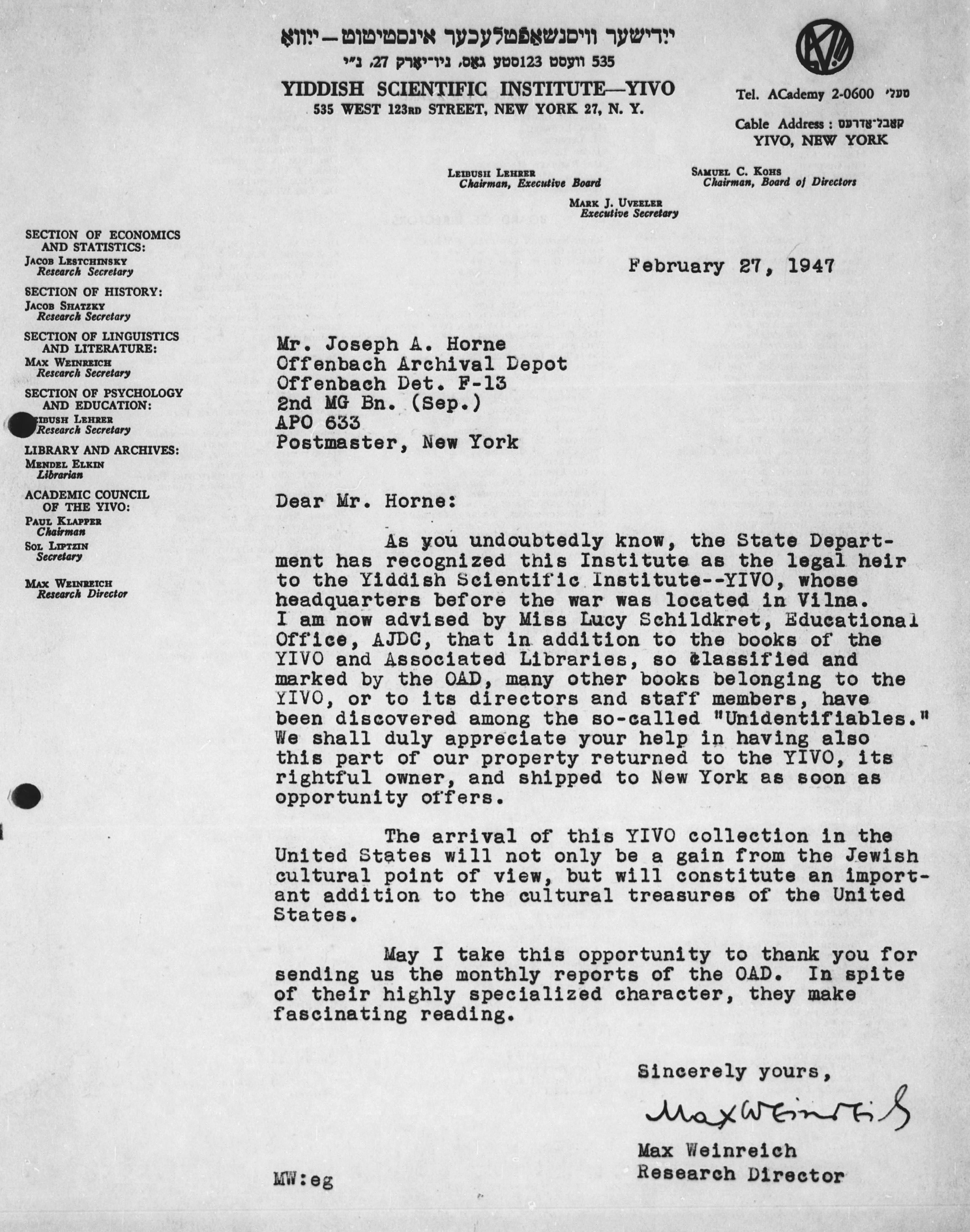
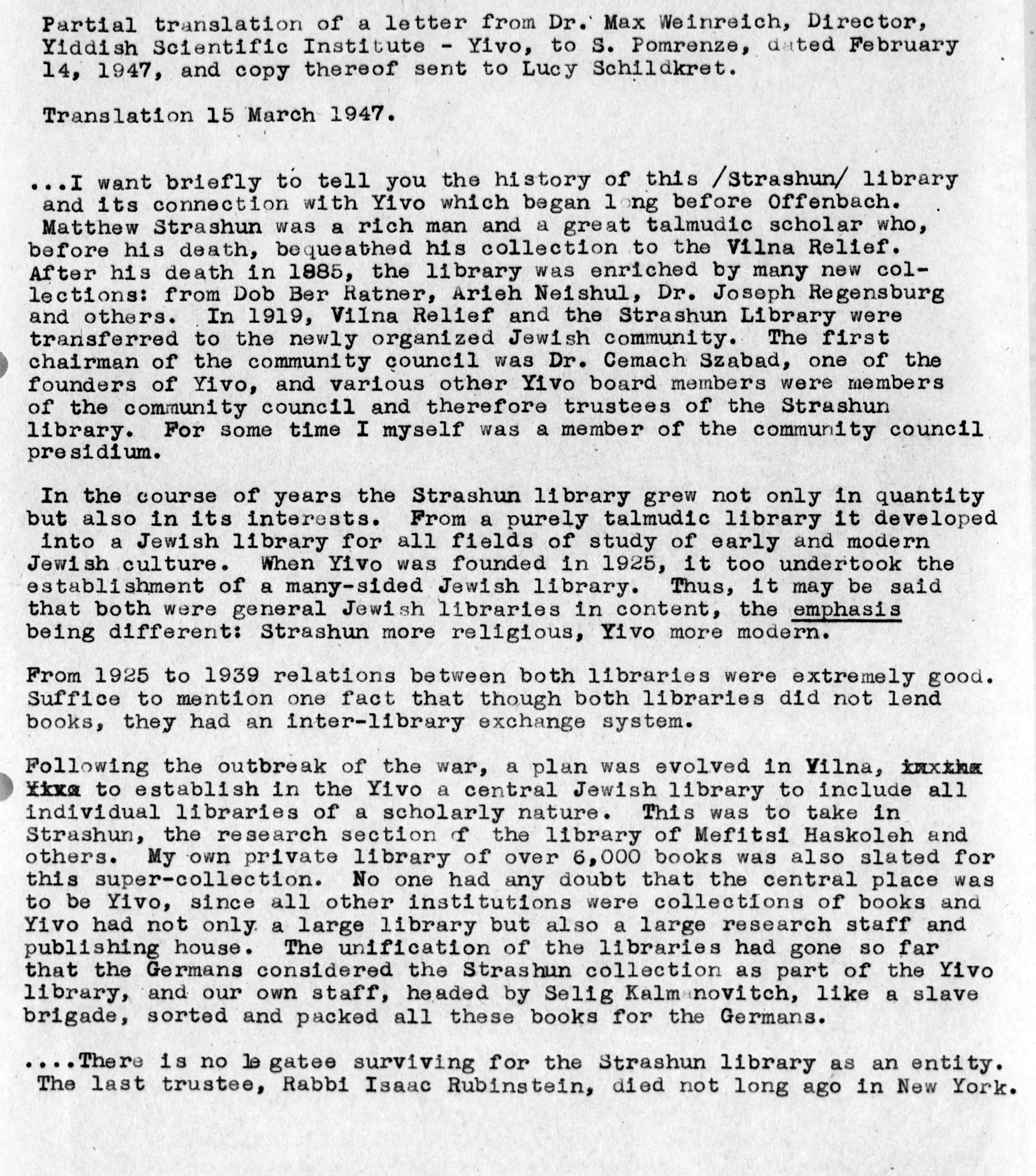
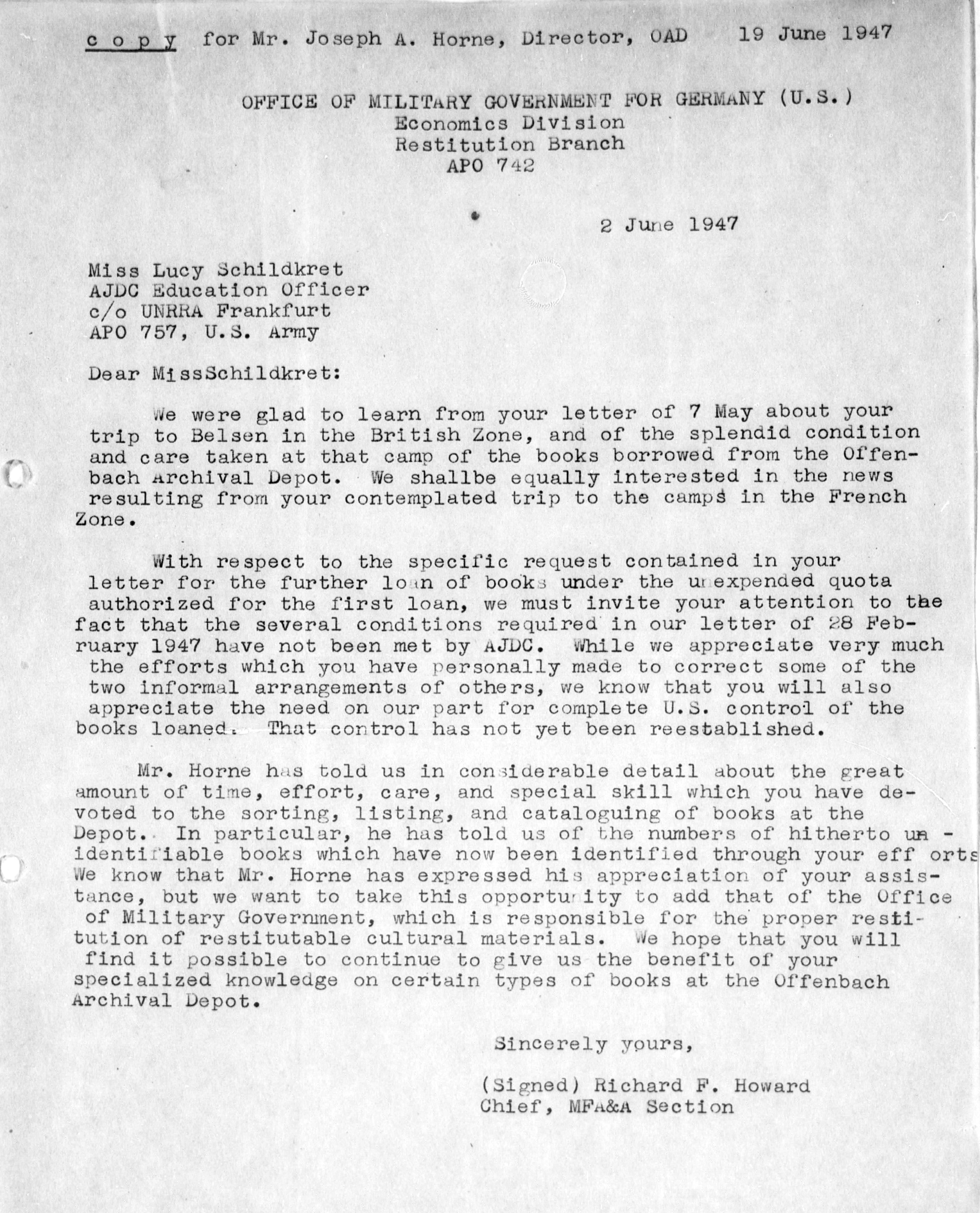
The complexities of sorting, identifying and returning books at the scale demanded of the Offenbach Archival Depot become clearer when reading through the declassified documents relating to what happened with just the YIVO library.  For instance, YIVO like many libraries of its size and mission had been the repository of family libraries.  Books at Offenbach were being identified by ex-libris and other markings as belonging to individuals and/or their families but they had in fact been donated to YIVO (or other institutions) by family members.  There are numerous letters between YIVO administrators with U.S. military officials trying to prove the ownership of items.

Though correspondence about the YIVO library begins in 1945, by early 1947 the vast library had yet to be shipped to YIVO in New York.  The reasons include continual reduction in manpower, both skilled and unskilled, at the depot and complex, bureaucratic chains of command within the U.S. military, between the Allied zones and even within the YIVO organization.  In a March 1947 document, Horne reports to his superiors that Miss Schildkret has been unable to examine several hundred thousand unidentified books because she had yet to receive authorization.

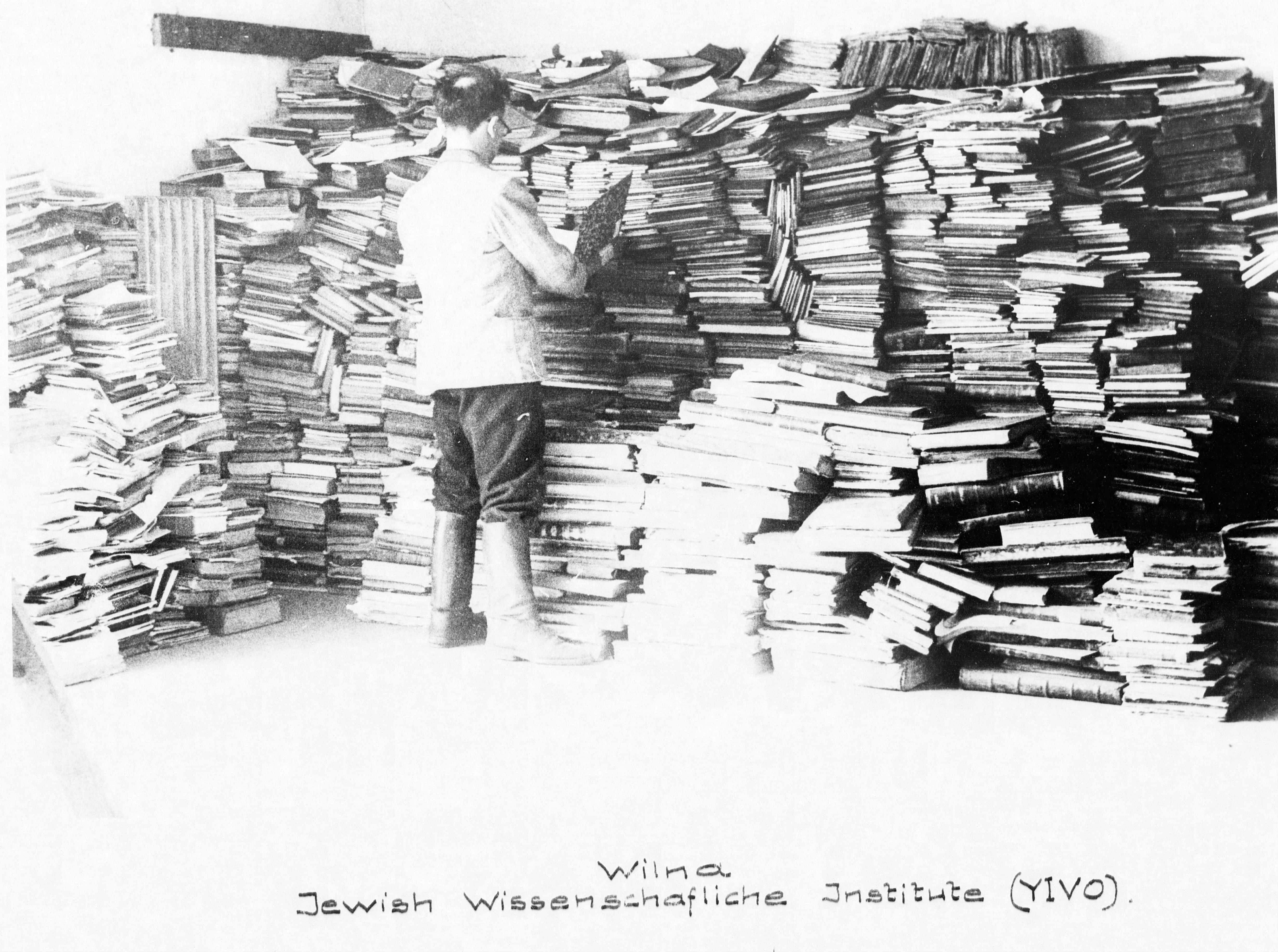
Vilna Library During German Occupation, in the files of the Offenbach Archival Depot

Vilna Library During German Occupation, in the files of the Offenbach Archival Depot

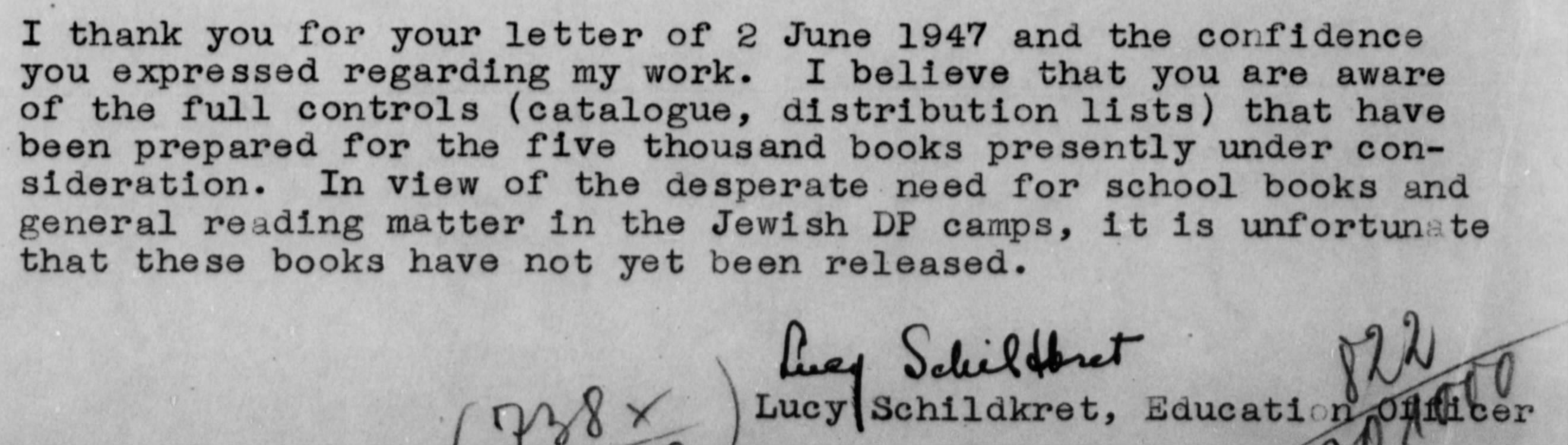
In 1938, Lucy Schildkret had studied in Vilna and worked at the YIVO.  Prior to the war, she would return to the U.S. and work as assistant to the research director at the YIVO headquarters in New York.  In 1946 she journeyed to Europe as an educational worker with the American Jewish Joint Distribution Committee (AJDC), the largest Jewish relief organization in America. Through this organization she was able to work with displaced persons in the camps.  With her skills in Yiddish and time at YIVO, she was able to discern that books that had been labeled as unidentifiable were indeed identifiable.  But even as she acquired the authority to help identify the YIVO library, she maintained her focus of serving the people housed in the displacement camps, and she would do so with a tenacity that would characterize her career for decades to come.

Schildkret responds two weeks later with a letter that concludes:

Her memoir presents a powerful account of the emotions stirred by working with the contents of the library from a place that she had called home and knowing what had happened to the people she’d called friends as the Nazis destroyed the city.

Eventually, with the combined effort of many individuals in several countries, over 90,000 items would be returned to the YIVO.  Seymour Pomrenze who had been pivotal in streamlining systems at the depot would be brought back to help shepherd the return of these items.  In 1998, Pomrenze shared his personal reminiscences of his experience with the Offenbach Archival Depot and the depot’s considerable achievements restituting and distributing millions of Nazi-looted materials including the YIVO library.

Mr. Horne, the person with whom we are taking this walk through history, would wrap up his tenure at Offenbach in 1948 though files show that he continued to support depot activities until its closure.  In the Cold War world, he would, strangely enough, continue to work with books and even return to his earlier interests in music and photography as he embarked upon a new journey.  One world war had ended. A new type of world war had begun. A new weapon in that war was the exchange of culture and what better place to share all that made up culture — from art to music to literature — than in a library.

More to follow …

Sources and Additional Readings

Cultural Plunder by the Einsatzstab Reichsleiter Rosenberg (ERR)

What Became of the Jewish Books? (New Yorker, February 2014)

U.S. Holocaust Memorial Museum — Offenbach Archival Depot

Pomrenze Personal Reminiscence about Offenbach

Mapping the Offenbach Archival Depot

Returning Looted European Library Collections

YIVO Digital Archive on Jewish Life in Poland

YIVO Institute

From That Place and Time: A Memoir, 1938-1947 by Lucy S. Davidowicz and Professor Nancy Sinkoff

Article – Dutch Jewish Ex-Libris Found among Looted Books in the Offenbach Archival Depot (1946) by F. J. Hoogewoud

1939 Photo of Lucy Schildkret in Vilna


Read Full Post »

« Newer Posts - Older Posts »