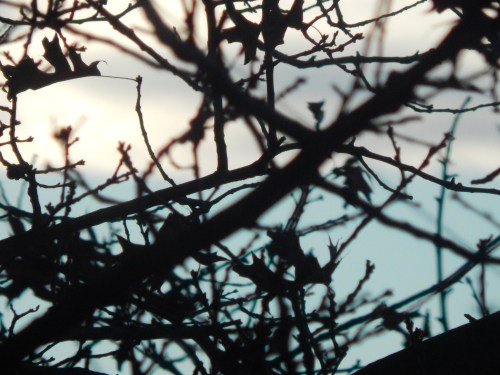
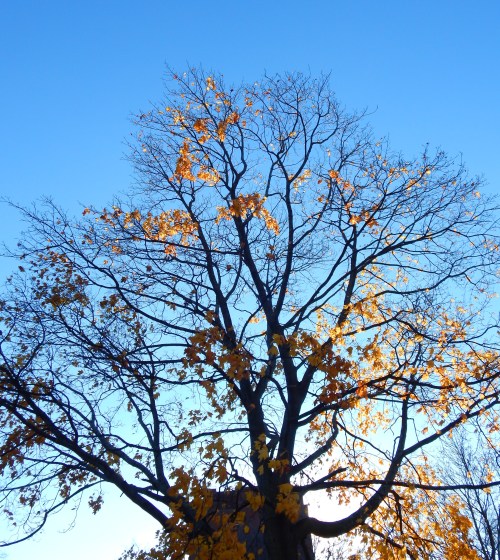
The oak tree has nearly lost all its leaves. Light now fills formerly dark spaces expanding the area for my indoor winter garden. 🙂
Posted in Branches, Inspiration, Nature Notes, tagged beauty, Inspiration, nature, Photography, trees, urban landscape on December 3, 2016| 1 Comment »
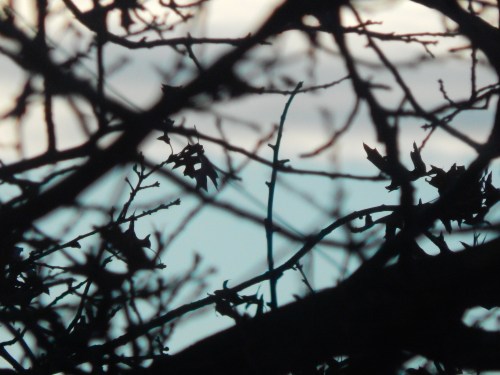
The oak tree has nearly lost all its leaves. Light now fills formerly dark spaces expanding the area for my indoor winter garden. 🙂
Posted in Branches, Nature Notes, tagged beauty, Belle Isle Marsh Reservation, Inspiration, nature, Photography, salt marsh on December 2, 2016| Leave a Comment »
Posted in Inspiration, tagged beauty, books, cybersale, gifts, Inspiration, nature, Photography on November 28, 2016| Leave a Comment »
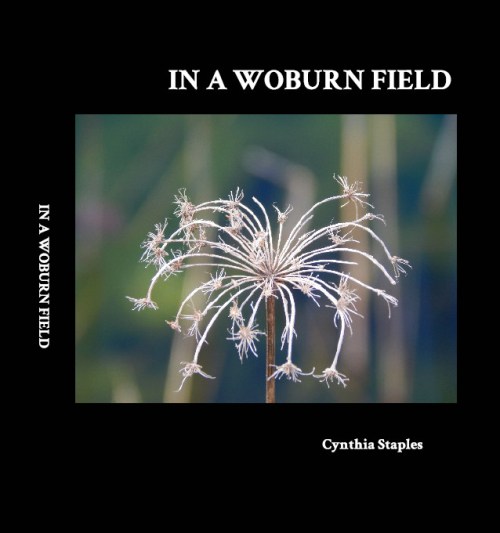
That’s right. There’s at least three opportunities to purchase my work and get a great deal. Blurb where I produce my photography books currently has a 50% off sell. Coupon code is BEST50. In my shop you’ll find a range of books including a new compilation of images from a field in Woburn, MA.
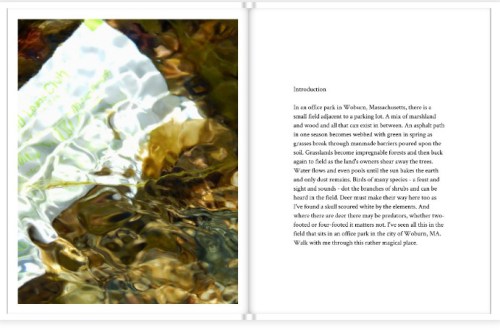

Preview the book here.
In my Zazzle shop you’ll find a mix of merchandise for the holiday season and well beyond.
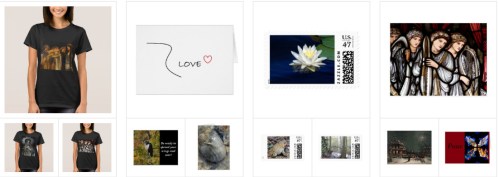
Coupon code for up to 70% off items is ZAZCYBERSALE.

Details from John La Farge’s Presentation of the Virgin
And if you prefer to step away from the computer and like to browse the shelves in person, then I invite you to visit the gift shop at Trinity Church where you’ll find some new postcards as well as classic images, and a lovely selection of music, inspiration books and other merchandise. Located at 206 Clarendon St., entrance is across from the Boston Public Library. Enjoy!
Posted in Inspiration, tagged beauty, Christmas Cactus, flowers, indoor gardening, Inspiration, Photography on November 27, 2016| 3 Comments »

As I plantsit a friend’s cactus, it is providing lots of wonderful photographic opportunity. Enjoy, and wherever you are in the world, have a good day. 🙂
Posted in Inspiration, Nature Notes, tagged birds, blue heron, Inspiration, Mystic River, nature, nature photography, Photography, urban landscape on November 27, 2016| 5 Comments »

I did indeed photograph the whole bird as it stood on a log in the Mystic River. I was hoping it might take flight but it didn’t and so I began to focus on the one thing moving — the water rippling as it flowed over the heron’s feet.
Posted in Branches, Inspiration, Nature Notes, tagged beauty, colors, Inspiration, nature, Photography, trees, urban landscape on November 21, 2016| Leave a Comment »
Posted in Inspiration, tagged architecture, art, beauty, Charles McKiim, Inspiration, John La Farge, religious art, stained glass windows on November 21, 2016| 4 Comments »

Detail from Presentation of the Virgin (after Titian) by John La Farge, 1888
At Trinity Church in the City of Boston, there is the stained glass window, Faith, by Burlison & Grylls of London, installed in 1877-1878. It was given in memory of Charles Hook Appleton and Isabella Mason by their teenaged daughters Julia and Marian Alice, known as The Appleton Sisters. The two sisters were extremely close. They lived together on Beacon Street and purchased adjoining property in Lenox, MA.
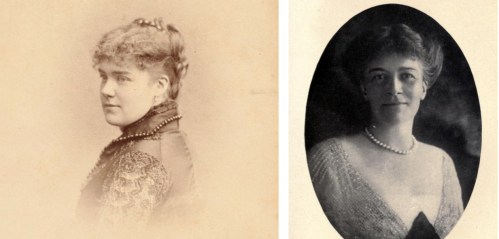
Julia and Marian Alice Appleton
Eventually, the oldest daughter Julia would meet and marry noted architect Charles McKim, a colleague and friend of the artist John La Farge. Sister Alice would marry George Von Lengerke Meyer. As did many families of their social circle the McKims traveled extensively and often throughout Europe. In Venice they visited the galleries and in that city one of Julia’s favorite paintings was Titian’s Presentation of the Virgin, 1534-1538.

In 1887, Julia would unexpectedly die during childbirth. The grieving McKim, along with sister Alice, would commission John La Farge to create a window in Julia’s memory. La Farge would select as focus a small portion of Titian’s large canvas. The window would be designed and completed within five months.
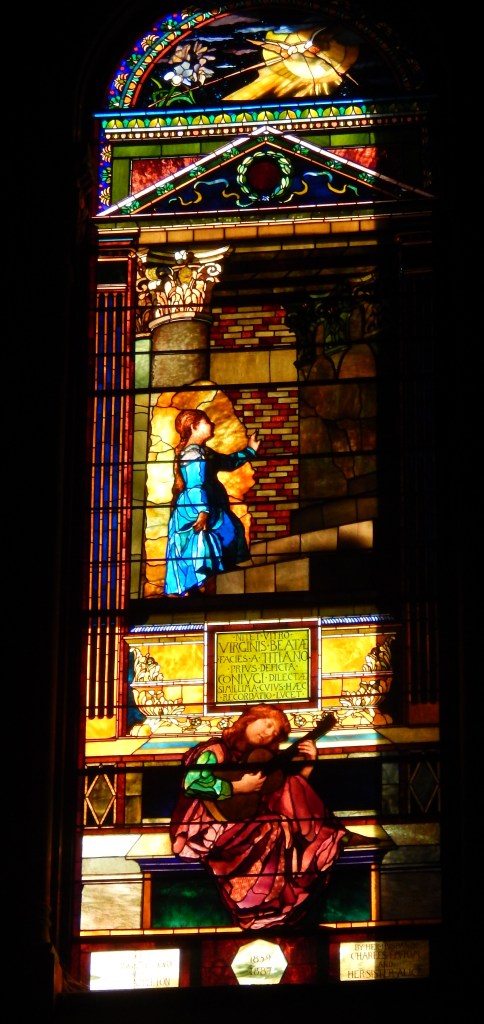
The window depicts a young girl climbing steps and symbolizes Julia’s climb toward heaven. Below this image and considered separate from the story is the image of an angel playing a musical instrument. It is a spectacular window at any time of day but especially when the sun is shining just right through the opalescent and painted glass. For this series of images, that perfect time was approximately 1pm on a sunny day.

La Farge’s early sketch can be found at the Boston Museum of Fine Arts, and the actual window is located on the south wall of Trinity Church located in Boston’s Copley Square.
Sources & Additional Reading
http://library.bc.edu/lafargeglass/exhibits/show/descriptions/all-saints/trinity-boston
Posted in Inspiration, Nature Notes, tagged abstract, beauty, Charles River, colors, Inspiration, nature, Photography, sun, urban landscape, water on November 17, 2016| 1 Comment »

Several analogies came to mind. The sun like liquid gold spilling over rocks into the sea. The sun in a bucket being dribbled from the heavens into the waters below. Jackson Pollack with a wide paintbrush and blue canvas and working only with shades of gold. In the end as in the beginning it was simply reflections of mostly bare branches and refraction at work in the gentle rolling waves of the Charles River.


Posted in Inspiration, Publication Updates, tagged beauty, books, edmands park, Inspiration, libraries, nature, photobooks, Photography, self-publishing, urban landscape on November 17, 2016| Leave a Comment »

scenes from edmands park
Walking into Edmands Park was an escape for me. I was working at a small nonprofit located at Boston College’s Newton Campus researching and writing grants. On occasion I needed to rise from the computer and walk around to collect my thoughts, free my brain from jargon, and so on. I’m not the most adventurous person – really! – but when I start walking I sometimes get lost in the motion. Luckily my job was free form enough, so long as I met deliverables and deadlines, that it was okay if my legs kept me going past the stone walls of the campus and into the neighboring woods. It became ritual and coincided with my deepening exploration of photography. At times it seemed a magical place, strangely isolated, though it was adjacent to an active college campus. I’m not sure how many of the students knew what beauty lay around them. Over time, I would collect photos from across the seasons. I couldn’t wait to make my way into the woods after a heavy rain or snowfall to see how the landscape had been transformed.

Eventually I compiled those images and paired them with a few words about my experiences in Edmands Park into a book and published it independently. I shared the book with friends but I didn’t really know what else to do at the time. Anulfo Baez of The Evolving Critic suggested I check out the Indie Photobook Library (iPL) founded by Larissa LeClair. Her library featured the work of emerging and established photographers who were self-publishing their work. I did reach out to Ms. LeClair and she did indeed accept my submission of In Edmands Park for her library.

Five years later her library collection has been placed at the Beinecke Rare Book & Manuscript Library at Yale University. In a recent press release she stated that while the iPL is now closed to submissions, she “will continue to advocate on behalf of self-publishers from around the world by directly consulting with libraries and museums on their acquisitions.” I am thankful for that early support and recognition of my work and honored to now have one of my books figuratively if not literally sitting on a library shelf at Yale University.

Sources & Additional Reading
iPL collection adds to Beinecke’s strengths in photobooks and modern trends in self-publishing – http://news.yale.edu/2016/11/16/ipl-collection-adds-beinecke-s-strengths-photobooks-and-modern-trends-self-publishing
See more images here: http://www.newtonconservators.org/art_staples.htm
Posted in Inspiration, tagged architecture, art, David's Charge to Solomon, Edward Burne-Jones, george minot dexter, history, Inspiration, Phillips Brooks, Photography, religious art, stained glass windows, storytelling, William Morris on November 16, 2016| Leave a Comment »
In time for the holidays, at the gift shop located at Trinity Church in Copley Square, you will soon find items featuring one of the most striking and provocative images that I have ever taken … probably because the source of the image is so striking and provocative. I think of them as angels though they are harpists robed in white in one corner of the stained glass window, David’s Charge to Solomon, by Edward Burne-Jones and William Morris & Co.

Detail from David’s Charge to Solomon by Burne-Jones and Morris
The women stand in a gallery at the rear of King David’s throne as the aged King delivers his charge to young Prince Solomon, and resting upon the King’s knees are the plans of the future Temple that he will not live to see. The window was presented to Trinity Church in the City of Boston by Frederic Dexter in memory of his father George Minot Dexter (1802-1872). As described in an 1888 church description, “the design is considered especially appropriate as Mr. Dexter lived but just long enough to see the plans of the new church completed and the work begun.”
George Minot Dexter was member of a prominent New England family that traced its roots to England and Ireland. It was a family of farmers, merchants, ministers, doctors and politicians. Dexter would become an architect and civil engineer. In 1836, he was commissioned to design the houses for Boston’s Pemberton Square and all of the accompanying ironwork. Today, 1300 of his architectural drawings for 85 different projects can be found at the Boston Athenaeum, in a building he would help to erect between 1847-1849.
In 1863 Dexter, then senior warden of Trinity Church, would call upon Phillips Brooks. Brooks, the descendant of several New England families of note, was a young minister attracting great attention as he served a Philadelphia parish. The young minister was in demand by many parishes across the nation and Trinity Church was especially active in its attempt to acquire him. It would take six years, in 1869, before Brooks would accept the call.
The church at that time was located on Summer Street in downtown Boston. Forward thinking, Brooks determined that it was time for the church to move to a new location, Boston’s Back Bay. Land had been bought and a building committee had already been formed when Boston’s Great Fire of 1872 destroyed the Summer Street church.
Dexter served on the building committee that selected the design of architect Henry Hobson Richardson. The building, which revolutionized American architecture, would be constructed between 1872-1877. Dexter would not live to see the building’s consecration in February 1877. He died November 26, 1872.
In addition to what has been referred to as The Dexter Window, his service to his church is also featured on a wall tablet, with the inscription by Honorable Robert C. Winthrop. It is located in the North Transept. Winthrop refers to Dexter’s self-sacrificing nature and how he remained “active to the last in good works and particularly in his tender care for the interest of the living and the remains of the dead during the trying scenes which attended the burning of our old house of worship in Summer St …”
He refers to the fact that beneath the Summer Street church was a crypt with family vaults. That crypt was laid bare by the destruction of the building overhead. Dexter would tend to those remains until he lost his life. In a letter to his friend Miss Mitchell, Phillips Brooks would write:

If you have the opportunity to tour Trinity Church, you’ll notice not only magnificent stained glass windows like David’s Charge to Solomon but also wonderfully decorated tablets with words that provide just a glimpse into the lives of people who considered that space their home. Well worth taking a moment to read. Enjoy!
Sources, Additional Reading and Opportunities
Trinity Church Art & History Tour Information
The Garden Square of Boston by Phebe S. Goodman
http://cdm.bostonathenaeum.org/cdm/ref/collection/p15482coll1/id/839



 Words + Images