Feeds:
Posts
Comments

Posts Tagged ‘stained glass’

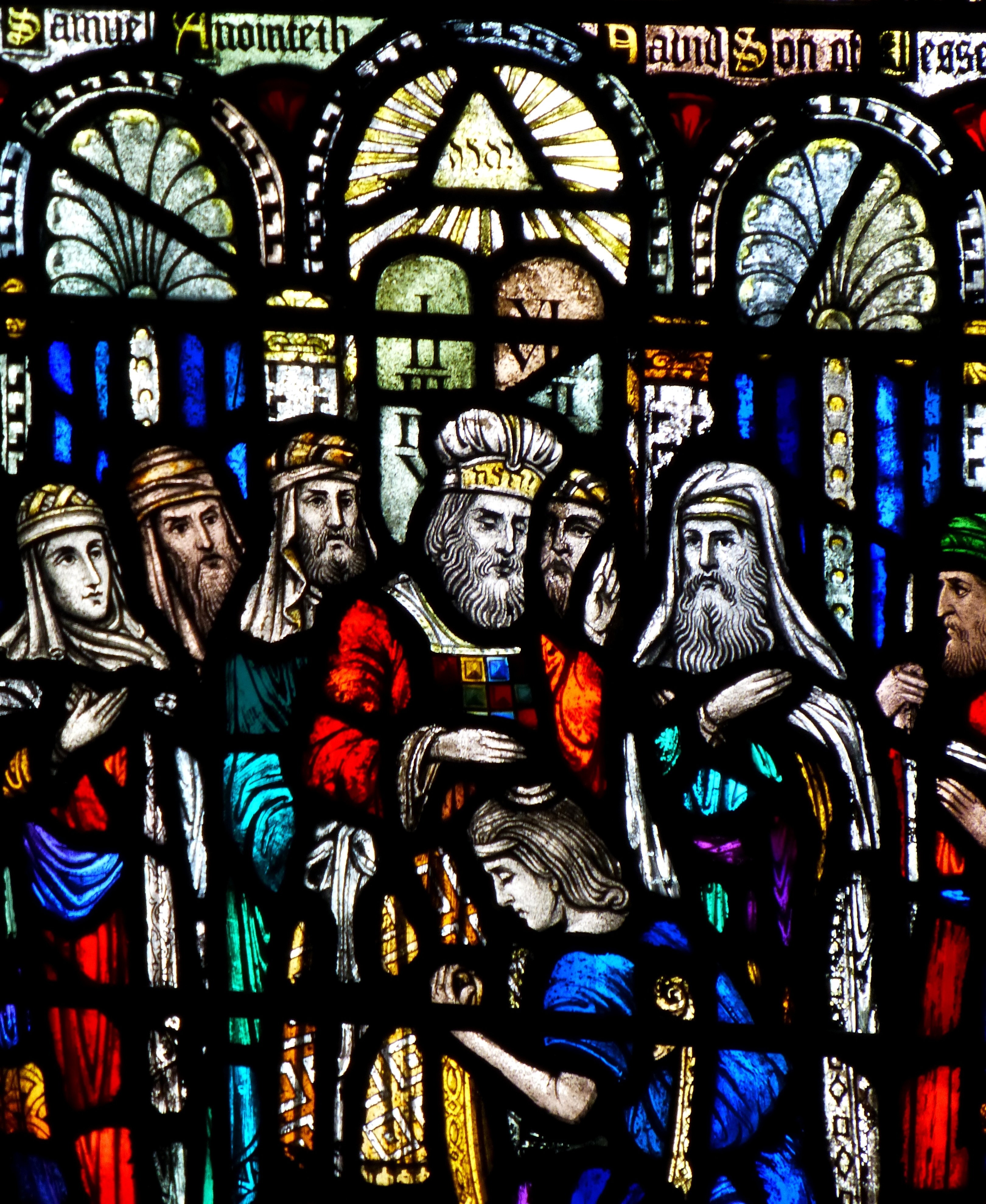
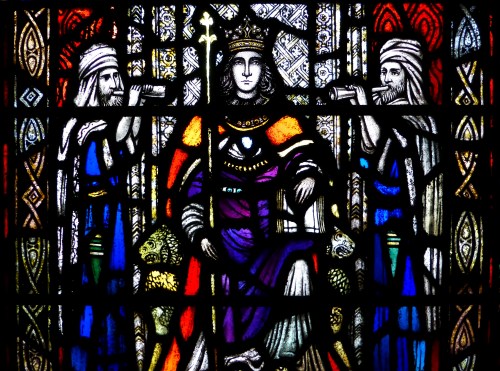
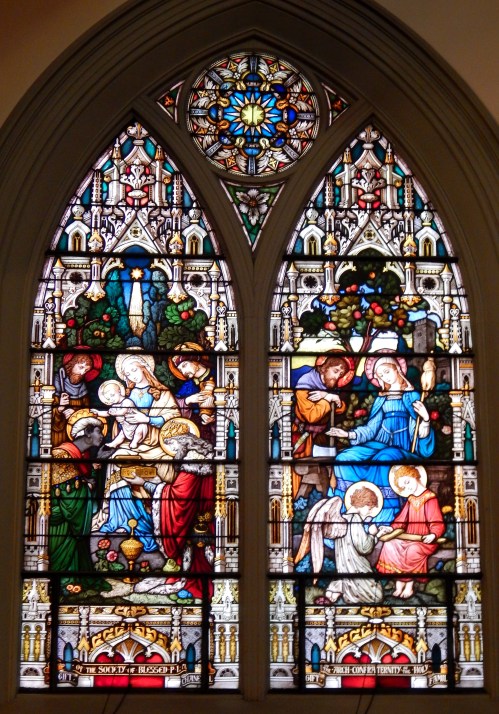
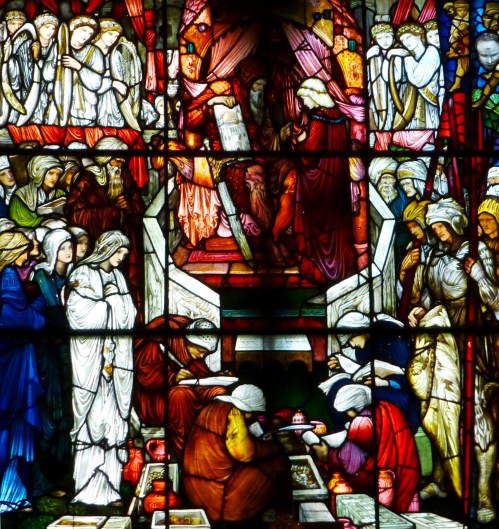
Recently I learned of an image in stained glass also appearing in thread, both based on a design by Burne-Jones.  I couldn’t help but do a bit of digging and learned this:  the stained glass window, David’s Charge to Solomon, was first commissioned in memory of George Minot Dexter (1802-1872) by his son Frederic Dexter. It is located at Trinity Church in the City of Boston.  I’ve had the great pleasure of photographing details over the years.

The window was designed by Edward Burne-Jones, the color harmonies developed by William Morris and the window fabricated in the William Morris & Co studio.

The window was installed at Trinity Church in 1882 in an area known as the baptistry.
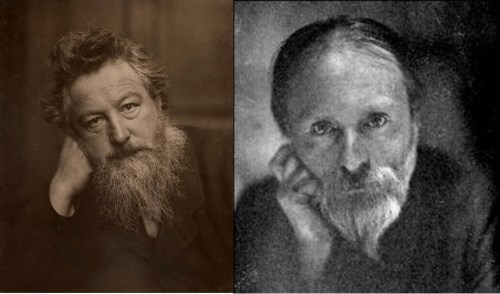
William Morris (1834-1896) and Edward Burne Jones (1833-1898)

William Morris (1834-1896) and Edward Burne Jones (1833-1898)

While Morris and Burne Jones would both pass away in the late 1890s, Morris & Co.’s design work and manufacturing would continue for decades at Merton Abbey, a village in Surrey, England where textile printing had taken place since the mid-19th Century.

Sir George Brookman c. 1920

Sir George Brookman c. 1920

While attending an exhibit at the 1900 Paris International Exhibition, and later visiting Merton Abbey in England, Australian mining magnate George Brookman saw Morris tapestries being custom woven for individual and corporate clients.  He also saw original designs, still being used, to reproduce artwork.  After seeing the Burne-Jones cartoon for David’s Charge to Solomon, he commissioned a tapestry to be made of that image.

Known as David giving Solomon directions for building of the Temple, the tapestry would be described as “a spacious and complex weaving of unusual size.  The soft, abundant reds beloved of the [Pre-Raphaelite] Brotherhood were in evidence.  Of especial beauty were the figures clad in silver-threaded armor.” Weavers were Walter Taylor, John Martin and Robert Ellis.
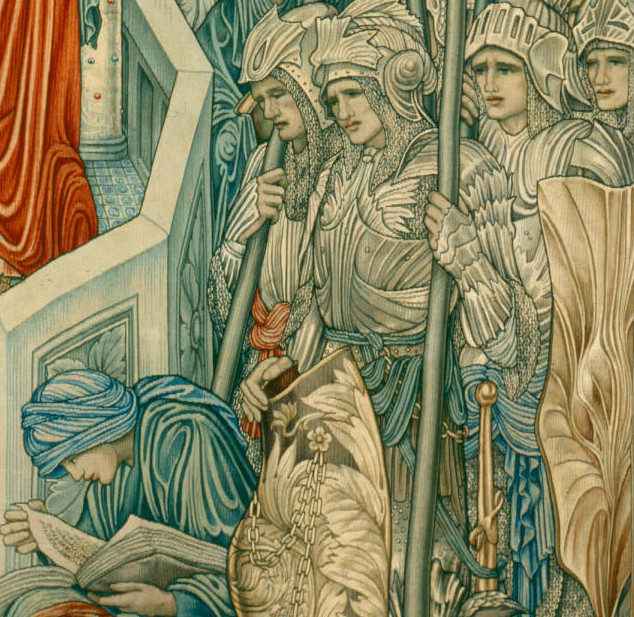
In 1920, Brookman sold the tapestry back to Morris & Co.  May Morris, the daughter of William Morris, would exhibit the tapestry along with other Merton Abbey works at the Detroit Society of Art and Crafts Exhibit.

May Morris (1862-1938)

May Morris (1862-1938)

excerpt from International Studio Magazine, 1922

excerpt from International Studio Magazine, 1922

Newspaper businessman, philanthropist and art benefactor George G. Booth and his wife, Ellen Scripps Booth, would purchase the tapestry to hang in Christ Church Cranbrook in Bloomfield Hills, Michigan, where I believe it still hangs to this day.
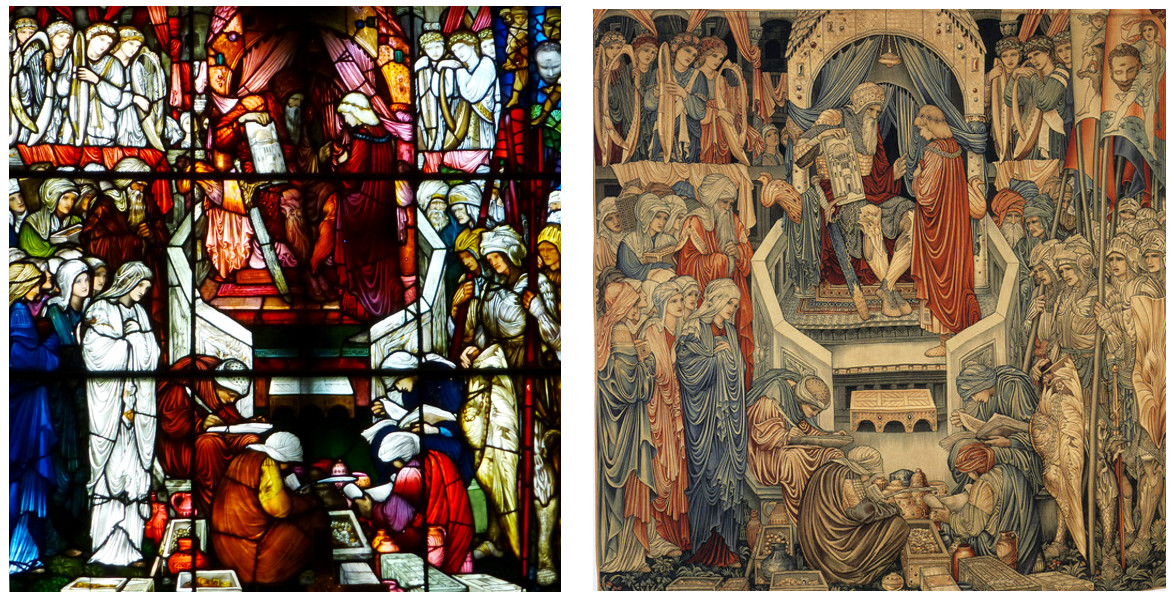
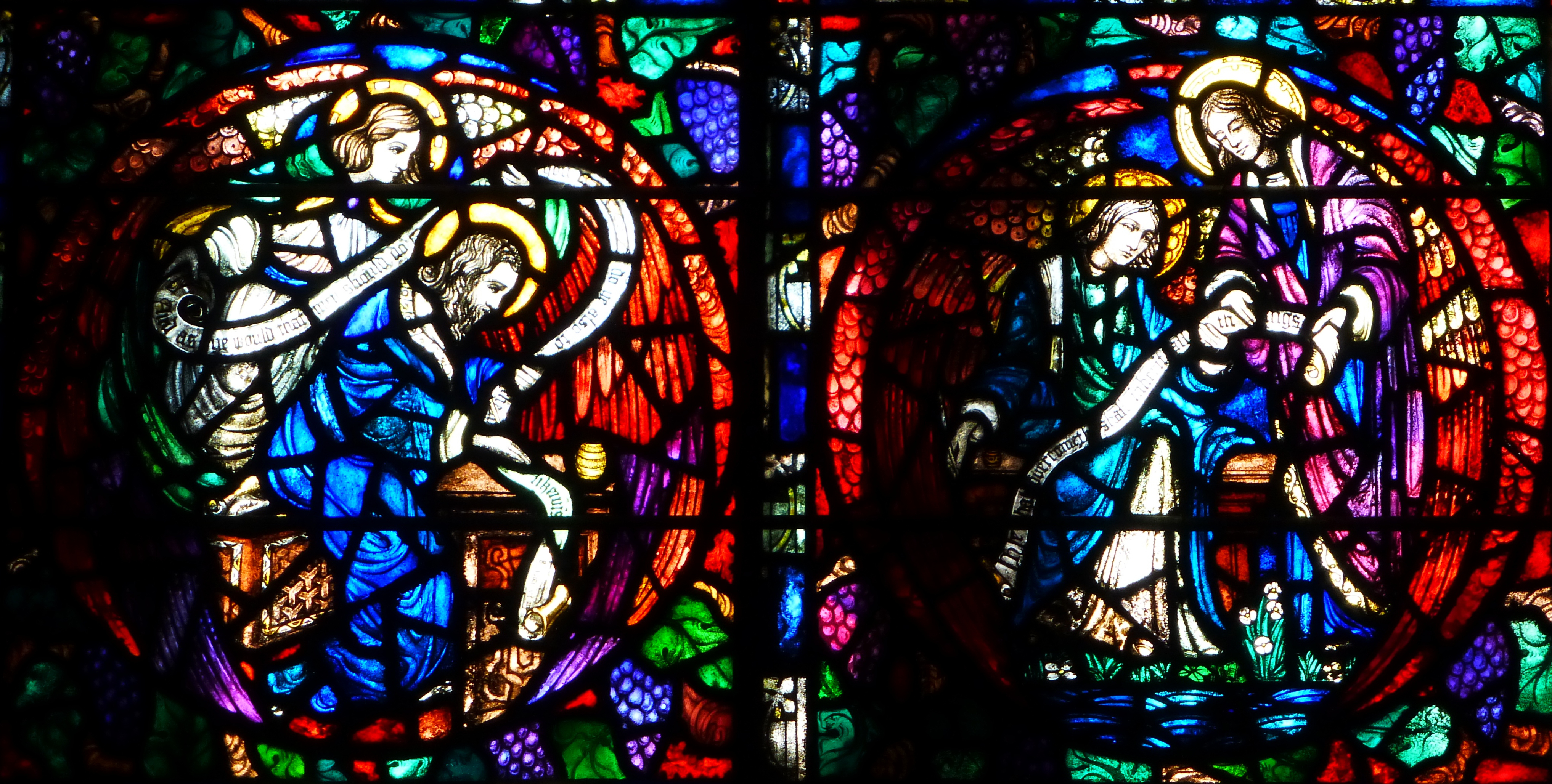
One design expressed in two different ways sharing one of the most influential stories in human history.

Sources/Additional Reading

Cranbrook Digital Archives

Details for comparison taken from David giving Solomon directions for building of the Temple, photograph by Jack Kausch, copyright Cranbrook Archives.

The William Morris Society in the United States


Read Full Post »

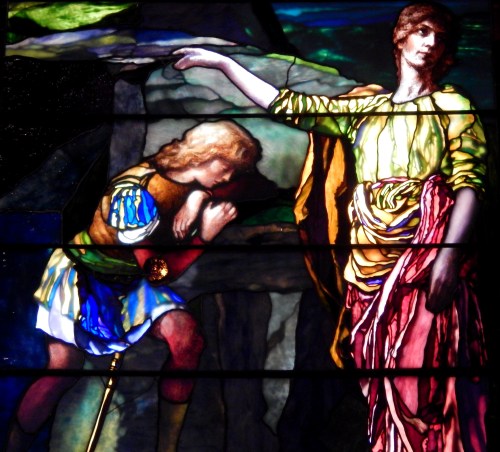
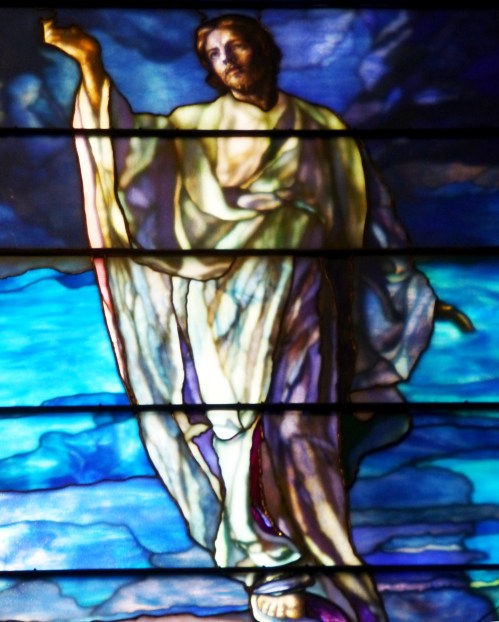
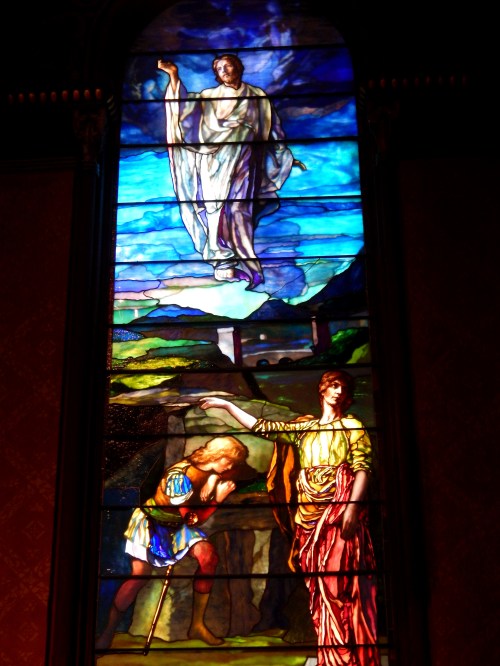
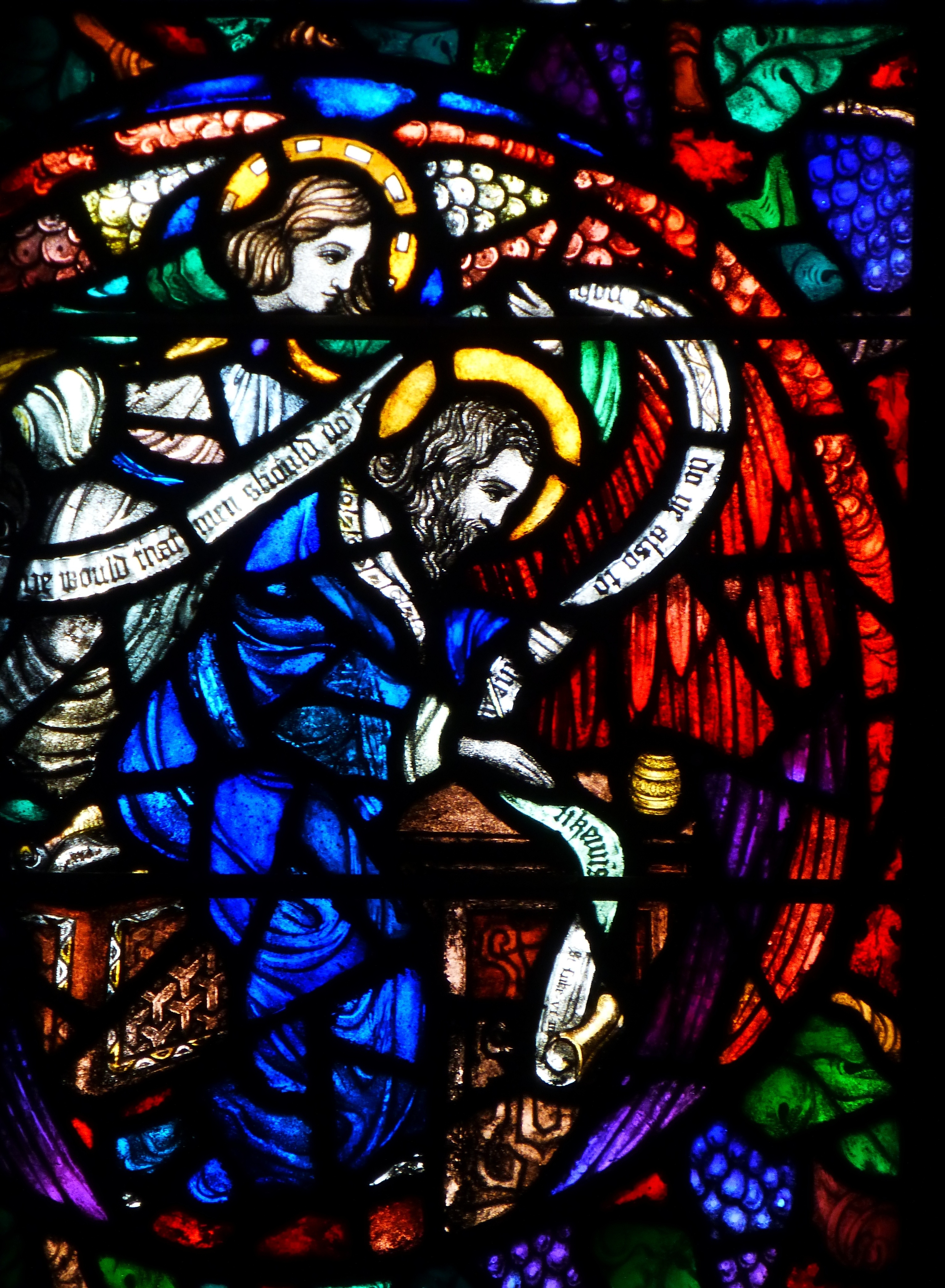
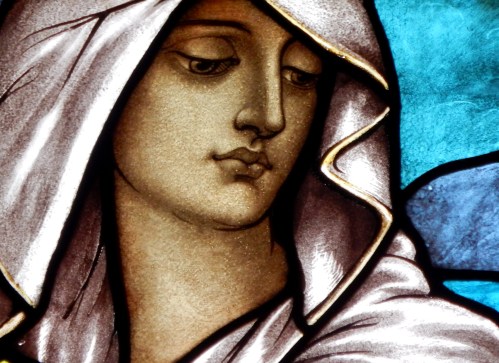
More details from the interior of Trinity Church in the City of Boston. Here we have a close up of the messenger in the stained glass window, The Resurrection, by John LaFarge.

In the March 1902 issue of The Church Standard, the window was described in this way:  “A beautiful memorial window has been added to the group in the north transept of Trinity Church.  It tells the story of the first easter morning.  In the background the purple clouds of morning are hanging, growing lighter as they seem to touch the low lying hills to the rear of the empty sepulchre, and their tints show the approaching dawn.  The flowing white garments of the risen Christ reflect the purple tints of the darker clouds … Upon the ground, reclining his head against the tomb, is the sleeping guard whose uniform makes a bright touch of coloring against the sombre hues of the walls.  A messenger nearby … [his] graceful garments of crimson and gold stand out in deep and inviting contrast.”

That same month, a reporter for the Boston Evening Transcript newspaper also notes the color: “The color is in the artist’s strongest and most brilliant vein, and is especially remarkable for its aerial tones of graduated blues and greens … In no stained glass work by LaFarge has he carried his extraordinary personal sense of color to a more complete measure of depth and significance.  It will, therefore, rank among his most important and characteristic work in this congenial medium.”  The window was commissioned by Charles A. Welch in memory of his wife Mary Love Boott Welch who died in 1899.

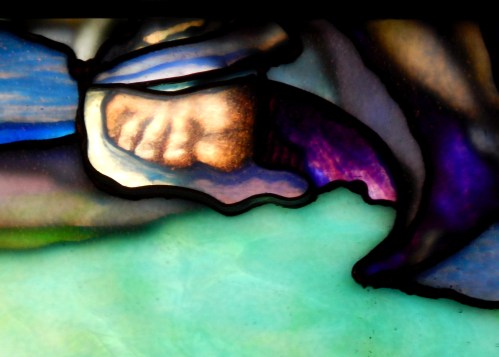
I’ve had the opportunity to photograph this window several times over the years.  But this particular day was special.  A friend had let me borrow her tripod and another friend had unexpectedly allowed me to access a place not often accessible so I could have new vantage points where I could focus on details I’d never focused on before … like five toes on a foot.

Of course, the whole is magnificent as well.

Whatever one’s vantage point, it is a lovely window to behold.  Learn more here:  Trinity Church Art & History

Read Full Post »

Courtesy of Trinity Archives

Photo of Charity, Courtesy of Trinity Archives

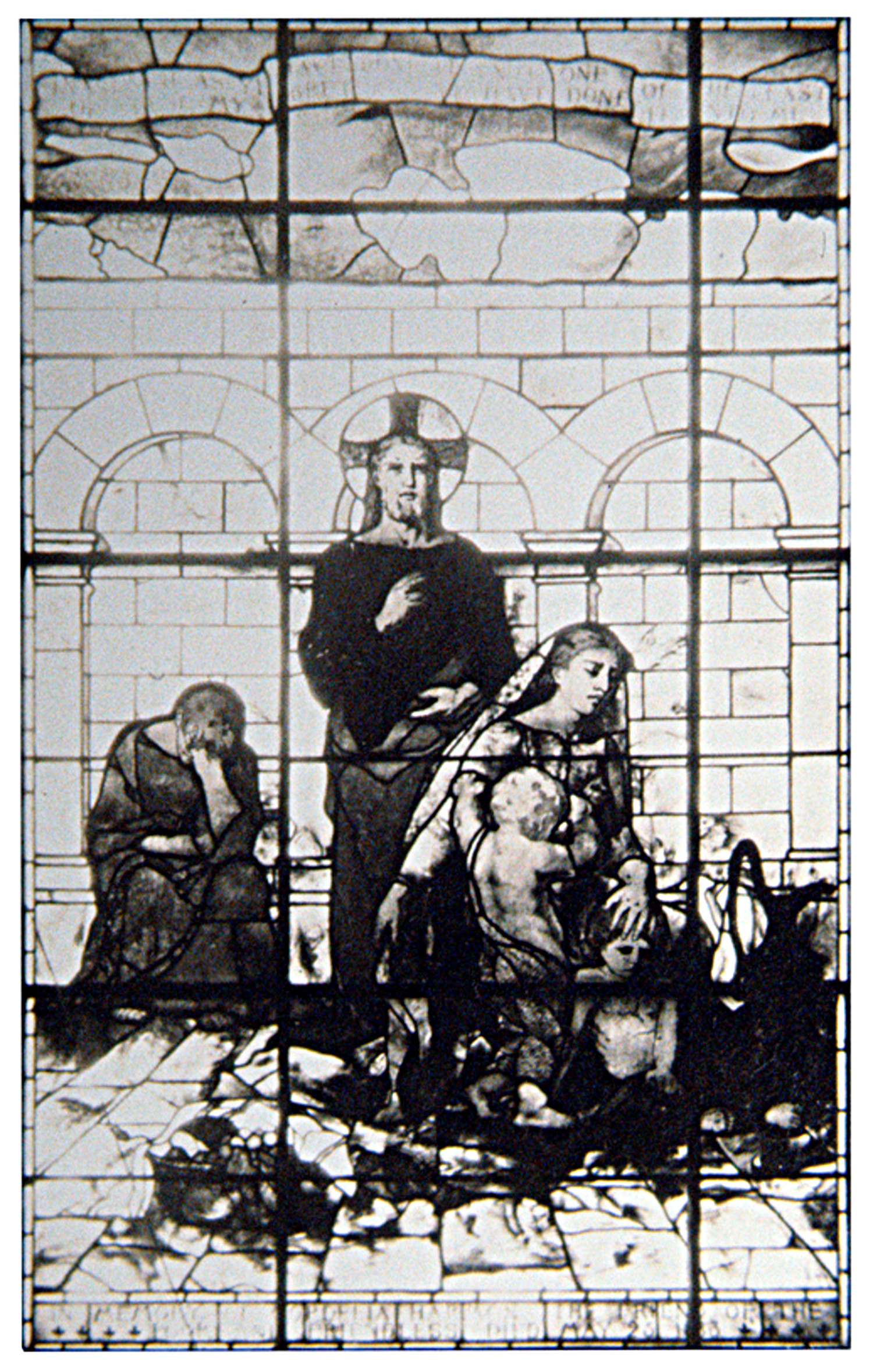
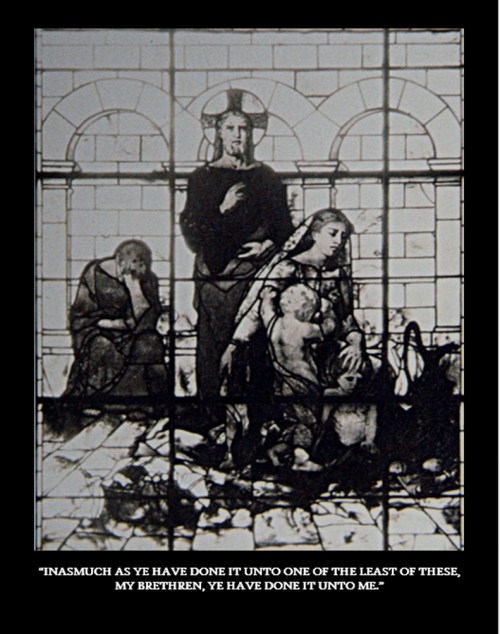
Charity is a stained glass window once located at Trinity Church in the City of Boston. It was designed by Frederic Crowninshield.  The inscription at the bottom of the window, barely legible in the above photo, reads “In memory of Cordelia Harmon, the friend of the poor and friendless. Died May 25, 1883.”  In an 1888 publication providing a descriptive account of the church, including of its windows, Harmon was described as “the Almoner of Trinity Church for many years, and through her good deeds was well known by all the poor in any way connected with the Parish.  The window was a gift of members of the Parish.”

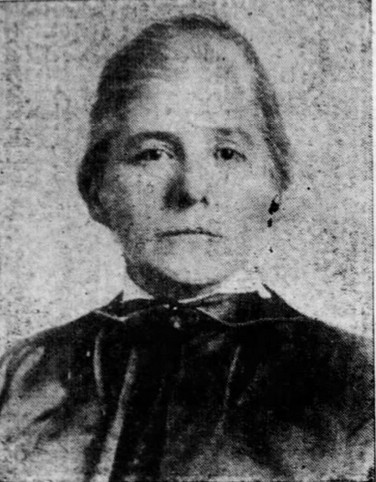
Born in Maine, Cordelia Harmon (1820-1883) spent her adult life in the Boston area.  It is clear from surviving records that she consistently strove to help those who could least help themselves.  Regardless of good deeds done as an elementary school teacher, a nurse at Mass General Hospital or serving people through programs offered by her church, Harmon appears to have never turned her eyes away from the wrongs that remained around her.

One of the church-supported programs that she participated on was The Ladies’ Relief Agency.  As a part of that charity’s design, every application submitted seeking assistance was investigated, including a home visit.  Through such visits, and no doubt her work with other charities, Harmon was able to see firsthand the lack of support for those with chronic diseases, people who were turned away from hospitals, and many of whom had no family to care for them.  She would write:  “How can a man, breathing fetid air, living in the squalor and debasement that abound, where the poor most do congregate and often of necessity, feel hope or courage to rise above his condition?

Harmon imagined creating a home for those people where they could live a good life until the end of their days.  It was an idea that she would discuss with Phillips Brooks, the rector of Trinity Church.  He would help her raise the funds to open The Boston Home for the Incurables in 1881.  Harmon would work at this home until she “died at her post” in 1883.  Phillips Brooks was traveling abroad when he learned of Harmon’s death.  In a letter to his brother he wrote:

Despite his expression of not feeling well-fitted to do the work of Cordelia Harmon, upon his return to Boston, Phillips Brooks did continue her legacy.  In 1883, Trinity formed The Committee for the Establishment of The Boston Home for Incurables to raise funds to expand upon Harmon’s idea.  Funds raised helped the Home to acquire a larger facility and accommodate more patients.  It would continue to expand and refine its services over the next 130 years.  Today, the Boston Home is a respected, model institution serving nearly 100 residents.

Charity, designed by Frederic Crowninshield,

The only known surviving image of the Harmon window is a black and white photo taken in the 1920s. In the center of the image, a woman and two children, destitute.  To the left, a figure with head bowed, the weight of the world upon his shoulders.  Standing amidst them is Jesus.  And above them all, in capital letters, is the text:  Inasmuch as ye have done it unto one of the least of these, my brethren, ye have done it unto me.  The window did not survive major renovations that took place in the 1950s. The window may be gone but the memory and legacy of Miss Cordelia Harmon lives on and continues to evolve.


Sources, Additional Reading, Etc.

http://www.thebostonhome.org/

https://www.givingcommon.org/profile/1072657/the-boston-home-inc/

September 19, 2014 article with video: http://assistivetech.scripts.mit.edu/blog/finding-a-home/

Charity postcard with insert about Harmon available at Trinity Church Bookshop

Read Full Post »

A plain black gown emphasized her type, which is fine, clean cut and deceptively simple.  Her eyes are dark and bright, her hair spun silver and the modulations of her low pitched voice are peculiarly musical. Denying herself color, she is a master of color.

Margaret Redmond, circa 1927

Margaret Redmond, circa 1927

In 1927, artist Margaret Redmond (1867-1948) was interviewed in her studio at 45 Newbury Street, Boston.  The interviewer Helen Fitzgerald described the space as, “a veritable treasure trove to the art lover.  All about her color glows and flames.  On the walls are sketches of colorful places … and the light transmuted by the stained glass of her own making fills the room with rays of gold and ruby, emerald, violet and blue so intense that it stirs in the sensitive observer an emotion akin to ecstasy.

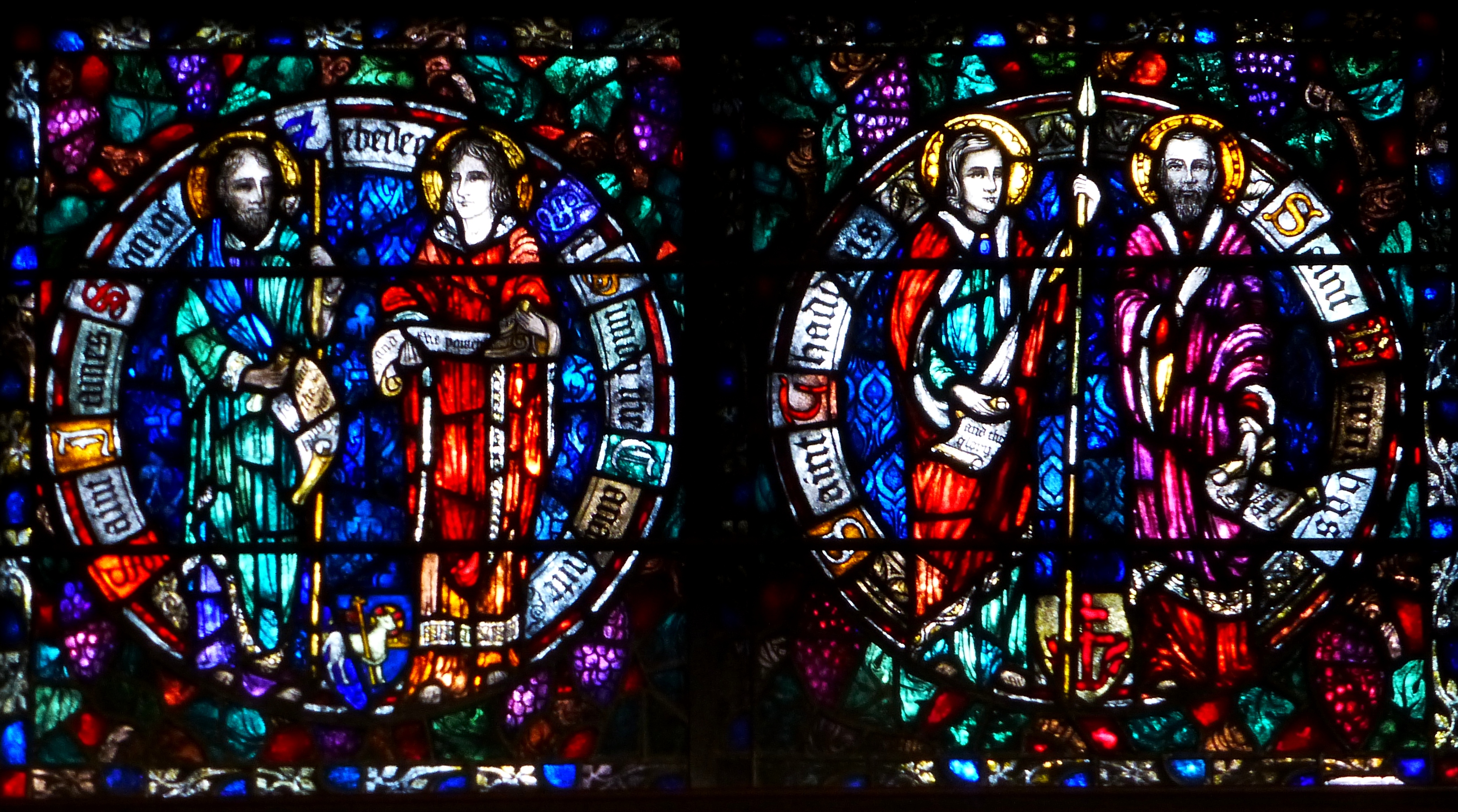
Detail from Evangelists Window, Trinity Church, 1927

Detail from Evangelists Window, Trinity Church, 1927

Detail from the Evangelists Window, Trinity Church, 1927

Detail from the Evangelists Window, Trinity Church, 1927

For the 1927 interview and in others, Redmond describes in detail her stained glass technique and why she chose to work with glass quite differently than contemporaries John La Farge or Louis Comfort Tiffany, whose works she admired.  As author Elinor Morgan summarized, La Farge and Tiffany designed with glass, whereas Redmond sought to use the glass as her canvas.

Detail from the Evangelists Window, Trinity Church, 1927

Detail from the Evangelists Window, Trinity Church, 1927

Born in Philadelphia, Redmond would study at the Pennsylvania Academy of Fine Arts, travel abroad to study in Europe, before returning to the states. In that 1927 interview, Redmond shared, “I went to England and France, where I spent two years studying the old glass windows in cathedrals, churches and museums. … My studies led me to many old cities and their churches and cathedrals.

Detail from the Evangelists Window, Trinity Church, 1927

Detail from the Evangelists Window, Trinity Church, 1927

When I had completed my pilgrimage of the cathedrals, I studied with Simon and Mellard in Paris.  Returning to this country, I came to Boston and entered the studio of Connick, the famous maker of stained glass, where I made my first window.”

Charles Jay Connick

Charles Jay Connick

Redmond apprenticed with Connick between 1906 and 1910.  Prior to that she bought a farm in Nelson, New Hampshire in an area that would become a hub for artists and intellectuals with Pennsylvania roots.  Redmond would maintain a summer home and studio there. Examples of her painting and stained glass work can still be found in this community.

Though her medieval inspired style of glassmaking was not in vogue, Redmond received a wide range of commissions for work in churches as well as in private homes and businesses. She exhibited her work, including watercolors and oil paintings as well as stained glass items, at arts and craft shows across the nation.

The 1920s and 1930s is considered her most productive period and this is when, for approximately $12,800, she would produce a series of windows for Trinity Church in the City of Boston, from the Apostles to the Evangelists (pictured earlier in this post) to scenes from the life of David and Solomon.

Throughout her career, Redmond was an innovator, for instance, experimenting with different uses for stained glass in the home, including fire screens which were popular in the period.  Though respected as an artist, she like many women was too often ostracized in a male-dominated field.  But in her studios she worked with both men and women, making a special effort to train young women as assistants in the different phases of the work.  In 1931, Connick would ask Redmond to list some of her favorite creations.  She would include on the list the windows produced for Trinity Church.

Detail from Tree of Life Window, Trinity Church

Detail from Tree of Life Window, Trinity Church

I have been unable to find a book solely about Margaret Redmond, or a single listing of her creations, but her papers including contracts are housed in the Smithsonian Archives of American Art.  A research project for another day perhaps. 😉

Sources/Additional Reading

Creates Stained Glass Windows, Margaret Redmond Searches Europe for Secrets of her Chosen Art, September 11, 1927 article interview by Helen Fitzgerald, Sunday Eagle Magazine, September 11, 1927
History Written in Glass by Elizabeth B. Prudden, The Christian Science Monitor, June 30, 1931

A Woman in Stained Glass … Against the Odds by Elinor Morgan, Stained Glass Quarterly, 1990

Women Artists at Trinity: Sarah Wyman Whitman and Margaret Redmond, article by Erica E. Hirshler in Makers of Trinity ed. by James F. O’Gorman, 2004

Redmond Papers at the Archives of American Art

Read Full Post »

In the shadow of the Back Bay is how the brochure describes the location of Our Lady of Victories Catholic Shrine.  I chanced upon the church yesterday after a meeting.  Crossing a street, I actually saw the back of the building first, an old brick structure with darkened windows that clearly had to be stained glass.  I made my way to the front of the building, studying the exterior and wondering if I might contact someone, some day, to ask if I might photograph the interior.

“Do you want to go inside the church?” A large man stood across the street.  He seemed to be in a hurry because he didn’t even wait for my answer before saying, “Just go down those stairs over there.” Then he continued on his way.

I went down the stairs into a little alleyway. There were a couple of older gentlemen there having a smoke. They greeted me kindly, and again without really waiting for me to say I wanted to enter the church, they directed me through a side door.

Inside was dark and warm. People moved about a bit in the shadows and I could hear a few sounds.  I could see no stained glass windows though.  Then, to my right, a gentleman walked from a side room.  He smiled and said, “You can come on in.  We’re just watching a movie.”

I thanked him for the offer, and said, “Actually, sir, I was wondering if I could go inside the church upstairs where the windows are.” His grin widened, and he said, “Of course. Just go back outside and up the stairs.  The doors are open.”

That’s what I did and following is a bit of what I saw.  There are quite a few images so please enjoy at your leisure. You can read more about the church’s history via this link.  In the future I hope to post more about the architecture and about the primary window designer, Franz Xaver Zettler.  And, by the way, I believe that the gentlemen who were so kind to me, were themselves being helped.  Located in the basement of the church is the Medeiros Center for Change.

Read Full Post »

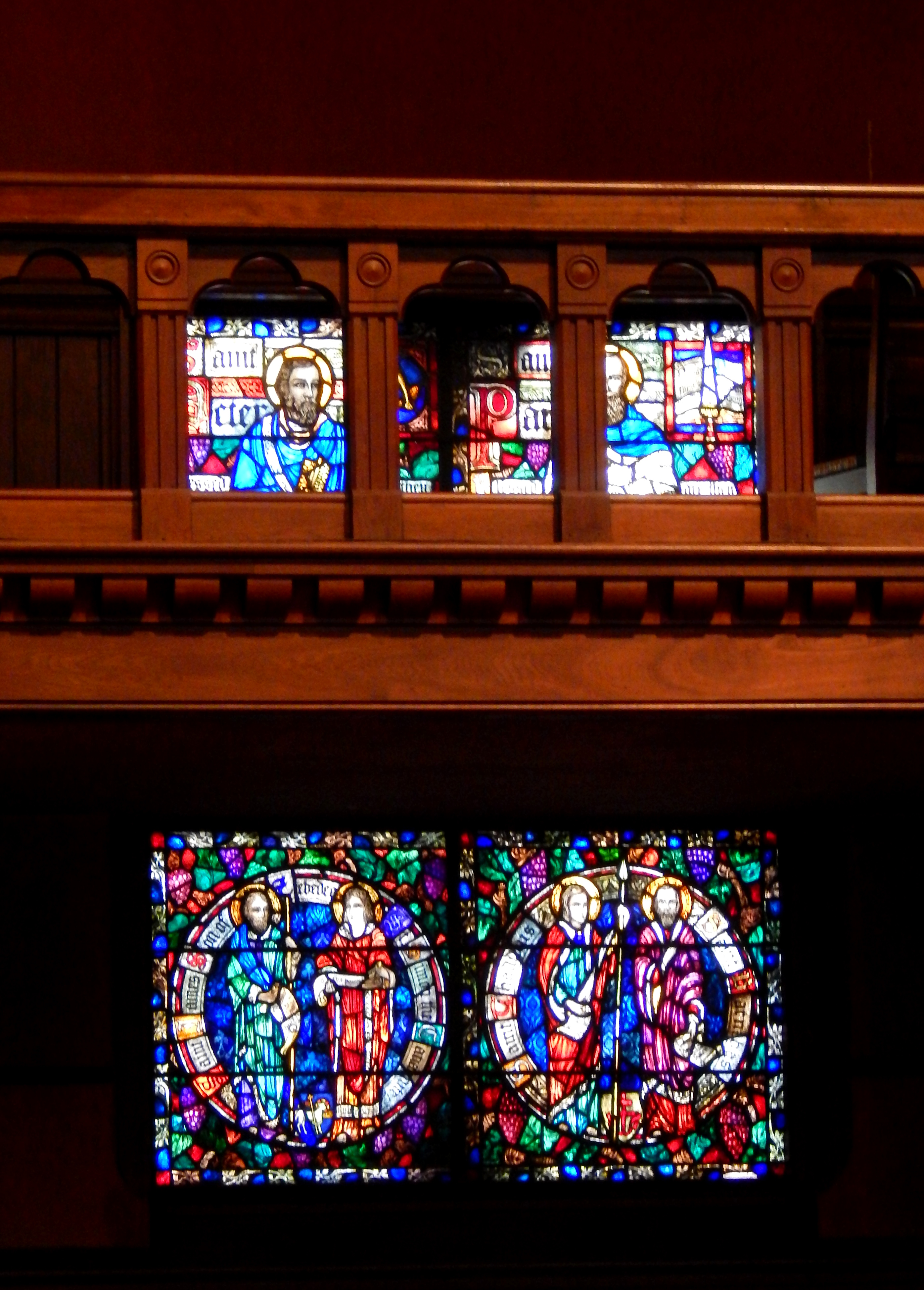
There is a person dear in my life who on occasion drives me crazy because he is compulsively compelled to help other people. As he likes to say, why else were we put here on this earth? A man of deep faith, his favorite saint is James.  I told him to tell me about James.  He shrugged and said, what more is there to say than what is faith without good works.  Indeed.  😉 This image of Saint James is one of two Saint James’s appearing in the the stained glass window designed by Margaret Redmond of Boston (1867-1948).  As you enter the sanctuary of Trinity Church in Copley Square, the windows are located to the left toward the north transept.  In the map one receives when engaged in a tour, the windows are labeled as Eight Apostles (1927).  In fact, all twelve apostles are represented, but only eight are most easily seen from the floor of the church, depicted in sets of four.

These eight apostles are James of Alphaeus, Matthias, Thomas, Bartholomew, James of Zebedee, Simon the Canaanite, Thaddeus and Simon Barnabus.

The other apostles — Andrew, Phillip, Peter and Paul — are paired above each set of four apostles.

A causeway not accessible by the public except during special events obscures their view …

… but assorted postcards and prints capturing their details are available in Trinity’s Book Shop.

What I enjoy about these windows is the explosion of colors.  Regardless of time of day or even season, there is always some new detail to discover.  For many reasons, they are an inspiring sight.

As the spring progresses, I hope to learn more about the artist Margaret Redmond, her life and her work.  As I do, I’ll be sure to share stories. Take care.

Read Full Post »

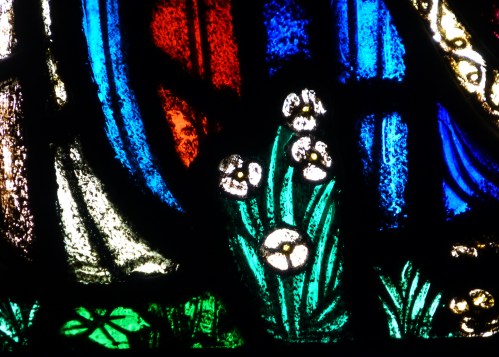
A small, powerful detail in a corner of the stained glass window, David’s Charge to Solomon, at Trinity Church in Copley Square. A little dark but I hope to work with the image over time.  Meanwhile, learn more about Trinity Church, its history and architectural tours via this link. Have a good weekend. 😉

Read Full Post »

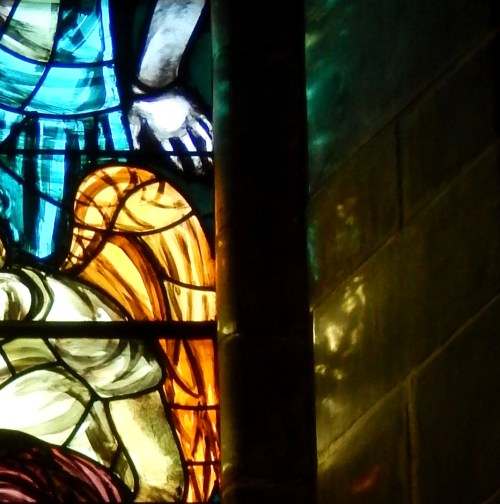
More images from Galway Cathedral. I was able to briefly visit the cathedral on two different days.

The first day was cloudy but on the second there was a period of bright sun.

As I tried to capture the colors of stained glass shimmering on the wall, I was reminded of light dancing on water and nature’s colors reflected and rippling on the surface.

A magical moment, indeed.

Read Full Post »

Of all the buildings that I was able to step into in Galway, I was able to spend the most time at the Galway Cathedral.  Dedicated on August 15, 1965 by Cardinal Cushing of Boston, it is noted as the youngest of Europe’s stone cathedrals.  Its art and architecture reflect many different styles and periods from Byzantine to Gothic to Romanesque.

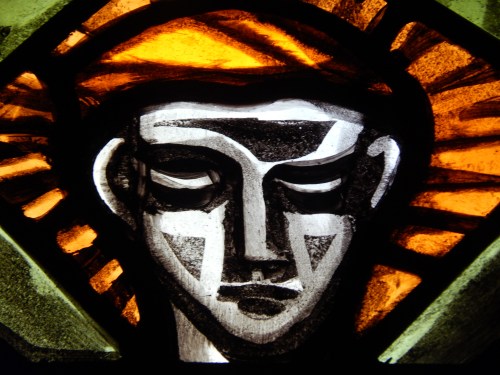
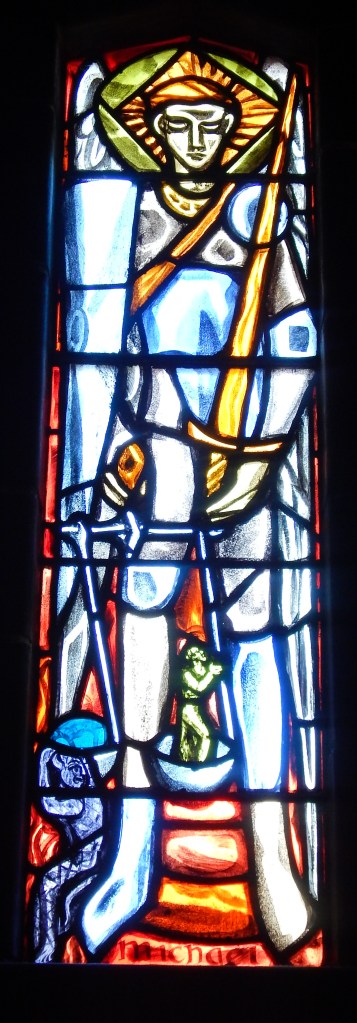
Detail from St. Michael, by Patrick Pollen of Dublin

Detail from St. Michael, by Patrick Pollen of Dublin

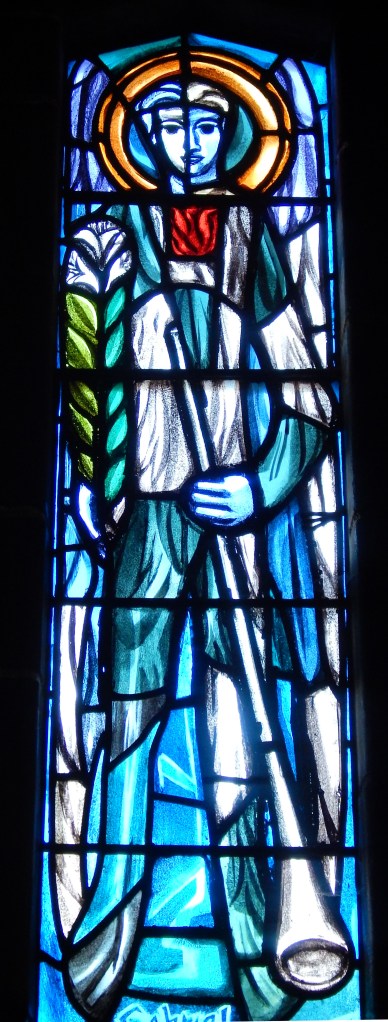
Online, there are many images of the exterior.  My camera tended to focus on the variety of stained glass windows, mosaics and carvings on the interior walls.  In addition to learning the larger story of the building’s creation, it has been a pleasure to research and learn about the individual artists, like Patrick Pollen, who dedicated so many years of their lives to producing artwork for this cathedral.

Detail from St. Gabriel, by Patrick Pollen of Dublin

Detail from St. Gabriel, by Patrick Pollen of Dublin

It will take me a while to sort through the images and continue my research.  There are always stories to discover! Until I pull together my words and images about this beautiful structure, here are few images to peruse.

Read Full Post »

Stained glass reflected on the stone floor at Cathedral of the Holy Cross in Boston’s South End.  The actual stained glass windows I may post in the future.

Read Full Post »

« Newer Posts - Older Posts »