Feeds:
Posts
Comments

Posts Tagged ‘travel’

… these along the famed Charles Bridge.

You can learn a bit more about the Charles Bridge here: https://en.wikipedia.org/wiki/Charles_Bridge.

There were so many people massed about the statues along the Charles Bridge, photographing the statues and the birds, that I began to train my camera into the surrounding landscape.

And then in quiet spots I’d train my camera on the statues once more.

It must be one of the most photographed and painted places in the world. Even if you aren’t able to visit yourself, there are many beautiful images out there to be viewed in books and online. Enjoy.

Read Full Post »

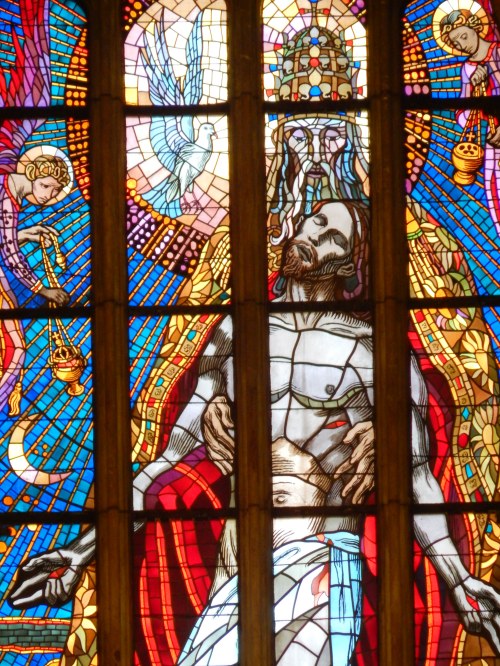
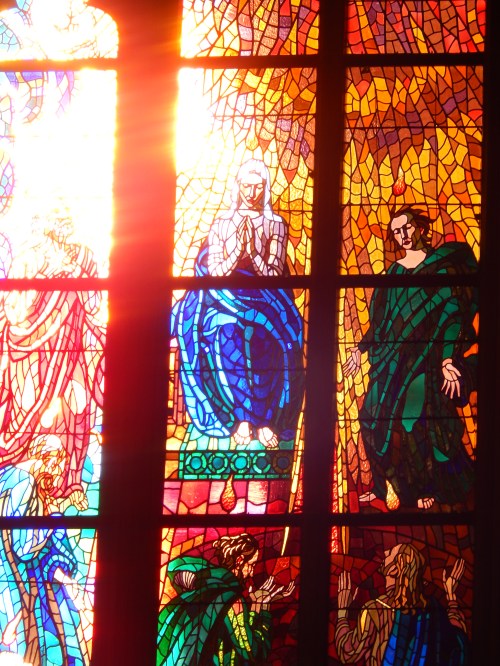
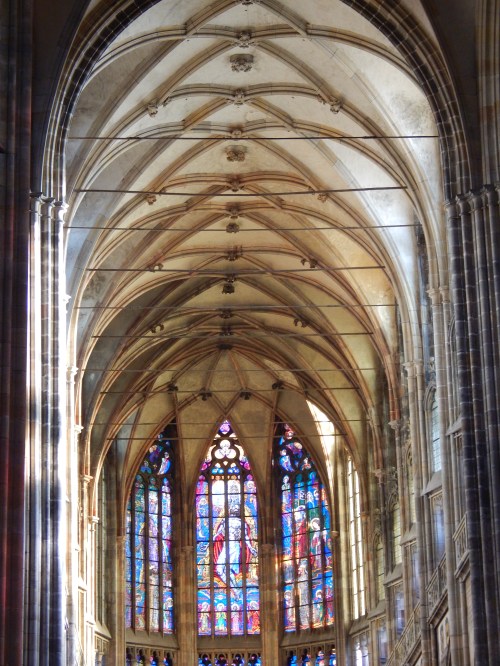
Yes, I have sought out stained glass in Prague and what beauty there is to be found like these images from the St. Vitus Cathedral at the Prague Castle.

Only a quick glimpse this trip …

… I hope to visit again for a longer period of time.  The windows were breathtaking as was the light they cast upon the stone.

Learn more about this cherished structure here: https://www.hrad.cz/en/prague-castle/guidepost-for-visitors/st-vitus-cathedral.shtml

Read Full Post »

43

Read Full Post »

Read Full Post »

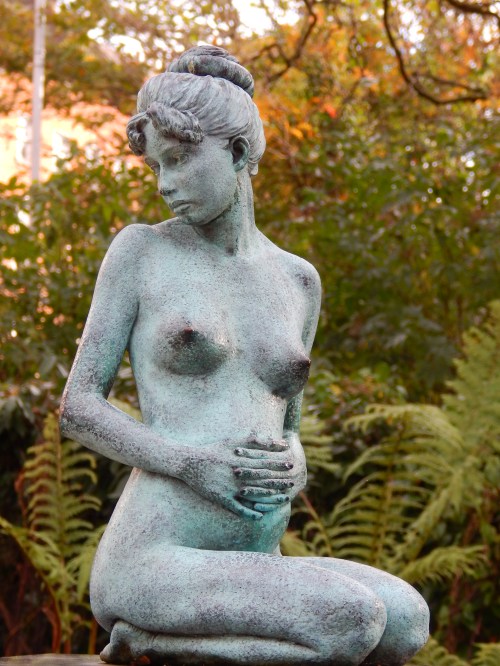
I thought I was pretty observant but I missed Dionysus’s torso as I meandered about the Oscar Wilde Memorial in Merrion Square.  The complete memorial includes three pieces: “the stone sculpture of Oscar Wilde, a pillar with a bronze of his pregnant wife and a pillar with a bronze male torso.” Actually, I think I noticed a torso but somehow it didn’t grab me the way Mr. Wilde did.

The sculpture was designed by Irish sculptor Danny Osborne.  As described on the Dublin City Council website, “Osborne used complementary polished colour stones and varying textures to create this striking lifelike pose of the writer sitting atop a 35-tonne boulder of white quartz from the Wicklow mountains. He wanted to depict Wilde’s love of beautiful objects, including stones, as well as his colourful personality. … Wilde is wearing a green smoking jacket with a pink collar, long trousers and shiny black shoes, with an unusual two-sided expression on his face, depicting both joy and sadness. Wilde’s shiny green jacket is made from nephrite jade, sourced in Canada. The pink collar is made of a rare semi precious stone called thulite, brought here from central Norway. Wilde’s head and hands are carved from Guatemalan jade. His trousers are made from larvikite – a crystalline stone from Norway, and his shiny shoes are black granite.”

Learn more, in the artist’s own words, in the video on the following page: http://www.dublincity.ie/DublinArtInParks/English

And Wikipedia has a great page about Oscar Wilde: https://en.wikipedia.org/wiki/Oscar_Wilde

Read Full Post »

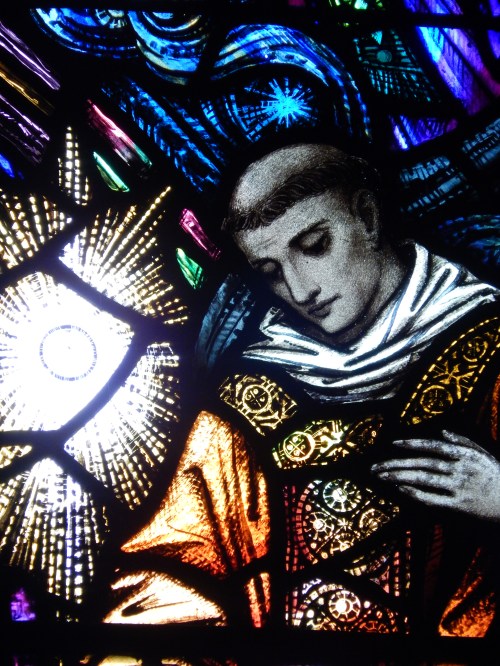
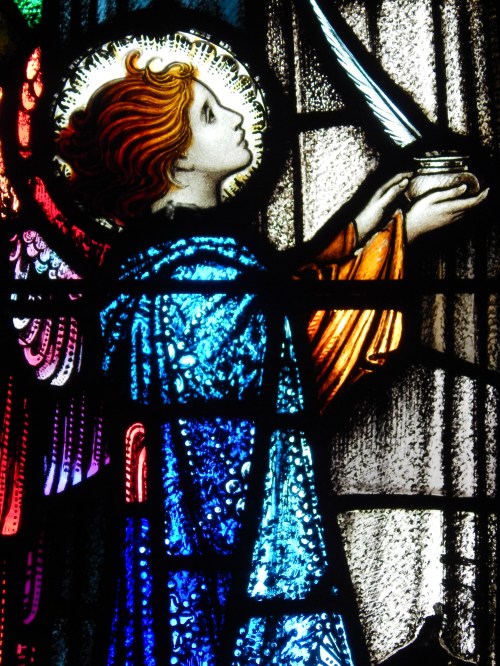
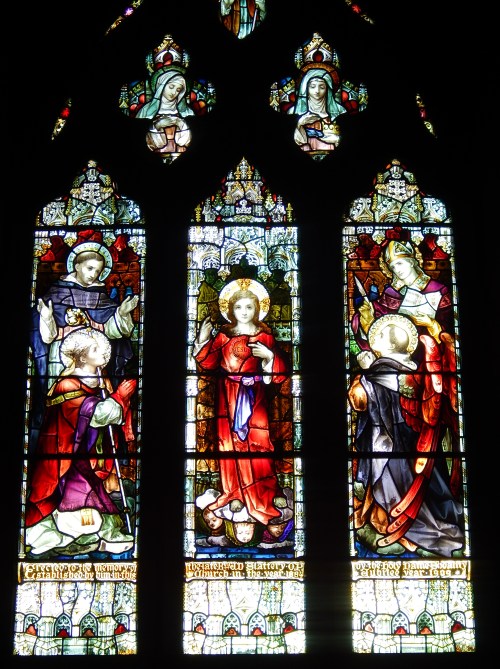
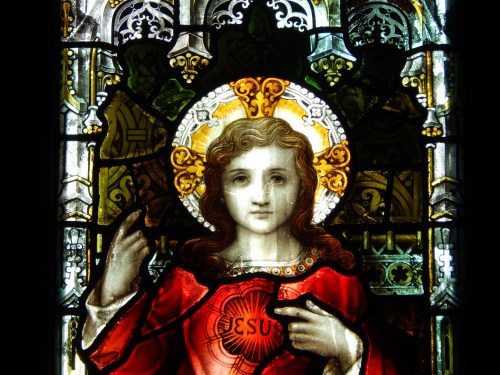
As the previous post suggests, yes, I am on the road for a bit beginning with a return to Dublin, Ireland! A quick trip for work and pleasure, and it was certainly a pleasure to chance upon the Saint Saviour’s Dominican Priory.  I had such a short window of time to photograph that I mostly focused my attention on a few windows. These are details from one window.

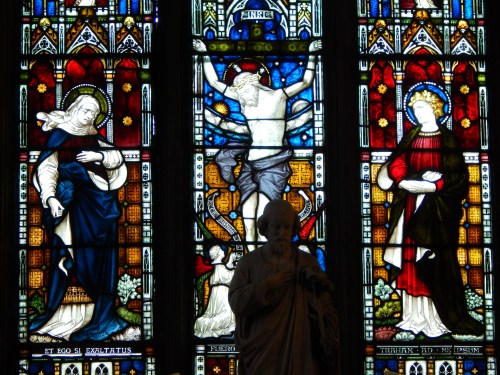
Here are details from a second.

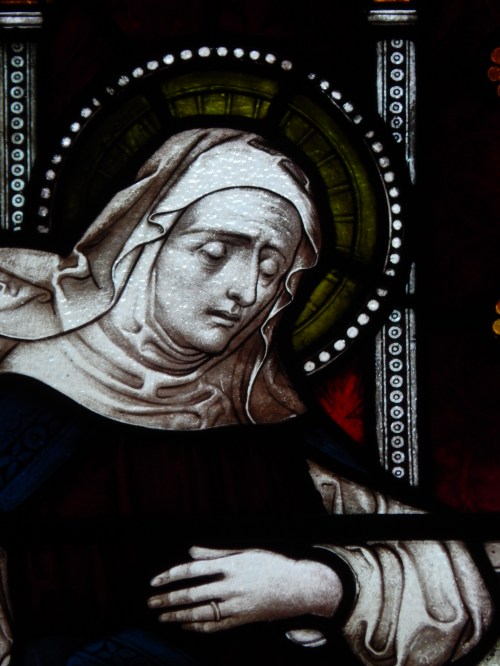
Here is the third …

Little literature could I find at the time on the church’s architecture or artwork but the stories can be discerned from the glass.

I found the building by getting lost, but if you are seeking it out, it is located at 9-11 Upper Dorset Street, Dublin 1. Learn more about the priory via the following link: http://www.saintsavioursdublin.ie/

Read Full Post »

Read Full Post »

Read Full Post »

photo by D. Ledesma

photo by D. Ledesma

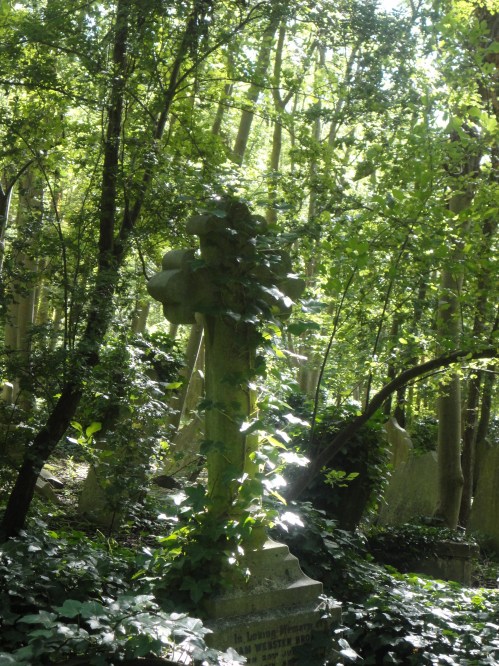
I am grateful to have family and friends who as they walk in the world will sometimes pause and think, “Hmmm.  This is a picture that Cynthia might like.” Some people will share photos of that sight in the moment by text.  Other times, as most often happens with my brothers, they will give me a ring and describe in great detail the Virginia sky above them. It is all wonderful, as are these images shared by a friend who recently traveled around London.  She is an archaeologist who has been involved in Egyptian digs and one day I will convince her to sit down for an interview about why she chose that field. Until then here are photos she shared of a walk through Highgate Cemetery.

photo by D. Ledesma

As the website notes, this cemetery opened in 1839 and is considered one of England’s great treasures with its fine funerary architecture.  There is an east side and a west side. The west side which includes an Egyptian Avenue is considered fragile and accessible only by special tour.  People of many backgrounds are buried here with some of the most famous figures buried including Karl Marx and George Eliot.

photo by D. Ledesma

photo by D. Ledesma

From these photos alone one can see the interplay of light and shadow upon the beautiful sculpture.  Scary movies (e.g. one involving Dracula) have been shot here but from these photos one can also imagine the serenity of this sacred space. It is still an operating cemetery.

photo by D. Ledesma

photo by D. Ledesma

For history buffs, the history page on the website is an amazing compilation of old and new video as well as text.  I don’t know if I will ever have the chance to view this place in person but I thank Ms. Ledesma for sharing these images with me.

Learn more at …

http://highgatecemetery.org/

http://highgatecemetery.org/about/history

Read Full Post »

Bust of Dean Stanley at Trinity Church

I took the picture, I did the research and this is what I learned:  On Easter Monday in 1877, Rev. Phillips Brooks was given leave by his parish, Trinity Church in the City of Boston, to take a sojourn to Europe.  While in England, he spent time with Arthur Stanley, Dean of Westminster Abbey. Brooks was invited to preach at Westminster in July, and it is written that Dean Stanley listened with delight to a doctrine after his own heart.  Brooks would later share in a letter, “Last Sunday I preached for Mr. Stanley at his church in London, and William and I were much in the little man’s company while we were in his town.  He is very pleasant and entertaining, but much changed since his wife’s [Lady Augusta Stanley] death. He has grown old and fights hard to keep up an interest in things.”(1)


In the autumn of 1878, Dean Stanley traveled to America. In Boston he preached for the Rev. Phillips Brooks at Trinity Church.  Brooks would later write that no one who heard the benediction at the close of the service would ever forget it. “He had been but a few days in America. It was the first time he had looked an American congregation in the face. The church was crowded with men and women of whom he knew that to him they represented the New World. He was for a moment a representative of English Christianity. And as he spoke the solemn words, it was not a clergyman dismissing a congregation, it was the Old World blessing the New; it was England blessing America.  The voice trembled while it grew rich and deep, and took every man’s heart into the great conception of the act that filled itself.”


In 1881, following Dean Stanley’s death, Phillips Brooks would write a 12-page retrospective for The Atlantic Monthly.  In conclusion Brooks would highlight lessons of faith and good will he thought taught by Stanley’s life, and then end with these words:

“These lessons will be taught by many lives in many languages before the end shall come; but for many years years yet to come there will be men who will find not the least persuasive and impressive teachings of them in Dean Stanley’s life. The heavens will still be bright with stars, and younger men will never miss the radiance which they never saw. But for those who once watched for his light there will always be a special darkness in the heavens, where a star of special beauty went out when he died.” (3)

Miss Mary Grant, an eminent British sculptor and Stanley’s niece by marriage, would execute a memorial bust.  That bust would be given to Trinity Church to commemorate his visit.  It is located in an area that I believe is known as the baptistry.  His visage “stands upon a bracket of Sienna marble … beneath which is a tablet of Mexican onyx, on which is engraved a tribute by Robert C. Winthrop.” (4) And sitting across from him?  A bust of Phillips Brooks.

Bust of Phillips Brooks by Daniel Chester French

Bust of Phillips Brooks by Daniel Chester French

Learn more about Trinity stories in stone and glass with a tour: http://trinitychurchboston.org/art-history/tours

Sources for this post …

(1) Phillips Brooks, 1835-1893: Memories of his life … by Alexander Viets Griswold Allen (1907)

(2) Life and Correspondence of Arthur Penrhyn Stanley, Volume 2 by Rowland Edmund Prothero (1893)

(3) The Atlantic Monthly, Volume 48, October 1881

(4) Trinity Church in the City of Boston, 1888, pp. 31-32

(5) Mary Grant

(6) Phillips Brooks Bust image is from Wiki Commons

Save

Read Full Post »

« Newer Posts - Older Posts »