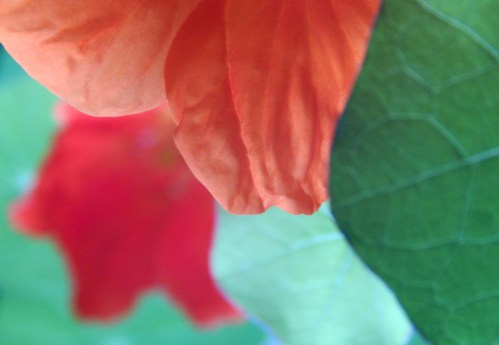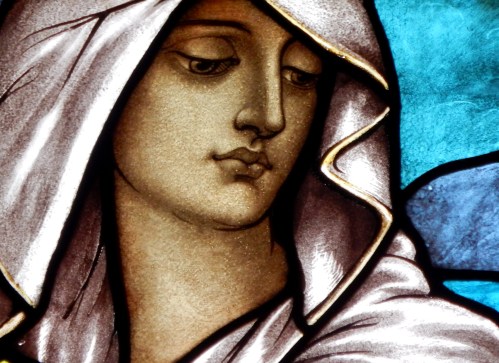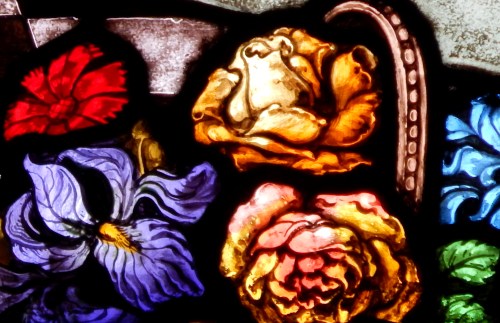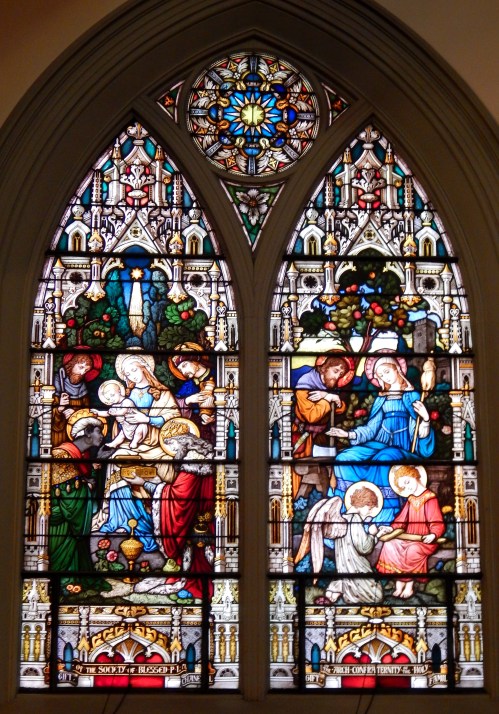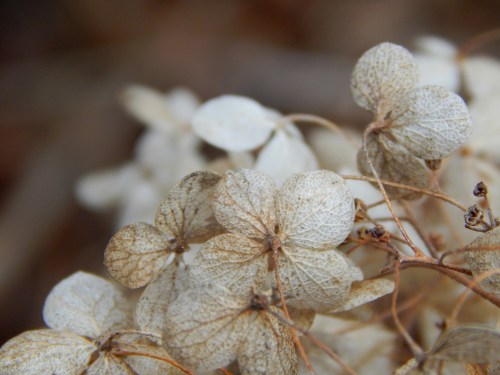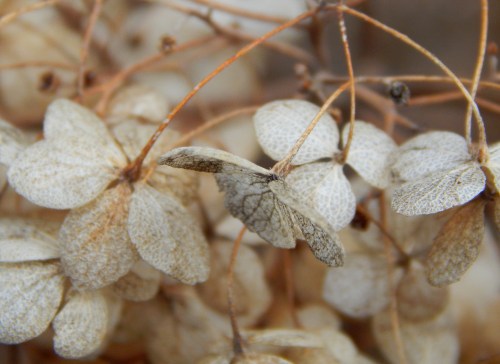
… to have the opportunity to photograph such beauty in so many forms.

I’ve noticed some activity at my local flower shop. Spring really is coming, isn’t it? Be well. 😉


… to have the opportunity to photograph such beauty in so many forms.

I’ve noticed some activity at my local flower shop. Spring really is coming, isn’t it? Be well. 😉

Posted in Inspiration, Kitchen Inspirations, Nature Notes | Tagged abstract, beauty, colors, flowers, herbs, Inspiration, nasturtium, nature, Photography, plants, roses, tulips | 3 Comments »

Posted in Inspiration | Tagged beauty, colors, flowers, form, Inspiration, petals, Photography, tulips | 4 Comments »

Blue Rose in the Hall
Maybe it was fear that made the young men shout “Nooooo!” as I stood next to a For Sale sign in front of a house in a suburb outside of Boston. Fear of change, fear of something different coming into their midst. And maybe it was fear that made a woman look me up and down as I questioned her entrance into a building (part of my job at the time). As she left the building she made sure to look at me in that same way and I had to think, “Well, if looks could kill, I’d be six feet under.” And maybe it was fear that made the waitress do some things during a meal, such that once I’d left the restaurant with my friend (whose favorite restaurant it was), she said, “I’m sorry. I didn’t expect that to happen.”
Now if I were to say that all of those fairly recent events happened, in part, because all the other individuals were white and I am black … well, I think there are folks who might say, as is often said today, why does everything have to be attributed to race? Because race does matter. As does class, gender, and economics. It all matters. But here’s why race stands out for me: slavery. “Slavery ended,” someone said to me once. “Why keep bringing that up?”
Born in the 1970s USA, I have never been a slave. I have never been shackled or forced to give up a child or beaten if I tried to put pen to paper or pick up a book. I’ve never stood in a market while an overseer pointed out my attributes so that someone might buy me as a companion for their children or an extra servant in the kitchen. Never needed to carry papers proving freedom (or ownership), nor been branded, or had to hope that my master would free our children in his will.

As former slaves did about 150 years ago, I’ve never been in a position of celebrating freedom and, on the other hand, having to deal with the realities of having little but the clothes on my back and waiting for forty acres and a mule. Never had to deal with “separate but equal” or segregated schools (my older brothers did who were born in the 1950s and 1960s). Never been in a position or location where I had the right to vote but other forces, those perhaps suffering from fear of change, were putting strategies into place to prevent me from voting (my parents dealt with that).
Nor have I had to watch a loved one (or even a stranger) brutally beaten, mutilated, hung from a tree or a telephone pole, and burned. I’ve heard a few stories from older family, watched the documentaries and read quite a few articles. When I read the stories of lynching, especially in old newspapers recently digitized, and see the images, I cry. I cry for the people who died, the people who watched and tried to help, and even for the people who watched and did nothing. I did wonder what the people who did nothing were thinking? And what about the people who sang and danced and even cut off parts for souvenirs or mailed those parts to white politicians trying to effect some change?
For some, did the actions they witnessed mean nothing because the people to whom the deeds were done looked nothing like them? Or was it just that they did not know what to do? Were some people truly scared or were they simply seeking pleasure in establishing control over another? All of those incidents are part of the fabric of this country, as are the people, of all races and backgrounds, who fought to end slavery, the people who fought to end routine lynchings and the people who continue to fight for economic and voting rights for all people.
Yes, I do indeed bring up slavery and other injustices from the so-called past because of present-day incidents like in Ferguson. Slavery is an institution, one of many, that this country has yet to deal with. I don’t care about politics or how people choose to identify themselves in this country as Republican, Democrat, Tea Party, Libertarian and so on. Political labels and tenets change over time. But what about human behavior? How has that changed over time? Or has it? Why do we treat people the way that we do?
You can “follow the money” in terms of why slavery was entrenched in this country for so long. Economics, economics, economics. In too many venues of late, I have read people saying stop talking about race and focus on the economic issues in a Ferguson. Of course, economics is an issue and powerful factor leading to injustices happening in many communities. But it comes down to a bit more than money to treat people as inferior or to hear their screams of pain and laugh or to make assumptions about their children’s ability to learn regardless of resources provided for education. And it is about more than economics to see all those things taking place around you and to do nothing. To some extent, I feel little right to judge others because I do not always know what to do as I learn about the horrors around me, in this country and abroad. I do know with regard to slavery and the seeds that were planted that continue to sprout, I do not want to forget.

I’ve been researching the past, including slave times, quite a bit of late for various projects as well as to better understand current events. In the remembering, and rediscoveries, I don’t come to hate people who look different than me. Not at all. A part of me mourns. I mourn the horrors, and I also celebrate the courage of so many different peoples, their hopes, their activism and their creativity in finding the beauty in this life. And I celebrate such in the people who are active today.
As a final note in my Sunday ramblings, if you chose to read so far, … I came upon a 1920s newspaper article about a lynching. The reporter recounted that witnesses heard the dying man sing a song with his last breaths as the flames consumed him. I looked up the song and came upon the following 1950s rendition by Sam Cooke. A powerful piece.
Posted in Inspiration | Tagged blue, civil rights, colors, culture, economics, education, essay, history, hope, Inspiration, life, lynching, music, Photography, politics, race, racism, Sam Cooke, slavery, spirituals, storytelling | 15 Comments »

I don’t remember the details of the day, four years ago. But I guess I was working at my desk and the sun struck a box of pins. You just never know what’s going to catch your attention. 😉
Posted in Inspiration | Tagged colors, fun, Inspiration, musings, Photography | 4 Comments »

the sun was shining and so there was a wonderful reflection of the tulips in a nearby framed print of blueberries in a field. A wonderful layering took place.

Posted in Inspiration | Tagged abstract, beauty, flowers, Inspiration, layering, Photography, reflections, tulips | Leave a Comment »

It’s a little gray outside today so I thought I’d play around with that shade as I photographed the tulips.


Posted in Inspiration | Tagged abstract, beauty, colors, flowers, gray, Inspiration, monotype, Photography, shades, tulips | 1 Comment »

Lizzie’s Tulips
A bouquet of tulips from a friend. We’ll see how the winter light falls upon these petals over time.

Petals
Posted in Inspiration | Tagged abstract, bouquet, colors, flowers, gifts, Inspiration, petals, Photography, tulips | 7 Comments »

Early morning light falling upon a bundle of plastic flowers, left behind by friends at least a year ago. They are tucked out of the way in the hallway, ignored, until the light makes them shine.

Posted in Inspiration | Tagged beauty, colors, flowers, Inspiration, Photography | 2 Comments »

Portrait Eric Stenger, 1906, Museum Ludwig, Foto (c) Rheinisches Bildarchiv
At the end of one letter, Dr. Erich Stenger writes, “I am up to my neck in work again and often regret that we did not get together more while you were here. There would have been so much more to show and to discuss. The director of the Kodak Museum B. Newhall has announced his visit. And when will YOU be returning to Germany?” (excerpt from 1950 letter from Stenger to Joseph A. Horne)

Erich Stenger (1878-1957) was a noted photographic historian and collector. He trained as a chemist. He worked during the early days of photography when photography was viewed more as a science rather than art. In 1905, he would join the faculty of the Technische Hochschule in Berlin as an assistant instructor in the photographic department. In the early 1900s, he co-wrote papers on The Fundamental Principles of Three-Colour Photography, and Radiation Sensitiveness of Silver Bromide Gelatin for White, Green and Orange Light. By 1934, he was named to the chair of photography founded in 1864 by Hermann Wilhelm Vogel, a post he would retain until his retirement as Professor Emeritus in 1945. He began building his photography collection as a student and would do so until the end of his days.

Portrait Franz Grainer, 1920er Jahre, Museum Ludwig, FH 2438, Foto: © Rheinisches Bildarchiv
His collection was diverse, from landscapes to portraits, to decorative framed items to caricatures about photography. Beaumont Newhall wrote that “At the time of World War II, his collection was said to be the largest in private hands anywhere in the world.”

Hermann Wilhelm Vogel: Dreifarbendruck nach Verfahren: Vogel-Ulrich.
Aufnahme nach Ölgemälde und natürlichen Schmetterlingen 1892
Museum Ludwig, FH 10248, Foto: © Rheinisches Bildarchiv
Beaumont Newhall (1908-1993), referred to in Stenger’s letter, was a pioneering historian and first curator of photography at the Museum of Modern Art in New York.

Beaumont Newhall, Self Portrait, Museum of Modern Art, New York, 1970.
Over his career, he would write five editions of the signature work, The History of Photography. In 1945-1946, the Roberts Commission would recommend him as a good candidate for the Monuments, Fine Arts and Archive unit. Paul J. Sachs described Newhall “as one of the best men for library work.”

Newhall’s name appeared on one of the last lists of qualified officer personnel that the Roberts Commission presented to the War Department, indicating that “the only alternative after this is enlisted men.” Newhall would not be assigned to the unit. After discharge, Newhall returned to the U.S., continuing his research, lecturing, and curating photography exhibits. In 1948, he became the first Curator of Photography at the Kodak Eastman House in Rochester, NY and would serve as its director from 1958-1971.

One of those enlisted men who would join the Monuments, Fine Arts and Archive unit was Joseph Anthony Horne. And as part of that unit, Horne would meet Dr. Erich Stenger and learn of his unique photographic collection. Exactly when and where Horne first met Stenger in postwar Germany is unclear but the friendship they developed, as indicated through correspondence about everything from photography to family, would endure for a decade. That friendship must have stemmed from a mutual love of photography. Horne had been a photographer with the Farm Security Administration – Office of War Information (FSA-OWI).
Horne’s MFA&A colleague Paul Vanderbilt, during an Investigation Trip to Interview German Authorities and Inspect Private Papers, reports meeting Stenger in September 1946:
Vanderbilt recommended:
Horne certainly met Stenger at a December 1946 meeting of photographers and photographic scientists “to discuss the present situation of the photographic trade and industry in Germany.” Mr. Horne had been invited to attend by the Berlin Press Photographers Guild. In his report following the meeting, he echoed Vanderbilt’s recommendations that Stenger be aided in reassembling his photographic collection, a collection spread across a divided postwar Germany.

Germany Occupation Zones 1946
It is unclear from available records how helpful Horne, Vanderbilt and the other Monuments Men were in helping Dr. Stenger rebuild his collection in a post-war, rapidly becoming Cold War, world. What is clear is that this unit of librarians, archivists and those dedicated to preserving and sharing knowledge, felt strongly about helping this gentleman as much as they could.
As the socio-political landscape of Europe changed, and with it the U.S. presence, Horne prepared to move on to other positions within the U.S. foreign services. Regardless, he and Stenger stayed in touch, corresponding about family and photography, and perhaps even their shared interest in stamp collecting. Horne would highlight opportunities for Stenger to exhibit photography, and Stenger provided updates on the health of his collection.
“The day after tomorrow I will be going to Switzerland, where I have been asked to come to deliver a few scientific lectures. I will be back home in mid-November. While in Switzerland, where I used to make annual purchases from merchants who knew what I was collecting, I will once again be on the look-out for my collection. Not having been back in eleven years, most of the merchants won’t remember me. Recently I was able to acquire some very special objects here in Germany; considering the awful destruction, I marvel that here and there something useful still pops up.” (excerpt from 1950 letter from Stenger to Joseph A. Horne)

Henry Traut, Porträt, München, Museum Ludwig,
1932, Foto: Rheinisches Bildarchiv
In 1955, Stenger’s diverse collection was purchased by the company Agfa, and today it complements a number of other collections as part of the Photographic Collection of the Museum Ludwig in Cologne. Stenger died in September 1957, and as Beaumont Newhall states in a later editorial, the world of photography lost a foremost historian and collector.
Sources and Additional Readings
The Photographic Collection of the Museum Ludwig
Image Magazine, 1958, incl. editorial on Dr. Erich Stenger
press page about the Stenger Collection
About Beaumont Newhall (International Photography Hall of Fame and Museum)
Beaumont Newhall (Scheinbaum & Russek LTD)
Posted in Inspiration | Tagged art, art history, Beaumont Newhall, books, cameras, collecting, Eric Stenger, Erich Stenger, history, Inspiration, Joseph A. Horne, Monuments Men, Museum Ludwig, Paul Vanderbilt, Photography, storytelling, World War II | 4 Comments »

When I saw these out of focus leaves — their form, shape, the melding of colors — I could not help but be reminded of the artwork of Tamara De Lempicka and her paintings, full of color, and the fall of light and shadows such that some things are revealed and the rest is left entirely to imagination.

As I was trying to learn more about the artist, I came across this website produced by family and friends. I especially enjoy the artwork page providing the opportunity to scroll through, by decades, her life story in words and images. Enjoy.
Posted in Inspiration, Nature Notes | Tagged abstract, art history, beauty, colors, imagination, Inspiration, leaves, nature, Photography, Tamara de Lempicka, women artists | 1 Comment »