Feeds:
Posts
Comments

Cynthia's avatarWords + Images

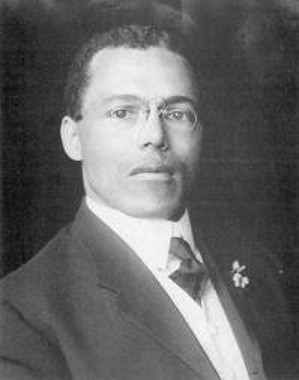
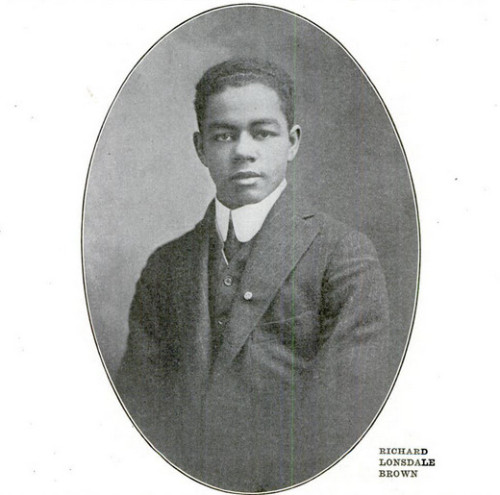
Richard Lonsdale Brown was born in 1892 in Evanston, Illinois. When less than a year old, his parents moved to West Virginia. There he attended public school and then trained as a sign painter. After finishing trade school, he remained in West Virginia for five years, “and then being a journeyman sign painter I traveled through the mining districts of the state … My journeys took me almost altogether through the mountains where, when God made them, He placed scenery the equal of which, I think, cannot be found in all America.”

Richard Lonsdale Brown, 1912

“It was there I believe that my love for landscape painting was awakened. When not painting signs I was doing what I could to reproduce the scenery of the mountains and valleys, the rivers and the streams on canvas.” Brown shared those words in a 1913 article that appeared in the New York Sun.

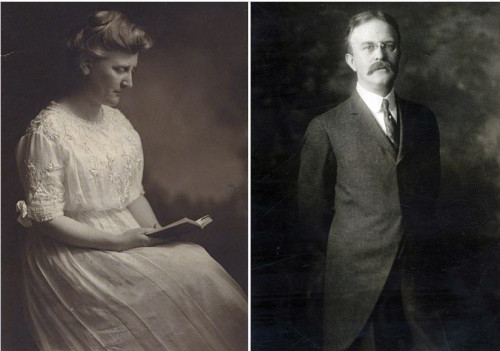
Mary White Ovington and Oswald Garrison Villard, circa 1910-1920 Mary White Ovington and…

View original post 884 more words

Cynthia's avatarWords + Images

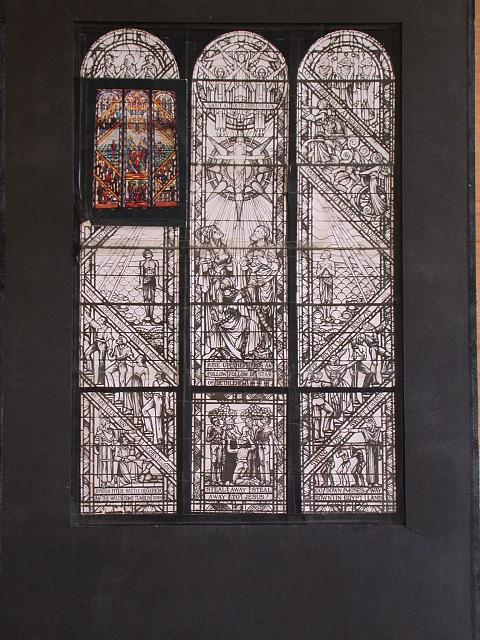
LambTuskegeeConcept

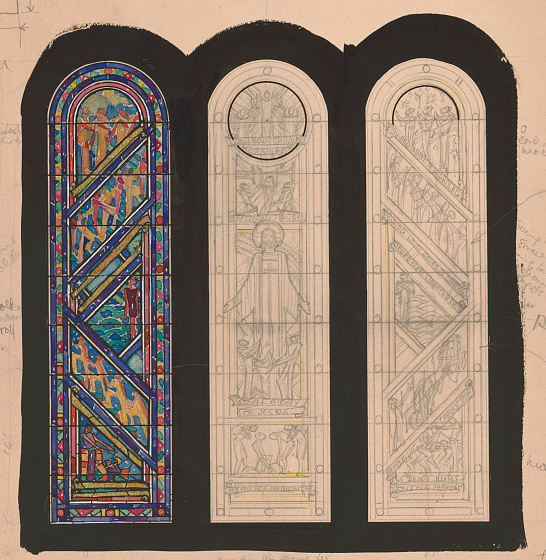
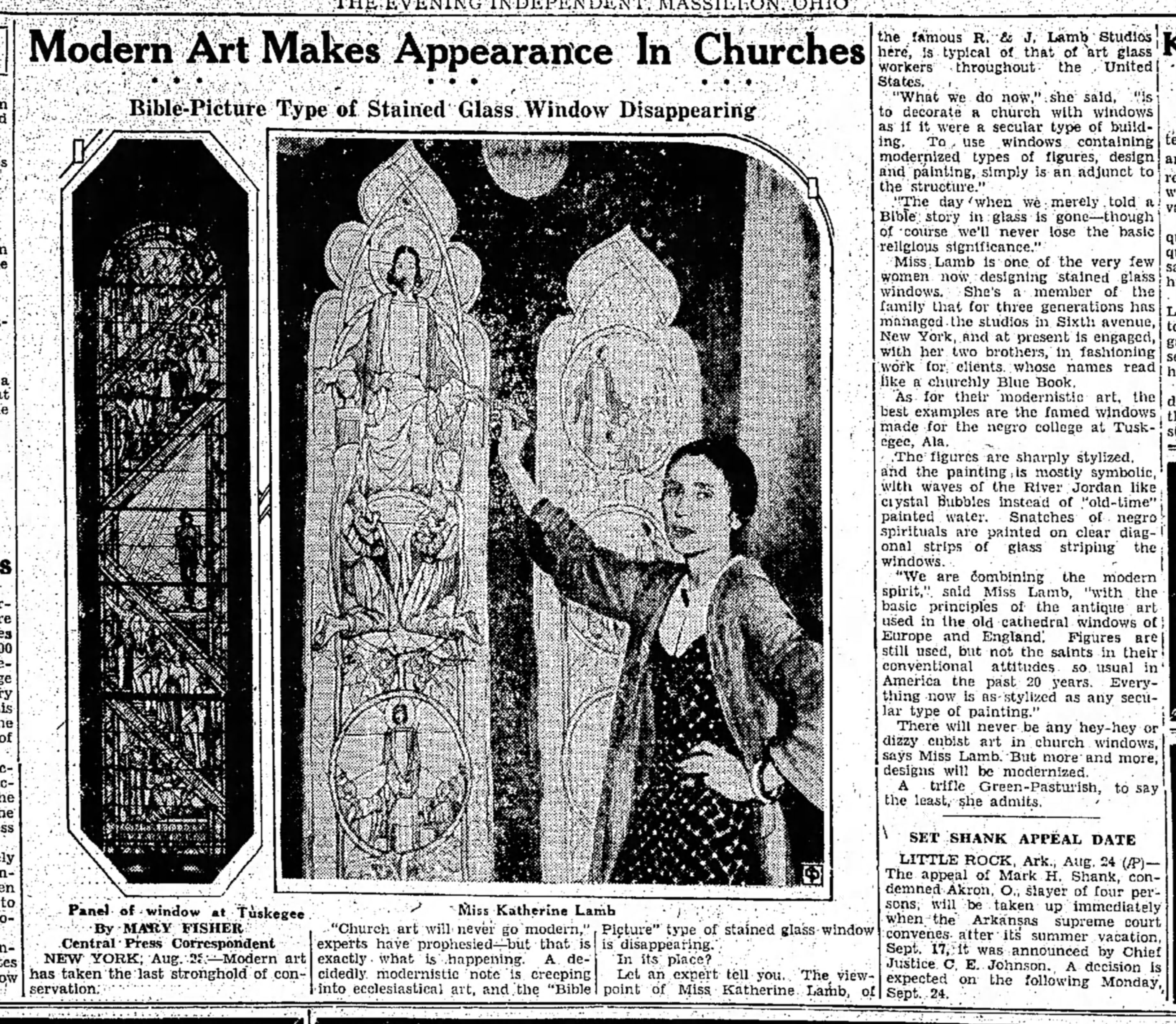
Today I was browsing the online archives of the Library of Congress and chanced upon this 1930s drawing by Katherine Lamb Tait. Though it is not labeled as such, I realized it was an early rendition of her design for the unique stained glass windows at Tuskegee University known as The Singing Window.

The_Evening_Independent_Fri__Aug_24__1934_

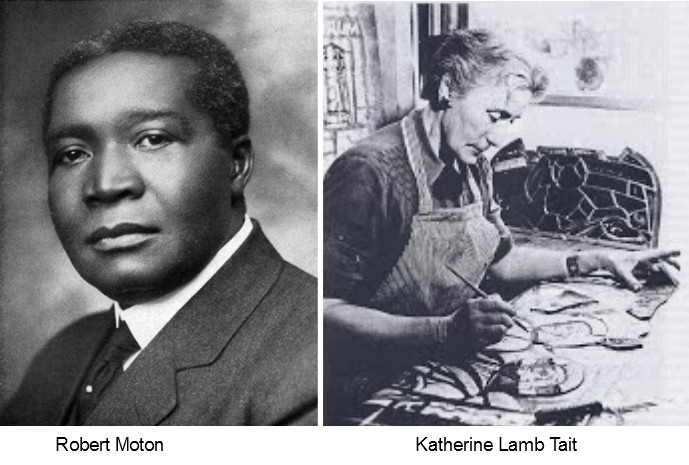
About two years ago, I wrote an article describing the story behind the windows. You can read it online here in Deep South Magazine and learn how Tait collaborated with Robert Moton, President of Tuskegee, to produce what would be a visual expression of eleven spirituals.

MotonTait

Installed in 1933, the original windows would only be in place for about twenty years before a fire destroyed the chapel where they were located. But because Tait’s final design survived …

TaitDesign

… when a new chapel was built in the 1960’s, architects were able to recreate and include the new Singing…

View original post 32 more words

Cynthia's avatarWords + Images

Before I began photographing the stained glass windows of St. Cyprian’s Episcopal Church in Roxbury, MA, the Rector Monrelle Williams invited a longtime parishoner, Ms. Leslie Gore, to share the church history with me. An active member since a child in the 1950s, she described Sunday School classes of 300-500 children, the different guilds, the cotillions that took place, the plays produced in the lower parish hall, and much more. Finally, I asked her, if there was one thing that she wanted people outside of her congregation to know about St. Cyprian’s what would it be. With a beautiful smile, she said, “I’d want them to know that this place is home. A beautiful place to be. A place where people encompass you.” As I photographed the stained glass windows, I thought of the children she described including her own. As they raced about the church, sang in the choir…

View original post 525 more words

in copley square

Artwork in the square. Deceptively simple looking and especially quite elegant when a gentle breeze blows and there’s plenty of breeze in Copley Square.

learning from elders

If you only listen to the first 6 minutes, it’s illuminating. And if you pour yourself some tea and make a plate of snacks, listen to the full hour.

https://www.loc.gov/item/2015669138/

It is the Pete Seeger oral history interview conducted by Joseph Mosnier in Beacon, New York, 2011 July 22. I also highly recommend: https://www.loc.gov/collections/civil-rights-history-project/articles-and-essays/music-in-the-civil-rights-movement/

the end of the beginning

Honestly, I have no words. I think Stephen Colbert captures it best for me. Check out his video in the following New York Times article: https://www.nytimes.com/2021/01/07/arts/television/stephen-colbert-trump-capitol.html

p.s. the subject line … I worry that, as I did after Biden won the election that first night, I worry that, once more, now that the riots are (so far) done, I hear people saying,”well, this is the end.” It is not. During World War II, after many defeats, the British finally obtained a victory. Some may have thought, well, this is the end. The year was 1942. Winston Churchill’s reply? “This is not the end. It is not even the beginning of the end. But it is, perhaps, the end of the beginning.”

Joseph A. Horne, 1943

Joseph Anthony Horne will not be remembered as one of Roy Stryker’s greatest Farm Security Administration – Office of War Information (FSA/OWI) photographers such as Dorethea Lange, Gordon Parks and Walker Evans but there is much to be gleaned from his photographs. With his camera, Horne primarily focused on the Washington, DC area where he lived with his wife and son. My understanding is that Stryker did not give specific direction on what to shoot but, once a region or event was selected, photographers had great leeway to shoot as they pleased and he would sort through the photos later. You can read more about the background and evolution of the photography project here. The photos of these photographers, including Horne, are available at the Library of Congress. What I find increasingly interesting about Horne’s photographs is seeing where his eyes gravitated.

He took these photos in the summer of 1943 in Franklin Park, Washington, DC. It appears to be a circular park with benches around the circle and from Horne’s photos it appears that white people settled on benches on one side of the circle and black people on the other side.

But when it came to listening to the presenters, like the Catholic Evidence Guild, all could stand together. Or at least the children could stand up front.

I’ve learned that Franklin Park, DC’s largest green space, will soon be transformed. It will become a destination point for residents and visitors. Horne’s photos reminds us that the park used to be quite the destination spot for a mix of peoples in the 1940s. Hopefully in 2021 that will be true once more in the park.

Franklin Park

the board is set

I’m always looking for inspiration. So when you’re more or less stuck in the house during a pandemic … and your eyes need a break from the screen … after awhile you start to look in old boxes that are just sitting around and that’s where I discovered Steve’s cache of chess pieces. I vaguely remember playing chess as a little kid but goodness knows I was never meant to be a Beth Harmon. I’m more into the zen of chess, as I am into the zen of fishing. The zen of fishing is tie a string on a stick, slip the string into the water, and then ponder the world about you. I’m not so into actually catching a fish just as I’m not so into demolishing my opponent across the board. But it’s nice to know how to do it. So … I had Steve set up the board. He picked these pieces up in Mexico years ago. I thought he’d simply tell me what I need to do … I know the basic moves. But he handed me a book! Starting Out: the Sicilian. Well, I moved my first pawn. We’ll see how this journey progresses.

I’m all about bringing nature indoors. That’s why its been such fun this winter to sip tea and to work with images in the public domain, as well as my own photography, to update my redbubble shop. I selected several artists whose works moved me personally and sorted through merchandise I would actually use. First up … William Morris.

I’m a fan of Morris’s bright, bold prints but I liked these for their unfinished quality and the softness of the colors. Very soothing to me. See what you think when you visit the shop.

And you can learn more about Morris via this Wikipedia page.

vestige of summer

three tomatoes on a windowsill