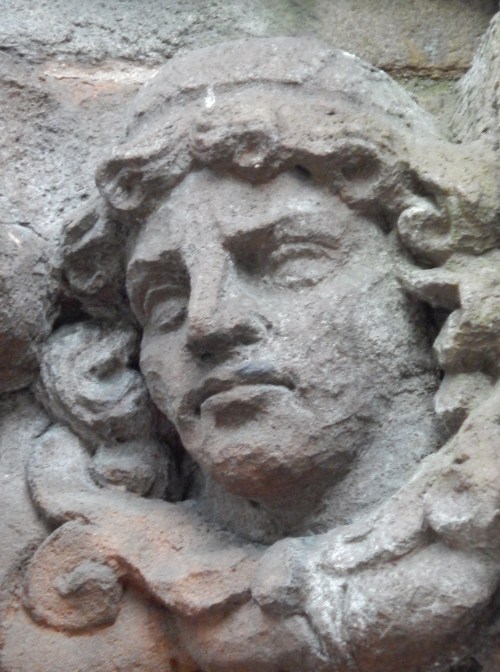
At some point, I’ll set myself up in Copley Square with a tripod, and photograph the church’s whole West Porch. At least I will do my best. Meanwhile, I am having great fun photographing the porch details.


Posted in Inspiration, tagged architecture, art, churches, faith, Inspiration, Photography, religion, sculpture, stonework, Trinity Church in Copley Square on July 16, 2015| 2 Comments »
At some point, I’ll set myself up in Copley Square with a tripod, and photograph the church’s whole West Porch. At least I will do my best. Meanwhile, I am having great fun photographing the porch details.
Posted in Inspiration, tagged architecture, art, Charles R. Lamb, City Beautiful, design, Doris Ulmann, eagles, history, Inspiration, J & R Lamb Studios, Katherine Lamb Tait, lambs, lecterns, Photography, Trinity Church on June 15, 2015| Leave a Comment »

Charles R. Lamb, photo by Doris Ulmann
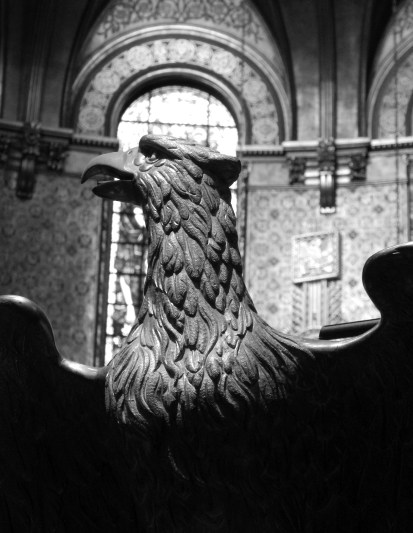
Recently I photographed the eagle lectern at Trinity Church in Copley Square, Boston. That day I had grown impatient with color and switched to black and white. And thankfully so because the play of light and shadows across the bird’s form revealed wonderful details. That lectern, original to the historic landmark (1877), was designed by Charles R. Lamb of J & R Lamb Studios of New York.
J & R Lamb Studios, established by brothers Joseph and Richard Lamb in 1857 and still in operation today, is most well-known for its stained glass creations. In fact, the company’s artists produced designs for a range of furnishings, metalwork and interior architecture as well. Charles Lamb (1860-1942), son of Joseph, left school at 16 to join his father and uncle at the studio. He would eventually take over management of the company.

Design drawing for metalwork: Chiro chalice with grapevines, by Charles R. Lamb
His brother Frederick Stymetz Lamb would become head designer and oversee the studio’s artists who included Charles Lamb’s wife, Ella Condie Lamb. Charles’s daughter Katherine Lamb Tait would become head designer after WWII.

Katherine Lamb Tait
Over the course of his individual career, Charles Lamb would focus on urban planning and help pioneer the concept of City Beautiful. Most of the short biographies I found describe him as an innovator with ideas ahead of their time. Though during his professional life, he enabled the creation of much bright beauty, the latter part of his life may have been a bit dark. On February 22, 1942 he passed away at his home, Lamb’s Lane, in Cresskill, NJ. He was 82.
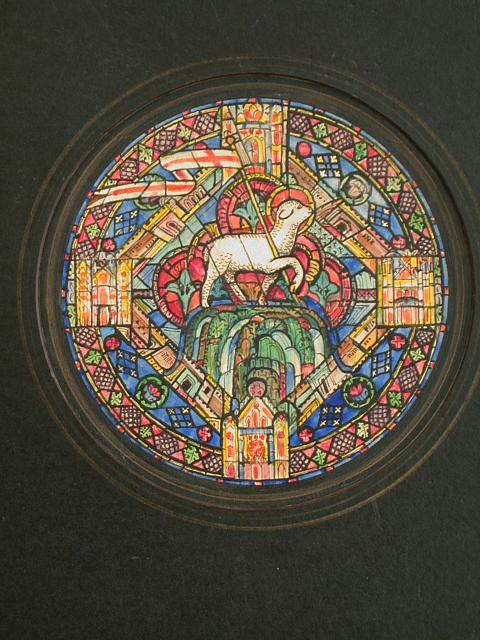
Design drawing for stained glass window “The Lamb on Mount Zion and Four-Square City of New Jerusalem” showing lamb with and elaborate detailing including grape/leaf border and Jerusalem/architectural motif
In 2003 and 2004, the Library of Congress acquired nearly 2500 drawings and sketches as well business records and photographs from the Lamb Studios. They are accessible to the public via this link: http://www.loc.gov/pictures/collection/lamb/. An incredible resource for artists and historians.

Design drawing for two stained glass windows with grapevine vegetal design
Sources & Additional Reading
Lamb Studios Archive at Library of Congress
Lamb Studios History by Barea Lamb Seeley
Corning Museum of Glass – Historical Perspectives: Katherine Lamb Tait
Charles R. Lamb image courtesy of Doris Ulmann Photographic Collection, 1915-1925, University of Kentucky
Posted in Inspiration, tagged architecture, education, emancipation, faith, George Peabody, history, Inspiration, Photography, Robert C. Winthrop, slavery, stained glass windows, Trinity Church in the City of Boston on June 7, 2015| 1 Comment »
“The influence of education, or of the want of education, on the welfare of our land can have no territorial limits or boundary lines. … Colleges in South Carolina or Tennessee or Virginia are United States colleges, and are as important to the welfare of the country as Yale or Harvard or Columbia. Illiteracy and ignorance are no mere local dangers, whether among whites or blacks. They are dangers to law and order and true liberty everywhere; and he that does most to eradicate them anywhere may claim no second place on the role of a comprehensive patriotism.”

Robert C. Winthrop (1809-1894)
In 1892, two years before his death, Hon. Robert C. Winthrop, spoke these rather timeless words at the annual meeting of the Peabody Trustees. For twenty-five years he had been President of the Peabody Education Fund, a philanthropic enterprise established by his friend George Peabody in 1867 to promote education initiatives in the post-Civil War southern states. It was a fund created with the best of intentions that had short and long-term positive impacts as well as controversies. I learned about the fund and Robert C. Winthrop after I photographed details from Hope, a stained glass window in the north transept of Trinity Church.
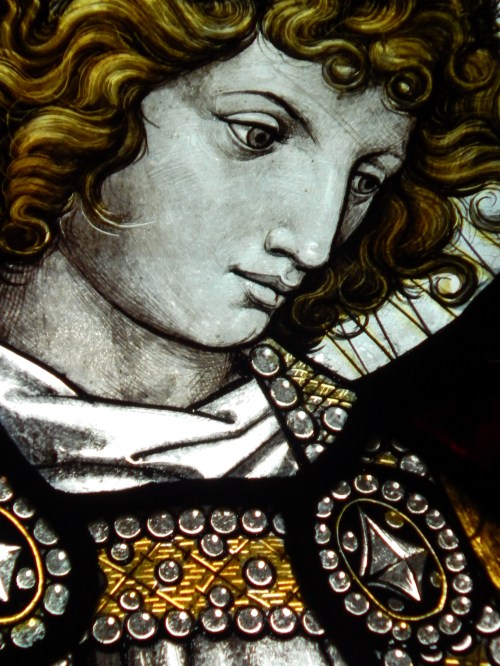
Detail from stained glass window, Hope, by Burlison & Grylls of London, 1877-1878
Most often after I photograph stained glass windows, I research the story depicted in the window or research the designers of the window. But this time I was curious about who had commissioned the artwork. In an 1888 document providing an historical and descriptive account of the parish and the Copley Square building, the author writes, “This window is typical of Hope, the motto of the Winthrop arms. The greater part of the window is occupied by two angels, each of whom is holding a scroll.” And then at the bottom there is a Latin quotation signifying, “A surviving son to the best of parents.”
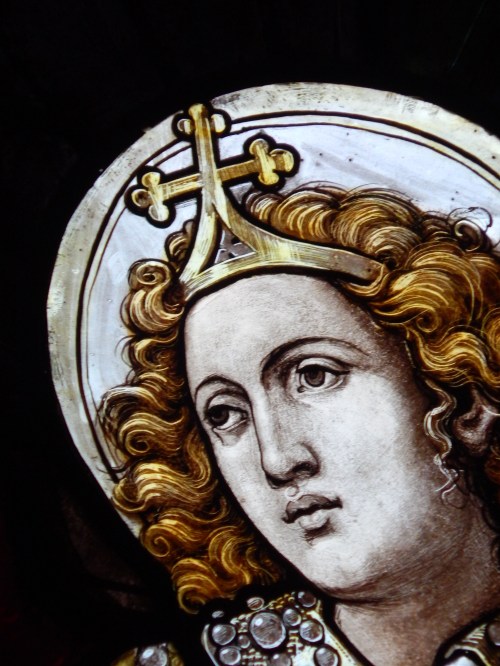
Details from stained glass window, Hope, by Burlison & Grylls of London, 1877-1878
The son was Robert C. Winthrop and you can read more about him via this detailed Wikipedia article, and in this Mass Historical Society article about interactions between Winthrop and Frederick Douglass. As for the window designed by Burlison & Grylls …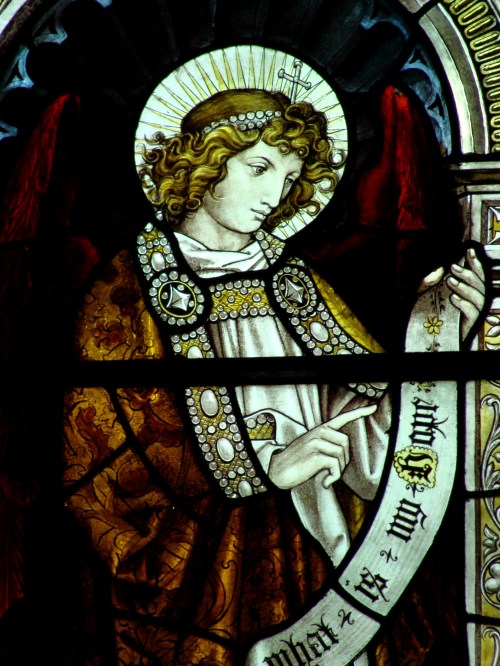
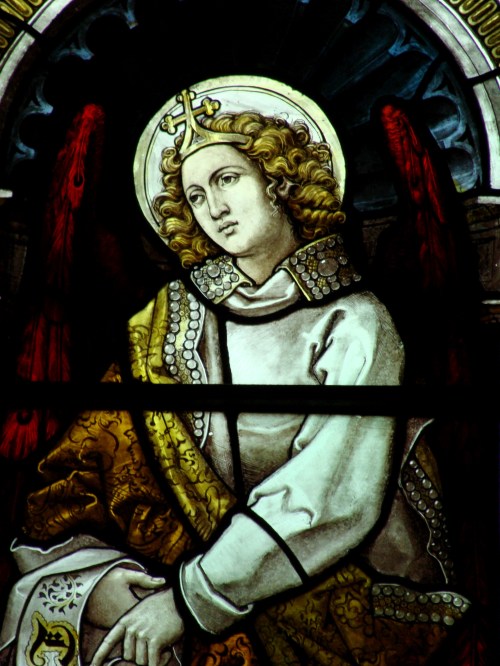
I feel like I have a greater appreciation of its beauty and look forward to continuing to photograph and share its details. Until then, learn more about Trinity Church and its art and architecture at http://trinitychurchboston.org/art-history
Posted in Inspiration, tagged architecture, art, beauty, colors, design, faith, Inspiration, John La Farge, memorial windows, Photography, Resurrection, stained glass, Trinity Church in the City of Boston on May 21, 2015| 2 Comments »
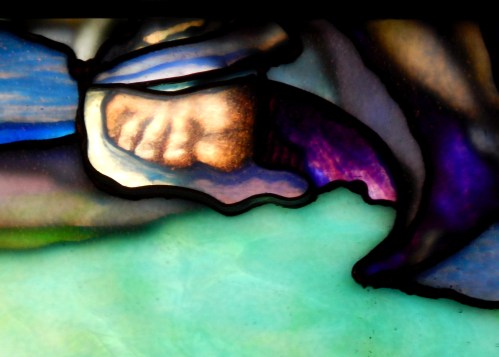
More details from the interior of Trinity Church in the City of Boston. Here we have a close up of the messenger in the stained glass window, The Resurrection, by John LaFarge.

In the March 1902 issue of The Church Standard, the window was described in this way: “A beautiful memorial window has been added to the group in the north transept of Trinity Church. It tells the story of the first easter morning. In the background the purple clouds of morning are hanging, growing lighter as they seem to touch the low lying hills to the rear of the empty sepulchre, and their tints show the approaching dawn. The flowing white garments of the risen Christ reflect the purple tints of the darker clouds … Upon the ground, reclining his head against the tomb, is the sleeping guard whose uniform makes a bright touch of coloring against the sombre hues of the walls. A messenger nearby … [his] graceful garments of crimson and gold stand out in deep and inviting contrast.”
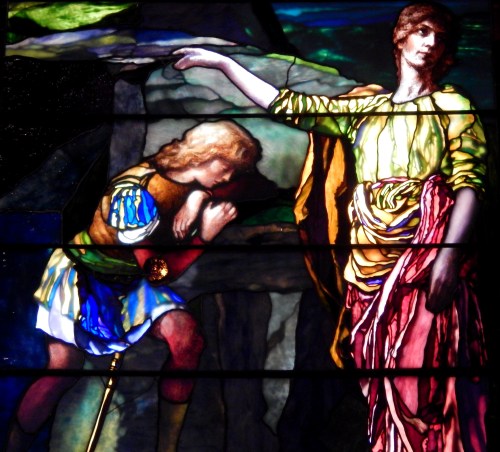
That same month, a reporter for the Boston Evening Transcript newspaper also notes the color: “The color is in the artist’s strongest and most brilliant vein, and is especially remarkable for its aerial tones of graduated blues and greens … In no stained glass work by LaFarge has he carried his extraordinary personal sense of color to a more complete measure of depth and significance. It will, therefore, rank among his most important and characteristic work in this congenial medium.” The window was commissioned by Charles A. Welch in memory of his wife Mary Love Boott Welch who died in 1899.
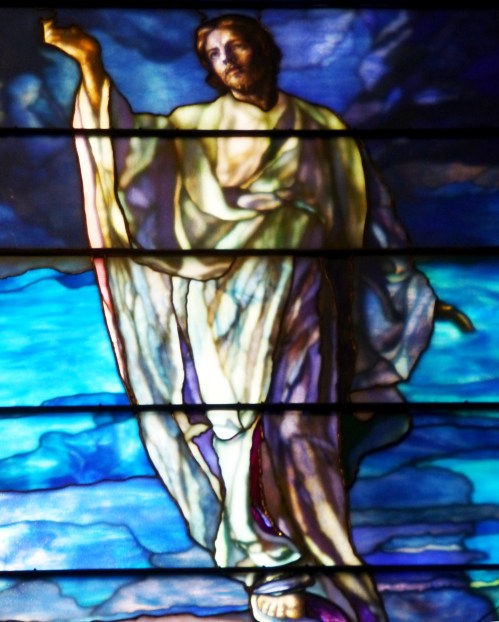
I’ve had the opportunity to photograph this window several times over the years. But this particular day was special. A friend had let me borrow her tripod and another friend had unexpectedly allowed me to access a place not often accessible so I could have new vantage points where I could focus on details I’d never focused on before … like five toes on a foot.
Of course, the whole is magnificent as well.
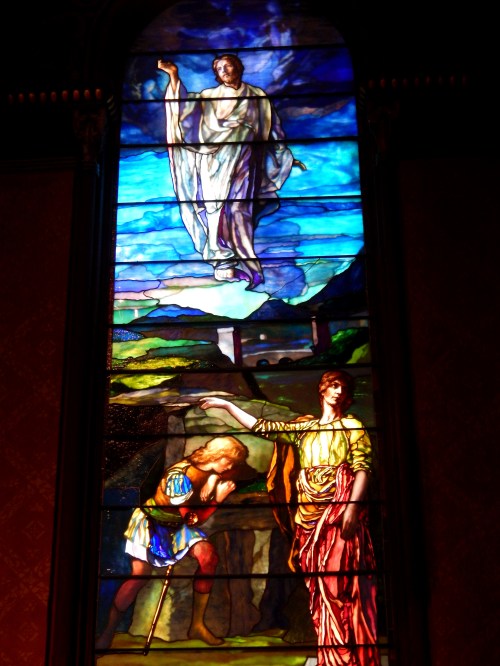
Whatever one’s vantage point, it is a lovely window to behold. Learn more here: Trinity Church Art & History
Posted in Inspiration, tagged architecture, art, beauty, churches, colors, faith, Inspiration, marble, mosaic, Photography, religion, symbolism, Trinity Church in the City of Boston on May 8, 2015| Leave a Comment »
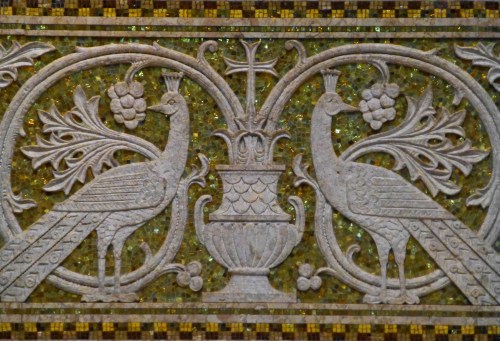
… particularly at certain times of day is the altar inside Trinity Church in Copley Square. This altar is not part of the original construction and furnishings that took place between 1872-1877. As described in a 1952 publication, The Story of Trinity Church in the City of Boston, by Rev. Edward Dutcher Romig, it was designed by Charles D. Maginnis as part of a 20th Century redesign of the chancel. He writes of a giant block of Montenelle marble quarried near Trieste, and covered with carved faces and inserted borders of Venetian gold glass and colored glass mosaics. “The peacocks on the face of the altar symbolize eternal life, and the grapevine represents the wine used at the Communion Service. Thus the whole composition tells us that Christians who devoutly partake of the Lord’s Supper share in Christ’s promise of eternal life.”
You can learn more in a variety ways including Art & Architecture tours. Another excellent resource is the book The Makers of Trinity available at the Trinity Book Shop.
Posted in Inspiration, tagged architecture, art, beauty, churches, colors, curiosity, decoration, Inspiration, John LaFarge, painting, Photography, Trinity Church on May 8, 2015| 2 Comments »
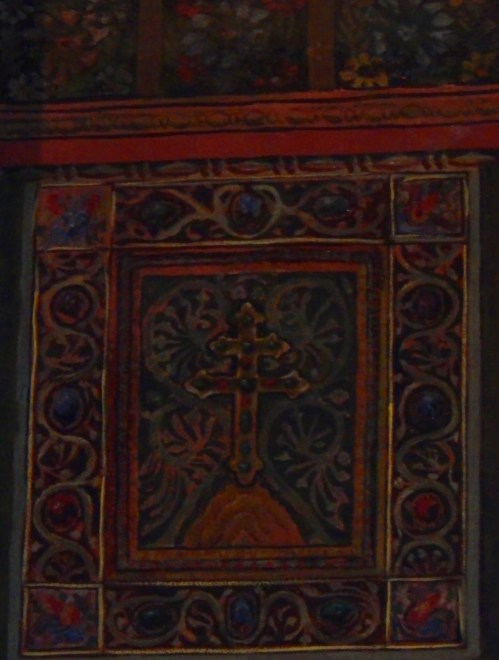
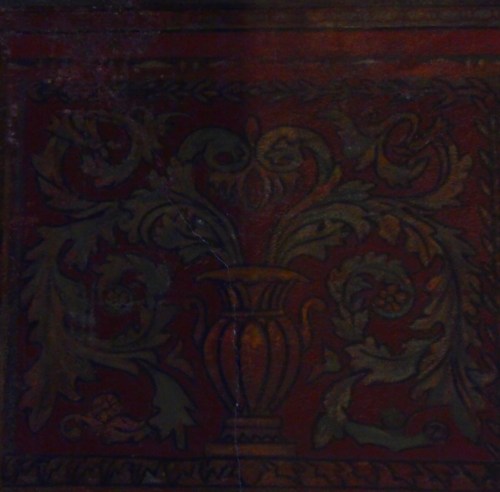
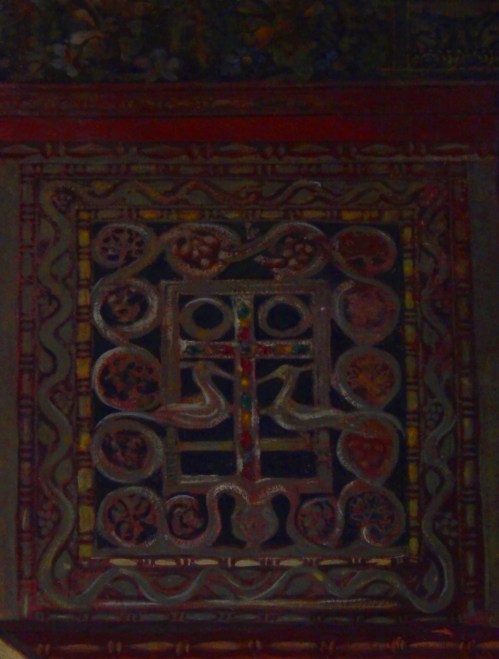
… I just make myself sit in a place, for just a few moments, and watch where the sunlight falls. And sometimes I notice that there are places where I have to shine my own light into a shadowed nook to appease my curiosity. One day recently, while shining such a light, this is what I saw at Trinity Church.
Posted in Inspiration, tagged architecture, art, beauty, churches, colors, faith, history, Inspiration, Orthodox, Photography, religion, stained glass windows, storytelling, Thomas Silloway, Universalist on April 18, 2015| 1 Comment »
Recently (once again), I was walking down the street, this time in Cambridge, lost in thought, and chanced upon a large white wood building that I’d seen many times. A church. Its main doors were usually locked midweek. But this day I decided to do something I’d never done before. I went around a corner and knocked at a different door, and this is what I learned.
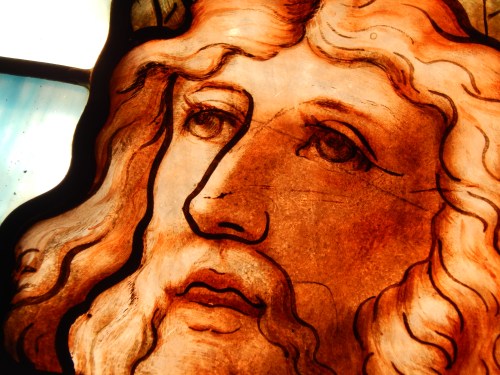
Now located at 8 Inman Street, Cambridge, MA, in the heart of Central Square, this church was once sited in a different part of Cambridge. In 1822, the First Universalist Society built a meeting space in Lafayette Square, Cambridge at the corner of what was then known as Main and Front Streets. In 1858, under the architectural supervision of Thomas Silloway, the Georgian style meeting house was significantly remodeled at a cost of $8,000.

In 1888, part of the church lot was taken by the City of Cambridge for the widening of Front Street (now Massachusetts Avenue). After careful consideration it was decided to move the building to its present location on Inman Street. The building was cut into two parts and, as described in the church brochure, “Over a period of five days, men and horses were used to pull the building through the 40-ft. wide streets of Cambridge. … Telephone and telegraph service were also temporarily interrupted…” When placed in the new location, a middle portion was inserted to increase the length twenty feet. In addition to other major remodeling efforts, over time, there were at least three series of stained glass window installations. Artisans included Redding, Baird and Co., Belcher Glass Co., and an unnamed student of John LaFarge.


By 1954, the Universalist congregation had diminished to a very small number providing the opportunity for the orthodox parish of St. Mary to obtain the structure. Later, assessed as part of the process for listing on the National Historic Register, the building was identified to have some of the rarest stained glass in the Northeast.

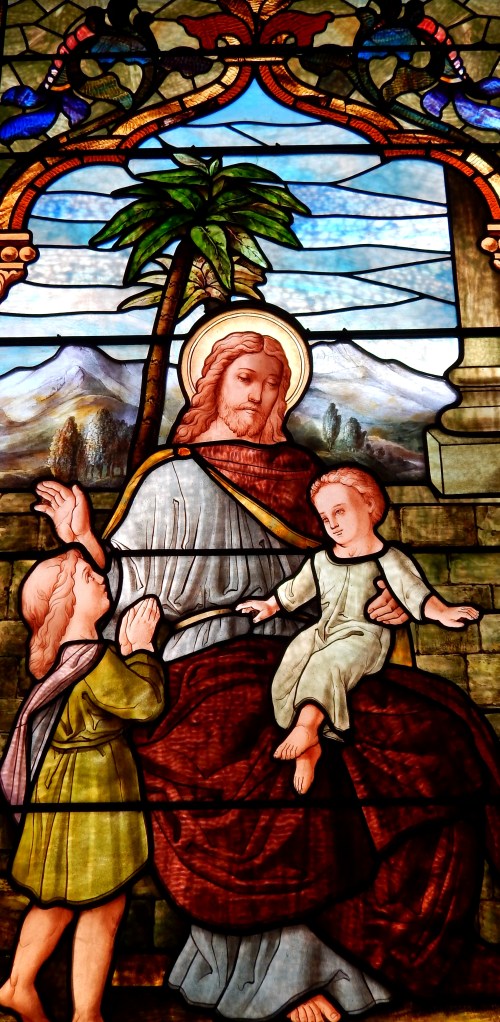
That particular day, I just took a quick peek, and what a delight.

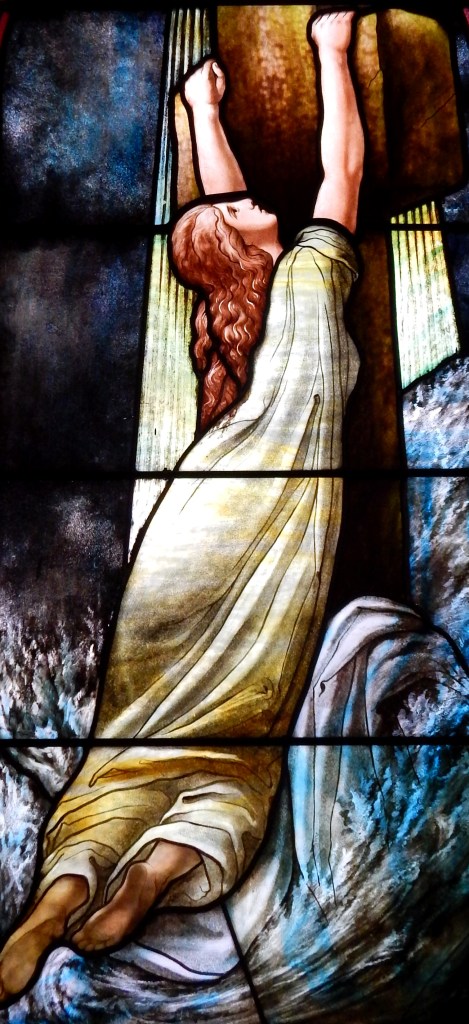
Across time and despite the change in parishes, great effort has been made to protect, preserve and expand upon the stained glass windows and other interior decoration.
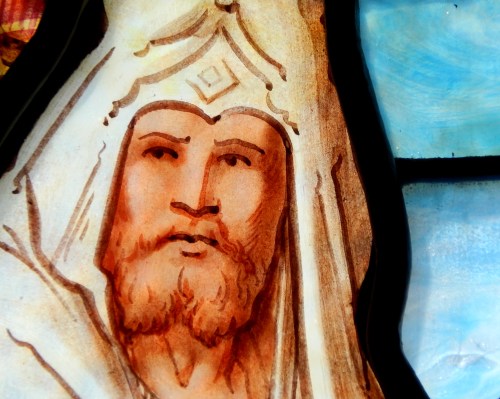


Please note that if you’re in the area, tours may be arranged.
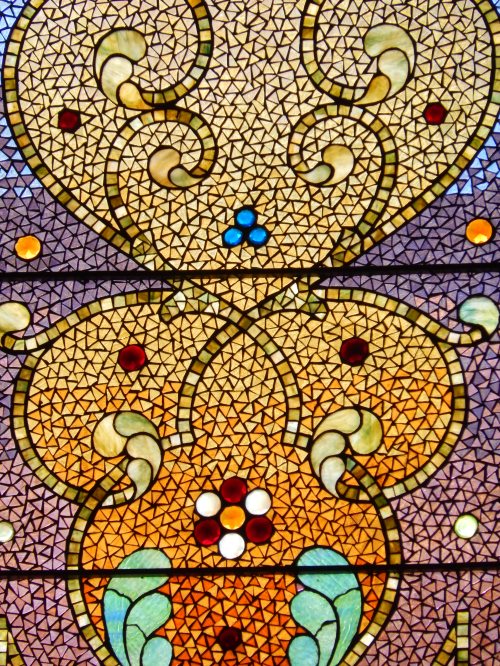


I am thankful for the opportunity to visit so unexpectedly.
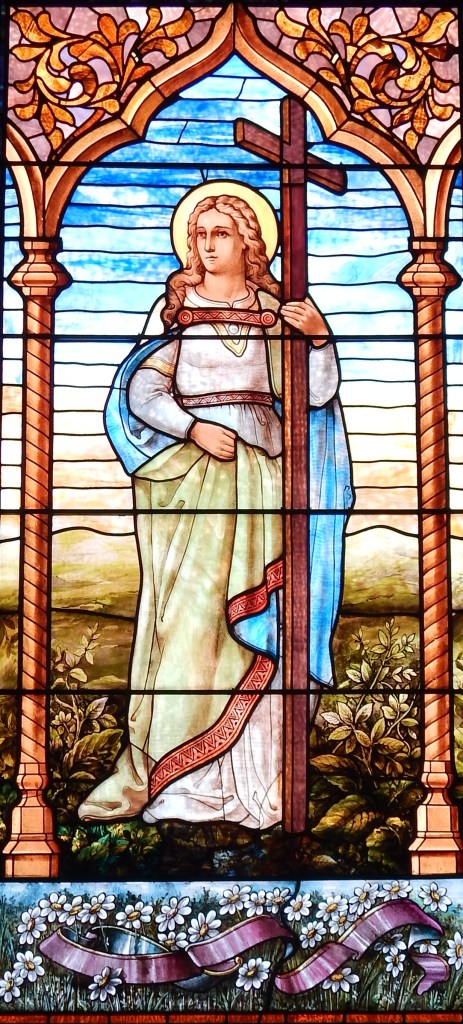


And I was reminded once more …you never know what a day will bring.

Sources/Additional Readings
St. Mary Orthodox Church Website
Posted in Inspiration, tagged architecture, assistive technology, charity, compassion, Cordelia Harmon, design, faith, history, Inspiration, Phillips Brooks, Photography, stained glass, storytelling, Trinity Church on April 13, 2015| 2 Comments »
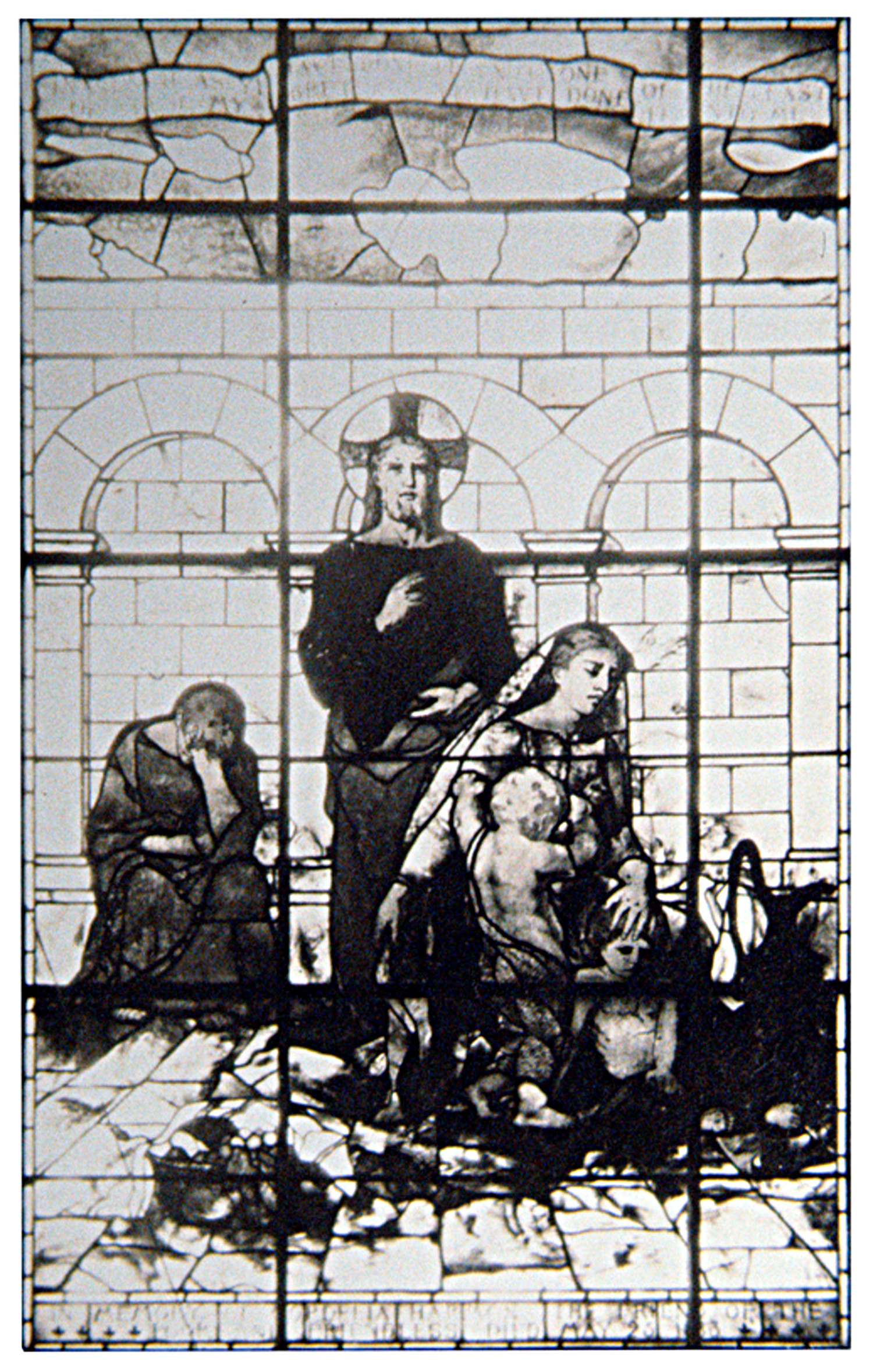
Photo of Charity, Courtesy of Trinity Archives
Charity is a stained glass window once located at Trinity Church in the City of Boston. It was designed by Frederic Crowninshield. The inscription at the bottom of the window, barely legible in the above photo, reads “In memory of Cordelia Harmon, the friend of the poor and friendless. Died May 25, 1883.” In an 1888 publication providing a descriptive account of the church, including of its windows, Harmon was described as “the Almoner of Trinity Church for many years, and through her good deeds was well known by all the poor in any way connected with the Parish. The window was a gift of members of the Parish.”

Born in Maine, Cordelia Harmon (1820-1883) spent her adult life in the Boston area. It is clear from surviving records that she consistently strove to help those who could least help themselves. Regardless of good deeds done as an elementary school teacher, a nurse at Mass General Hospital or serving people through programs offered by her church, Harmon appears to have never turned her eyes away from the wrongs that remained around her.
One of the church-supported programs that she participated on was The Ladies’ Relief Agency. As a part of that charity’s design, every application submitted seeking assistance was investigated, including a home visit. Through such visits, and no doubt her work with other charities, Harmon was able to see firsthand the lack of support for those with chronic diseases, people who were turned away from hospitals, and many of whom had no family to care for them. She would write: “How can a man, breathing fetid air, living in the squalor and debasement that abound, where the poor most do congregate and often of necessity, feel hope or courage to rise above his condition?”

Harmon imagined creating a home for those people where they could live a good life until the end of their days. It was an idea that she would discuss with Phillips Brooks, the rector of Trinity Church. He would help her raise the funds to open The Boston Home for the Incurables in 1881. Harmon would work at this home until she “died at her post” in 1883. Phillips Brooks was traveling abroad when he learned of Harmon’s death. In a letter to his brother he wrote:

Despite his expression of not feeling well-fitted to do the work of Cordelia Harmon, upon his return to Boston, Phillips Brooks did continue her legacy. In 1883, Trinity formed The Committee for the Establishment of The Boston Home for Incurables to raise funds to expand upon Harmon’s idea. Funds raised helped the Home to acquire a larger facility and accommodate more patients. It would continue to expand and refine its services over the next 130 years. Today, the Boston Home is a respected, model institution serving nearly 100 residents.
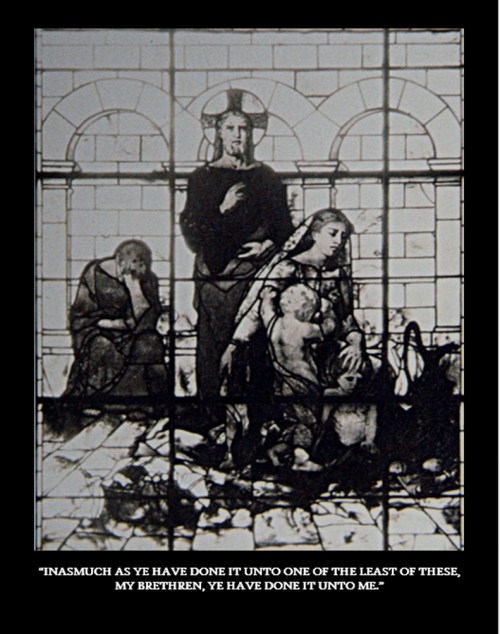
The only known surviving image of the Harmon window is a black and white photo taken in the 1920s. In the center of the image, a woman and two children, destitute. To the left, a figure with head bowed, the weight of the world upon his shoulders. Standing amidst them is Jesus. And above them all, in capital letters, is the text: Inasmuch as ye have done it unto one of the least of these, my brethren, ye have done it unto me. The window did not survive major renovations that took place in the 1950s. The window may be gone but the memory and legacy of Miss Cordelia Harmon lives on and continues to evolve.
Sources, Additional Reading, Etc.
https://www.givingcommon.org/profile/1072657/the-boston-home-inc/
September 19, 2014 article with video: http://assistivetech.scripts.mit.edu/blog/finding-a-home/
Charity postcard with insert about Harmon available at Trinity Church Bookshop
Posted in Inspiration, tagged architecture, art, Back Bay, beauty, colors, design, faith, Franz Xaver Zettler, Inspiration, munich glass, Our Lady of Victories Catholic Shrine, Photography, religion, stained glass, stained glass windows, storytelling on April 7, 2015| 1 Comment »
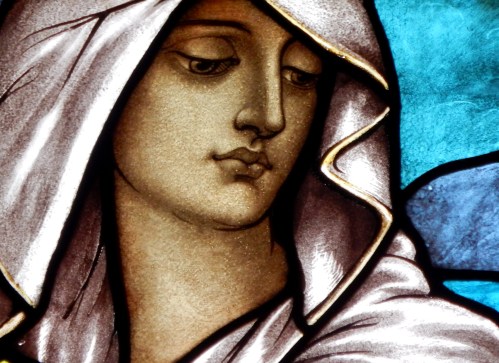
In the shadow of the Back Bay is how the brochure describes the location of Our Lady of Victories Catholic Shrine. I chanced upon the church yesterday after a meeting. Crossing a street, I actually saw the back of the building first, an old brick structure with darkened windows that clearly had to be stained glass. I made my way to the front of the building, studying the exterior and wondering if I might contact someone, some day, to ask if I might photograph the interior.
“Do you want to go inside the church?” A large man stood across the street. He seemed to be in a hurry because he didn’t even wait for my answer before saying, “Just go down those stairs over there.” Then he continued on his way.
I went down the stairs into a little alleyway. There were a couple of older gentlemen there having a smoke. They greeted me kindly, and again without really waiting for me to say I wanted to enter the church, they directed me through a side door.
Inside was dark and warm. People moved about a bit in the shadows and I could hear a few sounds. I could see no stained glass windows though. Then, to my right, a gentleman walked from a side room. He smiled and said, “You can come on in. We’re just watching a movie.”
I thanked him for the offer, and said, “Actually, sir, I was wondering if I could go inside the church upstairs where the windows are.” His grin widened, and he said, “Of course. Just go back outside and up the stairs. The doors are open.”
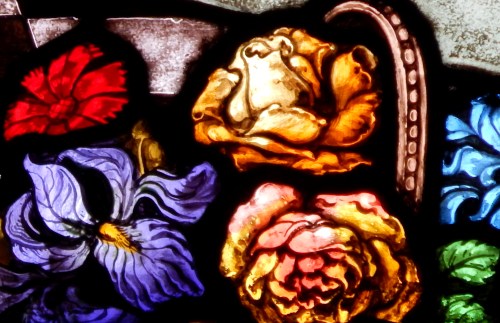
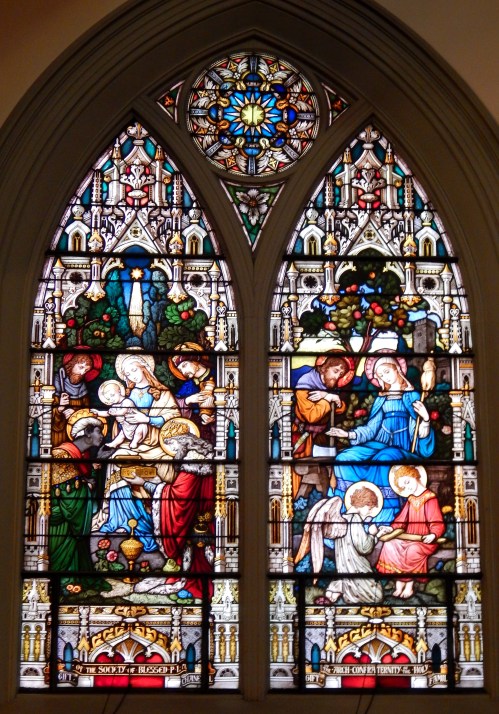
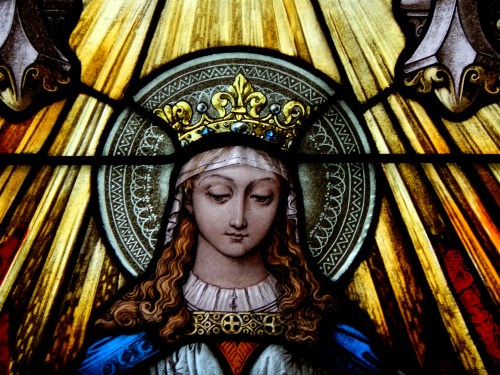
That’s what I did and following is a bit of what I saw. There are quite a few images so please enjoy at your leisure. You can read more about the church’s history via this link. In the future I hope to post more about the architecture and about the primary window designer, Franz Xaver Zettler. And, by the way, I believe that the gentlemen who were so kind to me, were themselves being helped. Located in the basement of the church is the Medeiros Center for Change.







Posted in Inspiration, tagged angels, architecture, art, churches, Clayton & Bell, colors, faith, Inspiration, music, Old South Church, Photography, religion, stained glass windows on April 1, 2015| 4 Comments »

I was racing around the Back Bay of Boston and decided at some point that I needed to rest for a bit and so I stepped inside of the Old South Church at the corner of Boylston and Dartmouth Streets. There were so many people sitting quietly that I decided that perhaps I should too (especially given the weight of my backpack). And so I sat and focused my camera mostly on one window. A large window above the chancel said to illustrate the announcement of the birth of Jesus to the shepherds. Designed and produced by Clayton & Bell of London and installed in 1875.
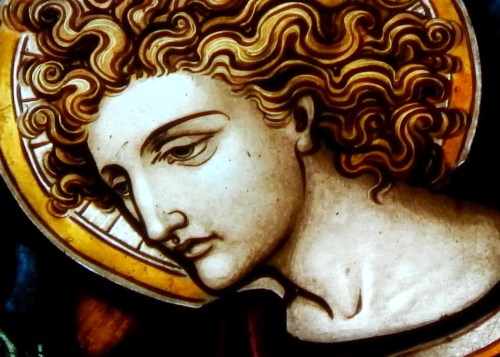
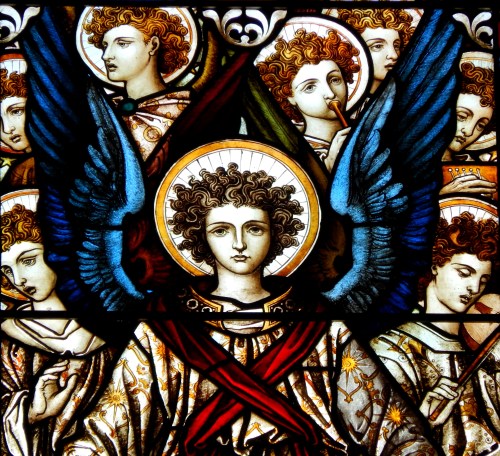
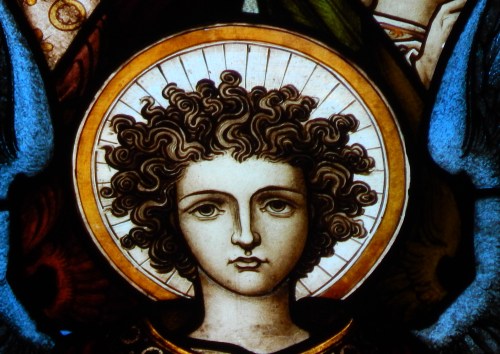

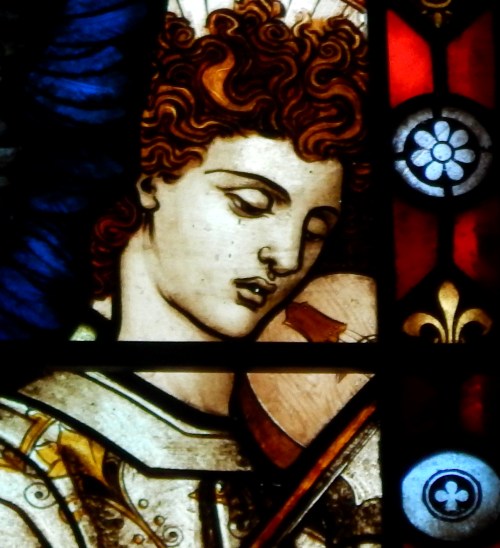


Learn more about Old South Church, its history and current activities, via this link.
 Words + Images