They almost made me cry, these two young men. We were their last stop for the day to pick up junk. I knew from an earlier phone call that they had already had a very full day. But as one of them went through the company schpeil, he added, “And if there’s anything else you need our help with just let us know.”
I looked up at him, “Are you sure?”
“Uhm, yes, that’s why we’re here. To help.”
I nodded. “Okay, next to my husband’s side of the bed, there’s a pole he uses to help with transfers that relies on tension between the floor and ceiling. It became loose and fell. When you’re done can you two put it back up?”
Without skipping a bit, they nodded.
And that’s what they did.
As I led them up the stairs, I said, “You know, the older I get the more I am willing to accept help when the offer is made. And sometimes I don’t even wait for the offer before requesting it.”
They laughed.
After acknowledging their presence, Steve napped in the bed as they worked. One of them nodded sagely. “I used to work in elder care, ” he said. “This is just fine.”
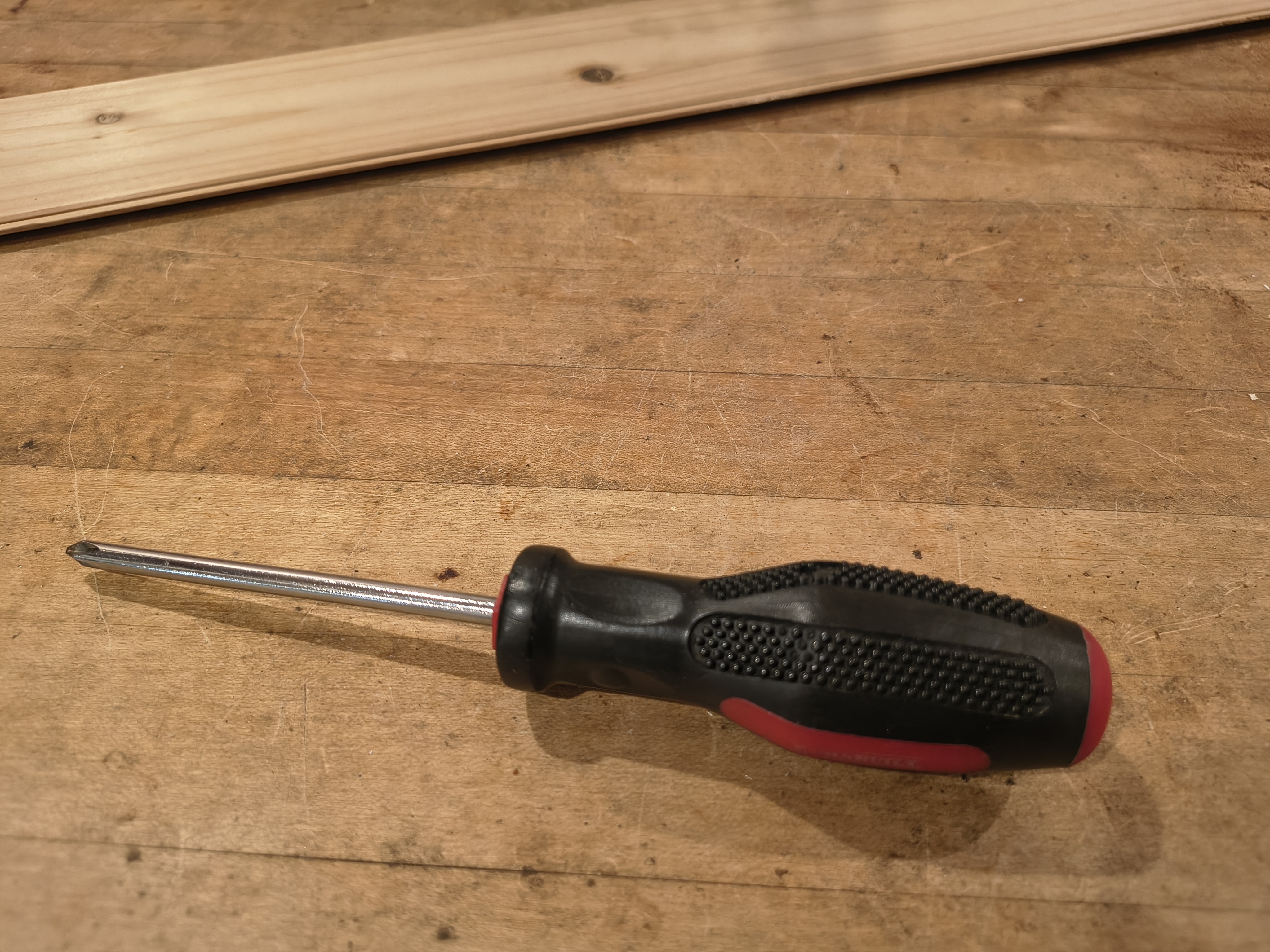
The two of them went to work using language that is not part of my repertoire about tension and how to insert screwdrivers at the base and turn to tighten . . . and after noticing the apparent look on my face one of the fellows looked around and saw Steve’s in-door woodworking area.
He said, “Uhm, if it’s okay for me to go in there and find a screwdriver I can do it for you.” I went in and picked up a screwdriver. “Will this work?”
He nodded.
Yes, I gave them a tip and good review but mostly what they left me with was a lighter spirit. A genuine offer made and genuine follow through.
And as they left, I heard those usual soft words and so I shouted to the men as they made their way down the stairs, “Steve says thank you!”
There is a blue jay that likes to sit upon the porch and pound peanuts into any bare earth it can find in one of my pots, most often the pot of marigolds. A dove will occasionally land and then fly away, a fleeting guest, not like the mating pair that tried to nest on the porch during the pandemic. Now that I’ve added some pots of long willowy grass, lemongrass and zebra, sparrows will do a curiosity flyby but have not yet landed that I’ve seen.
I’m tempted to put out a water feature but that might attract more than birds. I am quite pleased with the porch this year. It was garden therapy i thought for Steve but it has surely been for me as well. I tell people I think I have reached capacity in terms of adding more containers but even as I look out the door now I can imagine one or two more containers just ‘cause. It is primarily a culinary space with many pots of basil, mint, lavender, thyme, rosemary and oregano. I added the lemongrass for height and texture though I know it is used in cooking as well.
I keep telling Steve the violas are edible but that’s a lost argument. Most attractive to me at the moment is the lavender. I’m sure for Steve it is the basil which he just pinched yesterday and we made a small batch of pesto for dinner.
I think of it as a mini-healing garden. I learned of the concept on my journey with Steve these past few years, sitting with him or by myself, in the rooftop gardens of different hospitals. Due to recent mobility challenges Steve had not been able to sit out there though he helped plant many of the containers. I call those Saturday mornings at the kitchen table surrounded by dirt our indoor gardening time. He pots the plants and I position them on the porch. He could only look out but of late we’ve learned of these things called suitcase ramps and voila he is able to sit in our little garden.
He doesn’t crave it the way that I do. We’ve discussed the fact that, in Virginia, I grew up in a porch culture and he most certainly did not. When he does sit out there I hope there is some benefit to mind and body. It is mid-July and the violas are fading. New opportunities await for filling some containers.
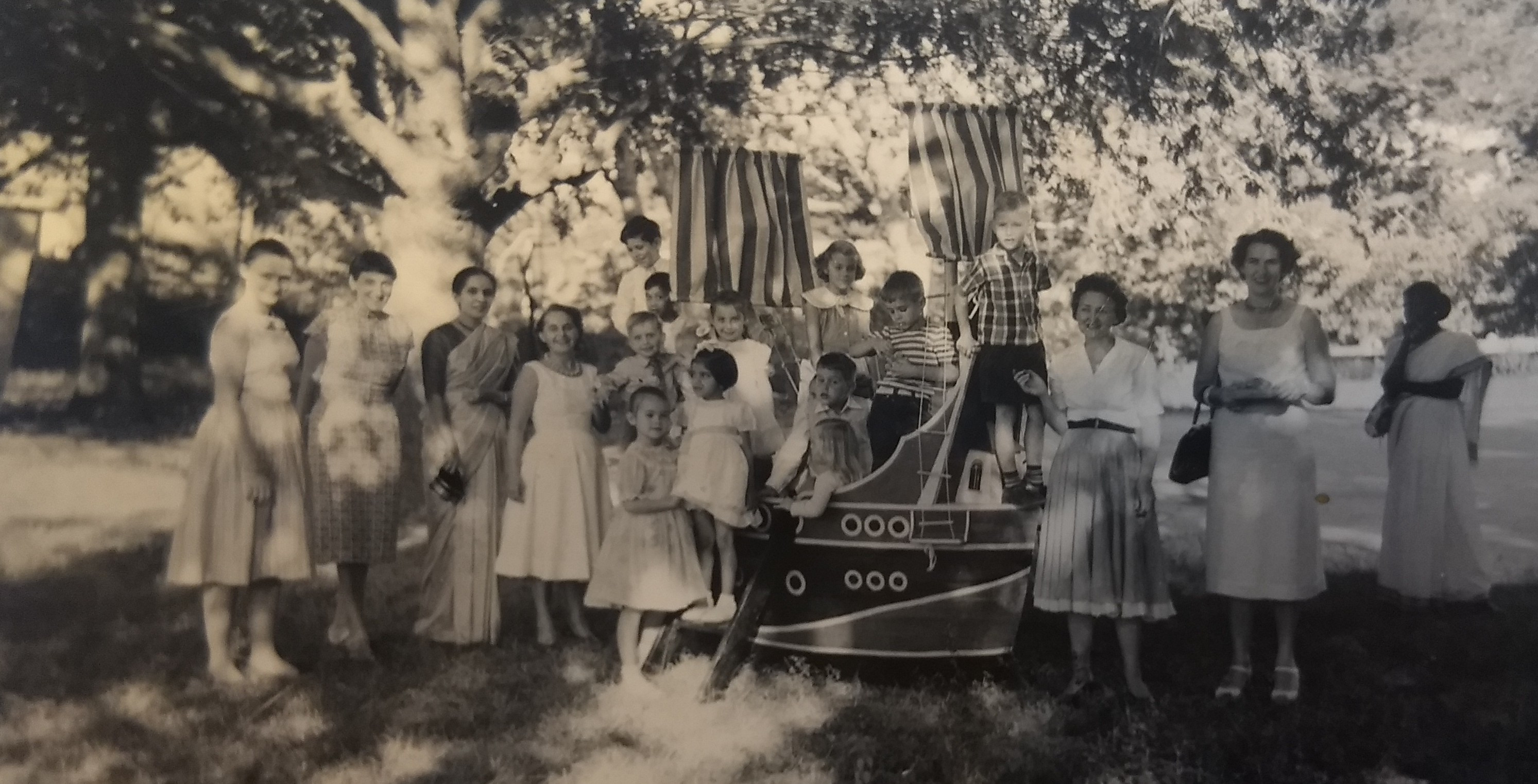
When my father was reassigned to Vienna we had to say good-bye to all of our friends. We had a party with my school friends. I “planned” it but my Ayah did all the work. The Ayah took care of me and my sister and made sure we weren’t stolen. She tucked me in bed at night, and chased the animals out. She got me up each morning. She was dark of skin with long dark hair. She would get me out of trouble and keep me safe. If I broke something, like a nice glass or cup, she often took the blame for me.
Hadi was the butler and oversaw the house and whole compound. He reported to my father. He was kind and gentle. One day I decided to cook a steak. I had to cook something. I was in the kitchen. I don’t remember why. He watched as I cooked the steak guiding me. When I thought it was done he said no but I didn’t listen. I insisted on eating it and it made me sick.
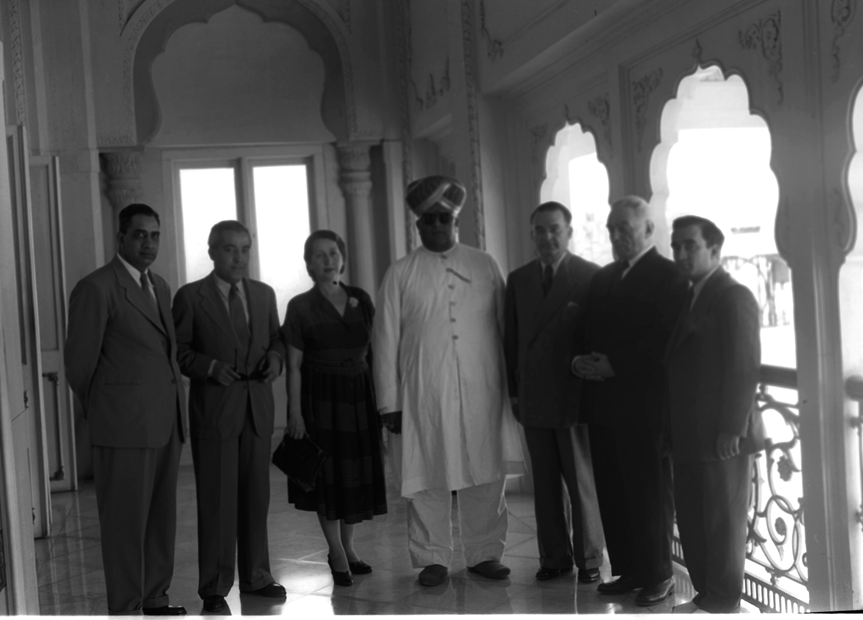
Let’s end with the Maharajah. My first impression of him was that he was fat. I mean he was a very big man to a small boy. My dad took me to work at the library that was located in Coorg. And that’s where I think I first saw him. He and my dad and I took a walk around his place. I wouldn’t call it a palace. Big compound is closer. The animals were loose in the compound. There was an elephant, gray, probably a male but I don’t know for sure. Probably a giraffe. He hunted. He shot a mother tiger and captured the cubs. There was a batch of those that I saw and played with. Four of them. They were very small. They would fit in my hands if I held them now. I think I told you they were white but they weren’t white solidly through. I don’t remember what year that was but I saw him more than once. I know he met with Queen Elizabeth in 1961 as she toured India. I remember seeing her driving in a convertible. I was looking down from the roof of the library.
I can’t think of these times as unusual. It was simply my childhood. We moved on to Vienna for a few years. I joined the Boy Scouts, an international troop, and received an award for knot tying. I had weak ankles and a doctor their prescribed ice skating. My mother taught me some fancy ballroom dances and my father tried to teach me guitar. There I was introduced to sachertorte. It is still one of my favorite desserts. Like I said, simply my childhood.
In Bangalore, I used to walk to the local Indian school, St. Anthony’s Boy’s School. Sometimes I took a rickshaw. The driver would be peddling on the street and I would wave him down. It was cheap and I had enough pocket money. I thought school was thorough and complete meaning subjects were covered thoroughly and completely without any gaps or holes. But when I went on to a British school in Bangalore I discovered there were holes in what I had been taught. It didn’t matter. I just loved learning and reading. Given that my father ran a library there were plenty of books at my disposal. My parents were open to me reading anything. There were no PTA (parent teacher association) meetings. No judgements. My father probably gave me the most books on all sorts of subjects.
The dachshund would meet me when I walked home from school. My general routine after returning home was to put on outdoor clothes and go climb a tree. There were not so many other kids around. Sometimes a few. We lived on Richmond Road, a street with lots of bungalows. White people generally lived in these bungalows, mostly Brits. They worked for the state I guess maybe civil servants.
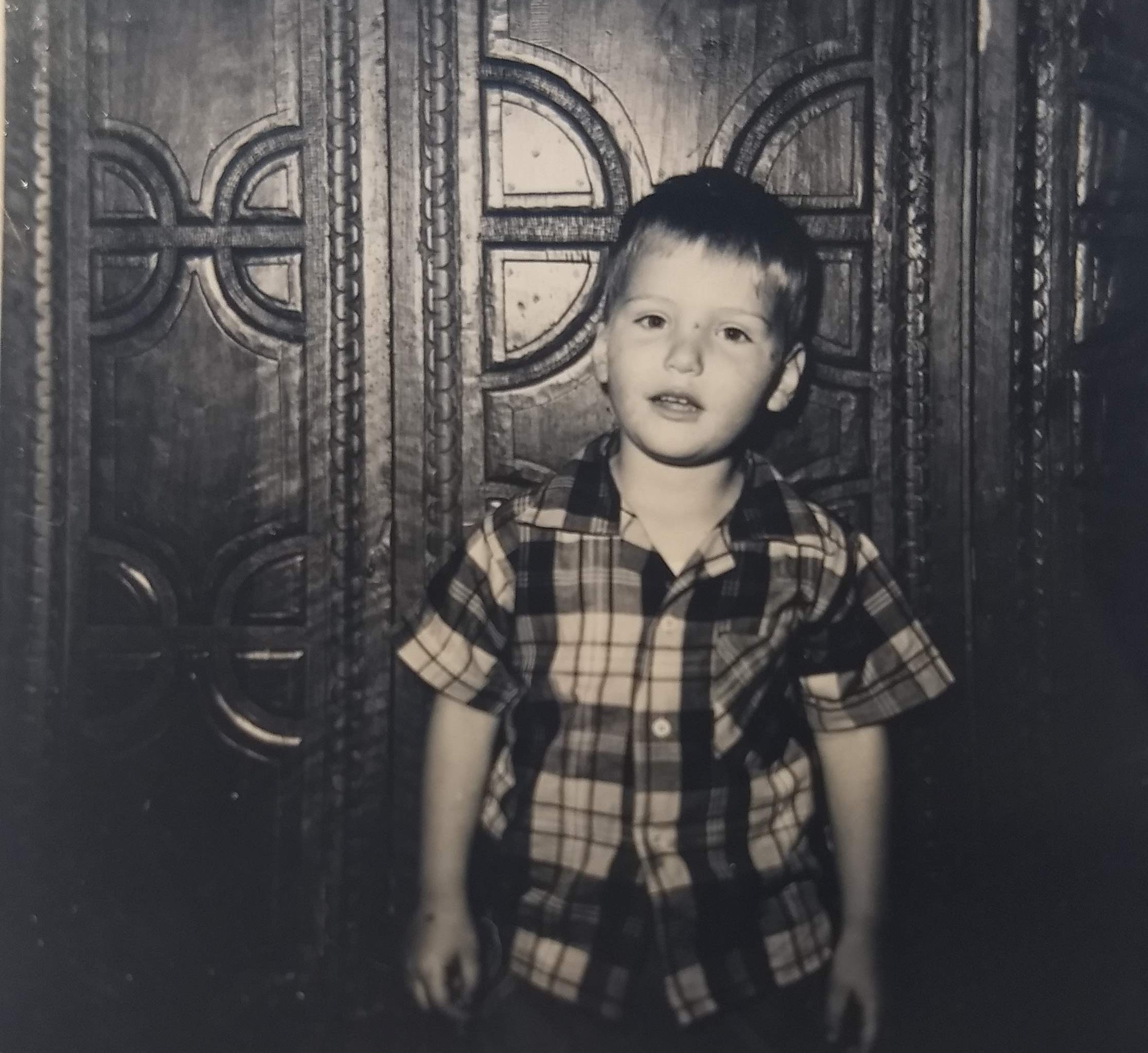
after first communion
My dad had a jeep as part of his job. On Sundays we would drive to mass at the Catholic church. I remember the building as spacious. Sometimes he would drive me to the library where he worked. That seemed spacious to me too. Everything seemed spacious to me back then. Even our bungalow.
I remember the bungalow had a veranda. I remember lots of plants on ours planted by the gardener and by my dad as well. My father liked to garden growing all kinds of plants edible and not. I remember everything from African violets to basil.
In addition to the dachshund and siamese cat, he owned parakeets. About four or five blue parakeets in a green cage. He also kept fish in a standard fish bowl. They were just plain old fish not very interesting to me. He also kept two horses. He loved animals. He’d grown up on a farm in Nebraska.
I fell from a mango tree and my dad looked at my arm and decided it was broken and took me to the doctor. I also fell while climbing a wall. A piece of the wall broke off in my hand and that’s how I fell. A stranger, an Indian man, picked me up and took me up to the house. Broke my arm that time too catching myself with my hand and elbow beneath me. But aside from events like this I felt safe and happy in Bangalore.
I enjoyed the food. My first glass of water there I drank not realizing there were peppercorns in the glass. Overall the food was not spicy. We had a cook. He would make me fried chicken. When my father was entertaining he would take over the kitchen. He greatly enjoyed cooking. From him I learned how to make pesto. He was a good cook.
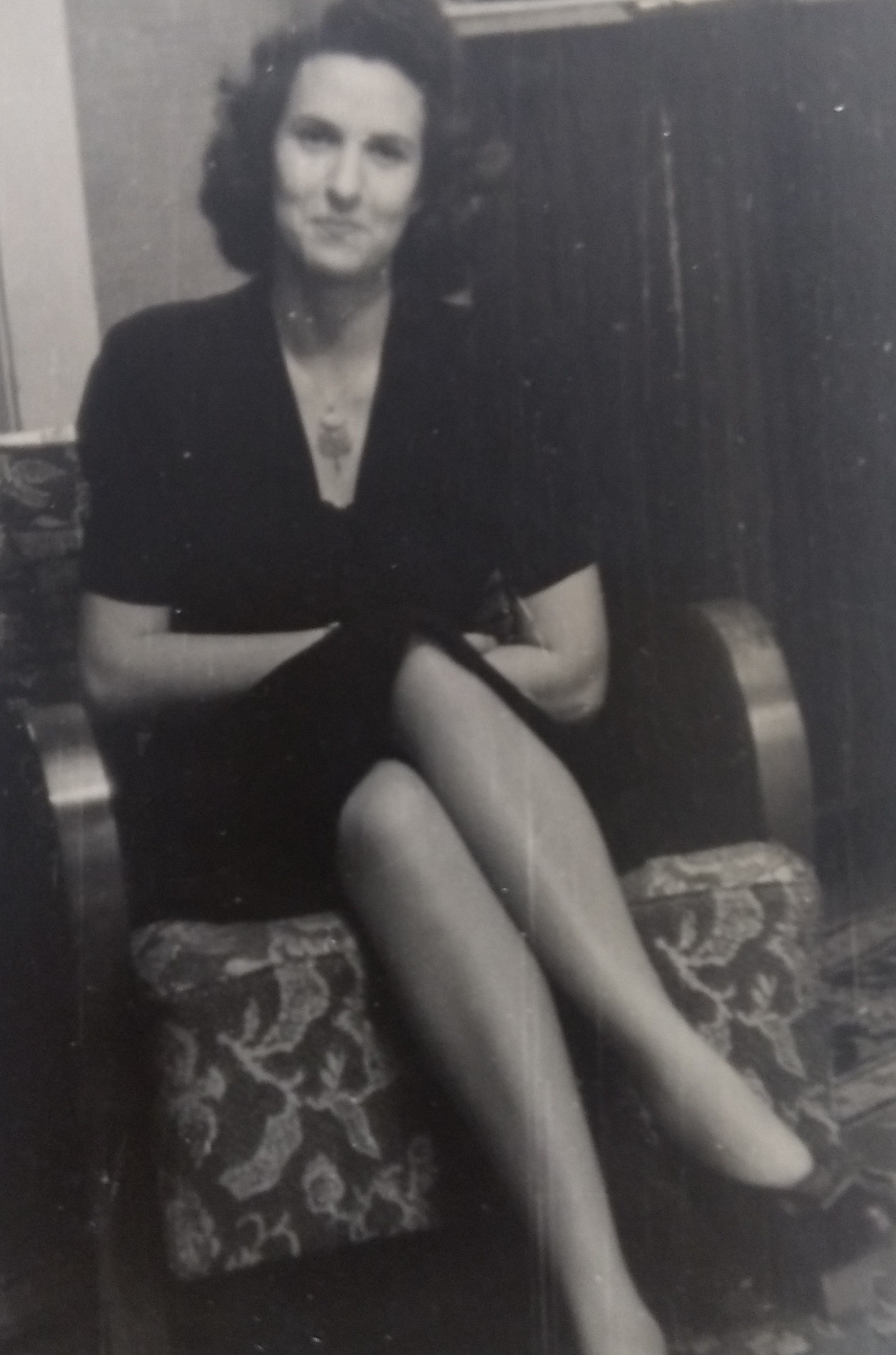
My younger sister had been born in Italy. My mother had her hands full with me, a baby and my father and all our animals. She was very beautiful and always smelled nice. Like flowers.
The first set of hand-sawn and sanded cedar hooks ready for giving.
“It’s not my best work, ” he said with a dispirited note.
“Hmm,” I replied. “And what have you said to me over the years when I stress about writing the best?”
After a long pause he said, “The best is the enemy of the good.”
“Well, my dear, what you have produced is good. AND I can’t wait to see the next set.”
His brow furrowed. “The next set?”
Today we worked on the next set. He directed me.
“Pull the saw toward you.” “Please move your fingers out of the way.” “Hmm. Let’s try the straight saw not the fret saw.”
And so on and so forth.
He worked with his pocket knife to clean up an edge on a piece. And as he worked he said, “For the next project we’ll need a chisel. Between 3/4″ and 1″ and …”
I took notes.
The chisel and other instruments are in the basement. He can’t navigate down those stairs yet so I continue to learn as I apprentice as a woodworker.
“And we’ll need to make a leg vise,” he added.
“But of course,” I said. Then I took a deep breath and asked, “Okay, what does a leg vise do?”
And as he explained all I could think was what an unexpected and unexpectedly lovely journey!
Outside this window, down below, there is a yard chaotically divided into lots of pocket gardens. There is a trio of pots that still have remnants of basil though I think they will fade to black when the night time temps drop into the 30s this week. There are raised beds bright green with red clover growing and the bright gold flowers of tall stalks of mexican tarragon. I specifically placed pots of orange and burgundy mums in the furthest bed right next to a forest of rosemary. I wanted that burnt beauty to be part of his line of sight once he returned home. And now that Steve is home, practicing his steps deliberately, he can walk from the living room to the distant kitchen window and see the wider world, the gardens that he helped plant and dream of what we will plant in the spring.
Adriana is one of the most inspiring artists I know whose passion around the climate crisis really does invite one to stop and think creatively about how to make a difference individually as well as collectively. Learn more and be inspired through her own words and images shared in this guest post.
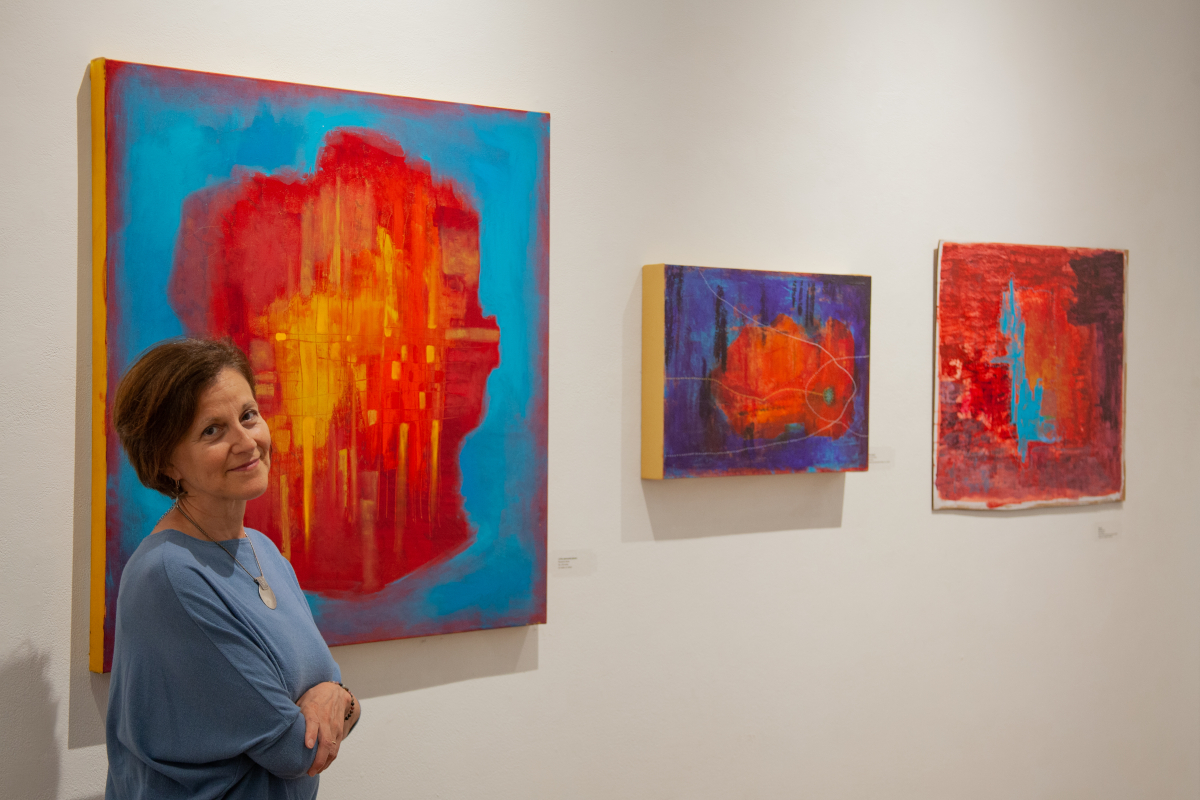
Adriana Prat stands next to her work, Breaking Free.
I am so thrilled and honored to write in Cynthia’s blog! I first met Cynthia years ago at the Riverside Gallery during one of our group exhibitions and since then I have always admired the poetry and poignancy of her blog posts, her empathy and humbleness, and the beauty and sensitivity of her photographs. I am delighted to have more opportunities to interact with Cynthia and her beautiful art lately through the i3C Artists Group we both belong to, and that I will talk about further here.
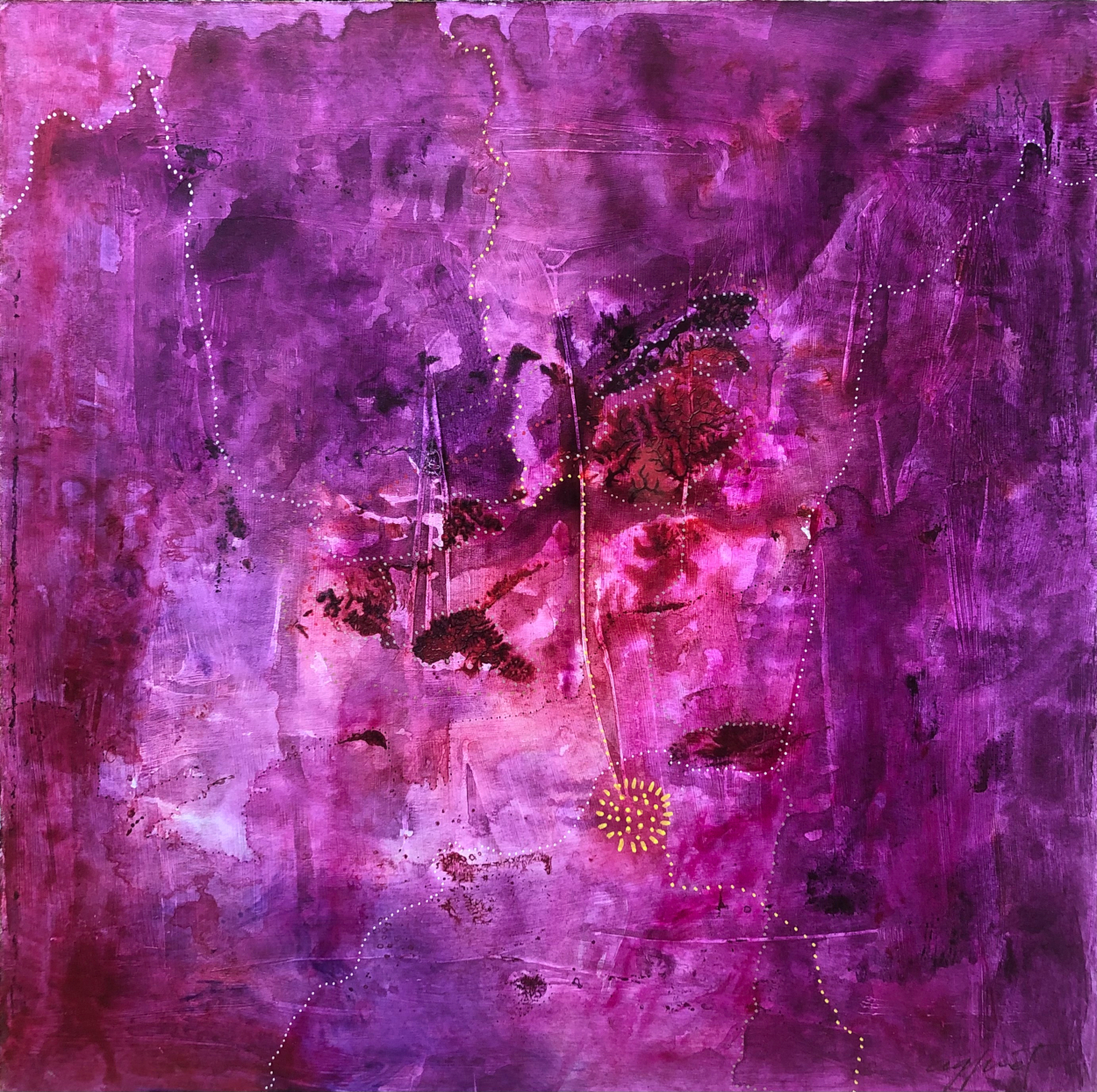
Pollution and the Gold
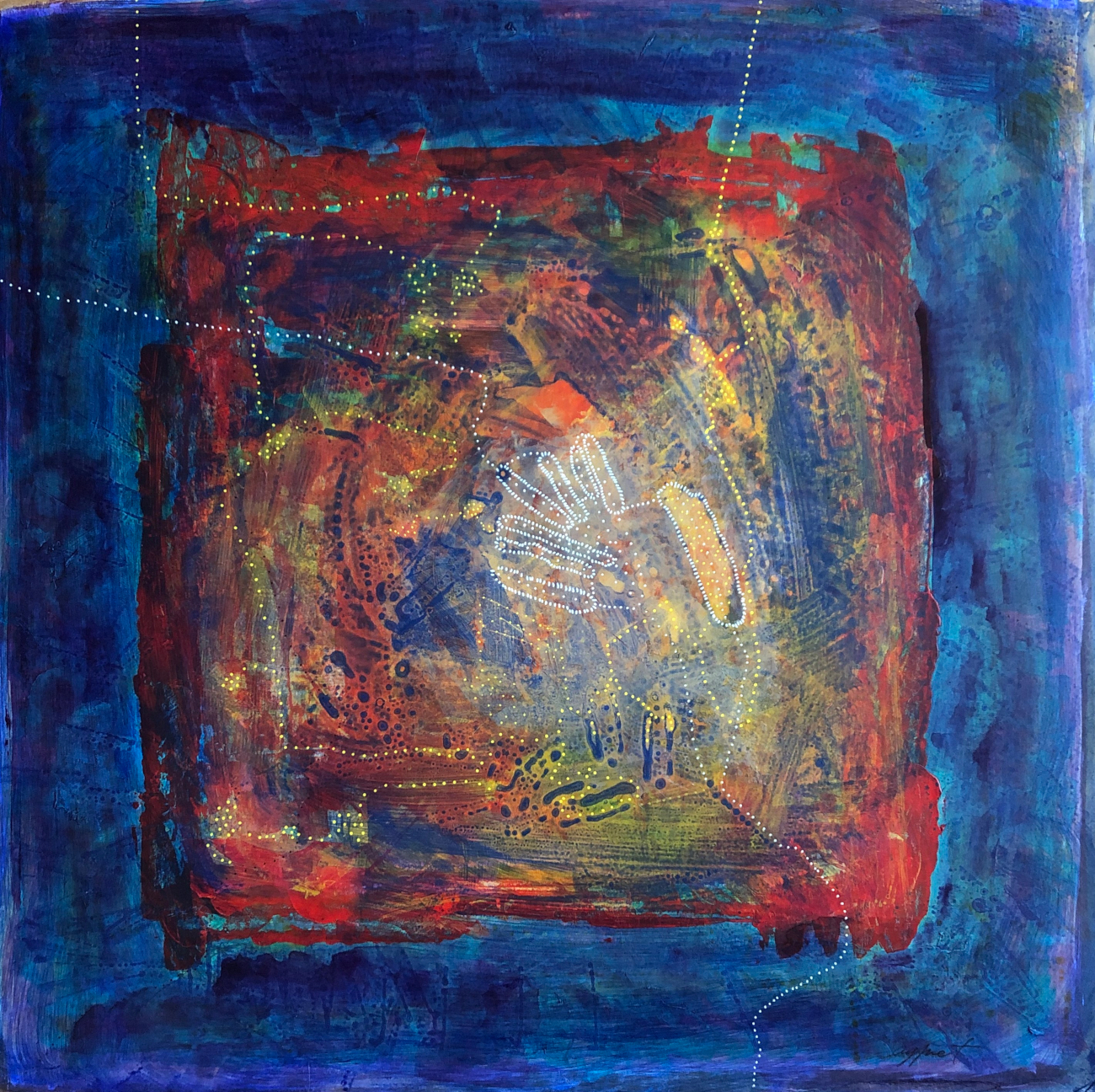
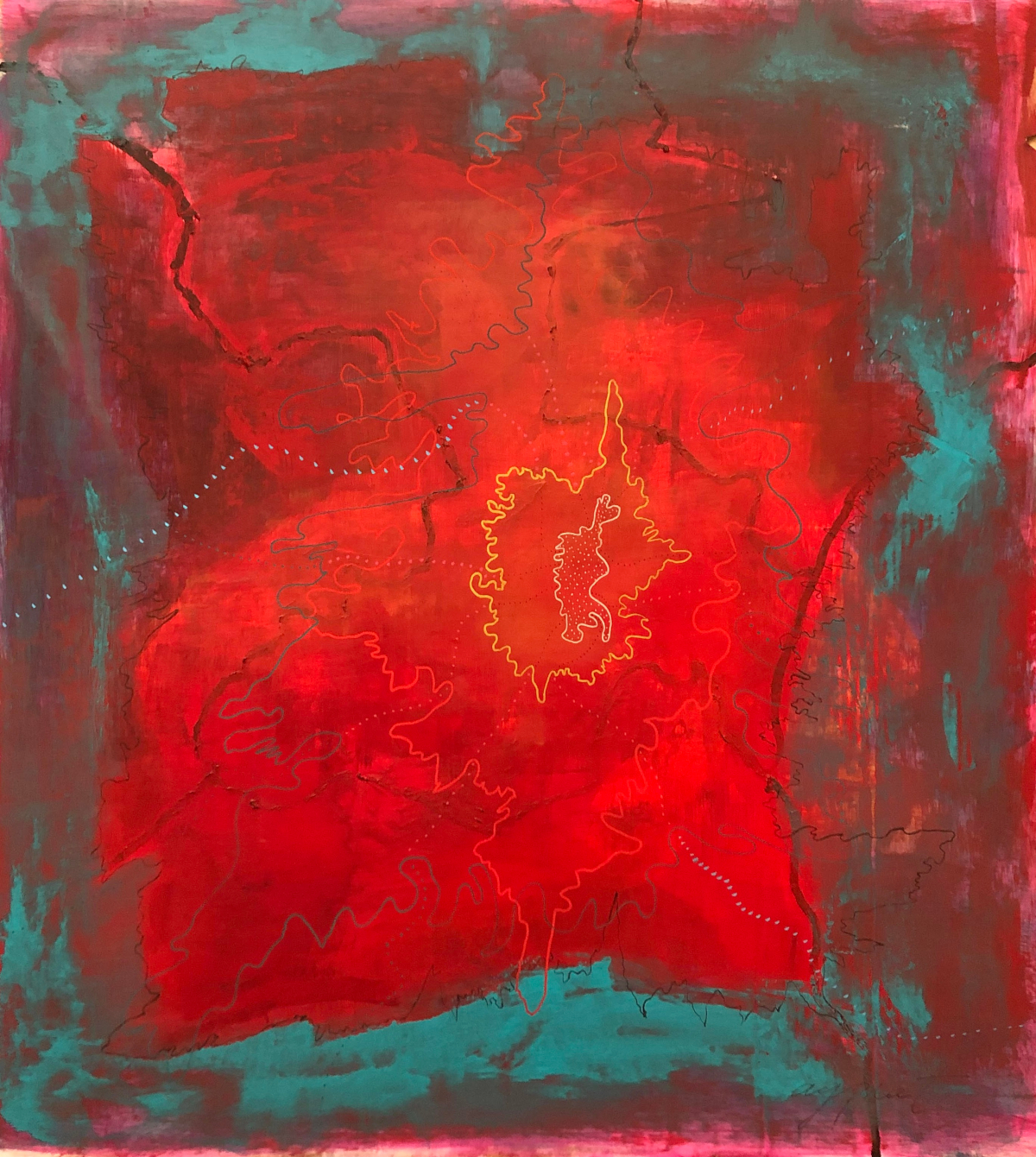
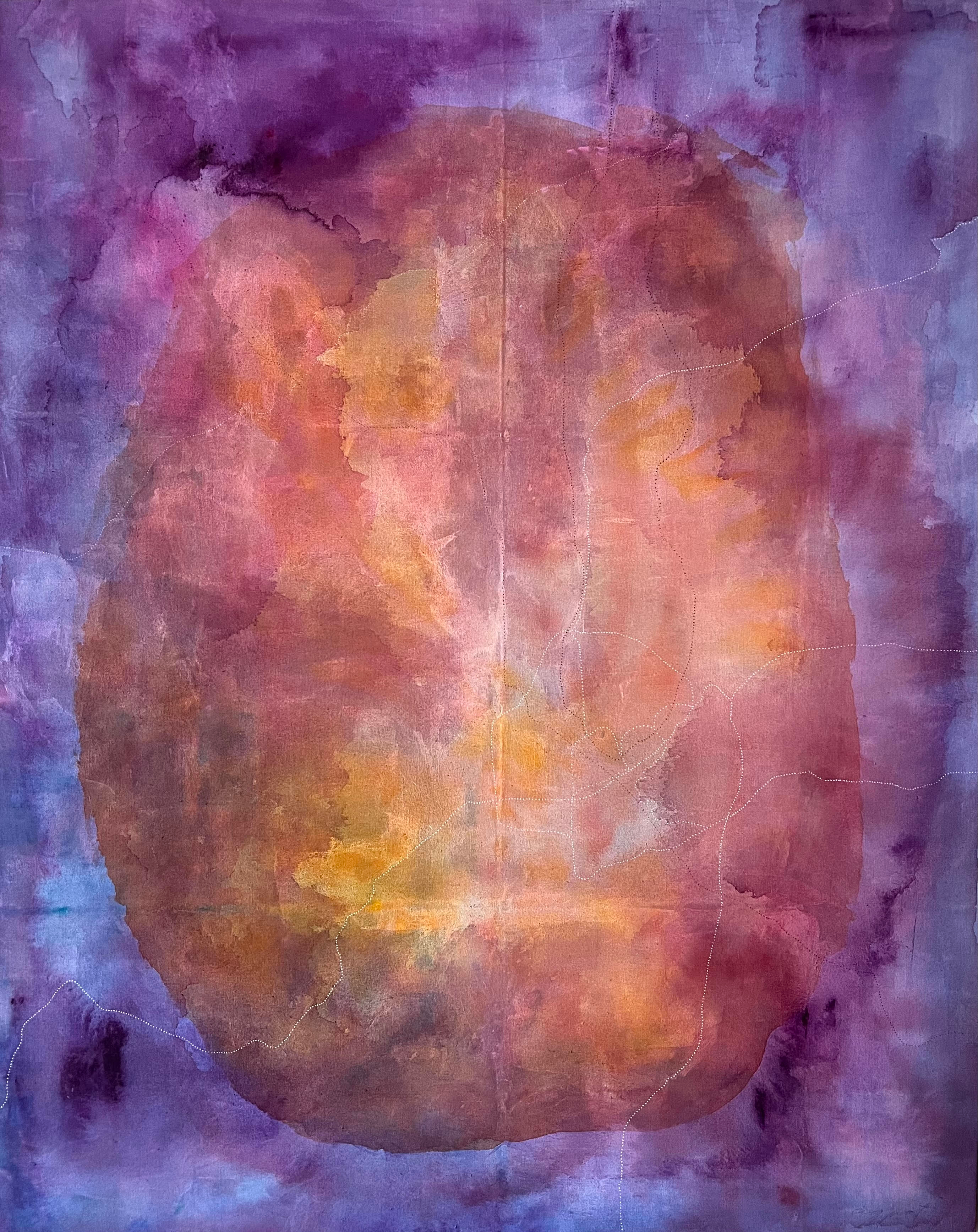
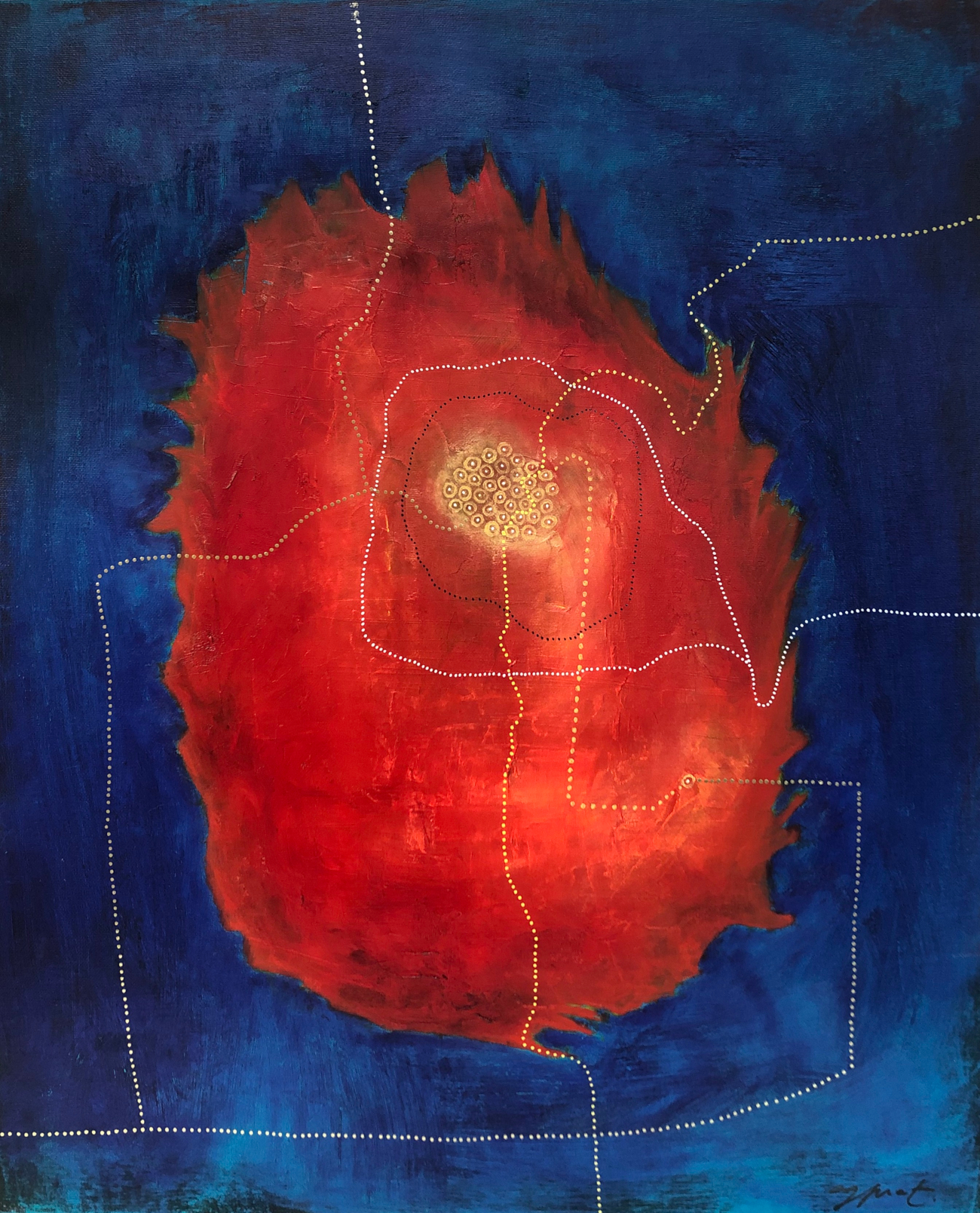
I am a non-representational artist who intuitively creates mixed media paintings, while mostly meditating on the urgency of the environmental crisis, its impact, and the adaptation all ecosystems must go through to survive. I work driven by my emotions and by the physicality of the art materials, open to happy accidents and chance, and with a strong thirst for color and texture.
Exploiting Beauty
During my early days in Argentina, I spent hours drawing or building craft projects. My father, an environmentalist ahead of his time, influenced me into value nature and the other species, and to be curious about the world that surrounds us. This early life experience impacted my decision to study science. After I moved to US, a more introspective life reconnected me with my old love for artmaking and I became an artist who worked part-time but with passion and determination, even while working full-time in science and raising a family that was always supportive of my life choices.
Topographies of the Exploitation of Our Land II
Because I lived much of my early life under a military dictatorship in Argentina and later as an immigrant in the US who could not vote, it was not until I became a full-time artist and a US citizen that I was able to speak up through my art. I am focused in using my art to bring awareness and action for the urgent environmental crisis.
Change is on its Way
Like in other aspects of life, I face a dilemma of what materials to use in my art practice that are better for the environment. In the spirit of refusing, reducing, reusing, repurposing and/or recycling, I paint mainly on corrugated cardboards from packaging materials, or on rejected, found surfaces, like canvases I find on the curb, or I thrift, and I push myself to consume only a small amount of new art materials. I believe the climate crisis resolution is an ethical and moral obligation we have for our future generations and for the other species that share our beloved planet Earth. By finding more sustainable ways to produce my art, I feel I move in the direction of halting my environmental impact in the world.
Your Brain on Climate Crisis News
Informed by my science background, my abstract work frequently resembles topographies that can be imagined either on a microscopic or a macroscopic scale. At a microscopic level, they are evocative of the cells of organisms I have studied and manipulated during my scientific research days, and of the metabolic paths and intracellular structures I have analyzed and investigated.
Andriana standing next to various works.
At the same time, while I paint, I find myself exploring these forms or topographies at a macroscopic level and they seem reminiscent of maps, geographies, or even our planet, in its constant struggle to survive due to the constant human-induced exploitation. Some of my works evoke the explorations found on vintage maps, much like itineraries of digging expeditions set to exploit the vital and finite natural resources (water, fossil fuels, gemstones, etc) found underground. In some of my paintings, the textures and marks I introduce delineate approximate concentric maps that evoke how some of the land’s ecosystems, the coastlines, for example, are changing due to ocean water raising. As global warming continues with the consequent water rising, some islands, lands are doomed to disappear…
Treasure Island
You can see more of my work on my website www.agprat.com or my Instagram account @agprat.art.
As part of my curatorial activities, I am actively curating the i3C (inspiring Change for the Climate Crisis) Artists Group and its exhibits. The i3C Artists Group has currently over 20 multidisciplinary artists (and counting…) from New England, New York, Pennsylvania, and Canada. The i3C artists’ diverse backgrounds and art practices enhance our shared commitment to the topic of the environmental crisis and our mission to inspire action to help resolve the environmental crisis. The group’s exhibits are conceived as an evolving and ongoing project, with iterations in different venues to continue spreading the i3C artists group’s mission. The group’s art processes and visions vary: some artists explore the impact of consumerism by reinventing reclaimed materials, or by creating a dialog with humanity’s waste and pollution; some celebrate the natural beings and their interconnection, pointing to their unique beauty or vulnerabilities; and some address the effects of climate change in our communities or global ecosystems.
You can check out the i3C Artists Group’s website (www.i3CArtists.com) or our Instagram account @i3cartists to get inspired and to know more about the group’s events in art centers, gallery spaces, and other venues.
I photographed the petunias in the garden today but I don’t have any petunia stories except that my mother used to plant them in the raised beds my father built for her in Virginia. Beds maybe 1′ or 2′ by 4′ or 5′. Nothing fancy. Plants purchased from the farmers market in downtown Lynchburg. Straightforward colors of red, purple and white come to mind. Although I do remember in later years when I returned home after college the selections had expanded and there were striped and maybe spotted petunias in the beds. As a child, in the early evening hours when the sun (and therefore heat) was low, I remember my mom and I would go out and pick the dead flowers to encourage new growth. It came across as something calming for my mother. My dad’s domain was the vegetable garden. The flowers were my mother’s and I think she cherished it.
Even after I moved from home I often managed to garden though I was not drawn to petunias. I have a growing fondness for them and an appreciation of how they fill in a container and complement other plants. As a child I didn’t appreciate them at all except as an opportunity to stick my hands in the dirt to help plant them and an opportunity to hang out with my mom as she took care of them. I was completely clueless as she included me in this process of caretaking and nurturing. I’m still not great at it with petunias. I try to find new varieties that need no deadheading. I seek out colors that complement the “main” plants I have growing in a container. And yet as seasons continue to pass I find myself planting more of those things from my childhood that I took for granted like petunias, scarlet sage and sweet william. Spring is near done and summer approaches. We’ll see what growing opportunities, prompted by the past or by the current moment, present themselves.
Yesterday Steve and I were looking down at a single sheet of paper. His last will and testament dated August 2018. In that year during that month just a few days before that will was completed we had sat in a doctor’s office, the top in his field. He stared intently at a scan of Steve’s brain. He eventually nodded and essentially said I see where it is, it is growing fast so how about we do the surgery early next week.
What followed was this blur of activity as Steve kept us focused on the practical like preparing his office to be without their scientist, contacting financial institutions, filling the fridge, making sure I knew passwords, and of course sharing the news with family and friends. We had been in the process of updating his will and doing my first will anyway. But there was no time to complete that process so the lawyer coached him through what to put on that single sheet and to sign with witnesses present.
As I have told Steve over the years he attracts a strong team and the medical team was strong for the surgery. And they were strong for the unexpected second brain surgery that took place the following year and the subsequent intensive physical therapy. In between the two surgeries my youngest brother died in Virginia. Steve couldn’t travel with me. Following the second surgery my second oldest brother died. Steve determinedly made that trek. He could not do so when my eldest brother died only a few months later of cancer during the midst of the pandemic. Nor could I.
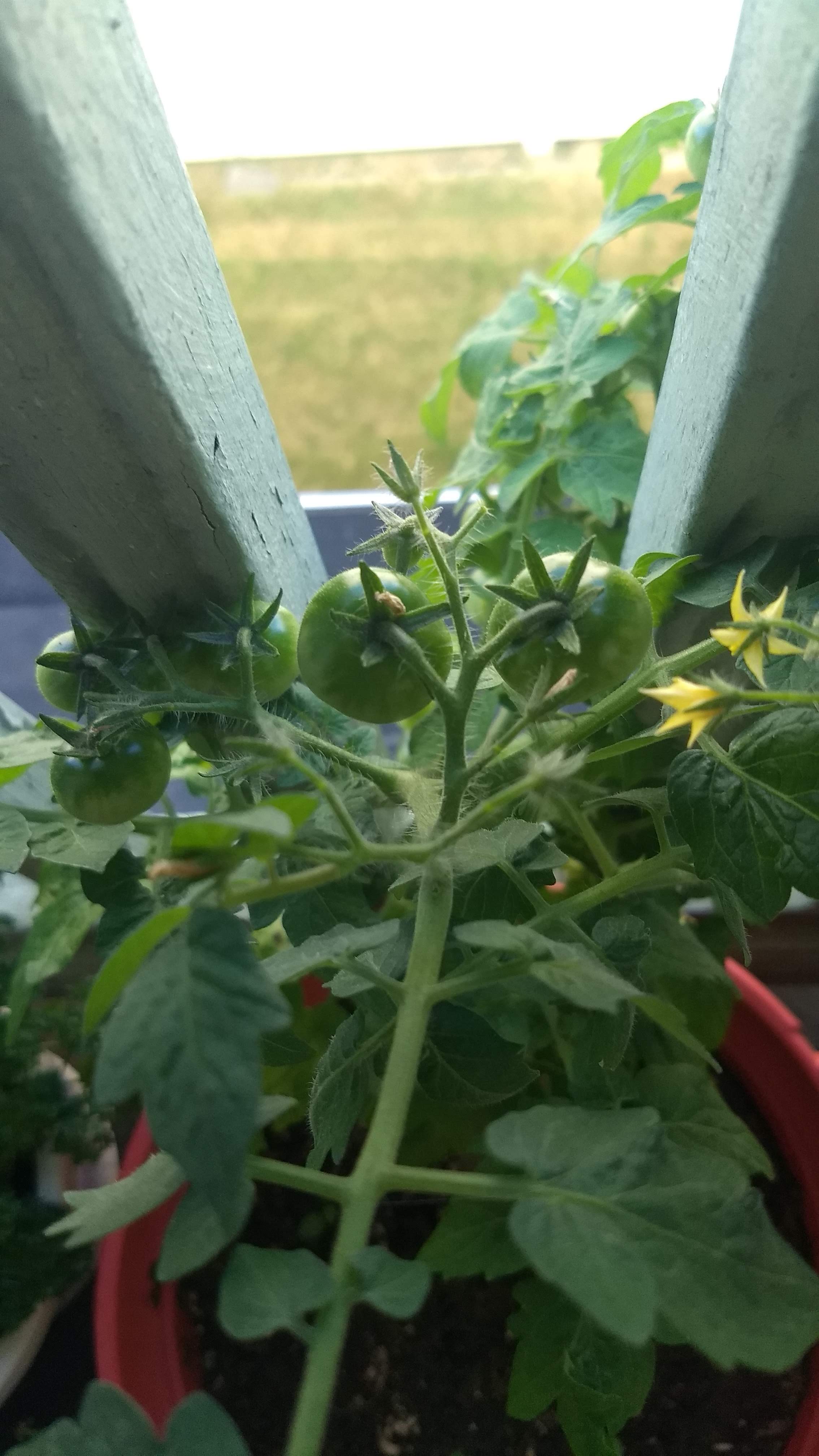
And in the midst of all that we closed on a house just as the pandemic struck. It was one of the most onerous processes I’ve ever been through. We moved ourselves in. The backyard was a demolition area but we managed to use every nook and cranny on the side of the house to grow a garden. Steve had his tomatoes and basil. I had my herbs and flowers. I accidentally hoarded eggs instead of toilet tissue and Steve was able to work in the basement and build us a dining room table. We zoomed zoomed zoomed like everyone else for work and to connect with family and friends. We did make excursions around the neighborhood with me constantly snapping at Steve to pull up his mask. We were cautious but not afraid. In a sense we were resolute … you deal with what comes at you because that’s all you can do.
Before August, nearly three years later, we will have our official wills completed. That’s why we were looking at that older document, to remind ourselves, and to reflect, “Wow. Three years? Is that when this whirlwind journey began?”
The yard that was a demolition project is now a full-fledged garden with different raised beds that Steve built. He has retired, more or less, and now enjoys the ability if not the outright necessity of impromptu midday naps. I was able to remain employed and of late have been given leave to do more writing and historical research. I’m committed to resuming photography and more creative writing, with what extra time I don’t know.
Soon Steve and I will go outside to pick some basil. Pesto will be made along with dinner. He moves a little slower in the kitchen in the evening hours so I will be sous chef and perhaps take some photos for instagram. I’ve had more pesto this year than in all the earlier years of my life. I can’t complain. I don’t think I can complain about much of anything.
Late evening zooms are wearing me down but I am going to try to watch tomorrow at 7pm, “Every Pecan Tree: Trees, Meaning and Memory in Enslaved People’s Live.” It is part of a lecture series produced by the Harvard Arnold Arboretum.
The title was provocative and made me think about trees in my life. I photograph a lot of trees and as the sun pours through the window now I know at some point, I hope at some point, I will bundle up and head out the door with my camera. The branches are all mostly bare of course but with several days in the 60s coming … I will try to get some before and after shots. Some things might accidentally bloom by week’s end. We’ll see …
I don’t know that I’ve ever seen a pecan tree. I’ve got books that help me identify birds and herbs, butterflies and moths but none about trees. I think I take trees for granted. The only tree I think I ever learned to recognize by leaf and seed was the maple tree because it grew next door in my Aunt’s yard and my brother grew one from one of its helicopter seeds and my dad actually planted the resulting seedling in our backyard though he did so with a big sigh because he knew one day its shade would cover his garden but he did so for the smile on my brother’s face.
Our yard was small but for the most part you don’t need a lot of space to grow trees.
We had a green gage plum tree. It was on the fence line so that meant the neighbors could pick some plums if they wanted too. My dad made wine that was apparently very tasty. He never let me drink it though. I suspect it was rather high octane. There was an apricot tree that I think produced one apricot over the span of its long life. The next door neighbor had a huge black walnut tree but I don’t remember people eating the nuts back then.
Across the street a neighbor had a towering pear tree that bloomed so white in spring. When the wind blew it was like snow was falling. The smell was divine. The fruit was so so. Small, green, hard to eat fresh but my mother would make small jars of pear jam that we’d eat on hot biscuits. Down the street was a sprawling mulberry tree. I heard stories of people making mulberry wine but mostly people hated the mess the berries made as they fell to the ground and they squished beneath your shoes. I fixed my dad a plate of them once, using my new tea party set, and he ate them with a smile. Citrus trees that people mentioned were before my time. No apples in the neighborhood and today that seems strange.
During the lecture, Tiya Miles, Professor of History and Radcliffe Alumnae Professor, Harvard University, will explore “the importance of trees as protectors of bodies and spirits, as sites of violence, as memory keepers, and as historical witnesses in the Black experience of captivity and resistance. Ultimately, time spent with these examples will underscore the centrality of the natural world to Black, and indeed, human, survival.”











 Words + Images