Feeds:
Posts
Comments

Posts Tagged ‘stained glass windows’

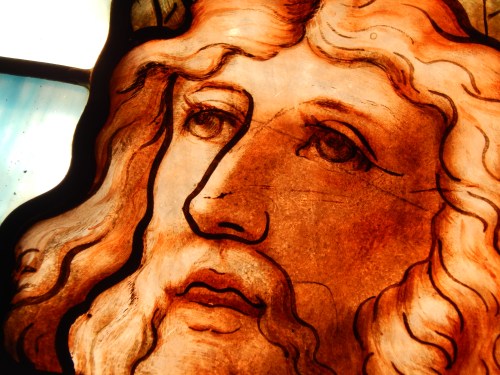
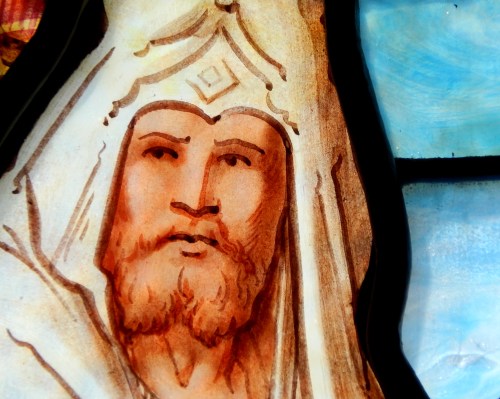
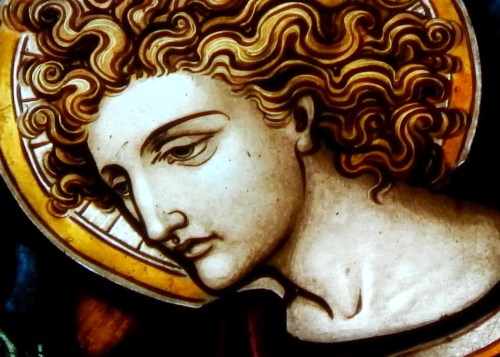
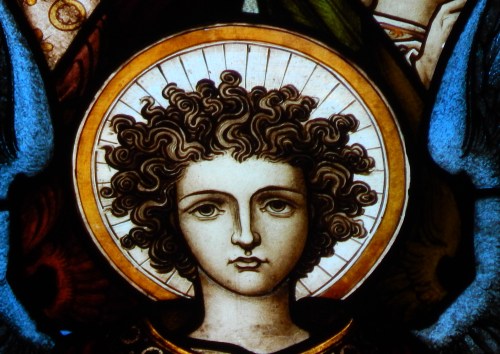
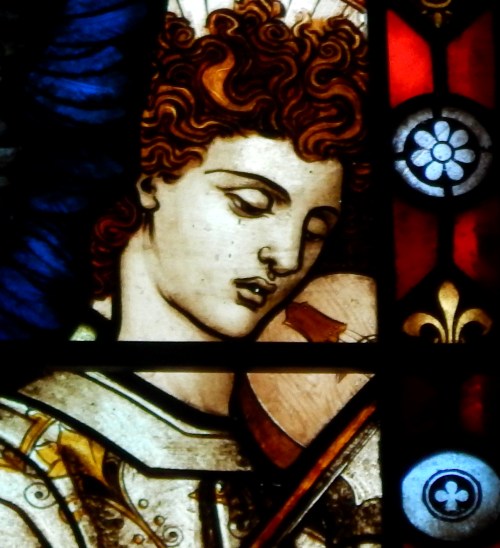
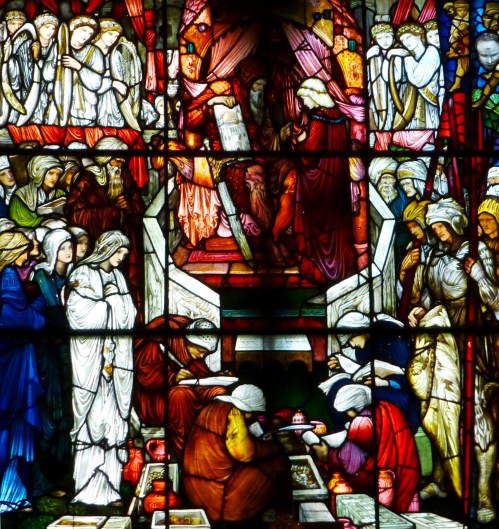
Recently I learned of an image in stained glass also appearing in thread, both based on a design by Burne-Jones.  I couldn’t help but do a bit of digging and learned this:  the stained glass window, David’s Charge to Solomon, was first commissioned in memory of George Minot Dexter (1802-1872) by his son Frederic Dexter. It is located at Trinity Church in the City of Boston.  I’ve had the great pleasure of photographing details over the years.

The window was designed by Edward Burne-Jones, the color harmonies developed by William Morris and the window fabricated in the William Morris & Co studio.

The window was installed at Trinity Church in 1882 in an area known as the baptistry.
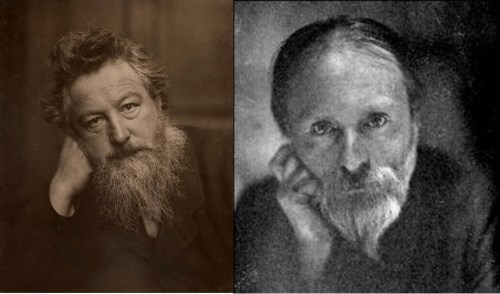
William Morris (1834-1896) and Edward Burne Jones (1833-1898)

William Morris (1834-1896) and Edward Burne Jones (1833-1898)

While Morris and Burne Jones would both pass away in the late 1890s, Morris & Co.’s design work and manufacturing would continue for decades at Merton Abbey, a village in Surrey, England where textile printing had taken place since the mid-19th Century.

Sir George Brookman c. 1920

Sir George Brookman c. 1920

While attending an exhibit at the 1900 Paris International Exhibition, and later visiting Merton Abbey in England, Australian mining magnate George Brookman saw Morris tapestries being custom woven for individual and corporate clients.  He also saw original designs, still being used, to reproduce artwork.  After seeing the Burne-Jones cartoon for David’s Charge to Solomon, he commissioned a tapestry to be made of that image.

Known as David giving Solomon directions for building of the Temple, the tapestry would be described as “a spacious and complex weaving of unusual size.  The soft, abundant reds beloved of the [Pre-Raphaelite] Brotherhood were in evidence.  Of especial beauty were the figures clad in silver-threaded armor.” Weavers were Walter Taylor, John Martin and Robert Ellis.
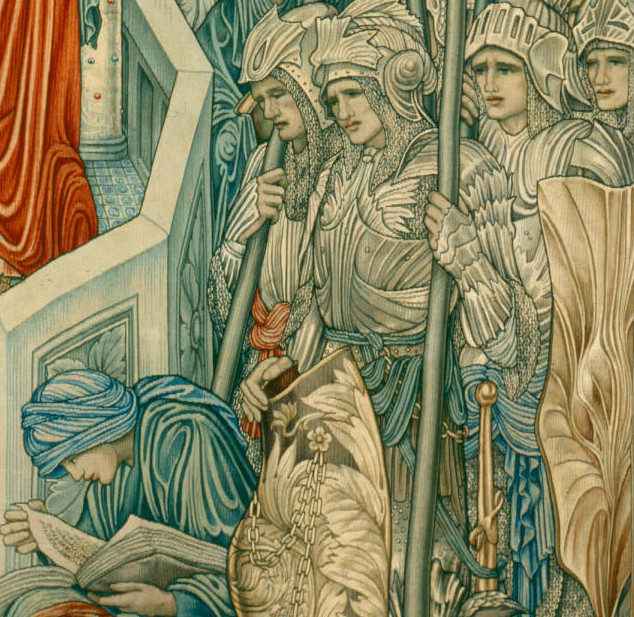
In 1920, Brookman sold the tapestry back to Morris & Co.  May Morris, the daughter of William Morris, would exhibit the tapestry along with other Merton Abbey works at the Detroit Society of Art and Crafts Exhibit.

May Morris (1862-1938)

May Morris (1862-1938)

excerpt from International Studio Magazine, 1922

excerpt from International Studio Magazine, 1922

Newspaper businessman, philanthropist and art benefactor George G. Booth and his wife, Ellen Scripps Booth, would purchase the tapestry to hang in Christ Church Cranbrook in Bloomfield Hills, Michigan, where I believe it still hangs to this day.
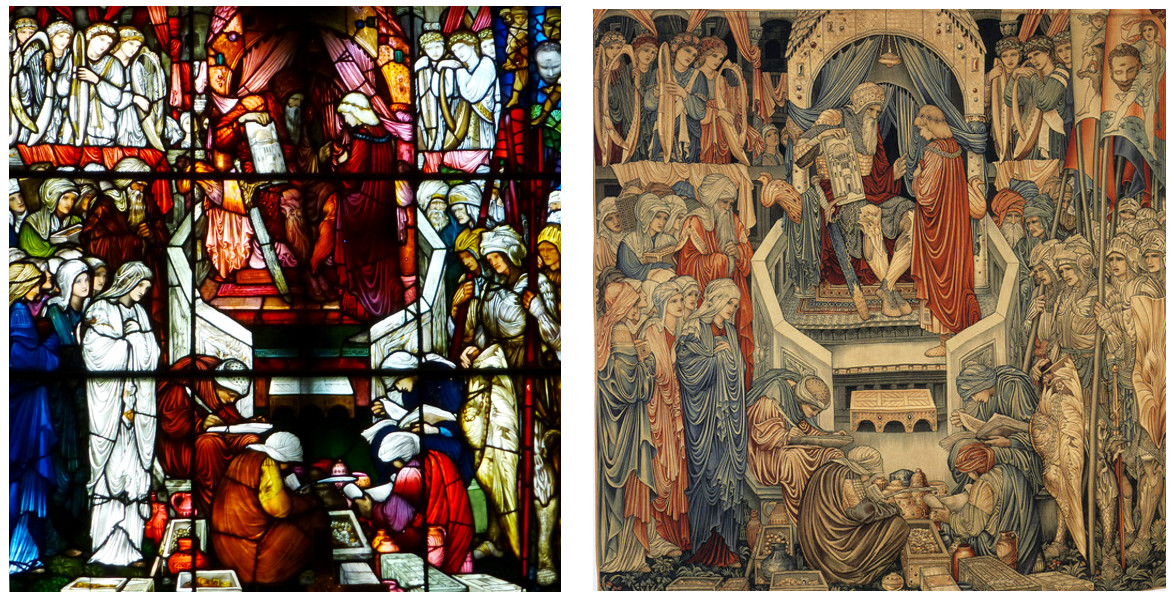
One design expressed in two different ways sharing one of the most influential stories in human history.

Sources/Additional Reading

Cranbrook Digital Archives

Details for comparison taken from David giving Solomon directions for building of the Temple, photograph by Jack Kausch, copyright Cranbrook Archives.

The William Morris Society in the United States


Read Full Post »

“The influence of education, or of the want of education, on the welfare of our land can have no territorial limits or boundary lines. … Colleges in South Carolina or Tennessee or Virginia are United States colleges, and are as important to the welfare of the country as Yale or Harvard or Columbia.  Illiteracy and ignorance are no mere local dangers, whether among whites or blacks.  They are dangers to law and order and true liberty everywhere; and he that does most to eradicate them anywhere may claim no second place on the role of a comprehensive patriotism.”

Robert C. Winthrop

Robert C. Winthrop (1809-1894)

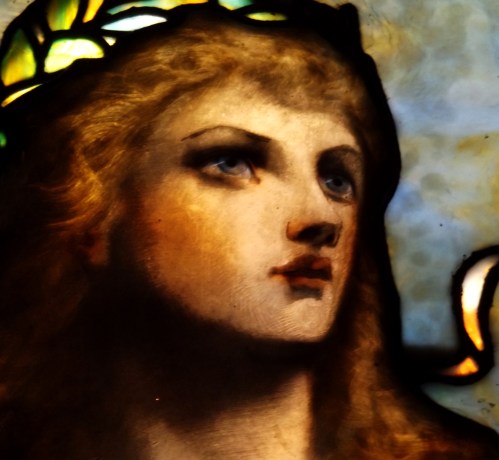
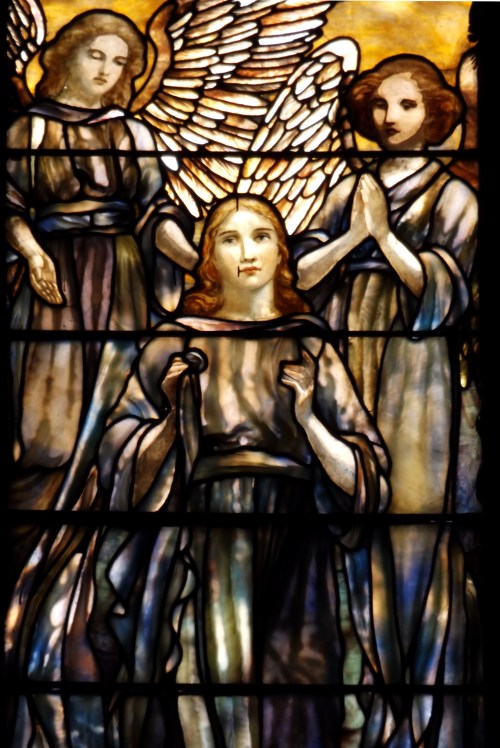
In 1892, two years before his death, Hon. Robert C. Winthrop, spoke these rather timeless words at the annual meeting of the Peabody Trustees. For twenty-five years he had been President of the Peabody Education Fund, a philanthropic enterprise established by his friend George Peabody in 1867 to promote education initiatives in the post-Civil War southern states.  It was a fund created with the best of intentions that had short and long-term positive impacts as well as controversies. I learned about the fund and Robert C. Winthrop after I photographed details from Hope, a stained glass window in the north transept of Trinity Church.

Detail from stained glass window, Hope, by Burlison & Grylls of Londong, 1877-1878

Detail from stained glass window, Hope, by Burlison & Grylls of London, 1877-1878

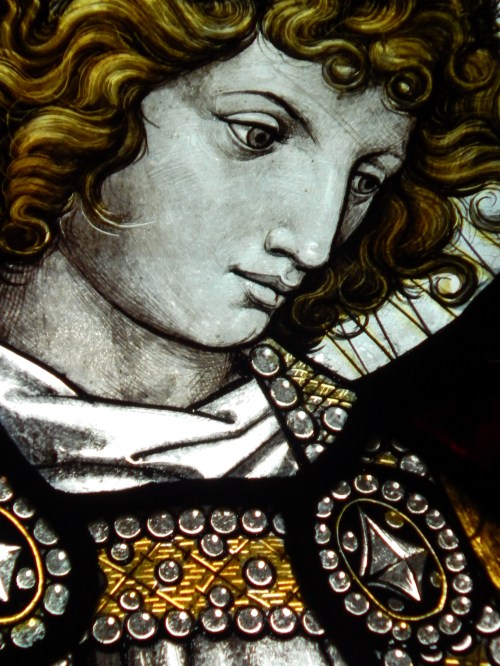
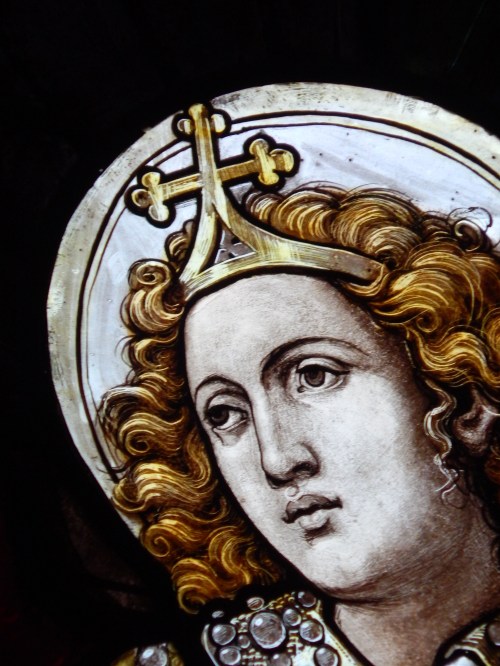
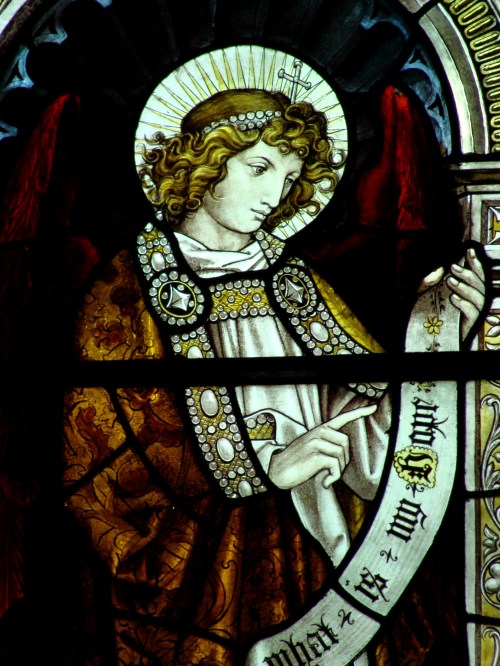
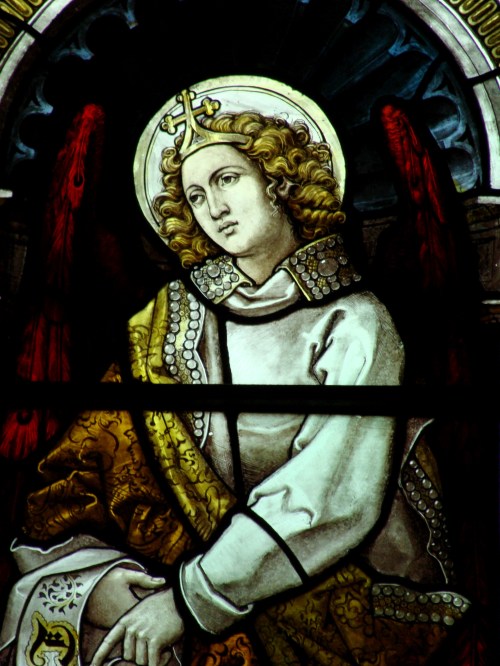
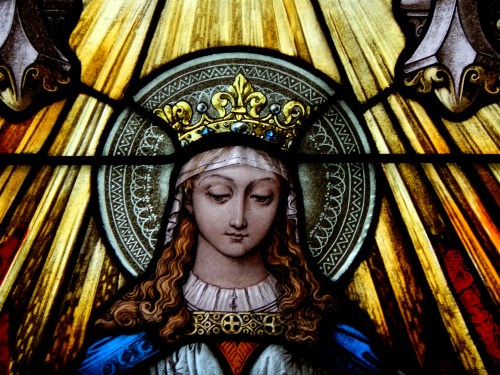
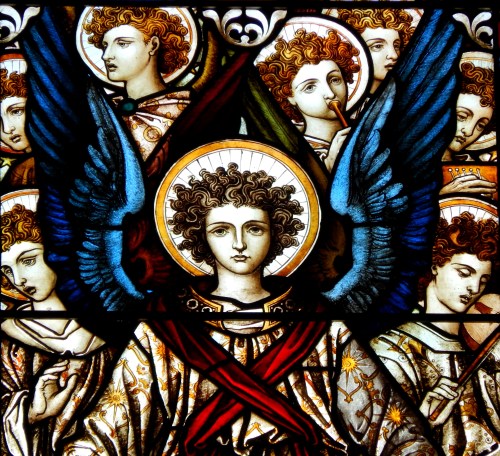
Most often after I photograph stained glass windows, I research the story depicted in the window or research the designers of the window.  But this time I was curious about who had commissioned the artwork.  In an 1888 document providing an historical and descriptive account of the parish and the Copley Square building, the author writes,  “This window is typical of Hope, the motto of the Winthrop arms.  The greater part of the window is occupied by two angels, each of whom is holding a scroll.”  And then at the bottom there is a Latin quotation signifying, “A surviving son to the best of parents.

Details from Hope

Details from stained glass window, Hope, by Burlison & Grylls of London, 1877-1878

The son was Robert C. Winthrop and you can read more about him via this detailed Wikipedia article, and in this Mass Historical Society article about interactions between Winthrop and Frederick Douglass.  As for the window designed by Burlison & Grylls …

I feel like I have a greater appreciation of its beauty and look forward to continuing to photograph and share its details.  Until then, learn more about Trinity Church and its art and architecture at http://trinitychurchboston.org/art-history

Read Full Post »

Recently (once again), I was walking down the street, this time in Cambridge, lost in thought, and chanced upon a large white wood building that I’d seen many times. A church.  Its main doors were usually locked midweek. But this day I decided to do something I’d never done before. I went around a corner and knocked at a different door, and this is what I learned.

Now located at 8 Inman Street, Cambridge, MA, in the heart of Central Square, this church was once sited in a different part of Cambridge.  In 1822, the First Universalist Society built a meeting space in Lafayette Square, Cambridge at the corner of what was then known as Main and Front Streets.  In 1858, under the architectural supervision of Thomas Silloway, the Georgian style meeting house was significantly remodeled at a cost of $8,000.

In 1888, part of the church lot was taken by the City of Cambridge for the widening of Front Street (now Massachusetts Avenue).  After careful consideration it was decided to move the building to its present location on Inman Street.  The building was cut into two parts and, as described in the church brochure, “Over a period of five days, men and horses were used to pull the building through the 40-ft. wide streets of Cambridge.  … Telephone and telegraph service were also temporarily interrupted…” When placed in the new location, a middle portion was inserted to increase the length twenty feet.  In addition to other major remodeling efforts, over time, there were at least three series of stained glass window installations. Artisans included Redding, Baird and Co., Belcher Glass Co., and an unnamed student of John LaFarge.

By 1954, the Universalist congregation had diminished to a very small number providing the opportunity for the orthodox parish of St. Mary to obtain the structure.  Later, assessed as part of the process for listing on the National Historic Register, the building was identified to have some of the rarest stained glass in the Northeast.

That particular day, I just took a quick peek, and what a delight.

Across time and despite the change in parishes, great effort has been made to protect, preserve and expand upon the stained glass windows and other interior decoration.

Please note that if you’re in the area, tours may be arranged.

I am thankful for the opportunity to visit so unexpectedly.

And I was reminded once more …you never know what a day will bring.

Sources/Additional Readings

St. Mary Orthodox Church Website

Read Full Post »

In the shadow of the Back Bay is how the brochure describes the location of Our Lady of Victories Catholic Shrine.  I chanced upon the church yesterday after a meeting.  Crossing a street, I actually saw the back of the building first, an old brick structure with darkened windows that clearly had to be stained glass.  I made my way to the front of the building, studying the exterior and wondering if I might contact someone, some day, to ask if I might photograph the interior.

“Do you want to go inside the church?” A large man stood across the street.  He seemed to be in a hurry because he didn’t even wait for my answer before saying, “Just go down those stairs over there.” Then he continued on his way.

I went down the stairs into a little alleyway. There were a couple of older gentlemen there having a smoke. They greeted me kindly, and again without really waiting for me to say I wanted to enter the church, they directed me through a side door.

Inside was dark and warm. People moved about a bit in the shadows and I could hear a few sounds.  I could see no stained glass windows though.  Then, to my right, a gentleman walked from a side room.  He smiled and said, “You can come on in.  We’re just watching a movie.”

I thanked him for the offer, and said, “Actually, sir, I was wondering if I could go inside the church upstairs where the windows are.” His grin widened, and he said, “Of course. Just go back outside and up the stairs.  The doors are open.”

That’s what I did and following is a bit of what I saw.  There are quite a few images so please enjoy at your leisure. You can read more about the church’s history via this link.  In the future I hope to post more about the architecture and about the primary window designer, Franz Xaver Zettler.  And, by the way, I believe that the gentlemen who were so kind to me, were themselves being helped.  Located in the basement of the church is the Medeiros Center for Change.

Read Full Post »

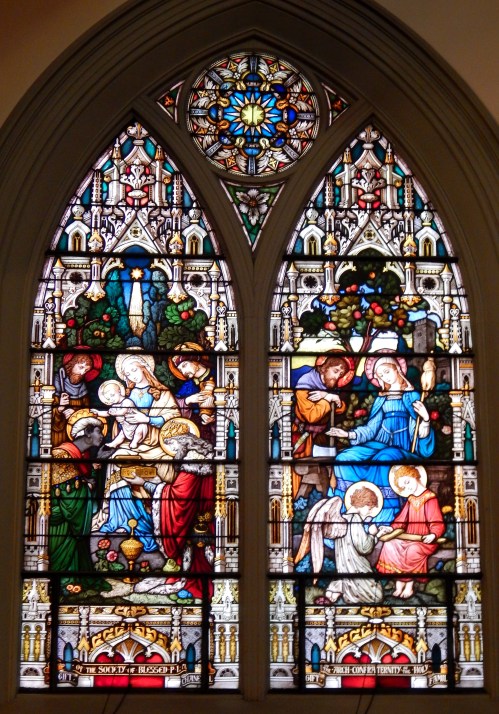
I was racing around the Back Bay of Boston and decided at some point that I needed to rest for a bit and so I stepped inside of the Old South Church at the corner of Boylston and Dartmouth Streets.  There were so many people sitting quietly that I decided that perhaps I should too (especially given the weight of my backpack).  And so I sat and focused my camera mostly on one window.  A large window above the chancel said to illustrate the announcement of the birth of Jesus to the shepherds.  Designed and produced by Clayton & Bell of London and installed in 1875.

Learn more about Old South Church, its history and current activities, via this link.

Read Full Post »

When I shared new photos I’ve taken inside Trinity Church with a friend, he remarked, “I see.  You’re digging deeper into the details.”  More details to share in the future. Have a good day, folks. 😉

Read Full Post »

As I’ve written about before, one of the great pleasures for me of stepping into a church is to see the wide variety of artistic expression through stained glass.  Such is certainly the case with a quick visit to St. Augustine’s, a Gothic church in Galway completed in 1859.

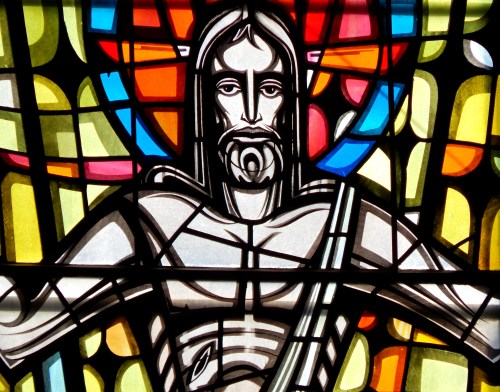
Apparently during renovations in the 1970s, the original window over the main altar was replaced by a new window depicting the Resurrection. The artist is George W. Walsh.You can read a bit more about Mr. Walsh via this link. His father, with whom he apprenticed for several years, was a pupil of stained glass artist and illustrator Harry Clarke.

While no one seemed to mind me meandering about with my camera, I focused mostly on that window above the altar with its many lovely parts making an incredibly beautiful whole.

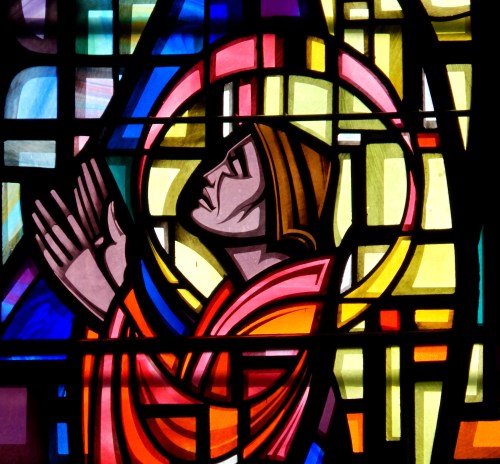
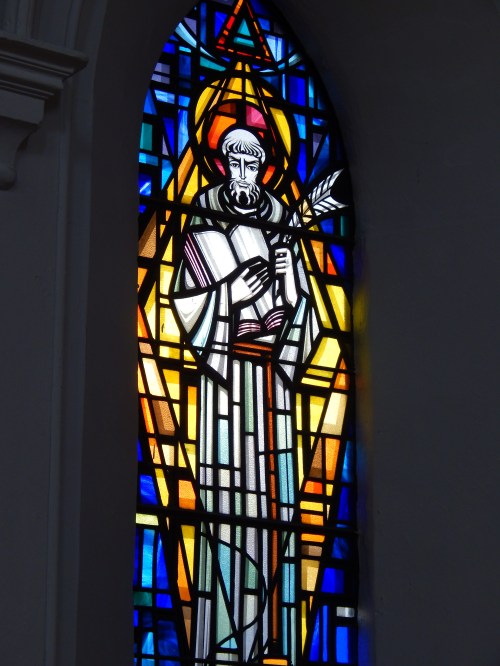
The other window that caught my attention happened to be a depiction of St. Augustine himself.  Later I discovered that Mr. Walsh also composed and completed that window.

It was a bit rainy that day so I did not take many exterior shots, but via this link you can view the building.  On this webpage, you can read just a bit more about the history of the Augustinians in Galway and more about the construction of this particular building.


Read Full Post »

I’ve been on a bit of whirlwind travel for work and pleasure. In addition to spending time among swans, I managed to step into a few churches along the way.  Here’s a bit of the beauty to be found at the Priory of St. Mary’s, The Claddagh, Galway, Ireland.  I hope I have the opportunity to return one day.

Read Full Post »

Stained glass reflected on the stone floor at Cathedral of the Holy Cross in Boston’s South End.  The actual stained glass windows I may post in the future.

Read Full Post »

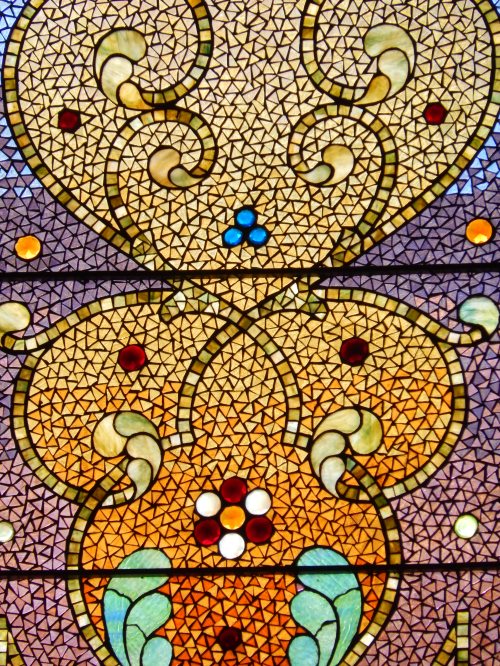
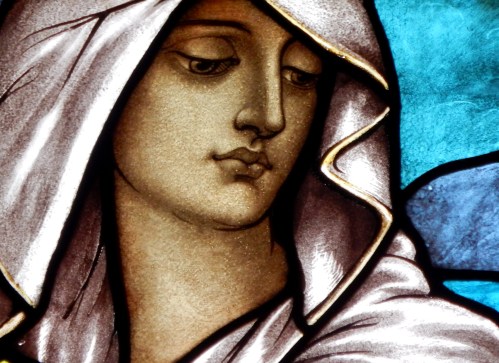
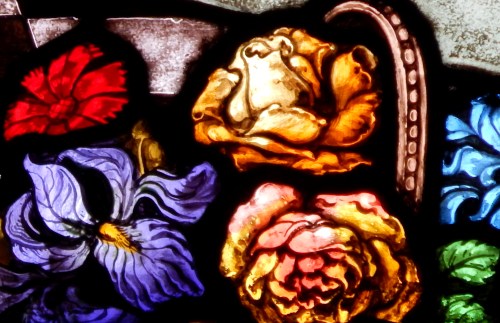
One of the reasons that I have come to love photographing stained glass windows is story.  There’s the story of the building in which the window is placed.  There’s the story of the people who commissioned the creation of the window.  There’s the story that the artist and his or her team is asked to express in paint and layers of glass, and their artistic interpretation of that story.  And then there’s the completed window and what story it actually conveys to each individual viewer across the generations.

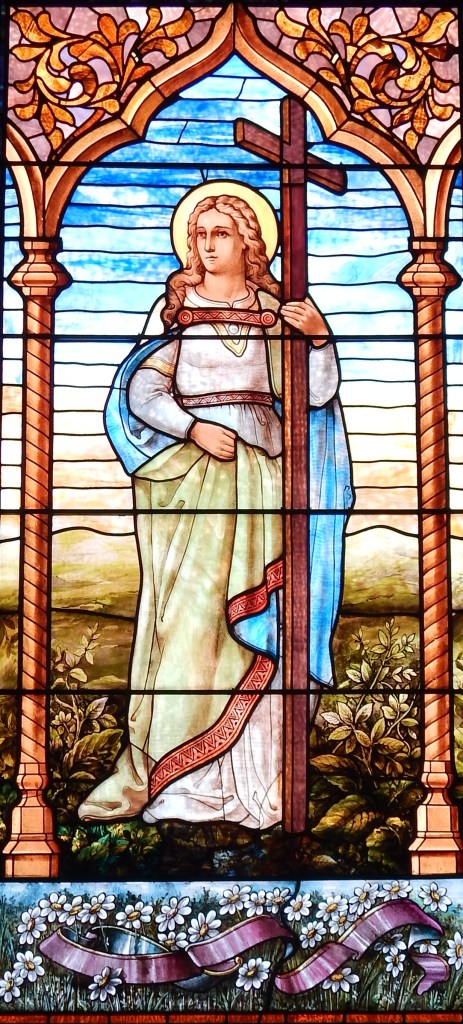
These are details from the windows at Church of the Convenant, located on Newbury Street in Boston’s Back Bay. It is a National Historic Landmark built 1865-1867.  Then, in the late 1890s, the sanctuary was completely redecorated by Tiffany Glass  & Decorating Company.

It is still an active parish and they have put together a wealth of information detailing the story of the parish, the Gothic architecture of the building, and its Tiffany decoration.

There is an online tour of the windows and interior via this link.  But, of course, if you’re in the area, definitely take the self-guided tour still available.  The walking map provides interesting descriptions of the three Tiffany designers’ interpretations of the biblical stories they were to represent in glass.

And of the photographs I took during my most recent walking tour, following is an image that did not work out and yet I could not make myself delete it.  So, I suppose such an action is part of the story of me.

More information available: http://www.cotcbos.org/

Read Full Post »

« Newer Posts - Older Posts »