Feeds:
Posts
Comments

Posts Tagged ‘culture’

Growing up in Virginia, my parents made clear quite often that “times are tight.”  Many a fellow classmate wore more expensive clothes but mine were just as clean and it didn’t matter that they were purchased via layaway.  And my brothers and I still share stories of how well my mother could stretch a can of Campbells soup.  But it wasn’t until I was accepted into college, completing financial aid forms and trying to figure out how my family’s income fit on various grids … that’s when one day I looked across the table at my parents and said, “Did you know we’re classified as poor?”  That I did not feel poor despite my family having little money says a lot about my parents and the neighborhood in which I walked.

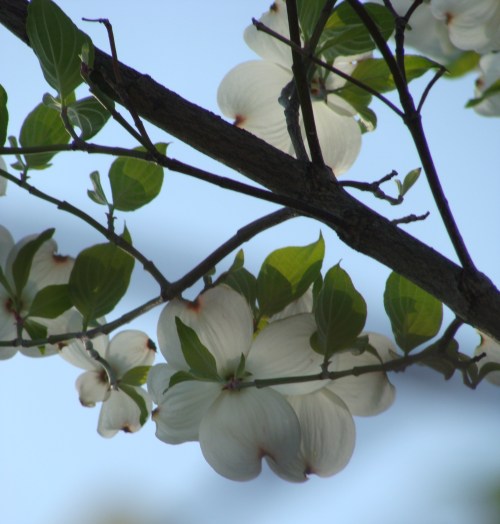
Virginia Dogwood

It is a very different neighborhood in which the little girl Dasani lives.  It is a Brooklyn neighborhood in transition.  Thanks to the New York Times series, Invisible Child, readers can journey with her through that changing world.  You the reader can walk with her, run, kick, and dance.  You can even hear her voice and those of the people around her because it is a multimedia presentation with short videos at the end of each of the five parts.  It is a series provoking a lot of conversation, dialogue, debate … and hopefully, most importantly, some good actions.  It can sometimes be tough to read and to watch but I hope people do.

Read Full Post »

Just one of those random questions running through my head this morning as I have the luxury of sitting in my home sipping strong coffee in the warmth of my kitchen while there are those in great need of food and shelter who have nothing this morning because the politicians in the fortress of solitude in DC can’t get it together to stop being children in a playground.  Anyway, racism, classism, and all those other -isms are too easily used to excuse the behavior of the men and women in Washington (and those who pay them in the various ways our system allows).  If Obama were blonde haired and blue eyed and with the same ideals there’d still be a fight … because indeed there was one.  Look at the Clinton Years.

Politicians aside with their blinders, fat pockets, or indeed “righteous ideals,” what bothers me most are the people who sit back and do nothing.  And maybe that’s because there are too many distractions.  I mean, on the morning news, immediately following one story of government shutdown, there was a story of a movie star’s fight with his girlfriend.  Really? That’s the next important story?

One of my favorite letters in American history is Martin Luther King’s Letter from a Birmingham Jail.  It was not a letter written to Klansmen or segregationists or to all those others who outright hated; it was a letter written to those who expressed a desire for change but were waiting for the right moment or not wanting to make any waves or simply did not understand the gravity of the situation.  I fear that people have lost sense of our interrelatedness, and thus do not understand the implications – the ripple effects – of the actions (and purposeful inactions) certain politicians are pushing.  If you have a well-paying corporate job with great benefits, why engage in a dialogue about health insurance or food stamps?  But as MLK wrote, “We are caught in an inescapable network of mutuality, tied in a single garment of destiny. Whatever affects one directly, affects all indirectly.”

I am proud to be an American, of its landscapes and its peoples and of course its opportunities.  Or at least of those opportunities that I perceived as a child growing up in Virginia.  And I was proud of its politics.  Probably using a different set of text books than are being allowed in school today, I thought I learned in World History, Civilizations, Civics and Government courses that, my goodness, what a wonderful system of government with its checks and balances, and opportunities for dialogue and debate (and yes, negotiation and compromise).  What a wonderful system.  What has happened?

Anyway, no more caffeine for me today.  Caffeine plus anger gives me a headache.  Perhaps I will be able to take another walk by the Mystic River, the source of these images.  I hope where ever you are, you find a peaceful moment too.  Have a good Tuesday.

Read Full Post »

My first impressions of ancient Japanese warriors were formed by the Akira Kurosawa movies that used to air on Saturday mornings when I was a child.  Later, I read James Clavell’s Shogun.  That was a heavenly experience for someone who had yet to leave her hometown, let alone travel the world.  I haven’t seen the Tom Cruise movie, The Last Samurai, all the way through, though somehow I managed to buy the soundtrack.  All that to say, it was quite the treat to view the current Boston Museum of Fine Arts exhibit, Samurai!

Photo by DL

Photo by DL

As described on the MFA website, samurai were “the military elite led by the shoguns, or warlords, of Japan from the 12th through 19th centuries.”  Through August 4th, the MFA is featuring this exhibit of Samurai armor from the Ann and Gabriel Barbier-Mueller Collection that highlights how armor design and use evolved over time from actual warfare to more showcase.

Photo by DL

Photo by DL

I have to thank my friend, DL, for dragging me out the door to see this exquisite exhibit.  It was quite fascinating to see the layerings of cloth, metal and even paper that formed protective barriers for men (and horses!) — pieces that remain enduring works of great art. Afterwards DL and I wandered over to the Egyptian area but that’s a story for another day.  If you’re in Boston before August 4th, I hope you have a chance to visit.  There’s also fun stuff on the MFA website.

Photo by DL

Photo by DL

Read Full Post »

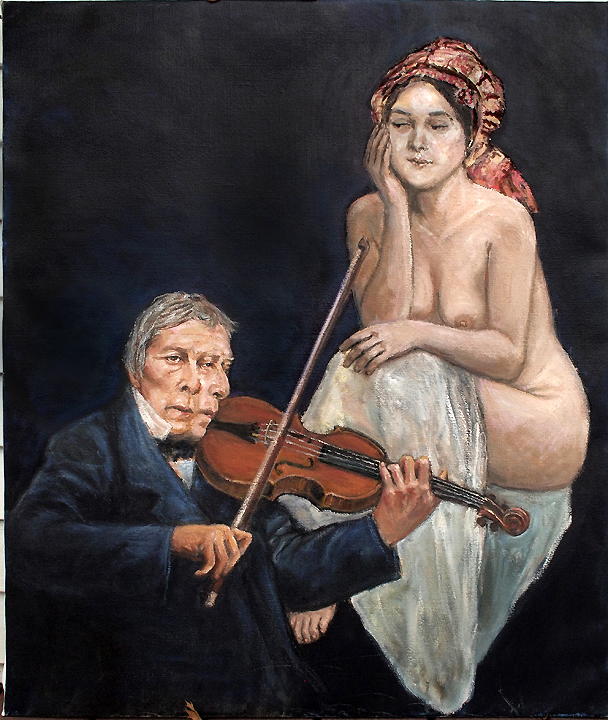
Ingres Serenades The Memory Of His Late Wife's Youth by Donald Langosy

Ingres Serenades The Memory Of His Late Wife’s Youth by Donald Langosy

Walking into the studio of artist Donald Langosy is like venturing into a secret garden soaked in light and shadow.  At first, all that one can do is gaze at the surrounding forest of color-filled canvases in all sizes.  Then the individual scenes emerge, often mysterious, sometimes dark and yet filled with light and motion at the same time.  By his subject matter, it is clear his passions for family, friends and for the artists across the disciplines who continue to inspire and influence his work.  The drama, the intensity and indeed the mischievous humor, come through each piece.  Last year I asked him how music influenced his work (view here).  This year I asked if he’d share an update on recent works.  Thankfully, he shared these images and the following words about what’s new, his creative process and where he finds goodness and beauty in this world.

***

Here are recent paintings as requested.  The Titania Paintings are from my Shakespeare series:  Midsummer Night’s Dream.  This is an ongoing series of 50″x42″ canvases that were actually painted end of last year.

Titania Sleeping by Donald Langosy

Titania Sleeping

I thought [the above painting of artist Jean Auguste Dominique Ingres serenading his young wife] would lead into a series showing artists with their model/muses and so I began …

Mr. and Mrs. William Blake in their Garden Reading Paradise Lost by Donald Langosy

Mr. and Mrs. William Blake in their Garden Reading Paradise Lost

“... but my intentions veered with …

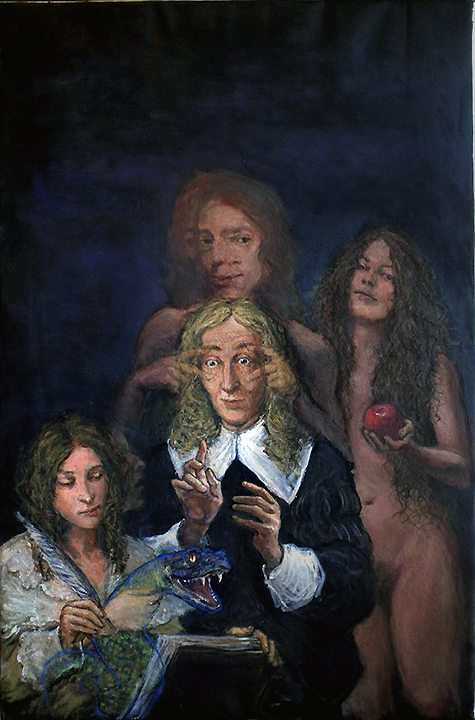
John Milton Composing Paradise Lost by Donald Langosy

John Milton Composing Paradise Lost

… and now I find myself beginning two large canvases that will deal with thoughts that have emerged out of the garden of eden…

And as for Mr. Langosy’s muse, his wife, Elizabeth…

Celebrating Elizabeth Turns Fifty is a painting that has been buried in my stacks for over a decade…it now shines over my shoulder as I work… reminding me that while evil and ugliness might have its moment it is rejected and fades… but goodness and beauty, an eternal delight,  endures….

Celebrating Elizabeth Turns Fifty by Donald Langosy

Celebrating Elizabeth Turns Fifty by Donald Langosy

Learn more about this artist at his Facebook page, The Art of Donald Langosy.

Read Full Post »

Boston Public Garden Street Light

Boston Public Garden Street Light

When I first read Lin Nulman’s haiku, I told her that her words made me want to paint, to capture the vivid impressions she conveyed of Boston.  I have yet to pick up a brush but I did think of her words when I rediscovered this photograph.  Her work appears in this week’s issue of Spare Change News, the longest continuously running street paper in the U.S.  Over 100 vendors, many of whom are currently or formerly homeless, purchase the papers from a distribution office for .25 and sell them on the streets of Boston, Cambridge and Somerville for $1.00.  If you’re in the neighborhood consider purchasing a copy, or making an online donation.  The writing is excellent and the stories not often told.  Meanwhile, I hope you enjoy Lin’s words below.


Sights of the City Haiku

Boston winter night—

streetlight caught in the glass rim

of a sun-catcher.


Dark birds float to a

bare tree. Underneath pages

of newspaper blow.


A young man reads poems

by Lorca on the train, lips

moving, body still.


Sky of milk and slate—

the sails below are whiter,

the river bluer.


Vs of geese fly east

across a violet sky, haze

above the wet earth.


My pages ruffle,

and the willow grows pale leaves.

They also ruffle.


T-shirt heat. Black-haired

boy’s block-print tattoo fills his

forearm: FORGIVEN.


Early autumn day.

Bronze beads pepper a bench from

a broken earring.


Blue sidewalk. Lights of

table candles tremble their

small constellation.


Lin A. Nulman is an Adjunct Professor of English at Bunker Hill Community College.  Her poetry has appeared in Black Water Review, Tanka Splendor, and the anthology Regrets Only: Contemporary Poets on the Theme of Regret, among others.

Read Full Post »

This morning I had a dream about two wonderfully portly smiling charcoal-skinned angels.  Now I know how the brain can pull together all sorts of images and concepts in an attempt to help one stay in bed.  I had already hit the alarm twice.  My brain was working overtime to keep me settled in the warmth.  You see, I do have a dark angel in the house — a holiday ornament of a little brown girl with close cropped hair.  For days I had been humming that song by Radiohead about black eyed angels swimming with me. And yesterday a certain painter hinted that he was feeling inspired by William Blake.  So, of course, I had pulled up William Blake images to view his vision of humanity in all its earthy, robust glory. So why wouldn’t I dream of black-eyed, dark-skinned angels smiling at me? Later I decided to take a break in my day and google such a scene.  Imagine my surprise at what I found.

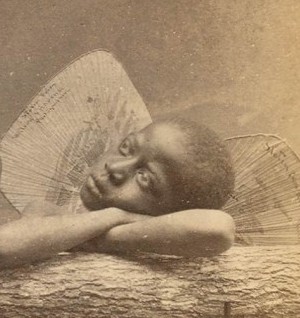
In the late 1890s, photographer George N. Barnard had photographed the daily life of South Carolina’s denizens in all their various shades.  In an ode to Raphael’s angels, he had two young African American boys pose with pondering expressions upon their faces.  Eventually he (or someone else?) placed wings upon their backs to complete the scene.

black angels 3

I’ve already tracked down a biography about Mr. Barnard, a famed American Civil War photographer.  I’m looking forward to learning more about him, and of the story behind this photograph of the South Carolina Cherubs.  But if you already know the story, please share.

Read Full Post »

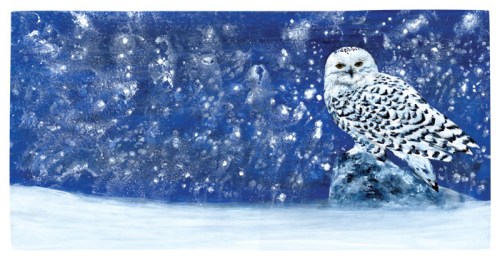
Snowy Evening by Rod MacIver

Snowy Evening by Rod MacIver

On occasion I muse on this blog about pausing and giving one’s self permission to stop moving in a world that is increasingly hectic.  One resource that has been especially useful for me of late is Roderick MacIver’s A Pause for Beauty, a daily e-journal produced by the Heron Dance Art Studio featuring MacIver’s paintings paired with his words or select quotations.
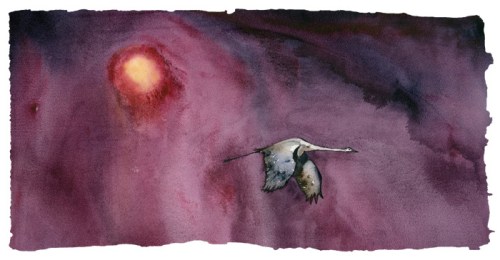
Solo Migration by Rod MacIver

Solo Migration by Rod MacIver

I was moved to contact MacIver, wanting to know more about this artist, his inspirations and the creation of his Heron Dance Art Studio.  Following are excerpts from our conversation.  Please note that the images he has granted permission to share on this blog are those he considers some of his favorites.
Eagle Morning by Rod MacIver

Eagle Morning by Rod MacIver

The website describes Heron Dance as a literary nonprofit and art studio founded in 1994.  While MacIver’s paintings dominate the site, he made clear that Heron Dance began as a print publication — a blue newsletter — based on interviews with people he met during his travels, people “who had some concept of greater good.”  “Art,” he noted,  “was minor in the beginning.”   As for why he conducted these interviews, “Well, previously I had worked on Wall Street and then I was diagnosed with a serious illness, non-Hodgkins lymphoma.  As I survived that illness, I wanted to devote myself to something positive.”  And so he set out to capture the experiences of people doing good works, learning about their spiritual lives, what motivated them, the nature of their struggles, as well as hopes.  Eventually, as he fully describes on his website, he stopped looking without and began looking within.

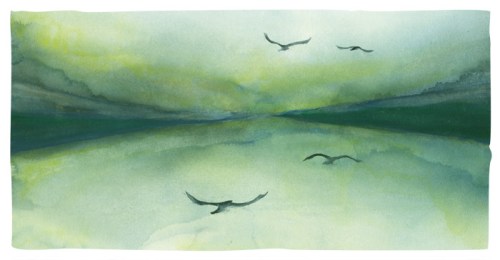
Tranquil Reflections by Rod MacIver

Tranquil Reflections by Rod MacIver

He taught himself to paint while in the hospital.  The art made its way into the print publication simply as part of the graphic design of the masthead.  It was over time, he shared, that the art became more important.  As more people began asking for his artwork, he realized his art could be an integral part of a business.  But painting he asserts is about more than business.  “No, I enjoy painting.  I need to create time to do more of it.”

Grizzly Wonder by Rod MacIver

Grizzly Wonder by Rod MacIver

He currently splits his time between the business side of the Heron Dance Art Studio (located in Vermont) and “the quiet beauty” of cabin life in the Adirondack woods where the landscape’s influence is clear in his painting.  Taoism is inspiring him these days. Taoism is a spiritual tradition that promotes living in harmony with nature, among other beliefs. “It’s an interesting approach to spirituality.  Water is an important component that I am exploring.  Water-related activities have been an important part of my life.”

Morning Solitude by Rod MacIver

Morning Solitude by Rod MacIver

The home page of the Heron Dance website lists his current and ongoing creative projects including new collections of his paintings and personal reflections available in books, calendars and diaries.

Heron Whisper by Rod MacIver

Heron Whisper by Rod MacIver

If you have a quite moment, or better yet, if you are seeking a quiet moment, I encourage you to read Mr. MacIver’s very detailed account of the the origins of Heron Dance via this link.  There you will find excerpts from the interviews mentioned earlier in this post, and see not only the evolution of a publication like Heron Dance but also witness the ongoing evolution of a person and his unique journey in this life.   Enjoy!

Read Full Post »
It was Martin Luther King, Jr. who wrote, “Shallow understanding from people of good will is more frustrating than absolute misunderstanding from people of ill will. Lukewarm acceptance is much more bewildering than outright rejection.”  His words have been in my head a lot this election year as has his following statement:  “Like a boil that can never be cured so long as it is covered up … injustice must be exposed, with all the tension its exposure creates, to the light of human conscience and the air of national opinion before it can be cured.”

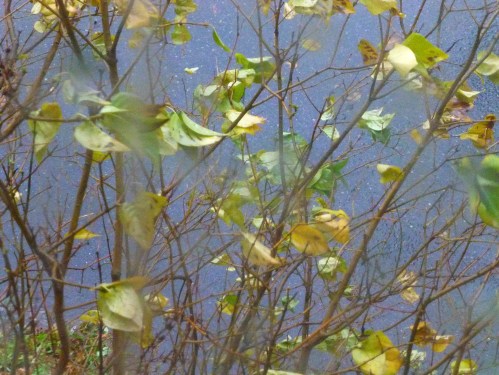
leaves blowing in the wind

I did not begin the morning thinking of Martin Luther King’s Letter from a Birmingham Jail.  I began the day thankful after learning, via phone calls and emails, that friends and family across the storm zone were all safe and with power.  But then I accidentally read a blog post.  Actually I skimmed it.  I had almost pressed the like button but there was some phrasing that made me pause.  I slowed down and really read the words before me on the screen.  That’s when the beautifully subtle racism and misogyny of the text became clear.  And I became so sad and so angry.

It was like the post became a flaming match that fell upon the kindling of recent stories about the subtleties of race and voter manipulation (let alone outright voting machine tinkering) in this 2012 election, and of my own experiences with the subtle undercurrent of rising racism and class discrimination and watching  good-hearted people not wanting to talk about it.

I thought of the people I’ve sat quietly beside on recent commutes home, as they’ve talked about how they like the look of Romney and Ryan and don’t like Obama’s look, and then they see me and my brown skin and look away quickly.  I was not angry at them or even necessarily offended.  I simply wanted to ask them, what does a “look” have to do with running a country in a chaotic world?

rain upon the window

I will never tell anyone how to vote.  I will simply say to those in this country who are able to vote, please do and do so with an understanding of who and what you are voting for.  Do more than a skim of the text or a superficial look.  That is what I will try to remind myself anyway.  Okay … tomorrow back to calming words and images.  Be well.

Read Full Post »

Imagine the troubadours of old as they walked the back roads of … some quiet place, with mandolins or banjos in-hand, a song on their lips and through those songs telling stories.  Not of fantasy or fiction.  They sang stories of lives simply lived.  That is the imagery conveyed by a conversation with Clay Rice about how music influences his visual art.  You see, Mr. Rice is famed for his silhouettes of children, nature and life along the Lowcountry of South Carolina.

He carries on a family tradition, first made notable by his grandfather, Carew Rice.  Most of the biographies I found about the Rices emphasized their artistry with paper, but during our brief chat, Mr. Rice made it clear that music has always been a part of his family’s life, and that songs have always been woven into his work, especially his children’s books.  Read more of our conversation here.  Enjoy!

Read Full Post »

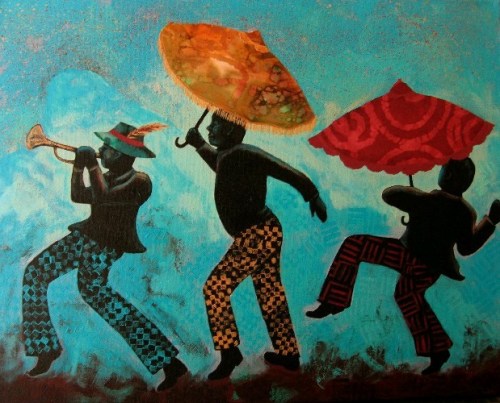
Laissez les Bontemps Rouler.  In other words, let the good times roll.  That is the name of this painting by artist Carol A. Simmons.  Without hearing a single note, can’t you feel the music imbuing this canvas with life?  How about the bluesy notes eminating from this painting of Lady Blue?

I must say I was first drawn to those works of Ms. Simmons that highlighted the bright colorful culture of the Gullah people and others in the lowlands of South Carolina and Georgia.  But recently I have had the great pleasure to learn more about her work, its continuing evolution, and yes … how music is influencing her creative journey.  Just click on one of the pictures above (or here) to discover for yourself the vibrancy of her work.  Enjoy!

Read Full Post »
« Newer Posts - Older Posts »