Feeds:
Posts
Comments

Posts Tagged ‘Edward Burne-Jones’

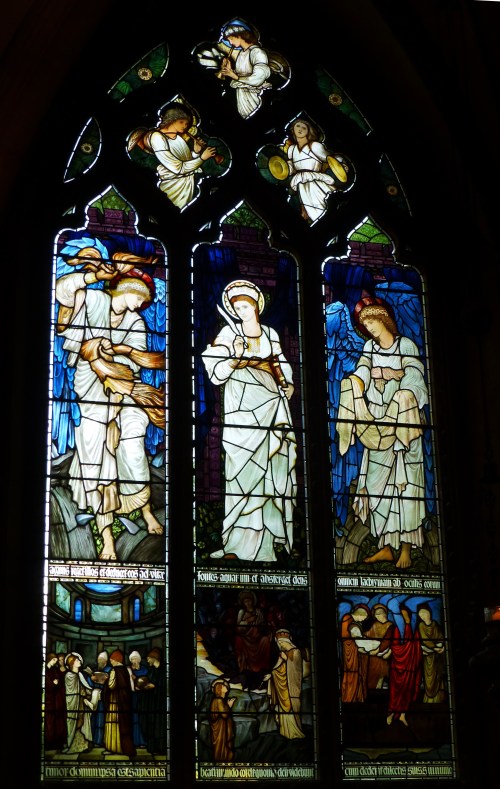
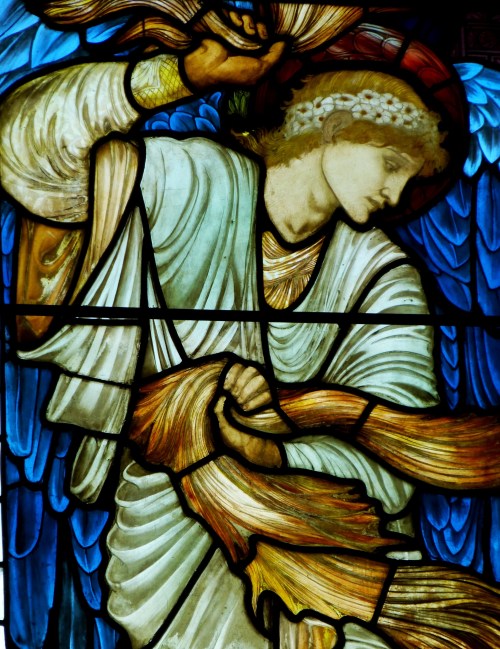
The angel above represents Victory and the angel below represents Sorrow.

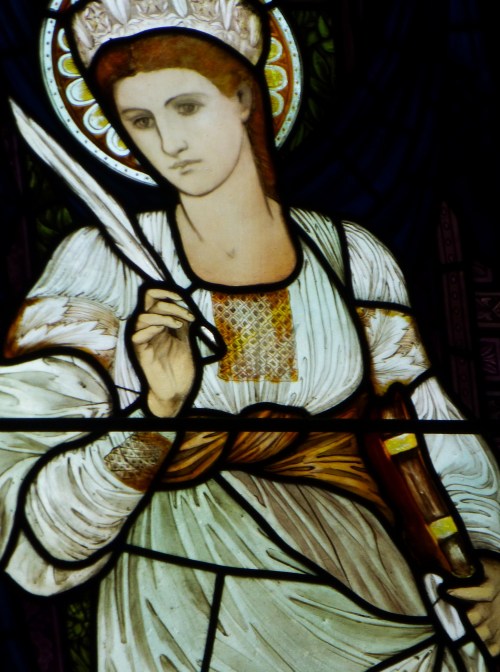
In the stained glass window (1878), designed by William Morris and executed by Edward Burne-Jones, the figure centered between these blue-winged angels is St. Catherine of Alexandria.  If you have a chance to research her story, you’ll understand why both sorrow and victory were paired.

The face of St. Catherine is that of Edith Liddell.  Her sister was the inspiration for Alice in the book, Alice in Wonderland.


Read Full Post »

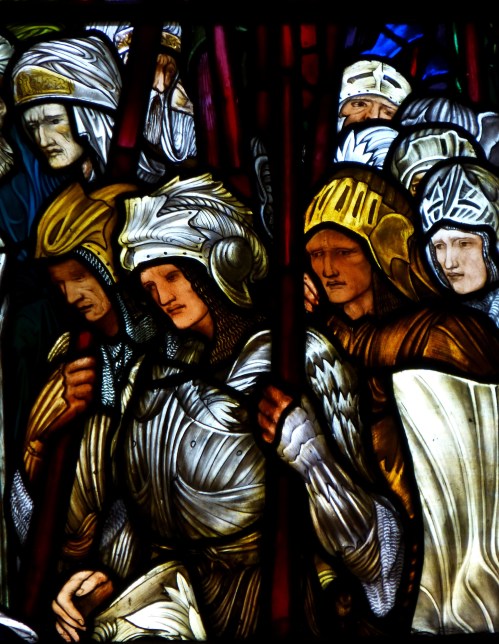
At least it is the pinks and golds that stand out to me on this hot, hot day as I review these images recently taken of the stained glass window, David’s Charge to Solomon.

At some point I hope to direct you to some of the stories and resources that other have shared with me about the window and the fascinating relationship between Burne-Jones and Morris.

Until then, here a few more images of the parts that create the whole.

Read Full Post »

I’m excited to share that now available at The Book Shop at Trinity Church in Copley Square, this mug and two different magnets depicting a photograph I took of the stained glass window, David’s Charge to Solomon.  As described in an earlier post, the window was designed by Edward Burne-Jones and executed by William Morris.  The entire window is of course fantastic but for me, with camera in-hand, it is the light streaming through these angels that draws my eyes.  To see these items and other lovely merchandise, visit the Book Shop in the undercroft (basement) of the church, or you can contact the Shop by phone at 617.536.0944 extension 225.

Read Full Post »

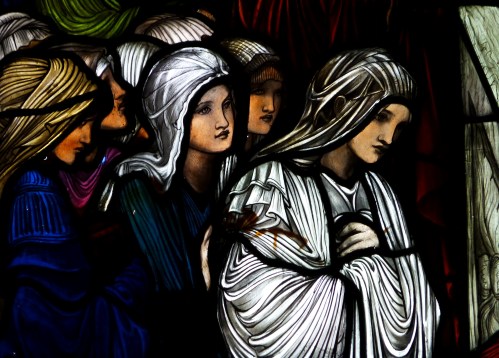
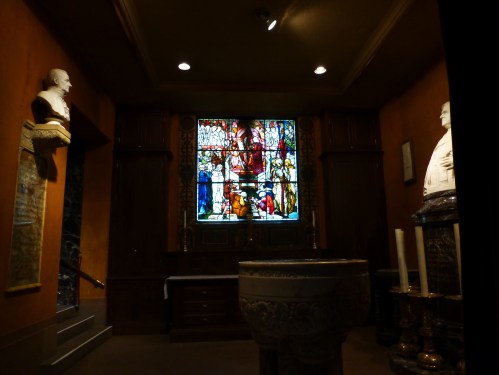
This scene is a detail from the Edward Burne-Jones and William Morris stained glass window, David’s Charge to Solomon, 1882.  The window, designed by Burne-Jones and executed by Morris, is located in the baptistry of Trinity Church in Copley Square. I was drawn to this particular section because of the colors, the incredible drapery of the cloth, and the faces of the women.
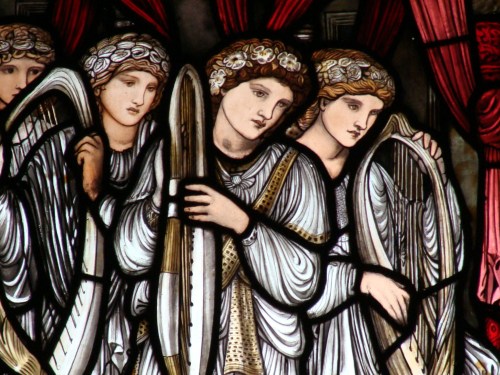
The faces of these women and apparently the faces of many of the women in Burne-Jones’s post-1860’s artwork all have a similar look.  They are likely the face of his great love and muse, Maria Zambaco.  She appears to have been the muse for many of the Pre-Raphaelite artists.  This wikipedia article gives a broad overview of the Burne-Jones/Zambaco relationship, but I must say that this Oxford Today article referencing Fiona MacCarthy gives a much richer picture of a complicated man, his many muses and the influence of his art.
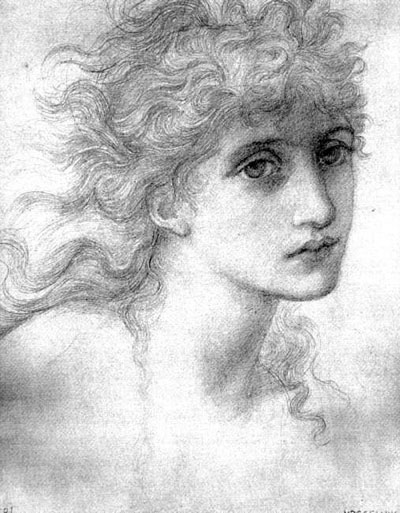
Study by Burne-Jones, c. 1870

Study by Burne-Jones, c. 1870

Read Full Post »
« Newer Posts