
Posts Tagged ‘photos’
Blue
Posted in Inspiration, tagged ancient customs, avatar, blue, deity, Hindu, Photography, photos, religion, religious art, sacred images on September 16, 2011| 1 Comment »
The Yellow Calla Lily
Posted in Inspiration, Nature Notes, tagged botanicals, calla lily, flowers, Photography, photos, pictures, yellow on September 15, 2011| Leave a Comment »


Strange Cats, a Bug and Music Lessons by a Bunny
Posted in Books I Love, Inspiration, Music, tagged Archy & Mehitabel, Bugs Bunny, Camille Saint-Saens, Carnival of Animals, Contributing Writer, Don Marquis, light verse, moth, music, musings, Photography, photos on September 14, 2011| 1 Comment »
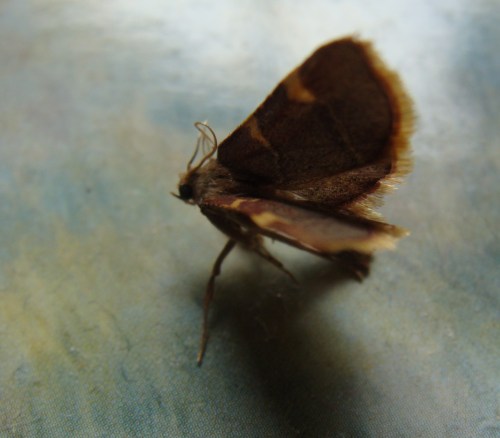
I found this moth on my kitchen table. I have to admit, thanks to Steve, I see moths just a little bit differently than I did before he and I met. Because he and I are of different generations, he often introduces me to art and music that I am quite sure I would not chance upon without him. Most recently he introduced Archy, a philosophical cockroach who used to be a poet in a previous life, and Mehitabel, a wise-talking alley cat who believes she is Cleopatra reincarnated. Created in 1916 by Don Marquis in his daily column for the New York Evening Sun, the pair share adventures expressed in light verse. One of Steve’s favorites: the lesson of the moth. In time, the shorts were compiled into books, and a musical was recorded with Carol Channing voicing Mehitabel.
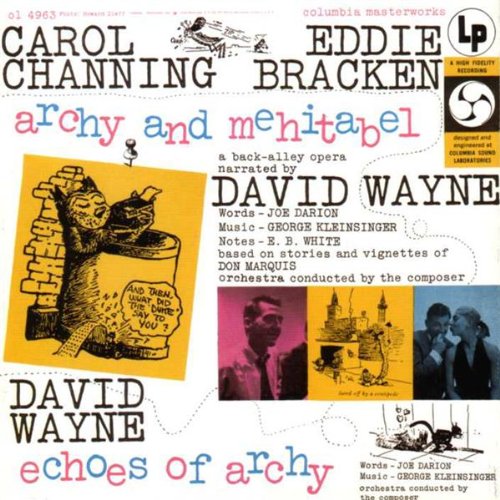 Steve tracked down a CD containing the original music production. We listened last night. It was a treat to hear the actors bringing such unique characters to life. Now, also found on this CD is the Carnival of Animals, an instrumental work paired with words by Ogden Nash. When the Carnival music started, it was beautiful … and it was strangely familiar. I asked Steve who confirmed, “It’s a classic by Saint-Saens. I first heard it as a child, when my father played it in the 50’s.” “Hmmm,” I replied. “I think I first heard it on Bugs Bunny.” Steve shrugged. “That’s where you first heard Wagner, isn’t it?” Well, too true. Meanwhile …
* You can hear the complete version of the Saint-Saens Carnival of Animals suite via this link.
* Read more about and by Archy & Mehatibel here.
* FYI, Carnival of Animals was featured in a Bug Bunny production which you can read more about at the bottom of this wiki page. And to learn more about Bugs Bunny as classical music teacher, check out this wonderful page called Bugs Bunny Goes Classical.
The Purple Calla
Posted in Inspiration, Nature Notes, tagged botanicals, Calla Lilly, flowers, Imogen Cunningham, nature, Photography, photos, pictures, purple, Robert Mapplethorpe on September 14, 2011| Leave a Comment »

The grocery store in my neighborhood has started selling Calla Lillies in every shade but white. Mostly purples and golds, so far.
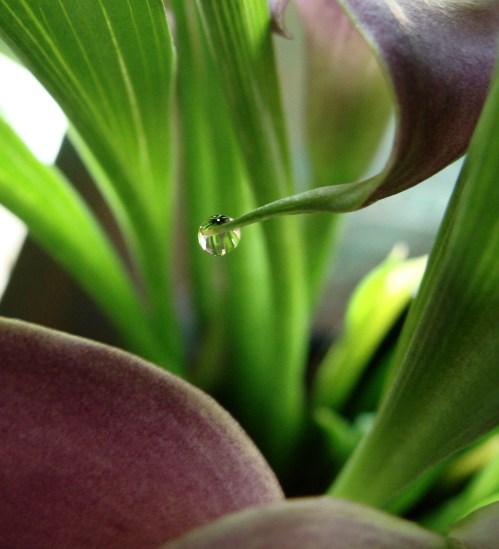
Aside from a purple silk dress I had in high school, I’ve never been a huge fan of the color. But that day in the grocery store, the dark hued plant caught my attention more so than its lemony neighbor. Now it sits in the kitchen window catching light.
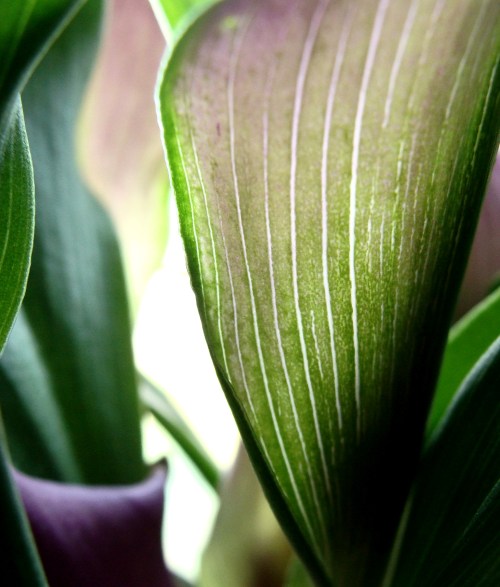
A friend has been encouraging me to photograph this plant for a while. In a guest post, he raised my awareness of the Calla photographs taken by both Robert Mapplethorpe and Imogen Cunningham.
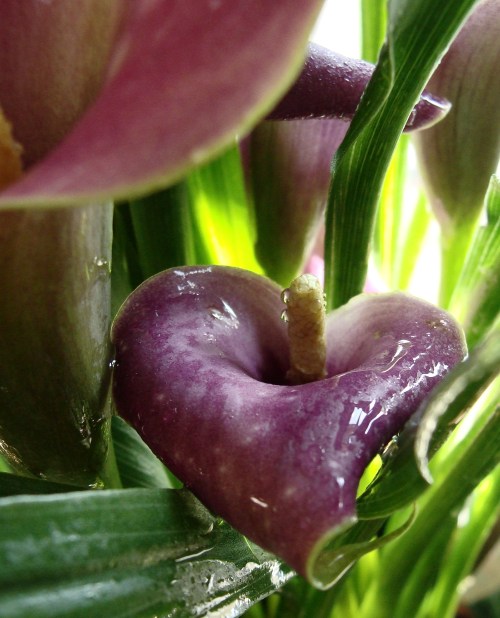
They chose white blossoms. For now, I think I will experiment with color. I’ll let you know how it goes. 😉
Lovely Fungi
Posted in Inspiration, Kitchen Inspirations, Nature Notes, On the Road, tagged fungi, mushrooms, nature, Newburyport, Photography, photos, pictures, wild mushrooms on September 13, 2011| 1 Comment »
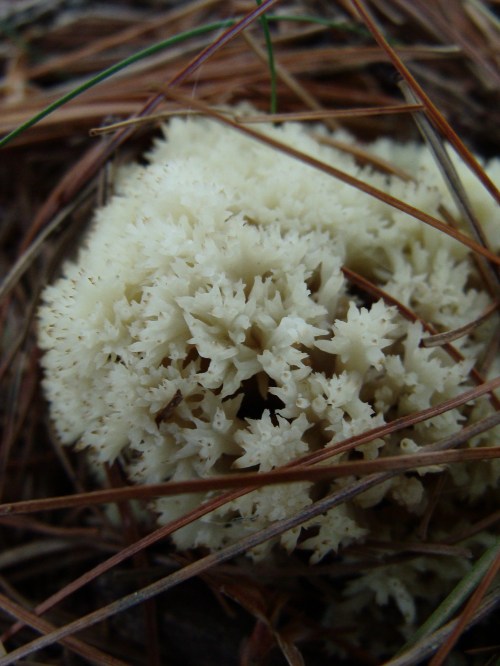
While I only occasionally consume a mushroom, I do love to photograph them. These I recently photographed in Newburyport, Massachusetts.


Through Windows …
Posted in Branches, Inspiration, Kitchen Inspirations, Nature Notes, tagged childhood memories, family, life, light, Photography, photos, pictures on September 12, 2011| 1 Comment »
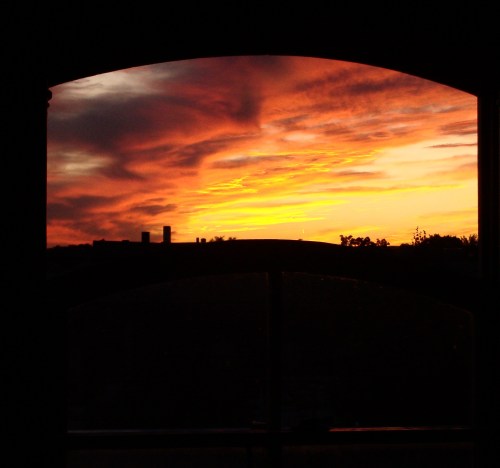
sunset through my kitchen window
When I was a child, I used to shadow my mother as she roamed about our house. Together, through all manner of windows, we would peer out into the day. These were often quiet times with my mother deep in thought. But always eventually she would remember that I was by her side, and she would say, “Do you see it?” As I pressed my face to the kitchen window, she’d point out things like, “The robin in the walnut tree? See the sunlight on its breast?” At night, gazing through the glass living room door, she would nod toward a single star. “See that one? Sparkling in the branches of the pear tree. That’s mine,” she’d say with a grin.

blowing bubbles through an open window
As I grew older, the tables turned, so to speak. In college and well-beyond, whenever and wherever I traveled (before the days of cell phones), I would drag the hotel phone to my perch at a window and describe to her all that I saw through my portal. Her reactions to what I shared certainly influenced by storytelling skills. From her I learned that windows framed moments as well as provided sources of light.


I’ve been lucky at this phase of my life to live in a space with many windows. With camera in-hand I am able to take full advantage of what mom taught me. She is on my mind today as a soft light falls illuminating the oak tree outside my window. On one branch a gray squirrel sits with cheeks bulging with acorns. Two branches up, a blue jay diligently cracks and consumes its own share of nuts. They both ignore me though I must be as viewable to them as they are to me. As I watch this sight, I think of the past and my window-time with mom but I also think of the present and future. That young friend I mention on occasion, the one with whom I draw, is older. A whopping four-years old. And as she visits now, one of her first requests of me is, “Can we look out all the windows?” How can I say no?
Bugs on a Rose
Posted in Inspiration, Nature Notes, tagged beetles, insects, June Bugs, nature, Photography, photos, pictures on September 12, 2011| Leave a Comment »

Rainy Day Blues …
Posted in Branches, Inspiration, Nature Notes, tagged nature, Photography, photos, pictures, rain, trees, weather on September 8, 2011| Leave a Comment »

Dark and Lovely: Black Radishes
Posted in Inspiration, Kitchen Inspirations, tagged black radishes, culinary inspiration, food, Photography, photos, pictures, vegetable, vegetarian recipe on September 7, 2011| 1 Comment »
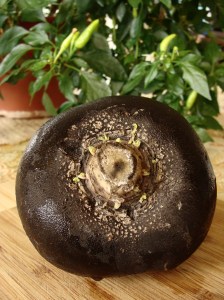

Yesterday I walked into my local grocery store with a very specific agenda: buy bread, butter and carrots. Somehow I left with those items plus a package of two large black radishes, a vegetable completely new to me. I decided to photograph them, and I was curious what Steve might do with them in the kitchen. Thanks to a Chowhound thread and his own imagination, it was a lovely experiment. The following recipe made one pancake-like serving that we split as an appetizer.

Steve’s Black Radish Latkes
Peel one large black radish. Grate approximately one-quarter of this radish into a bowl. Squeeze a tablespoon or so of lime juice over the top to help preserve color and cut the strong horseradish flavor.
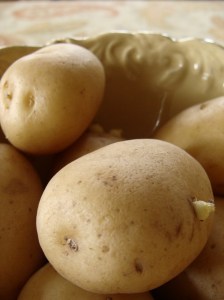
To the bowl add the following items, grated as well or finely chopped: white potatoes (the grated amount should be double the amount of grated radish), a small to medium red onion and a clove or more of garlic.
Salt and pepper to taste.
Mix with olive oil.
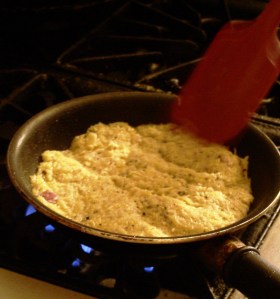 In a small frying pan, heat olive oil and butter. When hot, press the potato-radish mixture into the pan.
Initially cook the cake over high heat so that the bottom browns forming a crust. Once crust is formed on one side, flip it over to brown the second side. Once each side is browned, turn down flame and cover.
Cook over low flame for about 15 minutes or until potatoes are done in the middle. Watch carefully to avoid burning.
For added deliciousness, add grated parmesan cheese as part of the overall mixture or specifically to the crust. Steve thought adding grated apples might also be tasty. As for what variety of apple, when I asked him that question, he looked at me perplexed and asked, “Is there another apple beside Macintosh?”
Ahem. In the end, it’s your choice. If you can track down a black radish, try your own variation on a latke-theme. 😉
Through Sound and Image
Posted in Inspiration, Music, tagged audio, Contributing Writer, creativity, emotion, Inspiration, music, musings, Photography, photos, soundtracks, storytelling, visual images on September 6, 2011| Leave a Comment »
Reading photographer Jay Kinghorn’s post about how audio affects perception of visual images reminded me of the “soundtracks” I used to create as I wrote short stories. The music I collected helped me channel, get lost in, build and sustain emotions that I needed to create strong images on the page. With the support of a tech savvy roommate, I even played around with Windows Media and tried to weave together my written words with still images and compiled music. The goal? Simply to tell a story and use accompanying music to create emotional resonance. Currently I do little with short stories or movie making though music still influences my work … I sometimes listen to music as I walk along the Charles with my camera. Perhaps this New England winter, I will jump back into the fiction. Meanwhile, this late summer morning, I find myself pondering the fact that while audio certainly affects image perception, the flipside is also true. Visuals influence our perception of audio.

Leaf by the Charles River
Yes, there is some connection to recent Sunday musings where I lamented that, in today’s politics, glossy images distract from listening to candidates’ words. Nothing novel there – just look at the 1960 Kennedy/Nixon debate where television viewers apparently thought the inexperienced yet highly telegenic Kennedy won the debate while radio listeners thought the less telegenic, more experienced Nixon won. Politics aside, consider pharmaceutical ads especially the ones that air during the evening news and other programs associated with older viewers. The companies have to share the side effects associated with the drug being advertised. Notice how the spoken words (e.g. … this drug may cause this that or the other thing and in rare cases lead to death …) are paired with images of happy people of all ages meandering — sometimes slowly but always with a smile — along beaches, up mountains, through open-air markets, with a dog or two in tow. Hope is evoked so powerfully, visually that it becomes easy to let words of risk go in one ear and out the other. In the end, the images convey the message. Words become irrelevant.

Fallen
Of course, this is nothing new. Peoples’ visual and auditory responses and perceptions have been manipulated throughout human history, as a means to some end. I guess that’s what I am struggling with right now. When I watch a movie or movie trailer or attend a concert or an art exhibit or even a religious service, I am open to being manipulated. I await the melding of music, words and images to make me experience a story. But it’s when that manipulation happens in other contexts that I become wary and quite frankly on occasion angry. Artistically, I am looking forward to exploring these ideas in both my photography and writing, and to better understand how other artists use these ideas and I don’t mean in a Wag the Dog kind of way.
 Words + Images