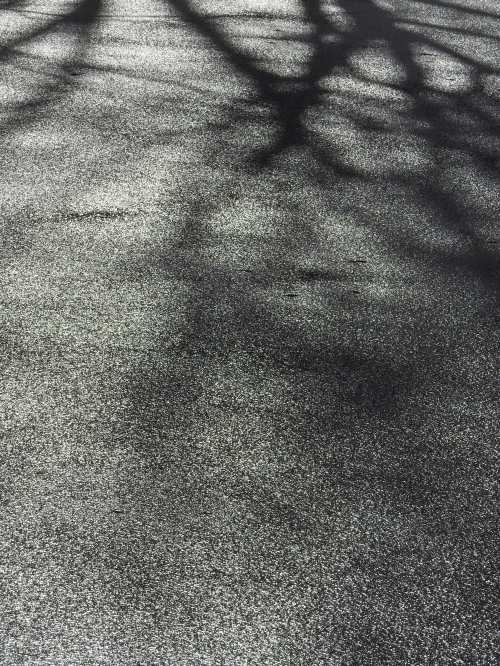
Its leaves have turned from green to brown
with little variation in between
but still the light shines through them bright
revealing dark beauty to be seen.
Posted in Branches, Inspiration, Nature Notes, tagged abstract, autumn, beauty, Inspiration, leaves, multiple exposure, nature, Photography, poetry, trees on October 30, 2017| Leave a Comment »

Its leaves have turned from green to brown
with little variation in between
but still the light shines through them bright
revealing dark beauty to be seen.
Posted in Inspiration, tagged African American history, American history, black history, class, culture, Inspiration, mentors, poetry, race relations, storyteller, women's history on October 5, 2017| Leave a Comment »

I’ve been researching the year 1927 for a project and came across an issue of The Crisis Magazine for that year. In this issue, several new artists were featured. Even though they were not the focus of my research, I became curious about who these people were and who they became. I knew of Countee Cullen but the others … I began by looking up Blanche Taylor Dickinson. The article in The Crisis notes that she “received honorable mention for her poem, “That Hill,” in The Crisis contest of 1926. Four of her poems have recently been accepted to appear in “Present Day Poets.” She was featured alongside Cullen, Loren R. Miller, Anita Scott Coleman and Eulalie Spence.

Three years earlier, Dickinson had written W. E. B. Du Bois, co-founder and editor of The Crisis. “I am a teacher and a reader of The Crisis but am just becoming a suscriber. You edit a fine magazine and it is a great factor in helping to bring us more and more into the recognition of the opposite race.” Enclosed with the letter were poems but no envelope with return postage because, as Dickinson wrote, if the poems were unacceptable to Du Bois, “you have a waste basket handy I am sure.”
Du Bois read her poems and then sent a reply, despite her lack of return postage. “You have some poetic feelings but are not good enough to publish. You must read more poetry. Buy Rittenhouse’s Little Book of Modern British Verse.”
Dickinson does indeed read Rittenhouse and other compilations. In 1925 she wrote Du Bois once more.
“Once before I was ‘nervy’ enough to write you a personal letter and you were kind enough to advise. So pardon this second intrusion and say, ‘She is determined to hold out to the end.’ I have read or you might say studied the book you mentioned … and feel that I have profited thereby. I have made a study of several others, too. Now if I could see a few expressions of mine in our own magazine, CRISIS, I imagine I should feel as I imagine one feels in your own sphere. I am not working for money now but for RECOGNITION. It is unwomanly of me to beg favor of your staff but I do ask please read these lines from the angle of the writer and others less favored and see what you can find in them that deserves criticism or comment.”
Du Bois’s reply? “I do not think that the poems which are enclosed are quite good enough for publication but I do think that the course of study upon which you are embarked is worth while and I hope you will keep it up.”
Dickinson, who’d been writing since childhood, would continue to work at her craft and her poetry would be published in a number of publications during the late 1920s. A little but not a lot is written about her life. Born in 1896 to a prosperous Kentucky farmer, she did well in school (including having her writing published), attended university, became a school teacher and worked as a journalist. She married a truck driver and moved around a bit. In 1929 she interviewed Amelia Earhart for the newspaper, Baltimore Afro-American. In 1930 Dickinson would deliver a speech about “The Cultural Values of Negro Poetry,” but little writing can be found after this time.
Her poetry is quite moving and suggestive of how she (or perhaps women around her) may have felt about life as a woman in the 1920s in general and as an educated African American woman specifically.
“Ah, I know what happiness is …
It is a timid little fawn
Creeping softly up to me
For one caress, then gone
Before I’m through with it …
Away, like dark from dawn!”
— excerpt from poem, A Sonnet and a Rondeau, 1927
Her words can be raw as in this excerpt from, The Good Wife, appearing in a 1932 newspaper, where her words reference the to-this-day divisive issues of class, color and even education level within the African American experience.
All day long
I been sipping suds.
Money making’s mine-
Money spending’s Bud’s.
Folks keep asking,
How could I
Let a man black as Bud
Take my eye.
I keep rubbing
‘Till my po’ head swim.
‘T ain’t worthwhile to answer
‘Cause Bud ain’t courted them!
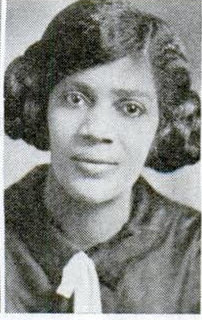
Her work can be found online and in print anthologies from and about the period known as the Harlem Renaissance. Blanche Taylor Dickinson died in 1972.
Sources & Additional Reading
http://credo.library.umass.edu/view/full/mums312-b168-i213
http://credo.library.umass.edu/view/full/mums312-b169-i545
http://credo.library.umass.edu/view/full/mums312-b169-i546
Shadowed Dreams: Women of the Harlem Renaissance by Maureen Honey
Kentucky African American Encyclopedia edited by Smith, McDaniel and Hardin, p. 142
New Negro Artists, The Crisis, February 1927, p. 206
The Good Wife, The Greeley Daily Tribune, October 10, 1932, p. 3.
Revelation, https://www.poetrynook.com/poem/revelation-16
Posted in Inspiration, Nature Notes, tagged homelessness, Inspiration, musings, nature, Photography, poetry, prose, squirrels, urban landscape on July 24, 2017| 1 Comment »

where do the squirrels go
perhaps inside a tree or beneath a big leaf
maybe underground to huddle in a group
a few brave souls probably stay with faces upturned to the sky
I’m pretty sure that I’ve seen wet squirrels before
but when it rains so steady as it has done today
where do the homeless people go
not into tree not beneath a leaf though I am sure there are a few undergrounds
but in general really I am asking as I see the puddles grow outside
where do the homeless go in the rain
those folks I saw just yesterday in Back Bay
not far from this squirrel
on the streets in the alleys on the benches
some asking for money some fighting and others praying
I don’t know where they go in the rain
but I probably should
Posted in Inspiration, tagged dance, filmmaking, Inspiration, poetry, Song of Myself, Walt Whitman on May 14, 2017| 1 Comment »
Spend four minutes in Whitman, Alabama as The Creative Minds Dance Crew reads (and occasionally dances) verse 21 of Walt Whitman’s Song of Myself.
Posted in Inspiration, tagged angels, art, beauty, holy grail, Idylls of the King, Inspiration, murals, painting, Photography, poetry, Tennyson on March 12, 2017| Leave a Comment »

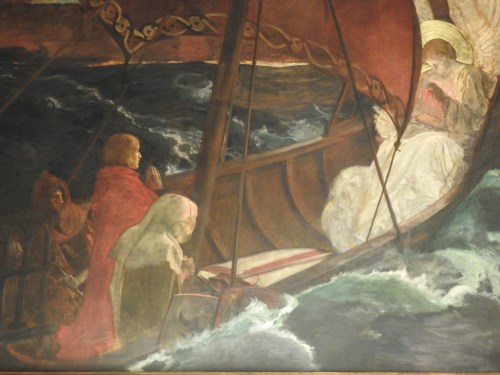
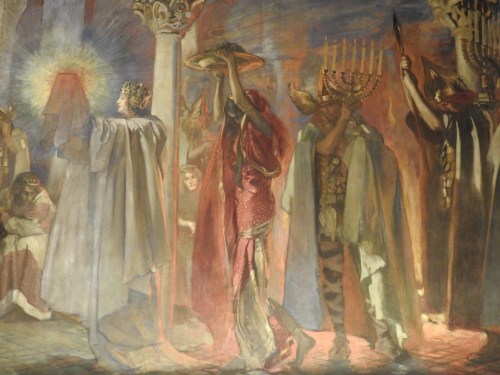
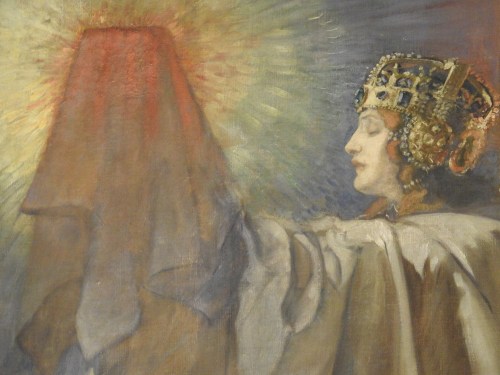
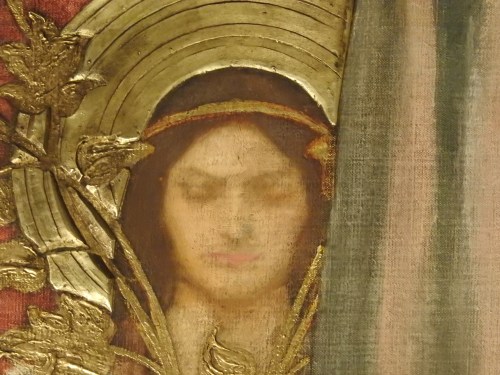
I have read too many headlines this morning. My head is full of thoughts. I think I shall take a break from the computer screen until I can sort them. Meanwhile, I share these last images from my recent visit to the Boston Public Library’s Abbey Room and painter Edwin Austin Abbey’s expression of Tennyson’s Idylls of the King.

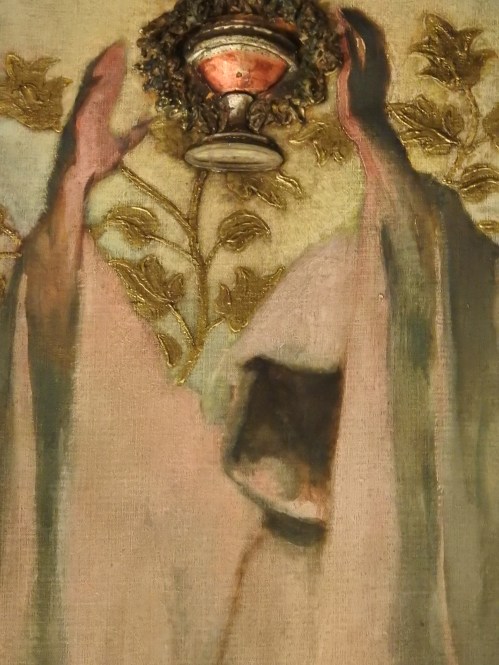
Panel XIII. Sir Galahad crosses the sea in Solomon’s Ship
As for what’s happening in this scene, from the BPL website: “Sir Galahad crosses the seas to Sarras in Solomon’s Ship, guided by the Grail borne by an angel. Sir Bors and Sir Percival accompany him, while three spindles for the Tree of Life rest upon the stern of the ship.”

https://www.flickr.com/photos/boston_public_library/sets/72157647672175522/with/15074561737/
Posted in Inspiration, tagged art, Arthurian, beauty, Boston Public Library, Edwin Austin Abbey, holy grail, Inspiration, painting, Photography, poetry, storytelling, Tennyson on March 11, 2017| Leave a Comment »

detail from The Arthurian Round Table and the fable of the Seat Perilous
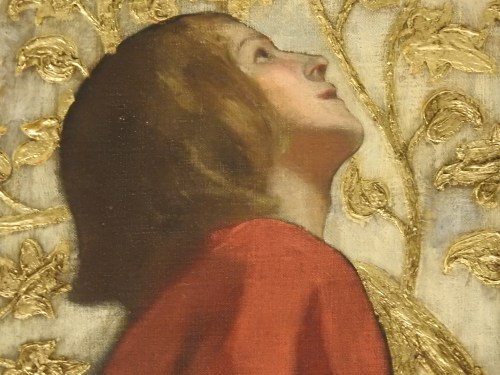
Between 1893 and 1902 fifteen panels were installed in the Boston Public Library in Copley Square depicting the story of The Quest for the Holy Grail. Conceived of by artist Edwin Austin Abbey (1852-1911) he based his work on Lord Alfred Tennyson’s version of the Arthurian legend. In recent years the BPL has done a magnificent job of capturing the beauty of the full panels and sharing each panel’s story with the public through Flikr. That link is below. When I walk in with my camera I tend to focus in on the details and this is what I recently saw.


detail from King Amfortas and the Castle of the Grail lie under a spell

This time one of my favorite panels to focus on what the last in the sequence, The Golden Tree. According to the BPL summary, an adaptation from an outline by Henry James, “Sir Galahad, now the King of Sarras, builds a golden tree. When he is presented with the Grail, his spirit and the Grail ascend to heaven. Like other elements throughout the mural cycle, the golden tree and the Grail are depicted in gilded raised relief, a method that Abbey may have learned from his studio partner John Singer Sargent.”


Well worth a visit to see in person but until then you can see the full cycle of panels here: https://www.flickr.com/photos/boston_public_library/sets/72157647672175522/with/15258034891/
And if you have a large cup of tea at hand, or something else, you can read Tennyson’s Holy Grail upon which the murals were based. They don’t write poems like this anymore. 🙂 http://d.lib.rochester.edu/camelot/text/tennyson-the-holy-grail
Posted in Books I Love, Uncategorized, tagged art, beauty, humanity, illustration, Inspiration, Miki Byrne, Podesto, poetry, Popshot Magazine, refugees, storytelling on March 2, 2017| 1 Comment »
That is what I encourage you to do if you choose to view the poem, Refugee, written by Miki Byrne and beautifully illustrated by Podessto:
Posted in Inspiration, tagged beauty, Inspiration, music, musings, nature, Photography, poetry, rivers on February 2, 2017| 3 Comments »

When I walked toward the river yesterday, I was so cold. I knew I couldn’t walk the length of the Esplanade photographing its wintry landscape but I felt compelled to try. I had not been to the river in a long time. Rivers have been on my mind of late.

I’ve been thinking about rivers and how they branch and what you can find in those branches over time. How rivers can run deep, they can run shallow, they shape the land even as the land shapes the flow of the waters.

Of late both a song and a poem about rivers periodically run through my mind. The song, composed by Sam Cooke, begins …
I was born by the river in a little tent
Oh, and just like the river I’ve been running ever since
It’s been a long, a long time coming
But I know a change gon’ come, oh yes it will …
The poem, as written by Langston Hughes, opens …
I’ve known rivers:
I’ve known rivers ancient as the world and older than the
flow of human blood in human veins.
My soul has grown deep like the rivers. …

My fingers already freezing, I made it to the river’s edge and began walking along an icy stretch. I looked around waiting for something to catch my attention. I watched where the sunlight fell. Finally I came to a point, as may always be the case, when I had to decide how much further I could safely continue versus turning back.

I paused, took a deep breath and looked around. I planted my feet and took a few photos. Right there. That was all I had. Just that given moment before I had to race into the nearest shop to warm myself. Later as I scrolled through the few pictures captured I was glad that I had decided to take action in that given moment. What to do in a given moment? That is the question I ponder as I follow rivers and as I do my best to follow the daily news.

It is a deluge. A constant stream of information. A co-mingling of truth, lies, opinion, jargon and drama spread with too much rapidity across social media platforms, often without deep thought or editing. And not just at the Presidential level. The profound nature of the changes taking place right now in human history across this planet is quite breath-taking. It is paralyzing to some, invigorating to others, and then there is everyone in between. For me, I am learning, as by the river, to pause and take a deep breath, and then to decide what I can do, from where I am, at a given moment.

I’m not sure when I will be returning to the river, at least the Charles River. Too cold right now but Spring will come. The bared branches arching over the water will soon enough be green.
Sources & Additional Reading
The Negro Speaks of Rivers by Langston Hughes
A Change is Gonna Come by Sam Cooke
Posted in Inspiration, Uncategorized, tagged america's future, American history, art, black history, immigration, Inspiration, Langston Hughes, Photography, poetry on January 25, 2017| 4 Comments »

a wall I saw today
Let America Be America Again
Let America be America again.
Let it be the dream it used to be.
Let it be the pioneer on the plain
Seeking a home where he himself is free.
(America never was America to me.)
Let America be the dream the dreamers dreamed–
Let it be that great strong land of love
Where never kings connive nor tyrants scheme
That any man be crushed by one above.
(It never was America to me.)
O, let my land be a land where Liberty
Is crowned with no false patriotic wreath,
But opportunity is real, and life is free,
Equality is in the air we breathe.
(There’s never been equality for me,
Nor freedom in this “homeland of the free.”)
Say, who are you that mumbles in the dark?
And who are you that draws your veil across the stars?
I am the poor white, fooled and pushed apart,
I am the Negro bearing slavery’s scars.
I am the red man driven from the land,
I am the immigrant clutching the hope I seek–
And finding only the same old stupid plan
Of dog eat dog, of mighty crush the weak.
I am the young man, full of strength and hope,
Tangled in that ancient endless chain
Of profit, power, gain, of grab the land!
Of grab the gold! Of grab the ways of satisfying need!
Of work the men! Of take the pay!
Of owning everything for one’s own greed!
I am the farmer, bondsman to the soil.
I am the worker sold to the machine.
I am the Negro, servant to you all.
I am the people, humble, hungry, mean–
Hungry yet today despite the dream.
Beaten yet today–O, Pioneers!
I am the man who never got ahead,
The poorest worker bartered through the years.
Yet I’m the one who dreamt our basic dream
In the Old World while still a serf of kings,
Who dreamt a dream so strong, so brave, so true,
That even yet its mighty daring sings
In every brick and stone, in every furrow turned
That’s made America the land it has become.
O, I’m the man who sailed those early seas
In search of what I meant to be my home–
For I’m the one who left dark Ireland’s shore,
And Poland’s plain, and England’s grassy lea,
And torn from Black Africa’s strand I came
To build a “homeland of the free.”
The free?
Who said the free? Not me?
Surely not me? The millions on relief today?
The millions shot down when we strike?
The millions who have nothing for our pay?
For all the dreams we’ve dreamed
And all the songs we’ve sung
And all the hopes we’ve held
And all the flags we’ve hung,
The millions who have nothing for our pay–
Except the dream that’s almost dead today.
O, let America be America again–
The land that never has been yet–
And yet must be–the land where every man is free.
The land that’s mine–the poor man’s, Indian’s, Negro’s, ME–
Who made America,
Whose sweat and blood, whose faith and pain,
Whose hand at the foundry, whose plow in the rain,
Must bring back our mighty dream again.
Sure, call me any ugly name you choose–
The steel of freedom does not stain.
From those who live like leeches on the people’s lives,
We must take back our land again,
America!
O, yes,
I say it plain,
America never was America to me,
And yet I swear this oath–
America will be!
Out of the rack and ruin of our gangster death,
The rape and rot of graft, and stealth, and lies,
We, the people, must redeem
The land, the mines, the plants, the rivers.
The mountains and the endless plain–
All, all the stretch of these great green states–
And make America again!
by Langston Hughes (1902-1967)
Read more Langston Hughes and find other poems for inspiration, reflection and perhaps even motivation at https://www.poets.org/