Feeds:
Posts
Comments

Yesterday I walked into my local grocery store with a very specific agenda:  buy bread, butter and carrots.  Somehow I left with those items plus a package of two large black radishes, a vegetable completely new to me.   I decided to photograph them, and I was curious what Steve might do with them in the kitchen.  Thanks to a Chowhound thread and his own imagination, it was a lovely experiment.  The following recipe made one pancake-like serving that we split as an appetizer.

Steve’s Black Radish Latkes

Peel one large black radish.  Grate approximately one-quarter of this radish into a bowl.  Squeeze a tablespoon or so of lime juice over the top to help preserve color and cut the strong horseradish flavor.

To the bowl add the following items, grated as well or finely chopped:  white potatoes (the grated amount should be double the amount of grated radish), a small to medium red onion and a clove or more of garlic.

Salt and pepper to taste.

Mix with olive oil.

In a small frying pan, heat olive oil and butter. When hot, press the potato-radish mixture into the pan.

Initially cook the cake over high heat so that the bottom browns forming a crust.  Once crust is formed on one side, flip it over to brown the second side.  Once each side is browned, turn down flame and cover.

Cook over low flame for about 15 minutes or until potatoes are done in the middle.  Watch carefully to avoid burning.

For added deliciousness, add grated parmesan cheese as part of the overall mixture or specifically to the crust.  Steve thought adding grated apples might also be tasty.  As for what variety of apple, when I asked him that question, he looked at me perplexed and asked, “Is there another apple beside Macintosh?”

Ahem.  In the end, it’s your choice.  If you can track down a black radish, try your own variation on a latke-theme. 😉


Through Sound and Image

Reading photographer Jay Kinghorn’s post about how audio affects perception of visual images reminded me of the “soundtracks” I used to create as I wrote short stories.  The music I collected helped me channel, get lost in, build and sustain emotions that I needed to create strong images on the page.  With the support of a tech savvy roommate, I even played around with Windows Media and tried to weave together my written words with still images and compiled music.  The goal?  Simply to tell a story and use accompanying music to create emotional resonance.  Currently I do little with short stories or movie making though music still influences my work … I sometimes listen to music as I walk along the Charles with my camera.  Perhaps this New England winter, I will jump back into the fiction.  Meanwhile, this late summer morning, I find myself pondering the fact that while audio certainly affects image perception, the flipside is also true.  Visuals influence our perception of audio.

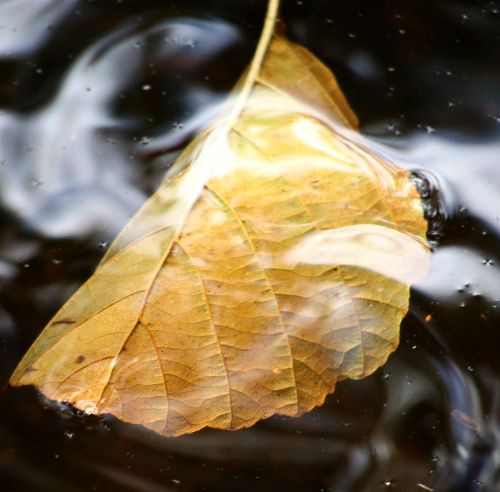
Leaf by the Charles River

Yes, there is some connection to recent Sunday musings where I lamented that, in today’s politics, glossy images distract from listening to candidates’ words.  Nothing novel there – just look at the 1960 Kennedy/Nixon debate where television viewers apparently thought the inexperienced yet highly telegenic Kennedy won the debate while radio listeners thought the less telegenic, more experienced Nixon won.  Politics aside, consider pharmaceutical ads especially the ones that air during the evening news and other programs associated with older viewers.  The companies have to share the side effects associated with the drug being advertised.  Notice how the spoken words (e.g. … this drug may cause this that or the other thing and in rare cases lead to death …)  are paired with images of happy people of all ages meandering — sometimes slowly but always with a smile — along beaches, up mountains, through open-air markets, with a dog or two in tow.  Hope is evoked so powerfully, visually that it becomes easy to let words of risk go in one ear and out the other.  In the end, the images convey the message.  Words become irrelevant.

Fallen

Of course, this is nothing new.  Peoples’ visual and auditory responses and perceptions have been manipulated throughout human history, as a means to some end.  I guess that’s what I am struggling with right now.  When I watch a movie or movie trailer or attend a concert or an art exhibit or even a religious service, I am open to being manipulated.  I await the melding of music, words and images to make me experience a story.  But it’s when that manipulation happens in other contexts that I become wary and quite frankly on occasion angry.  Artistically, I am looking forward to exploring these ideas in both my photography and writing, and to better understand how other artists use these ideas and I don’t mean in a Wag the Dog kind of way.


Scenes Along My Riverwalk

Fruitility

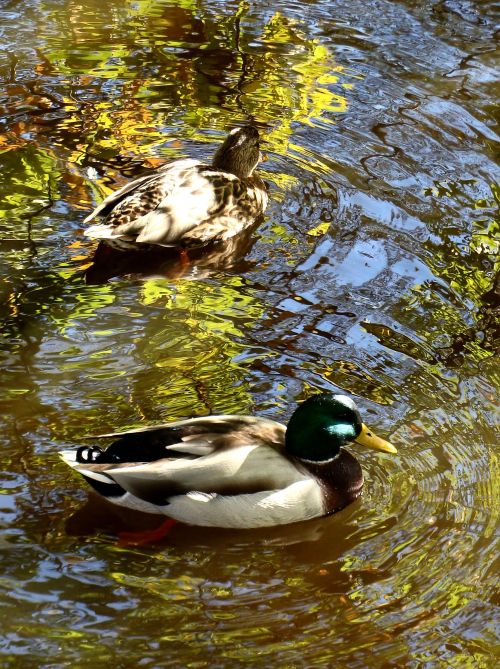
Abstract Reflections

This morning I’d put the television on mute as I worked on a paper.  When I finished the paper, I looked up and saw Michele Bachmann being interviewed by Bob Schieffer on CBS’s Face the Nation.  I turned the television off and prepared to walk away.  Then I stopped, sighed and turned the television back on.  I decided I should “walk my talk.”

You see,  I often tell younger friends of mine, especially young relatives, no matter what your political stance, first, be sure you vote, and second, vote responsibly – be informed.  So today, I decided to better inform myself about this candidate instead of only listening to heresay.  Well, without getting too personal, I’ll share a few things that stood out to me.

First, it will be a sad day in journalism when Bob Schieffer is no longer behind the desk.  In clear, concise, respectful language, he asked questions that showed without a doubt that he had done his homework and that he was prepared to ask the hard questions.  He was not to be distracted.

Second, it was sad to see once more that no matter how direct the question, even if repeated, candidates are well-trained in delivering non-answers.  I took public speaking.  It is amazing to see the tools being put to work so well by Ms. Bachmann (and all the other candidates).

Finally …

It may be my imagination but it seems that candidates, male and female, of any party, are so gloriously put together these days that they remind me of watching Entertainment Tonight or any of a half-dozen reality TV shows.  As I watch Bachmann, Perry and all the others on television, I just wonder if people are actually listening to candidates’ words or dazzled by their appearance.  It might make an interesting challenge as candidates share their thoughts on screen, to keep the sound up, but somehow “mute” the image.


Illuminated Glass

If you are ever in Boston’s Copley Square and you only have time to enter two buildings to view the beauty of their interior art and architecture then I highly recommend two buildings that face each other:  the Boston Public Library and Trinity Church.  Now, if you only have time to enter one building — and the sun is shining so bright that it brings tears to your eyes — consider a tour of Trinity.  Why?  The stained glass windows.  Yesterday was especially bright and beautiful in the city.  And I was especially lucky to capture a few images of brightly illuminated glass.

Read more about Trinity Church and its architecture here.  Learn more about the Boston Public Library here.


Illumination …

… in the kitchen, of course.

Irene’s Impact (So Far)

So far, thankfully, Irene has had less impact than expected where I am.  During a quick jaunt outside between bands of rain, I found broken branches, pools of water and a few people standing with faces to the air feeling the lingering breeze.  I found myself looking down and this is what I saw:

Patterns as Inspiration

Here are a few of the things inspiring me of late:

Sunlight shining through Japanese Maple leaves.

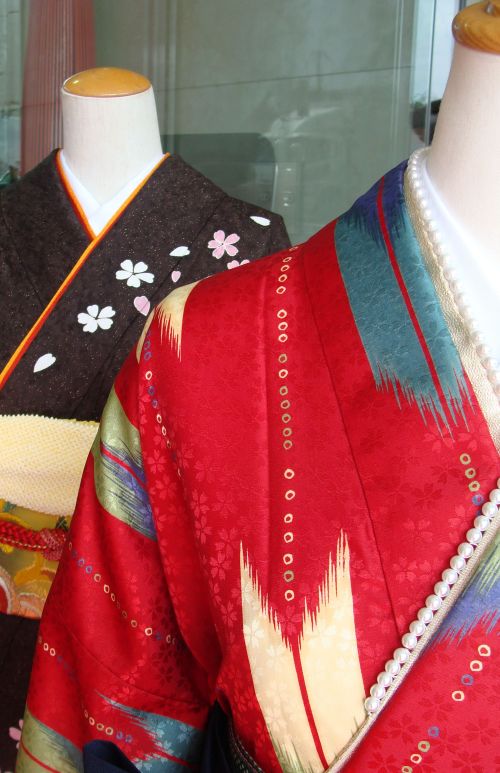
Japanese Noh robes as described in the book, Patterns and Poetry.

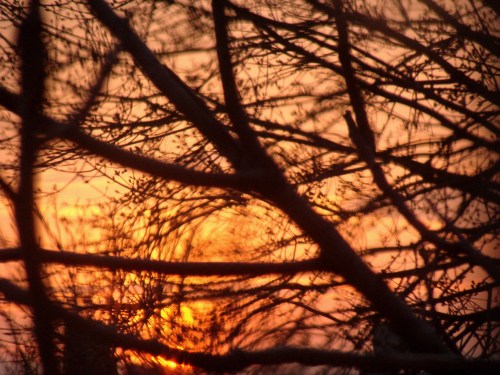
And always, always, always, trees –  their green leaves, bare branches and beautiful barks.


Wild carrots, anyone?

Queen Anne’s Lace, also known as “wild carrot,” grows widely and wildly along the Charles River.  It is so abundant that I sometimes ignore the sprawling plants, pushing it aside to get a glimpse of rarer, more colorful life.  But sometimes the leaves and flowers of this plant catch the light in such a way that I cannot ignore their beauty.