Feeds:
Posts
Comments

Posts Tagged ‘beauty’

An excellent find at the farmer’s market. Romanesco broccoli. Expect more photos before the subject is eaten. 🙂

Read Full Post »
James Weldon Johnson and Aaron Douglas

James Weldon Johnson (1871-1938) and Aaron Douglas (1899-1979)

Originally published in 1927, James Weldon Johnson’s book, God’s Trombones, is a slim volume composed of a prayer and seven poems: Listen, Lord–A Prayer, The Creation, The Prodigal Son, Go Down Death, Noah Built the Ark, The Crucifixion, Let My People Go, and The Judgement Day. The verses were inspired by his experiences attending black churches throughout the American south. The preachers’ oratory inspired Johnson to write these poems and, in the book’s preface, to reflect upon the nature of oration and folk traditions. His poems, I assume, inspired his artistic collaborators, Aaron Douglas and Charles B. Falls. The signature styles of two very different artists were brought together to complement Johnson’s words.

lettering by Charles Buckley Falls

Lettering by Charles Buckley Falls (1874-1960)

A publication was produced that is really quite distinctive with regard to words, images and overall concept. Johnson as scholar as well as poet produced a tome that captured in a unique way the power and importance of religion in the African American experience. He makes real even for those not having attended black churches how the preachers – God’s trombones – used word, rhyme and rhythm to give voice to the stories in the bible even when no bible was present.

Illustration

It would be easy to pick up this book, to skip the preface and go straight to the poems. But don’t. Johnson’s preface is critical, for his brief and cohesive insights into religion and the American experience, and for his guidance in how to truly appreciate what he was attempting to do with this book.

I claim no more for these poems than that I have written them after the manner of the primitive sermons. In the writing of them I have, naturally, felt the influence of the Spirituals. There is, of course, no way of recreating the atmosphere — the fervor of the congregation, the amens and hallelujahs, the undertone of singing which was often a soft accompaniment to parts of the sermon; nor the personality of the preacher — his physical magnetism, his gestures and gesticulations, his changes of tempo, his pauses for effect, and, more than all, his tones of voice. These poems would better be intoned than read; especially does this apply to “Listen, Lord,” “The Crucifixion,” and “The Judgment Day.” But the intoning practiced by the old-time preacher is a thing next to impossible to describe; it must be heard, and it is extremely difficult to imitate even when heard. …

“… The tempos of the preacher I have endeavored to indicate by the line arrangement of the poems, and a certain sort of pause that is marked by a quick intaking and an audible expulsion of the breath I have indicated by dashes. There is a decided syncopation of speech — the crowding in of many syllables or the lengthening out of a few to fill one metrical foot, the sensing of which must be left to the reader’s ear. The rhythmical stress of this syncopation is partly obtained by a marked silent fraction of a beat; frequently this silent fraction is filled in by a hand clap. …

The ensuing poems do read like song and the power of the words are echoed and strengthened by the complementary visusals.

Illustrations by Douglas for the poems, The Creation, The Prodigal Son, and Go Down Death.

Illustrations by Douglas for the poems, The Creation, The Prodigal Son, and Go Down Death.

Noah Built the Ark

Illustration and complementary chapter head for Noah Built the Ark

Illustration for The Crucifixion

Illustration for The Crucifixion

Illustration for Let My People Go

Illustration for Let My People Go


Both Johnson and Aaron Douglas are considered key figures of the Harlem Renaissance. Charles B. Falls was a noted illustrator and designer especially remembered for the posters he created during World War I and II as part of the Victory Books Campaign.

Over time the book has been reprinted numerous times including an edition by Penguin Classics, edited by Henry Louis Gates and with an introduction by Maya Angelou. As Johnson wrote in his preface the poems are really meant to be performed and over the years many individuals and institutions have done just that. Recordings can be found online.  You can also find the book fully digitized and viewable online thanks to the Documenting the American South project at University of North Carolina at Chapel Hill, my primary source for this post. I hope you have the opportunity to view the book in-hand or online: http://docsouth.unc.edu/southlit/johnson/johnson.html


Sources & Additional Readings

God’s Trombones (digitized) – http://docsouth.unc.edu/southlit/johnson/johnson.html

James Weldon Johnson – https://en.wikipedia.org/wiki/James_Weldon_Johnson

Aaron Douglas – https://en.wikipedia.org/wiki/Aaron_Douglas

Charles Buckles Falls – https://en.wikipedia.org/wiki/Charles_Buckles_Falls

The New Negro Renaissance – http://exhibitions.nypl.org/africanaage/essay-renaissance.html

More about the Victory Books Campaign – http://arcweb.sos.state.or.us/pages/exhibits/ww2/services/books.htm

Read Full Post »

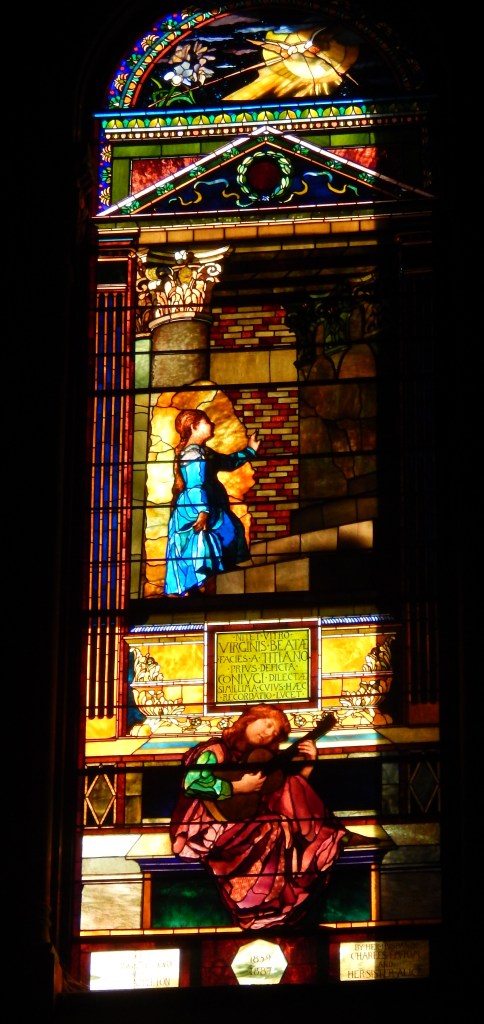
In a church, I walked into a room to photograph a specific set of stained glass windows that were at eye level, and when I turned to walk out I happened to look up and this is what I saw hanging on the wall. I don’t yet know the name of painter or painting. That research continues, and if you have any incites please let me know. I’m not a formal student of fine arts but I can imagine that there are layers upon layers of meaning in the choice of colors, the flowers shown, etc. More information to follow in the near future I hope.

Read Full Post »

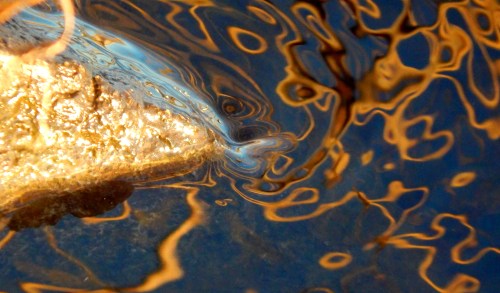
… light, wind, and water in action at the Copley Square fountain in Boston. It was a breezy day with bright sun. I sat by the water’s edge with my camera tucked away, intent upon eating a late lunch. I’m glad I had no expectation because I may not have seen what I did see just by sitting quietly by the water. After a while I could not ignore what I was seeing and so I had to put away my lunch, dig out my camera, and begin to photograph the motion before me.

Autumn leaves floating on the water’s surface first caught my attention, but the brightest of the leaves lay on the bottom.  I’m not sure what forces kept them there even as the fountain’s mechanics and nature’s wind erratically churned the water. The sun was bright too, low angled. It dispersed in the waters producing rainbows.

Nearby buildings and surrounding trees were reflected so they appeared to float above the sunken leaves. A friend came over and sat next to me, and while I listened intently, yes I did, my eyes kept sliding back to the water to see what a friend describes as the accidental and casual things water does to light.

Accept for playing around with my ISO settings on the spot, there is minimal post processing of these images. If you chance by the fountain and sit by its side, if the day is sunny and the wind is rippling the water’s surface, this is what you might see too. Or maybe something different. But I think it will all be beautiful.


Read Full Post »

🙂

Read Full Post »

and the sand shapes the water. A view while crouching in the sand at Revere Beach. Available as blank notecard here.

Read Full Post »

Walking through Belle Isle Marsh is not a traditional escape into the wild. Logan Airport is nearby so passenger planes fly overhead continuously. Stare into the distance and in one direction, over the marshy land, you see the glittering cityscape of downtown Boston skycrapers. In another direction you see the candy colored houses of residents who live nearby. It is a well-attended, and well-tended, state park located in East Boston. I tend to visit late in the day on a Sunday for about an hour which once led to the creation of this book, One Hour in Belle Isle. After the recent long journey it was a treat to return to this familiar place. To see autumn unfolding in the salt marsh. And yes once again for about an hour.


Read Full Post »

Seen at Swan Lake Iris Garden: http://www.sumtersc.gov/swan-lake-iris-gardens

Read Full Post »

When in Sumter, South Carolina, I missed the irises in bloom but the swans were in full force. The city’s Swan Lake Iris Gardens is the only public park in the U.S. to feature all eight swan species. The sun shone bright this particular day as this trio floated by.

Learn more about the park via this link: http://www.sumtersc.gov/swan-lake-iris-gardens

Read Full Post »

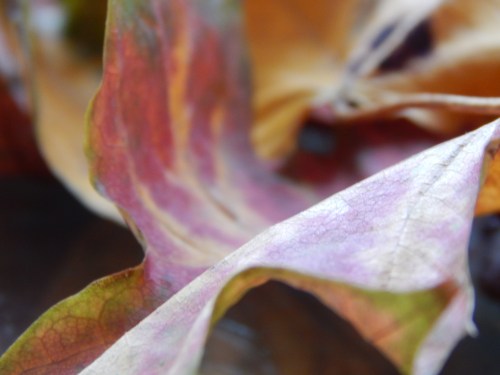
reflections of the changing leaves

Read Full Post »

« Newer Posts - Older Posts »