Feeds:
Posts
Comments

Posts Tagged ‘childhood’

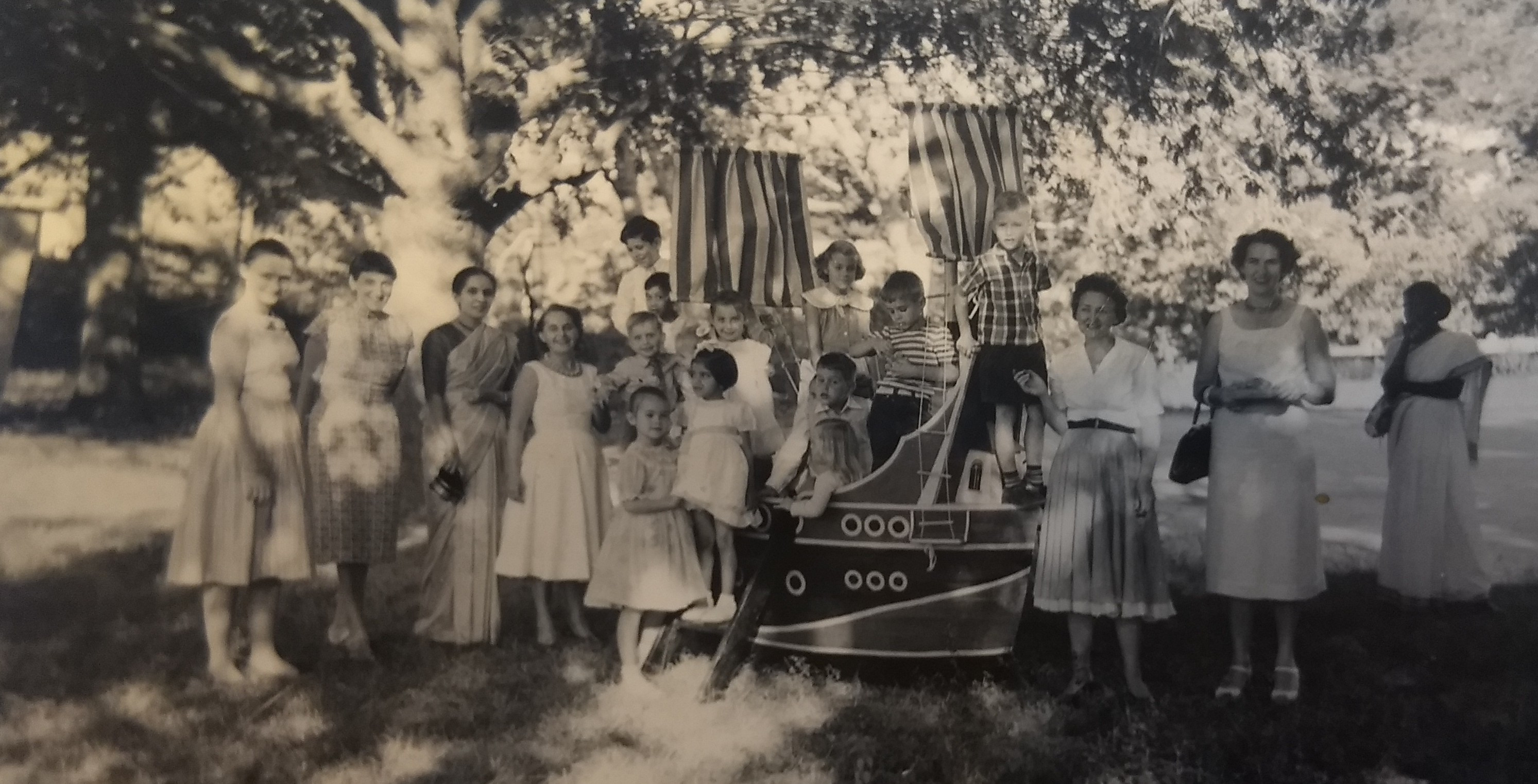
When my father was reassigned to Vienna we had to say good-bye to all of our friends. We had a party with my school friends. I “planned” it but my Ayah did all the work. The Ayah took care of me and my sister and made sure we weren’t stolen. She tucked me in bed at night, and chased the animals out. She got me up each morning. She was dark of skin with long dark hair. She would get me out of trouble and keep me safe. If I broke something, like a nice glass or cup, she often took the blame for me. 

Hadi was the butler and oversaw the house and whole compound. He reported to my father. He was kind and gentle. One day I decided to cook a steak. I had to cook something. I was in the kitchen. I don’t remember why. He watched as I cooked the steak guiding me. When I thought it was done he said no but I didn’t listen. I insisted on eating it and it made me sick.
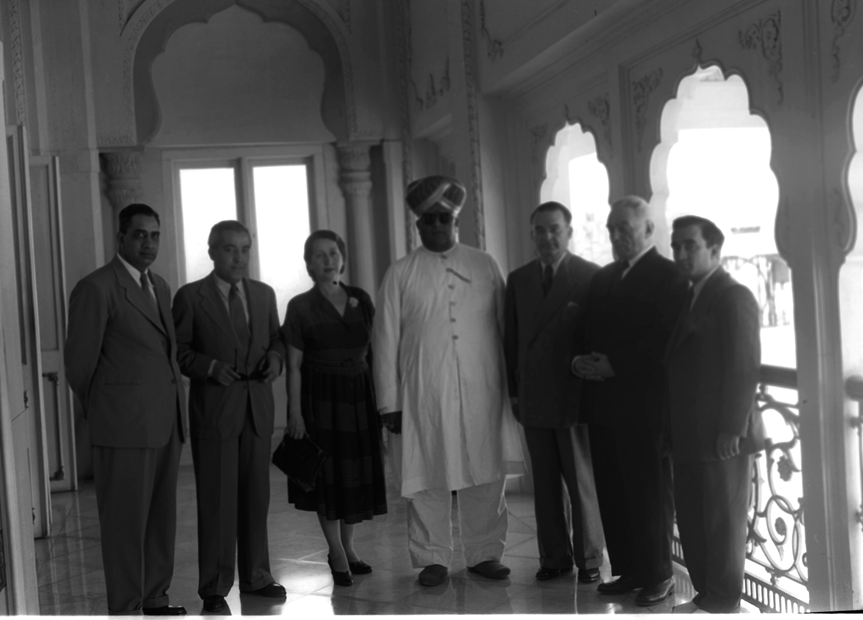
Let’s end with the Maharajah. My first impression of him was that he was fat. I mean he was a very big man to a small boy. My dad took me to work at the library that was located in Coorg. And that’s where I think I first saw him. He and my dad and I took a walk around his place. I wouldn’t call it a palace. Big compound is closer. The animals were loose in the compound. There was an elephant, gray, probably a male but I don’t know for sure. Probably a giraffe. He hunted. He shot a mother tiger and captured the cubs. There was a batch of those that I saw and played with. Four of them. They were very small. They would fit in my hands if I held them now. I think I told you they were white but they weren’t white solidly through. I don’t remember what year that was but I saw him more than once. I know he met with Queen Elizabeth in 1961 as she toured India. I remember seeing her driving in a convertible. I was looking down from the roof of the library. 
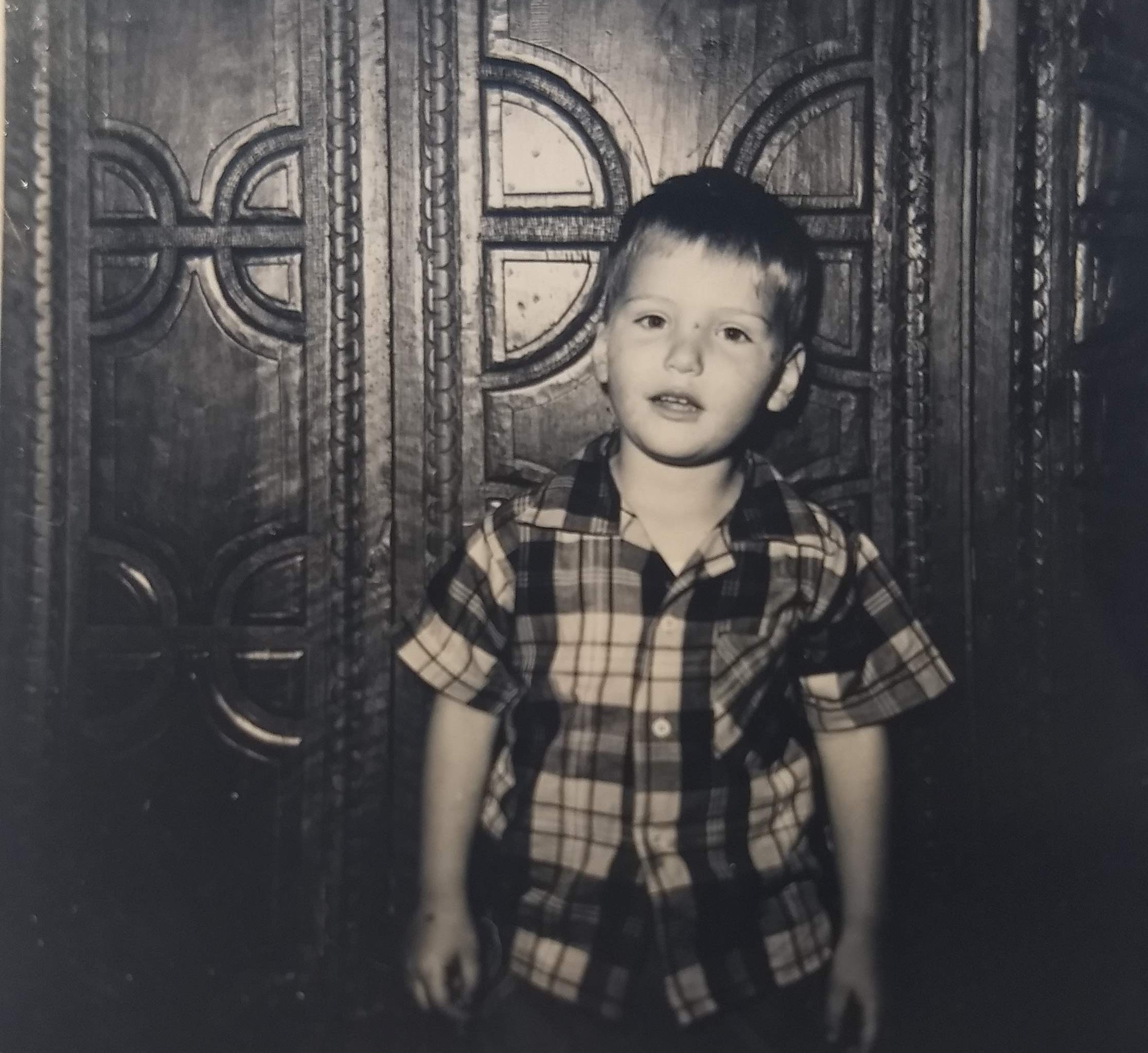
I can’t think of these times as unusual. It was simply my childhood. We moved on to Vienna for a few years. I joined the Boy Scouts, an international troop, and received an award for knot tying. I had weak ankles and a doctor their prescribed ice skating. My mother taught me some fancy ballroom dances and my father tried to teach me guitar. There I was introduced to sachertorte. It is still one of my favorite desserts. Like I said, simply my childhood.


Photo Sources:

Horne Family Album

https://archive.org/details/propix.275036712

Read Full Post »

In Steve’s own words …

In Bangalore, I used to walk to the local Indian school, St. Anthony’s Boy’s School. Sometimes I took a rickshaw. The driver would be peddling on the street and I would wave him down. It was cheap and I had enough pocket money. I thought school was thorough and complete meaning subjects were covered thoroughly and completely without any gaps or holes. But when I went on to a British school in Bangalore I discovered there were holes in what I had been taught. It didn’t matter. I just loved learning and reading. Given that my father ran a library there were plenty of books at my disposal. My parents were open to me reading anything. There were no PTA (parent teacher association) meetings. No judgements. My father probably gave me the most books on all sorts of subjects. 

The dachshund would meet me when I walked home from school. My general routine after returning home was to put on outdoor clothes and go climb a tree. There were not so many other kids around. Sometimes a few. We lived on Richmond Road, a street with lots of bungalows. White people generally lived in these bungalows, mostly Brits. They worked for the state I guess maybe civil servants.

after first communion

My dad had a jeep as part of his job. On Sundays we would drive to mass at the Catholic church. I remember the building as spacious. Sometimes he would drive me to the library where he worked. That seemed spacious to me too. Everything seemed spacious to me back then. Even our bungalow.

I remember the bungalow had a veranda. I remember lots of plants on ours planted by the gardener and by my dad as well. My father liked to garden growing all kinds of plants edible and not. I remember everything from African violets to basil. 

In addition to the dachshund and siamese cat, he owned parakeets. About four or five blue parakeets in a green cage. He also kept fish in a standard fish bowl. They were just plain old fish not very interesting to me. He also kept two horses. He loved animals. He’d grown up on a farm in Nebraska. 

I fell from a mango tree and my dad looked at my arm and decided it was broken and took me to the doctor. I also fell while climbing a wall. A piece of the wall broke off in my hand and that’s how I fell. A stranger, an Indian man,  picked me up and took me up to the house. Broke my arm that time too catching myself with my hand and elbow beneath me. But aside from events like this I felt safe and happy in Bangalore.

I enjoyed the food. My first glass of water there I drank not realizing there were peppercorns in the glass. Overall the food was not spicy. We had a cook. He would make me fried chicken. When my father was entertaining he would take over the kitchen. He greatly enjoyed cooking. From him I learned how to make pesto. He was a good cook. 

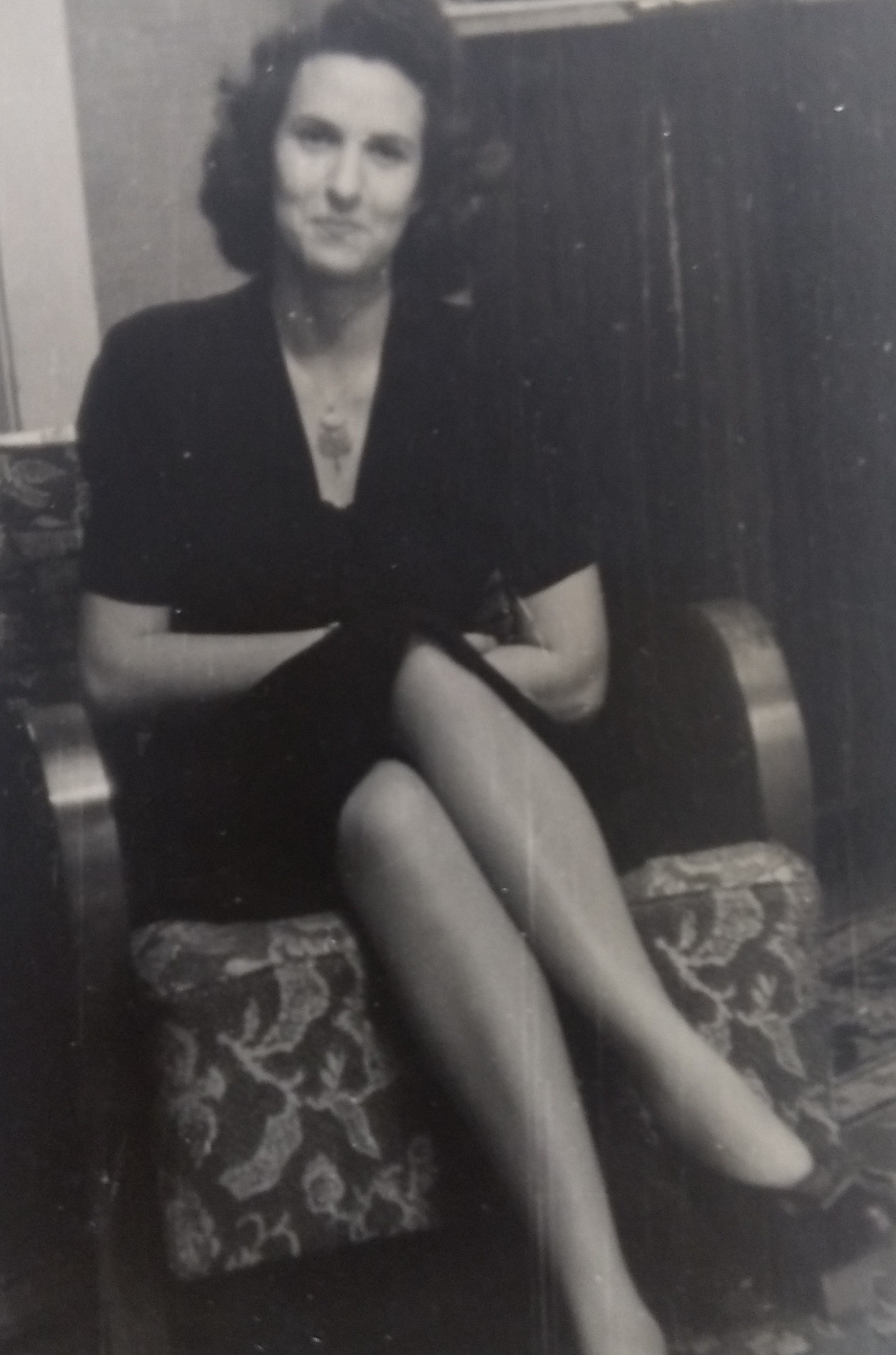
My younger sister had been born in Italy. My mother had her hands full with me, a baby and my father and all our animals. She was very beautiful and always smelled nice. Like flowers.

Read Full Post »

In Steve’s own words:

We were there from 1957 to 1962. My father worked as a librarian for the U.S. State Department. I was five years old when we arrived and I could still speak Italian from his previous post in Genoa, Italy. I had great pets in India. My father had a dachshund. A long skinny regular sized dachshund not a miniature. He also had a Siamese cat that he had brought from Italy. In addition I had a young mongoose. His name was Mongi. My father purchased him from a snake charmer. I most remember how he used to run up the sleeve of my shirt. I first saw him when the snake charmer came to visit our bungalow. He took him out of a bag and put him on the ground. He ran up to the snake and sniffed. The snake had come out of the bushes around our place. I think it was a cobra. The mongoose ignored the snake for a bit and sniffed all of the hands and feets he could find before returning to the snake. The snake charmer held a bag open and the mongoose ran back inside. The snake charmer picked up the snake very carefully and placed the snake in a different bag. The snake charmer, who probably saw my face filled with delight, made my father an offer. In exchange for a 5 rupee note, maybe about a $1, my father bought me the mongoose.

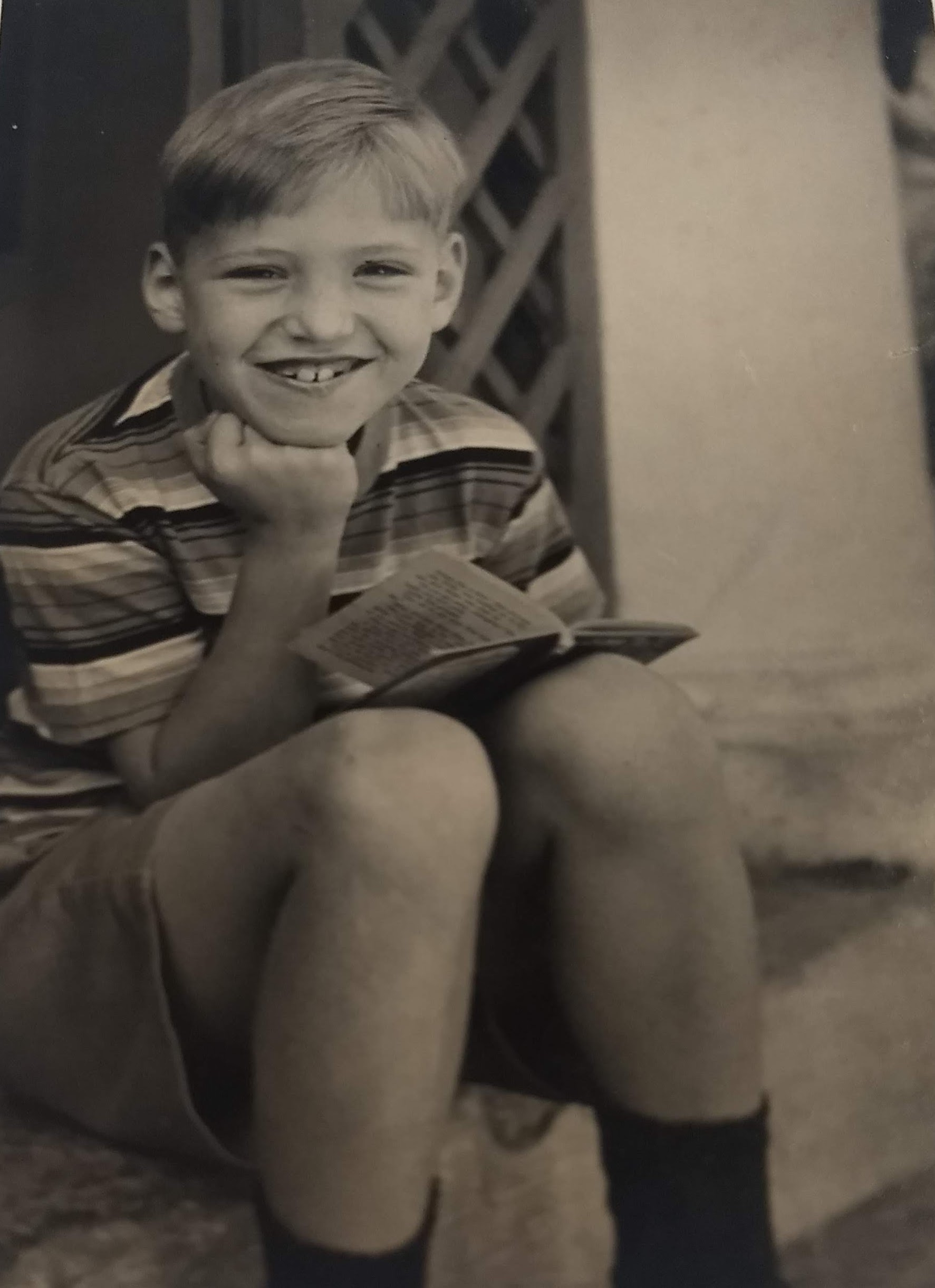
sitting on the steps of the bungalow book in hand

Over time I had more than one mongoose though only one at a time. The first Mongi got too used to people and got too close to someone cutting grass with a sickle and was killed. The snake charmers visited the house once a week and they always had a mongoose for sale. I remember my father reading Kipling’s Riki Tiki Tavi to me. In the end I think I had two or three mongoose before we left India for the U.S. before embarking for Austria. They were all killed by the sickle because the men wielding the sickle sat in the grass looking very inviting and the mongoose would get too close. The last Mongi I had to leave  behind because he was not allowed to enter the U.S. I felt like he was being unfairly blamed for killing chickens when he’d never killed a chicken in his life.

They are about as big as a gray squirrel. Our Siamese cat liked to carry them around in its mouth and treated them like kittens. The dachshund also liked to pick them up and carry them around by the waist. The trio got along fine even when a new Mongi appeared. They liked to sleep together and with me. When the Ayah put me to bed, she covered my bed with mosquito netting. The mongoose would wait and unstuff the net where it was tucked underneath the mattress and slip into bed with me. We kept him fed fairly well with leftovers from the table and bits of chicken. They could come and go as they pleased in and out of the house and into any bedroom. My mother thought me and my father were nuts but she bore with it. The family gardeners liked them because they killed the snakes that the gardeners chanced upon.

My mother had a harder time dealing with the goats. They weren’t pets. They were more of a nuisance. We kept a few in the compound. They were kept for their meat and had free range to wander wherever liked. I rarely messed with them because they would butt fiercely with their heads. Sometimes they wandered into the house. They’d walk right through the screen door by butting the screen out. They usually made their way to the couch and fell asleep. I think they thought they were people.

The most common animal I saw in India were monkeys. There were several mango trees in the compound. The monkeys infested the trees. Rheesus monkeys. They made a chittering sound. They ate the mangoes and also threw them to the ground. I liked to climb the mango trees to pick mangoes and just eat them fresh. I still like the taste of fresh mangoes.

Read Full Post »

IMG_0599

… a little boy with big bottles of bubbles. Photos of one of my littlest cousins taken by his older cousin. Hope that smile and those bubbles brighten your day.  🙂

IMG_0607

IMG_0610

Thanks, L!

Read Full Post »

A small, powerful detail in a corner of the stained glass window, David’s Charge to Solomon, at Trinity Church in Copley Square. A little dark but I hope to work with the image over time.  Meanwhile, learn more about Trinity Church, its history and architectural tours via this link. Have a good weekend. 😉

Read Full Post »

In the heart of the city, adults don’t tend to say anything.  They’ll pass me by and pretend not to notice me as I lean precariously over fences into private property or kneel at the base of trees.

It is the children who ask, even as their parents are sometimes trying to shush them, “What are you doing, lady?”

When I tell them that I am photographing sunlight, they ask, “Well, how do you do that?”  And I say with great drama, “Well, the way I choose to photograph sunlight is as it pours over the branches of the trees and creates shadows on the ground.”

The older kids raise eyebrows in disbelief but the younger children, they sometimes nod with great understanding.


Read Full Post »

It was a delight to receive an email from graphic design artist and photographer Cindy Dyer earlier this year.  I had “liked” a post on her beautiful blog and she had visited mine in response.  She liked enough of what she saw to invite me to include my essay, Seeds, in the Spring 2013 issue of her digital magazine, Celebrate Home.  The issue is on newsstands now, so to speak, free to download and print issues can be purchased.  Seeds can be found on page 95 but I encourage to check out all of the writing, imagery, and recipes to found in this lovely publication.  And you can check out Cindy’s blogs via the following links:  http://www.cindydyer.wordpress.com/ and http://www.gardenmuse.wordpress.com/

Read Full Post »

Stained Glass Window, Trinity Church in Copley Square, Boston

Stained Glass Window, Trinity Church in Copley Square, Boston

I hope my five-year old friend doesn’t stop seeing the fairies in the dandelions after she starts school.  Maybe, in part, it was that thought that made the following article catch my attention:  In Your Mind Was Once a Cathedral by Michael Michalko.  I am a generalist and so I have been privileged to work with people across many different fields of interest.  One thing many have in common is a concern that young people entering the workforce seem to have an increasing inability to think outside the box.  They are extremely facile with social media tools and especially texting and yet at the same time seem less capable of using their hands.  If answers can’t be found in a printed manual or Wikipedia, they don’t know how to take out a blank piece of paper (or lined yellow pad) and sketch out alternative ideas.  Or even how to ask questions.  Perhaps an oversimplification but I’ve seen enough examples firsthand for Michalko’s  article at the Creativity Portal to resonate and make me want to share.  Many other interesting articles there as well.  Enjoy.

Read Full Post »

With Father’s Day approaching, I decided to post a “reprint” of a story I wrote that appeared a few years ago on the Dead Mule School of Southern Literature website.  


Seeds

In elementary school, my younger brother and I participated in an activity where we were given seeds to plant in cups. Over time the seeds sprouted and tiny house plants grew. At home, when my brother discovered that the neighbor’s maple tree helicopters littering our yard were in fact winged seeds, he decided to replicate the school activity.  He planted one seed in a handful of soil in one of the small white Styrofoam cups that our dad liked to use for coffee.

My parents were supportive of his effort, though not at all positive that he was doing anything except making a cup full of mud.  But, green shoots soon sprouted up through the soil. When the sapling outgrew the Styrofoam cup, he planted it in one of Mom’s large clay pots.

My brother was only about seven years old with the attention span of gnat. We all expected him to forget about the tree, to let it wither and die once the joys of watering it faded away. But he didn’t lose interest. He watered it. He moved it around the yard to catch the traveling rays of the sun.  He dragged it under the house during rain storms.  When a branch was accidentally broken, he applied a field dressing of black electrical tape which saved the budding limb.

Dad was fine with the tree until my brother wanted to transplant it from the pot to a fertile area near the vegetable garden. He tried to explain to us that the roots of maple trees spread ferociously. We heard the words but we didn’t really understand. My brother wanted to replant his tree, and I supported him. Mom sided with  us.  “Let him plant the thing. See what happens.”

Over the years we watched the garden shrink as the tree grew magnificently, with a trunk so wide I couldn’t wrap my arms around it, and a canopy so broad that it shaded half the back yard.

One day I saw my father looking up at the tree, lips pursed.  Then he looked at my brother’s head thrown back, face beaming as he looked up at his tree. My father tipped his cap at the tree and sighed.

“Come on,” he said to my brother. “Get inside and wash your hands.”

As my brother dashed by him, my father patted him on the head.

Nearly thirty years later, the tree is gone and so are my parents. My brother is grown and not especially inclined toward gardening.

But recently he did call me. He’d gone to the store to buy gifts for his girlfriend’s two young daughters.

“What did you buy?” I asked.

“Little gardening gloves,” he said.

And I could hear the smile in his voice.

Read Full Post »

For most of my professional life, I have worked for environmental organizations where staff often ponder questions like what does it mean to connect children (especially urban youth) to nature (especially in the big city)?  I find myself reflecting on my childhood in a small Virginia city where people kept a chicken or two in their backyards.  One neighbor even illegally kept a goat.  I write often about being able to see the Blue Ridge Mountains from my back porch.  In a yard the size of postage stamp, my younger brother and I discovered bright blue bird’s eggs in a nest near our house, a monarch chrysalis under our backporch, and garter snakes burrowed in the ground near the dog’s water dish.  I never visited a national park in my youth but I certainly felt connected to nature.  I now live in a metropolis of three million plus people.  There is no place I can go without hearing the rumble of cars in the distance, trains rolling by or planes flying overhead.  I believe in the magnificence of cities and in human ingenuity but there is something to be said for a quiet patch of green.

Read Full Post »