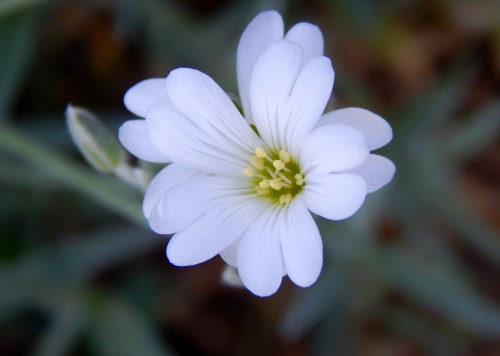
Off to Open Studios. Have a good day, folks. 🙂
Posted in Inspiration, Nature Notes, tagged beauty, colors, flowers, gardening, Inspiration, nature, Photography on May 15, 2016| Leave a Comment »
Posted in Books I Love, Branches, Inspiration, Nature Notes, tagged ariella chezar, beauty, book review, books, creativity, floral arrangement, flowers, Inspiration, Photography, the flower workshop on May 9, 2016| Leave a Comment »

In short, from front to back, each page of The Flower Workshop is a treat. Am I biased? Perhaps. This is the kind of book that I can imagine on the table in front of me as I sip sweet tea, just flipping through the pages. Strangely enough, it was my younger brother who recently reminded me that that is exactly what I used to do as a child with my mom’s gardening books. Just sit and peruse them over and over again. Well-written and beautifully photographed, the book provides step-by-step instruction for producing 45 floral arrangements. But beyond those specific projects, the reader is truly educated in how to “branch out” and experiment with how to work with flowers, foliage, fruit and more to create what I consider to be ephemeral works of art.
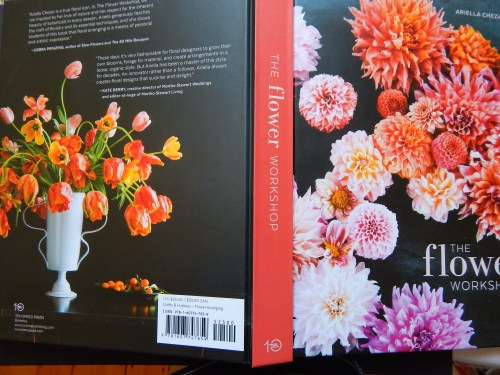
Will I be producing a flowering dogwood display anytime soon? No but I do have a greater appreciation for the skill as well as imagination behind such displays that I had perhaps taken for granted in churches, hotels and even the homes of friends. And I also take away a deeper understanding of everything from the rule of three to the subtle use of color to establish mood. There’s a nice index and seasonal flower guide. Simply a lovely resource.
I received this book from Blogging for Books for this honest review. Please check out the following links for more information.
Details about the book: The Flower Workshop
Posted in Branches, Inspiration, tagged beauty, colors, flowers, gardening, indoor gardening, Inspiration, orchids, Photography on May 9, 2016| 3 Comments »

Despite the fact I know very little about growing orchids, I seem to have success with this plant. As I’ve written before, I think it’s because I leave it alone to bloom as it likes. And what a wealth of blooms so far.


Posted in Branches, Inspiration, Kitchen Inspirations, Nature Notes, tagged colors, flowers, gardening, healthy eating, indoor gardening, Inspiration, peas, Photography, radishes, salads on May 8, 2016| 1 Comment »
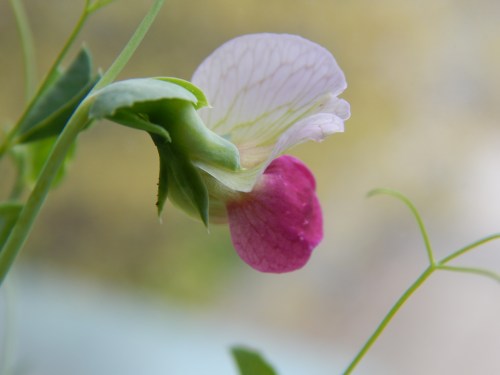
At the window my one pea blossom continues to bloom reminding me of a garnet drop.

The radish seeds with which I had such early, painful adventures have leafed out. I harvested some to form this base of a salad.

The flowers, plucked from a small pot in the hallway, didn’t have much flavor. Too subtle for my palate. But for my painting palette, they were just perfect. 🙂
Posted in Inspiration, tagged beauty, color, flowers, gardening, indoor gardening, Inspiration, peas, petals, Photography, tulips on May 5, 2016| 1 Comment »
As I was observing tulip petals, holding them up to the light, I noticed in the tangle of oversprouted peas I have growing at my window, a single pea blossom. Will it bloom? Will a pea pod form? Time will tell. Meanwhile in a moment of whimsy I decided to photograph my blossom against a background of tulip petal. No meaning. No expectation. Just indulgence in curiosity.
Posted in Inspiration, tagged beauty, colors, flowers, Inspiration, perspective, petals, philosophy, Photography, tulips on May 5, 2016| 4 Comments »
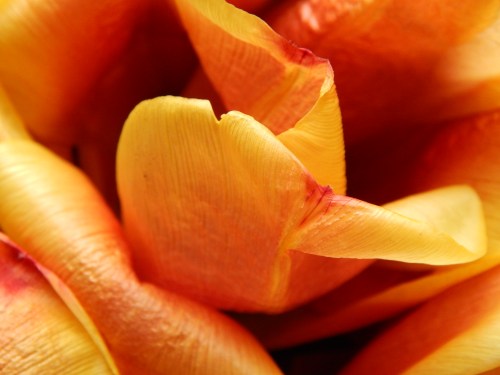
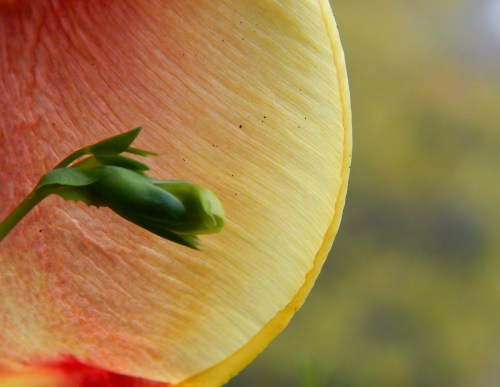
I continually learn through photography that when beautiful things fall apart – like my bouquet of tulips – that’s when you sometimes find an even greater beauty.


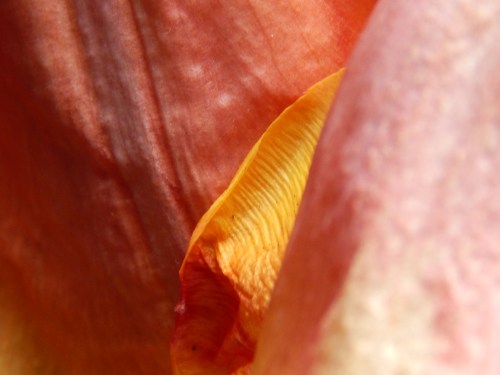
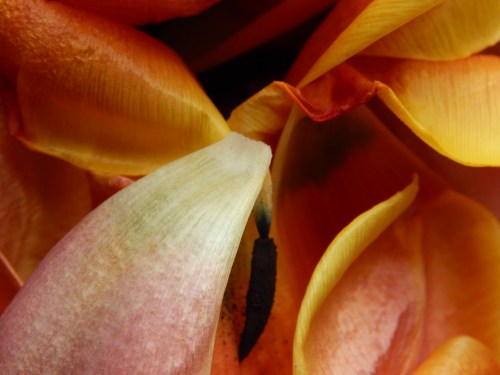

Posted in Inspiration, Nature Notes, tagged beauty, colors, flowers, friendship, gifts, Inspiration, orange, Photography, tulips on May 1, 2016| 3 Comments »
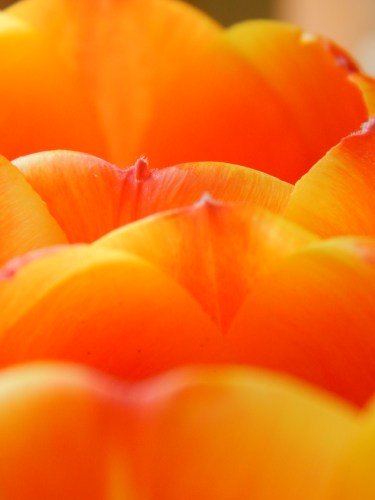
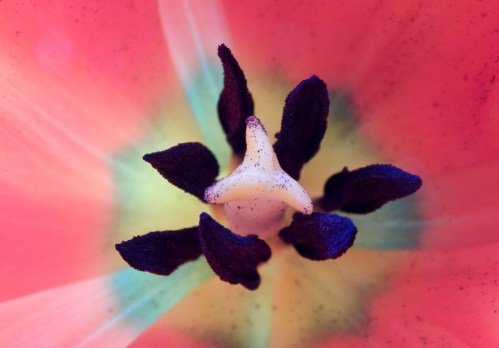
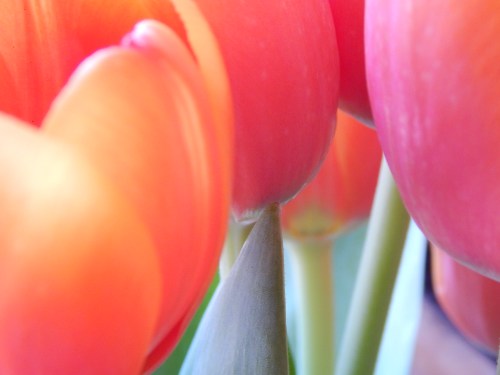
That was the color the bouquet of tulips appeared to be in the light of the shop. Then once brought home, placed in a vase, and bathed in the light of the sun all of these other colors appeared. An inspiring sight, to say the least.

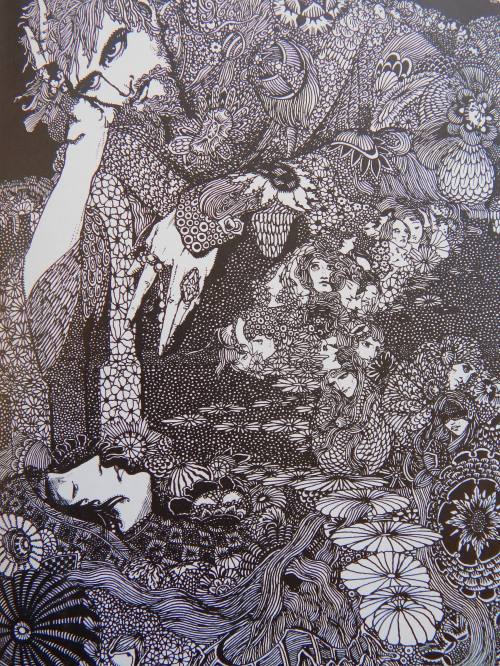
Posted in Inspiration, tagged adult coloring books, art, beauty, Edgar Allan Poe, flowers, Harry Clarke, illustration, imagination, Inspiration, nature on April 28, 2016| 3 Comments »
It must be a sign of the times that as I flipped through Edgar Allan Poe’s Tales of Mystery and Imagination as illustrated by Harry Clarke, I could not help but think what a great adult coloring book these illustrations would make. Perhaps not all of the illustrations … unless you’re into zombies and the Walking Dead. But these scenes from Poe’s short story Morella …
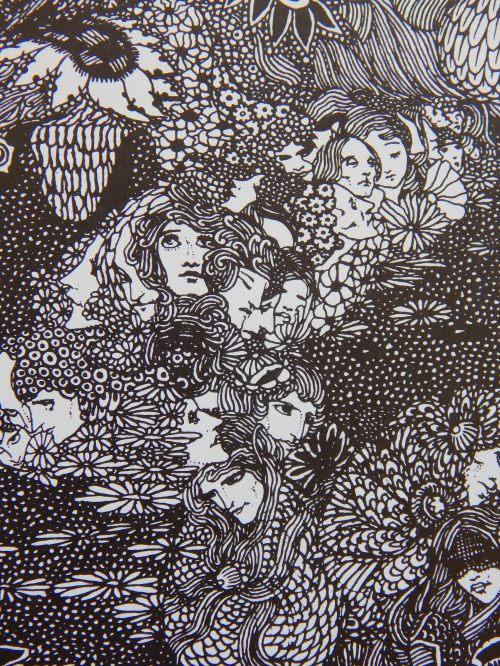
and these from The Colloquy of Monos and Una called to me with their flower and nature imagery. Harry Clarke (1889-1931) is perhaps more widely known for his stained glass work. Whether working with glass or with paper for his book illustrations, I wonder at the sources of his creative vision. I’m not always sure why I am inspired to do something but it sure is fun to take time to explore the possibilities. And to talk with other artists about their influences.
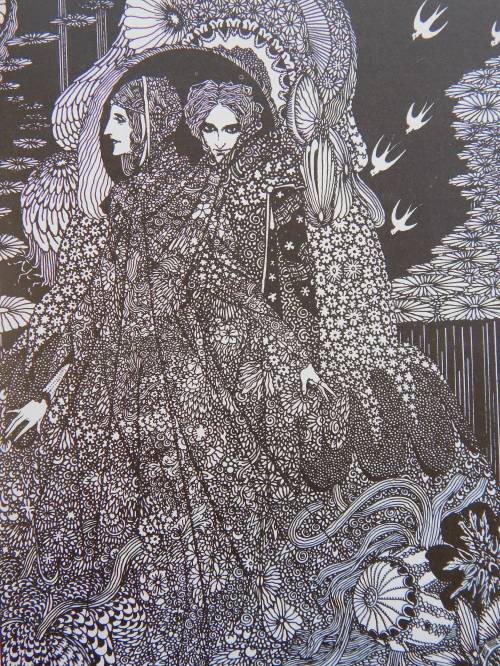

I can’t talk with Mr. Clarke but I am lucky enough to have access to a number of artists in my local community. Stay tuned for future updates about artists and their inspirations.
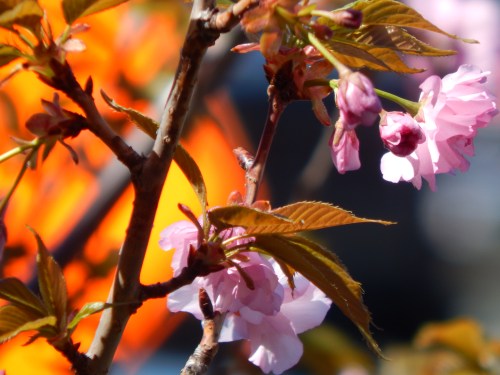
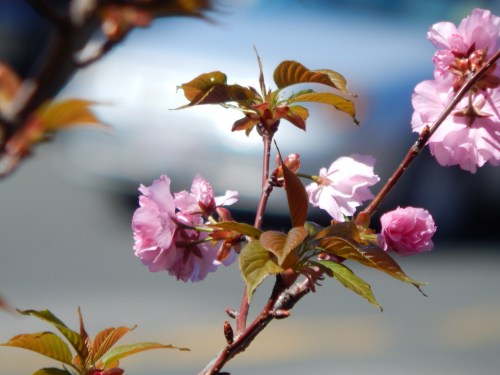
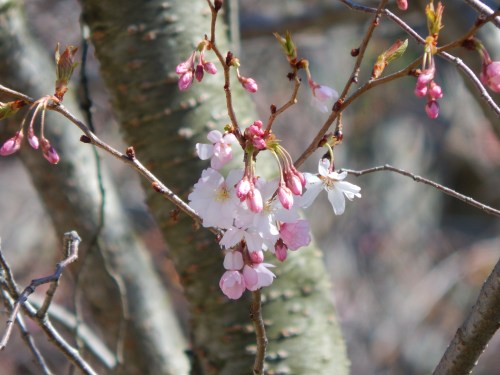
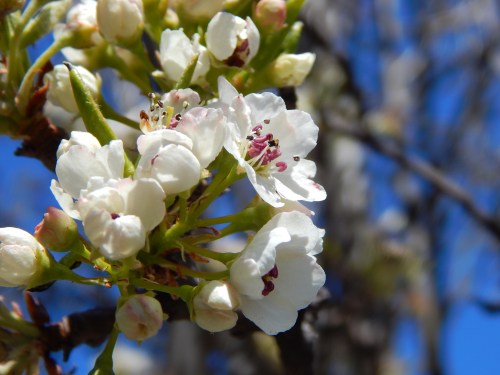
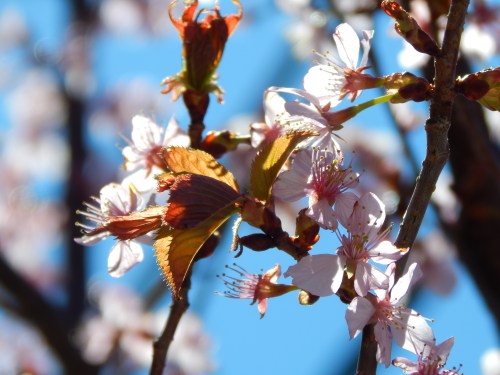
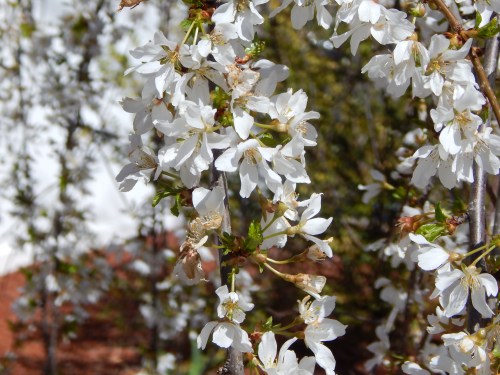
Posted in Branches, Inspiration, Nature Notes, tagged blossoms, colors, flowers, gardening, Inspiration, nature, Photography, pink, urban landscape on April 24, 2016| 1 Comment »
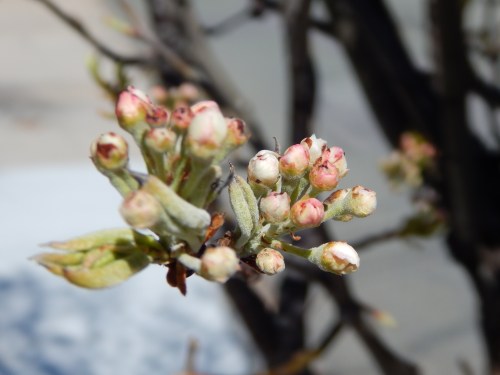
Posted in Branches, Inspiration, Nature Notes, On the Road, tagged beauty, colors, flowers, Inspiration, nature, Photography, urban landscape, walking on April 17, 2016| Leave a Comment »


 Words + Images