Feeds:
Posts
Comments

Posts Tagged ‘gardening’

I keep telling friends it was the radish that took me out. Not a slippery floor or a missed stair. I pulled a muscle in my back because I was trying to get the perfect shot of these roots on my radish seeds. I’ll never look at the radish the same way again. Have a good Friday, folks. 😉

Read Full Post »

the wonders to be found while wandering around inside a mall

Read Full Post »

morning light in the kitchen

Read Full Post »

Bees are not the only pollinators in this world but they are a major one. There are many different species of bees. Growing up in Virginia, I’d heard of sweat bees, and knew bumblebees on sight, but it was the honeybee with its soft gold and black coloring that I most thought of when I heard the word bee. I took for granted its production of honey and the wax harvested from colonies for my candles.  And I was quick to bat the insect away when I walked through a field of flowers. As for its role as pollinator, I didn’t think too much about that nor did many until reports of colony collapse disorder made national and international news.

photo by cynthia staples

As noted in the introduction of The Bee-Friendly Garden, “over 70 percent of the world’s plants depend on the pollination services of bees, including many nuts, fruits, tomatoes, peppers, or berries.” While the world might survive without bees, it would be a very different place to say the least.

One of the delights of this book is that the authors, a professional garden designer and an ecologist, educate, inspire and encourage.  Regarding the U.S., they describe the difference between native bee species and honeybees, and how bees and wasps look similar but behave very differently.  Honeybees with their yellow and black banded bodies are probably the most common image of bees, but native bees come in many shapes, sizes and colors, their bodies evolved to collect the pollen from a wide variety of plants, shrubs and trees.  Lists are provided by region of bee-friendly garden compositions, and in turns out that many of those same gardens — a mix of annuals, perennials and more — can attract and support other important pollinators like bats, butterflies and hummingbirds.

The book is an incredible resource and reference guide and I would suggest it as a wonderful addition to one’s gardening library.  The authors make clear with straightforward content that you don’t need to be a master gardener or landscape designer in order to create beauty around you and do some good in the world as well. As some of you know, I love to give seeds and plants to friends and family who live across the U.S.  This year I will certainly be using this book’s regional plants lists to help guide my selection of seeds.

photo by cynthia staples

I received this book from Blogging for Books for this honest review.  Detailed book information available via this link: http://www.penguinrandomhouse.com/books/243475/the-bee-friendly-garden-by-kate-frey-and-gretchen-lebuhn/

Read Full Post »

Read Full Post »

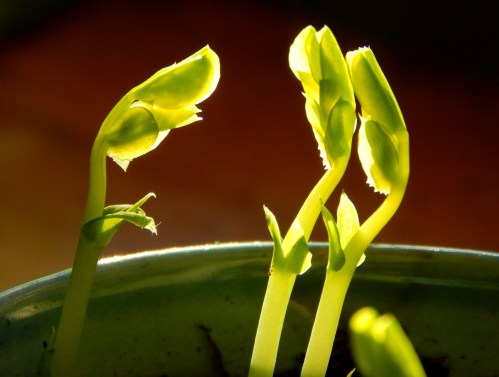
peas

peas

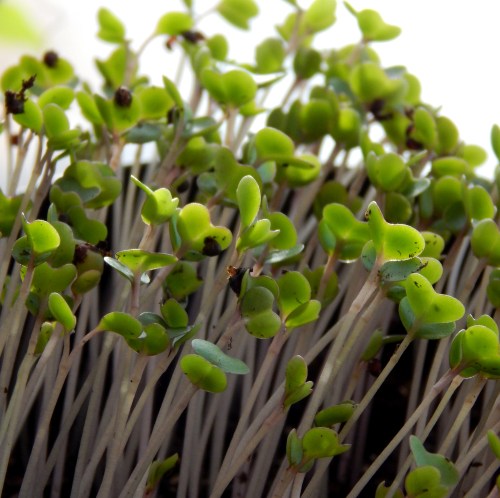
cress

cress

a mild and spicy mix

a mild and spicy mix

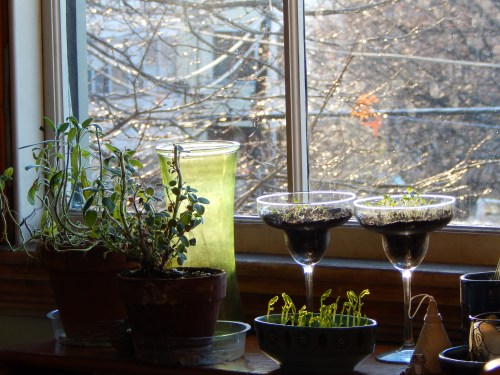
by the windowsill

by the windowsill

red winter kale in the hallway

red winter kale in the hallway

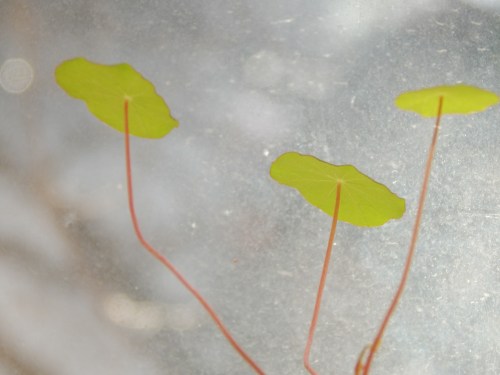
nasturtium

nasturtium

Read Full Post »

I recently ordered some seeds.  At first, it felt like an extravagance.  Not a lot of money was spent but there were certainly other things I could have put that money towards.  Immediate needs. But I bought the seeds thinking long-term for when the winter settles in, and all the leaves are gone from the oak tree and the sunlight shines through the many windows of the house.  Even in the bitter cold, when on the one hand I am able to photograph ice on the inside of the windows, there are sunlit nooks just warm enough for sprouts to grow and even on occasion my bucket of little potatoes.

The sprouts grow in little dishes so I’m not working with much dirt but whether a few inches of soil or a foot, it brings me joy sometimes and calm always.  I feel grounded.  Of late I’ve been interacting with friends, family and even strangers for whom the winter is a tough time. I’m tempted to send them all seeds so that they can create winter gardens and perhaps find calm and maybe even joy.  But I’m not sure that gardening works that way for everyone.  I may do it anyway, out of selfishness, because the act would make me feel good.

I did this past summer mail a young friend a package of edible flower seeds.  Someone who can be a little down and get stuck inside her head.  I thought working with her hands might be good.  She texted me back a picture of the unopened colorful seed packet sealed in a beautiful glass jar.  What else could I do but applaud her on the composition of the picture.  I mean, who am I to dictate how someone gardens.  Later when she came to visit in person I let her taste some of the sprouts I had growing, some mild mixture of greens.  I happened to have an unopened package of the seeds tucked away.  I gave them to her … along with a little bag of dirt.  The next text I received was of a bowl of growing greens.

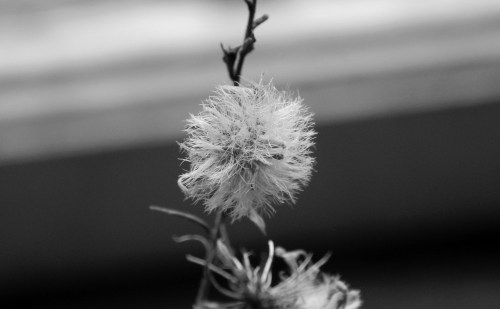
Just some random thoughts this Sunday morning as I stare at empty vessels waiting for their seeds. The pictures are images of dried flowers from the Belle Isle Reservation.

Read Full Post »

A very young friend to whom I send postcards recently gave me a gift in return.

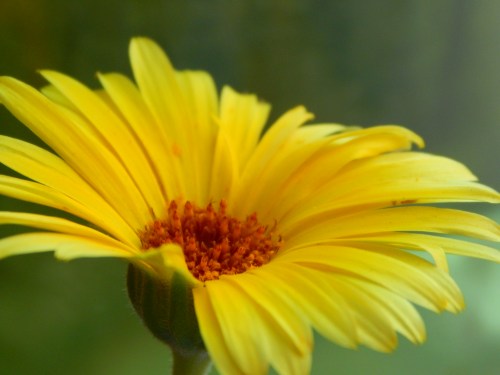
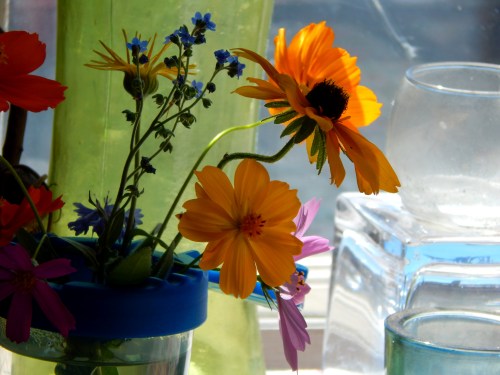
Flowers from her first garden.

A beautiful sight in the morning light.

Thanks, Vanessa. 😉

Read Full Post »

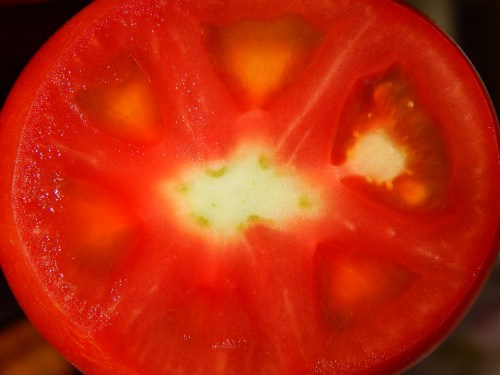
The last of a delicious gift of homegrown tomatoes.

Read Full Post »

There is an elderly woman who lives in my childhood home in Virginia.  My brother tells me that she loves to grow tomatoes like some people grow wildflowers.  In every available space, as a border to the porch, in the spots where the roses and hydrangeas grew, all now tomatoes.  While wonderful to see such eccentric growth, it was also hard for my brother to see.  There was a part of him that wanted the old yard back, the flower beds and vegetable garden and the swathe of green grass just big enough for children to run about with clothes lines arching above.  He wanted the fence line back that separated our property from the neighbor’s, a wire fence covered in honeysuckle and milkweed and edged with wild mint.  And he wanted the trees, the maple, the plum and that short-lived apricot.

All had been gone for near two decades but in that moment, of seeing those tomatoes, he fiercely wanted it all back and with it the parents now deceased and the siblings spread far and wide.  “You alright, Daddy?” his son asked.  He looked down at his five-year old who was sprouting up like an oak.  “Yes, son.  Daddy was just remembering.  Remind me to tell you about the seeds I planted in this place.” The son nodded and then said, “Okay, but can we go to the playground first?” My brother laughed, tickled his son, and let the past fade knowing it would never disappear.  “Yes, son, let’s go.  We must have our priorities.”

Read Full Post »

« Newer Posts - Older Posts »