Feeds:
Posts
Comments

Posts Tagged ‘stained glass windows’

The church was decorated with Easter lilies and pink roses and the entrance to each pew marked by a cluster of lilies. Palms were placed in pew openings and stood at various points to create a natural chapel. Upon the altar more lilies and roses. The war had limited the number of guests in attendance but even so Emmanuel Church on April 21, 1915 was filled with those wishing well the bride and groom, Leslie Hawthorne Lindsey of Boston and Stewart Southam Mason of England.
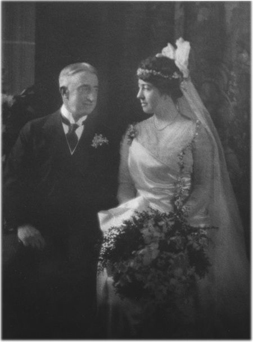
william lindsey, father of the bride, and daughter leslie lindsey

The bride wore white satin made with rose point lace and garnitures of small clusters of orange blossoms. The flowers held in place a veil of Limerick lace made especially for Miss Lindsey in Ireland the previous year. She carried a bouquet of white orchids and jasmine. Her wedding party wore shades of blue and pink silk, their gowns adorned by rosebuds. The bride maids carried baskets of pink sweet peas.

After the ceremony, there was a reception in the Bay State Road home of the bride’s father, William Lindsey. The bride’s mother now wore blue silk in a shade known as moonlight embroidered with baskets of silver. Flowers prevailed, decorating each room, smilax in the hallway, greenery entwining railings and baskets of roses on the stairs. Bells rung in celebration on both sides of the Atlantic as everyone knew that soon the bride and groom would return to his home in England and all they need do was board the Lusitania.
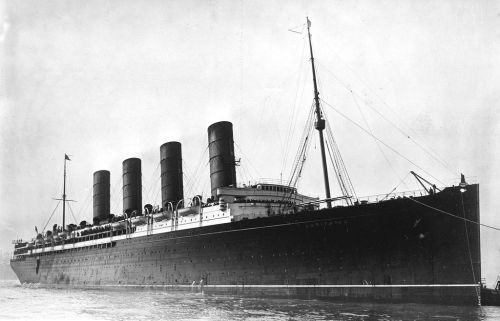
rms lusitania

rms lusitania

The RMS Lusitania would depart New York for Liverpool on May 1, 1915. On May 7, it would be torpedoes and sunk by a German U-boat. At least 1, 198 passengers and crew would die, including newlyweds Leslie Lindsey and Stewart Mason.  When the body of Leslie was returned to her father she wore the jewels that her father had given her.

A heartbroken father would do several things over the years in memory of his lovely daughter, one of which was to buy a piece of property adjacent to that of Emmanuel Church in 1919.  A chapel would be built. Begun in 1920, the structure would be finished in 1924.

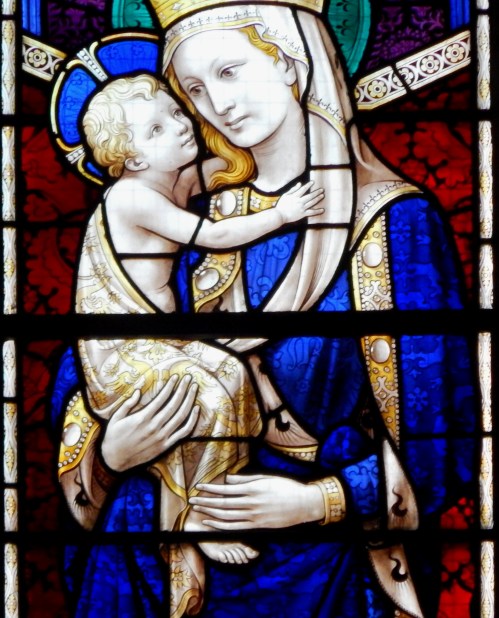
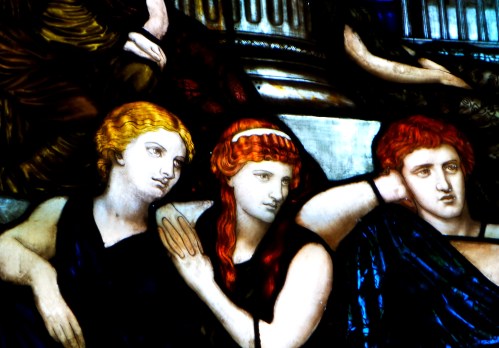
The chapel was designed by the architectural firm Allen & Collins. John Ninian Comper (1864-1960) designed the chapel’s decorative scheme from the altar to the chapel’s signature stained glass windows. Sadly, William Lindsey did not see the finished chapel. His youngest daughter shared memories of seeing her father sitting across the street watching the building’s construction and knowing he would not live to see it completed.
Sources and Further Reading

History of Lindsey Chapel on Emmanuel Church website

Boston Evening Transcript, April 21, 1915
John Ninian Comper

Emmanuel Church building information

Read Full Post »

details from life of st. paul's life, by henry holiday of london, 1878

details from st. paul’s life, by henry holiday of london, 1878

During my time visiting Trinity Church in the City of Boston, I have focused my camera on the details of the stained glass windows and the stories behind their creation. Within the church itself there are over 30 windows visible to the public and, less accessible to the public, there are additional windows in the parish house that I refer to as “hidden gems.”

detail from ephphatha by burlison and grylls

detail from ephphatha by burlison and grylls

Significant changes have occurred to the church over time, which you can learn about on the excellent guided tours. It’s the changes that took place in the parish house during the 1940s and 1950s that recently intrigued me. As the parish house was being reconfigured, three stained glass windows were removed.  My curiosity was sparked. What was the story of those “lost” windows? Here’s what I found on my search, not much that wasn’t already known but for me it was a wonderful journey.

An 1888 history of the church describes in detail The Harmon Window.  Designed by Frederick Crowninshield, the window was created in memory of Cordelia Harmon.  Harmon was “Almoner of Trinity Church for many years, and through her good deeds was well known by all the poor connected in any way with the Parish.”  The window depicted Charity composed of “a woman and two half-clothed children in the centre, and a figure with bowed head at the left. Behind is the figure of Christ, with his hand extended over them. Above is the text — Inasmuch As Ye Have Done It Unto One Of The Least Of These, My Brethren, Ye Have Done It Unto Me.” You can read more about Miss Harmon in this previous post Enduring Legacies.

1920s photo of Charity, courtesy of Trinity Archives

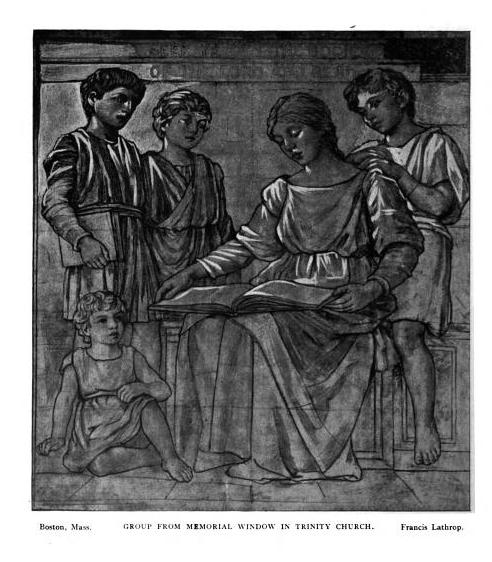
In a 1910 history of the church there is a description of The Tuckerman Window.  Designed by artist Francis Lathrop, most well known for his work with John La Farge on the murals of Trinity Church, the window depicted a woman surrounded by her four sons and instructing them from the bible.  According to the history, the woman and the boy at her right are the ones commemorated by the window.  They were Florence Tuckerman and her son Brooks Fenno Tuckerman. The design includes the words, Seek Ye Out The Book Of The Lord And Read. The window was given by Mr. and Mrs. John Brooks Fenno who also gave the window, The Storm on the Lake, located inside the church.

And finally there is The Suter Window. Designed by Charles E. Mills, it was executed by Edwin Ford and Frederick Brooks. It was a gift by Hales W. Suter in memory of his daughter, Gertrude Bingham Suter. “In the lower part of the window is the figure of a young girl, holding a sheaf of wheat.  On the ground before her, there lies a cross, while the path is strewn with roses. Her face is turned upward toward a vision – an angel who points out the New Jerusalem above.  The New Jerusalem is further represented in the smaller window above by the figures of two angels holding between them a crown.”

from Exhibition Catalog for the Boston Architectural Exhibition, 1891

The cartoon above I was able to find in the Catalog for the Boston Architectural Exhibition, 1891.  Such catalogs and similar art and architectural publications from the late 19th and early 20th centuries are increasingly being digitized and made available online. I love online research but it has been a pleasure interacting with archivists and stained glass experts too to learn as much as I did about these windows, the artists and their studios. While my search for now has come to an end, I hope you enjoy this brief glimpse of something beautiful that once was but is now no more except in stories. 😉

Read Full Post »

Read about The Singing Window at Tuskegee University in Deep South Magazine here. Enjoy!

Photo by Carol M. Highsmith

Photo by Carol M. Highsmith

Read Full Post »

You can read more about this personal project here: https://wordsandimagesbycynthia.com/2015/11/02/as-for-those-angels/

Read Full Post »

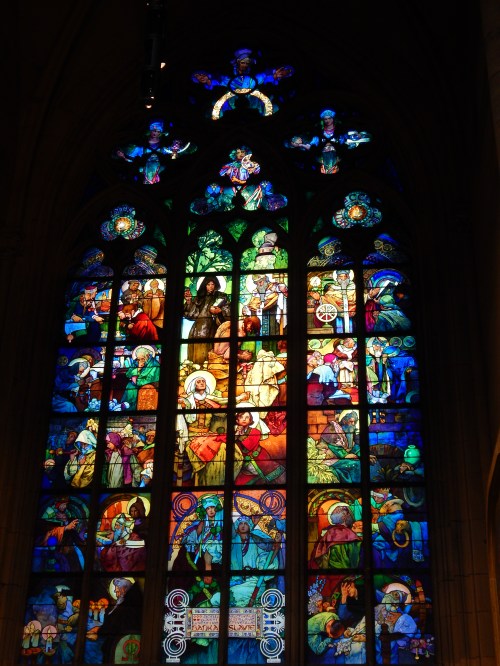
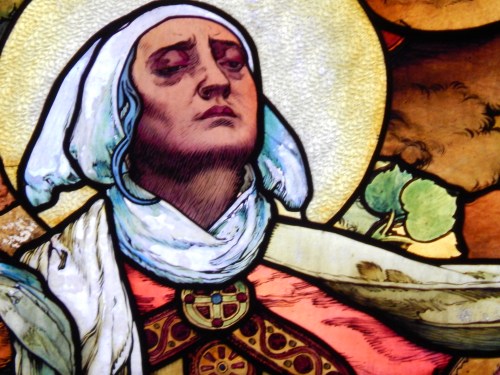
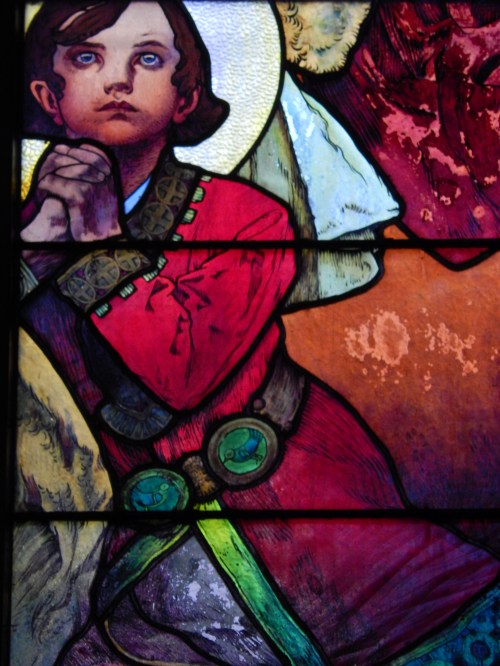
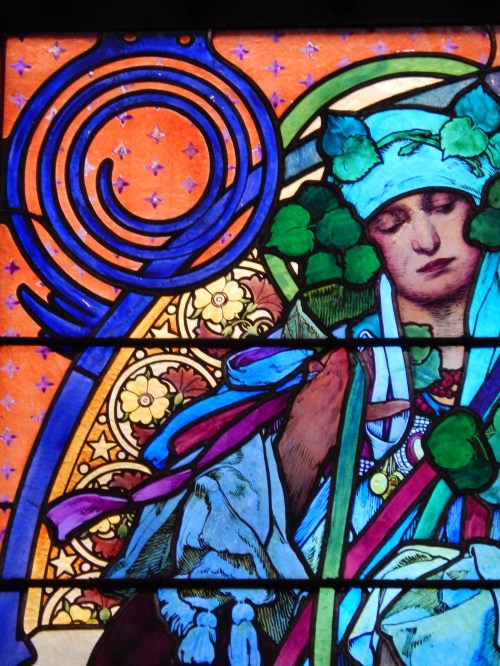
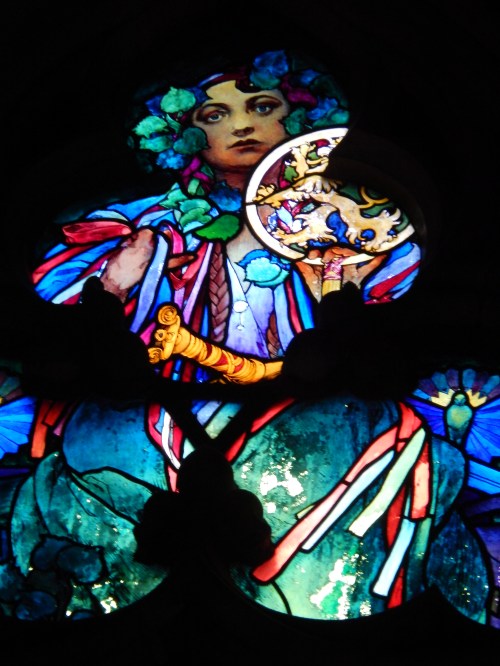
It was a bit of a race against time.  A storm was rolling in. So though we knew we had a few hours before the sun was due to set we didn’t have that great a window of time for light. We raced, as fast as the trolley would take us and then putting foot to pavement, from the Mucha Foundation back to Prague Castle and the St. Vitus Cathedral.  Why? Because at the Mucha Foundation we’d seen a drawing of a stained glass window that Mucha had designed for the St. Vitus Cathedral but he had passed away before seeing it executed. But then while watching a brief foundation video on Mucha we learned that a company had funded the execution of the window and it was in the cathedral.  We made it back to the cathedral in time to purchase a ticket and track down the window. And what a sight it was.

And now there is a race against time to catch a flight home and so I will simply leave you with a few images and a few links. Read more about this amazing artist here: http://www.mucha.cz/index.phtml?S=biog&Lang=EN and http://www.muchafoundation.org/

More to share when I return to the States. Until then, be well.

Read Full Post »

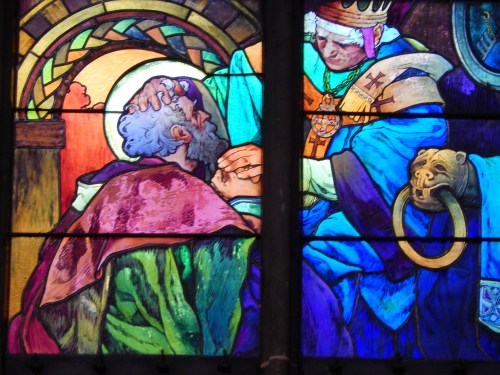
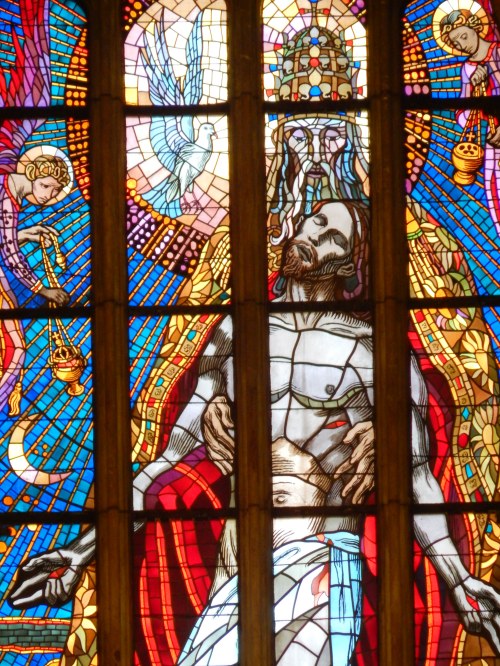
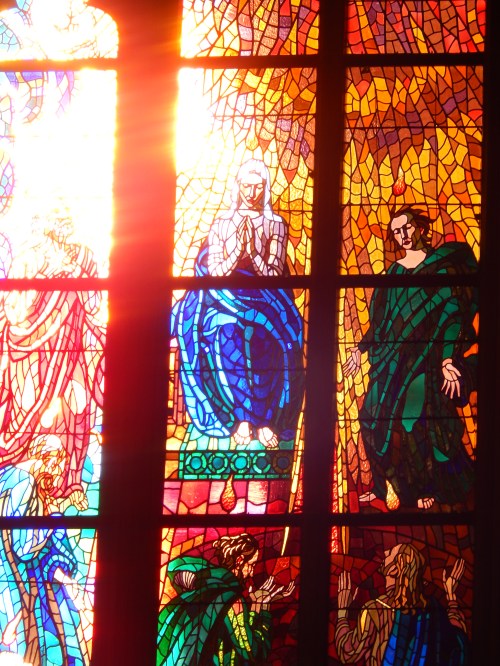
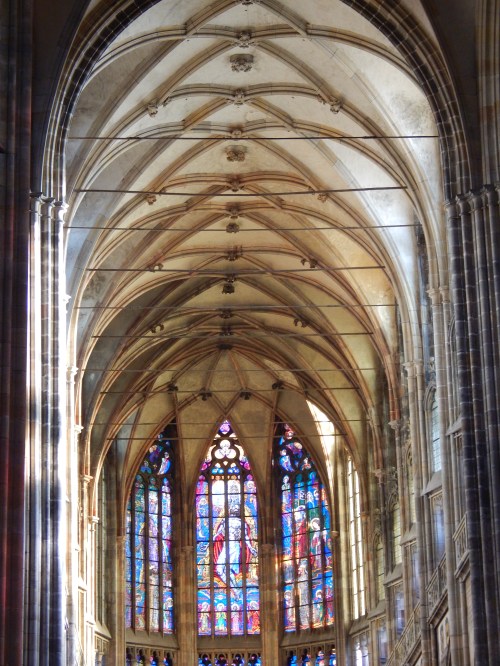
Yes, I have sought out stained glass in Prague and what beauty there is to be found like these images from the St. Vitus Cathedral at the Prague Castle.

Only a quick glimpse this trip …

… I hope to visit again for a longer period of time.  The windows were breathtaking as was the light they cast upon the stone.

Learn more about this cherished structure here: https://www.hrad.cz/en/prague-castle/guidepost-for-visitors/st-vitus-cathedral.shtml

Read Full Post »

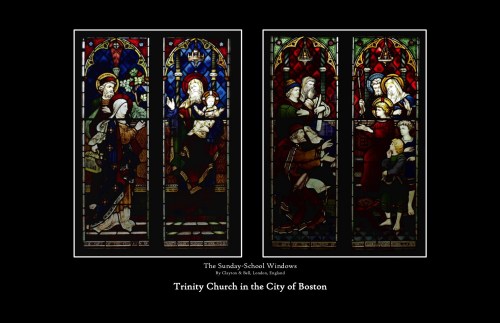
Coming soon to the Book Shop at Trinity Church will be this postcard depicting The Sunday-School Windows designed and made by Clayton & Bell in 1874.

You can read an earlier post I wrote about these windows, a hidden gem, via this link: https://wordsandimagesbycynthia.com/2014/07/13/sunday-school-windows-at-trinity-church/


Additional Readings

https://en.wikipedia.org/wiki/Clayton_and_Bell

http://printscharmingsoho.com/collections/clayton-bell-stained-glass-window-master-drawings

www.nytimes.com/2014/11/14/arts/design/conserving-stained-glass-records-at-corning-museum-.html


Read Full Post »

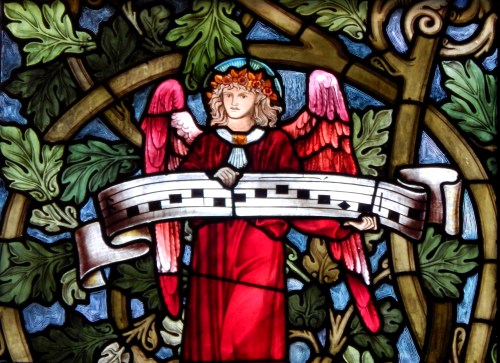
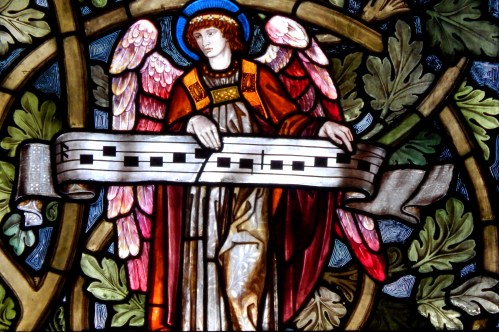
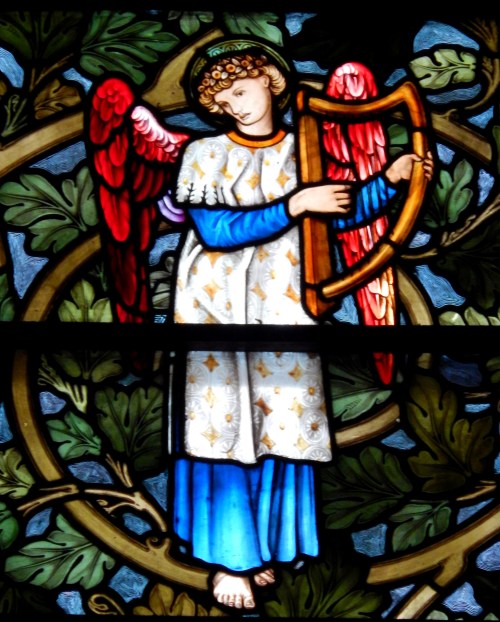
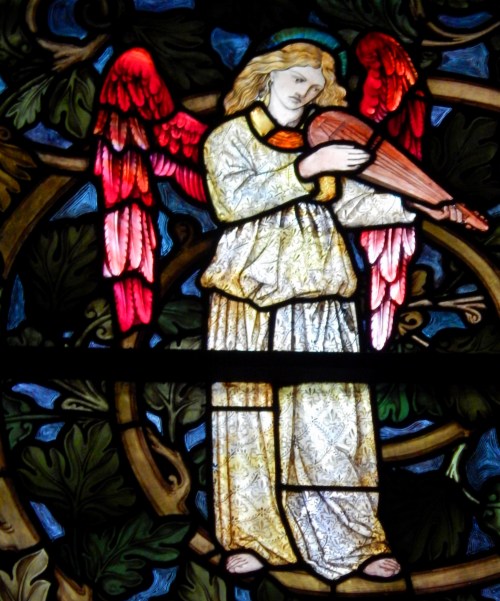
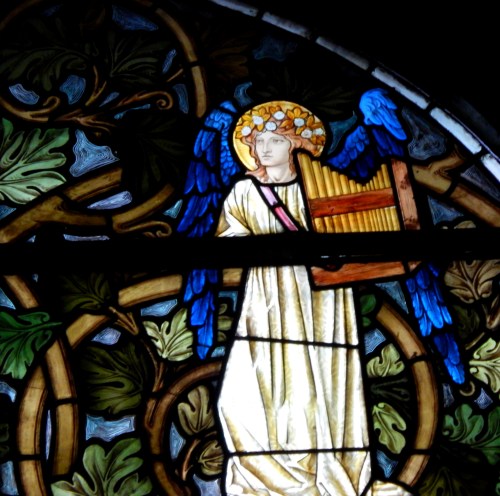
… they are Edward Burne-Jones angels.  Eighteen of them in a series of windows that are often referred to as the Christmas Windows, located inside Trinity Church in the City of Boston.  As I’ve written about before on this blog, these windows depict The Journey into Egypt, Worship of the Magi, and Wonder of the Shepherds.  The windows were designed by Burne-Jones and executed by William Morris in 1882.

Photographing these angels is very much a work in progress.  I’ve only captured eight so far and not all to my satisfaction.  British historian Fiona McCarthy once wrote what would Christmas be without a Burne-Jones angel.

Maybe that is the goal I can set for myself.  Before Christmas to have photographed all eighteen angels.  Wouldn’t that be something? We’ll see.  You know I’ll share if I succeed. 😉

Meanwhile, learn more about visiting Trinity Church and seeing the angels for yourself via this link: http://trinitychurchboston.org/art-history/tours

Read Full Post »

… there was a school and on the campus there was a chapel and inside the chapel there was a stained glass window known as The Singing Window.

photo by Carol M. Highsmith

photo by Carol M. Highsmith


Sources and Additional Readings

Learn more about the photographer Carol M. Highsmith on the Library of Congress website: Carol M. Highsmith Archive.

Learn more about Tuskegee University including its tours and the history of the chapel.

Read Full Post »

All three postcards depict beautiful fine art details found at historic Trinity Church in the City of Boston and are available in the church Book ShopPeace, Be Still is also available online via this link.

Read Full Post »

« Newer Posts - Older Posts »