Feeds:
Posts
Comments

Posts Tagged ‘stained glass’

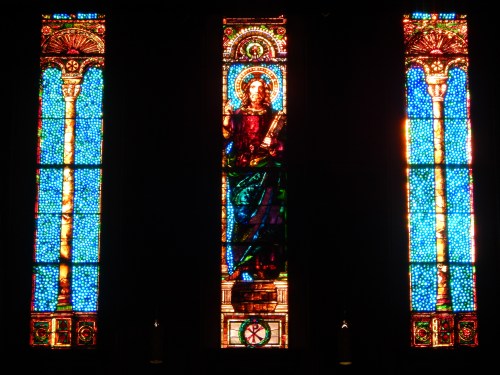
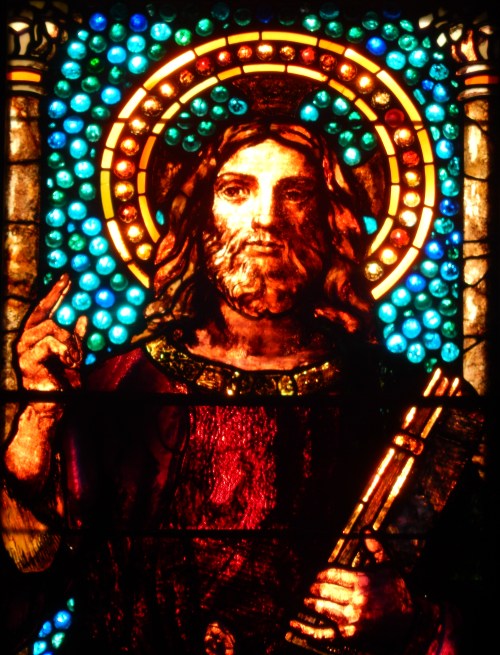
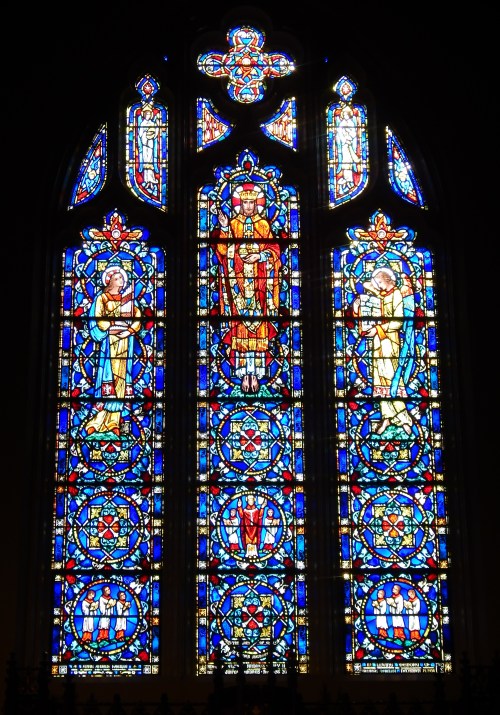
detail from stained glass window christ preaching by john la farge (1883)

Christ Preaching is a three story clerestory window located on the west end of Trinity Church in the City of Boston.  Beautiful at any time of day, because of its location, it especially comes to life as the sun begins to set.

Sometimes when tourists enter Trinity the first words they literally ask is, “Are there any Tiffany windows here?” When they learn that the answer is no, they will shrug, albeit politely, and walk away. And I can only shake my head, knowing firsthand what they are walking away from.

Learn more …

http://trinitychurchboston.org/art-history/windows-slideshow

http://library.bc.edu/lafargeglass/exhibits/show/descriptions/all-saints/trinity-boston

Read Full Post »

one of two stained glass windows by daniel maher stained glass

one of the two windows depicting, “pentacost,” by daniel maher stained glass

These windows at St. James’s Episcopal Church by local artisans Daniel Maher and Lyn Lovey express a creativity and diversity that is very modern. It is almost startling to look up and see them in the clerestory after viewing older works by Tiffany, Clayton & Bell, Goodhue and others in other parts of the  building. In part that’s because of my own ignorance around stained glass making today and how churches continue to commission their design and installation. Working with glass remains a popular and contemporary art. And in places like St. James, the past and present harmonize quite nicely.

one of a pair of windows designed by lyn hovey stained glass

I’ve lived in Boston for almost twenty years and I can’t even imagine how many times I’ve walked along Massachusetts Ave past this church. When I’ve been tired I’ve stepped into its adjacent garden and sat on the church steps. I’ve always wondered, what was behind the red stone? I’m grateful to the rector, sexton and other staff for allowing me to appease my curiosity and glimpse the beauty inside. Until you can make your visit, below are a few images for you to enjoy. And there’s also a link to a very interesting overview of the windows available online.

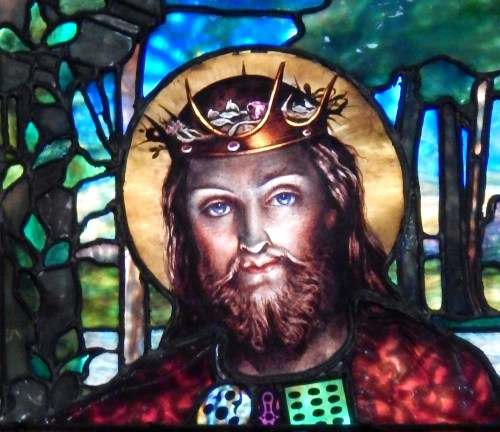
Detail from chancel windows …

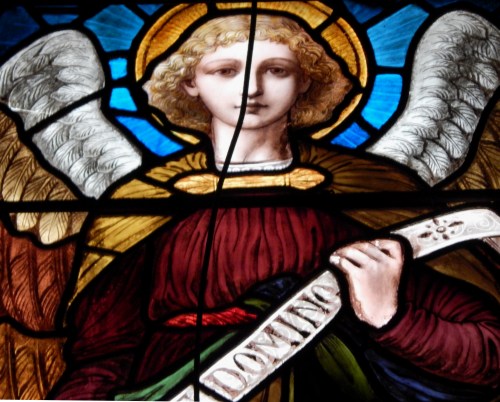
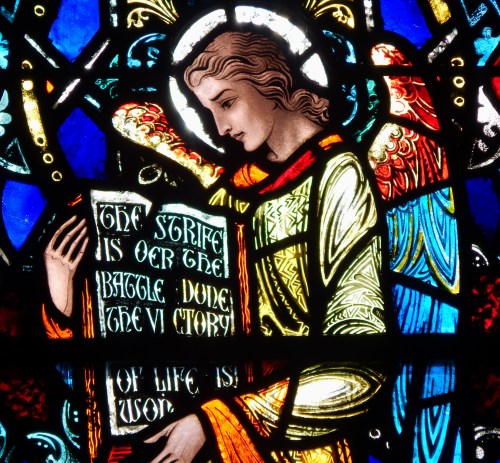
Detail from one of the choir angel windows …

Detail from the Resurrection window…

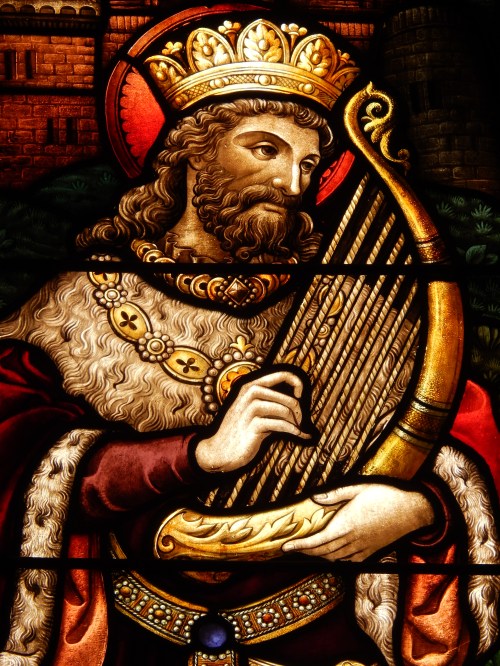
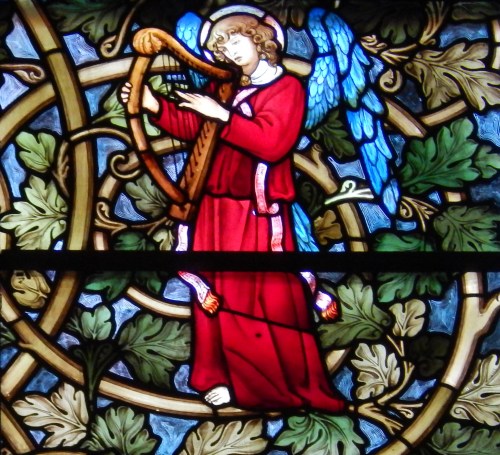
Detail from David with Harp …

Detail from Dorcas window …

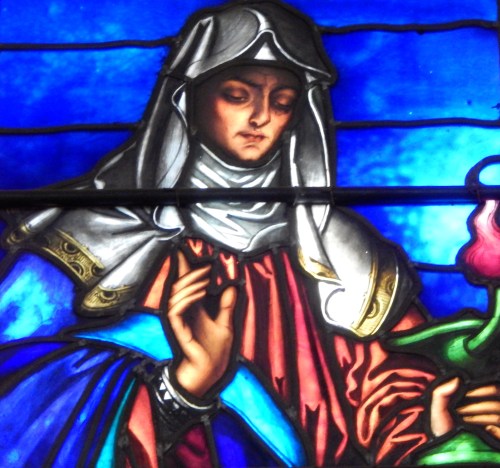
Detail from Saint Dorothea window …

Detail from the Greenleaf window …

Detail from the Nativity window …


Additional Reading and Links

St. James’s Episcopal Church

Overview of St. James Stained Glass Windows

Daniel Maher Stained Glass

Lyn Hovey Stained Glass


Read Full Post »

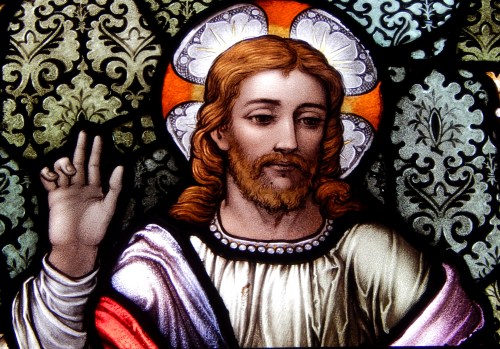
detail from rice memorial window “christ the light of the world”

As you travel along Massachusetts Avenue in Cambridge, just outside of Porter Square, you will find St. James’s Episcopal Church, a beautiful stone structure designed by Henry Martyn Congdon in a Richardsonian Romanesque style. While the church was founded in 1864, the cornerstone of the particular building in which I peered today was laid in 1888.  Inside is quite a variety of stained and painted glass (and a bell re-cast by Paul Revere!).

While I visited at the wrong time of day and time of year for the best effect, the opalescent windows along the west wall still caught my attention. I visited in early morning in spring but for the windows to be seen as their designers — John La Farge and possibly Tiffany — intended, I will need to visit again in winter in the late afternoon just before sunset.

detail from "jesus the good shepherd"by john la farge

detail from “jesus the good shepherd” by john la farge

I’ve already marked my calendar. 🙂

detail from the batchelder-dexter window, “the mission of the seventy”

I’m still sorting through pictures and their stories. More to come from my delightful visit. Meanwhile you can learn more about the church, its people and the history of the building here: http://www.stjames-cambridge.org/

Read Full Post »

virgin & child by charles connick, 1916

Emmanuel Church in the City of Boston is an Episcopal parish located on Newbury Street. Consecrated in 1861 it is a masterpiece among the many architectural treasures to be found in Boston’s Back Bay.  Its history as a place of worship and advocate for social justice for over 150 years are well documented on the church’s website. On the day that I and a friend visited to view the interior, an arts program for the homeless was concluding. Based on brief interactions with some of the participants it is clearly an empowering project, and just one of many offered in service to those in need.  I hope to learn more in the future but on that day my focus was the stained glass windows. From the literature shared by one of the clergy, the stained glass artists whose work can be found in the church include John Ninian Comper, Charles Connick, Frederic Crowninshield, Harry Eldredge Goodhue, Heaton Butler & Bayne, Charles Eamer Kempe, Tiffany, Samuel West and Henry Wynd Young.

incredulity of st. thomas by tiffany glass & decorating, 1890

incredulity of st. thomas by tiffany glass & decorating, 1890

With expansion and construction into the 1920s, there are many different styles represented in the windows of Emmanuel Church.

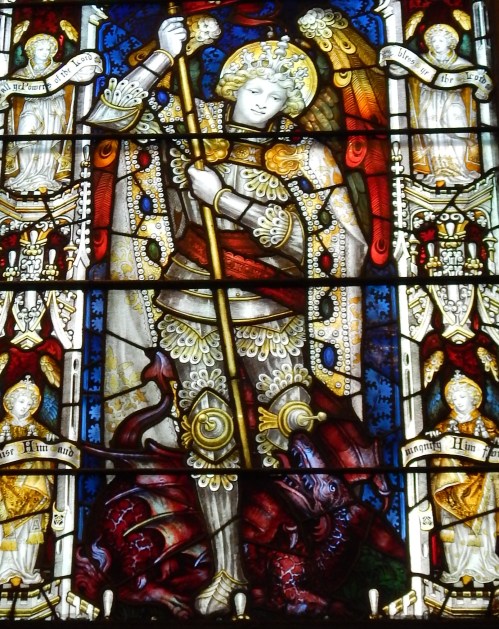
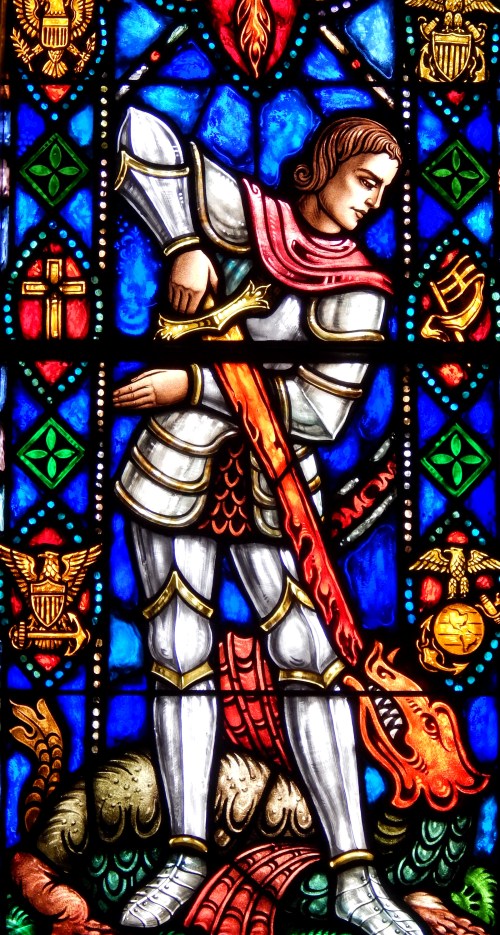
st. michael killing the dragon by charles eamer kempe, 1901

st. michael killing the dragon by charles eamer kempe, 1901

by harry eldredge goodhue, 1905

adoration of the magi by henry wynd young, after 1918

adoration of the magi by henry wynd young, after 1918

Windows have been lost over time.

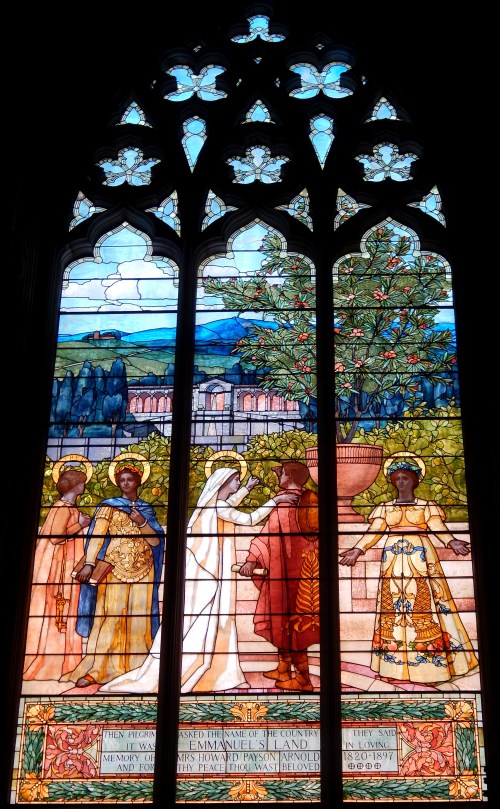
Others have been beautifully restored including the church’s signature window, Emmanuel’s Land, comprised of 15 panels of leaded glass with 17 smaller sections of tracery above, and done in the opalescent style made famous by John La Farge, Louis C. Tiffany and Frederic Crowninshield.  Emmanuel’s Land is one of Crowninshield’s largest works.

emmanuel's land by frederic crowninshield

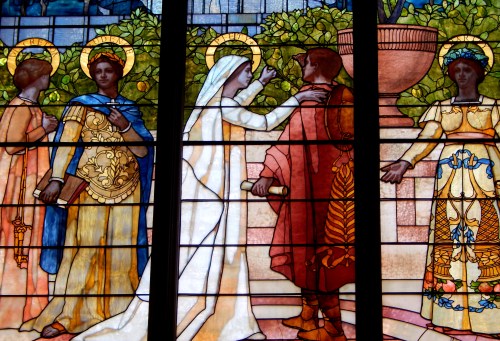
emmanuel’s land by frederic crowninshield, 1899

The window is especially notable because it does not depict a religious scene but instead a scene from John Bunyan’s book, The Pilgrims Progress.

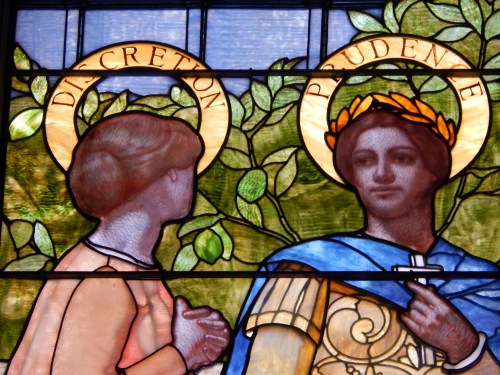
Piety, Discretion, Prudence and Charity show Pilgrim Emmanuel’s Land. The window was designed in memory of Mrs. Howard Payson Arnold, Crowninshield’s mother.

The windows are housed in a structure that has evolved quite a bit over its history from its original construction in 1861.  As the parish grew, adjacent plots of land were purchased and new adjoining structures were built including a parish house, west transept, and two chapels. The Lindsey Chapel was the last to be built between 1920-1924. A poignant tale is at the heart of its construction but I shall save that story and those images for another post.

In this post I’ve shared just a brief glimpse of the windows inside this lovely church. I hope you have the chance to see firsthand. Learn more about the church via the following link:

Emmanuel Church in the City of Boston

Read Full Post »

During a recent trip to California, I was standing on a street corner looking up at a church.  As usual, I’d come upon it because I’d gotten lost. I wanted to enter to see what kind of stained glass might be inside but I could tell that mass was about to start and I did not want to disturb the service with the shutter of my camera.  I was about to walk away when a voice behind me said, “Well, why don’t you come inside?” She was an older woman with a bright smile.  “It doesn’t matter if you’re not Catholic. Just sit in the back so you can take a peek.” All but taking my hand, she led me inside.  I did not take pictures that day but I did return and this is a little of what I saw.

Little Flowers

Presentation at the Temple

St. Barbara

St. Ignasius

St. Ignasius

St. Cecilia

St. Cecilia

Detail from Crucifixion

Detail from Crucifixion

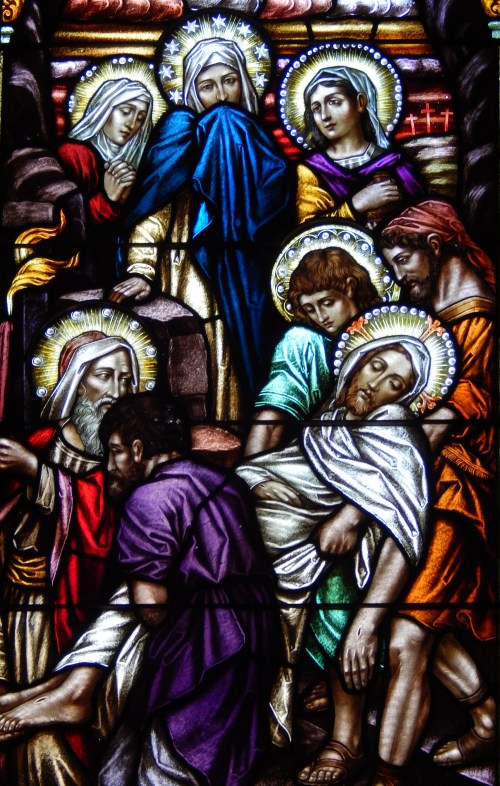
Our Lord is Laid in the Tomb

Our Lord is Laid in the Tomb

Detail from Resurrection

Detail from Resurrection

Ascension

Ascension

You can learn more about Our Lady of Sorrows church via the following link: http://www.our-lady-of-sorrows-santa-barbara.com/history/

Read Full Post »

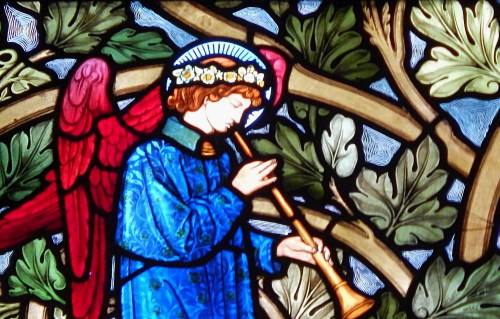
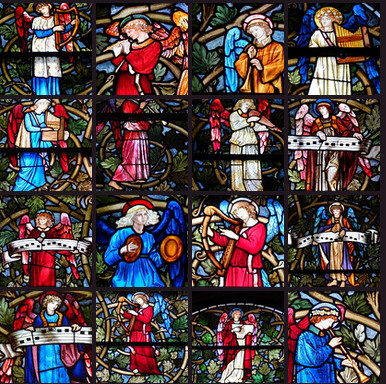
I will not likely make my goal of photographing by Christmas day all eighteen Burne-Jones angels in the stained glass windows known as the Christmas Windows at Trinity Church in the City of Boston.  The logistics are just not going to work out.  But …

… it has been a delightful exercise.  As I review what I did accomplish, new ideas are forming.

I think I shall consider this attempt a “first draft.” We’ll see what unfolds in the new year. 😉

You can read more about this personal project here: https://wordsandimagesbycynthia.com/2015/11/02/as-for-those-angels/

You can view the gallery of angels here: https://photosbycynthia.smugmug.com/ArchitectureDesign/Burne-Jones-Angels/

Read Full Post »

watercolor study for purity, a stained glass window at trinity church in copley square

John La Farge and the Recovery of the Sacred is an exhibit at the McMullen Museum of Art at Boston College.  This free exhibit concludes December 13, 2015. I am most familiar with La Farge’s murals and stained glass windows at Trinity Church in Copley Square. Complex is a term often used to describe La Farge’s work, and I have a better understanding why after seeing this exhibit.

study for presentation of the virgin, a stained glass window at trinity church in copley square

It was a treat to see the range of his artistic talent expressed in pen and ink sketches, watercolors, oil paintings, wood block prints and of course in stained glass.

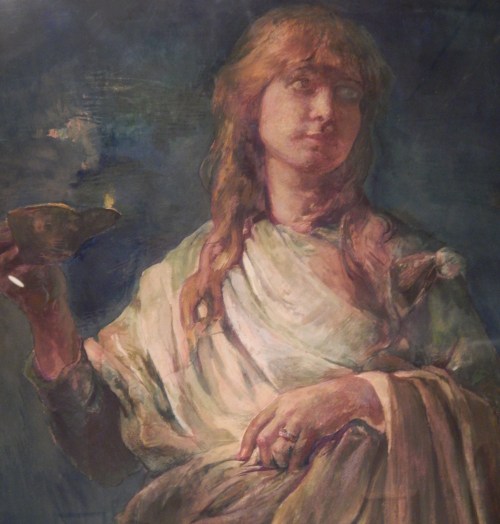
watercolor study by John La Farge

watercolor study by John La Farge

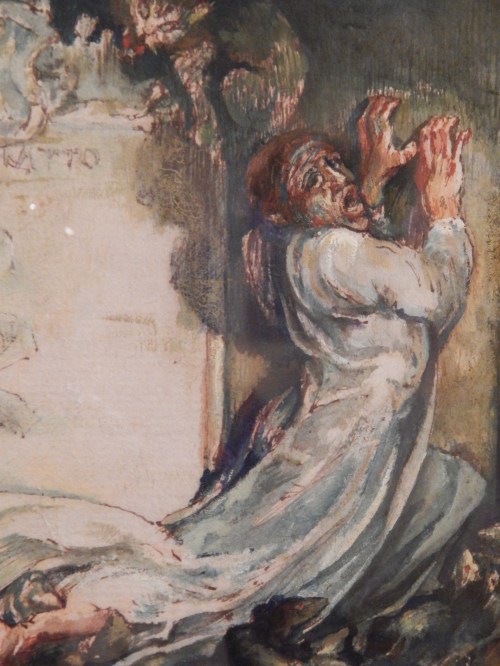
watercolor study for bishop hatto and the rats illustration

He may have been horrible at self-promotion, unlike his contemporary and supposedly one-time friend Louis Tiffany, but La Farge was certainly visionary when it came to manipulating light, colors and texture to capture particular moments, such as from his travels in Japan and the South Seas, and to tell stories both spiritual and secular.

tromple l’oeil curtain stained glass window by john la farge

Well worth a trip if you’re in the area. Further details can be found on the museum website: http://www.bc.edu/bc_org/avp/cas/artmuseum/visitor-information/index.html

Additional links

John La Farge and the Recovery of the Sacred Exhibit


Read Full Post »

Detail from The Baptism

Detail from The Baptism

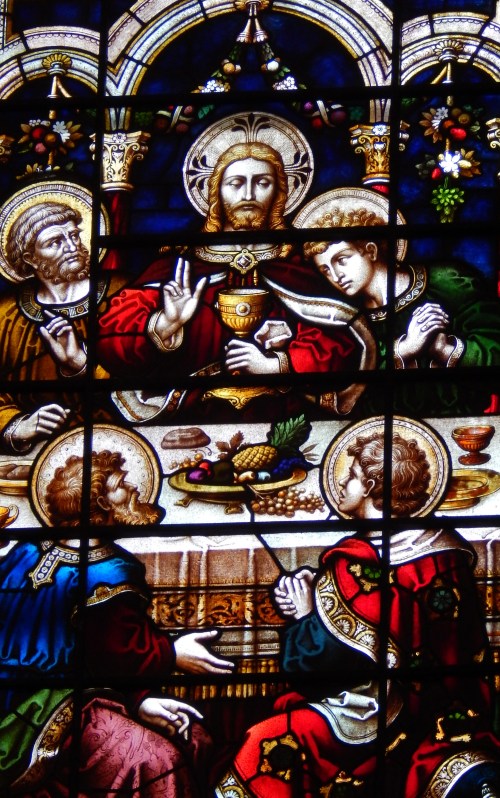
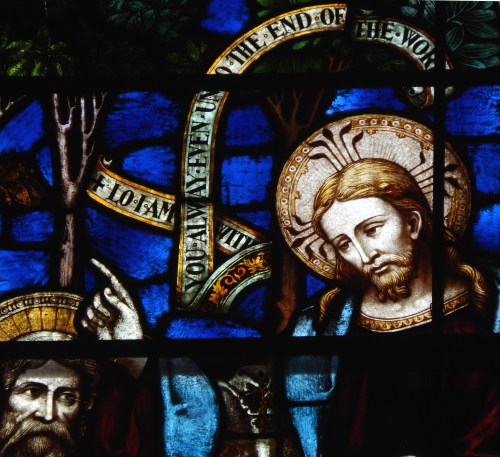
When Trinity Church was consecrated in 1877, there was only one stained glass window in place, The Baptism, in the chancel, designed by Clayton & Bell of London.  The rest was all clear glass.  By the end of 1878, there would be seven windows in the chancel marking a life: The Nativity, Jesus in the Temple with the Doctors, The Baptism, The Preacher, The Last Supper, The Resurrection, and The Commission to the Apostles.

Detail from The Last Supper

Detail from The Last Supper

I’ve not photographed the chancel very much.  But with the seasons changing and the light falling just a little differently, I’ve been focusing my camera on those windows again. Not focusing so much on trying to capture the whole window, but especially zooming in on the face.

Detail from The Commission to the Apostles

Detail from The Commission to the Apostles

New details are always being revealed.

Detail from The Resurrection

Detail from The Resurrection

I’m curious what else the autumn light will reveal.  You know I will be sure to share.  😉  Meanwhile, if you’re in the area you can check it out for yourself.  Learn more via the church website –http://trinitychurchboston.org/  – and here’s specific information about art & architecture tours http://trinitychurchboston.org/art-history

Have a good day, folks!


Read Full Post »

Detail from Baptism Window

There are thirteen stained glass windows inside St. Peter’s Episcopal Church in Central Square, Cambridge, MA. And I had the wonderful opportunity to stand before them all thanks to the kind gentleman, Rector Brocato, who let me through the door.

Detail from St. John the Baptist Window

Detail from St. John the Baptist Window

He took me on a brief and informative tour of his church and provided me with detailed literature.  The parish was founded in 1842. The current building was constructed in 1867.  The first stained glass window was added in 1917, designed by Wilbur Herbert Burnham.

AAA_wilbhbur_27920

Wilbur Herbert Burnham designing a stained glass window, ca. 1940 / Paul Davis, photographer. Wilbur H. Burnham Studios records, circa 1904-1991. Archives of American Art, Smithsonian Institution.

Burnham is one of two stained glass designers highlighted in the church’s guidebook.  He designed several windows for the church.

Detail from St. Anne Window designed by Burnham

Detail from St. Anne Window designed by Burnham

Detail from St. Anne

Detail from St. Anne Window

In the 1930s, two windows were added from the Charles J. Connick Stained Glass Studios, most noted of which may the High Altar Window.

Detail from High Altar Window, by Connick Studios

Detail from High Altar Window, by Connick Studios

High Altar Window by Connick Studios

High Altar Window

Detail from High Altar Window

Detail from High Altar Window

Detail from High Altar

Detail from High Altar

The current guide book is being revised to include the names of all the designers.

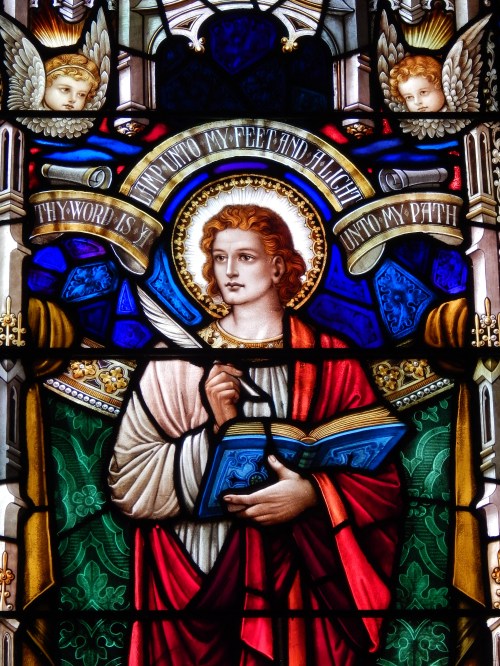
Detail from St. John Window

Detail from St. John Window

Even so, the current guide book provides a wonderful historical summary of the of the parish and detailed description of the biblical and secular symbolism in each window.

Detail from St. George Window

You can find out more about this welcoming place, from services and tours to community outreach, via the church website: http://www.saintpeterscambridge.org/

Detail from Nativity Window

Detail from Nativity Window

Sources/Additional Reading

Learn more about Wilbur Herbert Burnham in the Archives of American Art via this link.

Learn more about Charles J. Connick in the Archives of American Art via this link.

The Charles J. Connick Stained Glass Foundation is also a wonderful resource.

Read Full Post »

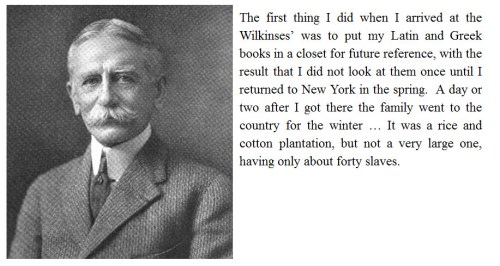
As I read Maitland Armstrong’s words, I heard David McCullough’s voice as he narrated Ken Burn’s The Civil War.  Maitland Armstrong (1836-1918) did many things during his long life but I was particularly interested in his journey as painter and stained glass designer.  I’d first learned about him as part of my research into the artists involved with decorating Trinity Church.  Maitland’s name had surfaced as a friend and contemporary of John LaFarge.

I chanced upon his memoir, Day Before Yesterday: Reminiscences of a Varied Life, published posthumously in 1920.  It opens, “I was born on the 15th of April, 1836, at Danskammer on the Hudson, near Newburgh.” In it he writes with great affection for his family and especially his mother.  He describes her southern roots, how she would sometimes leave New York to winter in Charleston, South Carolina, and how she nurtured his interest in painting before her death in 1853.
I had planned to skim Armstrong’s memoir focusing on his friendships with people like John La Farge and Augustus St. Gaudens.  In the table of contents, there is a chapter, St. Gaudens and Others.  But there was also a chapter, The South Before the War.  What did this artist have to say about such a time and place?

Well, what he does is describe in great detail, by painting with words, life in the south on a small network of plantations and the neighboring environs.  Even with his blood ties to a number of the families, he reports with a northern perspective.  He enjoys the hunting and accepts the slavery.  He learns a new language about the poor whites known as crackers and the slave assigned to him, his little darky.
It was in 1853, perhaps after the death of his mother, that Armstrong and his brothers traveled to Charleston.  There, while he is staying with relatives, the Wilkins family, they drive to their plantation Kelvin Grove, where Armstrong describes there was “a nice little village of comfortable white cabins for the negroes. But there always was in evidence a driver, as he was called, who was a superior negro and carried a whip.

He visited several family relations while in the South, from the Wilkins to his cousins, the Screvens.
The detachment with which Armstrong is able to describe the scenes that took place around him in the south (and in a later chapter his description of turmoil in New York) make clear his compassion for others but also his upper class background that separated him from those others.
At the end of the chapter Armstrong describes how that period in the south was one of the most delightful times in his life.  No cares, no worries. He would receive a letter decades letter from a family member describing the loss of the plantations and the slaves, the occupation by Union troops, and the auctioning off of property to pay debts.

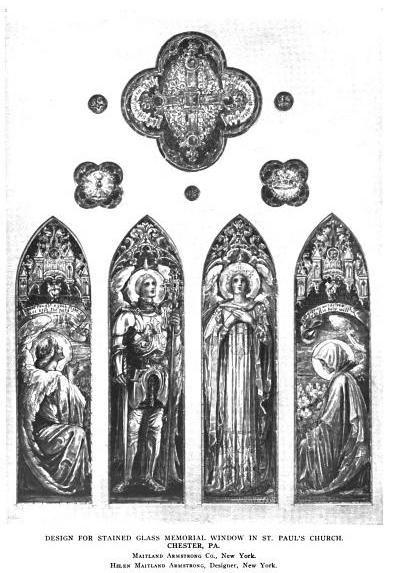
Armstrong would return to New York, attend the very best schools, and travel the world.  His life was truly varied serving as student and teacher in several different fields.  As a stained glass artist he would collaborate on masterpieces with his daughter, Helen Maitland Armstrong.  He would serve as a Consul General in Rome.  And near the end of his days, he decided to chronicle that life.
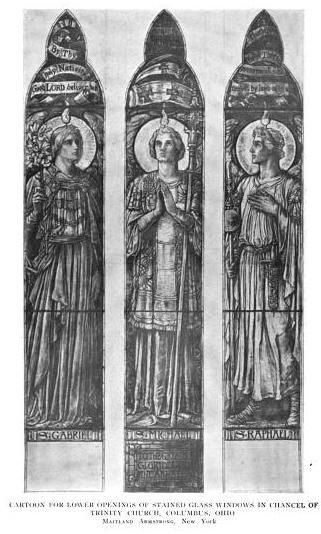
For anyone researching artists of a particular generation who ran in the same circles – La Farge, St. Gaudens, McKim, White, etc – this book could be an interesting resource. Armstrong describes personal vignettes of how these people interacted socially and appreciated each others work.  You could even completely ignore that chapter about the south.  But I think that chapter is important because, from a different source, it shines a light on life in the past … and it is that past that is the shaky foundation upon which we continue to try to build a brighter future in this country.
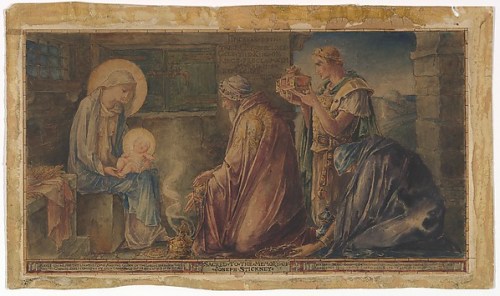
Nativity: Design for the Stickney Memorial Window, Faith Chapel, Jekyll Island, Georgia, Metropolitan Museum of Art

Nativity: Design for the Stickney Memorial Window, Faith Chapel, Jekyll Island, Georgia, Metropolitan Museum of Art


Sources/Additional Readings

Day Before Yesterday: Reminiscences of a Varied Life, 1920

Old Glass New Windows by Will H. Low, Scribner’s Magazine, Volume 4, 1888

Metropolitan Museum of Art, The Collection Online

Wikipedia — Maitland Armstrong

Year Books of the Architectural League of New York (late 1800s, early 1900s)


Read Full Post »
« Newer Posts - Older Posts »