Feeds:
Posts
Comments

Posts Tagged ‘storytelling’

One day I found myself walking along, looking at the world around me.  I passed a stand of birch and I found myself thinking, if I only knew how to paint, I’d paint these trees.  I kept moving along, but the sight of the trees remained in my mind and I found myself thinking, if only I could write music then maybe I could write a song about the trees.  But I know I don’t write music and so I started thinking, if only I could sing then maybe I could find someone else to write the music, but that would only work if I wasn’t shy. Now, I don’t really think I can sing but sometimes when I’m sure I’m alone, some kind of sound passes between my lips.  And so that day, with all those if’s put out into the world, I decided to go ahead and try that singing thing.  The following soft words emerged in some kind of rhythm.

If I knew how to paint

I’d paint these trees

How the wind does make them sway

Their leaves sunlit

Their branches bent

While high above soars a bird

Nothing Earth-shattering but it did make me feel good to sing and then hum the song for a bit.  Only later did I realize that the tune (if that’s the right word) that I used for my trees was for that of Amazing Grace, a point made clear when I viewed one of today’s Cowbird Daily stories.  The video short is an excerpt from the journey of another walker, Andrew Forsthoefel.  I hope you have a chance to view and listen to the video for yourself.  And by the way, that picture above … there must have been a day when I forgot that I couldn’t paint. 😉

Amazing Grace

Read Full Post »

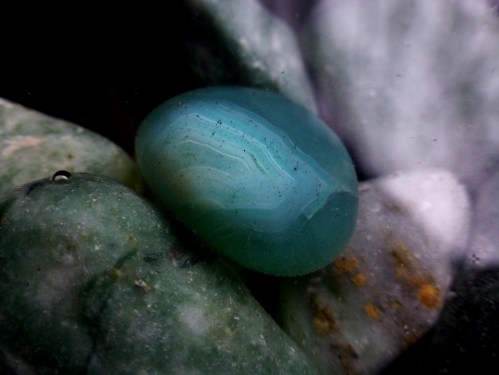
blue stone in water

blue stone in water in black bowl

One night a year or so ago, I entered my childhood home and walked into the kitchen.  The light was low and the air was warm.  I sat at the table with my mother, feeling welcomed as always.  Just as I did when I returned home from college, I began to tell her the stories of my daily life, the ups, the downs and all that lay in between.  I told her about the people I cared about and worried about.  I opened up a bit more than usual and began to share mistakes made and the opportunities I saw on the horizon.  I explained how I felt older, not sure about wiser,  but at least tempered by life and was looking forward to trying to apply some of the lessons learned.

blue stone in water, branches reflected

blue stone in water, branches reflected

She listened attentively, as she had always done, and on occasion, she smiled as I described some silliness of mine.  As I paused to take a deep breath, I admired how wonderful she looked, the smoothness of her caramel skin, the fullness of her brown hair reaching her proud shoulders, the strength in her arms, and the brightness of her eyes.  She was the strong woman of my youth, not the more fragile woman of my adulthood.  And yet I sat before her as an adult.

blue stone in water and branches reflected, in motion

blue stone in water and branches reflected, tilting the bowl

Still trying to catch my breath, I managed to say, “Ma, I’ve been telling you stuff that happened after you died, haven’t I?” She nodded. We stood and she pulled me into her arms.  She felt soft and warm and held me tight.  “That’s right, baby,” she said. ” And you’ve got a lot more stuff to do.  My time has passed but this isn’t your time.”  I woke up gasping for breath … which is what I had needed to do since I’d been having trouble breathing in my sleep.

rocks in water

rocks in water

I have not visited my mother’s grave, or my father’s, in well over a decade.  My main memories of the site are actually based on the stories my brother told of walking through the area with flower seeds in his pocket and letting them fall when the caretaker wasn’t looking.  I don’t know if those flowers ever bloomed but I feel like I carry them with me wherever I go, just as I carry my mother.  Or perhaps, she still carries me.

Read Full Post »

foreword to the interludes

interlude: genesis

interlude: exodus, part 1

interlude: exodus, part 2

Son of farmer in dust bowl area. Cimarron County, Oklahoma , photo by Arthur Rothstein, 1936.

Son of farmer in dust bowl area. Cimarron County, Oklahoma , photo by Arthur Rothstein, 1936.

“A gentle wind followed the rain clouds, driving them on northward, a wind that softly clashed the drying corn. A day went by and the wind increased, steady, unbroken by gusts. The dust from the roads fluffed up and spread out …  Now the wind grew strong and hard …  the dust lifted up out of the fields and drove gray plumes into the air like sluggish smoke. The corn threshed the wind and made a dry, rushing sound. The finest dust did not settle back to earth now, but disappeared into the darkening sky.”  — in the opening chapter of The Grapes of Wrath by John Steinbeck.

Liberal (vicinity), Kan. Soil blown by dust bowl winds piled up in large drifts on a farm, photo by Arthur Rothstein, 1936.

Liberal (vicinity), Kan. Soil blown by dust bowl winds piled up in large drifts on a farm, photo by Arthur Rothstein, 1936.

In April 1935, as Joseph A. Horne was teaching music in West Virginia, President Franklin Delano Roosevelt was creating the Resettlement Administration (RA) in Washington, D.C.  Guided by Rexford G. Tugwell, the agency intent was to help farmers and other rural poor suffering from the economic impacts of the Great Depression and the devastation of dust storms and other ecological events.   A Historical Section was created within the agency to document existing poverty as well as report the benefits of the agency’s work.  This section would be led by Roy E. Stryker.

Rexford Tugwell and Roy Stryker

Rexford Tugwell and Roy Stryker

In the 1920s, Tugwell and Stryker, both economists, had taught at Columbia University.  While there, they had collaborated on the book, American Economic Life. Stryker’s contribution included using photography to complement the text, something he also did as part of his lectures at the university.  He was not a photographer but he, and Tugwell, recognized photography as a useful, illustrative tool to convey and strengthen information.

Farmer and sons walking in the face of a dust storm. Cimarron County, Oklahoma, photo by Arthur Rothstein, 1936.

Farmer and sons walking in the face of a dust storm. Cimarron County, Oklahoma, photo by Arthur Rothstein, 1936.

Stryker left academic life to follow his friend and mentor to the Resettlement Administration. Three decades later, Stryker would recount that “Tugwell never said, “Take pictures.”  He said, “We need pictures.”  He never said how to take them.  He said, “Remember,” — and this is the only thing I can remember — “remember that the man with the holes in his shoes, the ragged clothes, can be just as good a citizen as the man who has the better shoes and the better clothes.” (Interview, June 13, 1964)

Farmer, local type, Brown County, Indiana, photo by Theodor Jung, 1935.

Farmer, local type, Brown County, Indiana, photo by Theodor Jung, 1935.

The agency’s original focus was on Rural Rehabilitation, Rural Resettlement, Land Utilization and Suburban Resettlement.  Activities included purchasing exhausted farmlands from farmers to convert the land into pastures or parks, for instance, and providing training for farmers to rehabilitate their farms through refinancing and other debt adjustments.  Out of work farmers were given jobs.  Building projects were begun.  The most controversial feature of the agency’s efforts was relocation.

Scottsboro (vicinity), Alabama. Farmers who have been resettled at work in a sand pit at Cumberland Mountain Farms, a U.S. Resettlement Administration project, photo by Arthur Rothstein, 1935.

Scottsboro (vicinity), Alabama. Farmers who have been resettled at work in a sand pit at Cumberland Mountain Farms, a U.S. Resettlement Administration project, photo by Arthur Rothstein, 1935.

From the beginning, the agency did not have much Congressional support.  Part of it was political.  Tugwell was considered to be one of the most radical of FDR’s New Dealers.  Plus the idea of relocating nearly a million farmers and other rural poor off the land into cities that they’d helped to build seemed too socialistic.

Rehabilitation client, Garrett County, Maryland, photo by Theodor Jung, 1935.

Rehabilitation client, Garrett County, Maryland, photo by Theodor Jung, 1935.

With funding limited by Congress, the Resettlement Administration would eventually dramatically narrow its efforts and focus on building relief camps in California for migratory farm workers.  One of these relief camps would inspire John Steinbeck’s The Grapes of Wrath.

All races serve the crops in California, photo by Dorothea Lange, 1935

All races serve the crops in California, photo by Dorothea Lange, 1935

Faced with rising criticism for his management, Tugwell resigned from the Resettlement Admininistration in 1936.  By September 1937, the agency was folded into a new federal entity, the Farm Security Administration (FSA).  The FSA, with its mandate to help the rural poor, would complete some of the Resettlement Administration’s original projects as well as embark upon a whole other series of financial and technical assistance programs.  Roy Stryker was given the greenlight to continue his documentary photography program.

Negro field worker. Holtville, Imperial Valley, California. He has just made himself shoes out of that old tire, photo by Dorothea Lange, 1935.

Negro field worker. Holtville, Imperial Valley, California. He has just made himself shoes out of that old tire, photo by Dorothea Lange, 1935.

He directed his photographers to take the best picture possible and to capture the story behind the image.  He could not tell them how to use their cameras, but he did suggest themes to focus on.

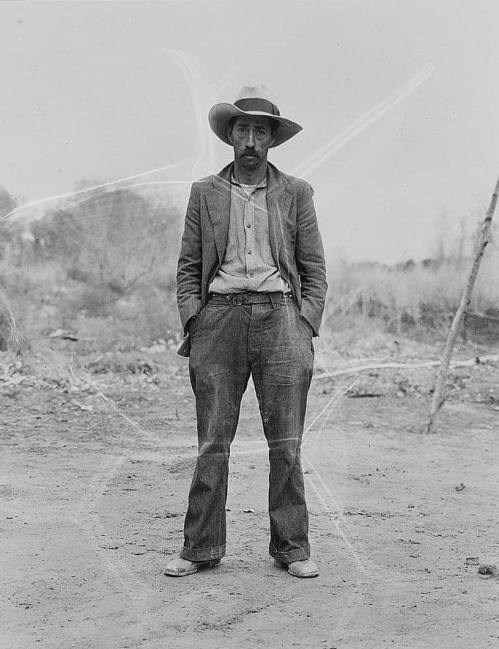
Imperial Valley, California, Mexican. He tells his story: he helped drive the French out of Mexico, fought against Maximilian, and he has, by serving the crops for many years, help build up Imperial Valley, photo by Dorothea Lange, 1935.

Imperial Valley, California, Mexican. He tells his story: he helped drive the French out of Mexico, fought against Maximilian, and he has, by serving the crops for many years, help build up Imperial Valley, photo by Dorothea Lange, 1935.

Based on how they operated in the field, these early documentary photographers, including Dorothea Lange, Walker Evans, Ben Shahn and Arthur Rothstein, were sometimes described as “sociologists with cameras.”

Mexican field worker, father of six. Imperial Valley, Riverside County, California, photo by Dorothea Lange, 1935.

Mexican field worker, father of six. Imperial Valley, Riverside County, California, photo by Dorothea Lange, 1935.

The photographers traveled across the nation, by assignment, sometimes alone and sometimes in groups, to areas of economic challenge, capturing dramatic hardships and also simply documenting people living their daily lives.

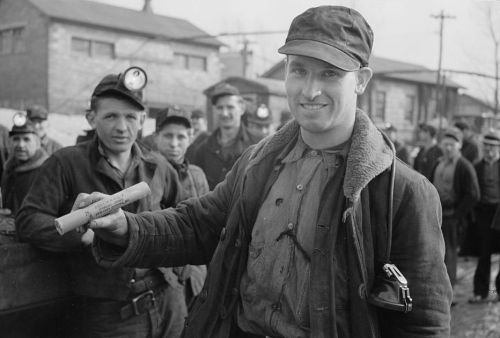
Untitled photo, possibly related to: Miners at American Radiator Mine, Mount Pleasant, Westmoreland County, Pennsylvania, photo by Carl Mydans, 1936.

Untitled photo, possibly related to: Miners at American Radiator Mine, Mount Pleasant, Westmoreland County, Pennsylvania, photo by Carl Mydans, 1936.

Farmer and sons walking in the face of a dust storm. Cimarron County, Oklahoma, photo by Arthur Rothstein, 1936.

Warm Springs Indian boy. Molalla, Oregon photo by Arthur Rothstein, 1936.

The FSA would operate from 1937 – 1942, with its photography unit capturing the diversity of the United States.

Negro boys on Easter morning. Southside, Chicago, Illinois, photo by Russell Lee, 1941.

Negro boys on Easter morning. Southside, Chicago, Illinois, photo by Russell Lee, 1941.

That diversity would be represented in the ranks of the photographers that Stryker brought together, men and women of different backgrounds, interests, and photographic skill.

Westmoreland project, Pennsylvania. Westmoreland County. Construction worker on the Westmoreland subsistence homestead project, photo by Walker Evans, 1935.

Westmoreland project, Pennsylvania. Westmoreland County. Construction worker on the Westmoreland subsistence homestead project, photo by Walker Evans, 1935.

In 1942, the photography unit moved into the Office of War Information (OWI)The OWI was created shortly after U.S. entry into World War II as an effort to consolidate existing government information services.

Two children in Anacostia, Washington, D.C. at the Frederick Douglass Housing Project, photo by Gordon Parks, 1942.

Two children in Anacostia, Washington, D.C. at the Frederick Douglass Housing Project, photo by Gordon Parks, 1942.

By 1943, another federal agency, the Office for Emergency Management, would  also be brought under the OWI umbrella, and its activities and some of its staff would merge with Roy Stryker’s photographic unit.  One of those staff would be Joseph A. Horne.

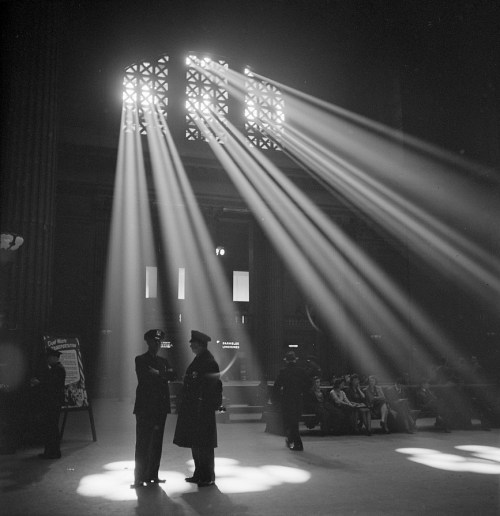
Chicago, Illinois. In the waiting room of the Union Station, photo by Jack Delano, 1943.

Chicago, Illinois. In the waiting room of the Union Station, photo by Jack Delano, 1943.

As these many agencies consolidated into one, the Farm Security Administration-Office of War Information (FSA-OWI), the nature of the photographs taken by its photographers changed to some degree as did the purpose of the images.

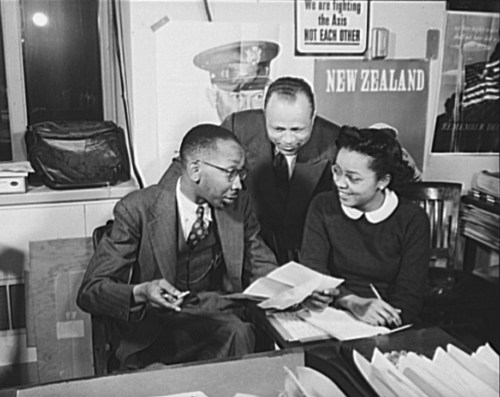
Office of War Information news bureau. Ted Poston, Negro desk editor of the Office of War Information (OWI), discusses a letter from one of the 240 Negro editors to which he sends war news from Washington, with William Clark and Harriette Easterlin, his assistants, photo by Alfred T. Palmer, 1943.

Office of War Information news bureau. Ted Poston, Negro desk editor of the Office of War Information (OWI), discusses a letter from one of the 240 Negro editors to which he sends war news from Washington, with William Clark and Harriette Easterlin, his assistants, photo by Alfred T. Palmer, 1943.

Documenting American life was still important but now with an emphasis on framing the images so that they would inspire patriotism, educate people about how to live and act during war time,  and evoke a sense of national pride in the strength, good humor and resilience of the American people.

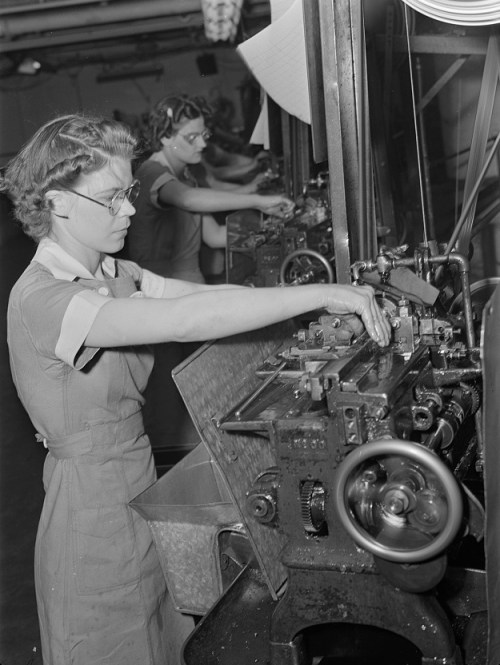
Women in industry. Tool production. Arms for the love of America! The capable young woman whose strong hands guide this cutoff machine is one of a Midwest drill and tool factory's many women employees. Almost 1,000 women have recently been employed in this comparatively new plant; sole men workers, other than foreman, are those in the heat treating department. Republic Drill and Tool Company, Chicago, Illinois, photo by Ann Rosener, 1942.

Women in industry. Tool production. Arms for the love of America! The capable young woman whose strong hands guide this cutoff machine is one of a Midwest drill and tool factory’s many women employees. Almost 1,000 women have recently been employed in this comparatively new plant; sole men workers, other than foreman, are those in the heat treating department. Republic Drill and Tool Company, Chicago, Illinois, photo by Ann Rosener, 1942.

Joseph Horne’s photos that appear in the FSA-OWI Collection, now housed in the Library of Congress, focused on the Washington, D.C. area where he had settled with his family.  His images include the crafting of victory gardens and urban farms.

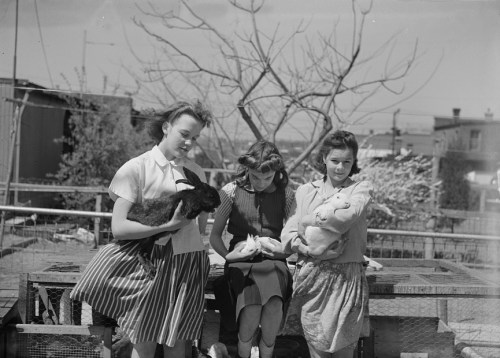
Washington, D.C. Children with rabbits which were formerly kept as pets, but now are being raised for food, photo by Joseph A. Horne, 1943.

Washington, D.C. Children with rabbits which were formerly kept as pets, but now are being raised for food, photo by Joseph A. Horne, 1943.

He also photographed the unique monuments located in the Congressional Cemetery, and the mix of peoples who made their way through Washington’s Franklin Park. And then there was that night in February 1944, when he photographed the opening of a new labor canteen.

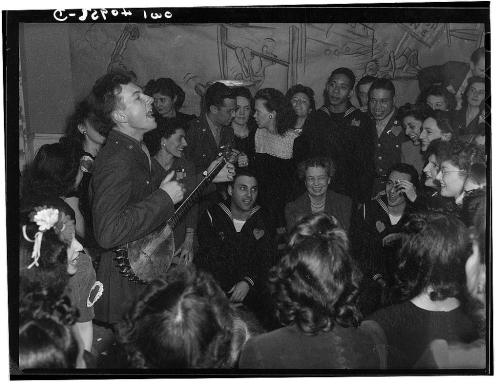
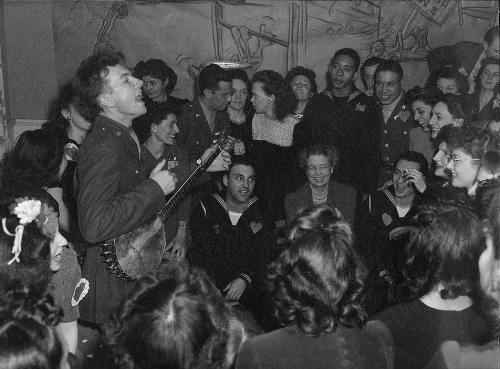
Washington, D.C. Pete Seeger, noted folk singer entertaining at the opening of the Washington labor canteen, sponsored by the United Federal Labor Canteen, sponsored by the Federal Workers of American, Congress of Industrial Organizations (CIO), photo by Joseph A. Horne, 1944

Washington, D.C. Pete Seeger, noted folk singer entertaining at the opening of the Washington labor canteen, sponsored by the United Federal Labor Canteen, sponsored by the Federal Workers of American, Congress of Industrial Organizations (CIO), photo by Joseph A. Horne, 1944

The photography unit was only one part of the FSA-OWI but it was one of the most successful units.  Through domestic and overseas operations, the  agency had sought to excite and educate Americans at home, and inform (or intimidate) allies and foes abroad, using radio broadcasts (e.g. Voice of America), newspapers, posters, film and photography. But as World War II progressed, conflicts arose around agency management and how to balance civilian and military interests.  Soon, Congress would severely cut the organization’s budget. By 1944, the enormous collection of FSA-OWI photos, black and white and color, would be transferred to the Library of Congress where they remain a valuable resource to this day.

Negro boy near Cincinnati, Ohio, photo by John Vachon, 1942 or 1943.

Negro boy near Cincinnati, Ohio, photo by John Vachon, 1942 or 1943.

By 1945, the Office of War Information as an organization was no more.  Any relevant international activities were transferred to the U. S. State Department, while relevant information gathering and related responsibilities were handed over to the intelligence agencies like the Office of Strategic Services/Central Intelligence Agency.

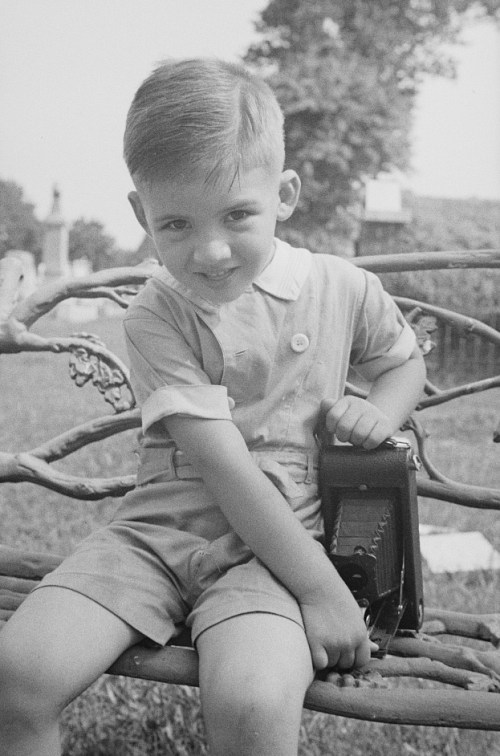
Joseph Jr. with Camera, photo by Joseph A. Horne.

Joseph Jr. with Camera, photo by Joseph A. Horne.

By the spring of 1944, Joseph A. Horne, the fellow with whom we are walking through history, had enlisted in the U.S. Army.  Soon he would be off to Europe where photography would remain an important feature of his life.  But before he traveled overseas, he would let his son play with one of his cameras.

Additional Reading/Sources …

Library of Congress Prints and Online Catalog

Stryker’s Shooting Scripts

Resettlement Administration

Farm Security Administration

Office of War Information

Oral Interviews with Roy E. Stryker

About Roy E. Stryker

Out of One, Many:  Regionalism in FSA Photography

Stryker and the FSA

John Steinbeck

FDR Presidential Library and Museum


Read Full Post »

foreword to the interludes

interlude: genesis

interlude: exodus, part 1

Photographers shooting cherry blossoms in Washington, D.C., 1922.

Photographers shooting cherry blossoms in Washington, D.C., 1922.

In early 1920s America, “a return to normalcy” was the popular catchphrase. People were weary from war and desiring to pull back from engagement in world affairs. With the support of business and promotion of isolationism, the Republicans would hold the White House throughout the decade.

Five sisters working for congressmen in Washington, 1926

Five sisters working for congressmen in Washington, 1926

Throughout most of the decade, the economy improved in the U.S. and in many parts of the world.  At the same time, countries like Germany were still dealing with the debts and damages of war, and in many countries, there were rising tides of nationalism — and resulting conflicts — as people sought independence from colonial powers.  In the U.S. wages were increased by some industry leaders.  Tax rates were lowered for the wealthy.  It was a bullish stock market.  In general, people had more money.  Some invested in stocks for the first time.  A consumer culture evolved.

Flapper 1922

Flapper 1922

In some agricultural areas, like Nebraska where Joseph lived, the situation was a bit different.  The postwar economics were not as kind.  The technological advances (e.g. electricity, telephone infrastructure, etc.) were taking place at a much slower rate in rural areas. The rural exodus to cities increased dramatically as people searched for new opportunities.

Inauguration of the garter flask in Washington, DC, 1926.

Inauguration of the garter flask in Washington, DC, 1926.

The 18th Amendment to the U.S. Constitution was still in place.  Prohibition would not be repealed until the 21st Amendment was ratified in 1931. Al Capone would become notorious during the 1920s, and he wouldn’t be the only one trying to find creative ways around the law. The era would be remembered by many names, from the Roaring Twenties to the Jazz Age.

F. Scott Fitzgerald, 1921

F. Scott Fitzgerald, 1921

In his book The Great Gatsby, Fitzgerald would capture the beauty and excesses of the period.  In his book The Sun Also Rises, Ernest Hemingway would popularize the term the lost generation, describing the young men who’d returned from World War I.  In 1925, folklorist  Zora Neal Hurston would arrive in New York during the height of the Harlem Renaissance where African American intellectuals like Langston Hughes and artists like Romare Bearden were redefining and celebrating what it meant to be black in America.

Zora Neale Hurston

Zora Neale Hurston

It was a period of innovation and of expansion of mass production.  People indulged in wonderful new technologies like radio and greater access to automobiles.  By 1928, Velveeta cheese was crafted, so to speak, for the first time and sliced bread made its debut.  Charles Lindbergh had flown his Spirit of St. Louis non-stop from New York to Paris.  Sports figures were celebrities.  Lou Gherig, Ty Cobb and Babe Ruth were hitting baseballs out of stadiums across the country.  Cinema expanded.   Mickey Mouse made his debut in a Disney animated short. Charlie Chaplin became an independent producer at this time.  In 1928, he films The Circus, a movie that brought Chaplin a special trophy at the very first Academy Awards (1929).

Charlie Chaplin

Charlie Chaplin

Such prosperity would not last, of course.  By the time seventeen-year old Joseph arrives in Washington, D.C., in 1928, financial collapse was imminent.  He didn’t share many stories of that time in his life so there’s no way to know what he was thinking or what he did on a daily basis.  We know the following based on notes written by Joseph later in his life, and the few stories he did tell his children.

Catholic University, between 1910-1926

Catholic University, between 1910-1926

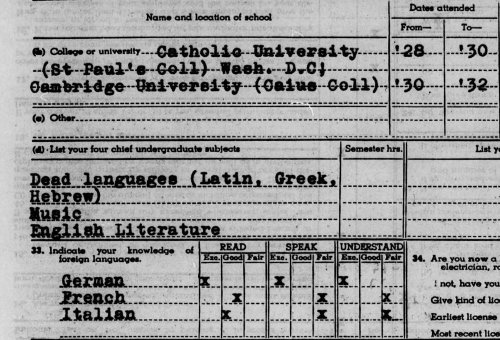
He arrived in Washington in 1928 to attend either Immaculate Conception College or St. Paul’s College.  St. Paul’s College is the house of studies for Paulist Seminarians who then complete their graduate studies in theology at Catholic University.

In a different document then the above, Joseph mentions attending Immaculate Conception College, also located in Washington, D. C.   Immaculate Conception (also known as the Dominican House of Studies) is the theological school for candidates for the priesthood in the Dominican Province of St. Joseph, which in the 1920s and ‘30s included all of the U.S. except for the West Coast. He may have studied there before transferring to Catholic University.

So far none of the schools can find record of his attendance.  I suspect some of the difficulty has to do with Joseph’s last name.  At some point in the 1920s, as he traveled from Nebraska to Washington, D. C., Joseph changes his last name.  He may have changed it more than once, but by the time he is in attendance at Caius College in Cambridge, England his last name is definitively Horne.  He will later recall an incident at the school when a professor would say, ” Mr. Horne, will you tell us, please, in your rude, crude, inimitable manner, all that you know of the Peloponnesian War.

Joseph also describes hearing, during this period, the writer, Christian apologist and famed orator G. K. Chesterton (1874-1936).  Chesterton was known for great intellectual debates with friends and colleagues George Bernard Shaw, H.G. Wells, and Hillaire Belloc.  Their debating spans the time Joseph was studying in Cambridge (1930-1932).  Mr. Chesterton was also debating on both sides of the Atlantic during this time.  In January 1931 in New York City, he debated with Clarence Darrow about whether or not the world would return to religion (read more here).  If indeed Mr. Horne was in England during this time he missed the beginning of the Great Depression in the U.S. though eventually the whole world would be affected.  In 1932, Joseph would have returned to see Hooverville’s springing up, the shantytowns named for President Hoover who had so misjudged the financial crisis.  He may have returned just in time to vote in the 1932 election in which New York Governor Franklin Delano Roosevelt would win in a landslide with his promise of A New Deal for the country.  He would have returned with the knowledge and skills of what he later characterized as “dead languages,” literature, and music.  He would not return with clerical robes.

President-Elect Roosevelt traveling to inauguration with President Hoover

President-Elect Roosevelt traveling to inauguration with President Hoover

By June 1933 he was teaching  music for the Pennsylvania-based Smith Williams Institute of Music. He would teach music and music appreciation to classes in Clarksburg, WVa and environs.  When I mentioned to Horne’s son that the institute apparently gave away free violins to students and instructors, he remarked, “Maybe that’s where my father got that beat-up violin he carried around.”  Horne would make $40/week until December 1935.

Smith Williams Institute of Music Advertisement

Smith Williams Institute of Music Advertisement

He ceased to teach in the Clarksburg vicinity after economic conditions became very bad.  He made his way back to the Washington, D. C. area and there, in his own words:

In other documents, he describes in greater details the different jobs held in the D.C. area. What becomes increasingly clear is his growing interest and skill in photography as a tool.  He also becomes interested in a young woman. Elsie was beautiful with a keen mind.  The two soon married and, in 1937, Joseph Jr. was born.

Though he clearly stayed in touch with is parents back in Nebraska, Joseph’s home was now in the Washington area.  He would continue to take on any job to provide for his new family, and to buy his cameras.

Elsie would later recall that he  always had to have the best camera, and that one year the family ate an awful lot of oatmeal so that they could pay for their son’s orthopedic shoes and still buy such an instrument. By 1941, Joseph would provide clinical photography for the Vets Administration, Mt. Alto Hospital in D.C.  In that same year, the U.S. would enter its second World War.

Washington D. C. Photo by Joseph A. Horne

Washington D. C. Photo by Joseph A. Horne

Priorities across the nation would shift.  Joseph Horne with his rural American roots, his knowledge of multiple languages, world literature, and music, and his facility with a camera would find himself in the U.S. and especially abroad at the crossroads of arts, culture and, perhaps most unexpectedly to him, of politics.

Stay tuned for the next Interlude in April.

Additional Reading/Sources …

1920s Farm Life in Nebraska

Radio in 1920s America

Prohibition: A Film by Ken Burns & Lynn Novick

Jazz: A Film by Ken Burns

Wall Street Crash of 1929

Library of Congress Prints and Photographs Online Catalog

Read Full Post »

foreword to the interludes

interlude: genesis

Photo by Joseph Anthony Horne, 1940s

American Midwest photo by Joseph A. Horne, 1940s

In 1911, by the time baby Joseph was held in the arms of his adoptive parents in Dodge, Nebraska, Europe was on the brink of war.  The Great Powers in Europe were Great Britain, Germany, Austria-Hungary, and Russia. The Ottoman (Turkish) Empire had a foothold in Greece and some parts of the Balkans — an area of southeastern Europe encompassing Romania, Bulgaria, Croatia, Serbia, Macedonia, Albania, Bosnia and Herzgovinia, Montenegro, and Kosovo.

Bulgarian Shepherdess, photo taken between 1880-1924.

Bulgarian Shepherdess

Five Girls Knitting in Albania, 1923.

Five Girls Knitting in Albania

In 1912 and 1913, wars broke out in the Balkans.  Bulgaria, Montenegro, Greece and Serbia formed the Balkan League to oust the Ottomans.  In the U.S., recent emigrants from the Balkans returned to their native lands to bear arms in support.

Greek Emigrants in NYC Returning to the Balkans to Fight, 1912

Greek Emigrants in NYC Returning to the Balkans to Fight, 1912

In the end, Bulgaria, Montenegro, Greece and Serbia conquered the Ottoman-held lands of Macedonia, Albania and Thrace. While nation-state lines had been redrawn; ethnic identities and affiliations had not changed.  Tensions simmered and flared, between the Balkan states, and with the Great Powers, especially between Austria-Hungary and Serbia.

Belgrade, Serbia circa 1900-1915

Belgrade, Serbia circa 1900-1915

The antipathy between the neighboring countries was longstanding.  Prior to the Balkan Wars, Serbia, which had been dependent economically upon Austria-Hungary, was beginning to build its own economic channels across Europe.  When Austria-Hungary banned imports of Serbian pork in 1906, the Serbs continued to sell its pork to France but rerouted the meat through Bosnia.  In 1908, Austria-Hungary annexed Bosnia from the Ottomans, and consequently shut down Serbian shipments of pork.  The Serbs appealed to Russia for support, but Czar Nicholas refused to go to war with Austria-Hungary.
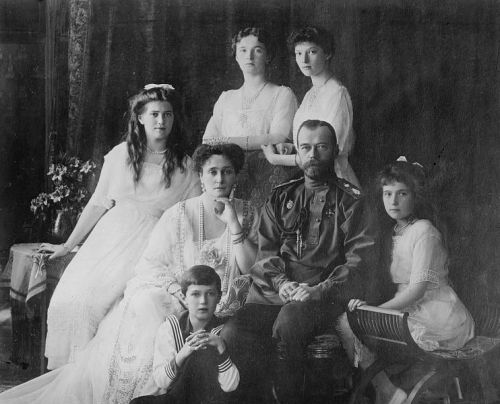
Czar Nicholas and the Russian Royal Family, 1917

Czar Nicholas and the Russian Royal Family, 1917

Approximately five years later, after the Serbian success against Turkey in the Balkan Wars, the Serbian prime minister apparently declared, “The first round is won. Now for the second round – against Austria.”  In his book, scholar Richard C. Hall refers to the Balkan Wars as the Prelude to World War I.

Four children seated on a ship, following battle for Thessaloniki between Bulgaria and Greece, 1912.

Four children seated on a ship, following the battle for Thessaloniki in the Balkan Wars, 1912.

On June 28, 1914, Austrian Archduke Franz Ferdinand and his wife were killed by a young Serbian nationalist.  The assassination is cited as the event that started World War I but obviously it was the spark that fell upon a lot of pre-existing kindling.  Diplomatic relations between many of the European nations was strained and alliances had become complicated.  With Germany’s support, Austria-Hungary presented Serbia with some strict demands in reparations.  While Serbia made efforts to meet the demands, in the end, Austria-Hungary broke off diplomatic relations and began preparing for war.  Russia, Serbia’s ally, began military mobilization against Austria-Hungary.  Britain and France expressed concern if Russia were to intervene in such a conflict.  Attempts at peaceful negotiations were brushed aside.  On July 28, 1914, Austria-Hungary declared war on Serbia.  Fighting began.  By August 1, Germany declared war on Russia.  Others joined the fray and soon every major Western power except for the United States was embroiled in war.

Packing for the Christmas Ship, November 1914

Packing for the Christmas Ship, November 1914

The majority of Americans, while aware of what was taking place in Europe, wanted to remain neutral.  Based on newspaper headlines and articles from the period,donations of every kind were collected and sent in support of allies like Great Britain, France and others.  The Red Cross Mercy Ship sailed to Europe with medical staff.  American children were encouraged to donate toys for the Christmas Ship, a vessel charged with delivering gifts by Christmas Day to needy European children.  The headlines also highlight the literal and figurative gulf separating Americans from the European conflict.  The U.S. was struggling with its own social, economic and political issues.  Even so the war was making an impression.

Suffragette Inez Milholland, suffragist, labor lawyer, World War I correspondent, and public speaker

Suffragette Inez Milholland, suffragist, labor lawyer, World War I correspondent, and public speaker

At the 1914 Southern States Suffrage Conference held in Chattanooga, Tennessee, Mrs. O. H. P. Belmont of New York was questioned about men in Belgium receiving the vote but not the women.  She replied: “With men waging war on the earth, in the air, on the sea and beneath the waters … shelling cities and destroying everything before them, leaving women and children without a place to lay their heads, it is somewhat illogical to talk of woman’s sphere as the home. In my opinion, the men who deliberately make war on women and children as has been done in Belgium, are not fit to be intrusted with the ballot for it was created as the weapon of civilization and Christianity, not of wholesale butchery.”
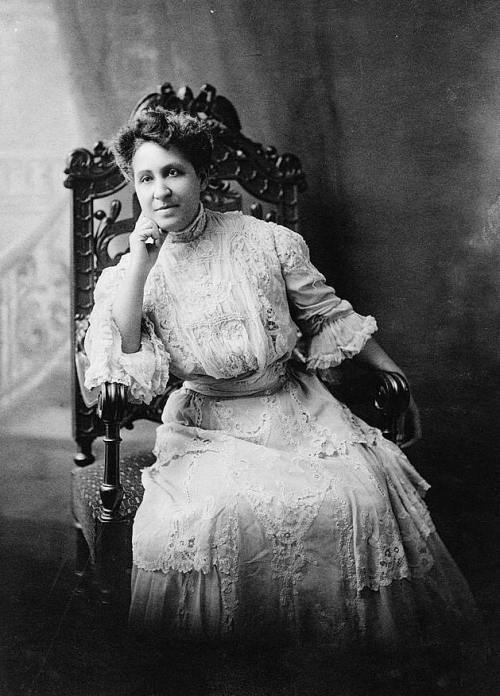
Suffragette Mary Church Terrell, daughter of former slaves, civil rights worker, suffragette, teacher

Suffragette Mary Church Terrell, daughter of former slaves, civil rights worker, suffragette, teacher

At the conclusion of her address, Ms. Belmont was asked if she thought the vote for women in the South should include the vote being given to Negro women, as well.  She replied that should be a decision left to the men of the South to decide. “We seek for women political rights equal to those of men. Negro women could share the rights of Negro men. If they are disenfranchised let the women share the same treatment. Our campaign is to eliminate the discrimination against women and secure for them a parity with men in the matter of the right to vote.” (New York Times, November 11, 1914)
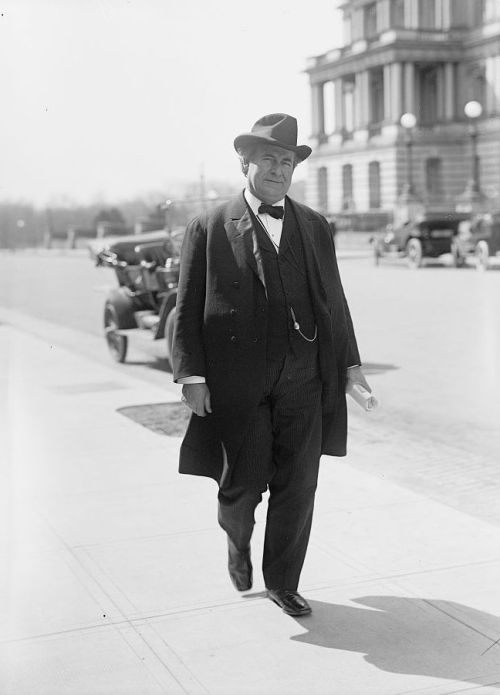
William Jennings Bryan, Rep. from Nebraska 1891-1895 and U.S. Secretary of State 1913-1915

William Jennings Bryan, Rep. from Nebraska 1891-1895 and U.S. Secretary of State 1913-1915

For several years, for many reasons, including a strong German American presence within the country, the United States pursued a policy of non-intervention.  One of the most vocal anti-war proponents was President Woodrow Wilson’s Secretary of State William Jennings Bryan.  He wanted the U.S. to maintain a neutral position and serve as mediator in the conflict.  “It is not likely that either side will win so complete a victory as to be able to dictate terms, and if either side does win such a victory it will probably mean preparation for another war. It would seem better to look for a more rational basis for peace.”  At odds with his President’s policies, Bryan would resign in 1915.

R.M.S. Lusitania, hit by torpedos off Kinsale Head, Ireland (photograph of drawing made for New York Herald and London Sphere)

R.M.S. Lusitania, hit by torpedos off Kinsale Head, Ireland (photograph of drawing made for New York Herald and London Sphere), Library of Congress

In 1917, after a series of events including the sinking of the Lusitania off the coast of Ireland with Americans on board (1915) and discovery of the Zimmerman telegram in which Germany proposed a military alliance with Mexico against the U.S. (1917), President Woodrow Wilson and other Progressives were able to promote the concept that the U.S. had to help make the world safe for democracy.  On April 1, 1917 the U.S. officially declared war on Germany. On December 7, 1917 war would be declared on Austria-Hungary.  In the end, the war would pit the Central Powers of Germany, Austria-Hungary and the Ottoman Empire against the Allied forces of Great Britain, the United States, France, Russia, Italy and Japan.  A national call for volunteers was made to join the military services.

Registering 1917, Library of Congress

Registering to Serve, 1917

The rate of enlistment for the volunteer army was too low, leading Wilson to sign the  Selective Service Act of 1917.  Over time, millions would be drafted into service.  Enlistment was even used as enticement to garner citizenship.  Tens of thousands of American men, of every race and background, began leaving daily for the battlefields of Europe.

World War I Infantry Soldiers, photographed between 1914-1918, Library of Congress

World War I Infantry Soldiers, photographed between 1914-1918, Library of Congress

At the same time, the formerly vast waves of immigration into the U.S. were effectively cut off.  A dearth of labor was created across the country just as industries were seeking to ramp up their production.  As a result, as one author phrased it, “an exodus ensued” as Northern and Midwestern manufacturers began recruiting for labor from the American South, especially for African Americans.  By 1919, nearly 500,000 African Americans had emigrated up north and out west. It would be a migration,  A Great Migration, that would continue into the 1940s.

Painting by Jacob Lawrence

Painting by Jacob Lawrence

Jobs and unexpected opportunities were created in an attempt to meet the demands of a nation and a world at war.  Wars do end, however, with WWI officially ceasing on November 18, 1918.  New opportunities arose as soldiers returned to the States, but tensions were heightened and prejudices magnified as well.

WEB Dubois in 1918, co-founder of the NAACP

WEB Dubois in 1918, co-founder of the NAACP

The summer and early fall of 1919, when Joseph would have been 8 years old, is known as Red Summer, a term coined by Joseph Weldon Johnson of the NAACP.  Race riots broke out in over two dozen cities across the U.S including in Omaha, NE, about an hour away from Dodge.  A black man was accused of assaulting a white woman and regardless of evidence a mob gathered and eventually the man was forcibly taken from police custody and brutally killed.  Actor Henry Fonda was a 14-year old boy in Omaha at the time.  He saw some of the events.  He later wrote that all he could think of was that black man dangling from a rope.
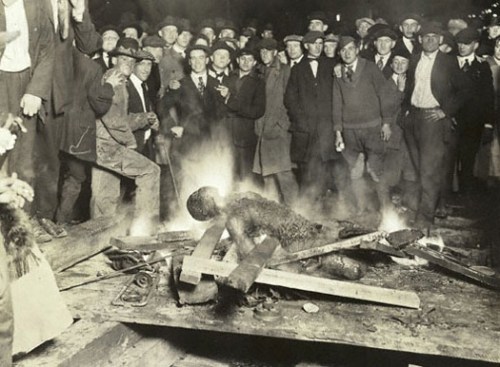
The burning of Will Brown's body, Omaha, Nebraska, Sept. 28, 1919. Source — NSHS, RG2281-69

The burning of Will Brown’s body, Omaha, Nebraska, Sept. 28, 1919. Source — NSHS, RG2281-69

Hundreds died that summer.  Many thousands lost their homes and livelihoods.  Seeds were sown for future conflicts.  And, no doubt, bonds were strengthened for future civil rights efforts.   A particular focus during the period, and for some decades to come, were campaigns against lynching. Lynching is a particularly color-blind act.  African Americans, while killed in large numbers, were not the only ones dying or being threatened with death in this horrific manner in the post-war period. Drawn to the U.S. in the late 1800s, German-speaking people from many different nations had emigrated seeking new lives.  Like little Joseph’s family, they especially migrated to the midwestern states to take advantage of the Homestead Acts.   The first act was signed into law by President Lincoln in 1862.  Anyone who had never taken up arms against the U.S. government (including freed slaves and women), was 21 years or older, or the head of a family, could file an application to claim a federal land grant. There was also a residency requirement.  In Nebraska, the land being homesteaded had once been considered “Indian Country” but as the U.S. sought to expand its territory the Kansas-Nebraska Act of 1954 opened the land to settlement.  The subsequent Homestead Act of 1862 gave 160 acres of this land to any head of household promising to live there for five years.
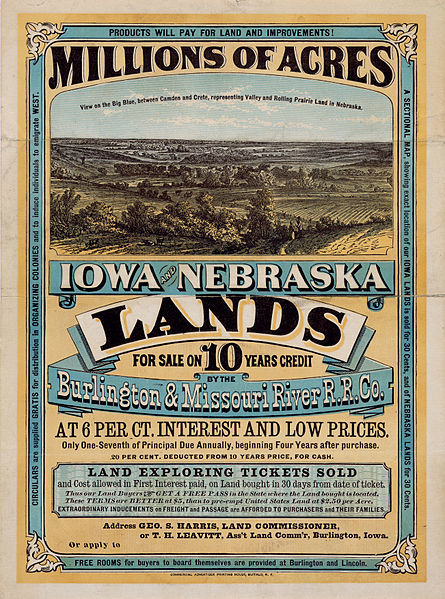
Library of Congress Printed Ephemera Collection; Portfolio 134, Folder 13. 1872.

Library of Congress Printed Ephemera Collection; Portfolio 134, Folder 13. 1872.

By 1910, approximately 200,000 residents of German heritage lived within the state of Nebraska.  Dozens of German language newspapers and other publications were regularly printed and distributed.  Cultural events conducted in German were the norm, not the exception.  All of this would change with U.S. entry into World War I in 1917.
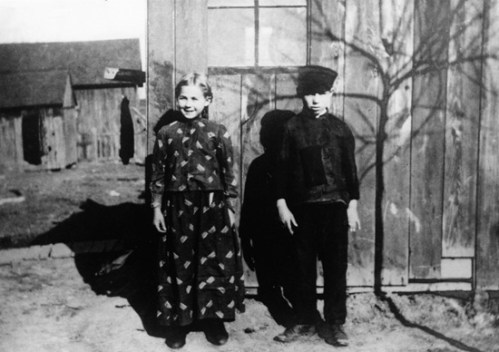
German Russian Children in Nebraska

German Russian Children in Nebraska

German-American farm family. Lincoln County, Nebraska by John Vachon, 1938.

German-American farm family in Nebraska by John Vachon, Library of Congress.

In Joseph’s adopted home, he spoke German, though he would have been challenged in speaking German in grade school.  Language has always been viewed as key to ethnic identity.   With anti-German sentiment at a fever pitch, the suppression of German language and culture was viewed as paramount to ensure that all those people of German-speaking heritage became thoroughly Americanized.  President Wilson signed a bill restricting German newspapers.  Clergy in primarily-German speaking communities were informed they could only deliver sermons in English even if people spoke only German.
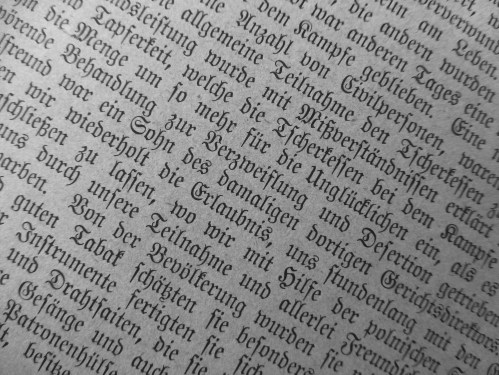
Classic German Script from a Vintage Book of Fairy Tales

Classic German Script from a Vintage Book of Fairy Tales

On April 9, 1919, Nebraska enacted a statute that would become known as the Siman Act, imposing restrictions on both the use of a foreign language as a medium of instruction and on foreign languages as a subject of study. Essentially no person in any public or private school could teach in any other language than English, and with respect to foreign language instruction, no child could be taught a foreign language until high school.

Example of one room school house in Nebraska, photographed 1938 by John Vachon

Example of one room school house in Nebraska by John Vachon, Library of Congress.

On May 25, 1920, instructor Robert T. Meyer broke the rules in his one-room schoolhouse in Zion Parochial School in Hampton, Nebraska by teaching to a 4th grader using a book of German bible stories.  He would be charged with violating the Siman Act and convicted at the state level.  Similar laws were being enacted across the country.  Meyer would fight his conviction all the way to the U.S. Supreme Court where the ruling would take on a national significance. In 1923, the Court would hold that the Nebraska statute violated the Due Process clause of the 14th Amendment.  While respecting the state’s desire to “foster a homogenous people,” the court found that the state had gone too far with the statute.  With its ruling, the court made clear that “the individual has certain fundamental rights which must be respected.”

Farm scene. Lancaster County, Nebraska , photo by Arthur Rothstein, Library of Congress

Farm scene. Lancaster County, Nebraska , photo by Arthur Rothstein, Library of Congress

By the time that ruling was made, Joseph was twelve years old.  Over the next five years, he would complete his grade school education.  In 1928, as a seventeen-year old, he would leave the family farm and Great Plains to travel eastward to study in a theological setting.  To become a seminarian as his path suggests?  If so, something happens along that path. He comes to a fork in the road. It is clear that at some point in the late 1920s or early 1930s, young Horne picks up a camera.  He will become adept at its use and he will begin to photograph the world around him.
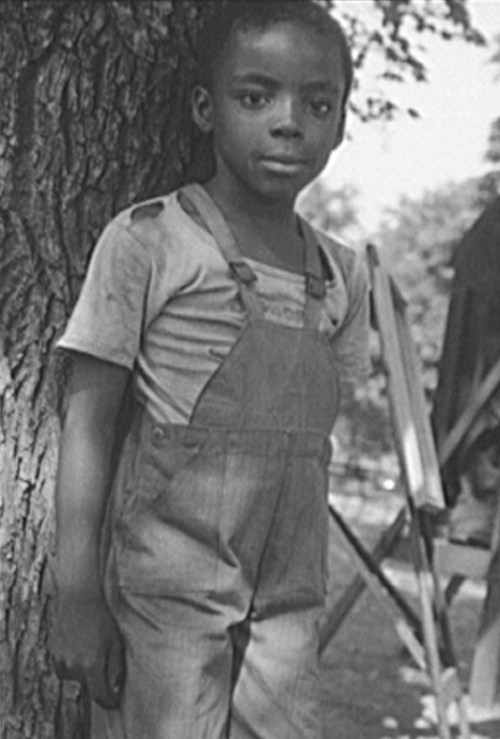
Photo by Joseph A. Horne

Photo by Joseph A. Horne

Sources/Additional Reading …

History.com Austria-Hungary Declares War on Serbia

William Jennings Bryan

Inez Milholland Boissevain

Mary Church Terrell

African Americans and World War I

Racial Tensions in Omaha September 28, 1919

The Rise and Fall of Jim Crow/Red Summer 1919

History of the NAACP

W.E.B. Dubois

Oral Histories from the Germans From Russia Collection

War Hysteria & the Persecution of German Americans

Library of Congress Prints and Photographs Online

Read Full Post »

I mostly remember leafy greens on Sunday.  My mother, with a few helping hands on occasion, would pick the leaves, rinse them to remove any grit, and then place them in a big pot with some ham.  Much water would be added, along with salt and pepper.  The pot would simmer for what seemed like hours.  Once steaming green leaves were piled on dinner plates, sometimes chopped white onions would be tossed on top for a bit of crunch (that’s what my dad liked) and sometimes apple cider vinegar, depending on the type of green.  Of all the greens, kale was my favorite, especially curly kale. After finishing the pot of any type of greens, nothing was better than to drink the remaining flavor-filled pot liquor. Mustard had a peppery bite, the intensity of which I was reintroduced to this past weekend in several interesting dishes that both stirred up these childhood memories and made me reach for my camera.

Mustard Greens

Mustard Greens

Steve bought one small bunch of mustard greens and began to experiment immediately.  The first dish involved adding a small portion of chopped fresh mustard greens to a vegetable stir fry of broccoli, kale and red peppers. The second mustard-infused dish was a homemade hamburger made of finely chopped steak, hen of the woods mushrooms, parmesan cheese, mustard greens and one egg.  The tiny hamburgers were formed, fried and served up on toasted bread with sliced tomatoes and red onions on the side.

Hamburger with Cheese, Mushroom and Mustard Greens

Hamburger with Cheese, Mushroom and Mustard Greens

The third dish was inspired by a particular Japanese method of layering thin slices of seared tuna, white rice, wasabi and shiso.  A spicy mouthful to say the least.  This particular variation on a theme involved cooking white rice and mixing it with fresh chopped green onion and mustard greens.  The rice was served with thin slices of tuna on top and wasabi and soy sauce on the side.  While the tuna is now gone, there is still rice remaining.  I’ve encouraged the chef to turn these leftovers into golden fried cakes.  We’ll see what the new week holds.;)

White Rice with Mustard Green and Green Onions

White Rice with Mustard Green and Green Onions

Read Full Post »
In February 1944, a photographer took a series of photos at the opening of a Labor Canteen in Washington, DC.  The entertainment that night was a young Pete Seeger and in the audience First Lady Eleanor Roosevelt.  Two years after I found the picture, I wrote Mr. Seeger asking if he remembered the photographer.  I was hoping for but not really expecting a response.  But one day I checked my mail and there was a postcard.

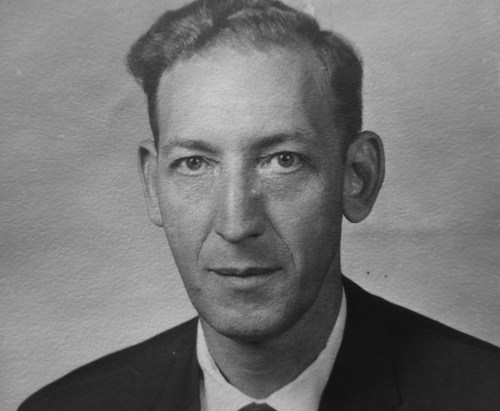
One side was covered with words, actually one word, peace, translated into many languages.  On the other side, handwritten, was essentially the following note:  “Cynthia, I’m 94 years old. The details from that time aren’t so clear anymore but my memoirs are being updated and I will make sure that the photographer’s name is duly noted.  Joseph Anthony Horne.”

Joseph A. Horne

Joseph A. Horne

Joseph Anthony Horne was born in 1911 and died in 1987.  I began researching his life out of curiosity.  You see, I knew a man who kept telling stories of a 1950s and 1960s childhood spent in exotic places.  Of fishermen in Genoa, Italy dropping seahorses into his hands. Petting a white elephant belonging to the Maharaja of Mysore. Skating in Vienna by doctor’s orders.  It was a life made possible by his father, Mr. Horne, working for the U.S. foreign service, a post he’d taken on after World War II.  As for what he’d done during the war, “something involving art and books while stationed in Germany.”  In the 1960s the family moved back to the U.S. to the Maryland/DC area where Horne continued to work in foreign service until retirement.

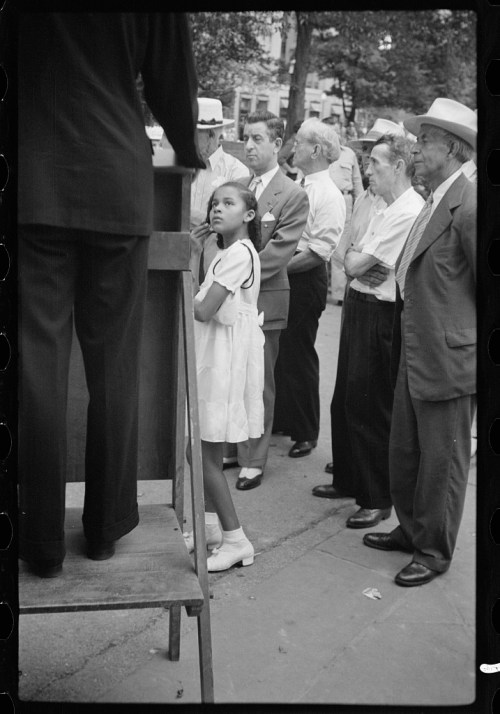
Photo by Joseph A. Horne, 1944, Library of Congress

Photo by Joseph A. Horne, 1944, Library of Congress

I already knew from the son that his father had been a photographer, loved books and music, and that the foreign service position held in all the various countries had involved working with libraries and inviting American musicians, writers and other artists to share their works.  Perhaps inspired by that PBS show, History Detectives, I asked the son was there anything more he’d like to know about his father.  I was given carte blanche to research as I liked.  Those mysterious post-war German years working with books drew my attention but soon I was researching his early years as well. So many files from the early and mid-twentieth century have been digitized, but I kept hitting a wall with finding information prior to 1940.  When I queried the son he mentioned, “that might be because he changed his name. ”  Turned out that Mr. Horne used to be Mr. Wisniewski and had grown up in Nebraska not Maryland as I had assumed.  “So he was born to the Wisniewski family?”  The son shook his head.  “He was adopted, along with a baby girl.  My father thought he’d been born in New York.”  When asked why he had selected Horne of all names, the son replied with a smile, “He thought he was an illegitimate love child of two New York families. the Astors and Langhornes.”  As I stared at the son, he laughed.  “My dad was quite the storyteller.  He even mentioned studying in Europe and hearing G. K. Chesterton.”

One bit of information was easy to find thanks especially to National Archive records available online.  In 1946, Joseph Anthony Horne joined the Monuments, Fine Arts and Archive unit.  From 1947-1948, he would serve as the director of the Offenbach Archival Depot, one of the primary collection points for preserving and returning books, artwork and cultural items stolen by Nazi Germany during World War II.  He had been a Monuments Man.  As for how an orphaned baby in New York City might travel to the American Midwest (along with many thousands of other orphaned and homeless children), and how a young man from Nebraska might find himself working as a photographer in Washington, DC … not to mention exactly who were the people, places and events experienced in Europe during and after the war … Well, all of that, would take a bit more digging.  It would be a treat to discover his connection to photography historians like Erich Stenger and artists like Karl Hofer and quite a surprise to learn of the drama at Offenbach involving missing books and the complex decisions made as the Cold War loomed, reminiscent of decisions made in the world today.  This post is just to set the stage.  More stories to follow.

Read Full Post »
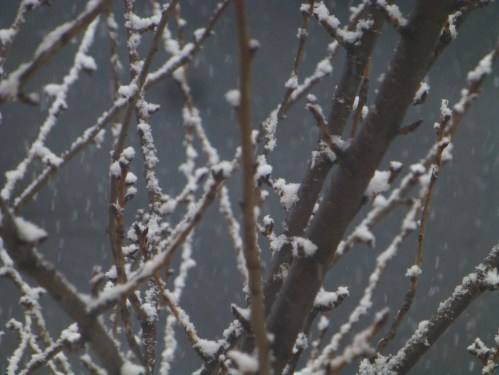
For the past couple of years, I’ve had the pleasure of engaging in a part-time research project.  Though in the beginning I thought I was documenting the story of one person, it quickly became an opportunity to learn the stories of many peoples, some famous and others not so famous, across many lands.  I’ve been struggling with how to share just a few vignettes.  With the advice of friends, I’ve decided to think of the vignettes as a journey, a walk through history.  Since the stories from that time have relevance today I think it is okay to share some of my findings here on this blog. These “interludes: a walk through history,” present different chapters in one’s man life, but really provide a glimpse into the history that continues to shape this world.  It’s been a wonderful, sometimes surprising, experience for me. I hope you enjoy the tales to be posted over time.  Not too frequently — I still need to share my pictures of the present day, like these branches covered in fresh fallen snow.

Read Full Post »
“I brought you something,” is what Zoe  said as she reached into her bag.  “An apple.”  A healthy snack.  How lovely, I thought as I glanced at the fruit.  As I looked closer, I could not help but exclaim, “Wow, it is like a sunset held in your hand!”  And what did she say?

She said, “Ha!  I knew you’d see it.  I picked it up and turned it around and knew you would see that landscape.  Your challenge is to photograph it!”  My stomach grumbled just a bit.  “You mean I can’t eat it?”

“Of course you can, ” she said, turning away.  “As soon as you figure out how to capture what you’re seeing.  That’s all.”

I must say it was a bit maddening that day to travel home hoping I didn’t bruise the landscape.  Did I capture it?  I don’t know but I sure had fun trying.  As I post these pictures, the landscape has been consumed.  It was a tasty artistic adventure.  I look forward to future challenges. 😉

Read Full Post »
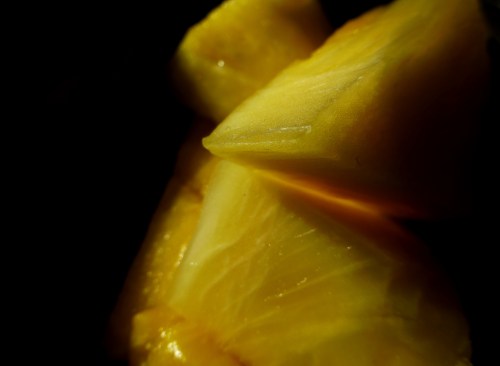
To celebrate Chinese New Year, a friend shared a fresh pineapple.  As I photographed the tasty remains, golden memories surfaced.

Cans of fruit cocktail mixed with jello.  That’s my earliest memory of pineapple.  My mom always poured the jello into a lovely crystal bowl.  One of those bowls that only came out of the cabinet at special times of the year and which we children were forbidden to touch.  It was usually strawberry or cherry jello and so the gold of the pineapple chunks would always stand out magnificently in contrast.  My first fresh pineapple I tasted when an aunt from up north came to visit for a week or so down south.  My younger brother and I watched enrapt as she took our father’s butcher knife and sliced open that fresh pineapple.  She then scooped out the innards, coarsely chopped them and then mixed with some fresh strawberries, a mixture that she then put back into the basket of the pineapple rind.  What a magical event for us.

Nearly two decades later, while traveling in Krabi, Thailand, I sat on a stone wall by the beach digging my toes into the sand.  A wizened little lady came up to me.  She carried a big stick and from the stick hung plastic bags filled with fresh cut pineapple.  I’d been warned to be cautious of purchasing certain food items from street vendors.  But I didn’t want to be rude.  We couldn’t speak the same language but she made clear the price.  Not much in American dollars.  Plus she handed me a sample to taste.  She had small fingers, work-worn, that reminded me of my mother’s.  I bought a whole bag.  Even if the fruit hadn’t been good (though it was), her smile would have been worth the purchase.

Read Full Post »

« Newer Posts - Older Posts »