
the seasons are changing wonderfully



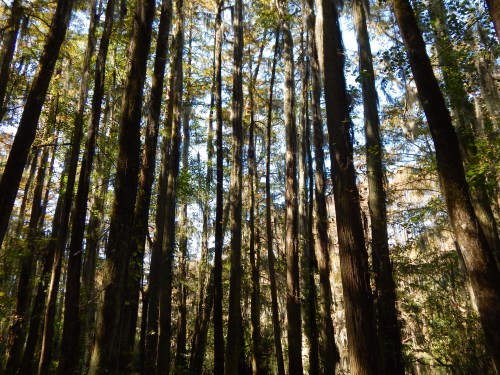

Posted in Branches, Inspiration, Nature Notes, On the Road, tagged beauty, dragonflies, insects, Inspiration, landscape, nature, nature photography, Photography, South Carolina, spiders, Sumter, swans, travel, waterfowl on October 2, 2016| 3 Comments »
Posted in Inspiration, tagged architecture, art, beauty, colors, jewish culture, Photography, reform jewish congregation, stained glass, temple sinai, travel on September 30, 2016| 1 Comment »
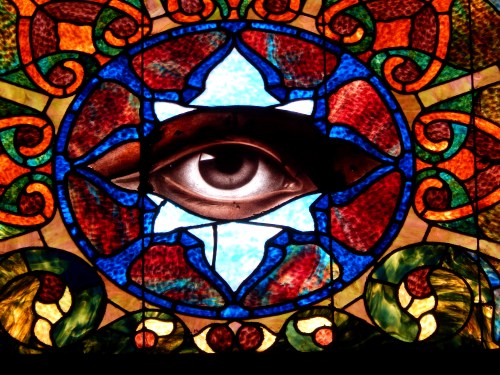
Details from two of the eleven stained glass windows in Temple Sinai in Sumter, SC. Stay tuned for more photos and the history of this beautiful historic structure in the near future.
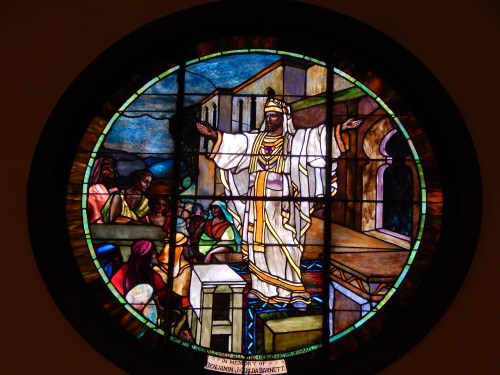
Posted in Inspiration, Nature Notes, tagged flowers, gardening, Inspiration, nature, Photography, travel on September 27, 2016| Leave a Comment »
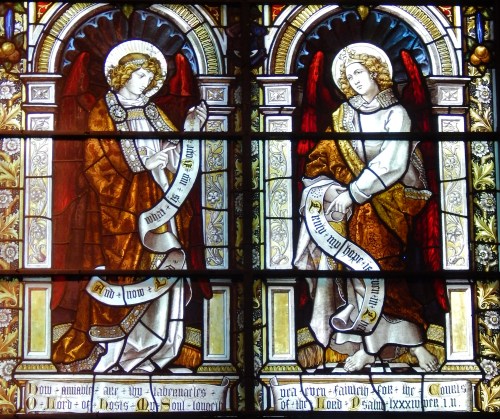
Posted in Inspiration, tagged architecture, art, beauty, colors, creativity, hope, Inspiration, Photography, stained glass windows, travel on September 25, 2016| Leave a Comment »

I don’t just challenge others and reap the culinary rewards, I also try to challenge myself and so in the coming weeks I am challenging myself to photograph and research two different sets of stained glass windows (at least). The first will involve some travel as I make my way to South Carolina to visit with relatives and en route may have the opportunity to photograph stained glass windows in a historic synagogue. The other involves researching this window (above) I noticed in a building while walking in the Back Bay of Boston. Stay tuned for future updates, and meanwhile, here’s a window located in a place I write about often, Trinity Church in the City of Boston. It is Hope by Burlison & Grylls.
Posted in Inspiration, Nature Notes, On the Road, tagged beauty, colors, flowers, Inspiration, landscape, nature, Photography, travel on August 17, 2016| 1 Comment »
Posted in Guest Contributor, Inspiration, Nature Notes, tagged cemeteries, Inspiration, landscape, memoir, Paris, Pere Lachaise, Photography, reflection, storytelling, travel on August 9, 2016| 4 Comments »
Burial places they certainly are, but across time, cemeteries have also served other functions within our communities — as gathering places for celebration, as gardens of serenity for reflection, as time capsules that help us remember and document the past. In the first of two posts, friend and guest contributor Donna Stenwall shares memories of her visits to cemeteries around the world, respecting their universal solemnity while experiencing the unique attributes of each place.

Detail from Oscar Wilde Tomb, Pere Lachaise Cemetery
It seems strange to say this, but cemeteries have always played a role in my life. The small New England town I grew up in is where it all began. One of my earliest memories is walking by the old cemetery on my way to the library. It was locked every day with the exception of July 4th. That’s when we were able to enter and roam the aisles of the chipped and weathered headstones of the residents that founded the town in the 1600’s. With the names and dates barely visible to the naked eye, this is where we were taught the art of stone rubbing.
The “new cemetery” as we called it was the spot to learn how to ride your bike for the first time without training wheels. We would fly up and down the streets of the cemetery enjoying the freedom of 2 wheels, and all the while passing the graves of neighbors that left us too soon.
Since Massachusetts still had Blue Laws at the time (meaning no shopping on Sunday), the place to take your first spin behind the wheel was the parking lot of the newly built mall on Sunday afternoons. There we got accustomed to the feel of the car, practicing forward and reverse and left and right hand turns. But, to practice that three-point turn on a hill that we would be tested on? It was back to the cemetery!

Gates of Pere Lachaise
When I began to travel, trips to cemeteries were on the itinerary. During my first trip to New Orleans I mentioned to our host that I would like to visit one of the old cemeteries I had heard so much about. The next day we set out to St. Louis Cemetery #3. It was there that I decided I wanted to be buried in a Mausoleum! Breathtakingly beautiful, I thanked our host for such an experience. It wasn’t until later I discovered that his mother was buried in St. Louis Cemetery and that our visit that day had been his first trip back since she had passed many years before.
My first trip to Paris, with its famous cemetery Pere Lachaise, was long overdue and bittersweet. My husband and I had planned a trip to Paris several times but circumstances prevented us from ever getting there. With a smile and twinkle in his eye he promised that he would take me to Paris on my 50th birthday. Ah, I thought, the City of Lights I will see you soon!
Heartbreakingly, my husband passed away on July 25, 2005 after a brief illness. Two months later, I celebrated my 48th birthday. When my 50th was approaching my dear friend suggested I think about Paris for my birthday. I wasn’t sure I could do it or even wanted to but with the urging of family and friends I made the trip. Paris was worth the wait and every step I took I knew my husband was with me cheering me on!
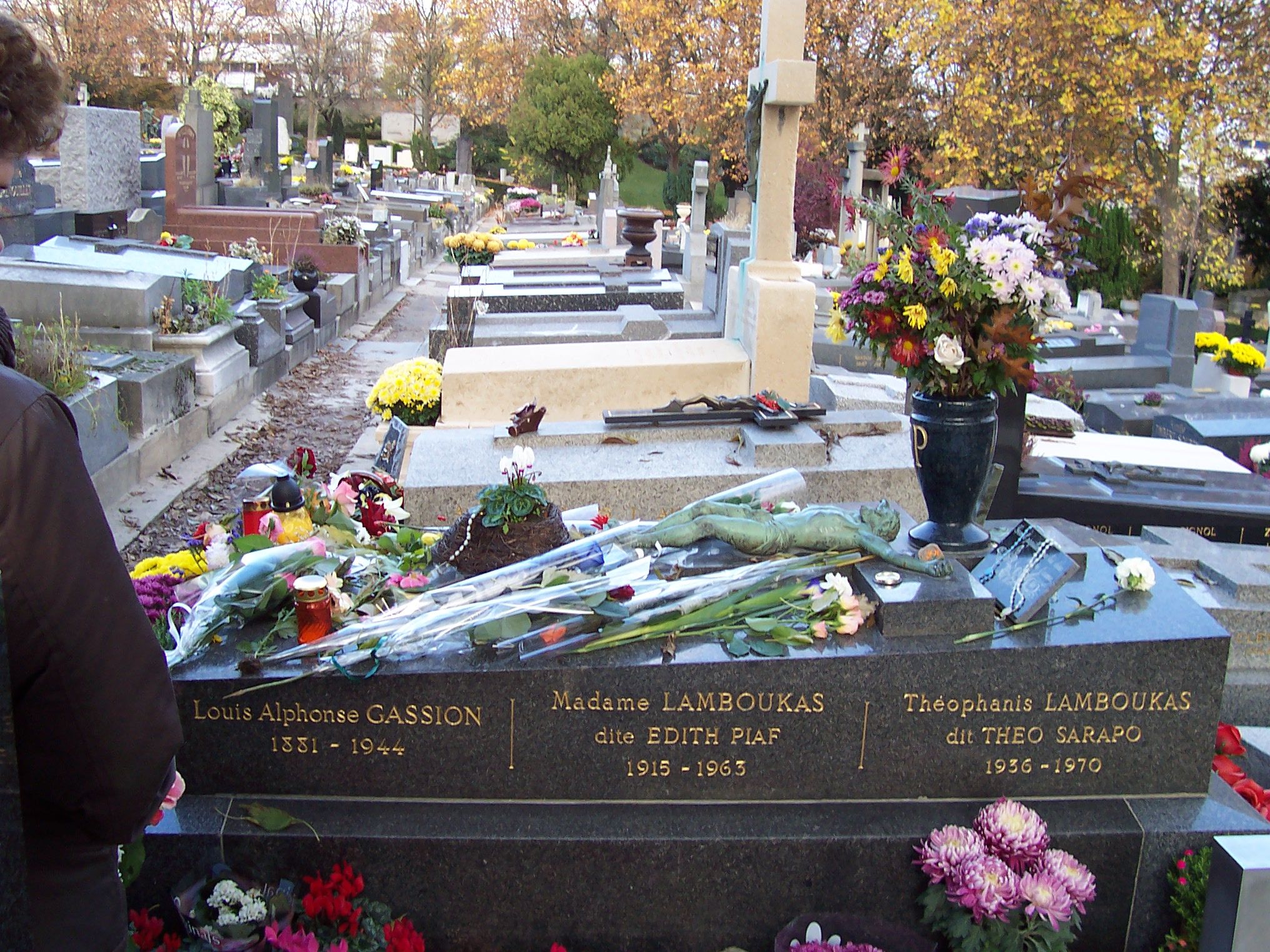
As a huge fan of Oscar Wilde, I knew I had to venture out to Pere Lachaise, the oldest cemetery in the city of Paris, to pay my respects. Not the easiest spot to get to, we hopped on the Metro, then a bus, and finally by foot. As we made our way to the other side of the cemetery we stopped to visit with Edith Piaf, Proust, Chopin, Colette, Sarah Bernhardt and Moliere. I noticed several people taking photos of the graves. I was a bit uncomfortable believing that these legendary souls were gawked at their entire lives and that now they should be allowed the peace they deserved.

On our way to the exit it dawned on me that Jim Morrison of the Doors was buried here and we should find his grave. My friend humored me but after ½ hour of roaming (we were notoriously bad map readers), she was ready to give up. I told her to stay put and I would take 10 more minutes. If I didn’t find his grave we would head back to the apartment. As I was rounding the corner, there, right in front of me was Jim Morrison, surrounded by metal barriers and his own security guard. His grave was strewn with gifts of cigarette butts and empty bottles of Jack Daniels left by the pilgrims that made the trek.
Several years have passed since my trip but I was reminded of my trip to Pere Lachaise when I caught a documentary on the cemetery and its residents. One scene shows 2 elderly ladies sitting on a bench, taking a moment after visiting their husband’s graves. One was buried next to Jim Morrison. When the interviewer asks her how she feels about all the activity near her husband’s grave, she just smiles and states “at least I know he never gets lonely.”
Photography by Donna Stenwall.
Posted in Inspiration, tagged birds, birdwatching, homelessness, Inspiration, storytelling, travel, urban landscape on June 29, 2016| 1 Comment »
“Would you like some cold water?” he asked as I walked away.
“No but thank you,” I said. “I’m just fine.”
“It’s unopened,” he added as he pulled the gallon jug from the white shopping bag. “You can have the first sip.”
“Thanks. I’m good. You take care, ” I said and waved good-bye to the man I’d met in the woods.

In my previous two posts, I shared images of nature near an office park. I’ve photographed there several times over the years. It is a meandering site with clusters of brick office buildings with each cluster surrounded by asphalt parking spaces. A few small landscaped gardens grace the entrances of some clusters or at least they have regularly mown lawns. And then connecting these manicured areas is just enough almost-wildlands, that are just wild enough to attract rabbits, foxes, deer and even the errant coyote. But mostly it is a haven for birds.
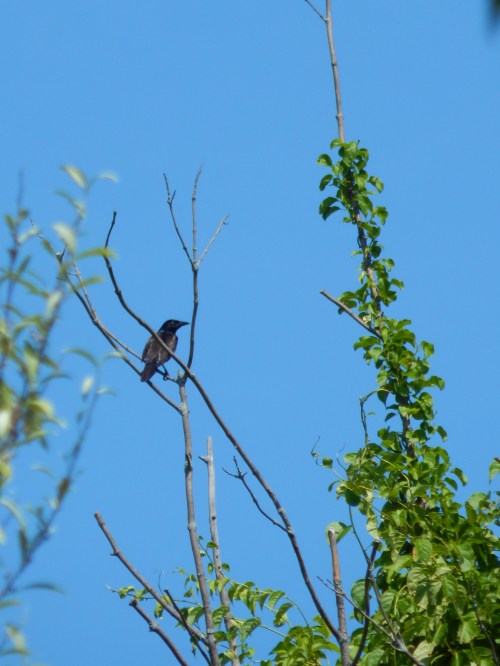
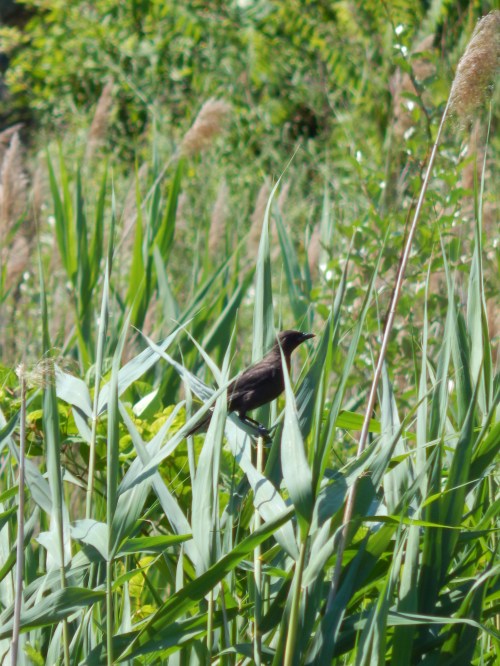
When I visit, I am usually in the company of my partner. He heads into one of the office buildings to check on a piece of equipment. I take my camera and wander the periphery of the parking lot. I look up into the trees, I scan the gullies to see how the sunlight is falling on the water and then I come to an iron gate. The gate is reminiscent of the ones you see on farms, more for keeping large animals at bay and not so much for stopping people.
I slip past the gate and determine whether I am going to go left and make my way up the gravelly path through the more heavily thicketed and treed area or if I will go right into a more meadowy area that becomes marshlands after a good rain. But this time the meadow was completely overgrown and too full of prickly plants for me to venture there, so I made my way up the gravel path.

This area too was overgrown. In times past I had been able to easily step off the path into the underbrush, not only to photograph wildflowers and animals but also to see what mischief local teens had been up to. You see, the gravel path ends with another iron gate and that gate abuts a small road and a residential area. With what I was wearing, and my lack of bug spray, I had decided not to step off the path that day. I made it to the second iron gate photographing what I could. The birds were singing so loud. I stopped to stare up into the trees. And that’s when I noticed the man slip past the iron gate onto the gravel path.
He hobbled along on two crutches and in one hand he also held a white plastic bag. He seemed dressed rather warmly for a day in the 90s, in his sweater and jacket and long pants. He wore white socks with his well-worn sandals. He moved very deliberately and slowly. As he came nearer, the dappled light caught in the silver of his blonde hair. He had a dark tan but as he came closer I could tell with a good shower he might become just a bit paler.
I smiled in greeting. I’ve been warned I should stop doing that so readily, but I felt no fear as he nodded in reply and then paused to say, “Birdwatching, eh? Seen any cardinals yet? I used to be able to sing their song.” After licking his lips, he began to whistle and when he got to the tweet, tweet, tweet I could genuinely exclaim, “Oh, yes, I know that sound.”
He hesitated, blue eyes darting about, and then said, “Well, okay, good luck.” He continued down the path moving just a bit faster than a snail. I stalled a bit, keeping an eye on him, and then I too began to walk down the path. I caught up with him. I had every intention of passing him so that I could continue my photographic journey in another area. But as I came up to his side he began to talk to me. Random stuff about the birds to be found in the area and during which seasons.
At some point I asked, in part to test an assumption forming in my mind, “Is this path a short cut for you?”
He said, “Oh, yes. This is a great short cut down to the Target.”
Having been to that Target, I didn’t think his statement was true but I said nothing.
He filled the silence quite eloquently.
In the course of our long walk down this short path, this gentleman would share from beginning to end in actually exquisite detail the plot of the 1950s movie, Harvey. He would share highlights from half a dozen academic and literary works that I only knew about because I’d seen their titles while browsing in the Harvard COOP bookstore. In one moment he would be talking about Kierkegaard and in the next about the Cedar Waxwing.
“You are quite the philosopher, sir.”
He shrugged. “Well, that’s what I studied at MIT along with physics.” I didn’t ask him in what year or if he finished. Later, around that subject, he would mumble something about “things happened.”
We made it to the parking lot. Maybe because he knew I would not be there much longer, he began to talk faster, telling me his name, and about his not-so-nice father who had been a famous chemist, stuff about religion. The light became too bright in his eyes on that subject so at that point I knew I needed to end the conversation.
“I need to rest,”he said and eased himself down on the curb.
“Well, nice to meet you. I’m off to photograph birds.”
As I walked away, that’s when he asked if I’d like some cold water.
I took a circuitous route through the office park that brought me back to his location. He was no longer there. I suspect he made his way back into the thicket where he likely has a spot. I think that had been his original intention, with his jug of cold water, until he came upon a small brown woman photographing birds in his woods.

Posted in Inspiration, tagged art, artistis, beauty, bohemian, contemporary art, Donald Langosy, fine art, Inspiration, love, muse, romance, storytelling, travel on June 2, 2016| 4 Comments »
Previously in The Story of My Art: “and then I met Elizabeth”
And now …
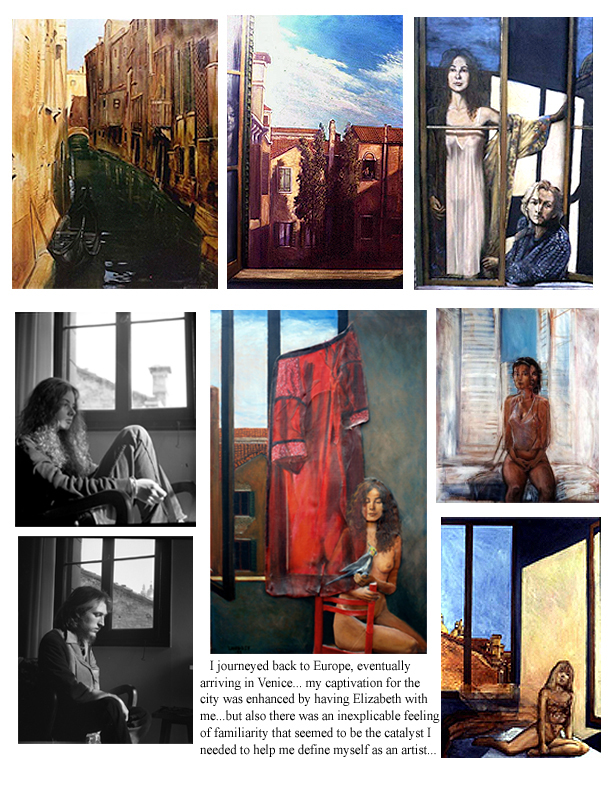

The next chapater in this artistic journey is Thursday June 9th. Meanwhile, learn more about Langosy’s art by contacting Zoe at zlangosy@me.com.
Posted in Inspiration, tagged art, artists, beauty, bohemian, contemporary art, creativity, Donald Langosy, fine art, Inspiration, Langosyarts, love, muse, painting, poetry, romance, storytelling, travel on May 26, 2016| 6 Comments »
Sometimes when I am in a room with a group of people, someone will say, “Be careful what you say. We have a writer in our midst and she always sees a story.” I don’t know that I always see a story, but in this case I do. It is the story of a man and a woman, two artists in their own right, who formed a union. A painter-poet and his writer muse. Donald and Elizabeth Langosy.
I have permission to call him Donald but, since I am friends with his daughter Zoe, my southern upbringing drives me to refer to him as Mr. Langosy . Now, Elizabeth has made clear, that since we are writing colleagues, I am to call her Elizabeth. And when she tells you to do something, what else is there to do but what she said in that gentle but oh so firm way of hers. She has that way about her, like a force of nature. Perhaps that is what drew Donald to her. That is his story to tell and, in part, that is what he has begun to do in the pages that his daughter helped him put together, The Story of My Art by Donald Langosy.
In these 14-pages a veil is pulled aside and we the viewer become privy to the bright life of a talented man and his love for a talented woman. We see how that love has enabled and empowered him to produce a body of work that is dynamic, vibrant, sometimes humorous, sometimes sad, and always provocative.
Below are two pages from The Story of My Art. Click on each image for a larger view. Over the course of the next six Thursdays the rest of the story will be shared. Join me on a journey …

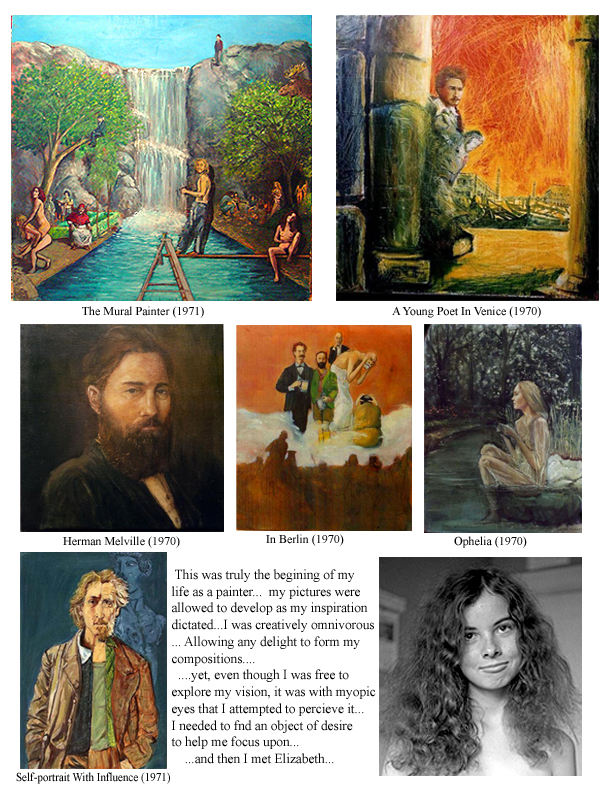
For more information about Langosy’s art, contact Zoe at zlangosy@me.com.
Posted in Inspiration, Nature Notes, tagged art, bank notes, banknotes, collecting, currency, engraving, history, illustration, notaphily, paper money, Photography, storytelling, travel on April 27, 2016| 4 Comments »

brazil: banknote showing freed slaves cooking
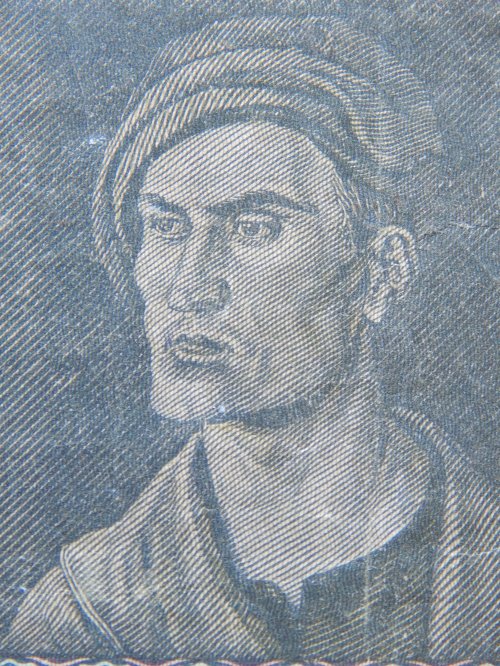
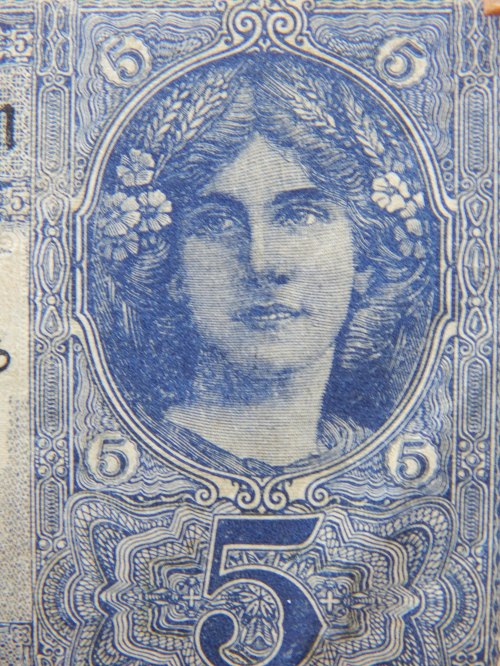
I am helping to research a bank note collection, mostly paper money from pre-World War Europe as well as other parts of the world. It is a fascinating project especially after the sometimes heated discussions here in the U.S. regarding the $20 bill and the plan to swap out the visage of Andrew Jackson for that of Harriet Tubman. Whichever $20 bill is held in hand in the future, embedded in that money, in the illustration, will be the story of that exchange. It’s the storytelling aspect that excites me about this bank note collection. Gathered over many decades, the notes are like tiny time capsules with regard to artistic expression, economics, history and more. The nature of using money certainly continues to evolve (e.g. don’t carry cash at all, just swipe your phone!), but I expect paper money may be around for awhile. Meanwhile, I’m looking forward to delving into the past and discovering the stories etched in these monies, a few of which are highlighted below.

france: 1940s bank note, image of Pyrenean shepherd

germany: notgeld was emergency money

british armed forces special voucher
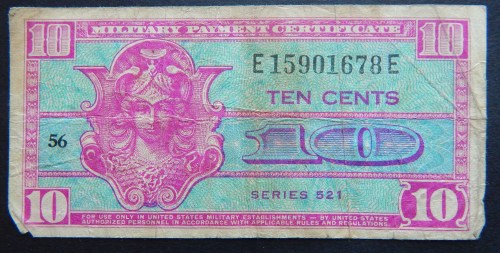
u.s. military payment certificate








 Words + Images