Feeds:
Posts
Comments

Archive for the ‘Uncategorized’ Category

“The most valuable qualification in an officer is common sense; contrary to general belief, it is the rarest element found in mankind.” — Major General Fox Conner (1874-1951)

foxconner

He would have been less than ten years old, I think. In a 1930s interview, eighty-two year old former slave Ike Woodward remembered as a child it was his job to lead blind Bob Conner around. Conner had been blinded in a Civil War battle. Woodward’s master, also named Ike Woodward, had sold the services of his young slave to the Conner family. In his his interview for the Works Progress Administration, Woodward would go on to remark that Master Conner was the papa of Mr. Fox Conner, a big man now in the army. That statement led me to ask: who was Fox Conner? An impressive figure it turns out.
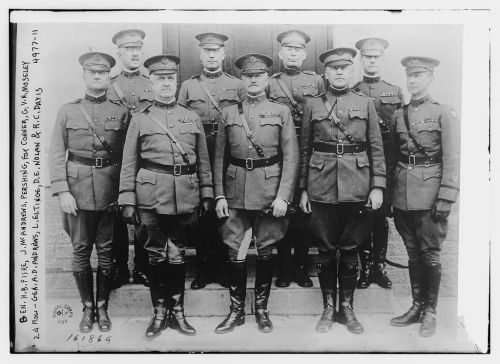
connerwithpershing

Conner to the left of Pershing (Source)

Conner would make his way from rural Mississippi to West Point and embark upon a stellar career in the military, serving in the Spanish American War, Pancho Villa Expedition and World War I. He earned military awards from the Purple Heart to the French Croix de Guerre. It was during World War I that he was selected by General Pershing to be a member of his operations section where one of Conner’s subordinates was George C. Marshall. A far-seeing strategist, he opposed the Treaty of Versailles seeing within it the seeds of a new world war with Germany.
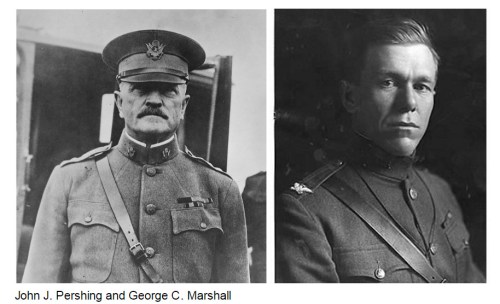
pershingandmarshall

During World War I Conner would become reacquainted with and develop an enduring friendship with an officer by the name of George S. Patton. Back in the States, in the early 1920s, Conner and his wife were the honored guests of a dinner party hosted by the Pattons. Invited to this dinner was a young officer named Dwight D. Eisenhower, whom Patton thought Conner should meet. According to one biographer, Russ Stayanoff, “In Eisenhower, Conner saw a likable, eager young officer available for the “next one;” an officer that he could groom. Conner undoubtedly needed an executive officer with whom he could get along, and Eisenhower fit the bill. The fruits of that February luncheon became apparent when Conner telephoned Ike later in the same week and asked him if he would like the assignment as his executive officer in Panama.”

dwighteisenhower

Today Conner is especially remembered for his mentoring of Eisenhower. As Executive Officer for Conner at Camp Gaillard in Panama, Eisenhower received an unparalleled education in military affairs that would be instrumental in his later success at the Command and General Staff School. Conner was a student of history. Whether personally with Eisenhower or through his later lectures at the Army War College, Conner influenced a generation of future leaders. He was a proponent of coalition building and the use of diplomacy in concert with strong leadership to bring about victory. His three axioms or principles of war for a democracy still discussed today: Never fight unless you have to; Never fight alone; and Never fight for long.

Thanks to the internet there appears to be an increasing amount of information available to the general public about Conner, as well as more detailed analyses of his teachings still relevant in this modern age.  A biography was published in 2011 about him and a new book more recently published in 2016. In much of the discourse about Conner that I saw there is reference to him being the son of a blind Confederate soldier. The only way I learned the little that I have of this man and of his enduring legacy was to read the remembrances of the slave “lent out” to help guide his father. Ike Woodward would work at the Conner place until the day Ike’s brother rode in by horseback and scooped him up, conveying that they were now free.

Sources & Additional Reading

Ike Woodward Slave Narrative

https://en.wikipedia.org/wiki/Fox_Conner

Major General Fox Conner: Soldier, Mentor, Enigma: Operations Chief (G-3) of the AEF by Russ Stayanoff, MA

http://www.casematepublishers.com/index.php/general-fox-conner.html#.WIZFhVUrKM8



Read Full Post »

tomatoes

tomatoestoo

and some olives

tomatoesandolives

Read Full Post »

One day I stood before a giant globe atlas with a friend in elementary school. We liked to spin it round and round. That day, and I’m not sure why, he stopped the globe and pointed at a place. He looked at me and said with a smile, “That says nigger. That’s what my mama told me.” I squinted at the spot (I needed glasses) and then I said to him, matter of factly, “No. That says Niger. I think your mama got it wrong.” His smile faded. And then we went out to play.

One day in high school computer class (Pascal!) I sat next to a friend whom I’d known since elementary school. We were both geeky. I wore a short skirt and one of my first pair of pantyhose. I almost felt grown up. He kept rubbing my knee. I was beginning to think he might like me. I didn’t know how to giggle but I did smile at what he was doing. I guess he noticed because he said  all of a sudden, “Cynthia, my mother doesn’t like black people. She wouldn’t let me bring you home.” I simply said, “Okay.” And in my mind’s eye I remembered his mother and my mother talking cordially at a parent-teacher meeting.

One day not long ago I stood in a place where I was tasked to welcome strangers. Two men walked in, one wearing a t-shirt emblazoned with a Nazi symbol and the other wore a t-shirt that said, white people are the best people. I did not feel very welcoming but to be welcoming was my job. In the end, on that day, the gentlemen and I conversed about everything except what they wore on their shirts and the color of my skin. We went our separate ways both still existing and having to live with each other in this world.

All of these things happened to me before Trump was voted in as President. I don’t blame Trump for racism, conservatism, alt-right, Breitbart and all the other ugliness in this world. I blame him for fanning the flames of hate. I hold him accountable for the blinders he chooses to wear about what he has done and his active willful ignorance about the scale of the harm he will do to this nation and the world with his cabinet choices.

He has become the President of a flawed, great nation. That nation will not fall with his presidency but it may fracture in ways not even conceived of yet. Will I hold him, Pence and others accountable? Yes! But I will also hold myself and others accountable if we do not take every opportunity, each day, no matter how seemingly small, to become better educated, informed, engaged and active world citizens.

One day …

Read Full Post »

cynthia_staples_1

The Arts at the Armory Café is located on the first floor of the Armory in Somerville. In addition to tasty food, the café offers visitors art upon its walls. I’m proud to be a participating artist for its Winter Art Show along with Aline Lotter, Casey Stanberry, Eleanor Elkin, Jennifer Weigel, Jessica Dyer, Lauren Jones, Lea Ruscio, Miranda Vitello, Ponnapa Prakkamakul, and Tracie Storie.The exhibit is on display January 6-31 in the Cafe. For more information visit http://artsatthearmory.org/cafe/

Read Full Post »

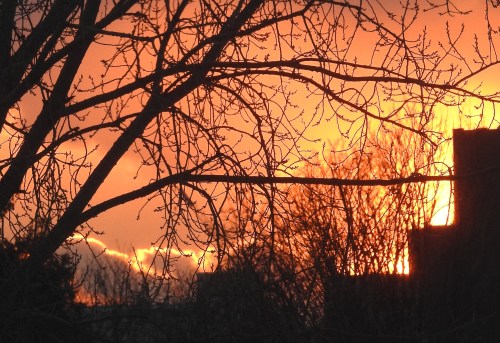
sunset3


Read Full Post »

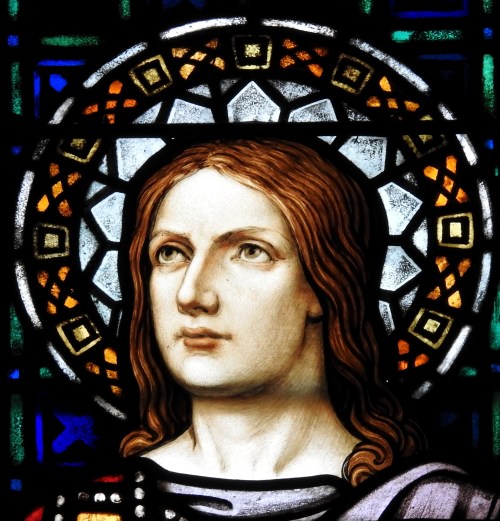
sp5

Coming soon I will share words and images from my brief journey inside St. Paul Church in Cambridge, MA. These are photos of St. John the Baptist and St. John the Evangelist.

sp2

Read Full Post »

transfigurationdetail

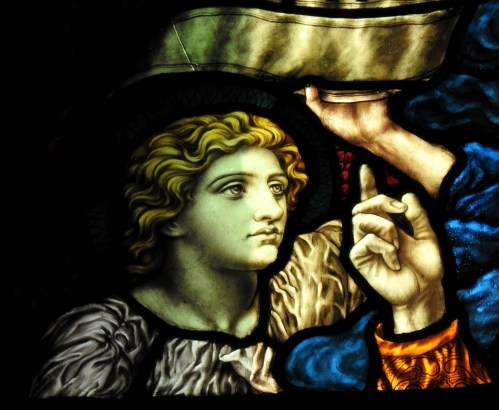
Three years ago on this blog, I wrote about Henry Holiday’s depiction of the Transfiguration in the stained glass window located at Trinity Church in the City of Boston. At the time I was particularly interested in the position of the hands in his window though my research revealed to me that he was especially noted for his execution of drapery.

transfigurationdetail2

With a new lens and new perspective I’ve been revisiting the window, and I begin to understand what I read about his work with cloth in glass.

transfigurationdetail3

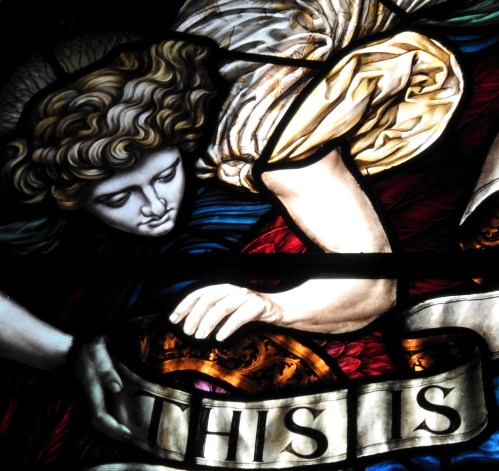
These images are from the top of the window. What’s amazing to me is that much of this detail you cannot see with the naked eye.

transfigurationdetail4

And yet the whole of what you see from the ground is quite stunning.

transfiguration

Read an earlier post here: https://wordsandimagesbycynthia.com/2013/10/07/holidays-tranfiguration/

View the window for yourself at Trinity Church: http://trinitychurchboston.org/art-and-architecture


Read Full Post »

I’m not as limber as I once was and so I was having difficulty getting through the window but I didn’t have to fret for long because a stranger took my hand and pulled me through and when I lost my shoe on the rim of the window frame, he picked it up and gave it back to me and then turned and continued to help other strangers out of the train.

I wasn’t sure that I’d write about the chaotic experience of being on the Orange Line train yesterday in Boston’s Back Bay Station that filled with smoke. In the moment I was less concerned about the possibility of a fire in the station and more concerned about the growing panic of the people around me. Later I just wanted to let the incident go. But then today I picked up something and I remembered the feel of that man’s hand holding mine.

It was rush hour. People had had a long day and just wanted to get home. The car in which I stood was not packed but it was tight enough especially as most of us wore the beginnings of our winter gear. The lights were on but there wasn’t much air circulating and the intercom system must not have been working because there was no news being shared by anyone. The train had partially pulled away from Back Bay Station before coming to a halt, and later, officials would note that that was the reason the train operator could not open the doors, because of the danger of people stepping onto the tracks and landing on the electrified third rail. But most people were not thinking of that as the smoke grew thicker, and from inside the car, we could see people on the platform start to run for exits.

Even as I was starting to say, please, be calm, I felt my own panic rising. And then people began to scream, especially when they realized the doors were not opening. People began beating at the windows. The smaller windows on the sliding doors were easier to break. Individual flight was on many a person’s mind for sure but others were trying to help scared people through the small openings. Then in the part of the car where I stood, a man on the platform motioned people away from a larger window. He was not a train official or one of the policeman stationed in the area. He was just a regular guy. He kicked at the window, again and again, until it flew in, a single large sheet, shattering into a spider’s web pattern but no jagged edges did I see. People started leaping out the window while that man and some others stood, held out their hands and helped strangers out. I did not stop to ask his name but I think I shall never forget him.

Read more: Boston Globe article

Read Full Post »

“i keep sitting down to write you about this painting… and each time i draw a blank… it is a favorite of mine… a poster of it welcomes you into my studio …” — Donald Langosy, 2016

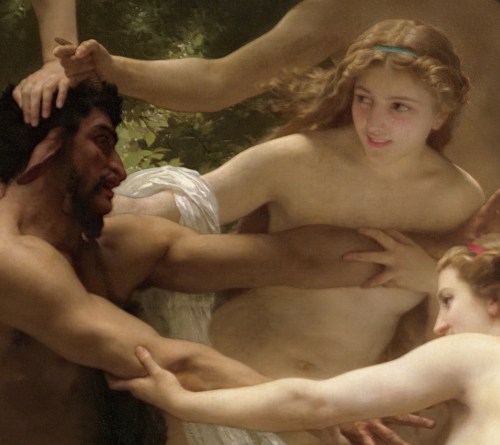
detail from nymphs and satyr by bouguereau

detail from nymphs and satyr by bouguereau

Of late I’ve become quite bold in asking people to share with me in words and sometimes images the beauty that they experience. I want to understand why a certain piece of music heard, a poem read, or a moment in a certain field can move them so deeply. In painter Donald Langosy’s case, I wanted to know why he was so moved by Bouguereau’s Nymphs and Satyr (1873), a painting held in the collection of the Clark Art Institute in Williamstown, MA. I’d learned from Langosy’s daughter that, as with Titian, it was a work of art Langosy might like to see in person one day.  And so I asked him to please tell me why, and as I waited for his words, I did a little bit of my own research into this Bouguereau.

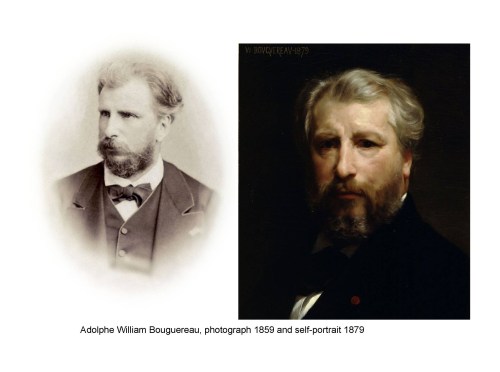
Adolphe William Bouguereau (1825-1905) was a French figurative painter noted for producing rather luminous works with Classical, mythological and religious themes. His work was very popular with the European and American public during his lifetime. He received top prices for his work. He not only painted portraits, but he also decorated private homes, churches and public buildings.

Pieta, 1876

pieta, 1876

Quite prolific, he apparently produced over 800 finished paintings. In addition, beginning in the 1860s he taught at the Academie Julian in Paris. Among his many students over the years he would teach Henry Ossawa Tanner and Ellen Day Hale. As I read criticism about his work from across the different decades, both the words beautiful and escapist were applied. During the height of Bouguereau’s career there was a new movement starting in the French art scene, Impressionism. Many within this new school were not enamored of Bouguereau’s work and actively belittled it. Despite the controversy surrounding his subject matter, so polished and dreamy during an age of great turmoil, few denied the mastery of his technique.

“sadly,” notes Langosy, “Bouguereau is remembered for his unending number of paintings of little girls and poetically posed young virginal women…. which is unfortunate… for it distracts from his many accomplishments…like this one, which is among the finest masterpieces ever painted…”

“…compositionally outstanding…. but outstanding because of the remarkable brush work… which is brilliant because of his command of color and line….. the sensual twirl feeling of the nymphs… the satyr in a diagonal angle attempting to brace himself against their attempts to over power him… Bouguereau’s subtle sense of line accenting the individual rhythms of the different poses…”

“…rhythm of line is what creates three dimension on a two dimensional plane…. and then there are the leaves and grass and the water… egads!….i’m speechless… i haven’t written enough about this painting… but now you will understand why it took me this long to write”

And that is how I came to learn of nymphs, satyrs and appreciate the work of Bouguereau through the words of Donald Langosy.


Additional Readings & Images

http://www.clarkart.edu/Art-Pieces/6158

http://www.bouguereau.org/

http://www.getty.edu/art/collection/artists/780/william-adolphe-bouguereau-french-1825-1905/

https://commons.wikimedia.org/wiki/William-Adolphe_Bouguereau


Save

Read Full Post »

The Beebe Estate is a historic house located at 235 W. Foster Street in Melrose, MA.  A lovely example of Greek Revival architecture built in 1828 as a home by William Foster, it is now an arts and cultural center. It is my pleasure to have three framed photographs appearing in Nature: Our Most Precious Resources, an arts exhibit hosted at the estate this September by the Friends of the Middlesex Fells. The opening reception was held September 2nd and it was a well attended gathering as you can see in the embedded video. Throughout the three remaining Saturdays in September you have the opportunity to visit and peruse the beautiful works on display. Enjoy. 🙂

Friends of the Fells; Exhibit; Opening Reception; Sept 2, 2016 from Julie Kelleher on Vimeo.

Read Full Post »

« Newer Posts - Older Posts »