Feeds:
Posts
Comments

seeking light

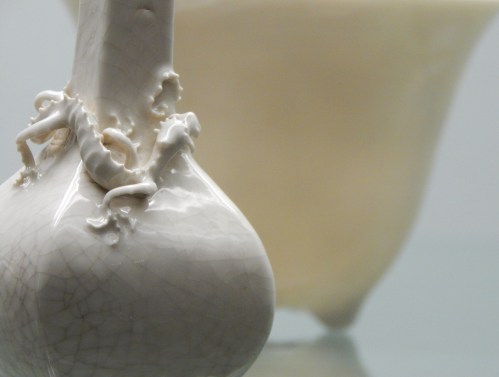
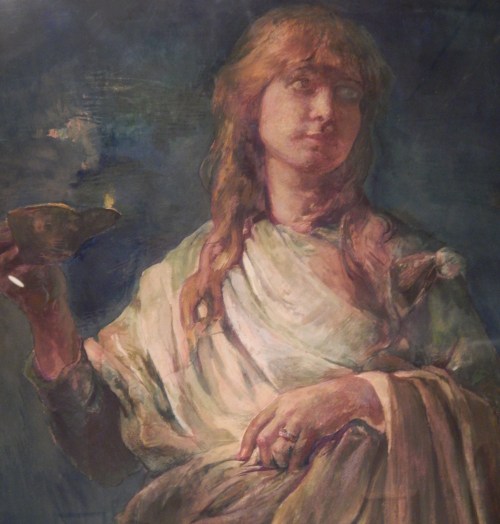
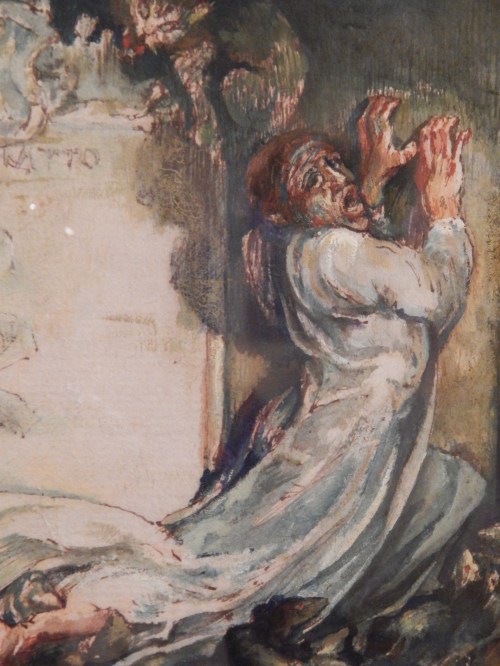
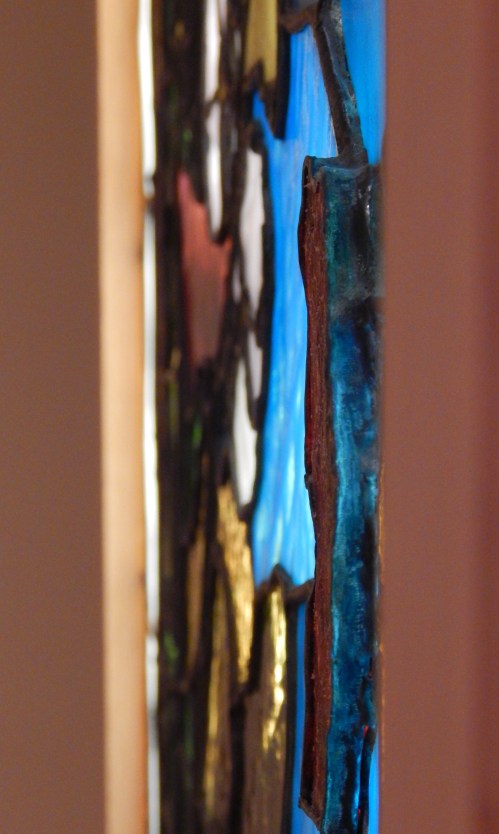
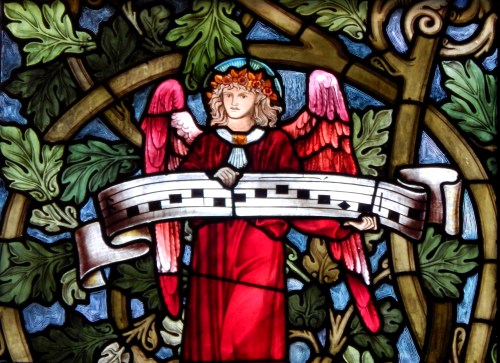
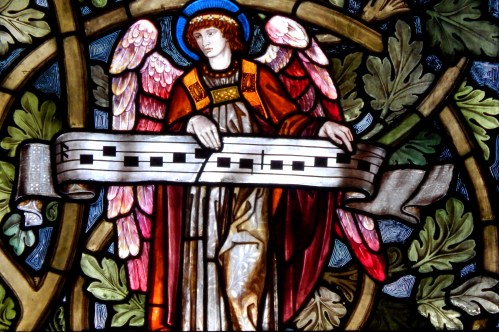
… paired with a powerful poem referencing Icarus.  It can take a while for the free version of the 52 page journal to load but it is worth it to start from page one and work your way to the end.  This Fall 2015 edition of Dirty Chai Magazine is filled with beautiful art, creative nonfiction, fiction and poetry.  As the editor Azia DuPont notes in her opening letter there are a number of sensitive pieces dealing with tough topics chosen “not for their shock value but for their humanity.”  As always I am honored to have one of my photos selected to share the page with such works. Enjoy.

https://dirtychaimag.files.wordpress.com/2015/10/dirtychaiissueviiifall2015.pdf

http://www.cambridgecc.org/riverside-gallery.html

purple and gold

a leaky pipe

Water flowed across the asphalt, a broken pipe perhaps.  In the bright light of the day were reflected the reds, greens, and golds of the overarching trees, and the thick dark lines of the neighboring fence.

And nearby a butterfly perched, the brightest one I’ve seen all year.

Congressional Gold Medal presented to the Monuments Men

Of the nearly 350 men and women who served in the Monuments, Fine Art & Archives Unit recovering and returning fine art, books and other items looted by the Nazis during World War II, six are still alive.  On Thursday, October 22, one of the youngest of the group, Mr. Harry Ettlinger, now 89 years old, accepted the Congressional Gold Medal on behalf of what has become known as The Monuments Men. In attendance were 175 family members of the Monuments Men plus hundreds of others.  It has been my pleasure to learn about the work of these men and women while researching the life of Joseph Anthony Horne. Below are a few pictures from the event where the political parties put differences aside to honor great deeds done in the past and encourage continued preservation of art and culture in these troubled times as well.

Exterior of the Capitol Building

U.S. Army Band Pershing's Own and U.S. Army Voices

U.S. Army Band Pershing’s Own and U.S. Army Voices preparing themselves.

Member of U.S. Army Color Guard retiring the colors.

Member of U.S. Army Color Guard retiring the colors.

Rep. Michael E. Capuano (MA) and Rep. Kay Granger (TX)

Rep. Michael E. Capuano (MA) and Rep. Kay Granger (TX)

Sen. Roy Blunt (MI) and Sen. Robert Menendez (NJ)

Sen. Roy Blunt (MI) and Sen. Robert Menendez (NJ)

Robert M. Edsel, Chairman of the Board, Monuments Men Foundation for the Preservation of Art

Robert M. Edsel, Chairman of the Board, Monuments Men Foundation for the Preservation of Art

Nancy Pelosi, Democratic Leader of the House of Representatives

Nancy Pelosi, Democratic Leader of the House of Representatives

Harry Reid, Democratic Leader of the U.S. Senate and Mitch McConnell, Majority Leader of the U.S. Senate

Harry Reid, Democratic Leader of the U.S. Senate and Mitch McConnell, Majority Leader of the U.S. Senate

Speaker of the House John A. Boehner about to present the gold medal.

Speaker of the House John A. Boehner about to present the gold medal.

Mr. Harry Ettlinger, Monuments Man, accepting the award.

Mr. Harry Ettlinger, Monuments Man, accepting the award.

Other Monuments Men present at the ceremony were Richard Barancik, Motoko Fujishiro Huthwaite, and Bernard Taper.  Learn more about these amazing men and women at …

http://www.monumentsmenfoundation.org/

Picture of all four Monuments Men at ceremony

ephemeral

walking in charlestown

My view on the way to the StoveFactory Gallery in Charlestown where I did a bit of gallery sitting for the 2015 Fall Art Exhibit. A beautiful show. Final opportunity to view is next weekend, October 24 & 25, 11 – 5.

Learn more here: http://www.artistsgroupofcharlestown.com/

Previous Interludes

photo by Joseph A. Horne, Mt. Olivet Cemetery

photo by Joseph A. Horne, Mt. Olivet Cemetery

In 1949, when Joseph A. Horne received an award from the Netherlands for his part in the restitution of books to that country, he was Chief of the American Information Center in Frankfurt, better known as Amerika Haus.  In a 2013 blog post, illustrator Eric Carle described his experiences at Amerika Haus as a young man:  “The Amerika Haus countered the negative view of the United States and the free world. It housed a library with books and magazines mostly in English, arranged discussion groups, performed plays, concerts, movies and exhibitions, for instance, a show on architecture from the United States. From time to time, the Amerika Haus arranged joint ventures with German cultural institutes …  The concept of the Amerika Haus was ingenious, successful and resonated with the German population eager for more contact with the outside world from which it had been isolated for many years.” A 20-year old art student, Carle would be hired to design posters for Amerika Haus events.

Libraries as places of cultural exchange was not a new idea.  Since 1938, the U. S. State Department had operated a global Cultural Relations Program, working with private citizens and organizations like the American Library Association, establishing libraries, orchestrating and/or collaborating with others to produce a wide range of activities from teacher/student exchanges to fine art exhibitions.  In post-war Germany the first Amerika Haus was established in Frankfurt by October 1947.  Others quickly followed.

The_Logan_Daily_News_Thu__Oct_22__1953_(3)

These centers, soon located across Germany, drew peoples of all ages and backgrounds curious about the U.S. and seeking education and cultural opportunities that had been denied under Hitler, and then again under Stalin for those people living in Soviet-occupied areas.

By 1953, the libraries were being operated under the auspices of the United States Information Agency (USIA), known abroad as the United States Information Service (USIS).  Established under President Eisenhower, USIA focused on public diplomacy, and consolidated a number of foreign information activities into one agency, including the existing network of libraries.  The USIA would focus on delivering programming overseas with the Department of State providing foreign policy guidance. Titles changed and field operations shifted, but people like Joseph Horne continued what they had been doing since the end of the war, serving as liaison and ambassadors of U.S. culture and democratic ideals. The libraries were a focal point.  Pulitzer Prize winning journalist, Hal Boyle, reported from Berlin in 1954:

The centers were viewed by many as a strategic investment against the rise of the Soviet Union and communism, not by using force, but by using arts, literature, music and commercial publications.  As Joseph Horne would later tell his son, “One of the most powerful pieces of U.S. propaganda ever was the Sears Roebuck catalog.

As the Cold War intensified, libraries, and especially Amerika Haus libraries in Germany, would become unexpected targets as the anti-Communist fervor intensified across the U.S.

Concerns had escalated to the point that government employees had to swear they were not Communist. Television networks made their employees sign loyalty oaths. Public media encouraged people to report anyone suspected of being “red.””

Excerpt from The_Pittsburgh_Courier_Sat__May_31__1952_

Excerpt from The_Pittsburgh_Courier_Sat__May_31__1952_

Lists were compiled by private groups as well as government agencies.  Celebrities were especially put under a spotlight.  People were blacklisted. They lost their jobs.  People were threatened with jail and expulsion from the country.

None more so than Wisconsin Senator Joseph McCarthy fanned the nation’s fears, with his fervent accusations of subversive activities at home and abroad.  In David Caute’s book, The Dancer Defects: The Struggle for Cultural Supremacy during the Cold War, he describes McCarthy’s interest in the State Department libraries, places where he believed Soviet and communist-leaning propaganda was being distributed.

McCarthy’s two aides, Roy Cohn and David Schine, would embark on a highly publicized tour of numerous European cities “striking at the cultural centers known as America House. … A major purge occurred in Berlin and throughout West Germany where the [United States Information Agency] had 40 branch libraries visited by an estimated 15 million people in the course of 1952.” He goes on to quote a 1953 Herald Tribune reporter as writing, “The burning of books is now progressing merrily in all American diplomatic missions abroad for all to see.

Russian American Vera Micheles Dean was head researcher for the New York-based, and anti-Communist, organization Foreign Policy Association.  In 1953, when her books were ordered pulled from the Amerika Haus libraries by the State Department, she put two questions to Secretary of State Dulles:  Who was responsible for drawing up the list of proscribed books? On what grounds were her writings forbidden?

In a 1953 article in opposition to McCarthy’s attacks against the libraries, correspondent Raymond Wilcove writes:  “More than 35 million people in 67 countries continue to throng America’s overseas libraries as Congress debates their value. Those who have seen them in operation say they provide America’s best show-window to the world.

Horne would later share that he remembered his phone calls from Cohn.  While he did not share the detail of the conversations, he was not complimentary about the interaction.  Despite the purge, in the end, the Amerika Haus libraries would survive McCarthy.  McCarthy would not survive Edward R. Murrow.

Edward R. Murrow

Edward R. Murrow

In the 1950s, on his CBS program See It Now, developed with colleague Fred Friendly, Murrow produced a series of reports about McCarthy’s activities.  His March 9, 1954 broadcast is widely hailed as one of television’s great moments.  Murrow began the report with these words,

Because a report on Senator McCarthy is by definition controversial, we want to say exactly what we mean to say, and I request your permission to read from the script whatever remarks Murrow and Friendly may make. If the Senator feels that we have done violence to his words or pictures and so desires to speak, to answer himself, an opportunity will be afforded him on this program. Our working thesis tonight is this question: If this fight against Communism is made a fight between America’s two great political parties, the American people know that one of these parties will be destroyed, and the Republic cannot endure very long as a one party system.”

Having been diligent at collecting film and audio clips of the Senator speaking in public, Murrow proceeded to air clips of the Senator, in his own words, making statements in one setting that he makes very differently in another. Murrow remarked,  “On one thing the Senator has been consistent. Often operating as a one-man committee, he has traveled far, interviewed many, terrorized some, accused civilian and military leaders of the past administration of a great conspiracy to turn over the country to Communism, investigated and substantially demoralized the present State Department …

Murrow was dogged in his examination of the Senator, finally concluding, “No one familiar with the history of this country can deny that congressional committees are useful. It is necessary to investigate before legislating, but the line between investigating and persecuting is a very fine one and the junior Senator from Wisconsin has stepped over it repeatedly. His primary achievement has been in confusing the public mind, as between the internal and the external threats of Communism. We must not confuse dissent with disloyalty. We must remember always that accusation is not proof and that conviction depends upon evidence and due process of law. We will not walk in fear, one of another. We will not be driven by fear into an age of unreason, if we dig deep in our history and our doctrine, and remember that we are not descended from fearful men — not from men who feared to write, to speak, to associate and to defend causes that were, for the moment, unpopular.

Pete Seeger Before McCarthy

Pete Seeger Before McCarthy Hearing

This is no time for men who oppose Senator McCarthy’s methods to keep silent, or for those who approve. We can deny our heritage and our history, but we cannot escape responsibility for the result. There is no way for a citizen of a republic to abdicate his responsibilities. As a nation we have come into our full inheritance at a tender age. We proclaim ourselves, as indeed we are, the defenders of freedom, wherever it continues to exist in the world, but we cannot defend freedom abroad by deserting it at home.

Langston Hughes Before McCarthy

Langston Hughes Before McCarthy Hearing

The actions of the junior Senator from Wisconsin have caused alarm and dismay amongst our allies abroad, and given considerable comfort to our enemies. And whose fault is that? Not really his. He didn’t create this situation of fear; he merely exploited it — and rather successfully. Cassius was right. “The fault, dear Brutus, is not in our stars, but in ourselves.”

Good night, and good luck.”

McCarthy’s influence waned. By the end of the year he would be censured by Senate.  In 1957 he died at the age of 48.  The libraries that he had so maligned were still going strong.  In 1959,  journalist Tom A. Cullen would write: “I have just visited the American “spy factory” in West Berlin.  That’s what the Communists call Amerika Haus, the new $250,000 United States Information Center.  But in an afternoon there I could find nothing more sinister than a few gray-haired grannies reading newspapers.  Or maybe it’s American jazz that’s sinister – there was a whole group of eager German youths listening to the latest long-playing jazz discs from the States.

Throughout this period, Joseph Horne’s foreign service activities would take him from Frankfurt, Germany to Genoa, Italy where he served as Public Affairs Officer. Intermittent time would be spent in the U.S. as his family grew.  In approximately 1957 or 1958 he would be assigned as Cultural Affairs Officer in Bangalore, India.  In 1961, President John F. Kennedy would appoint Edward R. Murrow as director of the United States Information Agency.  “Edward R. Murrow was my boss,” Horne would tell his son. India during this time, like much of the world, was going through great change. More to follow in the next Interlude.


Sources & Additional Readings

Amerika Haus: The First Fifty Years

History of the Amerika Haus

http://ericcarleblog.blogspot.com/2013/08/amerika-haus.html

DAI Heidelberg Library & USA Information

Information Bulletin April 1949

The Dancer Defects: The Struggle for Cultural Supremacy during the Cold War … by David Caute, page 26

Joseph McCarthy

Cohn & Schine Time Cover 1954

Vera Micheles Dean

Edward R. Murrow addresses Joseph McCarthy full video

Transcript of Murrow addressing McCarthy

https://en.wikipedia.org/wiki/Communist_Control_Act_of_1954


an archaeologist’s eye

photo by D. Ledesma

photo by D. Ledesma

I am grateful to have family and friends who as they walk in the world will sometimes pause and think, “Hmmm.  This is a picture that Cynthia might like.” Some people will share photos of that sight in the moment by text.  Other times, as most often happens with my brothers, they will give me a ring and describe in great detail the Virginia sky above them. It is all wonderful, as are these images shared by a friend who recently traveled around London.  She is an archaeologist who has been involved in Egyptian digs and one day I will convince her to sit down for an interview about why she chose that field. Until then here are photos she shared of a walk through Highgate Cemetery.

photo by D. Ledesma

As the website notes, this cemetery opened in 1839 and is considered one of England’s great treasures with its fine funerary architecture.  There is an east side and a west side. The west side which includes an Egyptian Avenue is considered fragile and accessible only by special tour.  People of many backgrounds are buried here with some of the most famous figures buried including Karl Marx and George Eliot.

photo by D. Ledesma

photo by D. Ledesma

From these photos alone one can see the interplay of light and shadow upon the beautiful sculpture.  Scary movies (e.g. one involving Dracula) have been shot here but from these photos one can also imagine the serenity of this sacred space. It is still an operating cemetery.

photo by D. Ledesma

photo by D. Ledesma

For history buffs, the history page on the website is an amazing compilation of old and new video as well as text.  I don’t know if I will ever have the chance to view this place in person but I thank Ms. Ledesma for sharing these images with me.

Learn more at …

http://highgatecemetery.org/

http://highgatecemetery.org/about/history