Feeds:
Posts
Comments

Visit the website of artist Cedric Harper. Scroll through the sculpture page. Be patient. There you will find The Book of Truth.

As described on the site, it is a ceramic sculpture with a tile base. Inside a large black box is a small black box with a white book. Next to the book is a line of small white trees glistening against a dark red sky. Stark. Beautiful. Visually compelling. Mysterious. What truths reside in that book? During a recent conversation, Cedric would not only tell me about the book but how life, especially its challenges, had shaped his unique artistic expression that combines, as he describes, language, symbols and dreams.

photo courtesy of the artist

I first met Cedric at the Riverside Gallery at the Cambridge Community Center.  We were exhibiting in the same show.  I would later tell him that he reminded me of my brothers.  He is a tall, slim, African American man. Very humble.  And like them someone too easy to underestimate, a sentiment I was reminded of when he described how surprised people can be to discover that he, this quiet gentleman, has created such bold work.

photo courtesy of artist

photo courtesy of artist

Having seen his work in person and online, I was drawn to his use of color and texture and his unique juxtaposition of words and images. Why particular words, images, even the use of such colors?  “They come to me in a dream.  I pick up the broken pieces that others throw away as trash.  In my dreams I see the completed piece.  And then all I have to do is make that image real.”

photo courtesy of artist

photo courtesy of artist

Born in 1957, raised in Kansas City, Kansas, member of a large family, he remembers how his parents stressed working hard. “You had to believe in yourself to achieve success. There were always stories about that.” After college at the University of Kansas-Lawrence, he met a nice fellow, and moved to France for a year.  In 1982 he returned to Kansas where “I met the love of my life.” Eventually they moved to Massachusetts where Cedric would work in healthcare as an advocate for individuals with disabilities.  He would do so for thirty years before becoming a full-time artist. “But when did you actually start producing art?” I asked, and he said quietly, “When my lover was dying.”

photo courtesy of artist

photo courtesy of artist

Cedric’s lover had contracted HIV. As they tried to figure out next steps, they set him up in a home on Cape Cod. Cedric commuted but eventually his lover’s condition worsened and Cedric took leave to take care of him.  “When I moved to the Cape, that’s when I began making art. You know how in Provincetown there are so many shops and they sell box kits for people to put their shells in and other trinkets. To keep my sanity, I started buying the boxes and putting them together and painting them. The paintings became more elaborate. People started paying attention.  They encouraged me.”

photo courtesy of artist

photo courtesy of artist

The pieces evolved.  “Provincetown is a mecca for people throwing out great trash. Beautiful pieces of wood and other materials. If some object called to me, I would bring it home, break it down. Later I’d have vivid dreams about the finished piece specific to the object I had picked up.  That was the hard part. Figuring out how to make that concept real.”

Cedric’s lover died April 7, 1994. “There were a lot of dishes broken that day,” he said with a gentle laugh.  Later he would add, “Art brought me back. Gave me perspective. Something to hold onto and communicate with.”

photo courtesy of the artist

Since then, his art has continued to evolve.  “I began reading books on ancient languages, studying heiroglyphs, and exploring how one translates pictures into language and vice versa.”

photo courtesy of the artist

“Exploring these ideas of language and symbols is what I want to do especially with something that already exists, that people have tossed away.  I can take it and make it my own. My inspiration comes from my imagination. There are no boundaries.”

See Cedric Harper’s artwork firsthand. His work will be on display this weekend, along with eight other fine artists, at the Riverside Gallery Exhibit, Words in our Work.  Opening reception is Sunday, February 28, 3:00-5:00 pm. The exhibit runs through March 2016.

As for what’s in The Book of Truth? The answers will be shared in a follow-up post. Take care.

Cedric Harper by Carol Moses

Artist Cedric Harper, Photo by Carol Moses


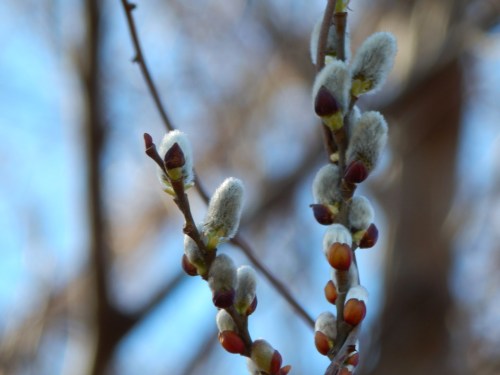
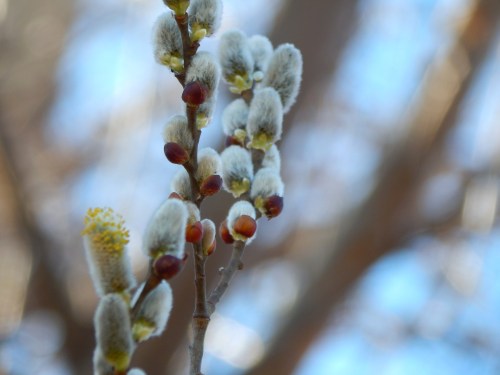
white

Fading but still quite beautiful.

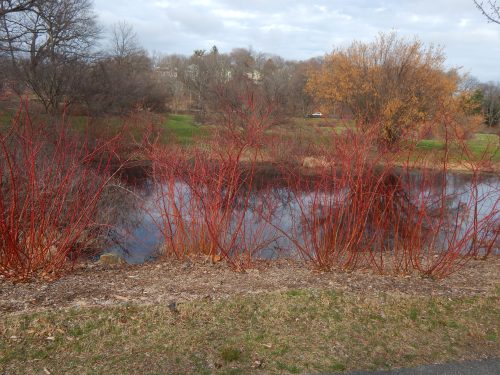
red

After working with words all day, all I wanted to do was play with food all night.

Red onion, roasted red tomatoes, sausage, and sprinkle of fresh parsley.

a gift from a young friend

Art by Maya

Art by Maya

Can you guess which one is me? A lovely gift from a young friend. A drawing of us out and about in the sun. She’s part of my informal Kids Postcard Club. My next step is to turn her artwork into a postcard and give her a few, along with postcard stamps, so she can share her work with friends and family near and far. We’ll see … 😉

the earth down below

I must admit, I’ve gained a whole new respect for my phone camera.  It was the right tool for the moment, staring at the land below.

sunlight and reflection

I must admit, at this stage in my life, there is no body of water, however large or small, that I will pass without pausing to see what might appear.

still chasing stained glass

During a recent trip to California, I was standing on a street corner looking up at a church.  As usual, I’d come upon it because I’d gotten lost. I wanted to enter to see what kind of stained glass might be inside but I could tell that mass was about to start and I did not want to disturb the service with the shutter of my camera.  I was about to walk away when a voice behind me said, “Well, why don’t you come inside?” She was an older woman with a bright smile.  “It doesn’t matter if you’re not Catholic. Just sit in the back so you can take a peek.” All but taking my hand, she led me inside.  I did not take pictures that day but I did return and this is a little of what I saw.

Little Flowers

Presentation at the Temple

St. Barbara

St. Ignasius

St. Ignasius

St. Cecilia

St. Cecilia

Detail from Crucifixion

Detail from Crucifixion

Our Lord is Laid in the Tomb

Our Lord is Laid in the Tomb

Detail from Resurrection

Detail from Resurrection

Ascension

Ascension

You can learn more about Our Lady of Sorrows church via the following link: http://www.our-lady-of-sorrows-santa-barbara.com/history/

Bees are not the only pollinators in this world but they are a major one. There are many different species of bees. Growing up in Virginia, I’d heard of sweat bees, and knew bumblebees on sight, but it was the honeybee with its soft gold and black coloring that I most thought of when I heard the word bee. I took for granted its production of honey and the wax harvested from colonies for my candles.  And I was quick to bat the insect away when I walked through a field of flowers. As for its role as pollinator, I didn’t think too much about that nor did many until reports of colony collapse disorder made national and international news.

photo by cynthia staples

As noted in the introduction of The Bee-Friendly Garden, “over 70 percent of the world’s plants depend on the pollination services of bees, including many nuts, fruits, tomatoes, peppers, or berries.” While the world might survive without bees, it would be a very different place to say the least.

One of the delights of this book is that the authors, a professional garden designer and an ecologist, educate, inspire and encourage.  Regarding the U.S., they describe the difference between native bee species and honeybees, and how bees and wasps look similar but behave very differently.  Honeybees with their yellow and black banded bodies are probably the most common image of bees, but native bees come in many shapes, sizes and colors, their bodies evolved to collect the pollen from a wide variety of plants, shrubs and trees.  Lists are provided by region of bee-friendly garden compositions, and in turns out that many of those same gardens — a mix of annuals, perennials and more — can attract and support other important pollinators like bats, butterflies and hummingbirds.

The book is an incredible resource and reference guide and I would suggest it as a wonderful addition to one’s gardening library.  The authors make clear with straightforward content that you don’t need to be a master gardener or landscape designer in order to create beauty around you and do some good in the world as well. As some of you know, I love to give seeds and plants to friends and family who live across the U.S.  This year I will certainly be using this book’s regional plants lists to help guide my selection of seeds.

photo by cynthia staples

I received this book from Blogging for Books for this honest review.  Detailed book information available via this link: http://www.penguinrandomhouse.com/books/243475/the-bee-friendly-garden-by-kate-frey-and-gretchen-lebuhn/

two petals

It’s why I like to peer over the sides of bridges. You never know what you’re going to see down below. I’m used to dead leaves, feathers, trash, those things I expect. Two fresh petals, in an area where no flowers were around that I could see, now that was a wonderful surprise.