Feeds:
Posts
Comments

Posts Tagged ‘design’

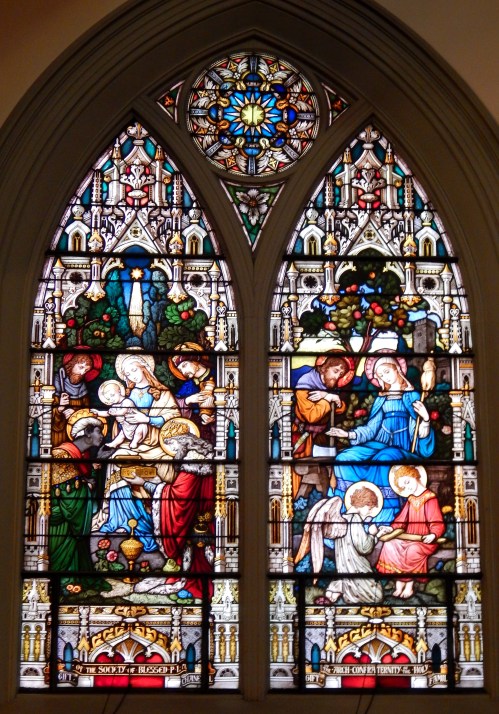
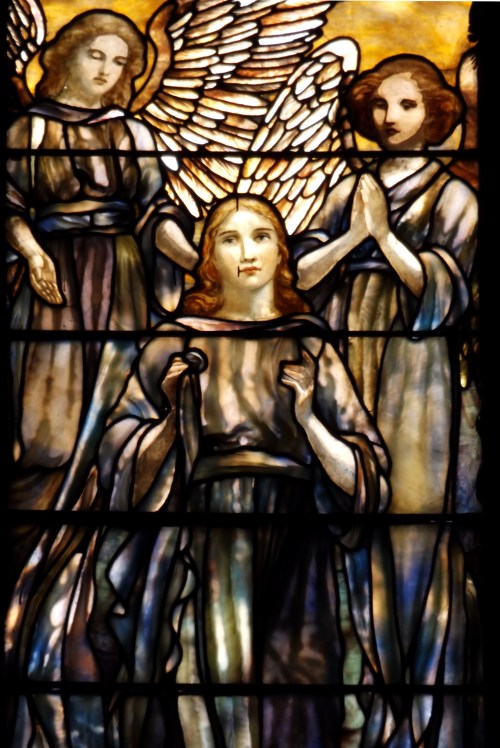
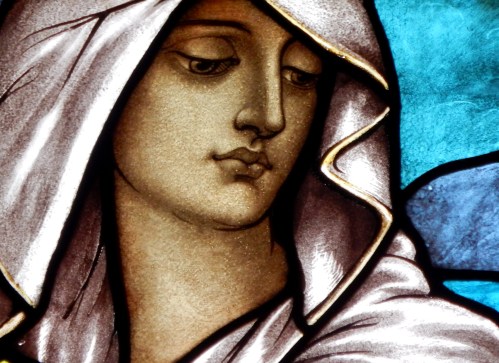
In the shadow of the Back Bay is how the brochure describes the location of Our Lady of Victories Catholic Shrine.  I chanced upon the church yesterday after a meeting.  Crossing a street, I actually saw the back of the building first, an old brick structure with darkened windows that clearly had to be stained glass.  I made my way to the front of the building, studying the exterior and wondering if I might contact someone, some day, to ask if I might photograph the interior.

“Do you want to go inside the church?” A large man stood across the street.  He seemed to be in a hurry because he didn’t even wait for my answer before saying, “Just go down those stairs over there.” Then he continued on his way.

I went down the stairs into a little alleyway. There were a couple of older gentlemen there having a smoke. They greeted me kindly, and again without really waiting for me to say I wanted to enter the church, they directed me through a side door.

Inside was dark and warm. People moved about a bit in the shadows and I could hear a few sounds.  I could see no stained glass windows though.  Then, to my right, a gentleman walked from a side room.  He smiled and said, “You can come on in.  We’re just watching a movie.”

I thanked him for the offer, and said, “Actually, sir, I was wondering if I could go inside the church upstairs where the windows are.” His grin widened, and he said, “Of course. Just go back outside and up the stairs.  The doors are open.”

That’s what I did and following is a bit of what I saw.  There are quite a few images so please enjoy at your leisure. You can read more about the church’s history via this link.  In the future I hope to post more about the architecture and about the primary window designer, Franz Xaver Zettler.  And, by the way, I believe that the gentlemen who were so kind to me, were themselves being helped.  Located in the basement of the church is the Medeiros Center for Change.

Read Full Post »

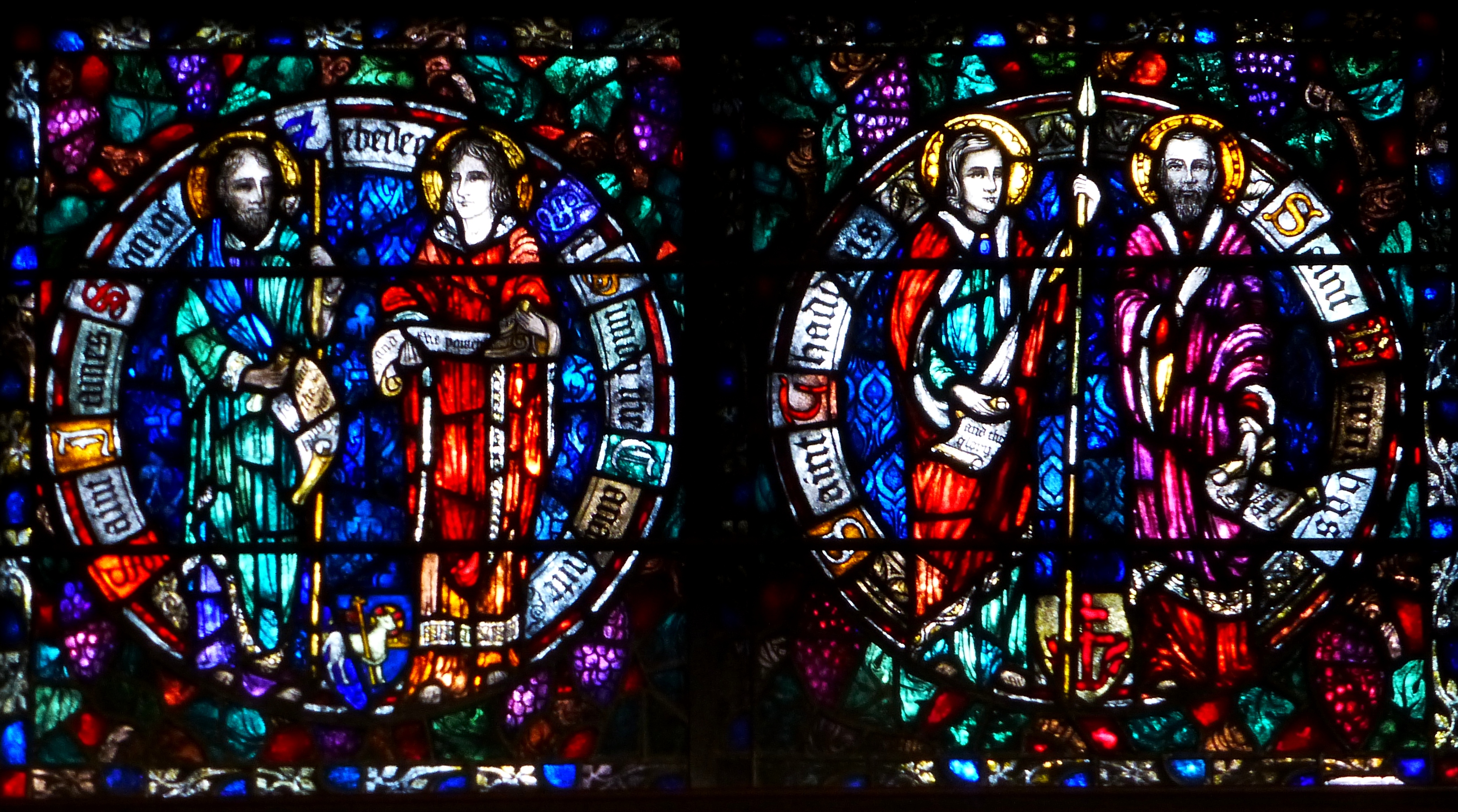
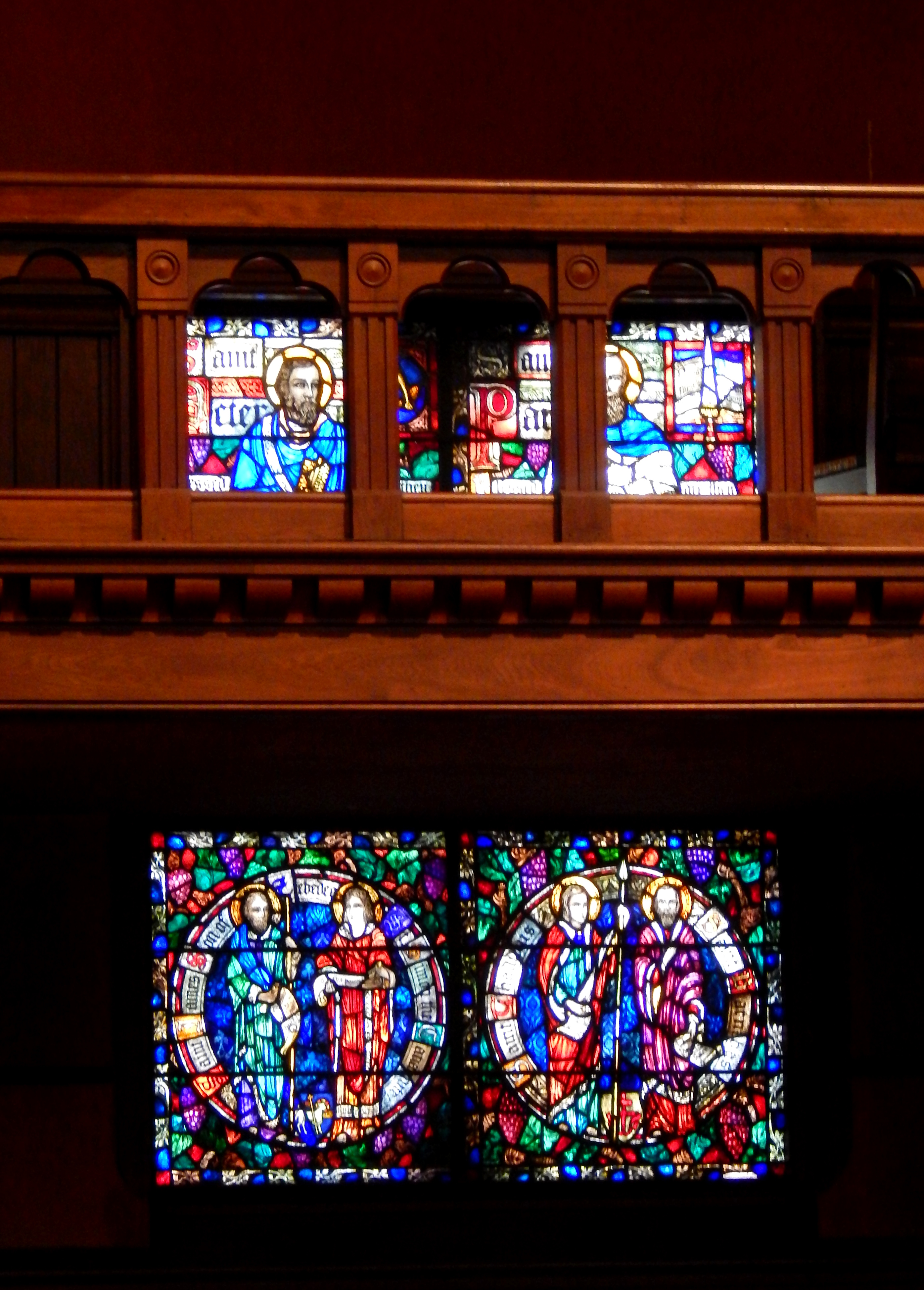
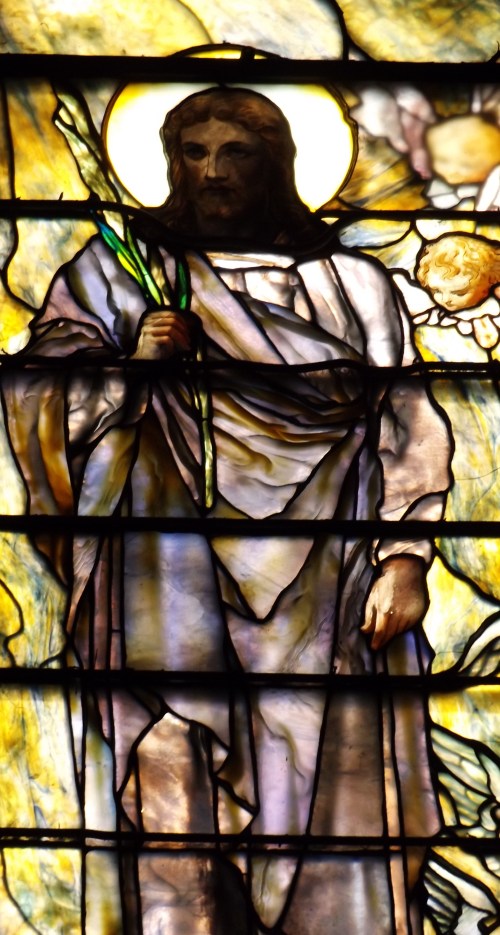
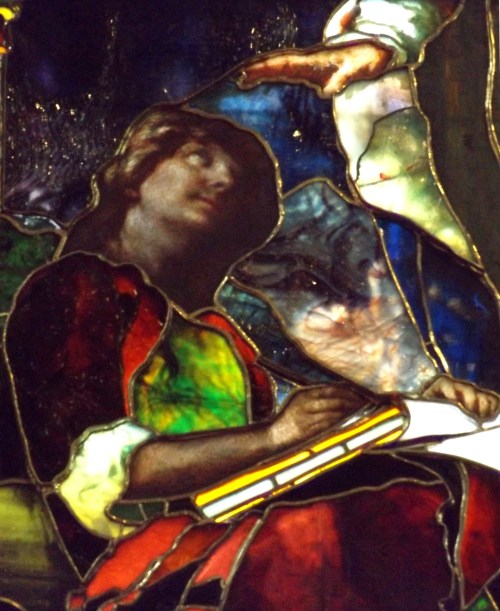
There is a person dear in my life who on occasion drives me crazy because he is compulsively compelled to help other people. As he likes to say, why else were we put here on this earth? A man of deep faith, his favorite saint is James.  I told him to tell me about James.  He shrugged and said, what more is there to say than what is faith without good works.  Indeed.  😉 This image of Saint James is one of two Saint James’s appearing in the the stained glass window designed by Margaret Redmond of Boston (1867-1948).  As you enter the sanctuary of Trinity Church in Copley Square, the windows are located to the left toward the north transept.  In the map one receives when engaged in a tour, the windows are labeled as Eight Apostles (1927).  In fact, all twelve apostles are represented, but only eight are most easily seen from the floor of the church, depicted in sets of four.
These eight apostles are James of Alphaeus, Matthias, Thomas, Bartholomew, James of Zebedee, Simon the Canaanite, Thaddeus and Simon Barnabus.

The other apostles — Andrew, Phillip, Peter and Paul — are paired above each set of four apostles.

A causeway not accessible by the public except during special events obscures their view …

… but assorted postcards and prints capturing their details are available in Trinity’s Book Shop.

What I enjoy about these windows is the explosion of colors.  Regardless of time of day or even season, there is always some new detail to discover.  For many reasons, they are an inspiring sight.

As the spring progresses, I hope to learn more about the artist Margaret Redmond, her life and her work.  As I do, I’ll be sure to share stories. Take care.

Read Full Post »

When I shared new photos I’ve taken inside Trinity Church with a friend, he remarked, “I see.  You’re digging deeper into the details.”  More details to share in the future. Have a good day, folks. 😉

Read Full Post »

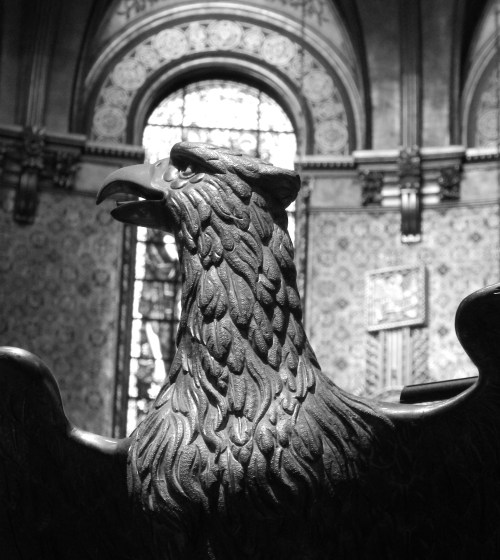
Close-up of the eagle lectern in the sanctuary at Trinity Church in Copley Square, Boston.

Read Full Post »

Stained glass reflected on the stone floor at Cathedral of the Holy Cross in Boston’s South End.  The actual stained glass windows I may post in the future.

Read Full Post »

One of the reasons that I have come to love photographing stained glass windows is story.  There’s the story of the building in which the window is placed.  There’s the story of the people who commissioned the creation of the window.  There’s the story that the artist and his or her team is asked to express in paint and layers of glass, and their artistic interpretation of that story.  And then there’s the completed window and what story it actually conveys to each individual viewer across the generations.

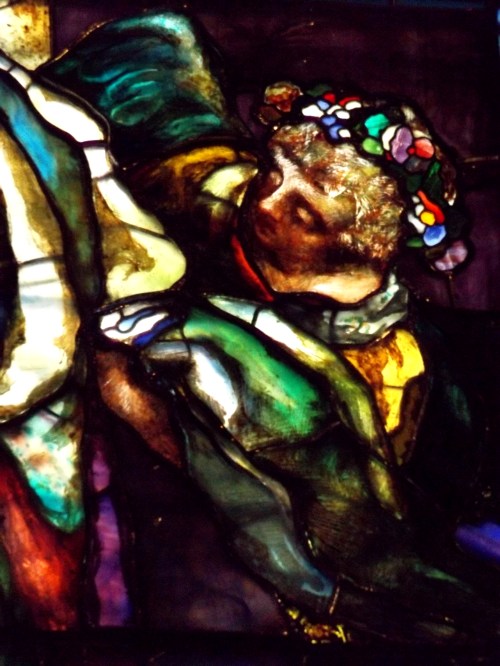
These are details from the windows at Church of the Convenant, located on Newbury Street in Boston’s Back Bay. It is a National Historic Landmark built 1865-1867.  Then, in the late 1890s, the sanctuary was completely redecorated by Tiffany Glass  & Decorating Company.

It is still an active parish and they have put together a wealth of information detailing the story of the parish, the Gothic architecture of the building, and its Tiffany decoration.

There is an online tour of the windows and interior via this link.  But, of course, if you’re in the area, definitely take the self-guided tour still available.  The walking map provides interesting descriptions of the three Tiffany designers’ interpretations of the biblical stories they were to represent in glass.

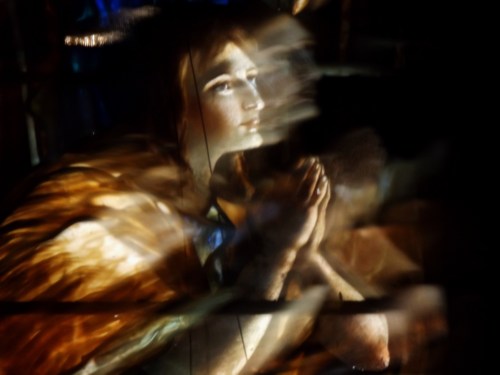
And of the photographs I took during my most recent walking tour, following is an image that did not work out and yet I could not make myself delete it.  So, I suppose such an action is part of the story of me.

More information available: http://www.cotcbos.org/

Read Full Post »

You’ll find  Ieposolyma-The New Jerusalem in an area known as the north transept of Trinity Church in Copley Square.  It is an upper level window that rests beside another John La Farge masterpiece, The Resurrection (1902).  The New Jerusalem was completed and installed eight years earlier in 1884.

As described by scholar James L. Yarnall in his biographical study of John La Farge, this window depicts “the vision of the New Jerusalem described in the book of Revelation. The design fused Byzantine architecture and Mannerist figures from Correggio with a dazzling array of jeweled opalescent glasses.”

If you’re in Boston, see firsthand how the sunlight shines through all of this magnificent glass — this window apparently contains every kind of glass La Farge ever used including pressed jewels, confetti glass, and opalescent glass.  Tour information available here.

I tend to focus on the pieces that make up the whole, but if you search online you’ll find some photographs of the whole window, like this one.

Read Full Post »

Read Full Post »

In The Art and Thought of John La Farge, author Katie Kresser writes that John La Farge (1835-1910) completed his first sketch of Nicodemus and Christ in 1874.  That biblical encounter is a subject that La Farge would depict in several different forms over time.  Here is a sketch dated 1877 in the Yale University Art Gallery, and here is an oil painting completed in 1880, now housed at the Smithsonian.  He would also create a stained glass window for the Church of the Ascension in New York.  The following image, The Visit of Nicodemus to Christ, is a photograph of the mural La Farge painted on the walls of Trinity Church in Boston.

The Visit of Nicodemus to Christ, mural by John La Farge

The Visit of Nicodemus to Christ, mural by John La Farge, 1878

It is one of several murals that La Farge painted inside the building with the aid of assistants like Augustus Saint-Gaudens, Francis D. Millet and Francis Lathrop.  I keep photographing them because I think that there is always something new to see and experience.

In the literature of the time period critiquing his work, there is often reference to La Farge’s use of color in the murals that borders on the poetic.  For example, “In his “Christ and Nicodemus,” … we find the color quality strongly dominant. … the rich blues vein the draperies and background like the threads in a Flemish tapestry …” (The Churchman newspaper, July 6, 1901).

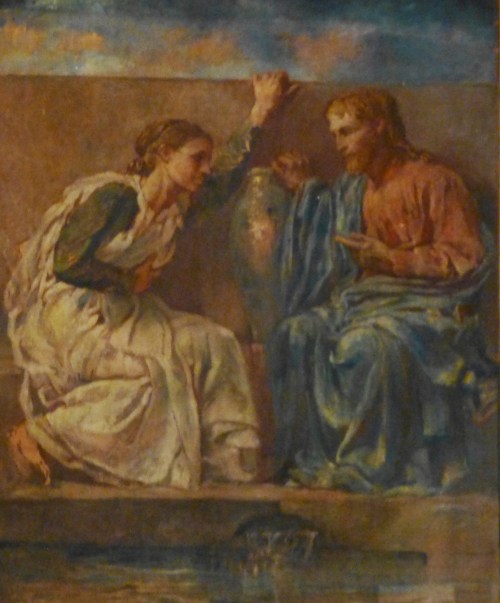
Christ Woman at Well, mural in Trinity Church by John La Farge

Christ Woman at Well, mural by John La Farge, 1877

The beauty of La Farge’s murals is constant but their colors do shift in the light.  Different details become present depending upon where one stands and at what time of day.

David, mural by John La Farge

David, mural by John La Farge, 1877

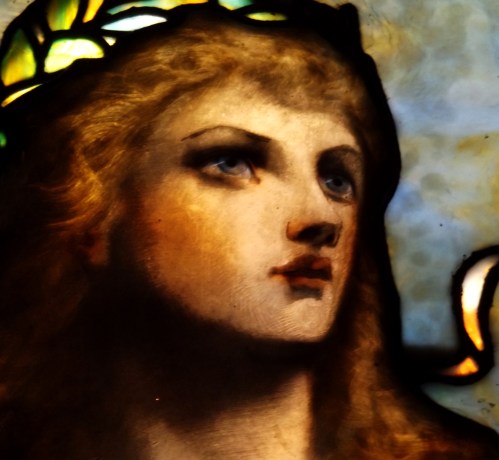
My favorite is perhaps the painting of David, because of the colors and especially for the expression on the young man’s face.

I had originally titled this post “in his own words” because I came across John La Farge: A Memoir and a Study compiled by Roy Cortissoz, literary and art critic for the New York Tribune, and La Farge’s friend.  In the book, completed in 1911 shortly after La Farge’s death in 1910, La Farge reminisces about what it was like painting the murals at Trinity under tight time constraints, in poor health, up high on scaffolding.  Reading the words made me appreciate the skills of all the artists even more.  If you’d like to read La Farge’ account, begin at the end of page 31 of the book, available online here.

Learn how you can see these murals and other architectural and design features at Trinity Church first hand here. Postcards of some of these images available via The Shop.

Read Full Post »

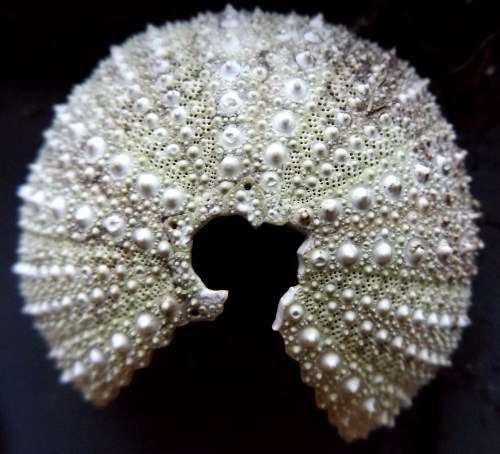
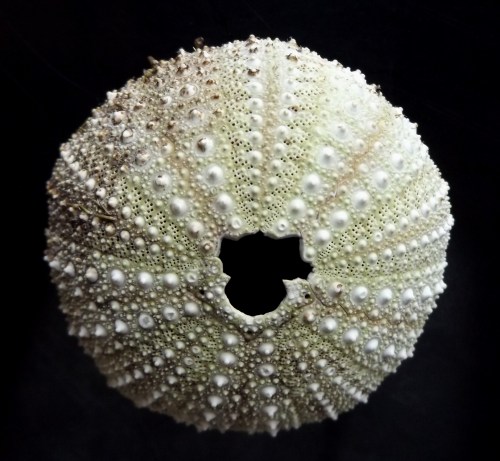
The sea urchin shell was whole when I picked it up off the beach but I was too cavalier when I placed it in my bag.  In the end, only one section was broken, and not lost.  So, if I am careful, I can recreate the whole with barely perceptible, yet beautiful lines, marking the breaks.

Read Full Post »

« Newer Posts - Older Posts »