That is what I encourage you to do if you choose to view the poem, Refugee, written by Miki Byrne and beautifully illustrated by Podessto:
Posts Tagged ‘Inspiration’
read the words out loud
Posted in Books I Love, Uncategorized, tagged art, beauty, humanity, illustration, Inspiration, Miki Byrne, Podesto, poetry, Popshot Magazine, refugees, storytelling on March 2, 2017| 1 Comment »
brown
Posted in Branches, Nature Notes, Uncategorized, tagged beauty, Branches, brown, colors, Inspiration, Photography, urban landscape on February 27, 2017| 1 Comment »


do you know … william m. kelley
Posted in Inspiration, tagged American history, black history, black newspapers, Harlem Renaissance, Inspiration, journalism, military history, storytelling, William M. Kelley on February 27, 2017| 3 Comments »

advertisement in The Crisis Magazine, 1922
I didn’t know, not until I was combing through the Military Intelligence Division – Negro Subversion files. Documents in these files were collected by the U.S. government from 1917 – 1941. In these pages, I learned about Emmett J. Scott, the previous subject of my “do you know …” series, and his role as Special Assistant to the Secretary of War. Information collected focused on three areas – (1) radical black organizations and their activities, (2) discrimination against blacks and (3) performance by blacks in the military.
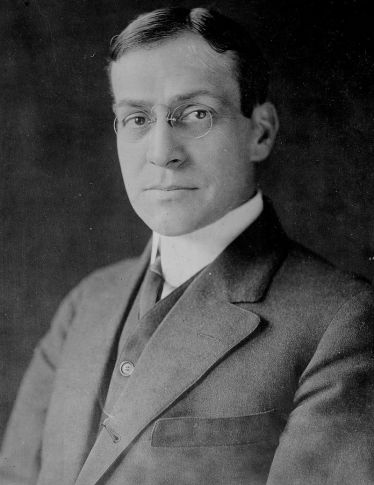
Secretary of War Baker
The files include press accounts, FBI investigative reports, commentary on the mood in black communities and correspondence from soldiers. Any letter by a soldier of color about mistreatment eventually found its way to Scott’s desk, as did the following letter that caught my attention with its eloquence.

“I am writing you this letter to protest my compulsory induction into the Military Service of the United States. I received my order of induction on July 30th, and when this letter reaches you I will be part of the Army and subject to its laws and discipline.
“In a letter recently to my local board, I truthfully stated, under oath, what I know to be the cause of my improper classification in the draft but as this was wholly a personal matter is it not the basis of my protest.”

“Since the United States entered the war, scores of Negro men, women and children have been lynched, burned and mutilated … Since the war began I have on five or six different occasions applied for enlistment in the Army or Navy, and each time I have met the sting of race prejudice and discrimination. And the same serpent lies in the path of hundreds of others who apply for enlistment daily. If, as is often argued, that certain provisions of the Constitution of the United States are not upheld because of states’ rights, surely, the Government can prevent discrimination and segregation in the Army and Navy, the Commander-in-Chief of which is the President of the United States.
Therefore, it is with a thousand and one grievances against my country and an ever burning sympathy for the many injustices heaped upon Negroes, even today, in this the supposed land of freedom, champion of democracy and defender of the helpless peoples that I go forth to battle; not as a patriotic soldier eager to defend a flag that defends me and mine but as a prisoner of war, shackled to a gun that shall spit fire in defense of a humanity which does not include me and to uphold the neutrality of the only other country that has outdone my own in the oppression of the black races of the earth. These are the bases of my protest.
If the expression of what one holds to be true, right and just is a crime, I respectfully submit myself to you as a representative of my Government or to your agents to be used or abused in defense of them, as you see fit.”

My curiosity was sparked!
Who was this William M. Kelley who had dared to write such a letter to the Secretary of War? He was a writer, that’s for sure. With a bit of online research I learned that he had also been editor, publisher and social activist.
Born in the 1890s in Chattanooga, TN, he would eventually make his way north to Chicago. There he was employed as a social worker by the Chicago League on Urban Conditions Among Negroes (a branch of the organization now known as the Urban League). By the time he signed his draft papers he was living in New York.
As for what happened during the war, especially after he wrote that letter, that I don’t know. He did attain the rank of Sergeant First Class. By 1920, he was back at work publishing and promoting black writers and artists.

ad in The Crisis Magazine, 1920
By 1922 he was hired as editor of the New York Amsterdam News, an important paper in the black community. Prior to that he’d worked as journalist and editor for other publications including the Champion Magazine in Chicago. In New York, he started his own magazine called Kelley’s Magazine. In its pages he published poets including Countee Cullen and Claude McKay as well as his own writing.

ad in The Crisis Magazine
Based on newspaper articles from the 1920s and 1930s, he was a vocal advocate of building strong black business and encouraged support of those businesses by the local community. “Give your own enterprises the chances the same chance you allow to others. Hasten the time when we shall take our places among the commercial races of the world. Whenever possible walk a block to the nearest colored store and spend your money. It will do you and your children good.”
As managing editor of a major black publication based in New York City during the Harlem Renaissance, he clearly knew the movers and shakers of the time.
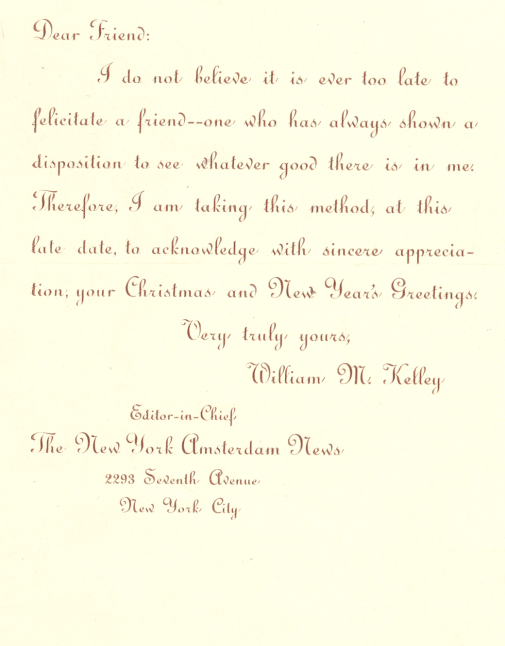
greeting card to W. E. B. Du Bois, 1928
He was politically active, as evidenced by his decision in 1929 to manage the campaign of Hubert T. Delaney. In an interview, Kelley said, “It’s about time for the Negro voter to demonstrate to the Republican party that they are serious in their desire to see a Negro elected to Congress from New York.”
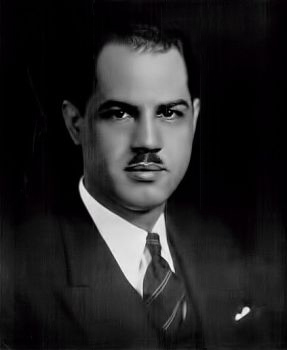
Hubert T. Delany
When outlining his campaign plan, Kelley used the analogy of a military formation. Delany won the primary but lost the general election.

Upon Kelley’s departure from the New York Amsterdam in 1933, he co-founded and edited the Daily Citizen. It operated for less than a year. A 1940 census indicates he was employed by the Works Progress Administration. Then by the early 1940s, he was working as an editor with The Peoples’ Voice, a publication founded by Adam Clayton Powell Jr. Eventually that paper folded as well.
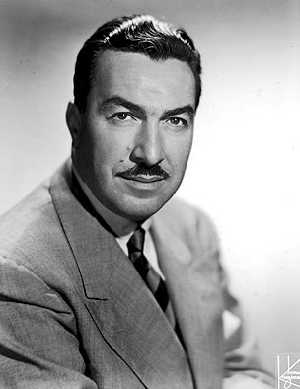
Adam Clayton Powell Jr.
On a family website, it’s noted that Kelley in his later years spent less time on writing and trying to launch newspapers. He worked a series of civil service jobs that provided more stable income to support his family. He died in October 1958. His son, an award-winning novelist and essayist, William Melvin Kelley Jr, passed away earlier this month.
To see actual pictures of William M. Kelley, view his descendants’ tribute here: https://kelleysmagazine.com/2016/02/29/a-portrait-of-pop/
Sources & Additional Reading
Interview with William M. Kelley Jr
http://credo.library.umass.edu/view/full/mums312-b044-i126
Hubert Thomas Delaney – https://en.wikipedia.org/wiki/Hubert_Thomas_Delany
The Pittsburgh Courier, November 17, 1923, page 15.
New York Age, August 8, 1925, page 7.
New York Age, August 31, 1929, page 3 – Wm. E. Kelley to be Campaign Manager for Delany for Congress
Adam Clayton Powell Jr – https://en.wikipedia.org/wiki/Adam_Clayton_Powell_Jr.
leaf
Posted in Branches, Inspiration, Nature Notes, Uncategorized, tagged brown, Inspiration, nature, nature photography, Photography, urban landscape on February 24, 2017| Leave a Comment »

in the branches
Posted in Inspiration, Nature Notes, On the Road, Uncategorized, tagged beauty, birds, birdwatching, Inspiration, nature, nature photography, Photography on February 23, 2017| 5 Comments »

A curious little bird by the Charles River. When I passed it the first time, and even moved in close, it did not fly away. And when I returned along the same path, there it remained ready for its next close up.

close up
Posted in Inspiration, Uncategorized, tagged architecture, art, beauty, churches, faith, Inspiration, John La Farge, religion, stained glass windows on February 21, 2017| 1 Comment »

Detail from stained glass window, The Resurrection, by John La Farge (1902) at Trinity Church in the City of Boston.
dried roses, parsley & oregano
Posted in Inspiration, Kitchen Inspirations, Uncategorized, tagged flowers, herbs, indoor gardening, Inspiration, Photography on February 20, 2017| 2 Comments »



do you know … emmett jay scott
Posted in Books I Love, Inspiration, tagged American history, black history, Booker T. Washington, Emmett J. Scott, Inspiration, jim crow, military history, Photography, race relations, race riots, racism, Reconstruction, storytelling, visual storytelling on February 20, 2017| 6 Comments »

I tend to think of Emmett Jay Scott as one of those individuals upon whose shoulders giants stand. Though today he is largely unknown, during his lifetime he was a noted author, educator, activist and entrepreneur. For eighteen years he served as personal secretary to Booker T. Washington. He was Washington’s closest adviser, publicist and his friend. I knew of Emmett J. Scott because of previous research into Washington’s life and visually Scott was almost always at his side. Like Frederick Douglass, Washington was a figure well-photographed in his day. I accepted his presence but it wasn’t until I chanced upon the book, Scott’s Official History of the American Negro in the World War (1919), that I decided to learn more.
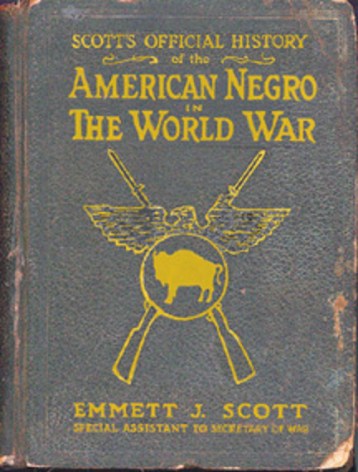
The title page states that it is a complete and authentic narration, from official sources, of the participation of American soldiers of the Negro race in the World War for democracy, profusely illustrated with official photographs. I was captured by the words “profusely illustrated.” As I perused the book online I was astounded by both the words and imagery in a publication that has been somewhat lost to time as has its author.
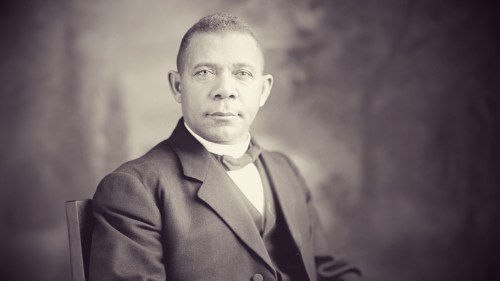
Booker T. Washington
Born in February 1873 in Houston, Texas, Emmett J. Scott was the child of ex-slaves. He attended Wiley College in Marshall, Texas, then worked a series of jobs before employment at a small Houston newspaper. He would eventually co-found the first African American newspaper in Houston, The Texas Freeman, and he would work with political activists like Norris Wright Cuney. Impressed by Scott’s skills, Booker T. Washington, principal of Tuskegee Institute, hired him in 1897.

Biographers note that “He became widely recognized as the leader of what was to later be known as the “Tuskegee Machine,” the group of people close to Booker T. Washington who wielded influence over the Black press, churches, and schools in order to promote Washington’s views.“[1] Like Washington, Scott believed that uplift for blacks would come through business development, the creation of strong financial institutions and nurturing economic self-sufficiency within African American communities. He ran the National Negro Business League founded by Washington in 1900. At Washington’s side, Scott was also active in U.S. politics at home and abroad. In 1909, Scott joined the American Commission to Liberia appointed by President Taft. After Washington died in 1915, Scott co-wrote a biography about his friend and mentor with Lyman Beecher Stowe, the grandson of Harriet Beecher Stowe.
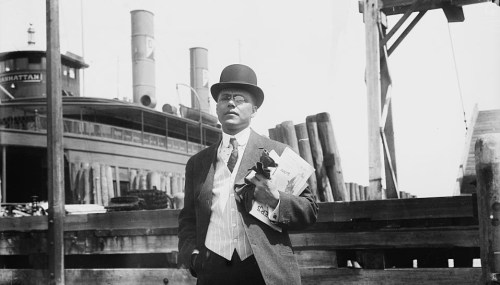
Scott in 1909 as part of the Liberian Commission
Following Washington’s death, Scott remained at Tuskegee and continued to promote Washington’s philosophy through endeavors like the National Negro Business League. As Scott and other black leaders like a young W. E. B. DuBois sought to identify future opportunities for advancement while celebrating current achievements, a storm brewed across the nation. The early 1900s was a tumultuous period. Race riots proliferated and not just in the South as highlighted in this 1900 dispatch from Columbia, South Carolina regarding a New York riot.

A 1908 Springfield, IL riot and lynching prompted ministers, both black and white, to speak directly to the incident. From a New York pulpit, the Rev. Dr. Madison C. Peter’s would remark:

Seven years before Thomas Dixon’s book would be brought to the big screen by D. W. Griffith as Birth of a Nation, Peters would go on to add, “We are reaping what we have allowed to be sown. Dixon’s novels and Tillman’s speeches have been a menace to the best interests of our republic … keeping alive the race antagonism North and South, which is setting men at one another’s throats when their hands should be clasped in brotherly love.”

Thomas Dixon Jr.
In 1910 when black fighter Jack Johnson beat white fighter James Jeffries in Reno, Nevada in a fight dubbed “the fight of the century” riots broke out across the nation.

Jack Johnson
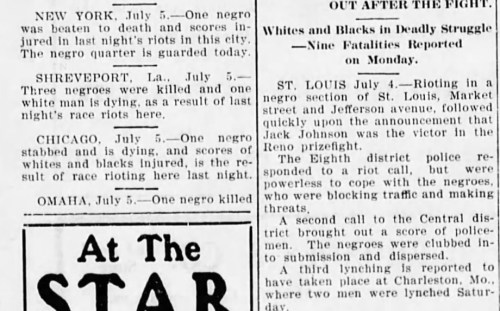
Meanwhile, by 1914, war raged in Europe. The U.S. would eventually join. On April 2, 1917, President Woodrow Wilson asked Congress to declare war on Germany in order to make the world safe for democracy. The Selective Service Act of 1917 temporarily authorized the government to raise an army through the compulsory enlistment of Americans. The resulting American Expeditionary Force would be sent to Europe under the command of General John J. Pershing.

Pershing
When the U.S entered the war, it was unclear what the role of black soldiers was to be, assuming there was to be any role at all. After much discussion and vociferous debate it was decided all American men were needed in this Great War, and Emmett Jay Scott was to play a pivotal role in their involvement. As one biographer notes:

Robert R. Moton, President of Tuskegee and President Woodrow Wilson
“…there was considerable uneasiness as to what would be the status of the Negro in the war and quite naturally Tuskegee Institute was one of the centers which helped in adjusting these conditions. Dr. Moton, Principal, and Mr. Scott, made frequent visits to New York and Washington, and were constantly in consultation with the authorities at Washington. Out of these discussions and together with the activities of other agencies working towards the same end, the Officer’s Training Camp for Negro Officers was established at Des Moines, Iowa, and later, following a conversation between Dr. Moton and Mr. Scott, Dr. Moton interviewed President Wilson and suggested that a colored man be designated as an Assistant or Advisor in the War Department to pass upon various matters affecting the Negro soldiers who were then being inducted into the service and as the result, Mr. Scott went to Washington on October 1st, 1917, and from then until July 1st, 1919, served as Special Assistant to the Secretary of War.” [2]

draftees
Over a million African Americans responded to their draft calls and nearly three-quarters of a million served. Even as hundreds of thousands stepped forward to answer Wilson’s call, “race antagonism” continued unbridled. On July 2, 1917, a riot broke out in East St. Louis between black and white workers that left over a hundred blacks dead. In a July 4th address, Colonel Theodore Roosevelt preceded his war address to remark, “There has just occurred in a northern city a most lamentable tragedy. We who live elsewhere would do well not to be self-righteous about it, for it was produced by causes which might at any time produce just such results in any of the communities in which we individually dwell.”
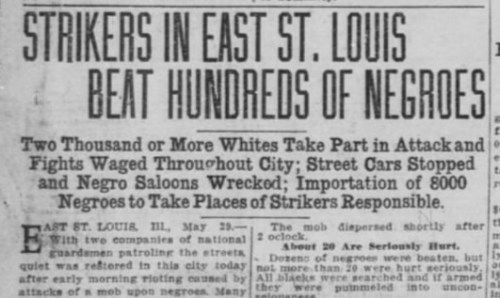
Even as over one hundred indictments were being made in the St. Louis incident, an altercation took place in Houston, TX between black soldiers stationed at Camp Logan and white residents. In the end, according to one source, “Three military court-martial proceedings convicted 110 soldiers. Sixty-three received life sentences and thirteen were hung without due process. The army buried their bodies in unmarked graves.” [3]
Emerging out of the resulting nationwide protests was the question – if we are to make the world safe for democracy shouldn’t we make America safe for democracy?
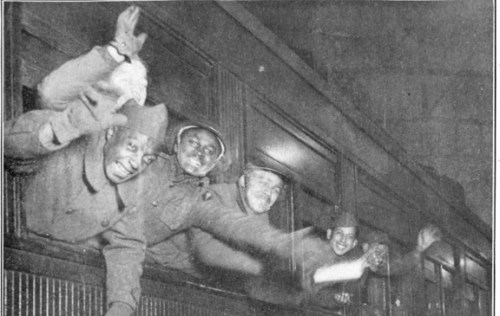
soldiers from chicago arriving in france
Despite outright discrimination, verbal and physical abuses, and segragation among troops, African Americans served with distinction at every level (as they had in previous engagements like the Spanish-American War).

troop 367th known as the buffaloes
Today I know of many people, of diverse backgrounds, who have no idea of the significant role of African Americans in World War I. Why is that? In part, it is because the visuals were not produced or those that were produced — the illustrations, the paintings, the photography — were not widely distributed. They were not reproduced in the consumer publications of the period. The heroics of individuals, with rare exception, or of whole troops, with rare exception like the Harlem Hellfighters, were not retold, and certainly not in the classroom, as part of the narrative of America’s victory in the Great War.

two officers who received the croix de guerre
What was Emmett J. Scott thinking when he decided to produce his book? He tells us in the preface: “The Negro, in the great World War for Freedom and Democracy, has proved to be a notable and inspiring figure. The record and achievements of this racial group, as brave soldiers and loyal citizens, furnish one of the brightest chapters in American history. The ready response of Negro draftees to the Selective Service calls together with the numerous patriotic activities of Negroes generally, gave ample evidence of their whole-souled support and their 100 per cent Americanism. …

troop from philadelphia
It is difficult to indicate which rendered the greater service to their Country—the 400,000 or more of them who entered active military service (many of whom fearlessly and victoriously fought upon the battlefields of France) or the millions of other loyal members of this race whose useful industry in fields, factories, forests, mines, together with many other indispensable civilian activities, so vitally helped the Federal authorities in carrying the war to a successful conclusion. …

corporal fred mcintyre of the 369th
It is because of the immensely valuable contribution made by Negro soldiers, sailors, and civilians toward the winning of the great World War that this volume has been prepared—in order that there may be an authentic record, not only of the military exploits of this particular racial group of Americans, but of the diversified and valuable contributions made by them as patriotic civilians.”

369th returning home “bringing back the unique record of never having had a man captured, never losing a foot of ground or a trench, and of being nearest to the Rhine of any allied unit where the armistice was signed, and the first detachment of allied troops to reach the Rhine after the armistice.”
In The American Negro in the World War Scott produces a comprehensive account of the involvement of black Americans in World War I, those in the field and those on the home front. I believe it is an important archival record.
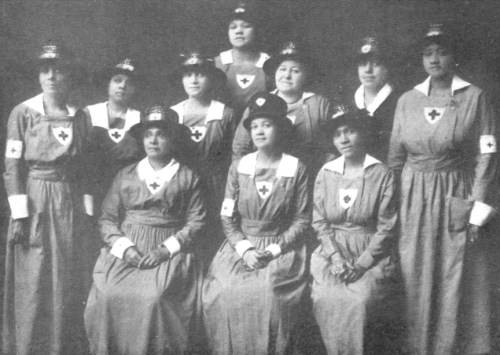
red cross canteen war workers in chicago
After the war Scott’s efforts with the military were both applauded and criticized. Some, like W. E. B. Du Bois, felt he should have been more vocal about the systemic racism and segregation among the troops stationed in Europe. But in wartime correspondence, just declassified in the 1980s, its clear that Scott worked hard to be a voice for the soldiers and to address injustices committed.

dr. emmet jay scott and his faithful office corps who co-operated in the performance of his duties as special assistant to the secretary of war
After the war, Scott would move on to Howard University. Outside of his university duties as Secretary Treasurer, he would continue to promote and invest in business development opportunities nationwide. He died December 12, 1957 at the age of 84.
Sources & Additional Reading
The American Negro in the World War – https://archive.org/details/scottsofficialhi00scot_0
or http://net.lib.byu.edu/~rdh7/wwi/comment/Scott/ScottTC.htm
[1] Emmett Scott, Administrator of a Dream
http://www.blackpast.org/aah/scott-emmett-j-1873-1957
https://en.wikipedia.org/wiki/Booker_T._Washington
[2] http://afrotexan.com/AfroPress/Editors/scott_emmett.htm, a Sketch from the National Cyclopedia of the Colored Race (1919)
They Came to Fight: African Americans and the Great War
[3] http://exhibitions.nypl.org/africanaage/essay-world-war-i.html
just two minutes plus
Posted in Inspiration, Uncategorized, tagged Alvin Ailey, art, beauty, Black History Month, dance, Inspiration, music, storytelling, urban life on February 19, 2017| 2 Comments »
I was seeking not so much inspiration as simple background music to help me stay focused on my writing. In my usual meandering way I chanced upon this video and in reading about the origins of the video I learned about an award winning movie that probably most other people already know about called Moonlight. I hope to see it one day but meanwhile here is, in just over two minutes, a film from director Anna Rose Holmer capturing a powerful collaboration between the Alvin Ailey American Dance Theater and the movie composer Nicholas Britell. Choreography is by the theater’s artistic director Robert Battle.
Additional Reading – https://en.wikipedia.org/wiki/Moonlight_(2016_film)
take my hand
Posted in Inspiration, tagged Inspiration, kindness, musings, storytelling on February 14, 2017| Leave a Comment »
That’s what he said. I made an assumption he was a man based on the timbre of his voice because I was rather blinded by the blowing sleet and snow. I couldn’t see.
I was trying to cross the street, making my way to the train, but the puddle that had formed in the intersection earlier in the day was so large I couldn’t tell where the sidewalk ended and so I was having to walk in the street but I couldn’t see and was just hoping the drivers could see me.
“Here, take my hand!”
And so I reached out and a mittened hand grabbed mine, holding me steady as I danced across the slushy lake to his side. With no windshield wipers for my glasses all I could tell was that he was a tall man dressed a bit more properly for the weather than me. “Thank you,” I said and then I shouted, “Stop!”
He had started across the crosswalk toward the other side but in helping me he hadn’t noticed that the street lights had changed. Not many cars on the road that night but there was one that streaked past.
We crossed the road together, walking into the wind. Though we could not really see each other we still managed to chat about the weather. By the time we made it to the station we had concluded jovially that after surviving that winter of three three-foot snowstorms in a row, how bad was this really?
Entering the station, my glasses instantly fogged. I stared at what I thought was his general direction and said, “Thanks again.” He replied, “And same to you.”
And I thought as I waited on the platform that once again a stranger had taken my hand.

