Feeds:
Posts
Comments

Posts Tagged ‘nature’

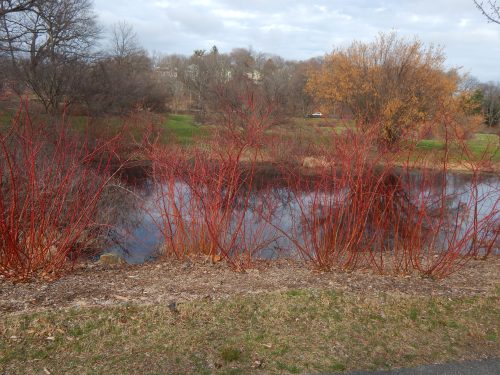
I must admit, I’ve gained a whole new respect for my phone camera.  It was the right tool for the moment, staring at the land below.

Read Full Post »

I must admit, at this stage in my life, there is no body of water, however large or small, that I will pass without pausing to see what might appear.

Read Full Post »

Bees are not the only pollinators in this world but they are a major one. There are many different species of bees. Growing up in Virginia, I’d heard of sweat bees, and knew bumblebees on sight, but it was the honeybee with its soft gold and black coloring that I most thought of when I heard the word bee. I took for granted its production of honey and the wax harvested from colonies for my candles.  And I was quick to bat the insect away when I walked through a field of flowers. As for its role as pollinator, I didn’t think too much about that nor did many until reports of colony collapse disorder made national and international news.

photo by cynthia staples

As noted in the introduction of The Bee-Friendly Garden, “over 70 percent of the world’s plants depend on the pollination services of bees, including many nuts, fruits, tomatoes, peppers, or berries.” While the world might survive without bees, it would be a very different place to say the least.

One of the delights of this book is that the authors, a professional garden designer and an ecologist, educate, inspire and encourage.  Regarding the U.S., they describe the difference between native bee species and honeybees, and how bees and wasps look similar but behave very differently.  Honeybees with their yellow and black banded bodies are probably the most common image of bees, but native bees come in many shapes, sizes and colors, their bodies evolved to collect the pollen from a wide variety of plants, shrubs and trees.  Lists are provided by region of bee-friendly garden compositions, and in turns out that many of those same gardens — a mix of annuals, perennials and more — can attract and support other important pollinators like bats, butterflies and hummingbirds.

The book is an incredible resource and reference guide and I would suggest it as a wonderful addition to one’s gardening library.  The authors make clear with straightforward content that you don’t need to be a master gardener or landscape designer in order to create beauty around you and do some good in the world as well. As some of you know, I love to give seeds and plants to friends and family who live across the U.S.  This year I will certainly be using this book’s regional plants lists to help guide my selection of seeds.

photo by cynthia staples

I received this book from Blogging for Books for this honest review.  Detailed book information available via this link: http://www.penguinrandomhouse.com/books/243475/the-bee-friendly-garden-by-kate-frey-and-gretchen-lebuhn/

Read Full Post »

… books by Bruno Munari on drawing trees and drawing the sun. Online descriptions suggest they were written for children but I think what is meant is children of all ages.  Unexpected finds as I walked through the library. Thank goodness I have a big backpack.

More information about Bruno Munari

Brainpickings on Munari: https://www.brainpickings.org/2012/11/22/bruno-munari-design-as-art/

drawing a tree:  http://www.artbook.com/8887942765.html

drawing the sun: http://www.artbook.com/8887942773.html

Wikipedia on Munari: https://en.wikipedia.org/wiki/Bruno_Munari

Read Full Post »

Read Full Post »

Read Full Post »

My brother described a scene that I wish someone would paint.

He lives in Virginia, not in a rural place, but not an urban megalopolis either. A plain old city with a crumbling downtown and further out global firms building plants, and the accompanying fancy housing for their management, on lands that used to be working farms, if not outright plantations if you go back far enough.

It’s a city near the river and crisscrossed by highways but in the beginning it was the railroads that allowed this city to make its fortune, bridging north and south, a passage way for goods of all sorts.

It was on a literal bridge that the incident took place.

My brother was driving home on a nice new road. He was recounting stories of his day to me when he said, “Oh my God. You won’t believe …” I reacted thinking at first he was seeing a roadside accident. He calmed me down and then explained, “Overhead, the bridge that crosses the road, there are deer passing by in the night. They are walking on the railroad tracks on the bridge overhead fading in and out of the mist.”

A number of people pulled off the road to watch, like my brother, hoping no train would come before the animals could walk into the surrounding fields and woods. Nothing happened. Just the lingering memories of a beautiful sight.


Read Full Post »

The feather became wet as I watered the plants. Yes, I have feathers in my garden. 😉

Read Full Post »

Available as PDF for $5.99 or in print. Other books can be viewed on my pinterest board. Enjoy.

Read Full Post »

Richard Lonsdale Brown was born in 1892 in Evanston, Illinois. When less than a year old, his parents moved to West Virginia. There he attended public school and then trained as a sign painter. After finishing trade school, he remained in West Virginia for five years, “and then being a journeyman sign painter I traveled through the mining districts of the state … My journeys took me almost altogether through the mountains where, when God made them, He placed scenery the equal of which, I think, cannot be found in all America.”

Richard Lonsdale Brown, 1912

“It was there I believe that my love for landscape painting was awakened. When not painting signs I was doing what I could to reproduce the scenery of the mountains and valleys, the rivers and the streams on canvas.” Brown shared those words in a 1913 article that appeared in the New York Sun.

Mary White Ovington and Oswald Garrison Villard, circa 1910-1920

Mary White Ovington and Oswald Garrison Villard, circa 1910-1920

Mary White Ovington (1865-1951), co-founder of the National Association for the Advancement of Colored People, remembered first learning of Richard Lonsdale Brown in 1910.  In her memoirs, she recounts it was during a meeting with Oswald Garrison Villard (1872-1949).”In 1910, when Mr. Villard and I were working in the newly organized NAACP, he gave me a letter from the artist George de Forest Brush, asking me if I would take up the business mentioned in it. It told of a young colored artist, Richard Brown, from Charleston, West Virginia, who had recently come to New York with some excellent sketches.”

George De Forest Brush

George De Forest Brush

“I called upon Mr. Brush in his picturesque studio on MacDougall Alley and saw his pictures. They were lovely things, trees and melting skies, alive in form and color. Mr. Brush was deeply impressed with them.  ‘He is no more than a boy,’he said, ‘and he came into my studio, shy, discouraged. He had brought his sketches under his arm to New York, and when not in one of our great galleries was spending his time trying to sell them. No one wanted even to look at them. He was poor; he was colored. Could one have greater handicaps?’ Mr. Brush welcomed him to his studio and looked with interest and appreciation at his work. ‘Can I ever be an artist?’ Richard asked when had shown all he had. The answer was, ‘You are an artist.'”

Brown would exhibit his work in the Ovington Brothers Gallery in New York, March 18-23, 1912.  It would showcase paintings done in West Virginia before he was 18 years old and in the hills of New Hampshire while under the tutelage of Mr. Brush. Mary Maclean, a writer with the New York Times wrote a profile of the young artist for the newspaper. The article appeared in March, just before the exhibit, helping to make it a great success.

It was estimated that 2,500 people attended. Twenty-six pictures were for sale and sixteen were sold including little sky sketches. The young man charmed people with his demeanor as well as the quality of his work. Collectors who reportedly purchased his work included Jacob H. Schiff, Edward Warburg, Mr. Coster, and celebrity Miss Mary Garden.

Art Critic Joseph Edgar Chamberlin quoted in the New York Age, March 1912

Maclean’s profile would also be printed in the April 1912 issue of the NAACP’s The Crisis Magazine for which Richard Lonsdale Brown produced the cover.

Cover Art by Richard Lonsdale Brown

Ovington remembered, “Crowds came and he had many purchasers. The prices for most of the pictures were high, and so Richard would paint little cloud sketches in the evening and sell them the next day. He made over a thousand dollars. We all hoped he would use it for study; I had plans for Paris but the money went where his affections dictated. He spent it on a sister, who he used to tell me, was more talented than he, in a vain attempt to cure her of what proved to be an incurable disease.”

by Richard Lonson Brown

by Richard Lonsdale Brown

White and black publications of the period described him as “the rising young artist.” Instead of Paris, Brown would study in Boston, living at the Robert Gould Shaw House. Ovington remembers him producing posters for W. E. B. Du Bois’s Pageant. He exhibited in private homes. He would eventually travel down South. Before he left, he would confide to Ovington that he could not paint as he used to. He’d begun painting landscapes but was now intrigued by figures. As he studied those figures he was discouraged at how society beat them down. He was excited by what was happening in Harlem and hoped to be a part of it. “Not that I have forgotten what I want to do most of all, ” he would tell her. “Someday, when I am the artist I hope to be, I want to return and paint those West Virginia hills.”

Mt. Monadnock, originally purchased by Jacob H. Schiff

While it is unclear if he returned to those West Virginia hills, he would not be part of what became known as the Harlem Renaissance, nor would Ovington see him again after that last encounter. In 1915, he would exhibit his work in the Washington, DC home of Mrs. Carrie W. Clifford.  He died September 23, 1917. Posted in the March 1918 issue of The Crisis was the following passage: “The parents of the late Richard Lonsdale Brown write us that they are living in Muskogee, Okla, and that the young artist died at their home and under their care.”

by Richard Lonson Brown

A Bend in the Stream, originally purchased by Albert Andriesse

While it appears that the three paintings above and the 1912 Crisis cover are his only surviving work, clearly he produced many other sketches and paintings during his brief lifetime. So perhaps somewhere out there are Brown’s little cloud sketches, scenes of melting skies and his West Virginia mountains.


Sources and Additional Readings

Negro Youth Amazes Artists By His Talent, New York Times, March 1912

Richard Lonsdale Brown Biography by the Indiana Illustrators and Cartoonists

Black and White Sat Down Together: The Reminiscences of an NAACP Founder (pp. 75-76)

Detailed descriptions of his three known paintings

Read Full Post »

« Newer Posts - Older Posts »