Feeds:
Posts
Comments

Posts Tagged ‘design’

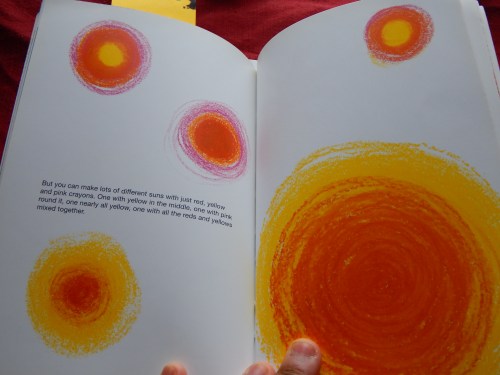
… books by Bruno Munari on drawing trees and drawing the sun. Online descriptions suggest they were written for children but I think what is meant is children of all ages.  Unexpected finds as I walked through the library. Thank goodness I have a big backpack.

More information about Bruno Munari

Brainpickings on Munari: https://www.brainpickings.org/2012/11/22/bruno-munari-design-as-art/

drawing a tree:  http://www.artbook.com/8887942765.html

drawing the sun: http://www.artbook.com/8887942773.html

Wikipedia on Munari: https://en.wikipedia.org/wiki/Bruno_Munari

Read Full Post »

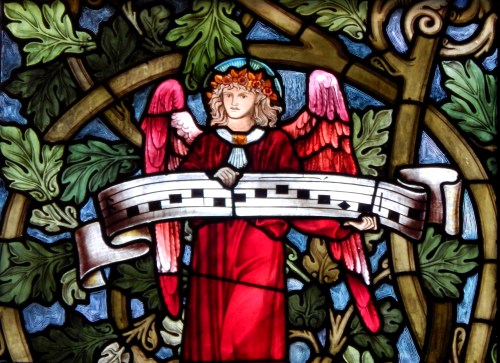
Read about The Singing Window at Tuskegee University in Deep South Magazine here. Enjoy!

Photo by Carol M. Highsmith

Photo by Carol M. Highsmith

Read Full Post »

Nancy Li, owner of TAO Select Image courtesy of artist.

Nancy Li of TAO Selection
Image courtesy of artist.

Believe it or not, porcelain had been on my mind just before my chance encounter with Nancy Li of TAO Selection.  I had come across a review of Edmund de Waal’s new book, The White Road.  A noted potter, the book chronicles de Waal’s “journey into an obsession” to learn more about the origins and reinvention of porcelain.  The prologue opens with de Waal in China: “I’m trying to cross a road in Jingdezhen in Jiangxi Province, the city of porcelain, the fabled Ur where it all starts …” Nancy Li is quick to tell you, and rightfully so, her family is from this region of China and that she is a third generation designer of porcelain.

Image courtesy of artist.

As I later told her, what I most admired about our first brief encounter outside of a church gift shop was her determination to find venues to market her jewelry, and also to share the story of her family and cultural heritage of working with porcelain. In his book de Waal writes of working with porcelain clay to make a jar. Though his studio is in South London, he writes, “… as I make this jar I’m in China. Porcelain is China. Porcelain is the journey to China.” During an interview, Nancy Li made a similar statement.

Image courtesy of artist.

We met briefly in Cambridge during her lunch break.  Again, with great passion, she began sharing the story of her family especially of her grandfather, a porcelain master.  For three generations the family and 15-20 employees have been working with clay using a proprietary process, molding it in forms from pendants to bowls to large statuary, hand-glazing and then firing the pieces in her family’s kiln.  I’ve always thought of porcelain as fragile but porcelain can be strong as Nancy demonstrated by dropping a lovely blue and white bracelet on the floor. It made a beautiful ringing sound and remained unbroken.

On her website, Nancy describes attending the top fashion school in China, Donghua University.  In talking with her I learned that six years ago she moved to the U.S. where she also received a Ph.D. in Materials Engineering from Boston University and a Management Degree from the MIT Sloan School of Management, part of her dual efforts to better understand the science behind porcelain and to raise awareness globally about the family business and the high-quality of the artwork produced.

Image courtesy of artist.

On top of her full-time job as a Systems Engineer, Nancy makes time to interact with people around Boston, educating them about porcelain and obtaining feedback about peoples’ fashion interests.   She shares the feedback with her family, including producing sketches for alterations and new designs, inspired by what she hears and by her own artistic background.

She describes wanting to help people understand that high-quality porcelain is not only for the wealthy.  It is not only something from the past to be found in antique stores.  It is contemporary and it is art, an art that represents a culture.  “Each piece of art has a story behind it,” she says at one point, holding a necklace in her hand.  “It is art that inspires, that’s meant to be shown and shared. I think Americans have a wrong impression that everything made in China is cheap quality. What my family does in its local community, what it has been doing for so long, is of the highest quality and I want to share that work, our work, and help it evolve.”

Following are links to learn more about and connect with designer Nancy Li and to view more of her wearable porcelain art.

TAO Selection Etsy Shop

TAO Selection Website

Following are links to learn more about artist and writer Edmund de Waal and his passion for porcelain.

http://www.edmunddewaal.com/

The White Road

Read Full Post »

You can read more about this personal project here: https://wordsandimagesbycynthia.com/2015/11/02/as-for-those-angels/

Read Full Post »

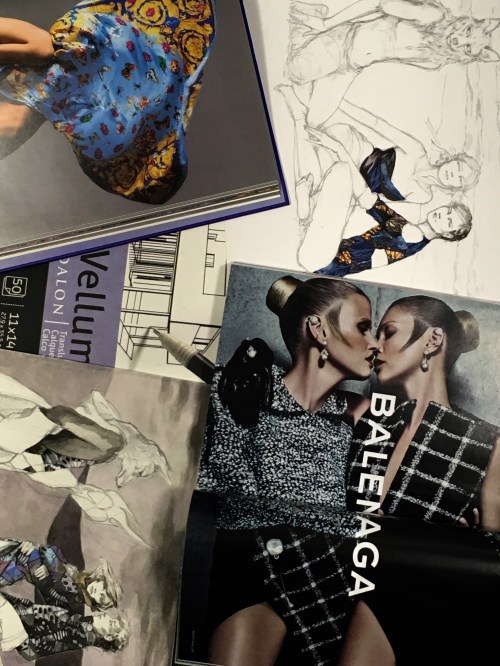
Remember the hand of the budding artist? Well, mom is artist Zoe Langosy.  Recently, she mentioned how important this period of fashion weeks around the world had been in her artistic growth and I asked her to share more through her words and images …

When I was 14, the fashion world became a magic kingdom to me. Fashion took me on a journey through music, pop culture, the arts… I couldn’t get enough. Already developing into a figurative artist, my drawings became filled with long-legged, often tragic looking, beauties. All my characters were adorned in lavish attire made from a patchwork of fabrics and colors.  As this was before the internet, the way I kept up with my new found passion and muse was either on TV or through magazines.  My teenage bedroom began to overflow with Vogue’s from all over the world, Harpaar’s Bazaar, The Face, Sky… Nothing ever compared, though, to the September issue of American Vogue.

Each year seemed to compete with the year before… More pages, more looks, more exclusive inserts from designers. Each year, as summer drew to a close, my sister and I would check newsstands every day anticipating its arrival.  The first issue I purchased was in 1991. Linda Evangelista donned the cover, smoldering with red hair and tartan. I must have turned the pages of that issue a thousand times, and yet somehow kept it pristine like only a true collector could. Never letting any hands on it but my own.

photo by Zoe Langosy

24 years have passed, and I still feel a buzz when the September Vogue appears on the newsstand. It remains a guilty pleasure of mine, still inspiring my art … Of course, I have other inspirations these days as well.

These days, I’m okay if the cover gets scratched or my one-year old tears out a page. Now, it’s become so ingrained in my world it’s like buying a new set of pencils. Something I’m prepared to destroy and use purely as a visual playground that will set my imagination running.

Follow Zoe’s creative journey …

http://www.zoe.langosy.net/

Langosy Arts on Etsy

Read Full Post »

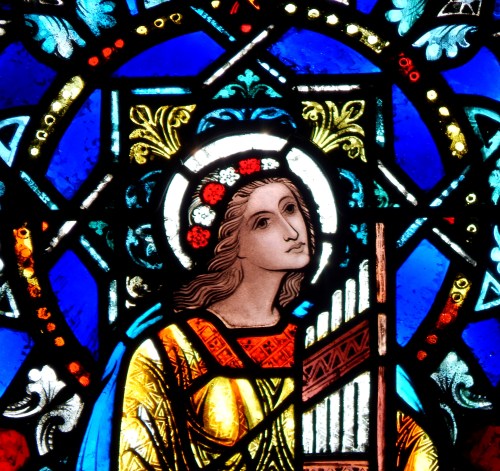
Detail from Baptism Window

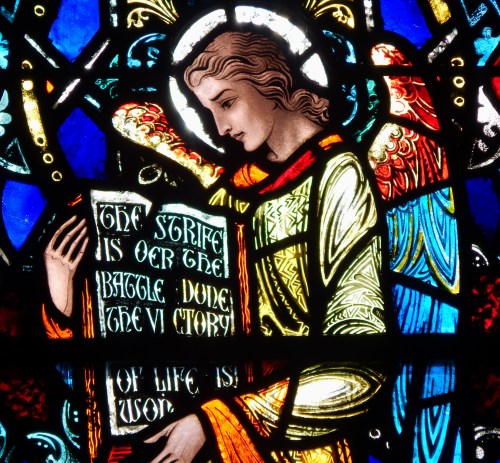
There are thirteen stained glass windows inside St. Peter’s Episcopal Church in Central Square, Cambridge, MA. And I had the wonderful opportunity to stand before them all thanks to the kind gentleman, Rector Brocato, who let me through the door.

Detail from St. John the Baptist Window

Detail from St. John the Baptist Window

He took me on a brief and informative tour of his church and provided me with detailed literature.  The parish was founded in 1842. The current building was constructed in 1867.  The first stained glass window was added in 1917, designed by Wilbur Herbert Burnham.

AAA_wilbhbur_27920

Wilbur Herbert Burnham designing a stained glass window, ca. 1940 / Paul Davis, photographer. Wilbur H. Burnham Studios records, circa 1904-1991. Archives of American Art, Smithsonian Institution.

Burnham is one of two stained glass designers highlighted in the church’s guidebook.  He designed several windows for the church.

Detail from St. Anne Window designed by Burnham

Detail from St. Anne Window designed by Burnham

Detail from St. Anne

Detail from St. Anne Window

In the 1930s, two windows were added from the Charles J. Connick Stained Glass Studios, most noted of which may the High Altar Window.

Detail from High Altar Window, by Connick Studios

Detail from High Altar Window, by Connick Studios

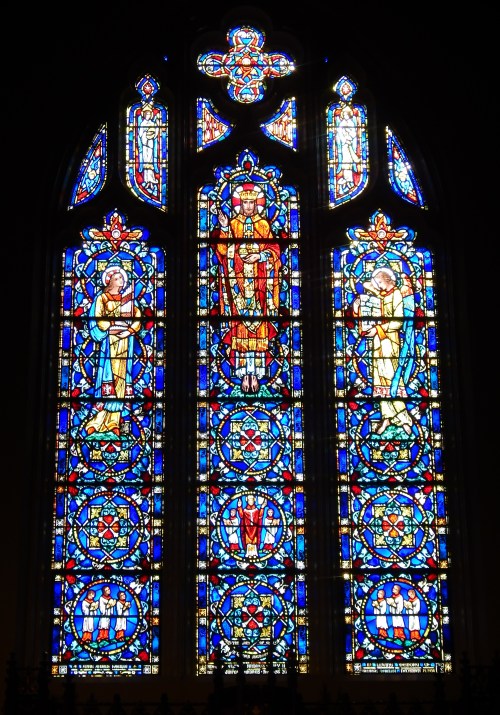
High Altar Window by Connick Studios

High Altar Window

Detail from High Altar Window

Detail from High Altar Window

Detail from High Altar

Detail from High Altar

The current guide book is being revised to include the names of all the designers.

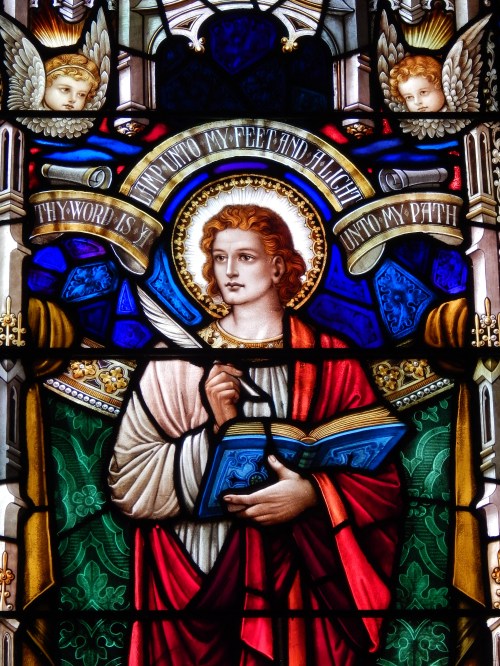
Detail from St. John Window

Detail from St. John Window

Even so, the current guide book provides a wonderful historical summary of the of the parish and detailed description of the biblical and secular symbolism in each window.

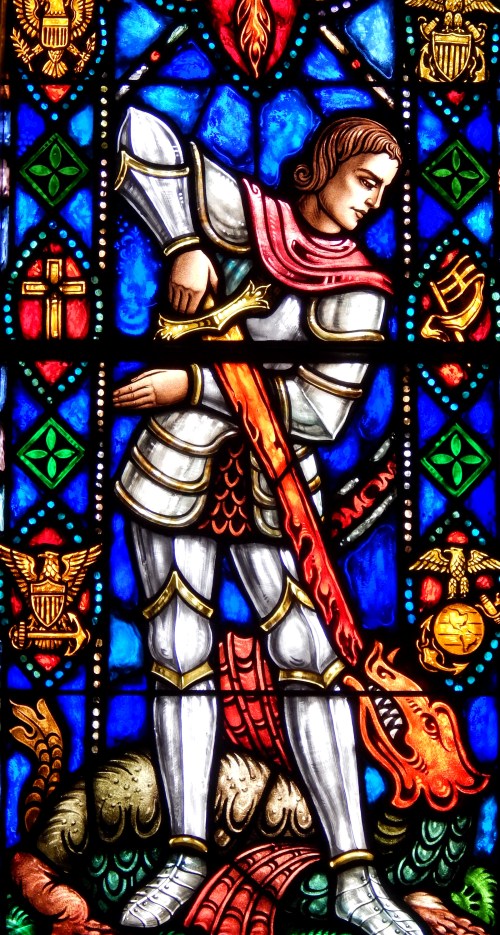
Detail from St. George Window

You can find out more about this welcoming place, from services and tours to community outreach, via the church website: http://www.saintpeterscambridge.org/

Detail from Nativity Window

Detail from Nativity Window

Sources/Additional Reading

Learn more about Wilbur Herbert Burnham in the Archives of American Art via this link.

Learn more about Charles J. Connick in the Archives of American Art via this link.

The Charles J. Connick Stained Glass Foundation is also a wonderful resource.

Read Full Post »

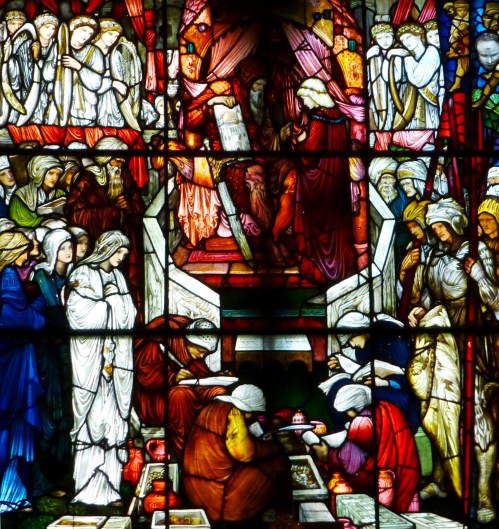
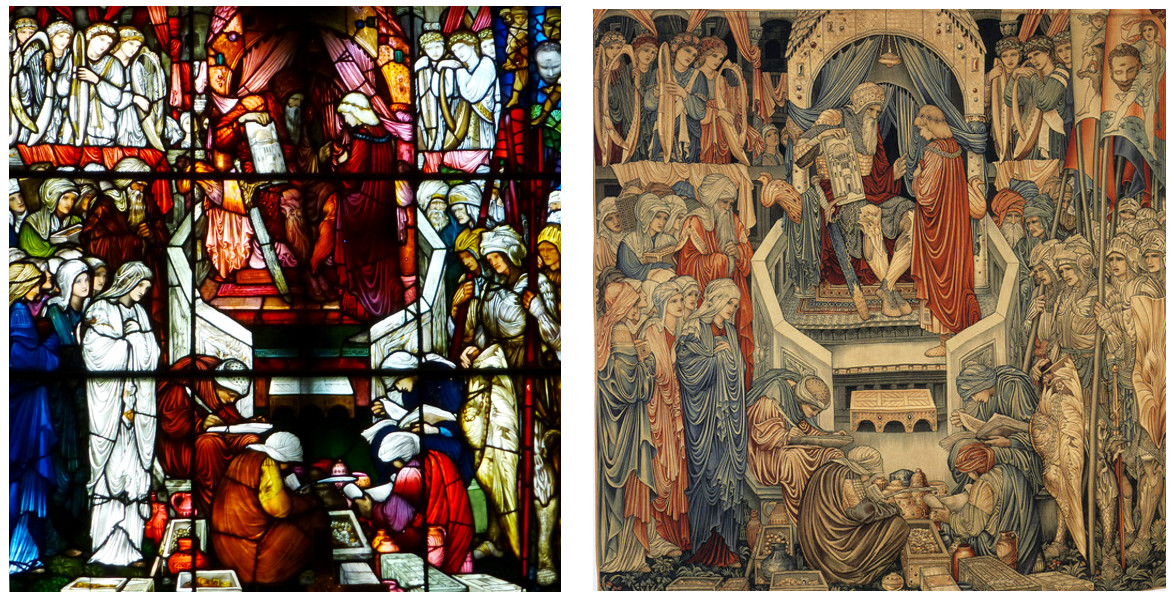
Recently I learned of an image in stained glass also appearing in thread, both based on a design by Burne-Jones.  I couldn’t help but do a bit of digging and learned this:  the stained glass window, David’s Charge to Solomon, was first commissioned in memory of George Minot Dexter (1802-1872) by his son Frederic Dexter. It is located at Trinity Church in the City of Boston.  I’ve had the great pleasure of photographing details over the years.

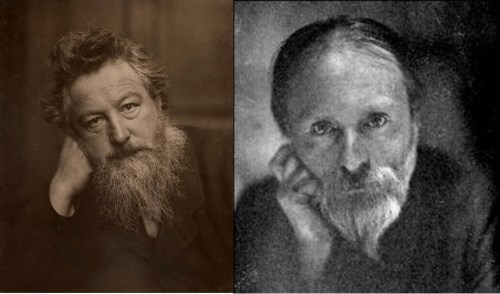
The window was designed by Edward Burne-Jones, the color harmonies developed by William Morris and the window fabricated in the William Morris & Co studio.

The window was installed at Trinity Church in 1882 in an area known as the baptistry.

William Morris (1834-1896) and Edward Burne Jones (1833-1898)

William Morris (1834-1896) and Edward Burne Jones (1833-1898)

While Morris and Burne Jones would both pass away in the late 1890s, Morris & Co.’s design work and manufacturing would continue for decades at Merton Abbey, a village in Surrey, England where textile printing had taken place since the mid-19th Century.

Sir George Brookman c. 1920

Sir George Brookman c. 1920

While attending an exhibit at the 1900 Paris International Exhibition, and later visiting Merton Abbey in England, Australian mining magnate George Brookman saw Morris tapestries being custom woven for individual and corporate clients.  He also saw original designs, still being used, to reproduce artwork.  After seeing the Burne-Jones cartoon for David’s Charge to Solomon, he commissioned a tapestry to be made of that image.

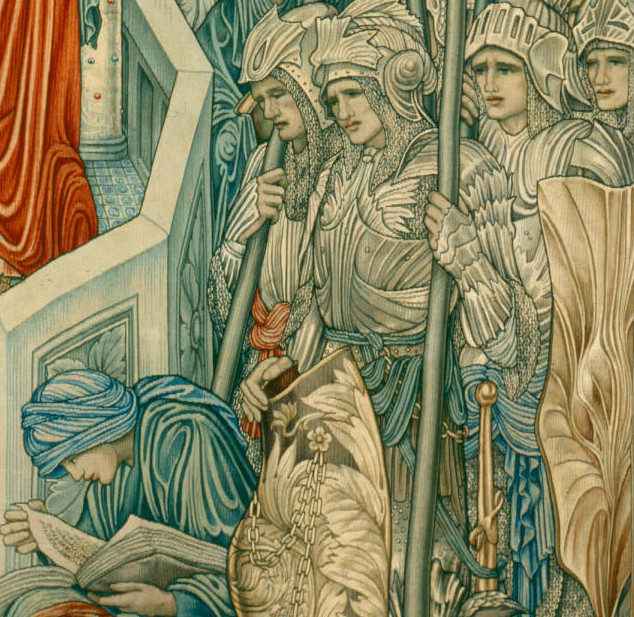
Known as David giving Solomon directions for building of the Temple, the tapestry would be described as “a spacious and complex weaving of unusual size.  The soft, abundant reds beloved of the [Pre-Raphaelite] Brotherhood were in evidence.  Of especial beauty were the figures clad in silver-threaded armor.” Weavers were Walter Taylor, John Martin and Robert Ellis.

In 1920, Brookman sold the tapestry back to Morris & Co.  May Morris, the daughter of William Morris, would exhibit the tapestry along with other Merton Abbey works at the Detroit Society of Art and Crafts Exhibit.

May Morris (1862-1938)

May Morris (1862-1938)

excerpt from International Studio Magazine, 1922

excerpt from International Studio Magazine, 1922

Newspaper businessman, philanthropist and art benefactor George G. Booth and his wife, Ellen Scripps Booth, would purchase the tapestry to hang in Christ Church Cranbrook in Bloomfield Hills, Michigan, where I believe it still hangs to this day.

One design expressed in two different ways sharing one of the most influential stories in human history.

Sources/Additional Reading

Cranbrook Digital Archives

Details for comparison taken from David giving Solomon directions for building of the Temple, photograph by Jack Kausch, copyright Cranbrook Archives.

The William Morris Society in the United States


Read Full Post »

Charles R. Lamb, photo by Doris Ulmann

Charles R. Lamb, photo by Doris Ulmann

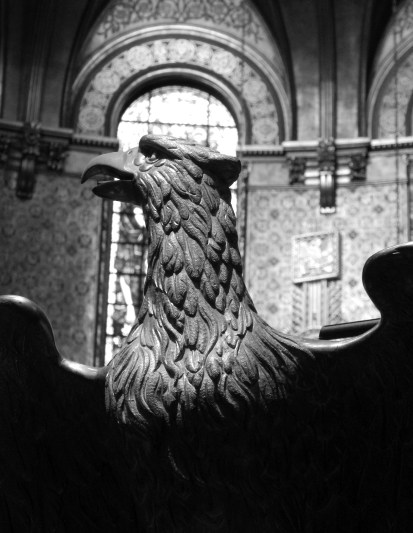
Recently I photographed the eagle lectern at Trinity Church in Copley Square, Boston.  That day I had grown impatient with color and switched to black and white.  And thankfully so because  the play of light and shadows across the bird’s form revealed wonderful details. That lectern, original to the historic landmark (1877), was designed by Charles R. Lamb of J & R Lamb Studios of New York.

J & R Lamb Studios, established by brothers Joseph and Richard Lamb in 1857 and still in operation today, is most well-known for its stained glass creations. In fact, the company’s artists produced designs for a range of furnishings, metalwork and interior architecture as well.  Charles Lamb (1860-1942), son of Joseph, left school at 16 to join his father and uncle at the studio.  He would eventually take over management of the company.

Design drawing for metalwork: Chiro chalice with grapevines

Design drawing for metalwork: Chiro chalice with grapevines, by Charles R. Lamb

His brother Frederick Stymetz Lamb would become head designer and oversee the studio’s artists who included Charles Lamb’s wife, Ella Condie Lamb.  Charles’s daughter Katherine Lamb Tait would become head designer after WWII.

Katherine Lamb Tait

Katherine Lamb Tait

Over the course of his individual career, Charles Lamb would focus on urban planning and help pioneer the concept of City Beautiful.  Most of the short biographies I found describe him as an innovator with ideas ahead of their time.  Though during his professional life, he enabled the creation of much bright beauty, the latter part of his life may have been a bit dark. On February 22, 1942 he passed away at his home, Lamb’s Lane, in Cresskill, NJ. He was 82.

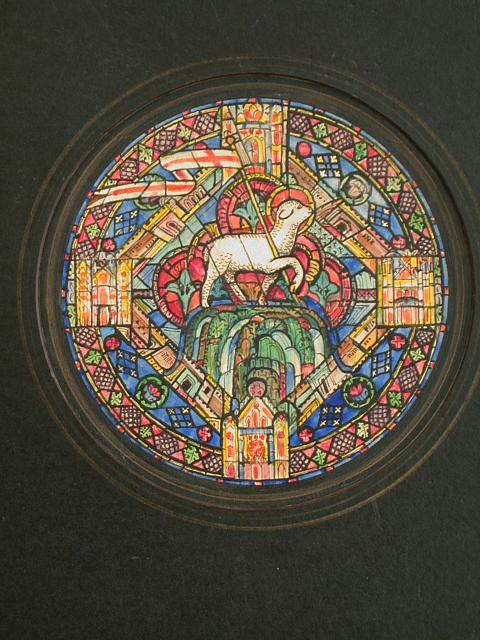
Design drawing for stained glass tondo window "The Lamb on Mount Zion and Four-Square City of New Jerusalem" showign lamb with and elaborate detailing including grape/leaf border and Jerusalem/architectural motif

Design drawing for stained glass window “The Lamb on Mount Zion and Four-Square City of New Jerusalem” showing lamb with and elaborate detailing including grape/leaf border and Jerusalem/architectural motif

In 2003 and 2004, the Library of Congress acquired nearly 2500 drawings and sketches as well business records and photographs from the Lamb Studios.  They are accessible to the public via this link: http://www.loc.gov/pictures/collection/lamb/.  An incredible resource for artists and historians.

Design drawing for two stained glass windows with grapevine vegetal design

Design drawing for two stained glass windows with grapevine vegetal design

Sources & Additional Reading

J & R Lamb Studios

Lamb Studios Archive at Library of Congress

Lamb Studios History by Barea Lamb Seeley

City Beautiful Movement

Corning Museum of Glass – Historical Perspectives: Katherine Lamb Tait

Charles R. Lamb image courtesy of Doris Ulmann Photographic Collection, 1915-1925, University of Kentucky

Read Full Post »

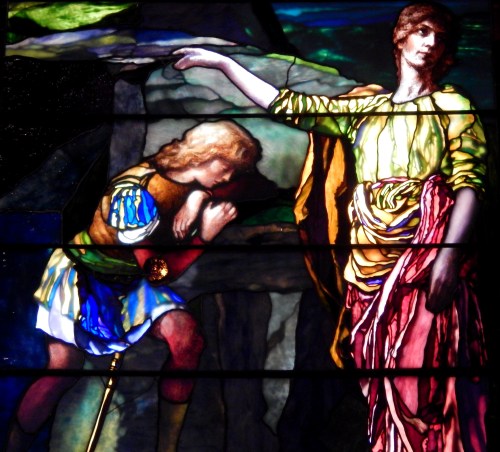
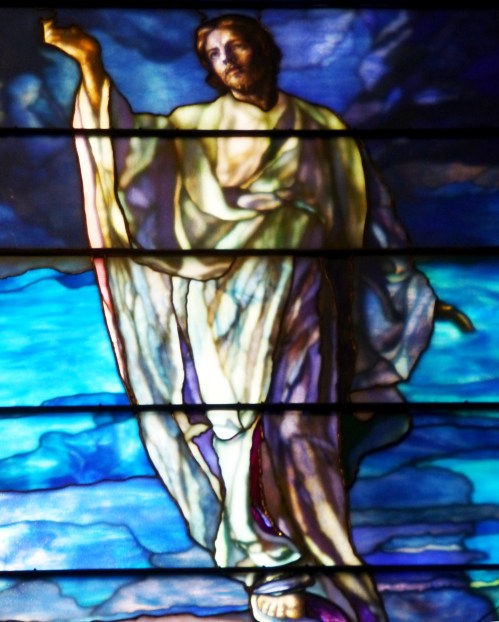
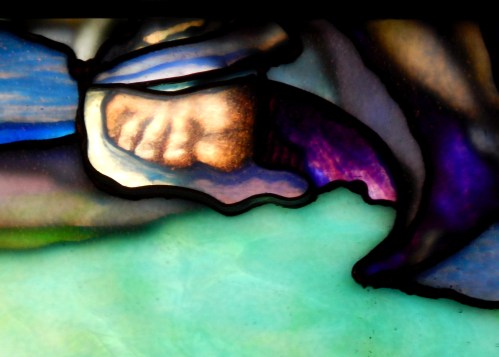
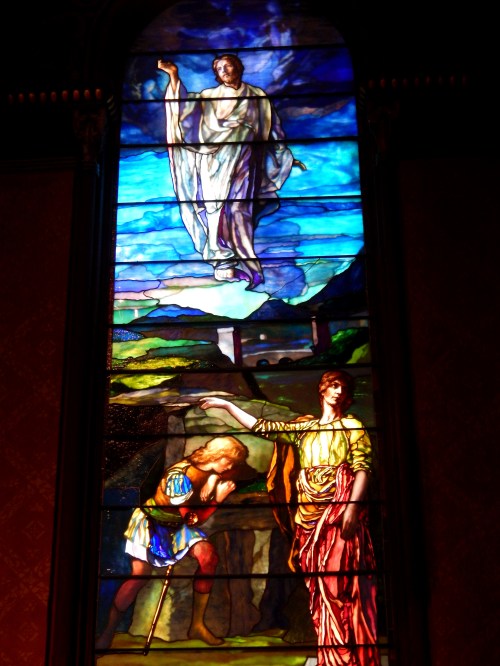
More details from the interior of Trinity Church in the City of Boston. Here we have a close up of the messenger in the stained glass window, The Resurrection, by John LaFarge.

In the March 1902 issue of The Church Standard, the window was described in this way:  “A beautiful memorial window has been added to the group in the north transept of Trinity Church.  It tells the story of the first easter morning.  In the background the purple clouds of morning are hanging, growing lighter as they seem to touch the low lying hills to the rear of the empty sepulchre, and their tints show the approaching dawn.  The flowing white garments of the risen Christ reflect the purple tints of the darker clouds … Upon the ground, reclining his head against the tomb, is the sleeping guard whose uniform makes a bright touch of coloring against the sombre hues of the walls.  A messenger nearby … [his] graceful garments of crimson and gold stand out in deep and inviting contrast.”

That same month, a reporter for the Boston Evening Transcript newspaper also notes the color: “The color is in the artist’s strongest and most brilliant vein, and is especially remarkable for its aerial tones of graduated blues and greens … In no stained glass work by LaFarge has he carried his extraordinary personal sense of color to a more complete measure of depth and significance.  It will, therefore, rank among his most important and characteristic work in this congenial medium.”  The window was commissioned by Charles A. Welch in memory of his wife Mary Love Boott Welch who died in 1899.

I’ve had the opportunity to photograph this window several times over the years.  But this particular day was special.  A friend had let me borrow her tripod and another friend had unexpectedly allowed me to access a place not often accessible so I could have new vantage points where I could focus on details I’d never focused on before … like five toes on a foot.

Of course, the whole is magnificent as well.

Whatever one’s vantage point, it is a lovely window to behold.  Learn more here:  Trinity Church Art & History

Read Full Post »

Courtesy of Trinity Archives

Photo of Charity, Courtesy of Trinity Archives

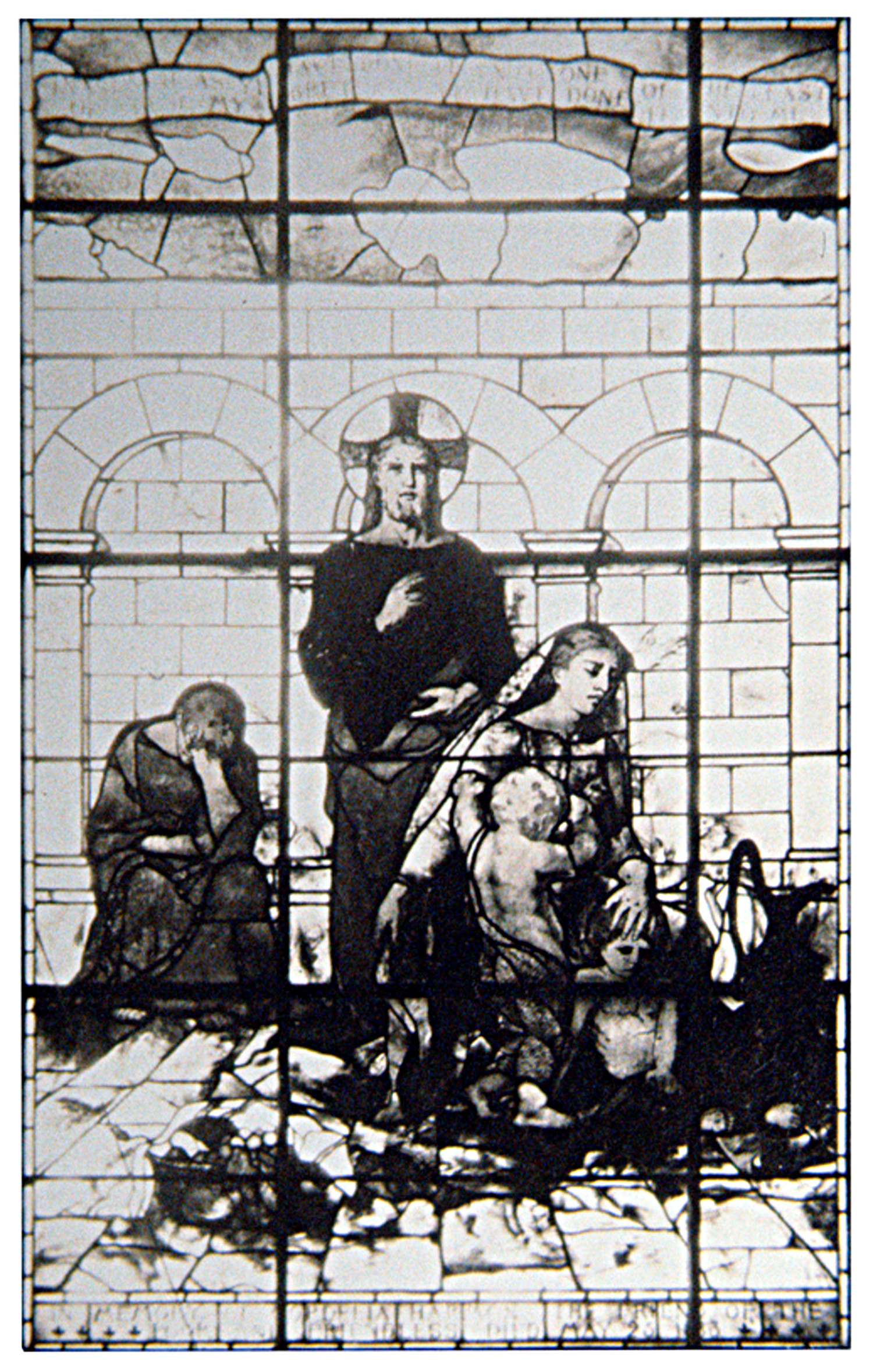
Charity is a stained glass window once located at Trinity Church in the City of Boston. It was designed by Frederic Crowninshield.  The inscription at the bottom of the window, barely legible in the above photo, reads “In memory of Cordelia Harmon, the friend of the poor and friendless. Died May 25, 1883.”  In an 1888 publication providing a descriptive account of the church, including of its windows, Harmon was described as “the Almoner of Trinity Church for many years, and through her good deeds was well known by all the poor in any way connected with the Parish.  The window was a gift of members of the Parish.”

Born in Maine, Cordelia Harmon (1820-1883) spent her adult life in the Boston area.  It is clear from surviving records that she consistently strove to help those who could least help themselves.  Regardless of good deeds done as an elementary school teacher, a nurse at Mass General Hospital or serving people through programs offered by her church, Harmon appears to have never turned her eyes away from the wrongs that remained around her.

One of the church-supported programs that she participated on was The Ladies’ Relief Agency.  As a part of that charity’s design, every application submitted seeking assistance was investigated, including a home visit.  Through such visits, and no doubt her work with other charities, Harmon was able to see firsthand the lack of support for those with chronic diseases, people who were turned away from hospitals, and many of whom had no family to care for them.  She would write:  “How can a man, breathing fetid air, living in the squalor and debasement that abound, where the poor most do congregate and often of necessity, feel hope or courage to rise above his condition?

Harmon imagined creating a home for those people where they could live a good life until the end of their days.  It was an idea that she would discuss with Phillips Brooks, the rector of Trinity Church.  He would help her raise the funds to open The Boston Home for the Incurables in 1881.  Harmon would work at this home until she “died at her post” in 1883.  Phillips Brooks was traveling abroad when he learned of Harmon’s death.  In a letter to his brother he wrote:

Despite his expression of not feeling well-fitted to do the work of Cordelia Harmon, upon his return to Boston, Phillips Brooks did continue her legacy.  In 1883, Trinity formed The Committee for the Establishment of The Boston Home for Incurables to raise funds to expand upon Harmon’s idea.  Funds raised helped the Home to acquire a larger facility and accommodate more patients.  It would continue to expand and refine its services over the next 130 years.  Today, the Boston Home is a respected, model institution serving nearly 100 residents.
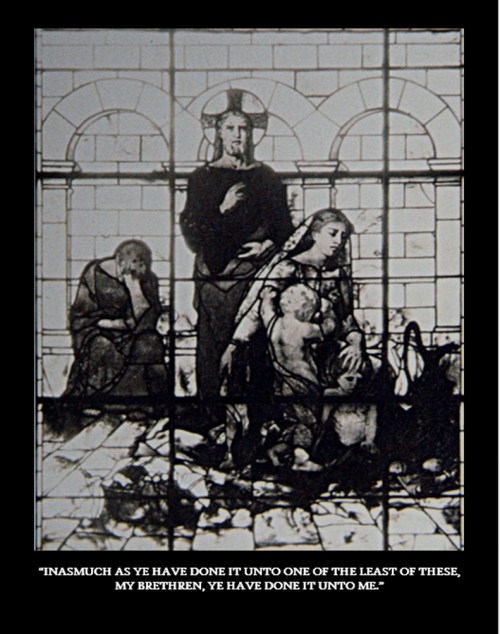
Charity, designed by Frederic Crowninshield,

The only known surviving image of the Harmon window is a black and white photo taken in the 1920s. In the center of the image, a woman and two children, destitute.  To the left, a figure with head bowed, the weight of the world upon his shoulders.  Standing amidst them is Jesus.  And above them all, in capital letters, is the text:  Inasmuch as ye have done it unto one of the least of these, my brethren, ye have done it unto me.  The window did not survive major renovations that took place in the 1950s. The window may be gone but the memory and legacy of Miss Cordelia Harmon lives on and continues to evolve.


Sources, Additional Reading, Etc.

http://www.thebostonhome.org/

https://www.givingcommon.org/profile/1072657/the-boston-home-inc/

September 19, 2014 article with video: http://assistivetech.scripts.mit.edu/blog/finding-a-home/

Charity postcard with insert about Harmon available at Trinity Church Bookshop

Read Full Post »

« Newer Posts - Older Posts »