Feeds:
Posts
Comments

Posts Tagged ‘religion’

foreword to the interludes

interlude: genesis

interlude: exodus, part 1

Photographers shooting cherry blossoms in Washington, D.C., 1922.

Photographers shooting cherry blossoms in Washington, D.C., 1922.

In early 1920s America, “a return to normalcy” was the popular catchphrase. People were weary from war and desiring to pull back from engagement in world affairs. With the support of business and promotion of isolationism, the Republicans would hold the White House throughout the decade.

Five sisters working for congressmen in Washington, 1926

Five sisters working for congressmen in Washington, 1926

Throughout most of the decade, the economy improved in the U.S. and in many parts of the world.  At the same time, countries like Germany were still dealing with the debts and damages of war, and in many countries, there were rising tides of nationalism — and resulting conflicts — as people sought independence from colonial powers.  In the U.S. wages were increased by some industry leaders.  Tax rates were lowered for the wealthy.  It was a bullish stock market.  In general, people had more money.  Some invested in stocks for the first time.  A consumer culture evolved.

Flapper 1922

Flapper 1922

In some agricultural areas, like Nebraska where Joseph lived, the situation was a bit different.  The postwar economics were not as kind.  The technological advances (e.g. electricity, telephone infrastructure, etc.) were taking place at a much slower rate in rural areas. The rural exodus to cities increased dramatically as people searched for new opportunities.

Inauguration of the garter flask in Washington, DC, 1926.

Inauguration of the garter flask in Washington, DC, 1926.

The 18th Amendment to the U.S. Constitution was still in place.  Prohibition would not be repealed until the 21st Amendment was ratified in 1931. Al Capone would become notorious during the 1920s, and he wouldn’t be the only one trying to find creative ways around the law. The era would be remembered by many names, from the Roaring Twenties to the Jazz Age.

F. Scott Fitzgerald, 1921

F. Scott Fitzgerald, 1921

In his book The Great Gatsby, Fitzgerald would capture the beauty and excesses of the period.  In his book The Sun Also Rises, Ernest Hemingway would popularize the term the lost generation, describing the young men who’d returned from World War I.  In 1925, folklorist  Zora Neal Hurston would arrive in New York during the height of the Harlem Renaissance where African American intellectuals like Langston Hughes and artists like Romare Bearden were redefining and celebrating what it meant to be black in America.

Zora Neale Hurston

Zora Neale Hurston

It was a period of innovation and of expansion of mass production.  People indulged in wonderful new technologies like radio and greater access to automobiles.  By 1928, Velveeta cheese was crafted, so to speak, for the first time and sliced bread made its debut.  Charles Lindbergh had flown his Spirit of St. Louis non-stop from New York to Paris.  Sports figures were celebrities.  Lou Gherig, Ty Cobb and Babe Ruth were hitting baseballs out of stadiums across the country.  Cinema expanded.   Mickey Mouse made his debut in a Disney animated short. Charlie Chaplin became an independent producer at this time.  In 1928, he films The Circus, a movie that brought Chaplin a special trophy at the very first Academy Awards (1929).

Charlie Chaplin

Charlie Chaplin

Such prosperity would not last, of course.  By the time seventeen-year old Joseph arrives in Washington, D.C., in 1928, financial collapse was imminent.  He didn’t share many stories of that time in his life so there’s no way to know what he was thinking or what he did on a daily basis.  We know the following based on notes written by Joseph later in his life, and the few stories he did tell his children.

Catholic University, between 1910-1926

Catholic University, between 1910-1926

He arrived in Washington in 1928 to attend either Immaculate Conception College or St. Paul’s College.  St. Paul’s College is the house of studies for Paulist Seminarians who then complete their graduate studies in theology at Catholic University.
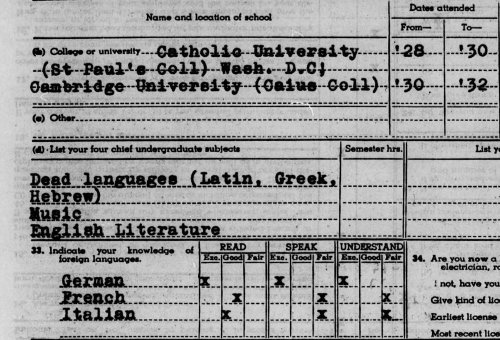
In a different document then the above, Joseph mentions attending Immaculate Conception College, also located in Washington, D. C.   Immaculate Conception (also known as the Dominican House of Studies) is the theological school for candidates for the priesthood in the Dominican Province of St. Joseph, which in the 1920s and ‘30s included all of the U.S. except for the West Coast. He may have studied there before transferring to Catholic University.

So far none of the schools can find record of his attendance.  I suspect some of the difficulty has to do with Joseph’s last name.  At some point in the 1920s, as he traveled from Nebraska to Washington, D. C., Joseph changes his last name.  He may have changed it more than once, but by the time he is in attendance at Caius College in Cambridge, England his last name is definitively Horne.  He will later recall an incident at the school when a professor would say, ” Mr. Horne, will you tell us, please, in your rude, crude, inimitable manner, all that you know of the Peloponnesian War.

Joseph also describes hearing, during this period, the writer, Christian apologist and famed orator G. K. Chesterton (1874-1936).  Chesterton was known for great intellectual debates with friends and colleagues George Bernard Shaw, H.G. Wells, and Hillaire Belloc.  Their debating spans the time Joseph was studying in Cambridge (1930-1932).  Mr. Chesterton was also debating on both sides of the Atlantic during this time.  In January 1931 in New York City, he debated with Clarence Darrow about whether or not the world would return to religion (read more here).  If indeed Mr. Horne was in England during this time he missed the beginning of the Great Depression in the U.S. though eventually the whole world would be affected.  In 1932, Joseph would have returned to see Hooverville’s springing up, the shantytowns named for President Hoover who had so misjudged the financial crisis.  He may have returned just in time to vote in the 1932 election in which New York Governor Franklin Delano Roosevelt would win in a landslide with his promise of A New Deal for the country.  He would have returned with the knowledge and skills of what he later characterized as “dead languages,” literature, and music.  He would not return with clerical robes.

President-Elect Roosevelt traveling to inauguration with President Hoover

President-Elect Roosevelt traveling to inauguration with President Hoover

By June 1933 he was teaching  music for the Pennsylvania-based Smith Williams Institute of Music. He would teach music and music appreciation to classes in Clarksburg, WVa and environs.  When I mentioned to Horne’s son that the institute apparently gave away free violins to students and instructors, he remarked, “Maybe that’s where my father got that beat-up violin he carried around.”  Horne would make $40/week until December 1935.

Smith Williams Institute of Music Advertisement

Smith Williams Institute of Music Advertisement

He ceased to teach in the Clarksburg vicinity after economic conditions became very bad.  He made his way back to the Washington, D. C. area and there, in his own words:

In other documents, he describes in greater details the different jobs held in the D.C. area. What becomes increasingly clear is his growing interest and skill in photography as a tool.  He also becomes interested in a young woman. Elsie was beautiful with a keen mind.  The two soon married and, in 1937, Joseph Jr. was born.

Though he clearly stayed in touch with is parents back in Nebraska, Joseph’s home was now in the Washington area.  He would continue to take on any job to provide for his new family, and to buy his cameras.
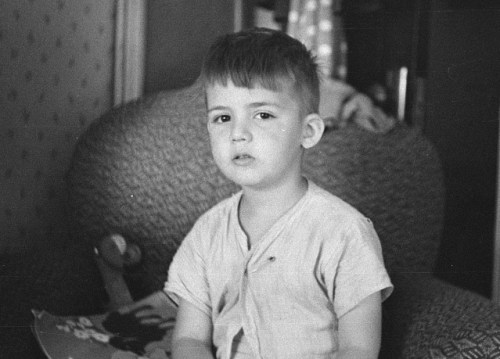
Elsie would later recall that he  always had to have the best camera, and that one year the family ate an awful lot of oatmeal so that they could pay for their son’s orthopedic shoes and still buy such an instrument. By 1941, Joseph would provide clinical photography for the Vets Administration, Mt. Alto Hospital in D.C.  In that same year, the U.S. would enter its second World War.

Washington D. C. Photo by Joseph A. Horne

Washington D. C. Photo by Joseph A. Horne

Priorities across the nation would shift.  Joseph Horne with his rural American roots, his knowledge of multiple languages, world literature, and music, and his facility with a camera would find himself in the U.S. and especially abroad at the crossroads of arts, culture and, perhaps most unexpectedly to him, of politics.

Stay tuned for the next Interlude in April.

Additional Reading/Sources …

1920s Farm Life in Nebraska

Radio in 1920s America

Prohibition: A Film by Ken Burns & Lynn Novick

Jazz: A Film by Ken Burns

Wall Street Crash of 1929

Library of Congress Prints and Photographs Online Catalog

Read Full Post »

… a lovely surprise appeared at my door.  The postcards I mentioned as a work-in-progress in a previous post have arrived.  These are images I’ve had the pleasure of taking of the stained glass windows at Trinity Church in Copley Square, Boston, a building considered one of the most significant in American architecture.

These postcards will be available at the Book Shop located in the undercroft (lower level) of the church.  Learn more about the parish and current activities here and specifically tours here and about the Book Shop here.  In addition to postcards of the stained glass you will also find a few of my other nature-themed postcards like the following.  Happy writing! 😉

Read Full Post »

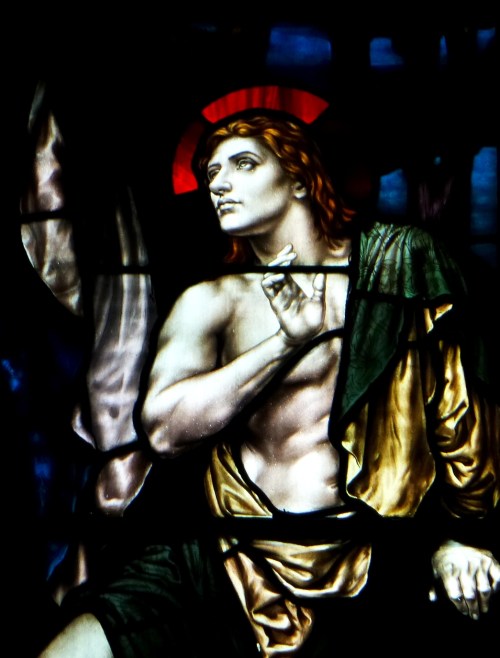
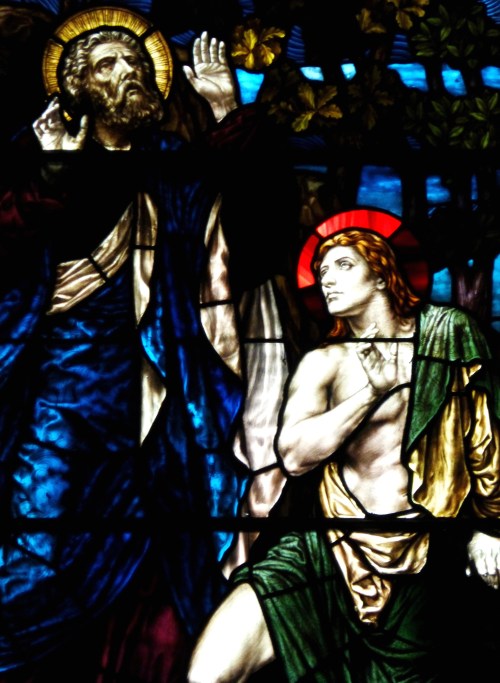
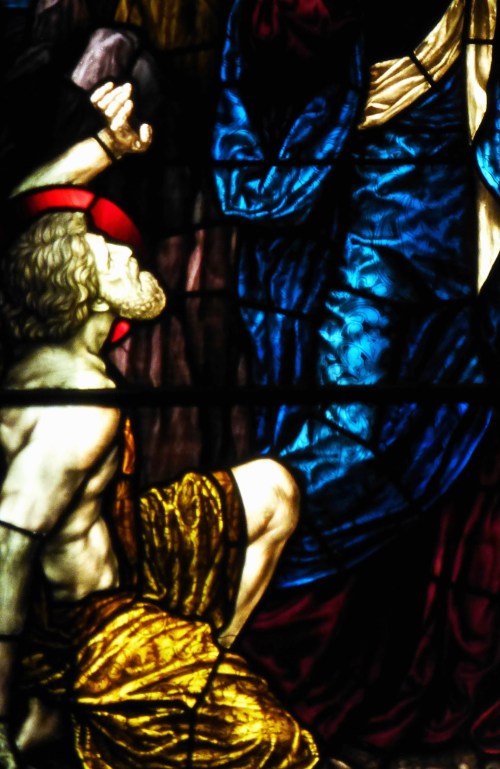
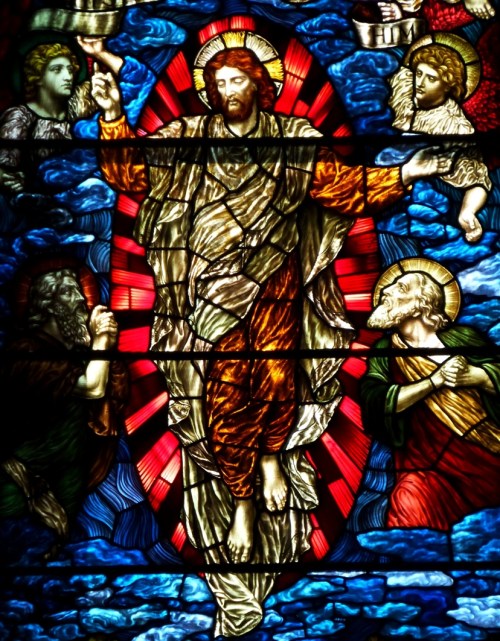
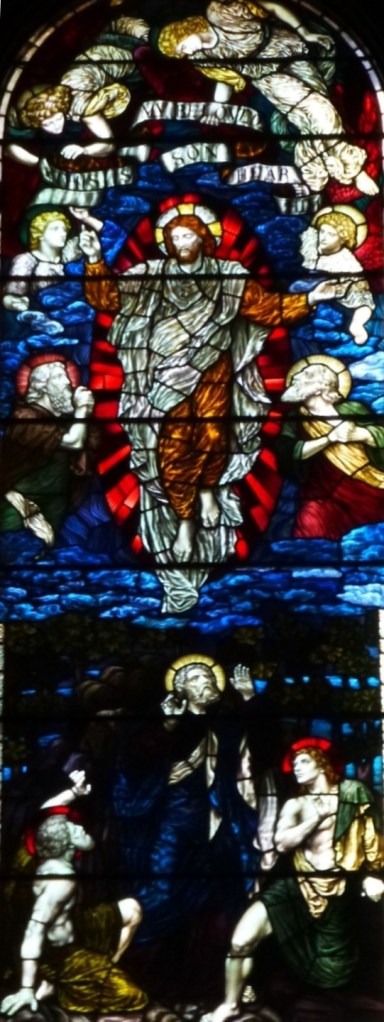
I keep reading that Henry Holiday of London was noted for his execution of drapery, i.e. the fall of cloth, around his figurative subjects; that it was a style reminiscent of Dante Rosetti.  I do love the intricate layering of cloth in these scenes from his stained glass window, The Transfiguration (1878), but it is the hands I particularly notice at present.   As promised in an earlier post, here is a bit more about the artist and his creation.

Henry Holiday was born in London in 1839.  His talent for drawing set him on an early artistic path where he would be influenced by Pre-Raphaelites like Burne-Jones, William Morris and Dante Rosetti.  Over time, he would develop his own unique style.  He traveled the world as many an artist of that period did.  Trips to locales like Italy and Egypt influenced his illustration, painting, sculpture and his work with stained glass.  Read more about his diverse interests and artistic expressions in this wikipedia article.

During his lifetime, Holiday did quite a bit of work for American churches, and that’s why I’ve been lucky enough to view and photograph his window, The Transfiguration, at Trinity Church in Copley Square, Boston.

The window depicts a moment described in the New Testament. The basic story is that Jesus and three of his apostles, Peter, James and John, traveled up a mountain to pray.  There Jesus begins to shine like the sun, his clothes becoming white as snow.  The prophets Moses and Elijah appear at his side and talk with him. Eventually “a bright cloud overshadowed them, and a voice from the cloud said, “This is my Beloved Son, with whom I am well pleased; listen to him.” When the disciples heard this, they fell on their faces with awe. But Jesus came and touched them, saying, “Rise, and have no fear.” And when they lifted up their eyes, they saw no one but Jesus only. …” (Matthew 17:1-92, Mark 9:1-9; Luke 9:28-36; 2 Peter 1:16-18).”

There are a lot of great resources online about the significance of this moment in Christianity and its various interpretations.  If you’re in Boston’s Back Bay, view Holiday’s window firsthand, especially when the sun is shining bright.  Postcards and prints available in the Trinity Book Shop with shipping available worldwide.

Read Full Post »

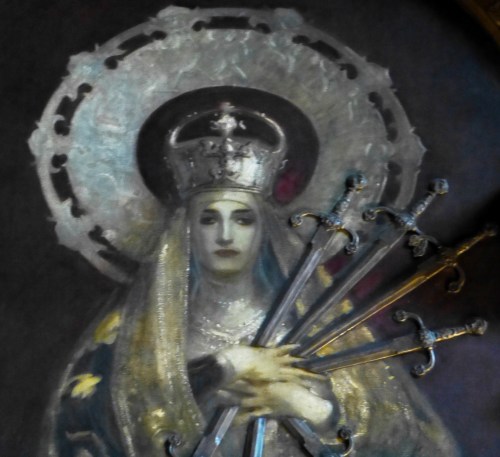
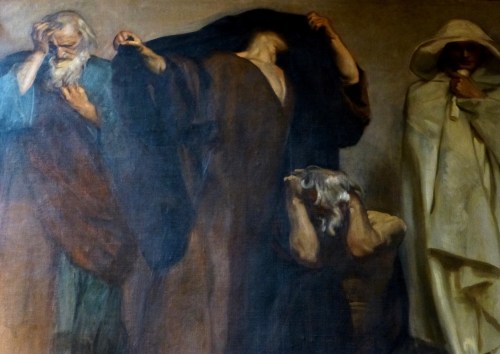
Based on yesterday’s post, I was asked by a few folks if I went up one more flight of stairs to view the hands of the Sargent murals.  Oh, yes indeed I did.  I did not begin with the Madonna of Sorrows with her silver crown.  With my limited time, I focused first on the prophets.

At the end of my stay, as I focused more on the Madonna of Sorrows, I had to stand close to a young security guard.  Finally I turned to her and asked, “Do you ever get bored?” She smiled and suddenly looked about twelve years old.  She said, “No, ma’am.  Every day I see something new.”

See all of the Sargent murals, in context, via this link.  This is an excellent site as well: http://www.sargentmurals.bpl.org/


Read Full Post »

That is this lay person’s interpretation of this image of The Transfiguration of Jesus, a stained glass window in Trinity Church in Copley Square.  It is by Henry Holiday of London.  I hope to share more about the whole window and its maker in the coming month, but meanwhile I can share that I’ve been lucky enough to photograph this center part of the window. It will be available as a postcard in the church’s Book Shop in early October.  Have a good day, folks.

Read Full Post »

Following are pictures taken of the John Singer Sargent murals located on the top floor of the McKim Building at the Boston Public Library.  You can read more about the murals creation and restoration here and here.


Read Full Post »

That is the theme of the May/June 2013 issue of Alive Now, a lovely, thought-provoking bimonthly publication.  I am honored to have the above photo appearing in an issue addressing a topic that affects perhaps all people in different ways.  On the magazine website, there is a section called Visual Psalmists where the photographers in each issue tell the story behind their images.  The May/June stories may not be up yet, so for now I’ll just share that I took this photo on a marina in Miami years ago while waiting to meet up with friends.  I sat on a bench, turned my head, and there it was in silhouette.

Read Full Post »

Today there is an interfaith service taking place in Boston at the Cathedral of the Holy Cross. All faiths, all peoples, are welcome to come together to continue the healing process.

It is a grand space.  I was lucky enough to visit in the recent past to photograph a bit of the interior.  Like today, it was a sunny day, with light shining through, creating warmth.

Regardless of one’s faith, if you’re in the area in the future, I’d encourage a visit, if only to sit in the calm.

Read Full Post »

This winter, I’ve been lucky enough to continue photographing the interior and exterior artwork of Trinity Church in Copley Square, Boston.

Trinity is considered one of the most architecturally significant buildings in the United States.  It sits in the center of the City of Boston in an area known as the Back Bay.  If you are ever in the Boston area, I highly recommend a visit to view in person this beautiful structure.  Inside you will find represented the great stained glass artists including John La Farge, Edward Burne-Jones and Margaret Redmond.  Above is a scene from one of her stained glass windows, depicting King Solomon.  I’m pleased to share that this image is available as a postcard in The Shop at Trinity Church, located in the church’s basement.  Future postcards will include this scene from the window Jesus Blessing Little Children by Henry Holiday of London

and this mural by John La Farge depicting the story of Christ and the woman at the well.

The church is located at 206 Clarendon Street, Boston, Massachusetts.  The Shop is located in the basement (or undercroft).   You can read more via this link.  Direct line is 617.536.0944 extension 225 for The Shop.

Read Full Post »

The man with whom I am involved I tend to describe as a science guy who works with light.  He says that’s not quite accurate but it works for me.  Since the beginning of our relationship we have  shared many an illuminated experience that we have described quite differently.  There was the infamous halo around the moon.  I will forever describe sunlight on water as “dancing” but now I also see the resulting light-filled ripples as “caustic.”  Most recently we have talked of rainbows.

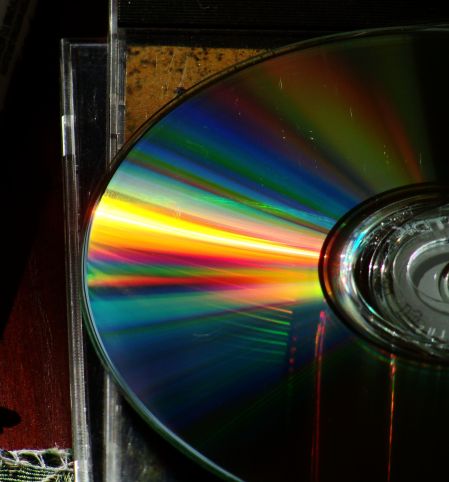
I see rainbows all around on earth.  I am amazed at the places I find them like on the back of this silver tray left forgotten in a corner closet.   Or the rainbows formed on the surface of CDs left out of their case on a table near a sunny window.

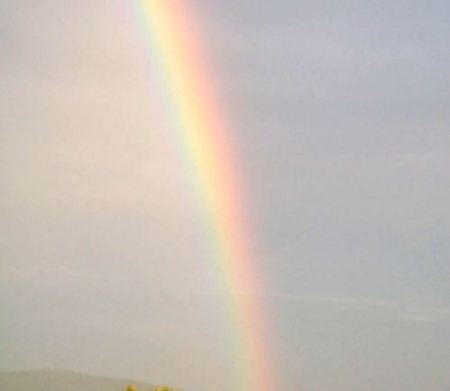
I see them less often in the sky mostly because I usually have my head ducked down in the rain. And that is the source of rainbows in the sky, my science guy reminded me at the dinner table recently, rainbows are formed by sunlight striking raindrops in the air.  White light is divided into all its splendid colors.  I listened attentively as he described how the water drops act as prisms, how light is refracted not reflected, and so on and so forth.  It was like a cool Cliff Notes version of The Science of Rainbows 101.

As the lecture wrapped, I stood up, my mind swimming with the science of it all.  Suddenly my guy added, “Of course, my dear, you do realize that there were no rainbows before Noah and his ark.”  He smiled gently.  “Or so that story goes.”  With an exaggerated sigh, I sat back down.  “Remind me of that story please.”  You see, my science guy’s bookshelves are not only filled with the science writings of Feynman and Einstein, they are also filled with the religious writing of Chesterton, Crossan and even a little Thicht Nhact Hanh.  It is amazing to walk in this world with this fellow (and with others) and to have my eyes and mind and even on occasion my heart opened to the different ways of experiencing the world, even something so seemingly simple as a rainbow.

Read Full Post »

« Newer Posts - Older Posts »