Feeds:
Posts
Comments

Posts Tagged ‘storytelling’

branches

I’ve only done one art installation. It revolved around the childhood food memories of former slaves living in the deep south. It was an installation that was visual and tactile with hanging branches and shells. Thankfully, people found it thought provoking. A new installation comes to mind based on the experiences of children enslaved in New England. The concept is based on the content of advertisements in newspapers from the 18th century. With regard to slavery, you can divide the ads into at least two categories: “to be sold” and “runaway.” And then there were a few ads I came across that one might almost categorize as “giveaway.” These ads most often involve young children.

“A negro infant girl about six weeks old to be given for the bringing up. Inquire of John Campbell Post-Master to know further …” (1706)

Imagine walking into a room lit by flickering lamplight. Against the wall there would be a simple desk and chair and on the desk accessories strewn about appropriate to the times including a ledger book. Nearby stands a period printing press. In the air are sounds one might hear to give a sense of place, perhaps the scratch of a quill pen on stationery, the shuffling of papers, the machinations of the printing press, and maybe someone whistling or playing a bone flute with some ditty of the day. And in the background, steadily becoming louder, is the sound of a child crying. And that building sound might draw the viewer’s attention to a different part of the room where there is a big wooden block, not unlike an auction block, and upon the block is a straw basket. The cries emanate from it. Hanging, or projected onto the wall, is that ad: “A negro infant girl about six weeks old to be given for the bringing up.”

Then one might enter a different room, a small room, dimly lit. Scattered about would be household items appropriate to the times including clothing for young children. The sound in the air this time? Perhaps the babble of young children, the gurgle of a baby and then a mother’s voice, frantic yet calm, as she tries to rush them, to shush them, and get them moving out a door. That door slams shut, “Wham!” and then the ad is projected on the wall:

“Ran away from their Master … a Negro woman with four small children, three of them mulattos, the youngest a Negro that sucks or is lately weaned …”

In a later newspaper advertisement I would find that that same woman would runaway from that same man this time with just her now two year old Negro child. What was this woman’s story? What was her name? What happened to the other children? What choices had to be made?

The following ad particularly struck me because it helps bring to life in a different way the economic linkages between north and south long before this land was ever one nation.

“Any person with a Negro man slave or slaves to sell or to be transported to Virginia for a market may repair to John Cambpell Post-Master of Boston … transport will be free …”

For this ad the viewer would be directed to walk into a room that is a carpenter’s shop or a blacksmith’s shop or even a distillery. You’d hear the sounds of men at work, orders being placed. Then as the din dies down you hear a man with a British accent call out a list of names to come to him … Cato, Scipio, Jupiter, Prince. Maybe he’ll say, “Gentlemen, you’ve done fine work but I have need to send you away.”

Why revisit the past?

So that the past will not be repeated. But also so that we better understand what actually happened. Just these few ads paint a different picture of colonial New England for me. The historic landscape is deeper, richer and darker. It gives further credence to how the contagion of slavery is part of the very foundations of this country. We cannot move past something if we do not understand what it is that we are trying to move past.

Read Full Post »

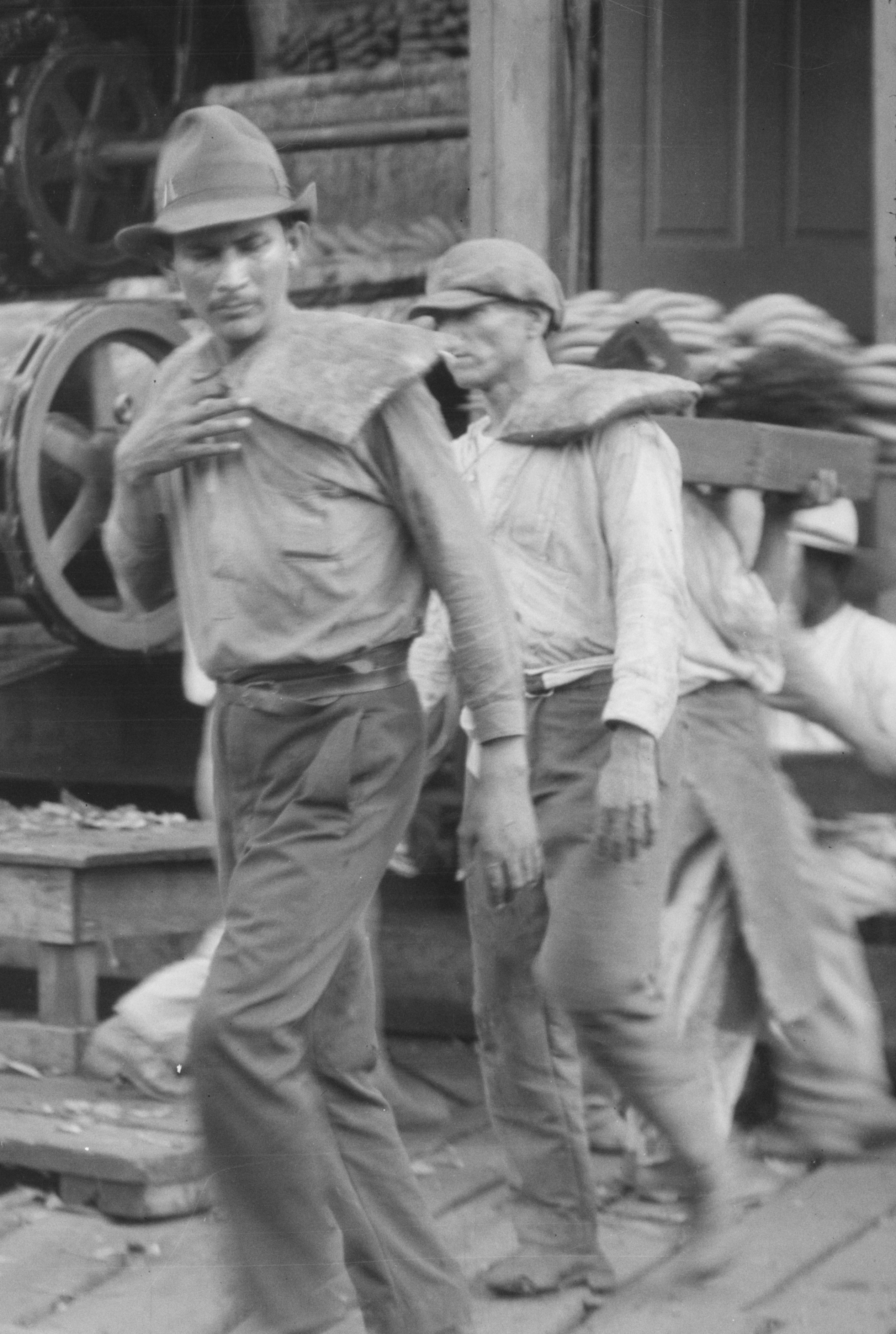
Photo by Arnold Genthe between 1920 and 1926.

Yesterday I was looking for inspiration and one of my favorite sources for such is to peruse the online collections of the Library of Congress. What a treasure. I used those collections extensively when pulling together a “walk through history” through the life of Joseph Anthony Horne. And as part of that journey I learned about photographer Arnold Genthe (1869-1942). Genthe is best known today for his photographs of Chinatown, the aftermath of the 1906 San Francisco earthquake and his dreamy portraits of actors and actresses like Isadora Duncan, politicans like Theodore Roosevelt and literary figures including Jack London. I revisited his Library of Congress collection with a different eye, I suppose, than previously and was delighted to discover photographs he’d taken in the 1920s in New Orleans. One of the things he sometimes did in Chinatown was to walk the streets and hide his camera to try and obtain those candid shots of people just living not posing for the camera.

Photo by Arnold Genthe, between 1920 and 1926.

But he also made eye contact with people and there must have been something about him such that they would pause just a moment for him.

Photo by Arnold Genthe, between 1920 and 1926.

New Orleans was one of the world’s great banana ports. I can imagine Genthe, perhaps on assignment in New Orleans, taking a morning stroll with his camera to the wharves and capturing the work of the day, the unloading of bananas. He captures the dignity and beauty of men hard at work. They did not pose for him but they did stop and smile at him.

Photo by Arnold Genthe, between 1920 and 1926.

Sources & Additional Reading

https://en.wikipedia.org/wiki/Arnold_Genthe

https://www.loc.gov/pictures/collection/agc/

Read Full Post »

One day I was walking through a parking lot with some groceries and I hear a small voice say, “Excuse me, excuse me, can you help me?” I pause and from around a big car steps a small woman, smaller than me and I’m not big. In short, she’d locked herself out of her car and she was barefoot because she’s just had her nails done but she stepped out of the car to pick up something and then the door shut and so on and so forth and her cell phone and purse were inside. Luckily I had my cell phone and so I called a locksmith who said it would be awhile and after asking her “would you like me stay with you?” she nodded emphatically and I just hoped that the scallops I’d purchased would be okay in the blazing sun. And in this age of COVID of course we were socially distant so that made it okay that she stayed in the shade of the car and I stayed in the sun of the parking lot. We bantered a bit and then she asked, somewhat shyly, “Where are you from?”

Now I am brown and she was a beautiful darker shade than me with a creole accent. And people with that accent “up here” in New England have often asked me that same question. Though corporate training sessions will tell you that is a politcally incorrect question to ask these days, I took no offense. I said what I always say, “I am from Virginia.”

She nodded slowly. And with a smile, I added, “I do have to tell you that that is not the first time I’ve been asked that question.” She perked up. “You see, when I first moved up here, there was a fellow I’d see on the greenline train every now and then who’d say to me every single time, “You’re from Dominica.” I’d say I’m from Virginia and he’d frown perplexed and just walk away.”

She laughed.

“I didn’t even know what Dominica was,” I admitted to her. “I thought he meant the Dominican Republic.”

She laughed again and described Dominica to me.

I then shared, “And when I was in the hospital with my husband one of the aide’s asked me, “Where are your from, girl?” And when I told her Virginia, she just shook her head and said, “Ah. You’re one of those brown people who don’t know where they come from.” She looked me over and said, “You just tell people you’re from “de island.” I asked , “Which island?” She just shook her head. “Just say “de island!”

The woman laughed again. She looked away and then she looked back at me. “I’m from Haiti. You look like you’re from Jamaica.”

I have never been to any of the islands. The islands of the British West Indies that were part of the Atlantic slave trade triangle. I don’t know specifically how my ancestors made their way, enslaved and otherwise, from Africa to the British West Indies to the southern British colonies of Virginia and North Carolina. I still think I am from Virginia, from the foothills of the Blue Ridge Moutains, especially at this time of year when both there and in New England the landscape is a riot of color as the trees change.

Where are you from? Such a loaded question. Such a gentle question. It all depends on who speaks the words and why.

Now this young woman in the parking lot also asked my name. She nodded. “Cynthia is a nice name but I am going to call you angel. God sent you to me. You’re my angel today.”

I opened my mouth but decided to close it and just smile.

Read Full Post »

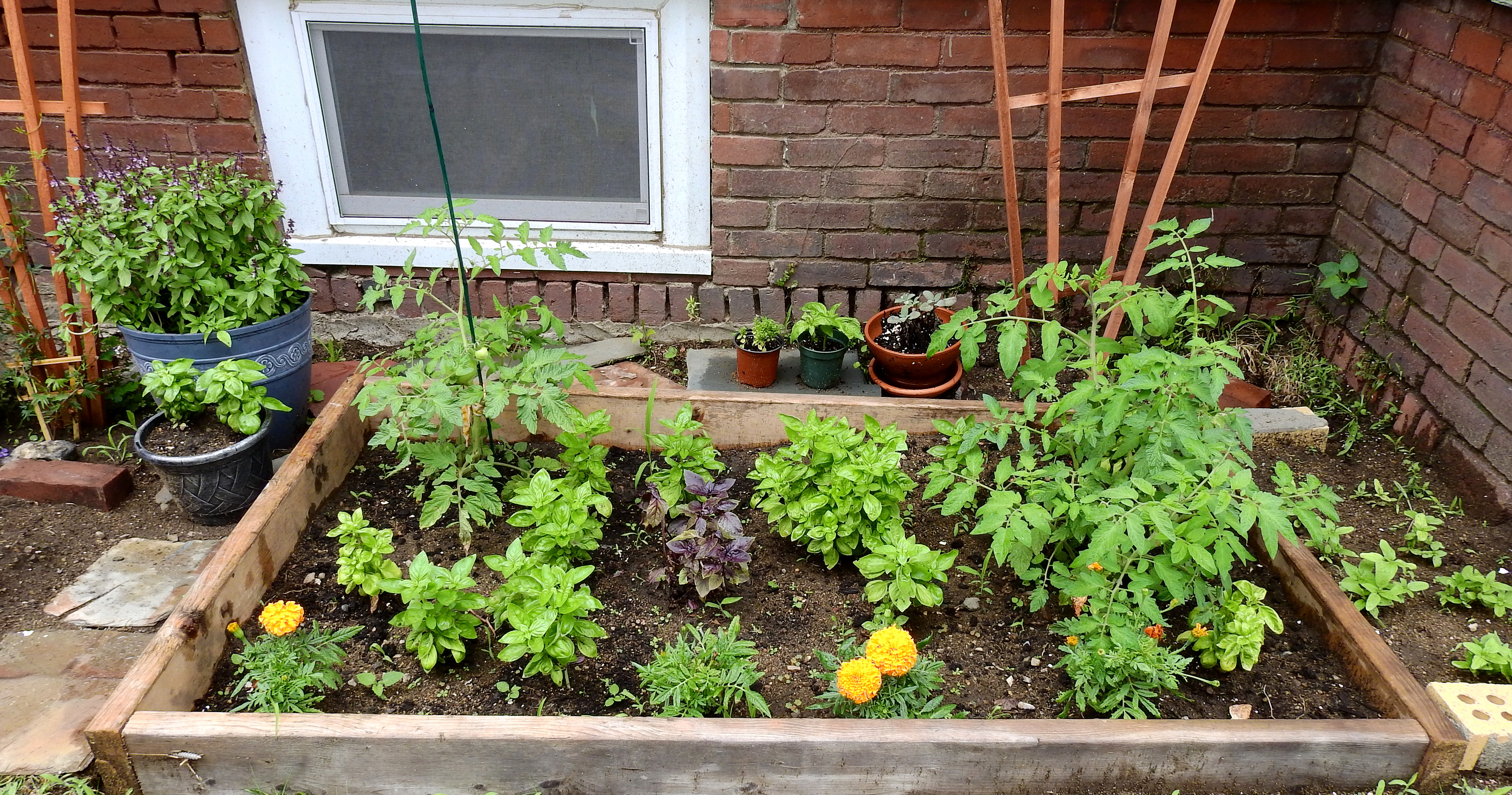
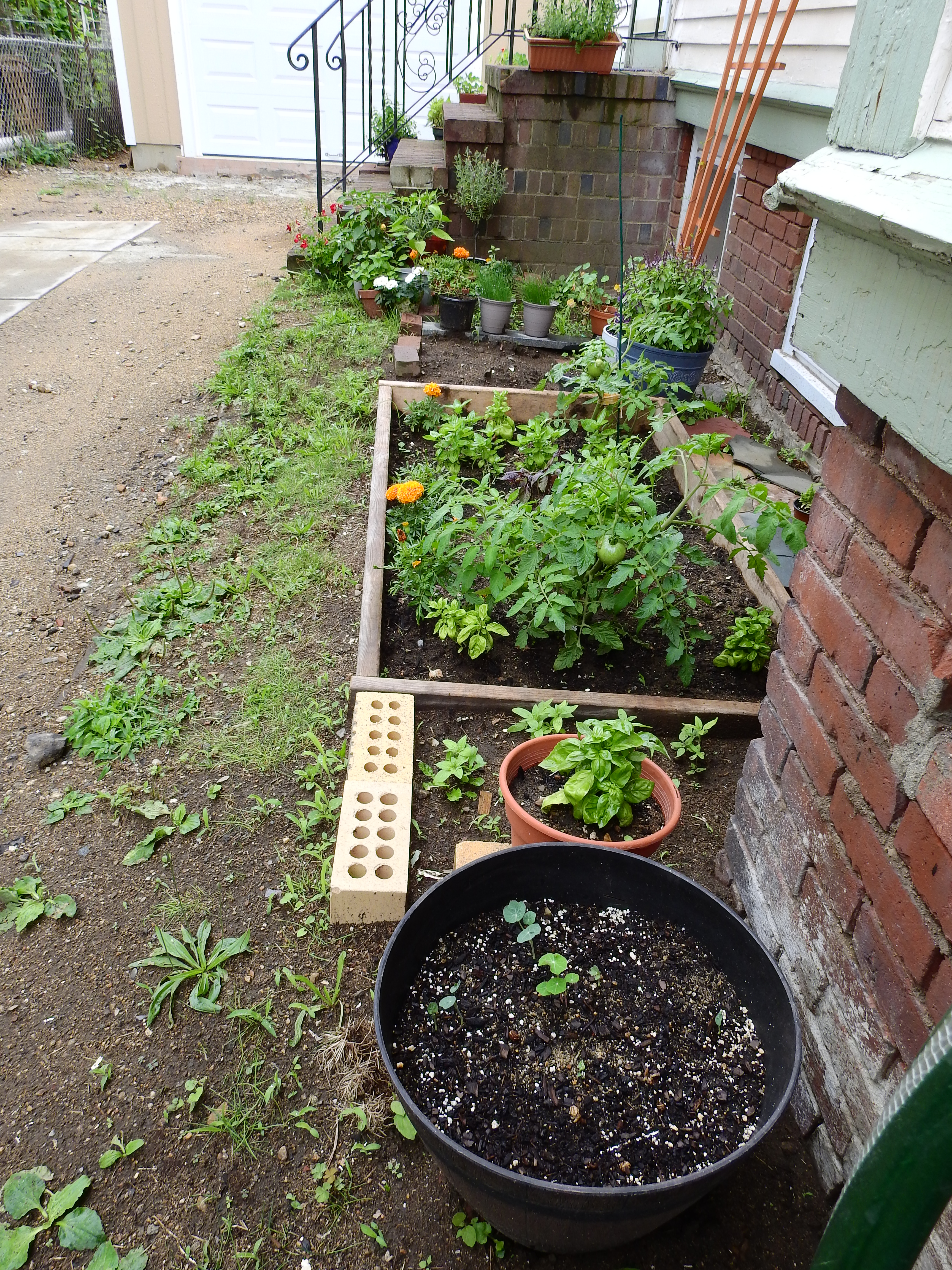
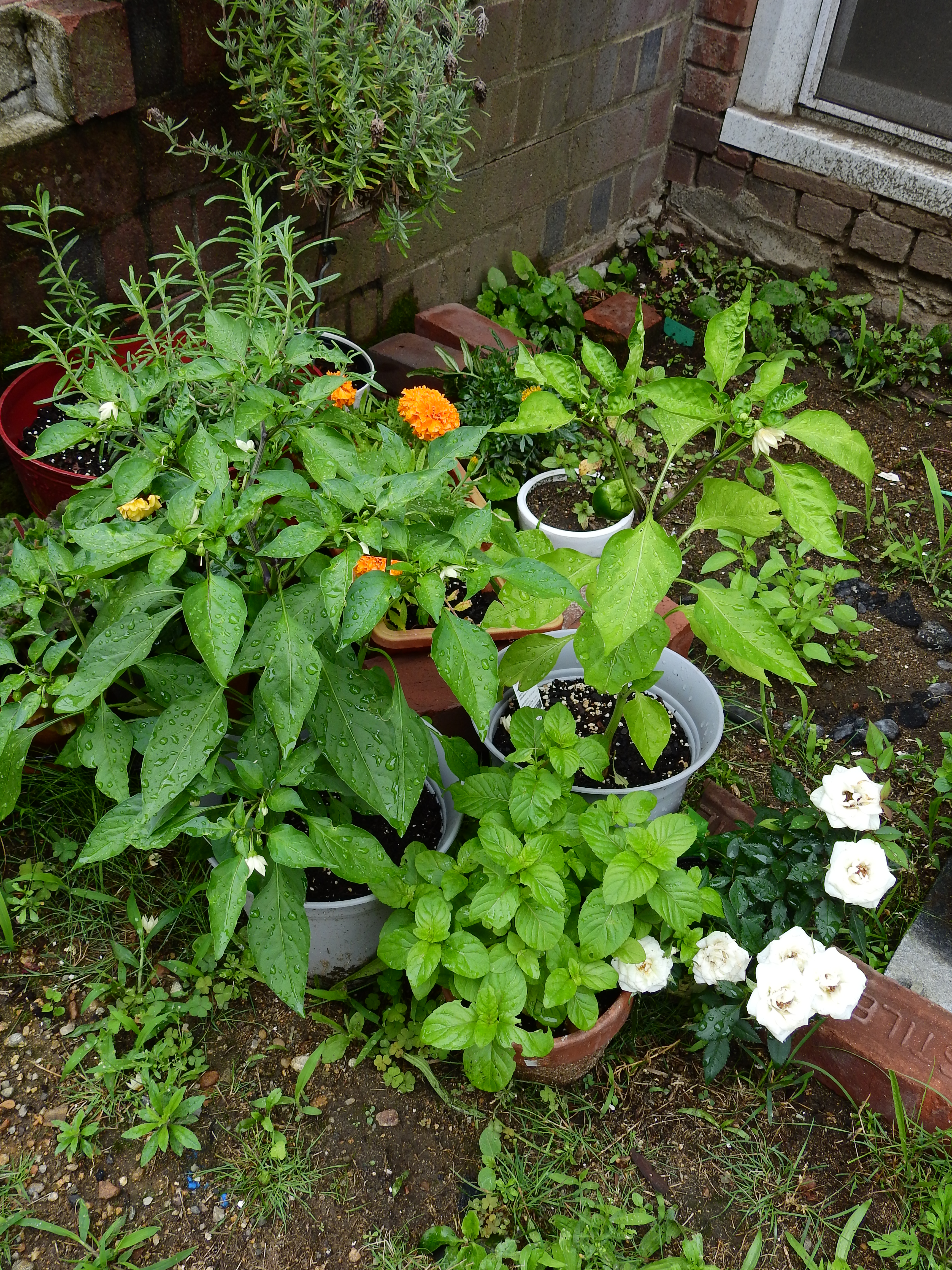
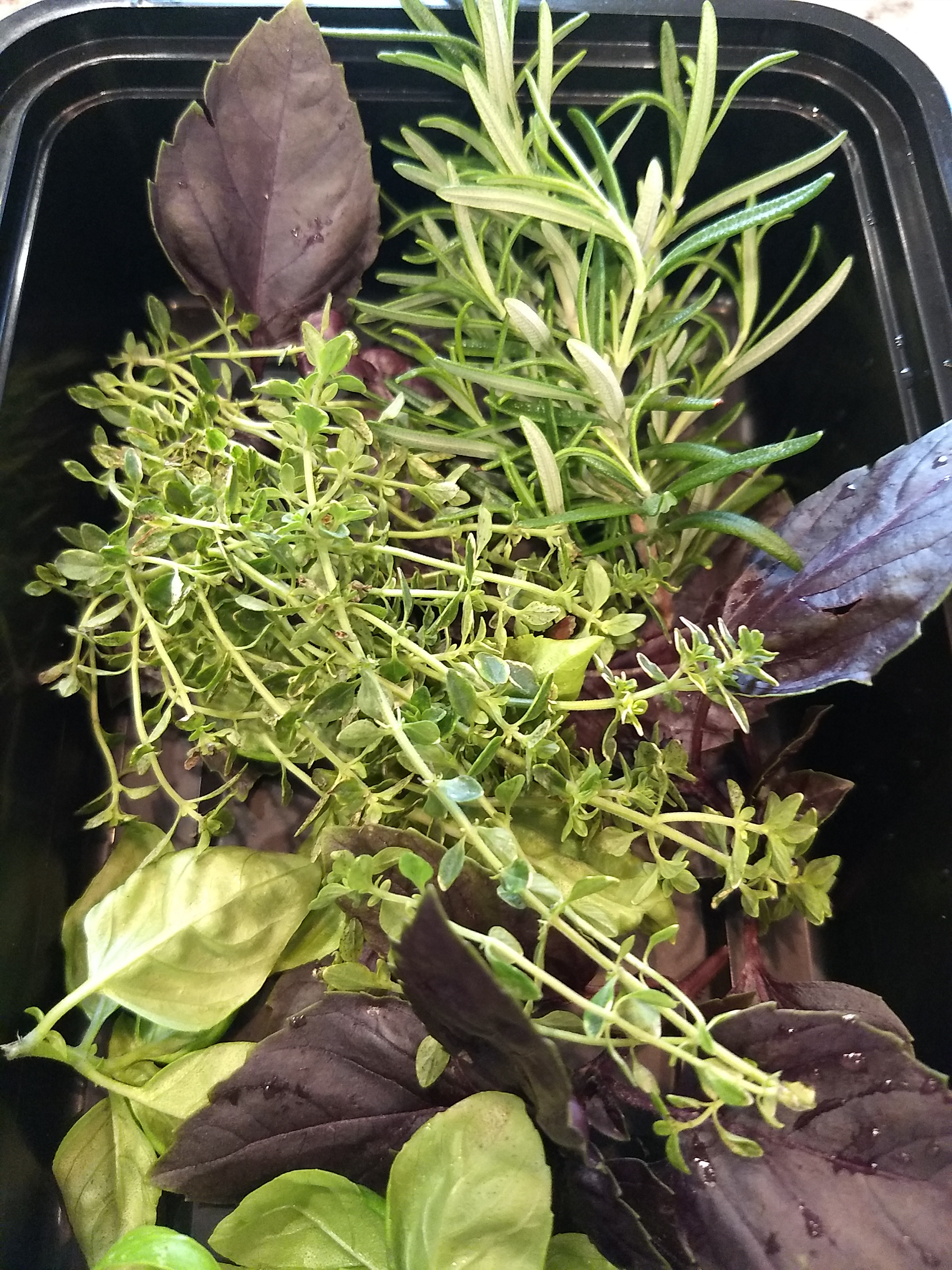
More flowers bloom on the bell pepper plant, and I see about dozen new blooms forming. Its neighbor the shishito plant is nearing its end I think with perhaps a few more peppers to grow large but no more blooms and its once dark leaves are now light lime. In a neighboring raised bed hot peppers form and what a spicy bounty they are turning out to be. I am imagining how beautiful their red crescent shapes will be as we indulge in them throughout the winter. Tomatoes, tomatoes, tomatoes … they weigh down might thick stalks, a beautiful, brilliant green … but, oh, when will they turn red?! Bushels of basil. Not a bad problem. Can you ever have too much caprese salad or garlicky pesto on toasted bread? As for the Swiss chard … just two plants purchased on sale to please the neighborhood bunnies but they must have enough food elsewhere … nary a bite has been taken and the leaves are growing large … so now Steve will have to cook us a dish with that Swiss chard. All recipes welcome. 🙂

Read Full Post »

raisedbed

The backstory is that Steve and I moved just as the pandemic struck the U.S. and everything began to shut down around us. Given that he is a cancer survivor and over a certain age that put him at high risk. But we still had to daily get from point A to point B, continue (luckily) to work from home, pack a mammoth amount of stuff (mostly books), navigate in a necessarily socially distant world … and try not to confuse shortness of breath due to anxiety with shortness of breath due to the virus.

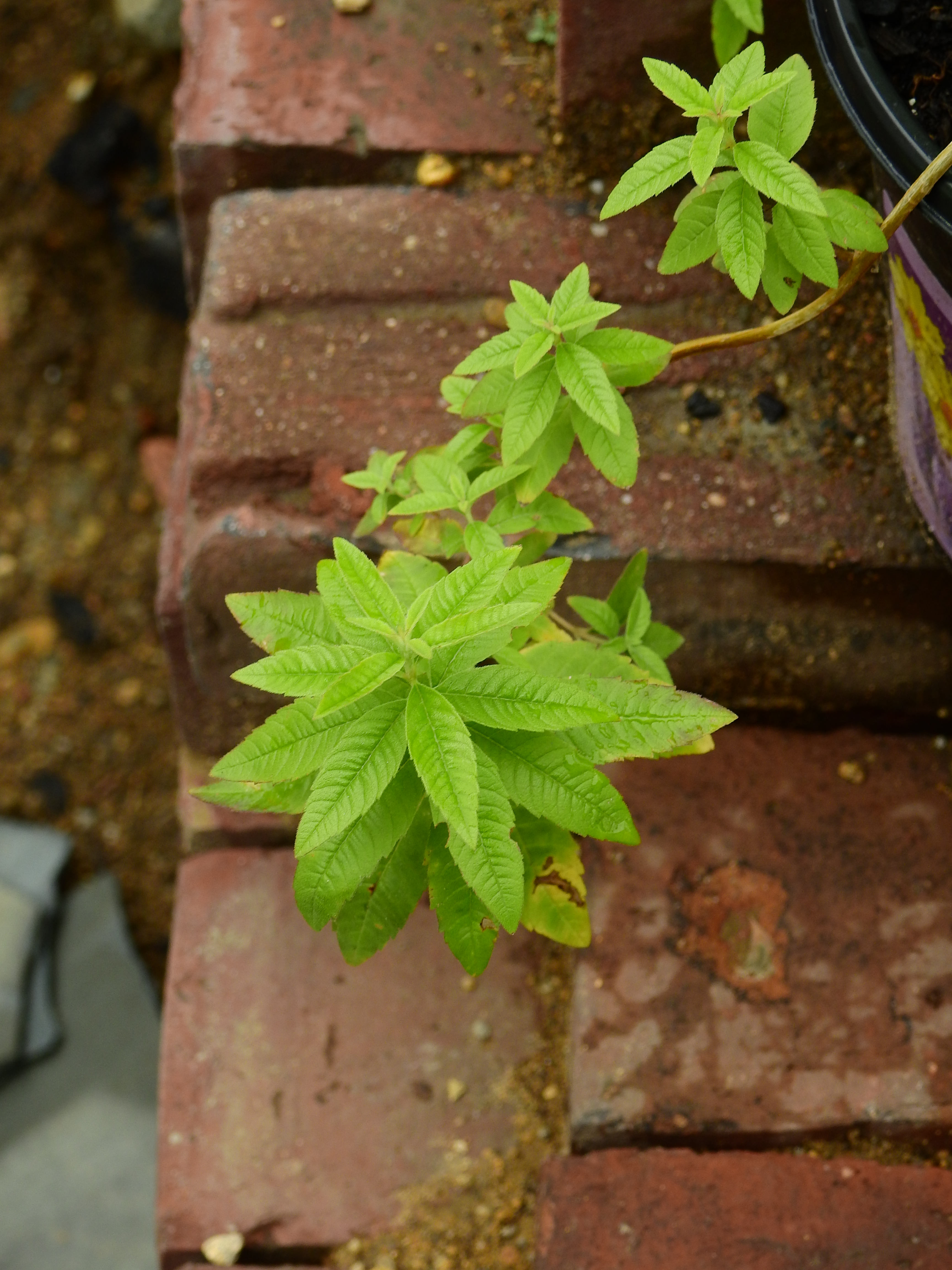
lemonverbena

lemon verbena

We made our way into our new home where I immediately began ordering bookcases because neither of us realized that between our two book collections we could probably start our own bookstore. The previous owner had built out the interior of the home wonderfully but the back yard … hmmm … three plus months later we’re still waiting on a contractor to come in with a caterpillar to remove debris and put down loam and on and on … and all of that stuff takes time!

thyme

thyme

Now I tend to come across as a rather calm person but I can be as anxious as any other human and one of the coping mechanisms I have found in my life is gardening. Probably goes back to childhood in Virginia being in the vegetable garden with my dad and helping my mother plant the flowers. Anyway in a time of such great chaos on so many fronts I was determined to have a garden. Steve’s only request was to plant tomatoes and basil.

tomatoes

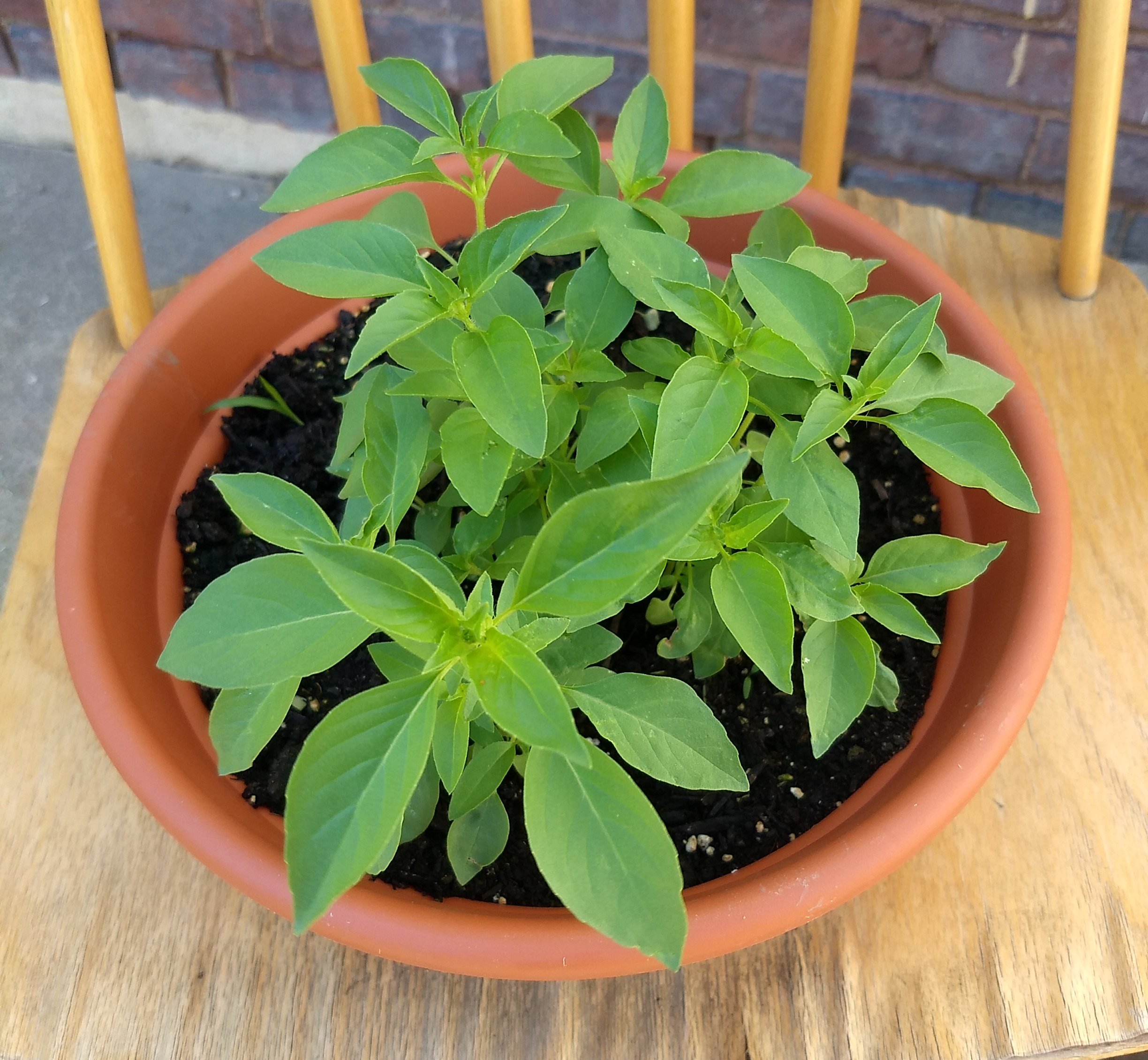
lemonbasil

lemon basil

mints

spearmint and orange mint

We’ve managed to do that and a bit more. The neighbors must think I’m crazy because I’m outside almost everyday to peek at the garden and take photos, and even Steve has gotten into the habit of asking me each morning, “How’s the garden doing?” I’ve forced him … I mean invited him … to put so much hard work into it that even now he owns it.

sidegarden3

DSCN0486

There is no rhyme or reason to the garden though I tried to be thoughtful at first. Keeping in mind pollinators. Keeping in mind bee-friendly. Keeping in mind full-sun, part-shade. Keeping in mind natural pest control. It became too much in this time. I just planted what would fit and tried to err on the side of edibility. The contractor is supposed to come next week. We’ll see … Chaos is still all around … in our personal lives, in the global realm … but for now there feels like space to breathe and to think and to consider planning. DSCN0515

I don’t feel like planning into the distant future right now but I can think about the seasons and what we might plant now to harvest in the fall and what we might plant now that will pop up in the spring. I think that’s good enough for now. 🙂


Read Full Post »

IMG_20200702_195228964

Steve’s been having a good time in the new kitchen and with the fresh herbs. I picked up the salmon but decided it was good exercise for him to go up and down the various flights of stairs to select herbs for the fish and my artistic vision of a caprese salad.

IMG_20200702_191935150

Only a few weeks ago, maybe even a week ago, he would have placed the salmon on the table and said, “Okay, go ahead. Take a picture and send it to William.”

Somehow my husband and my oldest brother bonded over food. Two very different people who found common ground in cooking. Given how infrequently they met I find it interesting they developed such respect for one another. Given that the two of them were of a certain generation, Steve, looking toward retirement one day, was hoping the two of them could start a little restaurant called The Two Grumpies. My brother, who had run restaurants before having to retire early due to health reasons, was not opposed to the idea and for awhile actively kept an eye open for locations in his hometown of Norfolk. But then Steve took some health hits and so did my brother though I don’t think he ever told me the full story. William could be a rather close-lipped person.

IMG_20200702_201157940

Steve is staying strong and continues to cook but no more pictures to William. William passed away this week after a recent diagnosis of late stage cancer. One of the things that must have peeved him most was that the disease took away his appetite.

Somewhere I have a picture of him holding me as a toddler. We had a bit of an age difference. In the photo you would see a plump little baby being held tight in the arms of a tall, strong, young Black man with a great smile.

In the past ten months I’ve lost all three of my brothers. I’m not sure people believe me when I say I don’t feel alone. I feel like they are more a part of me than ever. A close friend said, “Cynthia, does this mean when you’re walking in the world, you’ve got the shadows of three six-feet plus black men at your back?” I said, “Well, I suppose.” She remarked, “Oh, goodness. It was hard enough keeping you out of trouble before. Now you’re going to be a real badass!”

Perhaps so. 🙂


Read Full Post »

me, Keith and Donald, late 1970s

I was looking for the flash fiction story, The Blackest Sheep, that I wrote almost eighteen years ago. It was published in a small online zine and I think I made $5 for it as part of a writing contest. The zine doesn’t exist anymore and the only hard copy I have of the story is in a box at the bottom of a lot of other boxes. In short, it was a story based on truth of a black sheep of the family who, justifiably so, could be judged for all of the bad things he’d done and would likely do … and yet there was so much good that was there too. I wrote the story out of a sense that so many people might never know or remember that goodness once he was gone. And so through the lens of fiction I recounted how my older brother taught me how to bare my fist so that no one would pick on me (or at least never do it again), how, even though I was the “smart one” in the family, he patiently helped me make my way through homework or at least convinced me to keep my behind in the chair and finish what I needed to do.

William and Donald, late 1960s (maybe)

My favorite remembrance was how he, when asked by my mom, to walk my younger brother and I to school in the snow, he had us walk with our backs to the wind so that we would be shielded as he led us forward. And later in life, long after I’d written that story, he still did good things. He would come across archaic tomes of English literature left behind in a rooming house and keep it for me. Knowing my interest in photography, he would find frames at the flea market and other places and keep them for me. Keep in mind he was in Virginia and I am in Massachusetts. I did collect the books and the frames when I visited. He always called on my birthday and every holiday. As his body failed on him, he loved to just sit and watch the cooking channel … he had loved to cook especially for large groups of people … even though he could no longer eat most of what was being prepared. He found great childlike joy in little things. He was quick to laugh … and he could be quick to anger (especially when drinking too much) and quick to feel depressed because eventually even he could look back and see the different forks in the road of his life and the paths taken that perhaps should not have been.

DonaldWayneStaples

My brother Donald died just a few days ago with our oldest brother William by his side. He leaves no children but he leaves many friends and family behind who loved him and cherish the memories of his smile and laughter.  It is near incomprehensible to think of him and our youngest brother Keith passing away so closely together. For better and for worse, they tried to look out for each other, and I guess that is all that any of us can do.

-7785157256726719072

Donald and Keith in later years

P.S. Several years ago, while pondering what more to do, I wrote the following post called tea. The unnamed soul of the drama was Donald. https://wordsandimagesbycynthia.com/2015/08/18/tea/

Read Full Post »

This is a ramble with no meaning except I felt a need to put fingers to the keyboard and share an experience from this day.  I’ve been saving watermelon rind trying to decide if I will try to make some watermelon pickles. Now, I have never eaten such a pickle in my life though when I was little I used to admire their beauty in big jars on store counters. As a child I ate plenty of the fruit itself. My oldest brother still reminisces about the big ones with the big black seeds. I think I remember watermelons so big I could sit on them. Those are hard to find. Small, round, seedless (and in my humble opinion oftentimes tasteless) has become the store norm. I’ve lost my taste for watermelon flesh though I’ve been buying watermelon slices of late. Not for me but for a certain person in my life who needs to drink more water but doesn’t and so I simply place saucers of sliced cold watermelon in front of him. Hydration is hydration.

But now I have these rinds … and I’m in a creative place in my life right now … and so I told him I might try my hand at pickles. And when this person heard my intentions, he remembered words from a poem. “Reflections on a gift of watermelon pickles,” he said. We looked it up, a poem by John Tobias.  As I began to read it out loud, Steve, who has a wicked memory for poetry, stopped me to say, “I don’t think I’ve ever actually read the poem. I just know those few words.” And so I finished reading the poem and he was silent and when I looked up I saw that he had been moved to tears.

I think my big brother who is near Steve’s age would cry too. Not so my 12-year old friend. Her response to reflections on a life lived would be quite different than people five decades older. This is a rambling post with no photographs because there is no photograph that can compare to the rich imagery embedded throughout the poem … except maybe one day I’ll come across one of those big ol’ watermelons and split it open and let the sun shine on the pink flesh, black seeds and white rind … and maybe that would be an appropriate pairing of image with the following words. We’ll see …


Reflections on a Gift of Watermelon Pickle Received from a Friend Called Felicity

During that summer
When unicorns were still possible;
When the purpose of knees
Was to be skinned;
When shiny horse chestnuts
(Hollowed out
Fitted with straws
Crammed with tobacco
Stolen from butts
In family ashtrays)
Were puffed in green lizard silence
While straddling thick branches
Far above and away
From the softening effects
Of civilization;

During that summer–
Which may never have been at all;
But which has become more real
Than the one that was–
Watermelons ruled.

Thick imperial slices
Melting frigidly on sun-parched tongues
Dribbling from chins;
Leaving the best part,
The black bullet seeds,
To be spit out in rapid fire
Against the wall
Against the wind
Against each other;

And when the ammunition was spent,
There was always another bite:
It was a summer of limitless bites,
Of hungers quickly felt
And quickly forgotten
With the next careless gorging.

The bites are fewer now.
Each one is savored lingeringly,
Swallowed reluctantly.

But in a jar put up by Felicity,
The summer which maybe never was
Has been captured and preserved.
And when we unscrew the lid
And slice off a piece
And let it linger on our tongue:
Unicorns become possible again.

by John Tobias

Read Full Post »

dscn6815

It may not have been the smartest move, to visit a favorite salt marsh when the windchill is below zero, but sometimes it’s about forward momentum, to keep moving, and that’s what we did this morning while the light was bright. We didn’t last long on the trail, but it was enough.

dscn6811

dscn6810[1]

One thing that was hard to capture was how everything, every grass, branch, dried leaf, was encased in ice and they glowed in the sun, but it was too cold (for me) to stand still and frame the “perfect” shot, and my partner in crime kept telling me “we only have so many reserves of heat.” He had a destination … to the end of a particularly popular viewing area. We made it there but it was the least protected of areas and the wind hit, and we had a moment of “Go team!” before the race/skate back to the car.

dscn6834[1]

And on that race/skate back to the car I saw something wonderful. Finches, cardinals, doves and other birds I can’t name, feeding at the station that had been set up. Under different circumstances, with different preparation, I could have planted my feet and photographed all of their color and variation. But given my numb fingers, I figured enough was enough and I looked forward to future opportunities.

Read Full Post »

Padova,_cappella_degli_scrovegni,_esterno

Exterior of the Scrovegni Chapel, also known as the Arena Chapel, in Padua, Italy

This particular walk (or ramble) through history began after reading a footnote by stained glass historian Virginia Raguin. In her online history of stained glass in America, there is a footnote that reads, “Client and patron intermingled intellectually and socially; Brooks, H. H. Richardson, and La Farge had viewed Giotto’s Arena Chapel in Padua together. See John La Farge, The Gospel Story in Art (New York, 1913, repr. 1926), 279. ” I first learned of Reverend Phillips Brooks, architect H. H. Richardson and painter and stained glass designer John La Farge through their creative collaboration that produced the National Historic Landmark Trinity Church in the City of Boston. But what were they doing hanging out socially? What was The Gospel Story in Art that, if indeed it was published in 1913, it was done so after La Farge’s death? Who was Giotto and was there something special about his Arena Chapel?

BrooksRichardsonLaFarge

Phillips Brooks (1835-1893), Henry Hobson Richardson (1838-1886), John La Farge (1835-1910)

The first question is easy to answer. Born in the 1830’s, these gentlemen were of a generation. Though ostensibly from very different backgrounds, they were each members of a larger social class that would have socialized in the U.S. and abroad. With earned and/or inherited family wealth, they were expected to travel … the oceans were no barrier to lengthy tours of Europe, Asia and the Middle East. The men were also connected by their attendance and/or connection to elite schools like Harvard, Yale and Princeton. They would have attended the same literary and art salons in Boston, New York and elsewhere. Richardson and Brooks were friends long before Richardson entered the competition to build the new Trinity Church in Copley Square. And Richardson and La Farge were well-acquainted long before La Farge was asked to orchestrate the interior decoration of the new church. It would not be unheard of for these three men to be meandering about Europe and somehow meet up at a church. As for the second question …

JonesandLaFarge

Painting of Mary Caldawader Jones, and self-portrait of John La Farge

Apparently, The Gospel Story in Art, was a labor of love for La Farge that he never completed. Today La Farge is most well-known for his stained glass windows but he began his career as a painter and muralist. Throughout his life he studied art (even when he thought he was to become a lawyer), and eventually he would become a prolific writer and lecturer on the subject. La Farge died in 1910 but his friend New York socialite and philanthropist Mary Caldawader Jones compiled his work, with the illustrations that he used as reference for his text, and had the book published in 1913.  In the preface she explains that La Farge “had cherished the wish to write a book on the representation of the Christian story in art, a work for which few men were so well-fitted. Born and educated in the older faith of Christendom, he brought to his task not only the reverence of a believer, but also full knowledge of the widely different forms through which the life of Christ has been expressed by artists.”

GospelStoryInArtLaFarge

I found the reference on Page 297 referred to in the footnote, and, if I do the math correctly based on some other information I know, the three men likely stood in that chapel in 1882. Yet I know from other letters, memoirs, etc. that at least Brooks and La Farge had visited the chapel earlier in their lives, La Farge in 1856 just as he was beginning his artistic studies in Europe, and Brooks possibly in 1865 as he took a respite from preaching in Philadelphia. The young La Farge was so moved by what he saw that, once back in the U.S., he purchased etchings of Giotto’s paintings.

By 1872, Brooks was Rector of Trinity Church in Boston. His friend Richardson was overseeing construction of the new church. They’d discuss wanting the interior to be colorful, atypical of a traditional Episcopal church. When, in 1876, they commissioned John La Farge to decorate, did they reference Giotto and the chapel in Padua?

DSCN3126

decorative detail of wall inside Trinity Church

H. H. Richardson died in 1886, and his friend Phillips Brooks passed away in 1893. Whenever the two men had stood in the Padua chapel with La Farge, this is what La Farge remembered of the moment in The Gospel of Art. “Let us turn once more to Giotto, as the greatest of all those who represent the history of Our Lord. … 

ChapelViewFromEntrance

LaFargeQuote

ChapelViewTowardEntrance

In his book, La Farge references Giotto (c. 1267-1337), an Italian painter and architect, at least 49 times. He includes excerpts by Leonardo about Giotto as a leading figure in resurrecting art“…it was in truth a great marvel that from so rude and inapt an age Giotto should have had strength to elicit so much that the art of design, of which the men of those days had very little, if any, knowledge, was, by his means, effectually recalled into life.” A noted painter during his day, Giotto’s work in the Scrovengi Chapel, also known as the Arena Chapel, is considered his masterpiece. Frescoes depict the life of Mary and Jesus.

LastJudgementDetail

detail from Last Judgment fresco

La Farge writes:

LaFargeQuote2

JoachimShepherds

scene from the life of Joachim

“Were we to stand before the painting of Giotto in Padua, we should find it difficult to realize, in our present habit of passing over legends, how important these legends once were …”

AscensionDetail

detail from the Ascension

“If a movement of line can give the impression of sound, Giotto has done it … “

angel

angel

In earlier essays in his life, La Farge describes how his youthful travels in France and Italy, and in England among the Pre-Raphaelites, influenced his understanding and use of color. But only in this book do I suspect that he rhapsodizes about Giotto in a book that is about art and perhaps about La Farge’s connecting with his faith. One can only wonder what lasting impressions were made when a 21-year old La Farge first walked into that church.

Sources & Additional Reading

https://en.wikipedia.org/wiki/Scrovegni_Chapel

https://en.wikipedia.org/wiki/Giotto

https://en.wikipedia.org/wiki/John_La_Farge

https://en.wikipedia.org/wiki/Henry_Hobson_Richardson

https://en.wikipedia.org/wiki/Phillips_Brooks

http://college.holycross.edu/RaguinStainedGlassInAmerica/Home/index.html

http://college.holycross.edu/RaguinStainedGlassInAmerica/Museum&Church/Museum&Church.html

Image Metropolitan Museum of Art, Mary Cadwalader Rawle Artist: William Oliver Stone (1830–1875) Date: 1868 Medium: Oil on canvas Dimensions: Oval: 12 x 10 1/2 in. (30.5 x 26.7 cm) Classification: Paintings Credit Line: Gift of Mrs. Max Farrand and Mrs. Cadwalader Jones, 1953

The Gospel Story in Art by John La Farge page 297

The Gospel Story in Art (Archive.org)

Playful Padua by Rick Steves

Web Gallery of Art: Frescoes in the Cappella Scrovegni (Arena Chapel), Padua

Read Full Post »

« Newer Posts - Older Posts »