
Despite the fact I know very little about growing orchids, I seem to have success with this plant. As I’ve written before, I think it’s because I leave it alone to bloom as it likes. And what a wealth of blooms so far.


Posted in Branches, Inspiration, tagged beauty, colors, flowers, gardening, indoor gardening, Inspiration, orchids, Photography on May 9, 2016| 3 Comments »
Despite the fact I know very little about growing orchids, I seem to have success with this plant. As I’ve written before, I think it’s because I leave it alone to bloom as it likes. And what a wealth of blooms so far.
Posted in Inspiration, tagged beauty, color, flowers, gardening, indoor gardening, Inspiration, peas, petals, Photography, tulips on May 5, 2016| 1 Comment »
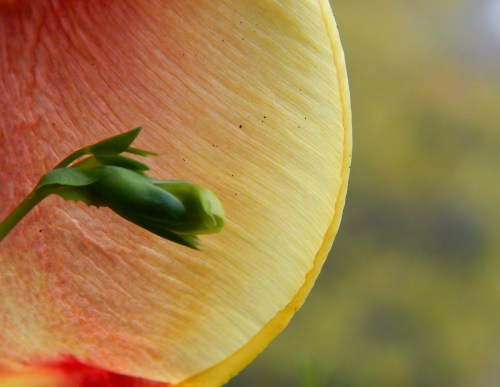
As I was observing tulip petals, holding them up to the light, I noticed in the tangle of oversprouted peas I have growing at my window, a single pea blossom. Will it bloom? Will a pea pod form? Time will tell. Meanwhile in a moment of whimsy I decided to photograph my blossom against a background of tulip petal. No meaning. No expectation. Just indulgence in curiosity.
Posted in Inspiration, tagged beauty, colors, flowers, Inspiration, perspective, petals, philosophy, Photography, tulips on May 5, 2016| 4 Comments »
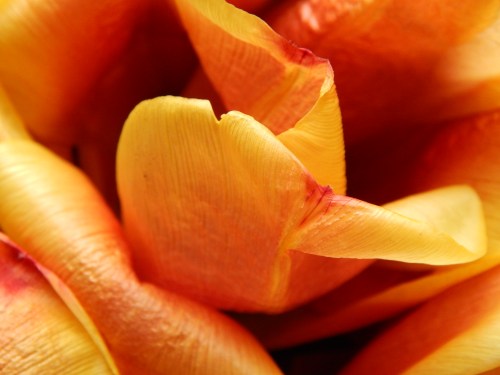
I continually learn through photography that when beautiful things fall apart – like my bouquet of tulips – that’s when you sometimes find an even greater beauty.



Posted in Inspiration, Nature Notes, tagged beauty, colors, flowers, friendship, gifts, Inspiration, orange, Photography, tulips on May 1, 2016| 3 Comments »
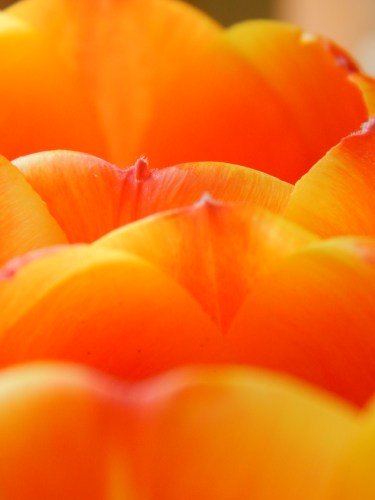
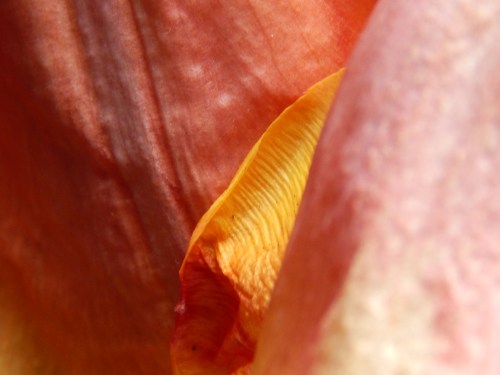
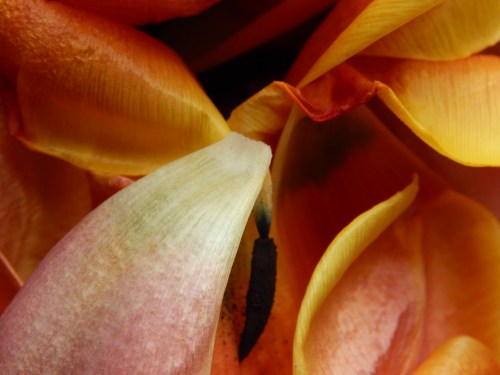
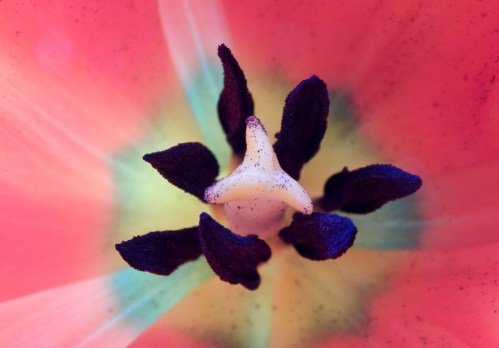
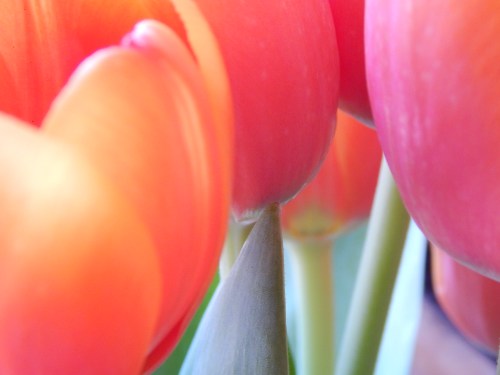
That was the color the bouquet of tulips appeared to be in the light of the shop. Then once brought home, placed in a vase, and bathed in the light of the sun all of these other colors appeared. An inspiring sight, to say the least.

Posted in Inspiration, tagged adult coloring books, art, beauty, Edgar Allan Poe, flowers, Harry Clarke, illustration, imagination, Inspiration, nature on April 28, 2016| 3 Comments »
It must be a sign of the times that as I flipped through Edgar Allan Poe’s Tales of Mystery and Imagination as illustrated by Harry Clarke, I could not help but think what a great adult coloring book these illustrations would make. Perhaps not all of the illustrations … unless you’re into zombies and the Walking Dead. But these scenes from Poe’s short story Morella …
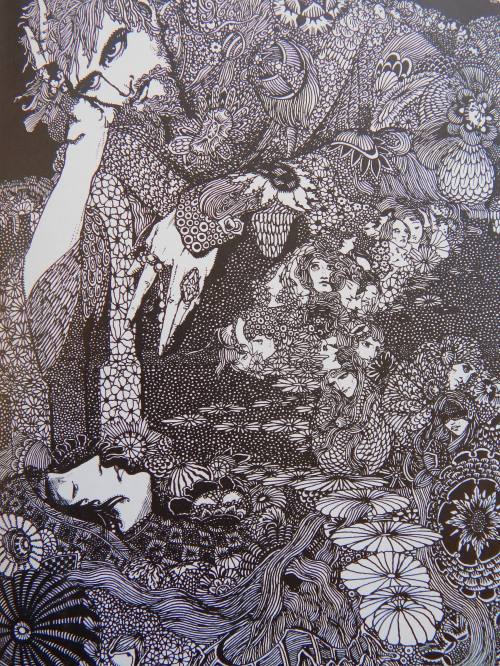
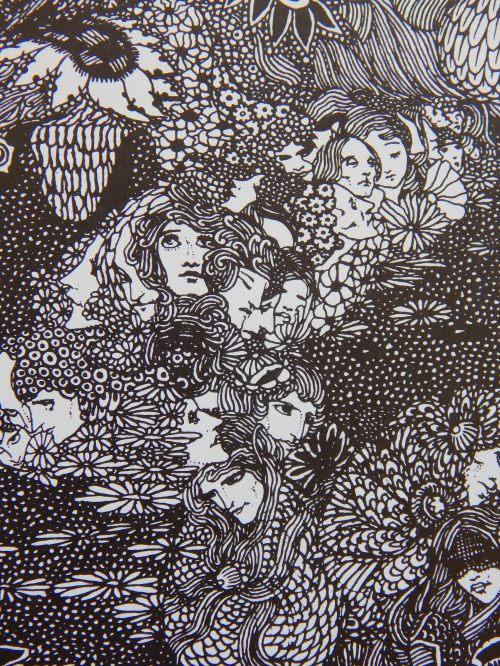
and these from The Colloquy of Monos and Una called to me with their flower and nature imagery. Harry Clarke (1889-1931) is perhaps more widely known for his stained glass work. Whether working with glass or with paper for his book illustrations, I wonder at the sources of his creative vision. I’m not always sure why I am inspired to do something but it sure is fun to take time to explore the possibilities. And to talk with other artists about their influences.
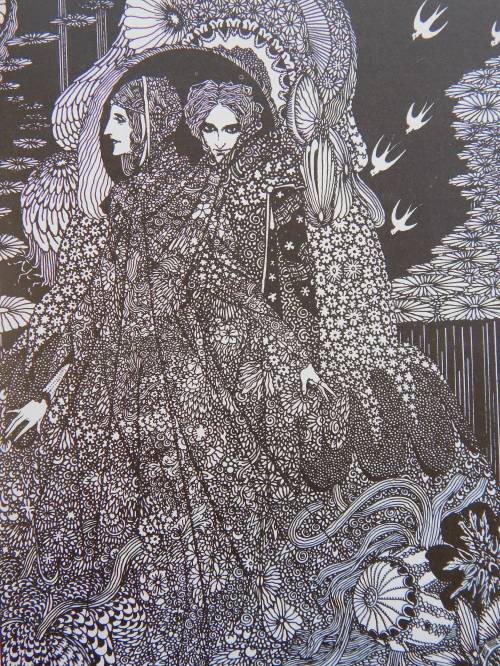

I can’t talk with Mr. Clarke but I am lucky enough to have access to a number of artists in my local community. Stay tuned for future updates about artists and their inspirations.
Posted in Branches, Inspiration, Nature Notes, tagged beauty, colors, Inspiration, nature, Photography, Somerville, sunlight, urban landscape on April 20, 2016| 1 Comment »
Posted in Inspiration, Kitchen Inspirations, tagged beauty, cabbage, color, creativity, food, food photography, greens, Inspiration, Photography, salads on April 19, 2016| 1 Comment »

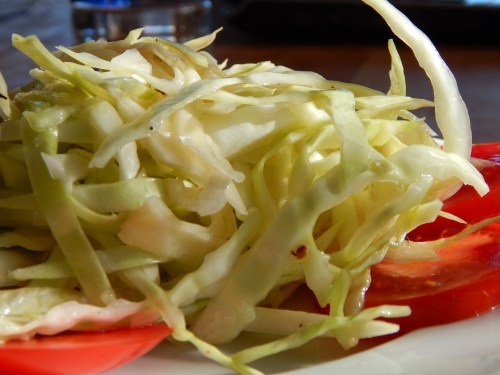
It was laziness that spurred my creativity in the kitchen. I desperately wanted a salad but I did not want to walk to the grocery store for my usual fixings, and so, I rifled through the refrigerator. In the bottom drawer I found a half a head of cabbage. The outer leaves did not look so good so I removed that layer. Then that magic thing happened. The late afternoon light shifted. All thoughts of hunger faded (for a short while) as I stared at something so beautiful.
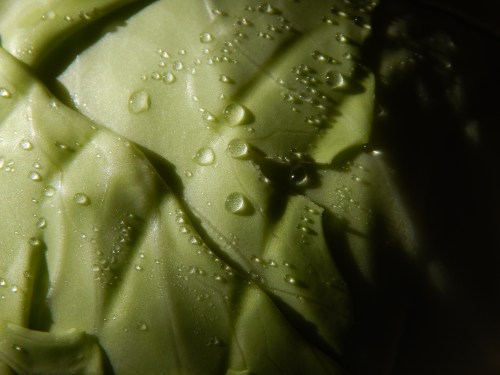
I found a simple recipe online for shredded cabbage with lemon and garlic. The sun hung around long enough to grace the final result with its presence.
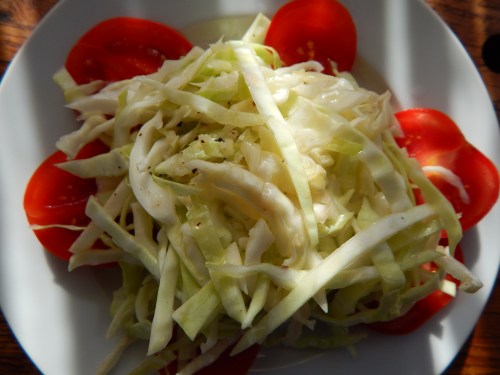
You can find the recipe here: http://www.foodandwine.com/recipes/shredded-green-cabbage-salad-with-lemon-and-garlic
Posted in Branches, Inspiration, Nature Notes, On the Road, tagged beauty, colors, flowers, Inspiration, nature, Photography, urban landscape, walking on April 17, 2016| Leave a Comment »
Posted in Inspiration, tagged architecture, art, beauty, Boston, churches, Emmanuel Church, family, flowers, grief, history, Lindsey Chapel, Lucitania, Photography, stained glass windows, weddings on April 16, 2016| 4 Comments »
The church was decorated with Easter lilies and pink roses and the entrance to each pew marked by a cluster of lilies. Palms were placed in pew openings and stood at various points to create a natural chapel. Upon the altar more lilies and roses. The war had limited the number of guests in attendance but even so Emmanuel Church on April 21, 1915 was filled with those wishing well the bride and groom, Leslie Hawthorne Lindsey of Boston and Stewart Southam Mason of England.
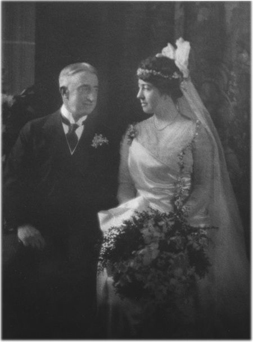
william lindsey, father of the bride, and daughter leslie lindsey
The bride wore white satin made with rose point lace and garnitures of small clusters of orange blossoms. The flowers held in place a veil of Limerick lace made especially for Miss Lindsey in Ireland the previous year. She carried a bouquet of white orchids and jasmine. Her wedding party wore shades of blue and pink silk, their gowns adorned by rosebuds. The bride maids carried baskets of pink sweet peas.
After the ceremony, there was a reception in the Bay State Road home of the bride’s father, William Lindsey. The bride’s mother now wore blue silk in a shade known as moonlight embroidered with baskets of silver. Flowers prevailed, decorating each room, smilax in the hallway, greenery entwining railings and baskets of roses on the stairs. Bells rung in celebration on both sides of the Atlantic as everyone knew that soon the bride and groom would return to his home in England and all they need do was board the Lusitania.
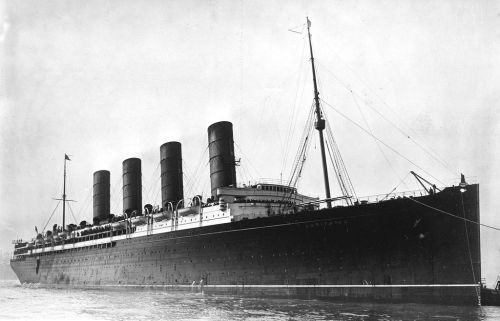
rms lusitania
The RMS Lusitania would depart New York for Liverpool on May 1, 1915. On May 7, it would be torpedoes and sunk by a German U-boat. At least 1, 198 passengers and crew would die, including newlyweds Leslie Lindsey and Stewart Mason. When the body of Leslie was returned to her father she wore the jewels that her father had given her.

A heartbroken father would do several things over the years in memory of his lovely daughter, one of which was to buy a piece of property adjacent to that of Emmanuel Church in 1919. A chapel would be built. Begun in 1920, the structure would be finished in 1924.

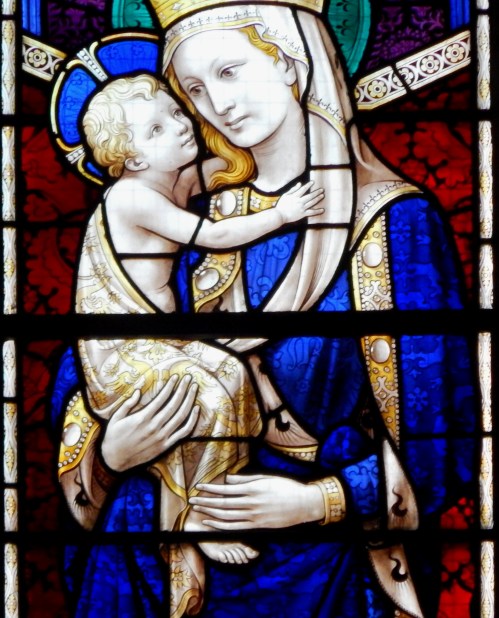
The chapel was designed by the architectural firm Allen & Collins. John Ninian Comper (1864-1960) designed the chapel’s decorative scheme from the altar to the chapel’s signature stained glass windows. Sadly, William Lindsey did not see the finished chapel. His youngest daughter shared memories of seeing her father sitting across the street watching the building’s construction and knowing he would not live to see it completed.
Sources and Further Reading
History of Lindsey Chapel on Emmanuel Church website
Boston Evening Transcript, April 21, 1915
Posted in Inspiration, tagged architecture, art, Back Bay, beauty, colors, faith, Inspiration, Photography, religion, stained glass, windows on April 14, 2016| 5 Comments »

virgin & child by charles connick, 1916

Emmanuel Church in the City of Boston is an Episcopal parish located on Newbury Street. Consecrated in 1861 it is a masterpiece among the many architectural treasures to be found in Boston’s Back Bay. Its history as a place of worship and advocate for social justice for over 150 years are well documented on the church’s website. On the day that I and a friend visited to view the interior, an arts program for the homeless was concluding. Based on brief interactions with some of the participants it is clearly an empowering project, and just one of many offered in service to those in need. I hope to learn more in the future but on that day my focus was the stained glass windows. From the literature shared by one of the clergy, the stained glass artists whose work can be found in the church include John Ninian Comper, Charles Connick, Frederic Crowninshield, Harry Eldredge Goodhue, Heaton Butler & Bayne, Charles Eamer Kempe, Tiffany, Samuel West and Henry Wynd Young.

incredulity of st. thomas by tiffany glass & decorating, 1890

With expansion and construction into the 1920s, there are many different styles represented in the windows of Emmanuel Church.
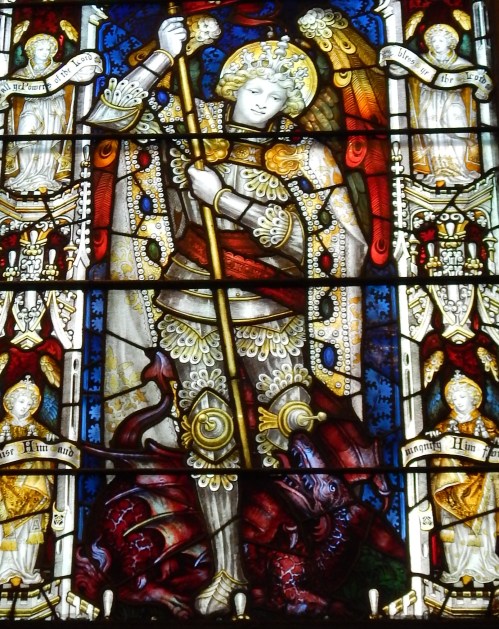
st. michael killing the dragon by charles eamer kempe, 1901


by harry eldredge goodhue, 1905

adoration of the magi by henry wynd young, after 1918


Windows have been lost over time.

Others have been beautifully restored including the church’s signature window, Emmanuel’s Land, comprised of 15 panels of leaded glass with 17 smaller sections of tracery above, and done in the opalescent style made famous by John La Farge, Louis C. Tiffany and Frederic Crowninshield. Emmanuel’s Land is one of Crowninshield’s largest works.
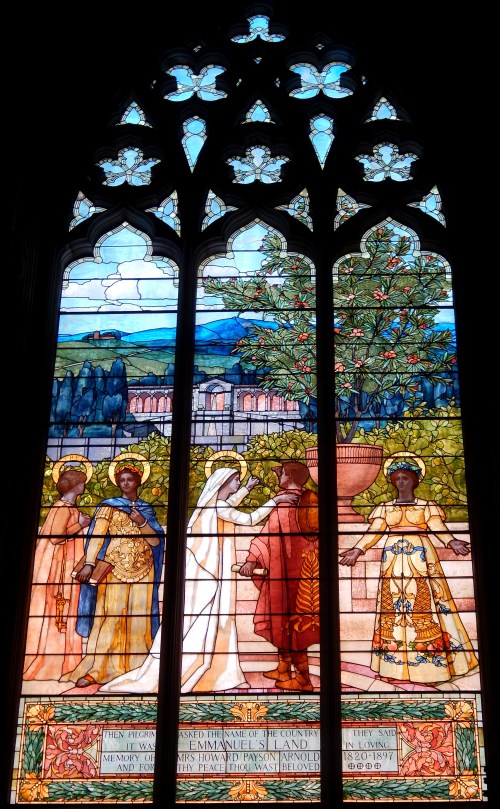
emmanuel’s land by frederic crowninshield, 1899
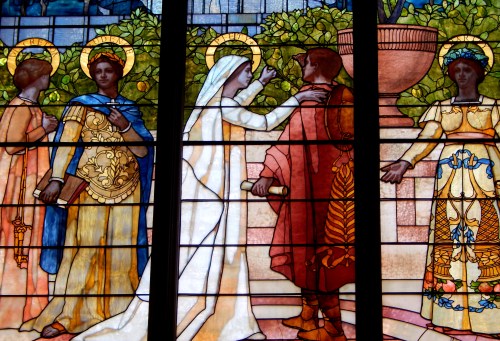
The window is especially notable because it does not depict a religious scene but instead a scene from John Bunyan’s book, The Pilgrims Progress.

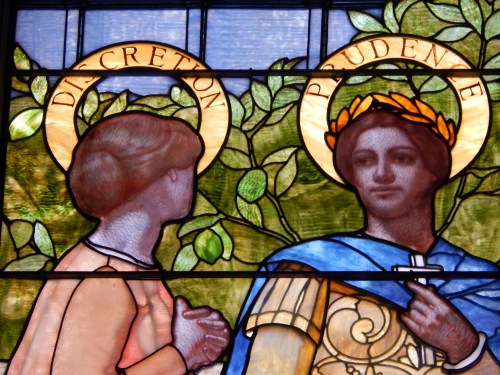
Piety, Discretion, Prudence and Charity show Pilgrim Emmanuel’s Land. The window was designed in memory of Mrs. Howard Payson Arnold, Crowninshield’s mother.
The windows are housed in a structure that has evolved quite a bit over its history from its original construction in 1861. As the parish grew, adjacent plots of land were purchased and new adjoining structures were built including a parish house, west transept, and two chapels. The Lindsey Chapel was the last to be built between 1920-1924. A poignant tale is at the heart of its construction but I shall save that story and those images for another post.
In this post I’ve shared just a brief glimpse of the windows inside this lovely church. I hope you have the chance to see firsthand. Learn more about the church via the following link:


 Words + Images