Feeds:
Posts
Comments

Posts Tagged ‘faith’

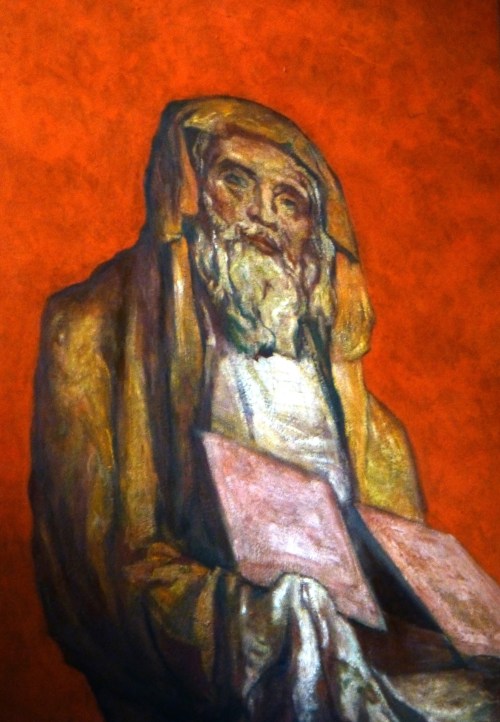
In The Art and Thought of John La Farge, author Katie Kresser writes that John La Farge (1835-1910) completed his first sketch of Nicodemus and Christ in 1874.  That biblical encounter is a subject that La Farge would depict in several different forms over time.  Here is a sketch dated 1877 in the Yale University Art Gallery, and here is an oil painting completed in 1880, now housed at the Smithsonian.  He would also create a stained glass window for the Church of the Ascension in New York.  The following image, The Visit of Nicodemus to Christ, is a photograph of the mural La Farge painted on the walls of Trinity Church in Boston.
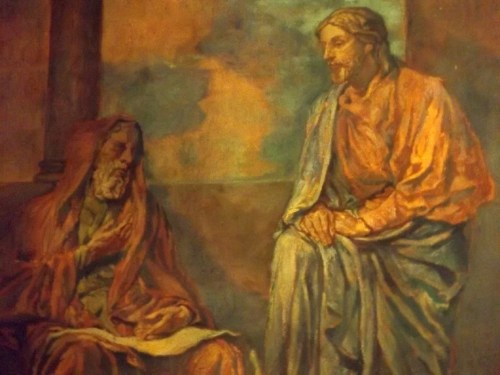
The Visit of Nicodemus to Christ, mural by John La Farge

The Visit of Nicodemus to Christ, mural by John La Farge, 1878

It is one of several murals that La Farge painted inside the building with the aid of assistants like Augustus Saint-Gaudens, Francis D. Millet and Francis Lathrop.  I keep photographing them because I think that there is always something new to see and experience.

In the literature of the time period critiquing his work, there is often reference to La Farge’s use of color in the murals that borders on the poetic.  For example, “In his “Christ and Nicodemus,” … we find the color quality strongly dominant. … the rich blues vein the draperies and background like the threads in a Flemish tapestry …” (The Churchman newspaper, July 6, 1901).
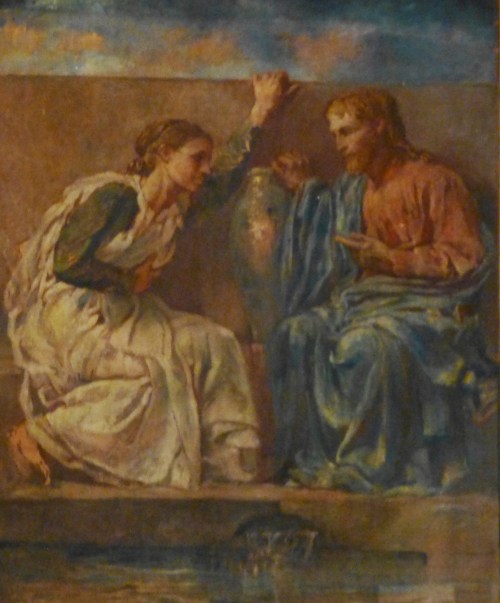
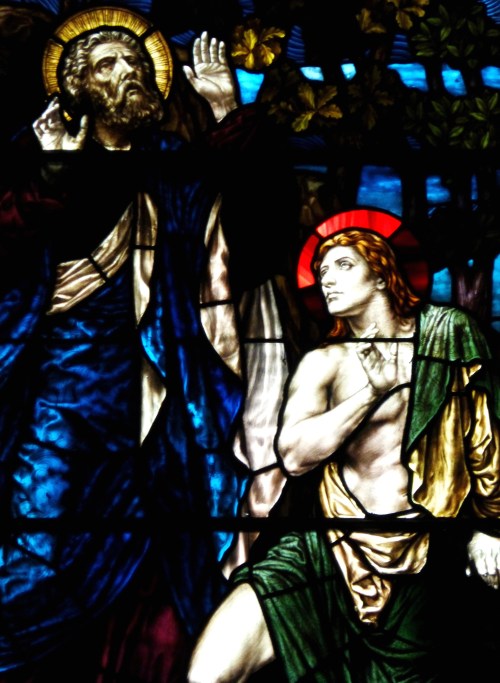
Christ Woman at Well, mural in Trinity Church by John La Farge

Christ Woman at Well, mural by John La Farge, 1877

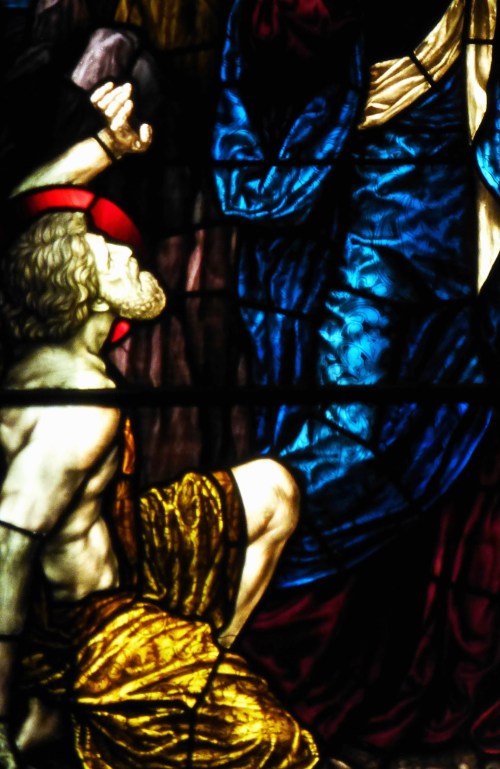
The beauty of La Farge’s murals is constant but their colors do shift in the light.  Different details become present depending upon where one stands and at what time of day.

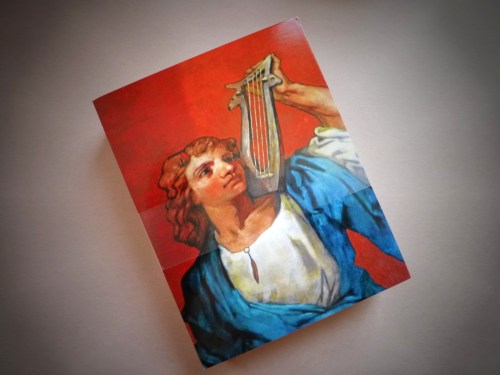
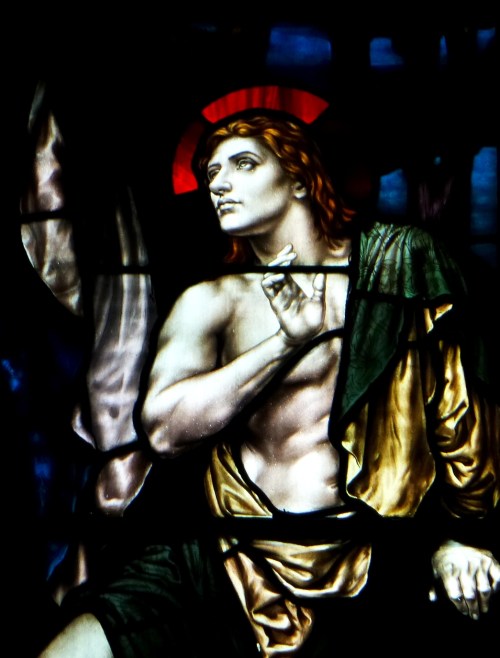
David, mural by John La Farge

David, mural by John La Farge, 1877

My favorite is perhaps the painting of David, because of the colors and especially for the expression on the young man’s face.

I had originally titled this post “in his own words” because I came across John La Farge: A Memoir and a Study compiled by Roy Cortissoz, literary and art critic for the New York Tribune, and La Farge’s friend.  In the book, completed in 1911 shortly after La Farge’s death in 1910, La Farge reminisces about what it was like painting the murals at Trinity under tight time constraints, in poor health, up high on scaffolding.  Reading the words made me appreciate the skills of all the artists even more.  If you’d like to read La Farge’ account, begin at the end of page 31 of the book, available online here.

Learn how you can see these murals and other architectural and design features at Trinity Church first hand here. Postcards of some of these images available via The Shop.

Read Full Post »

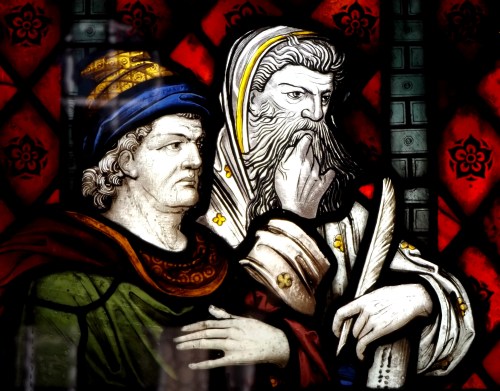
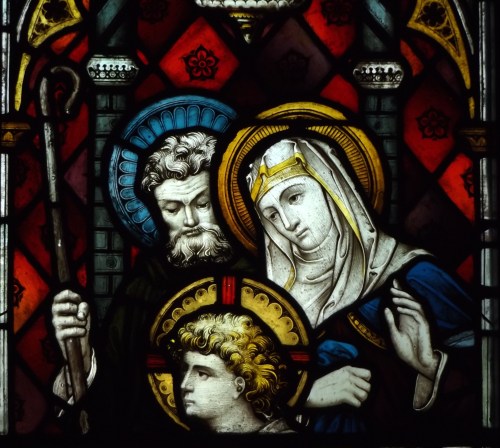
It is another one of those hidden gems in an architectural masterpiece that sits in the heart of the city of Boston.  The Sunday School Windows were designed by Clayton & Bell of London, England.  The left window depicts the story of the Presentation of Jesus, with Simeon holding the baby in his arms …

while standing nearby are Mary and Joseph.

The right window tells the story of Jesus in the Temple, with the doctors in the room …

as a young Jesus both listens and asks questions …

with two little children beside him.

Most captivating to me are the hands and the eyes, and the mix of colors and patterns within the glass, and how all of these components are pulled together to tell stories without words.

While these windows, a gift of the Children of Trinity Sunday School, are not viewable as a part of a traditional tour of Trinity Church in Copley Square, many other beautiful works can be seen as part of a tour of this historic landmark.  Learn more here.  Meanwhile, I look forward to sharing more images from this building and other structures in the future.

Read Full Post »

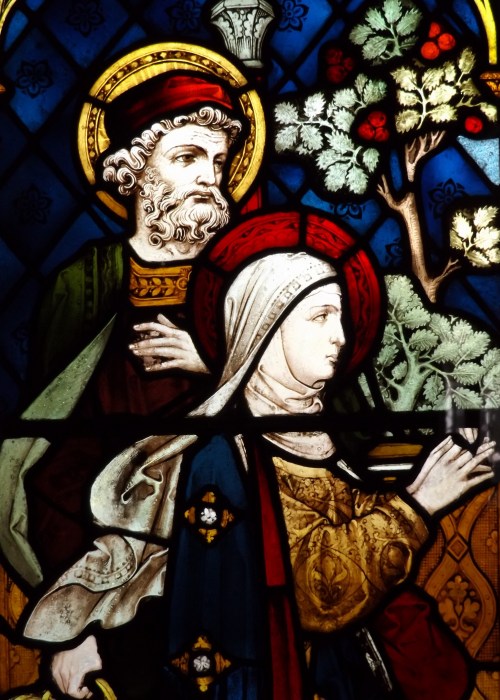
Detail from the Lucy R. Woods Window, Trinity Church, Boston

Detail from the Lucy R. Woods Window, Trinity Church, Boston

It is one of the many hidden gems of Trinity Church in the City of Boston.  According to archival records, the Woods Window was commissioned in memory of Miss Lucy R. Woods (1847-1904).  Miss Woods taught the Young Ladies’ Bible Class in the church Sunday School for thirty-three years, beginning in 1871.

The window was executed by John Hardman and Company, Birmingham, England, and designed by Dunstan John Powell, grandson of noted English architect and artist Augustus Pugin.

The window is located in a stairwell not easily accessible to the public but postcards and prints will soon be coming to the Book Shop.

Until then, you can read more about the original 1906 unveiling of the window here.  Hope to share more information about this window, and other hidden gems, in the near future.


Read Full Post »

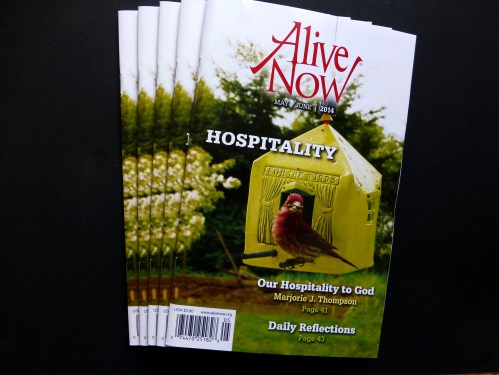
The May/June 2014 issue of Alive Now Magazine focuses on hospitality.  I’m grateful to have one of my photos appear in the pages.  It is a lovely, thought-provoking issue.  Hospitality is something I struggle with.  I know I’m not always as welcoming as I could be but I will endeavor to do better until the end of my days I hope. 😉  Learn more about Alive Now and the availability of this issue here.

Read Full Post »

… a lovely surprise appeared at my door.  The postcards I mentioned as a work-in-progress in a previous post have arrived.  These are images I’ve had the pleasure of taking of the stained glass windows at Trinity Church in Copley Square, Boston, a building considered one of the most significant in American architecture.

These postcards will be available at the Book Shop located in the undercroft (lower level) of the church.  Learn more about the parish and current activities here and specifically tours here and about the Book Shop here.  In addition to postcards of the stained glass you will also find a few of my other nature-themed postcards like the following.  Happy writing! 😉

Read Full Post »

As a child in Virginia I never imagined that I’d spend so much time as an adult in a place like Trinity Church watching sunlight stream through stained glass windows and play upon walls designed and painted by the likes of artist John La Farge.  This is a photograph of one of those murals.  I’m pleased at how it turned out as a postcard.  Soon to be available in the church Book Shop.  There is a wealth of information available in books and online about John La Farge.  I found particularly interesting this article about the rivalry between La Farge and Louis Comfort Tiffany.  Below are a few additional images of the murals.  Just a tease really because no picture can compare to the real thing. 😉

Learn more about the artist John LaFarge, architect Henry Hobson Richardson and much more on the church website.

Read Full Post »

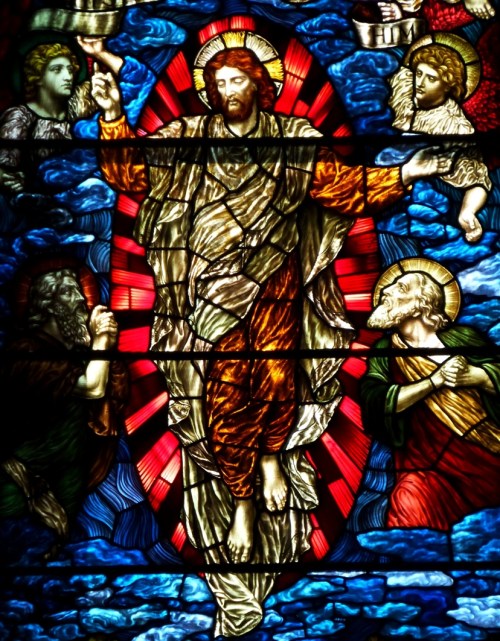
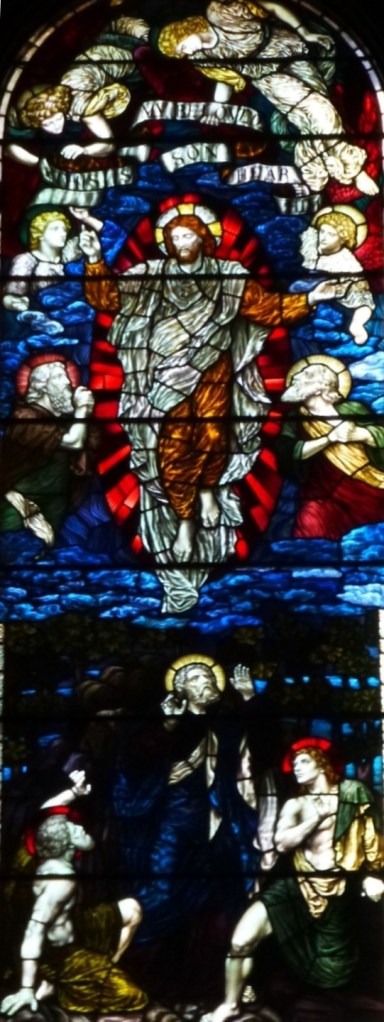
I keep reading that Henry Holiday of London was noted for his execution of drapery, i.e. the fall of cloth, around his figurative subjects; that it was a style reminiscent of Dante Rosetti.  I do love the intricate layering of cloth in these scenes from his stained glass window, The Transfiguration (1878), but it is the hands I particularly notice at present.   As promised in an earlier post, here is a bit more about the artist and his creation.

Henry Holiday was born in London in 1839.  His talent for drawing set him on an early artistic path where he would be influenced by Pre-Raphaelites like Burne-Jones, William Morris and Dante Rosetti.  Over time, he would develop his own unique style.  He traveled the world as many an artist of that period did.  Trips to locales like Italy and Egypt influenced his illustration, painting, sculpture and his work with stained glass.  Read more about his diverse interests and artistic expressions in this wikipedia article.

During his lifetime, Holiday did quite a bit of work for American churches, and that’s why I’ve been lucky enough to view and photograph his window, The Transfiguration, at Trinity Church in Copley Square, Boston.

The window depicts a moment described in the New Testament. The basic story is that Jesus and three of his apostles, Peter, James and John, traveled up a mountain to pray.  There Jesus begins to shine like the sun, his clothes becoming white as snow.  The prophets Moses and Elijah appear at his side and talk with him. Eventually “a bright cloud overshadowed them, and a voice from the cloud said, “This is my Beloved Son, with whom I am well pleased; listen to him.” When the disciples heard this, they fell on their faces with awe. But Jesus came and touched them, saying, “Rise, and have no fear.” And when they lifted up their eyes, they saw no one but Jesus only. …” (Matthew 17:1-92, Mark 9:1-9; Luke 9:28-36; 2 Peter 1:16-18).”

There are a lot of great resources online about the significance of this moment in Christianity and its various interpretations.  If you’re in Boston’s Back Bay, view Holiday’s window firsthand, especially when the sun is shining bright.  Postcards and prints available in the Trinity Book Shop with shipping available worldwide.

Read Full Post »

That is this lay person’s interpretation of this image of The Transfiguration of Jesus, a stained glass window in Trinity Church in Copley Square.  It is by Henry Holiday of London.  I hope to share more about the whole window and its maker in the coming month, but meanwhile I can share that I’ve been lucky enough to photograph this center part of the window. It will be available as a postcard in the church’s Book Shop in early October.  Have a good day, folks.

Read Full Post »

The evening before attending my first bar mitvah (quite an honor!), I happened to photograph this setting sun.  So, the following day at the big event, as I read along in the prayer book, the phrase “creating light and fashioning darkness” stood out to me and made me think of this image.

Read Full Post »

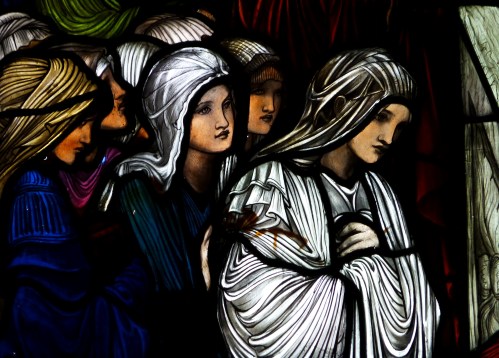
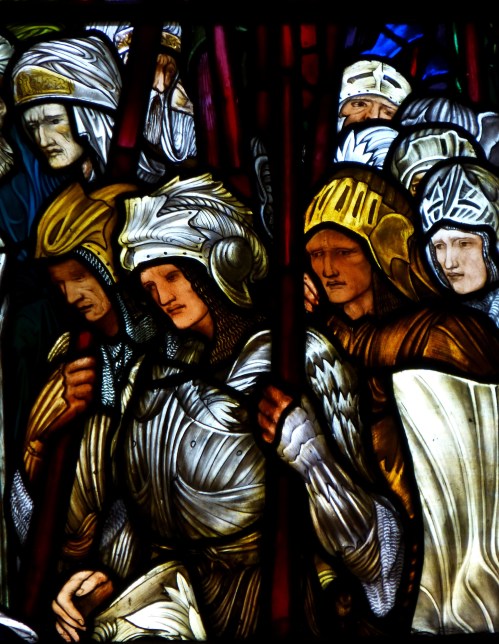
At least it is the pinks and golds that stand out to me on this hot, hot day as I review these images recently taken of the stained glass window, David’s Charge to Solomon.

At some point I hope to direct you to some of the stories and resources that other have shared with me about the window and the fascinating relationship between Burne-Jones and Morris.

Until then, here a few more images of the parts that create the whole.

Read Full Post »

« Newer Posts - Older Posts »